Effects of encapsulated sodium butyrate and arginine on the growth performance and gut health of broiler chickens, with or without enteric challenge
Abstract
The experiment evaluated the effects of encapsulated sodium butyrate and arginine on the gut health of broiler chickens from 1 to 22 days of age, with or without exposure to an enteric challenge. The experiment was carried out in the vivarium of the Federal University of Paraná, Brazil. Seven hundred and sixty-eight one-day-old male Cobb 500® broiler chicks were used. The birds were randomly assigned to eight treatment groups with six replicates each (48 experimental units with 16 birds per replicate) in a 4 χ 2 factorial design (four diets, with and without enteric challenge). The four diets were: 1) 113% standardised ileal digestibility (SID) arginine:lysine ratio; 2) 113% SID arginine:lysine ratio + encapsulated sodium butyrate; 3) 130% SID arginine:lysine ratio; 4) 130% SID arginine:lysine ratio + encapsulated sodium butyrate. At 15, 16, and 17 days of age, the birds in the challenged groups received 15 mg of amoxicillin per kilogram of live weight, inoculated into the ingluvium. At 19 days of age, the same birds received an inoculum containing Escherichia coli (ATCC® 8739™, 109 colony-forming units/bird). The results show that from 1 to 14 days of age, birds that received combined arginine and encapsulated sodium butyrate had better weight gain. Enteric challenge increased the production of short-chain fatty acids and reduced the depths of the crypts and the absorption area of the ileal mucosa. Arginine and encapsulated sodium butyrate supplementation effectively improved performance in the second week of life, but did not interact with the enteric challenge model.
crypt depth; dysbiosis; short-chain fatty acids; zootechnical performance
Introduction
With the increasing prohibition of the use of antibiotics as performance enhancers in animal feeds, researchers are searching for alternatives that maintain intestinal health, gastrointestinal tract functions, and the immune system, without causing antibiotic-related problems (Gadde et al., 2017; Giacomini et al., 2022; Riaz et al., 2025). However, restricting antibiotic use has resulted in birds' intestinal mucosa becoming more susceptible to some intestinal challenges in the field, such as necrotic enteritis caused by Clostridium spp. or infections by opportunistic bacteria such as Escherichia coli. (Fancher et al., 2020).
Encapsulated sodium butyrate (ESB) supplementation has received attention because of its beneficial effects on zootechnical performance, intestinal integrity, and intestinal immune function, as well as its inhibition of pathogen growth and enhancement of the intestinal barrier function (Song et al., 2017; Leonídio et al., 2024). When a salt is encapsulated, or coated, it is released more slowly after lipase action and its action is directed towards the lower part of the intestine (Smith et al., 2012). Encapsulated sodium butyrate acts as a prebiotic, encouraging the development of beneficial gut microbiota (Lactobacillus spp. and Bifidobacterium spp.), resulting in the production of lactic acid in the intestine. The gradual release of ESB provides an energy source for epithelial cells, promoting commensal bacteria while inhibiting colonisation by pathogens, mainly bacteria, such as E. coli and Salmonella spp. (Mazur-Kusnirek et al., 2024). Encapsulated sodium butyrate is also associated with the processes of recovery and regeneration of the intestinal mucosa, as it stimulates cell multiplication and expands the intestinal surface area, increasing the potential absorption of nutrients (Elnesr et al., 2020).
Nutritional additives with immunomodulatory functions can bring additional benefits to intestinal health. Some amino acids, in addition to constituting body proteins, regulate the main metabolic pathways that are necessary for maintenance, growth, reproduction, and immunity. These amino acids are known as functional amino acids, and include arginine, cysteine, glutamine, leucine, proline, and tryptophan (Ling et al., 2023). Arginine participates in protein synthesis, is a precursor of nitrogenous compounds such as creatine, and acts in muscle metabolism, in addition to being a precursor of nitric oxide with action on the immune system (Martí & Reith, 2021). Arginine is also considered an important secretagogue, increasing the release of insulin, growth hormone, and insulin-like growth factor 1 into the bloodstream (Tsugawa et al., 2019).
The optimal digestible arginine-to-lysine ratio (Arg:Lys) ranges from 1.08 to 1.25 (Corzo et al., 2021). This may be sufficient for the optimum growth performance of broiler chickens; however, higher levels of arginine supplementation may improve the gut health of chickens subjected to enteric challenges by normalising the gut microbiota, improving the immune response, and enhancing the antioxidant capacity of the intestinal mucosa (Ruan et al., 2020). Currently, the digestible Arg:Lys ratio in broiler diets can be easily optimised through the addition of supplementary L-arginine.
This study therefore aimed to evaluate the effects of ESB and supplemental arginine on productive performance, rupture tension and traction elongation of the intestine, morphometry of the intestinal mucosa, short-chain fatty acid (SCFA) concentrations in the caecal content, and serum biochemistry in broiler chickens from 1 to 22 days of age, with or without exposure to an enteric challenge.
Materials and methods
The birds were housed in experimental cages at the Federal University of Paraná, Palotina Sector, Brazil, for the duration of the experiment. All animal husbandry and biological material collection procedures were approved by the Ethical Conduct Committee for the Use of Experimental Animals, under protocol no. 25/2022.
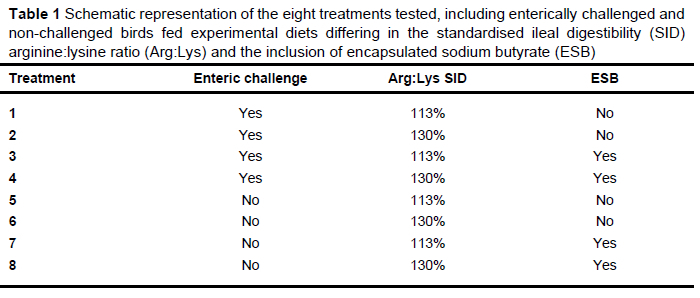
The experiment used 768 one-day-old male Cobb 500® broiler chicks with an average weight of 47.83 ± 1.06 g. Sexing was performed by observing the length of the wing feathers/plumage, assessed under bright light. The birds were randomly distributed in a 4 χ 2 factorial design, with four diets and two enteric challenge states. Each of the four diet groups were either exposed to an enteric challenge or not, resulting in eight treatments with six replicates each, totalling 48 experimental units with 16 birds each (Table 1). The four diets tested were:
1. 113% standardised ileal digestibility (SID) Arg:Lys,
2. 113% SID Arg:Lys + ESB,
3. 130% SID Arg:Lys, and
4. 130% SID Arg:Lys + ESB.
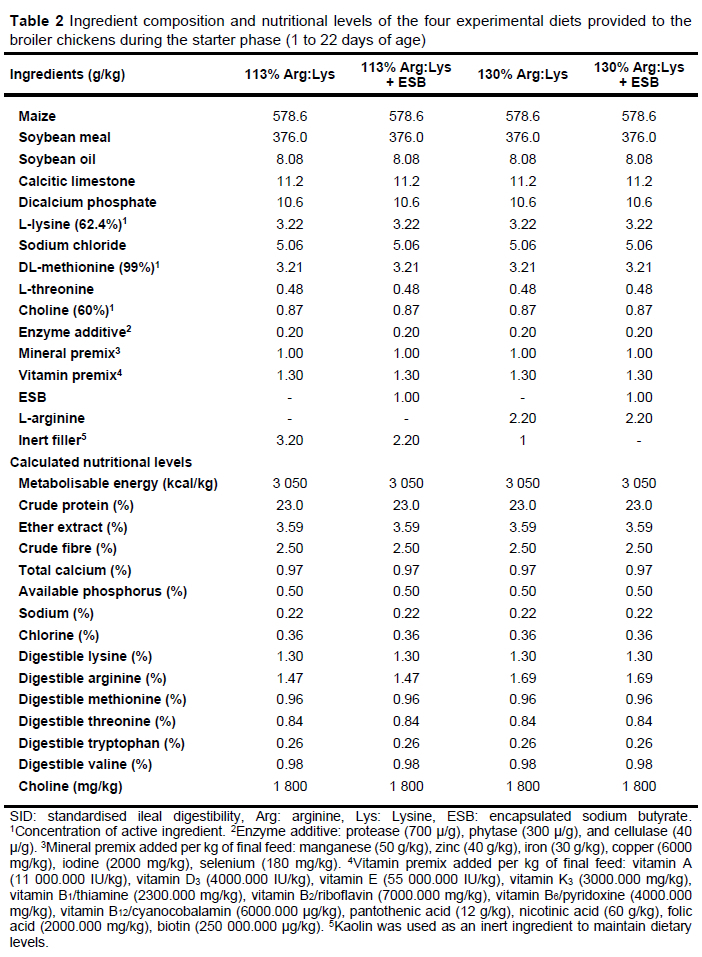
Diets with an Arg:Lys ratio of 130% were obtained through the inclusion of L-arginine (99%) at a dose of 2.2 g/kg, resulting in an arginine concentration of 1.69%. Diets with an Arg:Lys ratio of 113% were not supplemented with L-arginine, and a concentration of 1.47% was thus maintained. The commercial product from which the ESB was obtained was Novyrate®, and the dose used was 1 g/kg, following the manufacturer's recommendations.
From 1 to 22 days of age, a maize and soybean meal-based starter feed was provided (Table 2). This feed was formulated to meet the nutritional requirements of the birds, in accordance with the recommendations of the Brazilian Tables for Poultry and Swine (Rostagno et al., 2017). The metabolisable energy (ME) content of the feed was calculated in kilocalories per hundred grams (kcal/100g) by multiplying the factors of fat, protein, and carbohydrate, respectively, by 9%, 4%, and 4%, as reported by Eknayake et al. (1999). The crude protein (CP), crude fibre (CF), ether extract (EE), and amino acid concentrations were analysed according to AOAC (Association of Official Analytical Chemists, 2000) procedure numbers 968.06, 920.39, 962.09, and 982.30, respectively. The mineral concentrations in the samples were determined using the dry ashing method described by Chapman & Pratt (1982). All analyses were performed in triplicate. The experimental diets were free of growth-promoting antibiotics and anticoccidials (Table 2).
The poultry rearing environment consisted of two rooms fitted with air conditioners, exhaust fans, halogen heating lamps, and hoods equipped with infrared heating lamps. There were six batteries of four cages (0.55 χ 0.80 m) in each room, totalling 48 experimental units, and the cages were lined with fresh shredded paper. The unchallenged birds were kept in the first room, while the challenged birds were kept in the second room. The temperature was controlled by an automated system and regulated according to the age of the birds and their associated thermal comfort zones, and the birds received 24 hours of light per day until 22 days of age. Water and feed were provided ad libitum throughout the trial period. The vaccination programmes for Marek's disease, Gumboro disease, and infectious bronchitis were carried out at the hatchery.
At 15, 16, and 17 days of age, the birds in the challenged group were inoculated with 15 mg/kg of body weight of amoxicillin 500 mg (EMS®, Hortolândia/SP) in the ingluvium, according to the methodology adapted from Schokker et al. (2017). Two days later (on day 19), the same birds received an inoculum containing E. coli (ATCC® 8739™) with a calculated concentration of 109 colony-forming units/bird, also inoculated into the ingluvium of each bird. The unchallenged birds received distilled water at the same ages and in volumes equivalent to those received by the challenged birds.
Growth performance
To calculate the growth performance, the birds and leftover feed from each experimental unit were weighed weekly to evaluate the average weight, weight gain, feed intake, and feed conversion ratio. The feed conversion ratio was corrected for weekly bird mortality to obtain the corrected feed conversion ratio (cFCR), according to the methodology of Sakomura & Rostagno (2016):

Mechanical properties of the jejunum
At 22 days of age, two birds/replication (24 birds/treatment) were sacrificed by cervical dislocation, and a 10 cm section of the jejunum was obtained. The samples were subjected to a tensile test, which expresses the material resistance of a viscoelastic material to deformation by elongation when subjected to traction. This test was performed with the aid of a fixation device for the perforation test adapted to a texturometer (TA-XT2i model, Stable Microsystems Ltd., Goldalming, UK). Elongation and stress at rupture values were obtained. The parameters used were a velocity of 2 mm/second and a force of 20 g.
Gut health assessment - bowel length and histomorphometry
The length of the small intestine was measured immediately after the birds were sacrificed, with samples of the ileum approximately 5 cm in length being obtained. These samples were opened longitudinally, washed with formalin, fixed in a buffered formalin solution, and subsequently embedded in paraffin. Each sample was sliced into 5 μm thick semi-serial sections and stained with haematoxylin-eosin. For the morphometric study, images were captured by light microscopy (10χ objective) using a computerised image analyser system (Image-Pro Plus version 5.2; Media Cybernetics). The lengths and widths of 20 villi and the depths and widths of 20 crypts were measured (in μm) for each slide using the Image-Pro Plus software measurement tool. These morphometric measures were used to calculate the surface absorption area of the intestinal mucosa using the formula proposed by Kisielinski et al. (2002):
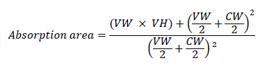
where: VW = villus width, VH = villus height, and CW = crypt width.
Determination of caecal content SCFA concentrations
To determine the SCFA concentrations, the caecal contents of the birds used for intestinal mucosal morphometric analysis were collected. The caecal content samples were diluted in sodium hydroxide, homogenised, and centrifuged at 3000 rpm for 5 minutes. A 1 mL aliquot of the supernatant was collected in an Eppendorf microtube and 0.2 mL of formic acid P.A. was added prior to storage in a freezer at -18 °C until analysis. The SCFA concentration was determined using a gas chromatograph equipped with a column of 80/120 CarbopackTM B-DA*/4% Carbowaxâ 20M (Scheppach et al., 1987).
Serum biochemistry analysis
For the analysis of the serum concentrations of alkaline phosphatase (ALP), gamma-glutamyl transferase (GGT), aspartate aminotransferase (AST), urea, uric acid, and glucose, 5 mL blood samples were collected at 22 days of age from the wing veins of 12 chickens per experimental group (2 birds/replicate; n = 12) using hypodermic needles (25 χ 7). These blood samples were stored in test tubes and subsequently centrifuged at 4500 rpm for 15 minutes to obtain serum. The samples were then frozen at -18 °C until analysis. Kits were acquired from Laboratorio Labtest (catalogue numbers, 2023/07: uric acid liquiform - reference 140, urea - reference 27, gamma-glutamyl transferase liquiform - reference 105, aspartate aminotransferase liquiform - reference 1009, alkaline phosphatase liquiform - reference 1011, glucose liquiform - reference 1091) and applied using an automatic biochemical analyser (model BS-120, from Mindray).
Statistical analysis
The data were analysed as a completely randomised design using the general linear model (GLM) procedure in the SAS statistical program (Statistical Analysis System, version 9.4), with statistical differences being determined using analysis of variance (ANOVA). Data normality was checked using the Shapiro-Wilk test. The model included the ESB supplementation, the arginine supplementation, the enteric challenge, and their interactions as fixed effects, and the effects of the ESB and arginine supplementation were considered throughout the trial period. For the evaluation of the interaction data (diet χ challenge), the data were subjected to Tukey's test using the PROC SORT procedure of the SAS statistical program. Data are presented as least square means ± standard errors of the means, and Tukey's honest significant difference test was used to identify significant differences between treatment means. Significance was declared at a 5% probability level.
Results and discussion
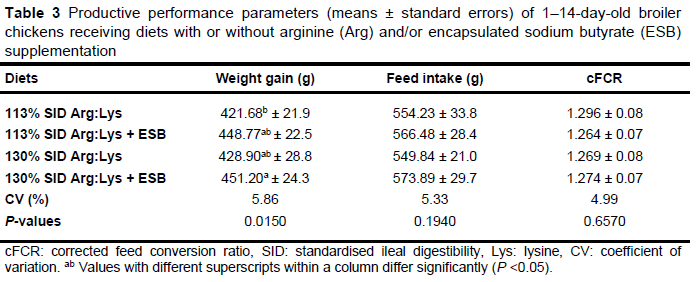
During the first 14 days of the trial, a period during which the birds were not submitted to the enteric challenge, it was observed that the addition of ESB to the diet, along with arginine supplementation, increased the weight gain of the birds (P <0.05) (Table 3). Supplementation with L-arginine alone or with ESB alone resulted in intermediate values.
In the encapsulated (protected) state, butyrate is released more in the lower portion of the gastrointestinal tract (Bedford & Gong, 2018), thereby influencing intestinal quality. In addition, the butyrate molecule has a bactericidal, bacteriostatic, and modulatory action on the intestinal microbiota, and therefore has positive effects on the animal (Silva et al., 2020).
The effects of arginine supplementation on growth in chickens may be related to its role as a potent secretagogue for insulin and growth hormone - mainly through the actions of its metabolites (such as nitric oxide or polyamines) - as well as through its effect of increasing immunoglobulin A production (Tsugawa et al., 2019; Castro et al., 2020). Some studies have shown that bird performance increases with the addition of a small amount of arginine to maize and soybean meal-based diets (Fernandes et al., 2009; Jahanian, 2009; Youssef et al., 2016), and in this study, an increase in the ratio from 113% to 130% with dietary L-arginine supplementation (0.22% inclusion) increased the body weights of the birds. These results were similar to those of Youssef et al. (2016), who reported that chickens that received a diet supplemented with 2% or 4% arginine, above their NRC (1994) requirements, had significantly higher body weights than control birds during the initial growth period. The growth-regulating properties of arginine involve its function as a primary component of body proteins and creatine, as a precursor of connective tissue-forming proline and hydroxyproline (Khajali & Wideman, 2010), and as a precursor of growth-promoting polyamines, by encouraging cell division, protein synthesis, and tissue growth (Pegg & Mccann, 1982).
Furthermore, the performance improvement associated with the use of ESB can be explained by this product's beneficial effects of promoting the development of intestinal epithelial cells and modulating the growth of intestinal symbiotic bacteria (Xue et al., 2024). Studies have already demonstrated the positive effects of dietary ESB on broiler growth performance, immunity, and intestinal microflora (Chamba et al., 2014; Sikandar et al., 2017), as well as its ability to optimise the use of dietary nutrients by increasing villus length (Chamba et al., 2014). Moreover, the microencapsulated form of sodium butyrate has been reported to be much more effective in exerting its beneficial effects on villi and intestinal bacteria (Ahsan et al., 2016).
In pigs (Manzanilla et al., 2006) and in chickens (Jerzsele et al., 2012), ESB supplementation has been found to promote microbial diversity and induce competitive exclusion between beneficial and pathogenic bacteria in the gastrointestinal tract. Previous studies on broilers have reported decreases in the counts of specific pathogenic bacteria, such as E. coli, Salmonella enteritis, and Campylobacter jejuni in the caecum, while other butyrate-based products have shown the potential to mitigate the impact of pathogenic bacteria (Namkung et al., 2011; Liu et al., 2019).
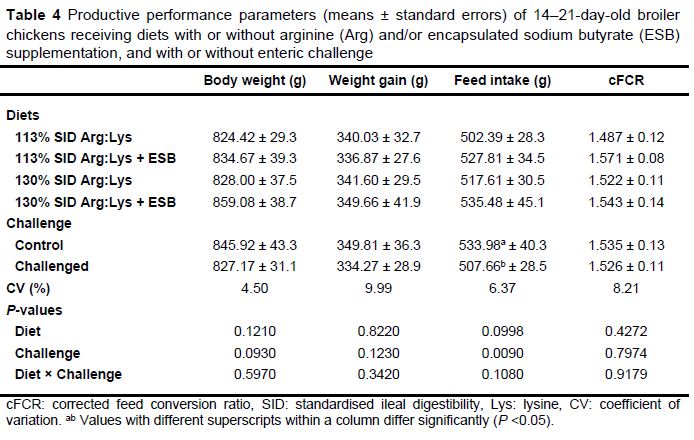
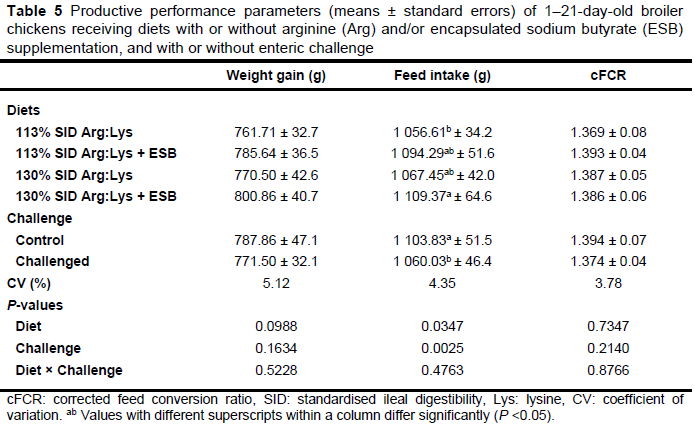
In the first week after the inoculation of the challenged birds (days 14 to 21), and in the period from 1 to 21 days of age, the challenged birds had lower (P <0.05) feed intakes (Tables 4 and 5). Birds that received diets supplemented with only arginine, only ESB, or a combination of both also had higher (P <0.05) feed intakes from 1 to 21 days of age (Table 5). Similar results at this age were found in other studies (Antongiovanni et al., 2007; Mahdavi & Torki, 2009).
A health challenge that induces an immune response usually causes a reduction in feed consumption. When stimulated by pathogens, the lamina propria antigen-presenting cells produce several cytokines, including tumour necrosis factor, interleukin 1, and interleukin 6, which stimulate and regulate the action of the macrophage itself, in addition to stimulating more cells to participate in the immune response (Sharma, 1998). These cytokines are proinflammatory and reduce the feed intake of immune-stimulated animals; they are also associated with the effects of dysbiosis and injury that microorganisms cause in the intestinal mucosa of animals. These effects lead to dehydration and poor use of dietary nutrients.
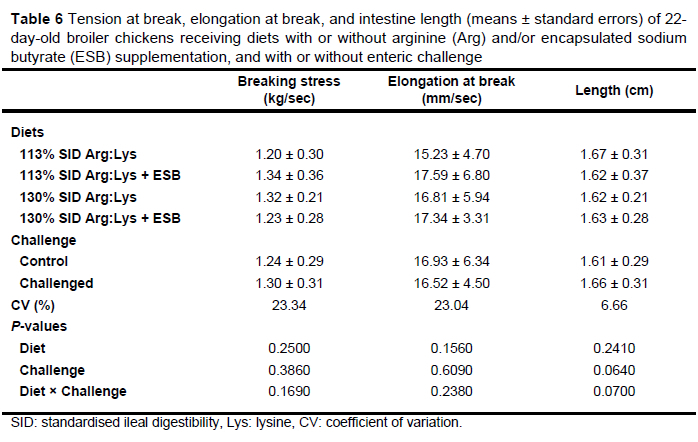
The mechanical properties (breakage stress and elongation at breakage) and gut lengths of the broilers at 22 days of age are shown in Table 6. Regarding the results for the length of the small intestine, there was no effect (P >0.05) of either the diet or the enteric challenge. According to Fernandes et al. (2014), when there is no increased requirement for arginine, both for protein synthesis and precursor synthesis, no beneficial effect of arginine on intestinal development is expected.
Chamba et al. (2014) reported increased jejunum and ileum lengths as a result of ESB supplementation. These authors observed that when infused into the colon, butyrate exerted a trophic effect on ileal and jejunal epithelial cells. Butyrate, in addition to providing energy to epithelial cells, markedly increases epithelial cell proliferation and differentiation, improving the colonic barrier function, as reported by Guilloteau et al. (2010). In the small intestine, butyrate enhances proliferation, differentiation, and maturation, reducing the apoptosis of normal enterocytes through its influence on gene expression and protein synthesis (Salvi & Cowles, 2021).
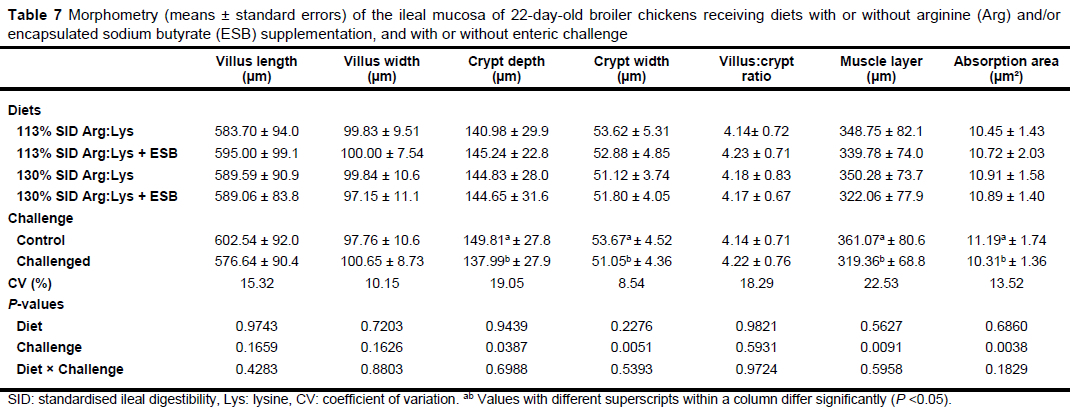
The intestinal mucosal morphometric results for the broilers' ileums at 22 days of age are reported in Table 7. There was a significant effect of the enteric challenge, with birds that were exposed to the challenge having shallower and narrower crypts, thinner muscle layers, and smaller absorption areas than non-challenged birds, indicating a lower capacity for the proliferation of new cells by the intestinal crypts. These morphological changes are indicative of the regeneration process and the attempt to return to intestinal homeostasis. The cell renewal of the intestinal mucosa is a continuous process that occurs through the balance between the processes of cell proliferation and differentiation and the loss of cells by desquamation (Uni, 1998), a mechanism known as cell turnover.
Under conditions of enteric challenge, the maturation of epithelial cells is necessary to maintain the numerous functional activities of the intestinal mucosa. The appearance of immature enterocytes with low absorptive capacity, as well reduced enzyme activity in the brush border, can compromise nutrient absorption (Reicher et al., 2020; Sadr et al., 2025).
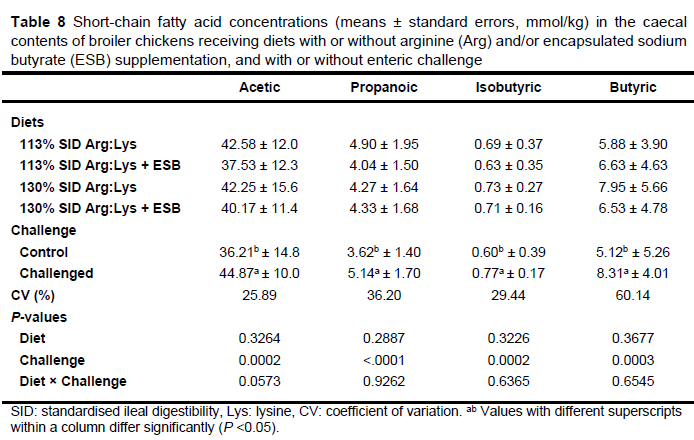
The SCFA concentrations in the broilers' caecal contents at 22 days of age are reported in Table 8. Enteric challenge had a significant effect on the SCFA concentrations, regardless of the diet provided. Challenged birds showed increased concentrations of acetic, propanoic, isobutyric, and butyric acids, compared to birds that were not challenged.
Short-chain fatty acids are microbial metabolites produced through the fermentation of carbohydrates and proteins in the intestines. One of the main roles of these metabolites is to reduce the intestinal pH and consequently inhibit the growth and colonisation of pathogenic bacteria. Other functions of these metabolites include enterocyte proliferation and differentiation, and mucin production (Suiryanrayna & Ramana, 2015). According to Stanley et al. (2014) and Oakley et al. (2014), the intestinal microbiota of broilers consists of about 1000 bacterial species. The ileum is the final portion of the small intestine, and contains bacteria that produce lactic acid, such as Lactobacillus, Clostridium, and Enterobacteria (Zheng et al., 2018). The anaerobic environment of the caeca characterises them as fermentation chambers for the production of SCFA (propionate, butyrate, and acetate) and vitamins (Louis et al., 2014).
Short-chain fatty acids are capable of combating fungal toxicity, in addition to functioning as a bacteriostatic mechanism and decreasing the intestinal pH. As food remains longer in these organs, the SCFAs promote the absorption of amino acids and the synthesis of vitamins (Singh & Kim, 2021). Lactobacillus spp. act by stimulating the secretion of immunoglobulins, lactate, and acetate, which contribute to the multiplication of Bacillus spp., Bacteroides spp., and Bifidobacterium spp. These microorganisms produce volatile fatty acids, decrease intestinal pH levels, and settle in the mucosa of the organ and act against the toxicity caused by E. coli, Campylobacter spp., and Salmonella spp. (Sulzner et al., 2014). In this study, the intestinal microbiome was disturbed by the enteric challenge, and the increase in SCFA concentrations may have formed part of an attempt to reestablish the balance of the microbiome.
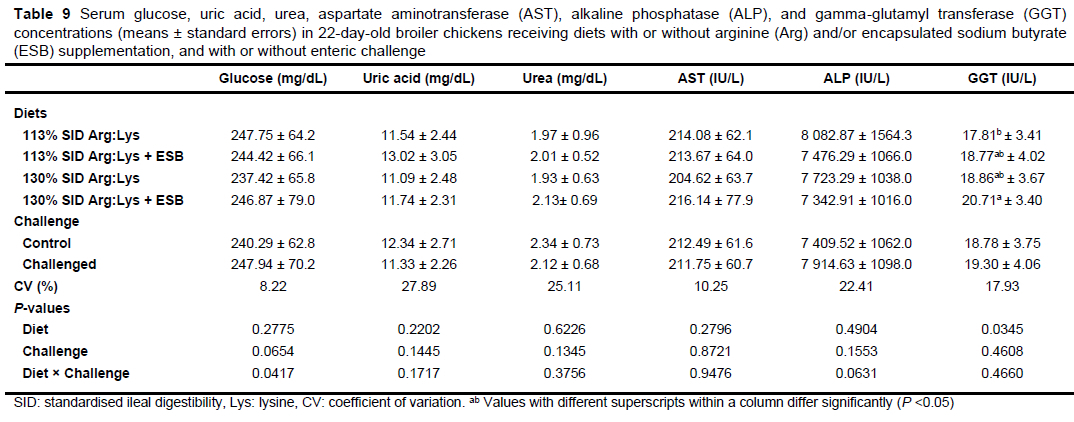
Data regarding serum biochemistry are shown in Table 9.
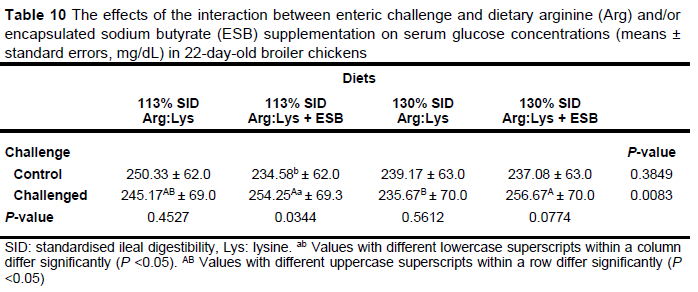
There was a significant effect of diet on the GGT concentration. Birds that received only ESB supplementation or ESB associated with arginine had a higher serum GGT level. There was also interaction (P <0.05) between the diet and the enteric challenge for the serum glucose concentration (Table 9).
The enzymes AST, ALP, and GGT are related to damage to specific organs, mainly the heart and liver (Mohammadzadeh et al., 2007). The levels obtained in this study were within the physiological reference ranges for glucose (130-260 mg/dL), uric acid (2-10 mg/dL), urea (0.2-5.0 mg/dL), AST (170-531 lU/L), ALP (14 043 ± 3 590 lU/L), and GGT (13-24 lU/L) (Borsa et al., 2006; Zálesáková et al., 2025). The differences detected between the diets in relation to the GGT level are probably due to physiological changes, since GGT is a sensitive and nonspecific indicator of liver disorders when found increased in the absence of other changes (Tuncer et al., 2007).
By more closely examining the diet χ challenge interaction for serum glucose levels (Table 10), it can be seen that the birds that were exposed to the enteric challenge and fed the diet supplemented with both arginine and ESB had higher glucose levels than the birds that were challenged and only supplemented with arginine. Furthermore, the birds exposed to the enteric challenge that received only ESB supplementation also had higher glucose concentrations than those not challenged.
Studies have demonstrated that certain degrees of dysbiosis (imbalances of the intestinal microbiota) are associated with increased blood glucose, just as it can be associated with inflammation of the enteral mucosa and oxidative stress (Christofoli et al., 2020; Xu et al., 2023). Zupancic et al. (2012) similarly reported that intestinal dysbiosis led to increased serum glucose levels. These studies corroborate the results found in this study, during which broiler chickens were exposed to an enteric challenge that may have caused intestinal dysbiosis.
Conclusion
Considering the increasing demand for economic efficiency and improved animal welfare in poultry production, the results of this study demonstrate that dietary supplementation with arginine combined with ESB represents a viable alternative to antibiotic growth promoters. This strategy effectively supported intestinal health and morpho-functional integrity, contributing to improved nutrient utilisation and productive performance under infectious and non-infectious challenge conditions. Given the short production cycle of broiler chickens and the need for rapid nutritional interventions, the combination of arginine and ESB emerges as a practical tool to mitigate enteric challenges under commercial rearing conditions, although further studies are warranted to better elucidate their interactions within the complex intestinal environment.
Authors' contributions
This article is based on research carried out during a master's degree entitled Effect of adding encapsulated sodium butyrate and arginine to diets for broiler chickens subjected to an enteric and thermal challenge model (available at: <https://tede.unioeste.br/bitstream/tede/5831/5/Regina_Buzim_2021.pdf>).
R.B., J.I.M., J.B., L.G., L.P.S.M., P.V.B., and P.L.A.Y. collected the data for this study, conducted the statistical analyses, collaborated in the interpretation of the results, and wrote the initial draft of this manuscript. R.B. and J.I.M. developed the original hypotheses, designed the experiments, collaborated in interpreting the results, and finalised the manuscript. All authors have read and approved the finalised manuscript.
Conflict of interest declaration
The authors have no conflicts of interest to declare.
References
-
Ahsan, U., Cengiz, Ö., Raza, I., Kuter, E., Chacher, M.F.A., & Iqbal, Z., 2016. Sodium butyrate in chicken nutrition: The dynamics of performance, gut microbiota, gut morphology, and immunity. World's Poultry Science Journal, 72(2):265-278. DOI: https://doi.org/10.1017/S0043933916000210
» https://doi.org/10.1017/S0043933916000210 -
Antongiovanni, M., Buccioni, A., Petacchi, F., Leeson, S., Minieri, S., Martini, A., & Cecchi, R., 2007. Butyric acid glycerides in the diet of broiler chickens: Effects on gut histology and carcass composition. Italian Journal of Animal Science, 6(1):19-25. DOI: https://doi.org/10.4081/ijas.2007.19
» https://doi.org/10.4081/ijas.2007.19 - AOAC, 2000. Official Methods of Analysis, 17th edition. AOAC International, Gaithersburg, MD, USA.
-
Bedford, A. & Gong, J., 2018. Implications of butyrate and its derivatives for gut health and animal production. Animal Nutrition, 4(2):151-159. DOI: https://doi.org/10.1016/j.aninu.2017.08.010
» https://doi.org/10.1016/j.aninu.2017.08.010 - Borsa, A., Kohayagawa, A., Boretti, L.P., Saito, M.E., & Kuibida, K., 2006. Serum levels of hepatic enzyme function in clinically healthy broiler chickens. Arquivo Brasileiro de Medicina Veterinária e Zootecnia, 58(4):675-677.
-
Castro, F.L.S., Teng, P.Y., Yadav, S., Gould, R.L., Craig, S., Pazdro, R., & Kim, W.K., 2020. The effects of L- Arginine supplementation on growth performance and intestinal health of broiler chickens challenged with Eimeria spp. Poultry Science, 99(11):5844-5857. DOI: https://doi.org/10.1016/j.psj.2020.08.017
» https://doi.org/10.1016/j.psj.2020.08.017 -
Chamba, F., Puyalto, M., Ortiz, A., Torrealba, H., Mallo, J.J., & Riboty, R., 2014. Effect of partially protected sodium butyrate on performance, digestive organs, intestinal villi and E. coli development in broilers chickens. International Journal of Poultry Science, 13(7):390-396. DOI: https://doi.org/10.3923/ijps.2014.390.396
» https://doi.org/10.3923/ijps.2014.390.396 - Chapman, H.D. & Pratt, F.P., 1982. Determination of minerals by titration method. In: Methods of Analysis for Soils, Plants and Water, 2nd edition. Agriculture Division, California University, Oakland, CA. pp. 169-170.
-
Corzo, A.C., Lee J.B., Vargas, J.I.A., Silva M.C., & Pacheco, W.J., 2021. Determination of the optimal digestible arginine to lysine ratio in Ross 708 male broilers. Journal of Applied Poultry Research, 30(1):100136. DOI: https://doi.org/10.1016/j.japr.2020.100136
» https://doi.org/10.1016/j.japr.2020.100136 -
Christofoli, M., Souza, C.S., Costa, T.F., Alexandrino, S.L.S.A., Faria, P.P., Minafra-Rezende, C.S., Santos, F.R., Minafra, C.S., & Pereira, P.S., 2020. Beneficial and harmful intestinal microbiota in poultry farming: Review. Research Society and Development, 9(7):e4397366. DOI: https://doi.org/10.33448/rsd-v9i7.3667
» https://doi.org/10.33448/rsd-v9i7.3667 -
Eknayake, S., Jansz E.R., & Nair, B.M., 1999. Proximate composition, mineral and amino acid content of mature Canavalia gladiata seeds. Food Chemistry, 66:115-119. DOI: https://doi.org/10.1016/S0308-8146(99)00041-2
» https://doi.org/10.1016/S0308-8146(99)00041-2 -
Elnesr, S.S., Alagawany, M., Elwan, H.A.M., Fathi, M.A., & Farag, M.R., 2020. Effect of sodium butyrate on intestinal health of poultry - a review. Annals of Animal Science, 20(1):29-41. DOI: https://doi.org/10.2478/aoas-2019-0077
» https://doi.org/10.2478/aoas-2019-0077 -
Fancher, C.A., Zhang, L., Kiess, A.S., Adhikari, P.A., Dinh, T.T.N., & Sukumaran, A.T., 2020. Avian pathogenic Escherichia coli and Clostridium perfringens: Challenges in no antibiotics ever broiler production and potential solutions. Microorganisms, 8(10):1533. DOI: https://doi.org/10.3390/microorganisms8101533
» https://doi.org/10.3390/microorganisms8101533 -
Fernandes, J.I.M., Murakami, A.E., De Souza, L.M.G., Ospina-Rojas, I.C., & Rossi, R.M., 2014. Effect of arginine supplementation of broiler breeder hens on progeny performance. Canadian Journal of Animal Science, 94:313-321. DOI: https://doi.org/10.4141/cjas2013-067
» https://doi.org/10.4141/cjas2013-067 -
Fernandes, J.I.M., Murakami, A.E., Martins, E.N., Sakamoto, M.I., & Garcia, E.R.M., 2009. Effect of arginine on the development of the pectoralis muscle and the diameter and the protein:deoxyribonucleic acid rate, of its skeletal myofibers in broilers. Poultry Science, 88:1399-1406. DOI: https://doi.org/10.3382/ps.2008-00214
» https://doi.org/10.3382/ps.2008-00214 -
Gadde, W.H., Kim, S.T., & Lillehoj, H.S., 2017. Alternatives to antibiotics for maximizing growth performance and feed efficiency in poultry: a review. Animal Health Research Reviews, 18(1):26-45. DOI: https://doi.org/10.1017/S1466252316000207
» https://doi.org/10.1017/S1466252316000207 -
Giacomini, P.V., Braga, F.S.C., Araujo, R.G.A.C., Cruz-Polycarpo, V.C., & Polycarpo, M., 2022. Meta-analysis of butyric acid: A performance-enhancing additive to replace antibiotics for broiler chickens. Revista Brasileira de Ciência Avícola, 24(3):e43973667. DOI: https://doi.org/10.1590/1806-9061-2021-1463
» https://doi.org/10.1590/1806-9061-2021-1463 -
Guilloteau, P., Martin, L., Eeckhaut, V., Ducatelle, R., Zabielski, R., & Immerseel, F.V., 2010. From the gut to the peripheral tissues: The multiple effects of butyrate. Nutrition Research Reviews, 23(2):366-384. DOI: https://doi.org/10.1017/S0954422410000247
» https://doi.org/10.1017/S0954422410000247 -
Jahanian, R., 2009. Immunological responses as affected by dietary protein and arginine concentrations in starting broiler chicks. Poultry Science, 88(9):1818-1824. DOI: https://doi.org/10.3382/ps.2008-00386
» https://doi.org/10.3382/ps.2008-00386 -
Jerzsele, A., Szeker, K., Csizinszky, R., Gere, E., Jakab, C., Mallo, J.J., & Galfi, P., 2012. Efficacy of protected sodium butyrate, a protected blend of essential oils, their combination, and Bacillus amyloliquefaciens spore suspension against artificially induced necrotic enteritis in broilers. Poultry Science, 91(4):837-843. DOI: https://doi.org/10.3382/ps.2011-01853
» https://doi.org/10.3382/ps.2011-01853 -
Khajali, F. & Wideman, R.F., 2010. Dietary arginine: metabolic, environmental, immunological and physiological interrelationships. World's Poultry Science Journal, 66(4):751-765. DOI: https://doi.org/10.1017/S0043933910000711
» https://doi.org/10.1017/S0043933910000711 -
Kisielinski, K., Willis, S., Prescher, A., Klosterhalfen, B., & Schumpelick, V., 2002. A simple new method to calculate small intestine absorptive surface in the rat. Clinical and Experimental Medicine, 2(3):131-135. DOI: https://doi.org/10.1007/s102380200018
» https://doi.org/10.1007/s102380200018 -
Leonídio, A.R.A., Minafra, C., Andrade, M.A., Nascente, E.P., Nascimento, G.M., Santos, J.B., Stringhini, J.H., & Almeida, A.M.S., 2024. Effects of encapsulated butyric acid on general performance, intestinal health, and colonization in organs of poultry infected with Salmonella enteritidis. Revista Brasileira de Zootecnia, 53(1):e20220150. DOI: https://doi.org/10.37496/rbz5320220150
» https://doi.org/10.37496/rbz5320220150 -
Ling, Z.N., Jiang, Y.F., Ru, J.N., Lu, J.H., Ding, B., & Wu, J., 2023. Amino acid metabolism in health and disease. Signal Transduction and Targeted Therapy, 8(1):345. DOI: https://doi.org/10.1038/s41392-023-01569-3
» https://doi.org/10.1038/s41392-023-01569-3 -
Liu, J.D., Lumpkins, B., Mathis, G., Williams, S.M., & Fowler, J., 2019. Evaluation of encapsulated sodium butyrate with varying releasing times on growth performance and necrotic enteritis mitigation in broilers. Poultry Science, 98(8):3240-3245. DOI: https://doi.org/10.3382/ps/pez049
» https://doi.org/10.3382/ps/pez049 -
Louis, P., Hold, G.L., & Flint, H.J., 2014. The gut microbiota, bacterial metabolites and colorectal cancer. Nature Reviews Microbiology, 12(10):661-672. DOI: https://doi.org/10.1038/nrmicro3344
» https://doi.org/10.1038/nrmicro3344 - Mahdavi, R. & Torki, M., 2009. Study on usage period of dietary protected butyric acid on performance, carcass characteristics, serum metabolite levels and humoral immune response of broiler chickens. Journal of Animal and Veterinary Advances, 09(08):1702-1709.
-
Manzanilla, E.G., Nofrarias, M., Anguita, M., Castillo, M., Perez, J.F., Martin-Orue, S.M., Kamel, C., & Gasa, J., 2006. Effects of butyrate, avilamycin, and a plant extract combination on the intestinal equilibrium of early-weaned pigs. The Journal of Animal Science, 84(10):2743-2751. DOI: https://doi.org/10.2527/jas.2005-509
» https://doi.org/10.2527/jas.2005-509 -
Martí, I.L.A.A. & Reith, W., 2021. Arginine-dependent immune responses. Cellular and Molecular Life Sciences, 78(13):5303-5324. DOI: https://doi.org/10.1007/s00018-021-03828-4
» https://doi.org/10.1007/s00018-021-03828-4 -
Mazur-Kusnirek, M., Lipinski, K., Antoszkiewicz, Z., & Matusevicius, P., 2024. Different forms of butyric acid in poultry nutrition - a review. Journal of Animal and Feed Sciences, 33(3):270-280. DOI: https://doi.org/10.22358/jafs/186022/2024
» https://doi.org/10.22358/jafs/186022/2024 -
Mohammadzadeh, S., Shariatpanahi, M., Hamedi, M., Ahmadkhaniha, R., Samadi, N., & Ostad, S.N., 2007. Chemical composition, oral toxicity and antimicrobial activity of Iranian propolis. Food Chemistry, 103(4): 1097-1103. DOI: https://doi.org/10.1016/j.foodchem.2006.10.006
» https://doi.org/10.1016/j.foodchem.2006.10.006 -
Namkung, H., Yu, H., Gong, J., & Leeson, S., 2011. Antimicrobial activity of butyrate glycerides toward Salmonella typhimurium and Clostridium perfringens. Poultry Science, 90(10):2217-2222. DOI: https://doi.org/10.3382/ps.2011-01498
» https://doi.org/10.3382/ps.2011-01498 -
Oakley, B.B., Lillehoj, H.S., Kogut, M.H., Kin, W.K., Maurer, J.J., Pedroso, A., Lee, M.D., Collet, S.T., Johnson, T.J., & Cox, N.A., 2014. The chicken gastrointestinal microbiome. FEMS Microbiology Letters, 360(2):100-112. DOI: https://doi.org/10.1111/1574-6968.12608
» https://doi.org/10.1111/1574-6968.12608 -
Pegg, A.E. & Mccann, P.P., 1982. Polyamine metabolism and function. The American Journal of Physiology, 243(5):212-221. DOI: https://doi.org/10.1152/ajpcell.1982.243.5.C212
» https://doi.org/10.1152/ajpcell.1982.243.5.C212 -
Riaz, R. & Nouman H.M., 2025. A meta-analysis on the effects of postbiotics on growth performance and gut morphology in broiler chickens. Probiotics and Antimicrobial Proteins. DOI: https://doi.org/10.1007/s12602-025-10816-8
» https://doi.org/10.1007/s12602-025-10816-8 -
Reicher, N., Melkman-Zehavi, T., Dayan, J., & Uni, Z., 2020. It's all about timing: early feeding promotes intestinal maturation by shifting the ratios of specialized epithelial cells in chicks. Frontiers Physiology, 11:596457. DOI: https://doi.org/10.3389/fphys.2020.596457
» https://doi.org/10.3389/fphys.2020.596457 - Rostagno, H.S., Albino, L.F.T., & Donzele, J.L., 2017. Tabelas Brasileiras Para Aves e Suínos: Composição de Alimentos e Exigências Nutricionais, 4th edition. Universidade Federal de Viçosa, Viçosa, MG.
-
Ruan D., Fouad, A.M., Fan, Q.L., Huo, X.H., Kuang, Z.X., Wang, H., Guo, C.Y., Deng, Y.F., Zhang, C., Zhang J.H., & Jiang S.Q., 2020. Dietary L-arginine supplementation enhances growth performance, intestinal antioxidative capacity, immunity and modulates gut microbiota in yellow-feathered chickens. Poultry Science, 99(12):6935-6945. DOI: https://doi.org/10.1016/j.psj.2020.09.042
» https://doi.org/10.1016/j.psj.2020.09.042 -
Sadr, V.S., Quinteros, J.A., & Liu, S.Y., 2025. Nutrient transporters in broiler chickens: intestinal gene expression profiles, functional roles, and influencing factors. Journal Animal Science and Biotechnology, 16:165. DOI: https://doi.org/10.1186/s40104-025-01302-w
» https://doi.org/10.1186/s40104-025-01302-w - Sakomura, N.K. & Rostagno, H.S., 2016. Métodos de Pesquisa em Nutrição de Monogástricos, 2nd edition. Jaboticabal, FUNEP. pp. 262.
-
Salvi, P.S. & Cowles, R.A., 2021. Butyrate and the intestinal epithelium: Modulation of proliferation and inflammation in homeostasis and disease. Cells, 10(7):1775. DOI: https://doi.org/10.3390/cells10071775
» https://doi.org/10.3390/cells10071775 - Statistical Analysis System, 2020. Software and services: system for Windows, version 9.4 software. Cary, USA.
-
Scheppach, W.M., Fabian, C.E., & Kasper, H.W., 1987. Fecal short-chain fatty acid (SCFA) analysis by capillary gas-liquid chromatography. American Journal of Clinical Nutrition, 46(4):641-646. DOI: https://doi.org/10.1093/ajcn/46.4.641
» https://doi.org/10.1093/ajcn/46.4.641 -
Schokker, D., Jansman, A.J.M., & Veninga, G., 2017. Perturbation of microbiota in one-day old broiler chickens with antibiotic for 24 hours negatively affects intestinal immune development. BMC Genomics, 18(1):241. DOI: https://doi.org/10.1186/s12864-017-3625-6
» https://doi.org/10.1186/s12864-017-3625-6 - Sharma, J.M., 1998. Avian immunology. In: Handbook of Vertebrate Immunology. Eds: Pastoret, P.P., Griebel, P., Bazin, H., & Govaats, A., Academic Press, San Diego, CA. pp. 73-136.
-
Sikandar, A., Zaneb, H., & Younus, M., 2017. Effect of sodium butyrate on performance, immune status, microarchitecture of small intestinal mucosa and lymphoid organs in broiler chickens. Asian-Australasian Journal of Animal Sciences, 30(5):690-699. DOI: https://doi.org/10.5713/ajas.16.0824
» https://doi.org/10.5713/ajas.16.0824 -
Silva, C.A.D., Bridi, A.M., Dias, C.P., Callegari, M.A., Nunes, E.C., Pierozan, C.R., Foppa, L., Jacob, D.V., Voorsluys, A.L., Ulbrich, A.L., & Goossens, T., 2020. Effects of encapsulated sodium butyrate and phytogenic on growth performance, carcass traits and health of growing-finishing pigs. Ciência Rural, 50(11 ):e20190718. DOI: https://doi.org/10.1590/0103-8478cr20190718
» https://doi.org/10.1590/0103-8478cr20190718 -
Singh, A.K. & Kim, W.K., 2021. Effects of dietary fiber on nutrients utilization and gut health of poultry: A review of challenges and opportunities. Animals (Basel), 11(1):181. DOI: https://doi.org/10.3390/ani11010181
» https://doi.org/10.3390/ani11010181 -
Smith, D.J., Barri, A., Herges, G., Hahn, J., Yersin, A.G., & Jourdan A., 2012. In vitro dissolution and in vivo absorption of calcium [1-14C] butyrate in free or protected forms. Journal of Agricultural and Food Chemistry, 60(12):3151-3157. DOI: https://doi.org/10.1021/jf3001058
» https://doi.org/10.1021/jf3001058 -
Song, B., Li, H., Wu, Y., Zhen, W., Wang, Z., Xia, Z., & Guo, Y., 2017. Effect of microencapsulated sodium butyrate dietary supplementation on growth performance and intestinal barrier function of broiler chickens infected with necrotic enteritis. Animal Feed Science and Technology, 232(1):6-15. DOI: https://doi.org/10.1016/j.anifeedsci.2017.07.009
» https://doi.org/10.1016/j.anifeedsci.2017.07.009 -
Stanley, D., Hughes, R.J., & Moore, R.J., 2014. Microbiota of the chicken gastrointestinal tract: influence on health, productivity and disease. Applied Microbiology and Biotechnology, 98(10):4301-4310. DOI: https://doi.org/10.1007/s00253-014-5646-2
» https://doi.org/10.1007/s00253-014-5646-2 -
Suiryanrayna, M.V.A.N. & Ramana, J.V., 2015. A review of the effects of dietary organic acids fed to swine. Journal of Animal Science and Biotechnology, 6:45. DOI: https://doi.org/10.1186/s40104-015-0042-z
» https://doi.org/10.1186/s40104-015-0042-z -
Sulzner, K., Kelly, T., Smith, W., & Johnson, C.K., 2014. Enteric pathogens and antimicrobial resistance in turkey vultures (Cathartes aura) feeding at the wildlife-livestock interface. Journal of Zoo and Wildlife Medicine, 45(4):931-934. DOI: https://doi.org/10.1638/2012-0217.1
» https://doi.org/10.1638/2012-0217.1 -
Tsugawa, Y., Handa, H., & Imai, T., 2019. Arginine induces IGF-1 secretion from the endoplasmic reticulum. Biochemical and Biophysical Research Communications, 514(4):1128-1132. DOI: https://doi.org/10.1016/j.bbrc.2019.05.044
» https://doi.org/10.1016/j.bbrc.2019.05.044 -
Tuncer, M.C., Ozturk, H., Buyukbayram, H., & Ozturk, H., 2007. Interaction of L-argininemethyl ester and Sonic hedgehog in liver ischemia-reperfusion injury in the rats. World Journal of Gastroenterology, 13(28):3841-3846. DOI: https://doi.org/10.3748/wjg.v13.i28.3841
» https://doi.org/10.3748/wjg.v13.i28.3841 -
Uni, Z., Ganot, S., & Sklan, D., 1998. Posthatch development of mucosal function in the broiler small intestine: effect of delayed access to feed. Poultry Science, 77(1):75-82. DOI: https://doi.org/10.1093/ps/77.1.75
» https://doi.org/10.1093/ps/77.1.75 -
Xu, T.T., Chen, P., Zhang, C.D., Shaukat, A., Lin, L.X., Yue, K., Ding, W.L., Tong, X., Liu, K.L., He, Y.F., Xie, J.F., Liu, F., Zhang, C., Zhang, H.Y., & Huang, S.C., 2023. Gut microbiome dysregulation drives bone damage in broiler tibial dyschondroplasia by disrupting glucose homeostasis. NPJ Biofilms Microbiomes, 9(1):1. DOI: https://doi.org/10.1038/s41522-022-00360-6
» https://doi.org/10.1038/s41522-022-00360-6 -
Xue, L., Shidong, W., Muzi Z., & Ming L., 2024. Sodium butyrate improves the growth performance, intestinal immunity, and ammonia tolerance of yellow catfish Pelteobagrus fulvidraco by increasing the relative abundance of Candidatus_Arthromitus. Aquaculture, 580(2):740359. DOI: https://doi.org/10.1016/j.aquaculture.2023.740359
» https://doi.org/10.1016/j.aquaculture.2023.740359 -
Youssef, S.F., Badawy, M.I., & El-Halim, H.A.H., 2016. Effect of l-arginine supplementation on productive, reproductive performance, immune response and gene expression in two local chicken strains: 2-responses of offspring. Egyptian Poultry Science Journal, 36(4):825-839. DOI: https://doi.org/10.21608/epsj.2016.168811
» https://doi.org/10.21608/epsj.2016.168811 -
Zheng, H., Steele, M.I., & Leonard, S.P., 2018. Honey bees as models for gut microbiota research. Laboratory Animals, 47(11):317-325. DOI: https://doi.org/10.1038/s41684-018-0173-x
» https://doi.org/10.1038/s41684-018-0173-x -
Zálesáková D., Novotny J., Rihácek M., Horáková L., Mrkvicová E., St'astník O., & Pavlata L., 2025. The blood biochemical parameters intervals and dynamics in modern broiler chickens. Veterinary and Animal Science, 29:100465. DOI: https://doi.Org/10.1016/j.vas.2025.100465
» https://doi.Org/10.1016/j.vas.2025.100465 -
Zupancic, M.L., Cantarel, B.L., Liu, Z., Drabek, E.F., Ryan, K.A., & Cirimotich, S., 2012. Analysis of the gut microbiota in the old order Amish and its relation to the metabolic syndrome. Plos One, 7(8):43052. DOI: https://doi.org/10.1371/journal.pone.0043052
» https://doi.org/10.1371/journal.pone.0043052
Accepted 30 January 2026
Published 13 February 2026