Fermentative attributes of wilted vs. unwilted Digitaria eriantha silage treated with or without molasses at ensiling
Abstract
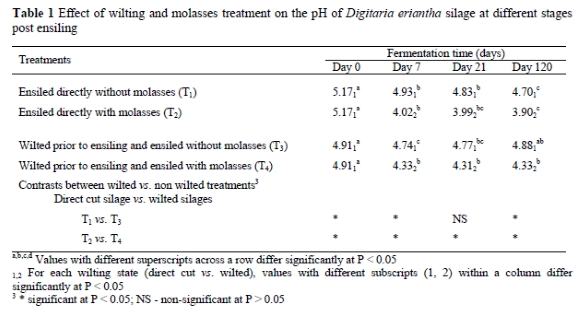
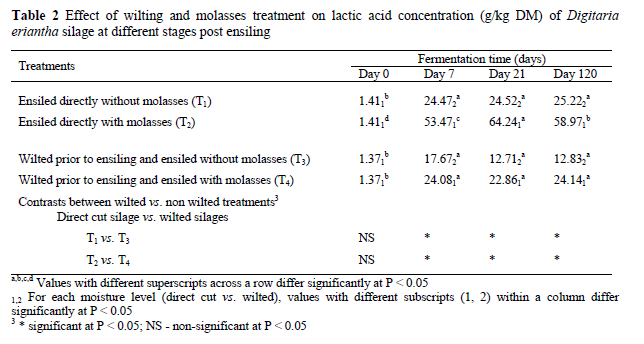
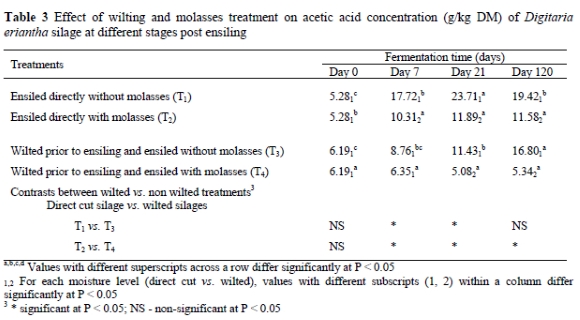
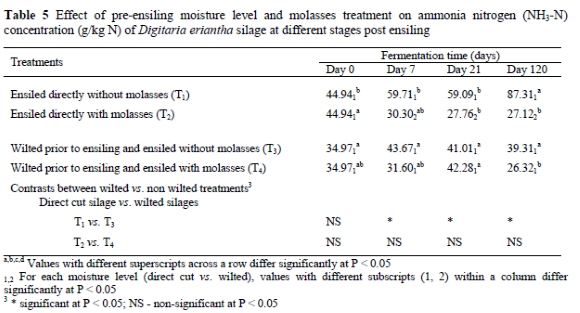
Silages made from directly cut or wilted Digitaria eriantha treated with or without molasses were evaluated to determine fermentative characteristics. The grass was harvested at the boot stage of growth and the material was ensiled in 1 kg mini-silos. Treatments were arranged in a factorial design of two moisture levels (directly cut or wilted) and two molasses addition (with or without molasses). Each treatment was ensiled in 12 separate bottles. The pH of molasses added silage declined faster than the pH of silage without molasses. The pH of unwilted silages continued to decline up to day 120 post ensiling compared to wilted treatments. Lactic acid concentration was higher for molasses added silage than those made without molasses at all ensiling times, and also higher for directly cut silage than those wilted prior to ensiling. In direct cut silages, acetic acid concentration was lower for molasses added silage than those made without molasses at all ensiling times. In both silages, with or without molasses, the acetic acid concentrations were significantly higher for unwilted silage than silage wilted prior to ensiling. The ammonia nitrogen (NH3-N) as percentage of total nitrogen (N) was higher in unwilted silage than prior wilted silage without molasses, while in the presence of molasses the effect of wilting on NH3-N as percentage of total N was not significant.
Silage; fermentation process; moisture level; Digitaria eriantha; Smutsfinger grass