Institutional Factors Affecting Smallholder Farmers' Decision to Adopt Climate Change Adaptation Strategies: Evidence from Raymond Mhlaba Local Municipality Eastern Cape, South Africa
Abstract
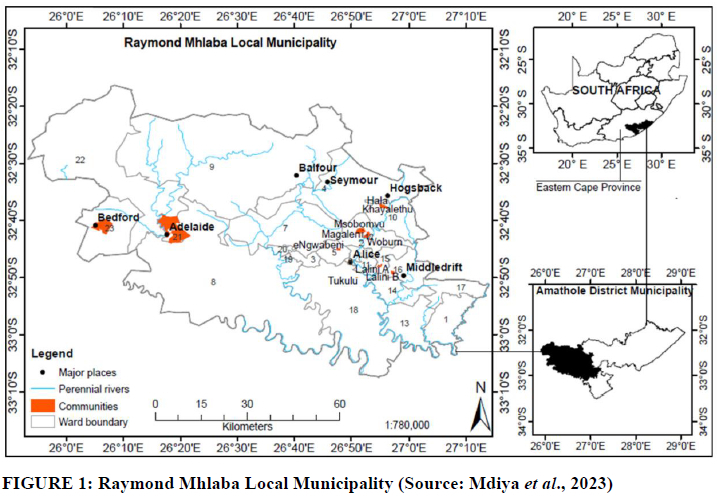
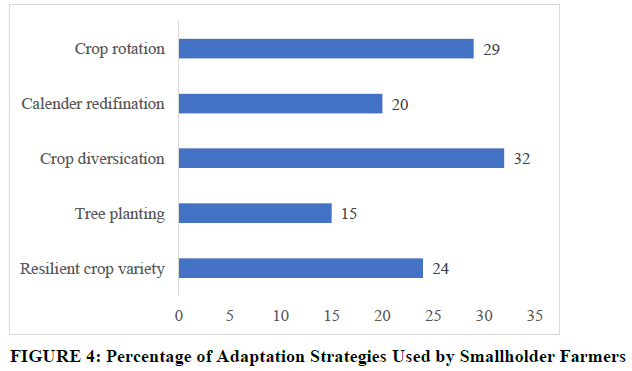
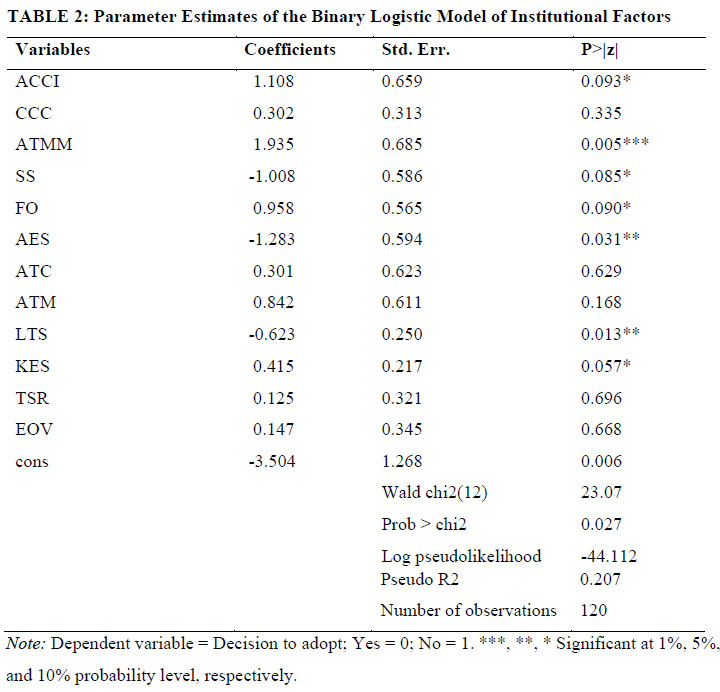
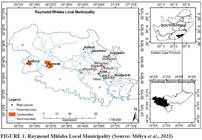
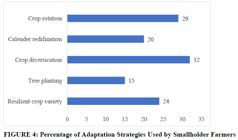
In recent years, adaptation to climate change has become a global focus; therefore, the present study was conducted in Raymond Mhlaba Local Municipality to understand the adaptation strategies employed by smallholder farmers to the adverse impact of climate change and to examine the extent to which institutional factors play a role in farmers' decisions to adapt to climate change. Using a multistage research design, data were collected from 120 smallholder farmers by administering a pre-tested questionnaire with both open- and closed-ended questions. The collected data were analysed using descriptive statistics and a binary logistic regression model. The results revealed that farmers employed crop diversification, crop rotation, calendar redefinition, resilient crop varieties, and tree planting as adaptation strategies in response to climate change. The binary logistic regression model results indicated that access to extension services, climate change information, and farmers' organisations influenced farmers' decisions to adopt climate change adaptation strategies. Policymakers should focus on enhancing rural institutional services and increasing climate change education to improve smallholder farmers' capacity in a changing climate.
Climate Change; Institutional Factors; Binary Logistics; Smallholder Farmers
 Thumbnail
 Thumbnail
 Thumbnail
 Thumbnail
 Thumbnail