Livestock Remedy Expenditure Patterns of Communal Farmers in South Africa: Implications for Animal Health Care Policies and Ethno-Veterinary Medicine
Abstract
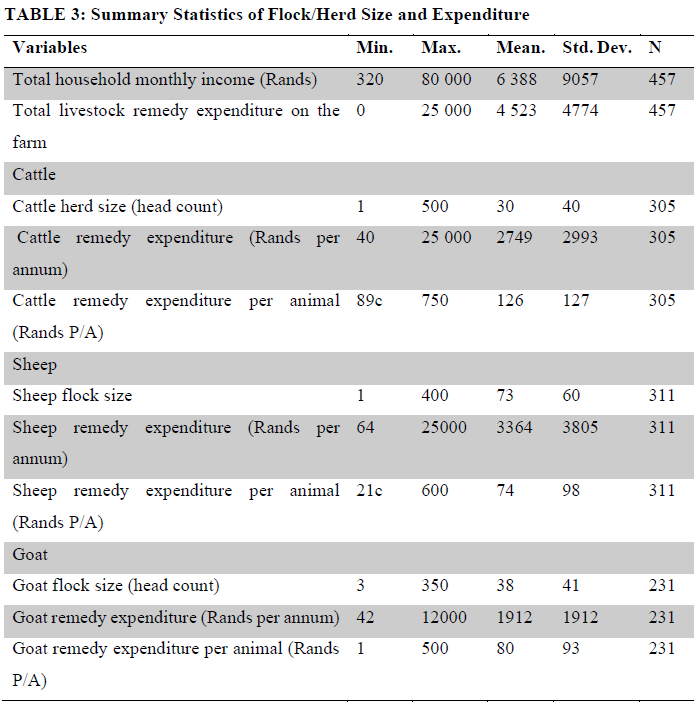
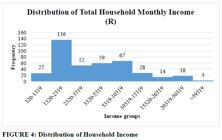
Understanding farming rural households' remedy expenditure patterns is a prerequisite for effective communal animal health care planning and policy design. This paper analyses the remedy expenditure patterns of communal farmers from a cross-sectional survey of 457 household heads in three provinces. The analysis is aimed at foregrounding animal healthcare policy designers and the potential contribution of Ethno-Veterinary Medicine (EVM) to rural economies. The survey data gathered randomly from a multi-stage sampling was processed and analysed descriptively using charts, mean, minimum, maximum and standard deviation. Results show that communal farmers spend an average of 70% of their average monthly income on livestock remedies annually. However, the expenditure differs across the three animal groups, with more average spending on sheep, cattle, and goats. These findings have an important implication for the profitability of livestock activities and their impact on the livelihoods of rural farming households in South Africa. This is significant, particularly because livestock is the largest agricultural sector in the country. Moreover, the fact that most communal farmers derive their income from state transfers underscores the importance of subsidised animal health care.
Communal Farmers; Remedy Cost; Ethno-Veterinary Medicine
 Thumbnail
 Thumbnail
 Thumbnail
 Thumbnail
 Thumbnail