Livestock Remedy Expenditure Patterns of Communal Farmers in South Africa: Implications for Animal Health Care Policies and Ethno-Veterinary Medicine
Abstract
Understanding farming rural households' remedy expenditure patterns is a prerequisite for effective communal animal health care planning and policy design. This paper analyses the remedy expenditure patterns of communal farmers from a cross-sectional survey of 457 household heads in three provinces. The analysis is aimed at foregrounding animal healthcare policy designers and the potential contribution of Ethno-Veterinary Medicine (EVM) to rural economies. The survey data gathered randomly from a multi-stage sampling was processed and analysed descriptively using charts, mean, minimum, maximum and standard deviation. Results show that communal farmers spend an average of 70% of their average monthly income on livestock remedies annually. However, the expenditure differs across the three animal groups, with more average spending on sheep, cattle, and goats. These findings have an important implication for the profitability of livestock activities and their impact on the livelihoods of rural farming households in South Africa. This is significant, particularly because livestock is the largest agricultural sector in the country. Moreover, the fact that most communal farmers derive their income from state transfers underscores the importance of subsidised animal health care.
Communal Farmers; Remedy Cost; Ethno-Veterinary Medicine
1. INTRODUCTION
Livestock is the largest agricultural sub-sector in South Africa, contributing over 40% to the national total output of the agricultural sector (DAFF, 2017). This is unsurprising as a large part (69%) of the country's land is marginal, primarily suitable for extensive grazing (DAFF, 2017). Due to the history of South Africa, this sub-sector, similarly to the other agricultural sub-sectors, consists of at least two farming systems: on the one hand, an intensely capital-intensive and mostly white-dominated system, and on the other hand, a smallholder communal farming system, mostly black dominated1 (Karaan & Vink, 2014). For smallholder communal farmers, livestock fulfils many functions that contribute to their livelihood other than commercial purposes (Swanepoel et al., 2009; Kunene-Ngubane et al., 2018).
The majority of the smallholders (both crop and livestock), approximately 2.3 million (Statistics South Africa, 2016), own small herds and flocks, especially concerning large stock units such as cattle (Bester et al., 2008). One of the main causes2 of the prevalence of small herds is livestock diseases, which claim most livestock mortalities (Reddy et al., 2016). In this respect, access to veterinary services and conventional remedies remains challenging for most communal farmers, as most can barely afford conventional animal remedies (Moyo, 2008; Reddy et al., 2016). A survey of communal farmers from five provinces found that farmers perceived conventional remedies as expensive (Habiyaremye et al., 2017). Subsequently, most smallholders revert to indigenous knowledge and practices for treating animal diseases, which are referred to as ethno-veterinary medicine (EVM).
Numerous studies across developing countries, mainly in Africa and Asia, have shown widespread use of EVM by smallholder farmers. These studies include the following: McCorkle and Mathias (1992) in African countries, Syakalima et al. (2018) in Zambia, Shen et al. (2010) in China and Chinsembu et al. (2014) in Namibia, among others. In South Africa, a handful of studies (Luseba & Tshisikhawe, 2014; Soyelu & Masika, 2009) have documented the wide use of EVM and plants for treating animals. Nevertheless, Masika et al. (2000) are among the few of these studies documenting its efficacy. Despite the controversy around EVM, there is some empirical evidence of its effectiveness and efficacy. For example, a study by Gathuma et al. (2004) showed how effective traditional remedies are against gastrointestinal helminthosis. Moyo (2008) confirmed the effectiveness of EVM-acaricides used by smallholders.
Despite the promising evidence of the efficacy and wide use of EVM, the economic value of EVM use has not been explored entirely. Specifically, the monetary and economic value of EVM use given the circumstances of communal farmers, most of whom survive on state transfers in the form of social grants. Furthermore, the National Development Plan (NDP) emphasised the importance of rural development through small-scale agriculture (NPC, 2011). Moreover, other rural development initiatives, such as the Comprehensive Rural Development Programme (CRDP), focus on, among others, the establishment of rural business initiatives and agro-industries in villages and small towns. In this respect, promoting and validating EVM through research can stimulate the demand for traditional animal remedies, create rural employment, and boost the demand for wild plants used for EVM that can be planted by rural households for commercial purposes (Masika et al., 2000). All these measures could stimulate the growth of rural economies, as resources, including non-tradable goods and services, will circulate in rural areas (Hendriks, 2002)3.
The objective of this study is to analyse expenditure patterns on livestock remedies to explore the economic worth of EVM to communal farmers expressed in monetary values and the potential contribution of EVM to the improvement of rural economies. More specifically, vaccination expenditure data collected from communal farmers in three rural provinces of South Africa will be used to achieve this objective.
2. LIVESTOCK PRODUCTION AND ANIMAL HEALTH CARE IN THE COMMUNAL SECTOR
2.1. Characteristics of the Communal Livestock Sector
Livestock (mainly cattle, goats and sheep) is widely kept in most rural areas of South Africa under the communal farming system (Bester et al., 2008; Scholtz et al., 2008). Hence, about 40% of the 13.8 million national cattle herd, about 67% of the 6.3 million goat flock and around 12% of the sheep flock in South Africa are kept under the communal farming system (DAFF, 2010; Munyai, 2012).
In this system, livestock plays a multifunctional role as a source of milk, manure to fertilise crop fields, a cultural purpose (i.e. in ceremonies), as a bank, whereby one could sell it in difficult times, and as draft power (Kunene-Ngubane et al., 2018). Montshwe (2006) also found that communal farmers increasingly keep livestock for sale. In terms of production, the communal livestock sector is generally characterised by low productivity. For example, Scholtz et al. (2008) reported the off-take of communal cattle farmers to be 6% and 25% for emerging farmers compared to 32% for their commercial counterparts.
2.2. Animal Health Care in the Communal System
Unlike the commercial farming systems, in the communal farming systems, livestock graze in the open shared grazing and are kraaled at night (Rust et al., 2019). These spaces constitute an ideal environment for spreading disease when various flocks/herds join, particularly given that some farmers vaccinate and others do not. Furthermore, this farming system is dominated by males, who are mostly pensioners, owning small herds and flocks (Simela et al., 2006). This poor background of communal farming is accompanied by poor literacy levels, which, according to Simela (2012), justifies a need for a low education-tailored approach to providing primary animal health care in this sector. Moreover, farmers in the communal farming system rely on state-subsidised animal health care for dipping and vaccination against prevalent and zoonotic diseases, such as anthrax and black quarter, as well as dipping services, since most farmers can hardly afford these remedies (Njenjezwa & Seethal, 2014).
However, conflicting arguments exist on providing free dipping services to communal farmers. For example, Kepe (2002) indicated that the Animal Diseases Act of 1984 has been replaced by the Animal Diseases and Parasites Act of 2002 in the Eastern Cape Province. This change implies that the provisions of this Act no longer require the state to provide dipping facilities for livestock. Until recently, in some communities, the state provided dipping acaricides free of charge to the communities.
Furthermore, budgetary constraints in provinces such as the Eastern Cape have caused the state to rethink the free dipping services (Kepe, 2002). This is also why DAFF created the Cost Recovery Plan (CRP) by DAFF (2013). CRP aimed to introduce a small fee for the state animal health care and veterinary services. Researchers such as Aliber et al. (2017) reported positive results regarding introducing small fees for the services provided by the state. They indicated that since the decline in animal remedy subsidies, use by communal farmers has increased.
However, these results appear inconclusive because they were not based on empirical evidence. Hence, the present study is needed to provide some empirical evidence.
Moreover, communal farmers' knowledge of remedies and the proper administration or use of conventional animal remedies is limited. It has been found that while using conventional remedies, they apply incorrect dosages and use inadequate drug administration methods (Mathius, 2007). These insufficiencies can be linked to poor literacy among these farmers and a lack of knowledge of conventional animal remedies. However, Njenjezwa and Seethal (2014) reported a decline in the above-mentioned subsidised services from the state. Furthermore, there is also empirical evidence of the shortage of animal health technicians and veterinary doctors serving communal farmers. Farmers sometimes claimed not to have observed either (Njenjezwa & Seethal, 2014; Simela et al., 2006). It can be inferred that currently, communal farmers are spending more on animal health care than before. However, a dearth of information exists on this observation (Reddy et al., 2016).
Finally, a study by Mdlulwa and Klein (2015) only provided cost-related results for the treatment and prevention of Rift Valley Fever and Lumpy Skin Disease over three years after the outbreak of the two diseases. While their study significantly contributed to the knowledge of the economic losses related to disease outbreaks among farmers, it mainly focused on cattle and failed to provide the average costs when there was no outbreak.
2.3. Farm and Non-Farm Rural Linkages: Role of EVM in Rural Economic Growth
There seems to be a link between the agricultural and non-agricultural sectors created by the supply and demand market forces. Hence, the expansion of the agricultural sector presents the potential to stimulate growth in the non-agricultural sector and has a poverty-reducing effect (Browne et al., 2007; Hendriks & Lyne, 2003; Wiggins & Hazell, 2011).
Furthermore, Rosegrant and Hazell (2000:45) found that agriculture considerably impacted rural development in countries where small-scale farms dominate. In this respect, increasing the productivity of communal farmers can increase the demand for inputs used in areas such as remedies, fertilisers, pesticides and labour. Moreover, Haggblade et al. (2009) reported that each dollar of additional value added to agriculture yields $0.30 to $0.50 of non-farm economy income. In this context, validating EVM use through research can potentially highlight the growth linkages described above in rural economies. The validation of EVM use will stimulate the demand for plants used for remedies, which will, in turn, lead to the domestication of the plants (Masika et al., 2000). Furthermore, the money spent on remedies will circulate within the rural economies, thus improving rural incomes and leading to employment creation and economic growth (Browne et al., 2007).
3. RESEARCH METHODS
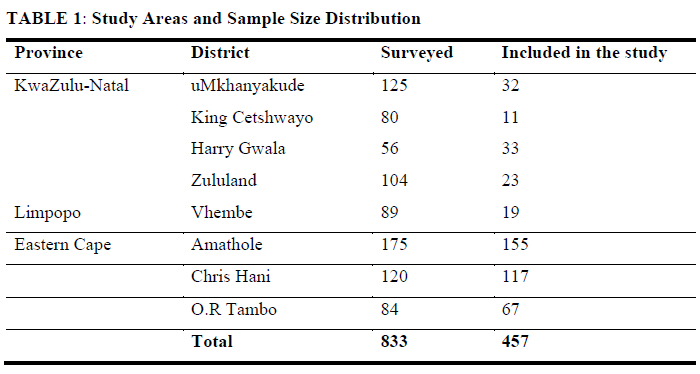
Three provinces with the majority (61%) of smallholder/communal farming in South Africa were chosen (Zantsi, 2021; Stats SA, 2016). Table 1 presents a summary of the selected districts in each province, together with the sample sizes.
A survey was conducted in the districts mentioned in Table 1 through a purposive multi-stage sampling procedure at the provincial and district levels and a random sampling method at the household level, using the local languages spoken in the study locations. Only commercial-inclined farmers were selected for this study whereby commercial-inclined individuals were selected; that is, any farmer who had sold at least 20% of their animals in the previous year/season.4 A questionnaire, administered in the local language in each respective district, was used to collect responses from household heads.
The data in this study were filtered from a cross-sectional survey of 833 households from the three provinces mentioned above, focusing on crop and livestock-producing farmers (see Zantsi, 2021). In line with the purpose of this study, only livestock-producing households were filtered (457). The 457 comprises 305 cattle-keeping households, 311 sheep-keeping households and 231 goat-keeping households, while only 112 kept all three types of livestock.
This study's principal data analysis method is descriptive statistics performed in Stata, whereby the averages, minimums, maximums and standard deviations are used to quantify the data. The results are then presented in charts and tables in the analysis.
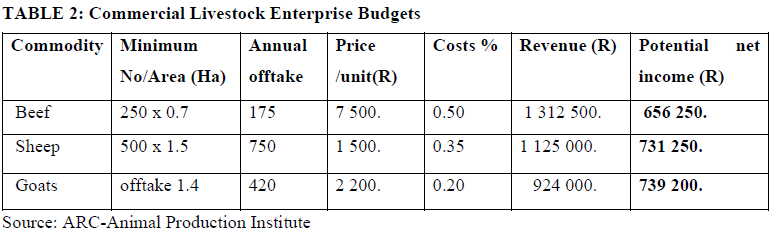
We have also performed a benchmarking exercise of the production cost factor of communal farmers against the best practices in the commercial sector. Table 2 below presents the enterprise budget for beef cattle, wool sheep and goats.
The cost factor is worth noting, which is expressed as the share of potential income. Of course, the revenue will depend on the farmer's efficiency and other costs not accounted for here, such as repayment of bonds, vehicles, tractors, etc. Cattle have the highest cost factor, while goats have the least.
4. RESULTS AND DISCUSSION
This section presents the data from the survey and provides a discussion of the related results. It begins with a description of the household characteristics of the study sample before presenting the herd/flock distribution and income, together with household vaccine expenditure.
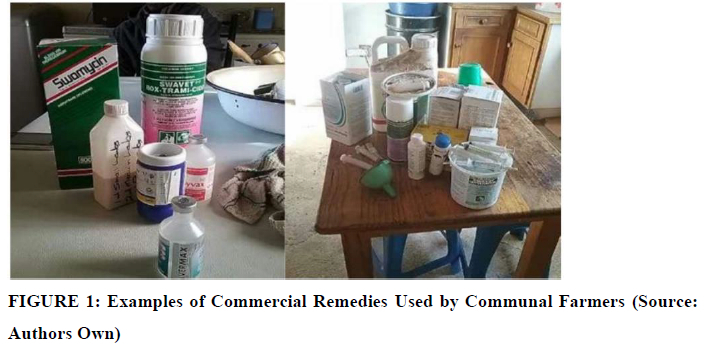
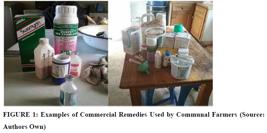
As indicated earlier, the data used in this paper were filtered from a more extensive survey with a different focus and where respondents' remedy types were not formally captured. However, farmers were sometimes willing to share the kind of commercial remedy when asked how much they spent on the remedy. Figure 1 depicts some of the commercial remedies used by respondents. From observations, the most used remedies were deworming remedies, remedies for controlling tick-borne diseases containing the active ingredient of tetracycline and dips for controlling external parasites. This finding corroborates Rust et al.'s (2019) finding that tick-borne diseases are more prevalent in communal farming systems.
4.1. Household Characteristics
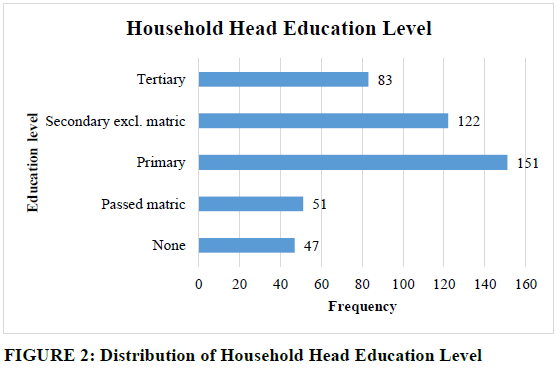
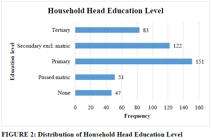
As household characteristics greatly influence the farming decisions made by farm households, they affect production. The current study sample consisted mainly of male household heads (67%) and about one-third (33%) of females. This is a general trend within traditional livestock communal farming, where males take sole responsibility for looking after animals and are mostly household heads (Ainslie, 2013). The average household head was 58 years old, the youngest was only 26, and the oldest was 76. Additionally, these results confirm the general trend in farming, both commercial and communal farming, that most of these household heads are approaching pension (DAFF, 2018; Rust et al., 2019; Stats SA, 2016). This observation skewed the age distribution among communal livestock owners towards older male respondents, which could be due to asset accumulation. For example, Habiyaremye et al. (2017) argued that older farmers tend to own more livestock than their younger counterparts because of skewed asset distribution towards older farmers. Regarding education level, most household heads had primary education (33%) and secondary (27%), while 18% had tertiary and 10% had no formal education, as depicted in Figure 2.
These results might have profound implications for the effective planning and design of animal health care policies. For example, gender distribution may affect decision-making regarding ruminant livestock within farming households. In contrast, age and education indicate the adoption of new remedies and how farmers may understand animal health care training and workshops as planned in the Compulsory Community Service of the DAFF veterinary strategy (DAFF, 2016). This is because older farmers tend to be risk-averse (Zantsi et al., 2022), and it has been shown that communal farmers misuse commercial remedies due to the limited understanding of prescriptions resulting from poor literacy (Mathius, 2007).
4.2. Flock and Herd Size
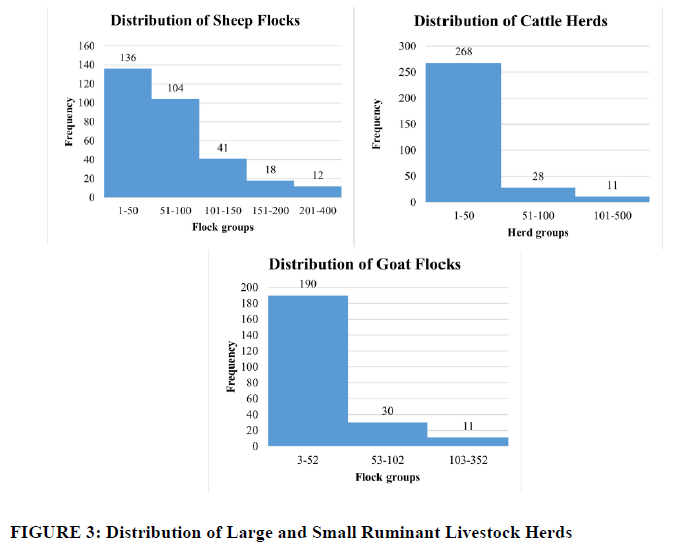
The national livestock census shows that communal farmers' herd/flock size tends to be smaller than their commercial counterparts (Bester et al., 2009; Scholtz et al., 2008). Furthermore, their distribution is not uniform due to the diversity within the communal farming systems (Bester et al., 2009; Scholtz et al., 2008). In this section, the herd/flock size of the study sample is reported. Herds and flock size are categorised into different equal ranges between the three animal groups (cattle, goats and sheep) and are presented in Figure 3. Moreover, the herd and flock size are important in analysing expenditure patterns as they aid in understanding the demand for remedies and the distribution of animals across farm households. Generally, small ruminant flocks are larger, with sheep being the largest, while large ruminants are relatively smaller than small ruminants.
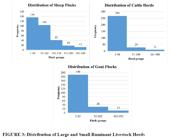
Goat flocks and results are presented in Figure 3. The most dominant goat flocks are between 3-52 goats and accounted for 82% of the respondents, with an average of 38 goats; the smallest flock consisted of three goats and the largest had 350 goats. This distribution does not deviate much from the figures reported in the general household survey, given that the study targeted commercial-oriented communal farmers (StatSA, 2016).
Unlike the goat flock, the sheep flock is distributed more evenly, although it shows a similar trend of inverse shape, with most households falling in the 1-50 flock group, as shown in Figure 3. On average, a farmer keeps a 70-seed flock size, with the smallest having only one sheep and the largest having up to 400 sheep. This is more than the average goat flock; farmers kept more sheep than goats. This may be largely attributed to the benefits of woollen sheep since none of the farmers kept cashmere goats.
Cattle herds were relatively smaller than sheep and goat flocks, with an average of 30 cattle ranging between one and 500 (see Figure 3). More than 80% of respondents in the sample fell in the 1-50 herd. The possible reason for the lower herd size is the high cattle maintenance cost. Cousins (2015) argued that large cattle herds tend to be kept by only a few wealthy households. The frequent occurrence of drought and grazing land shortage is another possible reason. The surveyed communal farmers reside in the former homelands, where the colonial policies confined black people to only 13% of the 82 million hectares of agricultural land in South Africa. Over time, these areas were affected by the degradation of rangelands, which also affected the productivity of livestock (Vetter, 2013).
4.3. Household Income and Vaccine Expenditure
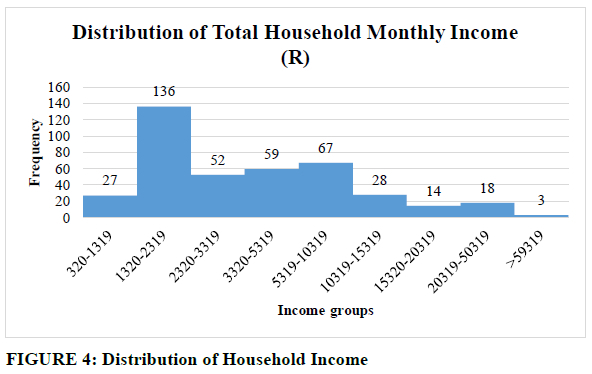
Figure 4 summarises the monthly household income distribution from the study sample. It shows income inequality in the sample, with most respondents falling into the R1320-R2319 income group. Most of the households in this group are old-age pensioners, while the other groups are mainly made up of working-class individuals. On average, households earn a monthly income of R6 388, with the lowest income households earning R320, while the highest income households earn R80 000.
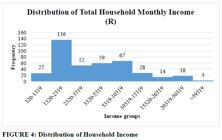
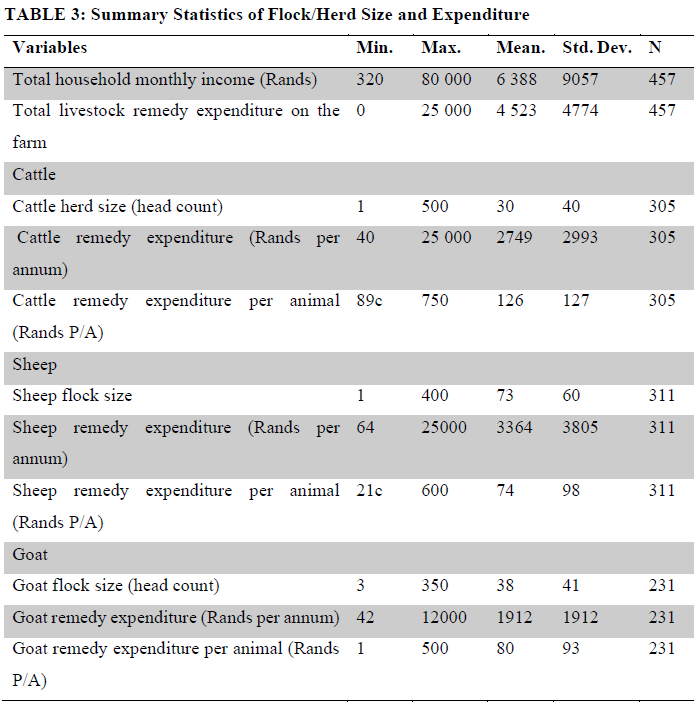
Table 3 summarises the average household monthly expenditure on livestock remedies for three livestock species. While most respondents are from low-income households, on average, they spend 11% of their income on remedies, while some probably low-income households spend up to 50% on remedies. Although it was expected that a large part of their expenditure was on cattle remedy because these are large ruminants, results show that, on average, they spend more on sheep remedy (R3 364), followed by cattle (R2 749), and goats (R1 912), probably because small ruminant flocks are relatively larger than cattle herds. This observation can also be related to importance since sheep were the most kept species (see research methods section). Furthermore, sheep farming is a lucrative farming activity in the Eastern Cape communal farmers, where most respondents live (De Beer & Terblanche, 2015). Moreover, the difference in expenditure between households could be attributed to their different socioeconomic circumstances. Ainslie (2002) reached a similar conclusion in his case study of Peddie in the Eastern Cape.
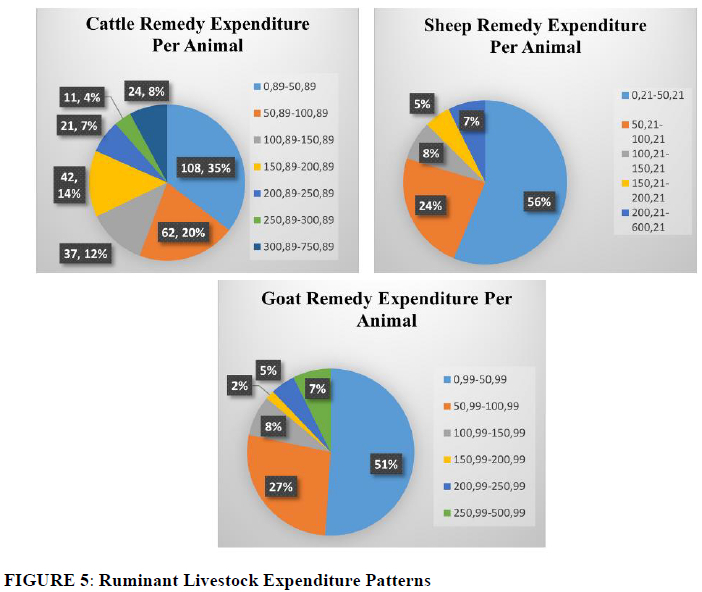
While goat remedy expenditure was the lowest in the overall proportion of livestock expenditure, households spent between R1 and R55 more on goats than cattle and sheep. Generally, in all three livestock species, most households spent between R1 and R55 per animal (see Figure 5). These results corroborate those of Ainslie (2002) in Peddie, who reported that the maintenance of large ruminants is more expensive than that of small ruminants.
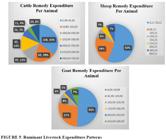
Communal farmers spend, on average, 70% of their average monthly income annually. If one compares these costs to those of the commercial sector, it would appear that the communal sector is incurring higher costs, meaning less efficient. A possible reason for this can be linked to economies of scale. Ideally, vaccines and animal remedies are cheaper if you buy them in bulk, and some remedies have to exist once opened. In this regard, farmers who keep ten animals or less, as in the communal sector, would not use the remedy best. Further, considering that these are not the only livestock costs, these results indicate how input cost affects communal livestock production. These results also provide an insight into the agribusinesses selling remedies. Such insights can help in future planning and market segmentation.
Additionally, these results contribute to the information on primary animal health care policy designers, as appropriate design heavily depends on how well one understands the beneficiary and their environment. One example is the Cost Recovery Plan (CRP), which seeks to instil a culture of small contributions from communal farmers for animal health care services (DAFF 2013). Hence, these results provide a clear picture of the expenditure of various livestock categories of communal farmers and can be used for planning. Apart from the two contributions mentioned above, these results also provide the opportunity cost of EMV use. Although research confirms the efficacy of some EVM use methods, their real monetary value is unknown5. These results also show how much money could circulate in rural communities and improve the rural economy in terms of effective EVM use. These results may contribute to one of the thrusts of the National Development Plan regarding job creation through agriculture and non-farm rural linkages to improve rural economies and income (NPC, 2011).
5. CONCLUSION AND RECOMMENDATIONS
While there is controversy around the effectiveness of EVM, there is some evidence of its efficacy in some cases. However, the validation of how EVM can contribute to rural economies remains to be explored. This article partially sought to contribute to this area by analysing communal farmers' expenditure patterns. Results show that communal farmers spend 70% of their monthly average income annually on livestock remedies. It was found that more expenditure is made on sheep, cattle and goats, respectively, possibly proportionately to the importance of each livestock species. This is a slightly different cost factor to that of the commercial sector, where the highest cost factor is on cattle, but in both the communal and commercial sectors, the least cost factor is on goats. While the type of animal remedy purchased could not be explored entirely with the survey responses, the data showed that most remedies used were for treating internal and external parasites.
The results showed that communal livestock farmers contributed to agribusiness development. The expenditure on livestock remedies shows and contradicts the view that communal farmers hardly spend on commercial remedies due to their low incomes. It has also been found that small rural businesses could generate the money spent on vaccines if EVM is validated. Overall, the findings of this study can also be of interest to policymakers, such as those designing primary animal health care, who can better understand how much money is spent by communal farmers on livestock remedies to create appropriate policies, such as the CRP.
Based on these findings, a few recommendations can be made. Firstly, there is a need for subsidised animal health care, including providing remedies for profitable communal livestock production and enhancing rural livelihoods through livestock. However, this should be proportionate to household income, particularly due to the current income inequality among communal farmers. Due to economies of scale and efficiency, communal farmers spend way more per animal than their commercial counterparts. Local livestock associations could help communal farmers buy remedies in bulk and then dose them together. Further, subsidised remedies should be a priority for economic disease and parasite control vaccines. Secondly, given communal farmers' low literacy levels and age, conventional remedies and instruction manuals should be translated into local languages, and workshops are needed to ensure the correct understanding of vaccine administration. Further research on EVM is required to validate the effectiveness and efficacy of traditional remedies, as they can contribute to rural economies.
REFERENCES
- AINSLIE, A., 2002. Cattle ownership and production in the communal areas of the Eastern Cape, South Africa. Research Report No.10. University of the Western Cape, Cape Town: Programme for Land and Agrarian Studies.
- AINSLIE, A., 2013. The sociocultural contexts and meanings associated with livestock keeping in rural South Africa. Afr. J. Range & Rangeland Sci., 30(1-2): 35-38.
-
ALIBER, M., GWALA, L., YUSUF, F., RAHIM, A., MUSHUNJE, A., ARWARI, M., MAKHUNGA, Z. & SHILINGA, Z., 2017. Government and Small-scale Agriculture: Understanding the successes and failures in respect of learning, planning and implementation. Available from: http://psppdknowledgerepository.org/component/jdownloads/download/287-government-and-small-scale-agriculture-understanding-the-successes-and-failures-in-respect-of-learning-planning-and-implementation. Accessed: 16 February 2018.
» http://psppdknowledgerepository.org/component/jdownloads/download/287-government-and-small-scale-agriculture-understanding-the-successes-and-failures-in-respect-of-learning-planning-and-implementation - BESTER, J., RAMSAY, K.A. & SCHOLTZ, M.M., 2008. Goat farming in South Africa: Findings of a national livestock survey. Appl. Anim. Husb. Rural Dev., 2: 9-13.
- BROWNE, M., ORTMANN, G.F. & HENDRIKS, S., 2007. Expenditure elasticity for rural households in the Embo ward, Umbumbulu, KwaZulu-Natal. Agrekon., 46(4): 566583.
- CHINSEMBU, K.C., NEGUMBO, J., LIKANDO, M. & MBANGU, A., 2014. An ethnobotanical study of medicinal plants used to treat livestock disease in Onayena and Katima Mulilo, Namibia. S Afr J Bot., 94(1): 101-107.
- COUSINS, B., 2015. Through a glass, darkly: Towards agrarian transformation in South Africa. In B. Cousins & C. Walker (eds.), Land divided, Land Restored: Land Reform in South Africa for the 21st century. Auckland Park, Cape Town: Jacana.
- DEPARTMENT OF AGRICULTURE, FORESTRY AND FISHERIES (DAFF)., 2010. Livestock numbers: communal and commercial- November 2010. Pretoria, South Africa.
- DEPARTMENT OF AGRICULTURE, FORESTRY AND FISHERIES (DAFF)., 2013. Community animal health care services. Strategy review document. Pretoria, South Africa.
- DEPARTMENT OF AGRICULTURE, FORESTRY AND FISHERIES (DAFF)., 2017. Economic review of the South African agriculture 2016/17. Pretoria, South Africa.
- DEPARTMENT OF AGRICULTURE, FORESTRY AND FISHERIES (DAFF)., 2016. South African veterinary strategy (2016-2026). Pretoria, South Africa.
- DE BEER, L. & TERBLANCHÉ, S.E., 2015. Improving the livelihoods of wool producers in a sustainable manner by optimizing the woolled sheep production systems within the communal farming area of the Eastern Cape: A vision that is future directed. S. Afr. J. Agric. Ext., 43(2): 105-122.
- GATHUMA, J.M., MBARIA, J.M., WANYAMA, J., KABURIA, H.F.A., MPOKE, L., MWANGI, J.N., SAMBURU AND TURKANA HEALERS., 2004. Efficacy of Myrsine Africana, Albizia anthelmintica and Hilderbrantia sepalosa herbal remedies against mixed natural sheep helminthosis in Samburu district, Kenya. J. Ethnopharmacol., 91: 7-12.
- HABIYAREMYE, A., MAZIYA, M., MDLULWA, N. & CHAMINUKA, P., 2017. Smallholder livestock farmers' knowledge, attitudes, practices and perceptions towards vaccinations: The case of five provinces in South Africa. International Development Research Centre.
- HAGGBLADE, S., HAZELL, P. & REARDON, T., 2009. Transforming the rural economy: Opportunities and threats in the developing world. International Food Policy Research Institute.
- HENDRIKS, S., 2002. Expenditure elasticities and growth linkages for rural households in two areas of KwaZulu-Natal. Doctoral dissertation, University of KwaZulu-Natal, South Africa.
- HENDRIKS, S. & LYNE, M., 2003. Agricultural growth multipliers for two communal areas of KwaZulu-Natal. Dev. South. Afr., 20(3): 423-444.
- KEPE, T., 2002. The dynamics of cattle production and government intervention in communal areas of Lusikisiki district, In A. Ainslie (ed.), Cattle ownership and production in the communal areas of the Eastern Cape, South Africa. Programme for Land and Agrarian Studies, University of the Western Cape.
- KARAAN, M. & VINK, N., 2014. Agriculture and rural development policies in the postapartheid era. In H. Bhorat, A. Hirsch, R. Kanbur & M. Mncube (eds.), The oxford companion to the economics of South Africa. England: Oxford University Press.
- KUNENE-NGUBANE, P., CHIMONYO, M. & KOLANISI, U., 2018. Possibility of organic beef production on South African communal farms. S. Afr. J. Agric. Ext., 46(1): 1-13.
- LUSEBA, D. & TSHISIKHAWE, M.P., 2013. Medicinal plants used in treatment of livestock disease in Vhembe region, Limpopo province, South Africa. J. Med. Plants Res., 7(10): 593601.
- MATHIUS, E., 2007. Ethno-veterinary medicine in the era of evidence-based medicine: Mumbo-jumbo, or a valuable resource? Vet J., 173: 241-242.
- MASIKA, P., VAN AVERBEKE, W. & SONANDI, A., 2000. Use herbal remedies by small-scale farmers to treat livestock diseases in central Eastern Cape province, South Africa. J. S. Afr. Vet. Assoc., 71(2): 87-91.
- MCCORKLE, C.M. & MATHIAS-MUNDY, E., 1992. Ethnoveterinary medicine in Africa. J. Int. Afr. Inst., 62(1): 59-93.
- MDLULWA, N. & KLEIN, K.K., 2015. Socio-economic impact of lumpy skin disease and rift valley fever on the South African Livestock economy. Pretoria: Agricultural Research Council.
- MOYO, B., 2008. Determinants and validation of ethno-veterinary practices used as alternatives in controlling cattle ticks by resource-limited farmers in the Eastern Cape Province, South Africa. Masters dissertation, University of Fort Hare, Alice.
- MUNYAI, F.R., 2012. An evaluation of socio-economic and biophysiscal aspects of small-scale livestock system based on a case study from Limpopo Province: Mudlulini village. Doctoral dissertation, University of Limpopo, South Africa.
- MONTSHWE, B.D., 2006. Factors affecting participation in mainstream cattle markets by small-scale farmers in South Africa. Masters dissertation, University of the Free State, Bloemfontein, South Africa.
- NATIONAL PLANNING COMMISSION., 2011. The National Development Plan 2030: Our future-make it work. Pretoria.
- NJENJEZWA, V.R. & SEETHAL, C.E.P., 2014. The role of the state in stock farming in rural areas: A case study of Hertzog, Eastern Cape, South Africa. S. Afr. Vet. Assoc., 85(1): 912.
- REDDY, v., GOGA, S., CHIUMBU, S. & TIMOL, F., 2016. Small-scale livestock farming and primary health care in South Africa: Challenges and policy implications. Policy brief, Human Science Research Council.
- RUST, T., RUST, J.M., NONGAUZA, N.S., DE RIDDER, C.H., FAKU, N.A., MOSS, S. AND MPHAHLA, M., 2019. Beef cattle production performance and farmer profile in a communal environment of the Eastern Cape Province. Appl. Anim. Husb. Rural Dev., 12: 1-10.
- ROSEGRANT, M.W. & HAZELL, P., 2000. Transforming the rural Asian economy: The unfinished revolution. Hong Kong: Oxford University Press.
- SHICAI, S., WILKES, A. & RONNIE, V., 2010. The importance of ethno veterinary treatment for pig illness in poor, ethnic minority communities: A case study of Nu people in Yunnan, China. Int. J. Appl. Res. Vet. Med., 8(1): 53-59.
- SOYELU, O.T. & MASIKA, P., 2009. Traditional remedies used for the treatment of cattle wounds and myiasisnin Amatola basin, Eastern Cape Province, South Africa. Onderstepoort J. Vet. Res., 76: 393-397.
- SIMELA, L., MAHANJANA, A.M. & MONTSHWE, B.D., 2006. Subsector analysis of the emerging red meat industry in South Africa. Department of Agriculture, South Africa.
- SIMELA, L., 2012. Options for the delivery of primary animal health care for livestock farmers on communal land in South Africa: Mnisi community case study. Masters dissertation, University of Pretoria, South Africa.
- SCHOLTZ, M.M., BESTER, J., MAMABOLO, J.M. & RAMSAY, K.M., 2008. Results of the national cattle survey undertaken in South Africa, with emphasis on beef. Appl. Anim. Husb. Rural Dev., 1: 1-9.
- STATISTICS SOUTH AFRICA (STATS SA)., 2016. Household Community survey. Pretoria, South Africa.
- SYAKALIMA, M., SIMUUNZA, M. & ZULU, V.C., 2018. Ethno veterinary treatments for common cattle diseases in four districts of the southern province of Zambia. Vet. World., 11(2): 141-145.
-
SWANEPOEL, F., STROEBEL, A. & MOYO, S., 2009. The role of livestock in developing communities: enhancing multifunctionality. Available from: https://www.ufs.ac.za/docs/default-source/almal-dokumente/the-role-of-livestock-in-developing-communities-enhancing-multifunctionality-341-afr.pdf?sfvrsn=0
» https://www.ufs.ac.za/docs/default-source/almal-dokumente/the-role-of-livestock-in-developing-communities-enhancing-multifunctionality-341-afr.pdf?sfvrsn=0 - VETTER, S., 2013. What are the costs of land degradation to communal livestock farmers in South Africa: The case of Herschel district in the Eastern Cape. Doctoral dissertation, Rhodes University, Graham's Town.
- VAN AVERBEKE, W. & MOHAMMED, S.S., 2006. Smallholder farming styles and development policy in South Africa: The case of Dzindi irrigation scheme. Agrekon., 45(2): 136-157.
- WIGGINS, S. & HAZELL, P., 2011. Access to rural non-farm employment and enterprise development. Background paper for the IFAD rural poverty report.
- ZANTSI, S., 2021. Unlocking the Potential of the Emerging Smallholder Farming Sector in South African Agriculture: An Agent-Based Approach. Doctoral dissertation, Stellenbosch University.
- ZANTSI, S. & NKUNJANA, T., 2021. A review of possibilities for using animal tracking devices to mitigate stock theft in smallholder livestock farming systems in rural South Africa. SAfr. Jnl. Agric. Ext., 49(1): 162-182.
- ZANTSI, S., MAZWANE, S. & GREYLING, J.C., 2022. Determinants of potential land reform beneficiaries' willingness to relocate from their former homeland homestead farms to commercial farms. S. Afr. Geogr. J., 104(2): 213-230.

2 Other reasons include stock theft, which is a growing concern (see e.g., Zantsi & Nkunjana 2021).
3 Non-tradable goods and services are goods and services that are only tradable within 100km radius and these include health, transport, education etc.
4 This is adapted from a definition of emerging farmers on communal land used in van Averbeke and Mohamed, 2006
5 Opportunity cost of EVM is taken as the money that is spent on conventional remedy because it most likely that it could be used for EVM remedies had they were tested for effectiveness as conventional remedies