Can Agricultural Extension Inspire South African Students to Pursue Careers in Agriculture?
Abstract
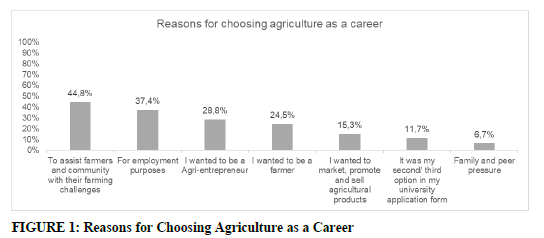
Agricultural extension and education programs can influence students' decisions to pursue a career in agriculture. Understanding the influence of agricultural extension on students' aspirations to pursue a profession in agriculture is critical for tackling agricultural sector concerns. This paper examines how agricultural extension programs affect students ' intentions to pursue a career in agriculture, including their plans to study agriculture, work in the agricultural sector, and start their own agricultural business. Data was collected from 163 postgraduate students from South Africa using Google Forms. The Statistical Package for the Social Sciences version 19 was used to analyse the quantitative data, and content analysis was used to analyse the qualitative data (open-ended questions in the questionnaire). 44.8% of participants mentioned that they chose agriculture to assistfarmers and the community, 37.4% for employment, 24.5% for farming, 28.8% for agricultural entrepreneurship, 15.3% for marketing, promotion, and selling agricultural products, 11.7% for university application, and 6.7% to meet family and peer expectations. Approximately a quarter of the participants (25.2%) were dissatisfied with their agricultural educational qualifications. The main reasons participants were not satisfied with their education qualification were that there were limited employment opportunities, and they wanted to study further/obtain a higher qualification. The government and educational institutions must take steps to address the issue of limited employment opportunities. This could include investing in job training programs to help people develop the skills they need for in-demand jobs, working with businesses to create more jobs in high-growth industries, and making it easier for people to start their businesses. This paper recommends that agricultural extension programs in basic education be more interactive and hands-on, allowing students to develop their vision of becoming future agricultural experts.
Agricultural Extension; Agriculture Education; Agricultural Sector; Careers; South Africa
1. INTRODUCTION
Agriculture is vital in society because it provides food, fibre, and fuel to a growing worldwide population. However, the agricultural industry faces various issues, such as climate change, population increase, resource restrictions, and changing customer tastes (Blakeney, 2022; Carlisle et al., 2019). Addressing these problems necessitates a trained and motivated workforce capable of driving innovation, implementing sustainable practices, and ensuring the agriculture industry's long-term survival. Kavga et al. (2021) suggest that the most appealing training program should focus on sustainable agriculture and precision agricultural technology.
Unfortunately, there has been a decline in student enthusiasm for pursuing agricultural jobs in recent years (Prasetyaningrum et al., 2022). According to Omotosho (2020), the older generation is the bulk of those actively engaged in agriculture. Uttej (2022) suggests that as much as it is a well-known reality, few young people work in agriculture, even though most rural individuals have the energy and passion to succeed in agro and associated occupations. Uttej (2022) further argues that it is essential to understand the reasons for poor involvement, including the issues that young experience in agriculture and related activities, as well as their recommendations. Most young people consider agriculture outdated, physically demanding, and without rewarding alternatives (Som et al., 2018). As a result of this view, participation in agricultural schools has declined, and there is a significant generation gap in agriculture as older farmers retire without sufficient successors. Therefore, there is a need to improve awareness of the economic opportunities in the agricultural sector (Magagula & Tsvakirai, 2020).
Agricultural extension and education programs might influence students' decisions to pursue a career in agriculture. Suprehatin & Shidiq (2020) discovered that agricultural students' views, subjective norms, and perceived behavioural control substantially influenced their intention to become agripreneurs. Students' intentions to pursue agricultural-related employment were predicted by their attitudes toward agriculture, perceived behavioural control, agricultural knowledge, and perception of sustainable agriculture practices (Zaremohzzabieh et al., 2021).
Chen et al. (2020) mentioned that agricultural exchange programs can significantly influence students' future job intentions. Rezvanfar et al. (2021) conducted a study in which they found that the intention toward employability was the most significant predictor of employability behaviour among agricultural extension and education students. Agricultural extension services are critical in promoting agricultural practices, sharing knowledge, and advising farmers and individuals interested in agriculture careers.
In various ways, agricultural extension services can substantially influence students' intentions of pursuing agriculture careers. Agricultural extension services can affect students' job aspirations through attitudes, knowledge, resources, and technology proficiency (Roy, 2023). By giving students insights into effective farming techniques, risk management, and resilience, these services link academic knowledge and real-world application, stimulating their interest in and desire to pursue careers in agriculture (Rai et al., 2023). Agricultural extension services play a vital role in attracting and retaining talented individuals in the agricultural sector, contributing to the sustainability and growth of the industry.
As such, this paper examines how agricultural extension programs affect students' intentions to pursue a career in agriculture, including their plans to study agriculture, work in the agricultural sector, and start their own agricultural business. Understanding the influence of agricultural extension on students' aspirations to pursue a profession in agriculture is critical for tackling agricultural sector concerns. Agricultural extension services may contribute to a flourishing and sustainable agricultural economy by recruiting and maintaining skilled persons, bridging the knowledge gap, supporting sustainable practices, resolving workforce difficulties, and boosting economic and social growth.
2. METHODOLOGY
2.1. Data Collection
The study's participants were selected using the two non-probability sampling techniques: purposive and snowball. Data was collected from 163 postgraduate students from various higher-learning institutions in South Africa. The survey link was sent to the respondents electronically using different institutions' databases. The relevant institutions requested the database through the heads of departments and secretaries of each department in the School of Agriculture. The Agricultural Research Council was also contacted, as it offers bursaries to agricultural postgraduate students; as such, the Council provided a database of postgraduate students. Google Forms was used to conduct the online survey.
2.2.
Pilot SurveyA pilot survey was conducted with ten students to test the questions and ensure they were clear and understandable. Some minor adjustments were made to the survey questions based on the pilot survey results.
2.3.
Data AnalysisDescriptive statistics in the form of percentages were used to analyse the data. The Statistical Package for the Social Sciences (SPSS) version 19 was used to analyse the data. Data was converted into percentages and ratios for clear interpretation.
2.4.
Open Ended QuestionsThe few open-ended questions were analysed through content analysis, which is a research method used to analyse text or qualitative data to make generalisations (Haggarty, 1996). Content analysis aims to provide knowledge and understanding of the phenomenon under study. This study used content analysis to understand better the factors influencing students' career choices in agriculture.
3. RESULTS AND DISCUSSIONS
3.1. Gender Composition
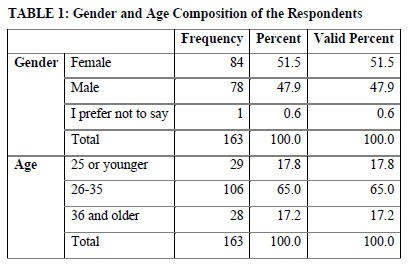
Table 1 below indicates the gender composition of the students who participated in the study on the impact of agricultural extension on students' intentions to pursue a career in agriculture. Table 1 illustrates the distribution of students based on gender. According to the information provided, most participants in the study were female, accounting for 51.5% of the total student population. This suggests that female students constituted a slightly higher proportion than male students. It implies a relatively balanced representation of both genders in the study sample, with a slight overrepresentation of female students. About 47.9% of the participants were male, indicating they comprised a significant portion of the study sample. Most participants in the study fell within the age group of 26-35 years, accounting for 65.0% of the total participants. This information provides insights into the age distribution of the study sample and highlights the significance of the 26-35 age group in the research. The age composition of participants in this study was essential as it provided valuable insights into the targeted design of interventions, understanding generational perspectives, addressing succession planning, informing policy and program development, and evaluating the generalizability of research findings.
3.2. Satisfaction with the Choice of Study
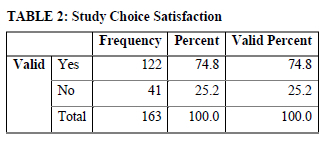
Table 2 below shows the respondent's satisfaction with the choice of their studies. Most participants (74.8%) mentioned that they were satisfied with their choice of study. However, approximately a quarter of the participants (25.2%) were dissatisfied with their agricultural educational qualifications. Given the current economic status in South Africa, one of the reasons for this dissatisfaction could be the limited employment opportunities. Agricultural students and graduates are then encouraged to do thorough research on their fields of study and ensure that they study to create employment opportunities that they expect after graduation.
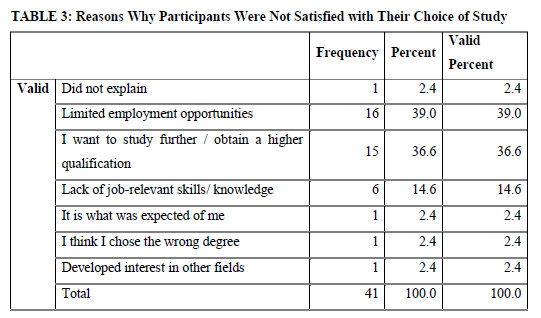
Of the 25.2% of participants who were not satisfied (as displayed in Table 3), there were various reasons for the dissatisfaction with their choices, and this included limited employment opportunities (39.0%) as the highest, followed by those who still wanted to study further.
The government and educational institutions must address the issue of limited employment opportunities. This could include investing in job training programs to help people develop the skills they need for in-demand jobs, working with businesses to create more jobs in high-growth industries, and making it easier for people to start their businesses. By taking these steps, the government and educational institutions can help ensure that people who pursue higher education can secure stable employment and build successful careers.
3.3. Reasons for Choosing Agriculture as a Career
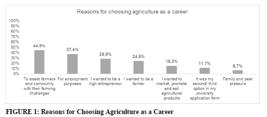
Participants were asked why they chose agriculture as a career in Figure 1, and 44.8% chose agriculture to assist farmers and communities with their farming challenges. The other reasons were as follows: 37.4% of the participants chose agriculture for employment purposes, 24.5% chose agriculture because they wanted to be farmers, and 28.8% chose agriculture because they wanted to be agricultural entrepreneurs. 15.3% of the participants chose agriculture because they wanted to market, promote, and sell agricultural products, 11.7% of the participants chose agriculture because it was their second/ third option in their university application form, and 6.7% of the participants chose agriculture because of family and peer pressure.
4. THE IMPACT OF AGRICULTURAL EXTENSION ON STUDENTS' ATTITUDES TOWARD AGRICULTURE
Agricultural extension can provide students with information about the different aspects of agriculture, such as crop production, livestock production, and agricultural economics. This information can help students understand the importance of agriculture and its role in the global economy. Agricultural extension can enable students to understand agriculture's challenges, such as climate change, food security, and sustainable development, which can improve their understanding of agricultural issues. This understanding can help students to develop solutions to these challenges and to make informed decisions about their future careers. Agricultural extension can motivate students to pursue careers in agriculture by providing them with opportunities to learn about the industry and to gain hands-on experience. This motivation can help to address the shortage of skilled workers in the agricultural sector.
Agricultural extension can be valuable in shaping students' perceptions of agriculture. By providing students with information, opportunities, and motivation, it can help to ensure that the next generation of farmers and agricultural leaders are prepared to meet the challenges of the 21st century. A study in Kenya by Mwangi, Mathenge and Kimani (2015) found that students who participated in an agricultural extension program had a more positive attitude towards agriculture and were likelier to consider a career in agriculture. Singh and Singh (2012) in India found that students who participated in an agricultural extension program better understood agricultural issues and were more likely to take action to address these issues. Ward and Lammers (2014) in the United States found that students who participated in an agricultural extension program were likelier to eat healthy foods and support sustainable agriculture practices. These studies suggest that agricultural extension can positively impact students' perceptions of agriculture.
5. CONCLUSION AND RECOMMENDATIONS
Agricultural extension can positively impact students' intentions to pursue agriculture careers. The impact of agricultural extension is likely more significant for students who have a positive attitude toward agriculture and are interested in learning more about the industry. This study contributes to the literature on agricultural extension by providing evidence that agricultural extension can have a positive impact on students' intentions to pursue a career in agriculture. This finding significantly suggests that agricultural extension can be used to address the shortage of young skilled workers in the agricultural sector.
Based on the findings of this study, the following practical recommendations can be made for enhancing the impact of agricultural extension on students' career intentions:
• Focus on students who have a positive attitude towards agriculture. Agricultural extension programs should target students who have a positive attitude toward agriculture. These students are more likely to be motivated by agricultural extension programs and to consider a career in agriculture.
• Provide students with opportunities to network with agricultural professionals. Agricultural extension programs should provide students with opportunities to network with agricultural professionals. This can help students to learn more about the industry and to get a sense of what it is like to work in agriculture.
• Integrate Interactive and Hands-On Agricultural Extension Programs in Basic Education: To encourage youngsters to consider agricultural jobs, interactive, hands-on agricultural extension activities must be implemented in basic education. Making these programs compulsory will ensure that students engage actively with agricultural practices, fostering a deeper understanding of the industry. Engaging in hands-on farm activities allows students to develop their vision of becoming future agricultural experts.
Agricultural extension can positively impact students' intentions to pursue agriculture careers. However, more research is needed to understand the long-term impact of agricultural extension on students' career choices. Future research could also explore the impact of different agricultural extension programs on students' career intentions. This research could track students participating in agricultural extension programs to see how their career choices change. This could help to identify the long-term impact of agricultural extension on students' career choices.
REFERENCES
- BLAKENEY, M., 2022. Agricultural innovation and sustainable development. Sustainability., 14(5): 2698.
- CARLISLE, L., MONTENEGRO DE WIT, M., DELONGE, M., ILES, A., CALO, A., GETZ, C., ORY, J., MUNDEN-DIXON, K., GALT, R.E., MELONE, B., KNOX, R. & PRESS, D.M., 2019. Transitioning to sustainable agriculture requires growing and sustaining an ecologically skilled workforce. Front. Sustain. Food Syst., 3(96): 1-8.
- CHEN, T., LEE, K., KABRE, P.M. & HSIEH, C., 2020. Impacts of educational agritourism on students' future career intentions: evidence from agricultural exchange programs. Sustainability., 12(22): 2-19.
- HAGGARTY, L., 1996. What is content analysis? Medical Teacher., 18(2): 99-101.
- KAVGA, A., THOMOPOULOS, V., BAROUCHAS, P., STEFANAKIS, N. & LIOPA-TSAKALIDI, A., 2021. Research on innovative training on smart greenhouse technologies for economic and environmental sustainability. Sustainability., 13(19): 1-22.
- MAGAGULA, B. & TSVAKIRAI, C.Z., 2020. Youth perceptions of agriculture: influence of cognitive processes on participation in agripreneurship. Dev. Practice., 30: 234 - 243.
- MWANGI, J.K., MATHENGE, D.K. & KIMANI, M.M., 2015. Impact of agricultural extension on farmers' knowledge, attitude and practices in Nyeri County, Kenya. J. Agric. Technol., 11(12): 2317-2328.
- OMOTOSHO, A., EMMANUEL, A., AYEGBA, P. & AYOOLA, J., 2020. Impact of Agricultural Education on Students' Career Choice: A Survey. Int. J. Emerg. Technol. Learn., 15: 51-61.
- RAI, A.K., RANJAN, A., BHARTI, S.D., SAIKANTH, D.R.K., SURENDER R.S. & GAUTAM, R., 2023. Agricultural Extension's Key Role in Modern Farming: A Review. Asian J. Agric. Ext. Econ. Sociol., 41(9): 475-485.
- REZVANFAR, A., GHORBANIAN, M. & SHAFIEE, F., 2014. An Investigation of the behaviour of agricultural extension and education engineering students in Tehran University towards employability. Procedía Soc Behav Sci., 152: 65-69.
- ROY, S., 2023. Influencing factors for pursuing agriculture as a career for agriculture undergraduates: A two-stage approach. Entrep. Educ., 6: 169-203.
- SINGH, V.P. & SINGH, U.P., 2012. Impact of agricultural extension on farmers' knowledge, attitude and practices in India. J. Agric. Ext., 18(2): 1-13.
- SOM, S., BURMAN, R.R., SHARMA, J.P., PADARIA, R., PAUL, S. & SINGH, A.K., 2018. Attracting and retaining youth in agriculture: Challenges and prospects. J. Comm. Mobilization Sustain. Dev., 13: 385-395.
- SUPREHATIN, & SHIDIQ, M. (2020). Determinants of agripreneurial career intentions: Evidence from agriculture students. Jurnal Manajemen dan Agribisnis., 17(2).
- UTTEJ, D., 2022. Youth in agriculture: Problems and suggestions. Indian Res. J. Ext. Educ., 22(5): 247-250.
- WARD, R.D. & LAMMERS, W.J., 2014. The impact of agricultural extension on student attitudes towards agriculture. J. Agric. Educ., 55(1): 82-90.
- ZAREMOHZZABIEH, Z., KRAUSS, S.E., D'SILVA, J.L., TIRAIEYARI, N., ISMAIL, I.A. & DAHALAN, D., 2021. Towards agriculture as a career: Predicting students' participation in the agricultural sector using an extended model of the theory of planned behavior. J. Agric. Educ. Ext., 28(1): 67-92.