Determinants of Bambara Groundnut commercialisation in KwaZulu-Natal, South Africa
Abstract
Bambara groundnut is an underutilised African crop grown and consumed in rural communities across South Africa. This study examined the determinants of the commercialisation of Bambara groundnut in the Umbumbulu and Nhlazuka farming districts in the KwaZulu-Natal province, South Africa. The study used primary data collected by the InnoFood Africa project from random samples of 271 and 414 Bambara groundnut farmers in Umbumbulu and Nhlazuka, respectively. The data were analysed using descriptive statistics and the Heckman two-step model. This study revealed that the decision to participate in the Bambara groundnut market depended on factors such as gender, age, use of the crop, household size, crop yield, farm size, market outlets, off-farm income, distance to market, and uses of the side streams. The results of the study have implications for which factors need to be addressed to encourage Bambara groundnut farmers to participate in the market. It is recommended that policies focus on creating an environment that improves the market for Bambra groundnut production.
Bambara Groundnut; Commercialisation; Farmers; South Africa; Underutilised; Factors
1. INTRODUCTION
In Africa, 140 million individuals face critical food insecurity, with at least one-fifth of people regularly going without sufficient food (Global Mid-year Report on Food Crises, 2022). However, prevailing patterns of agricultural output fall short of securing nutritious and affordable food for the growing populations of developing countries, thereby intensifying the risk of undernutrition and food scarcity (Pawlak & Kolodziejczak, 2020). Small-scale agriculture is the means of livelihood for most rural households in South Africa (Pawlak and Kolodziejczak, 2020). Provinces with rural areas, such as Limpopo (35.2%) and Mpumalanga (33.4%), are involved in small-scale agricultural production (Hlatshwayo et al., 2023). A large share of the crops grown are traditional, climate-hardy crops that withstand shifting weather patterns and other environmental pressures (Akinola et al., 2020). To promote plant-based diets, the inclusion of underutilised crops (UCs) in food markets has once again become a focus in policy discourse (Cesar et al., 2022). The European Commission and the UN's priority goals are to address the considerable protein deficits and declining biodiversity, while fostering sustainable value chains by promoting underutilised crops (Bjarklev, 2019). Academic studies frequently describe minor crops as underutilised, marginal, or as 'neglected and underutilised species' (Li et al., 2020). The International Plant Genetic Resources Institute (IPGRI) interprets NUS in two ways, with neglect indicating their designation as 'minor crops.' However, they continue to be used in small amounts for small-scale production. Underutilised crops are alternatives for addressing food insecurity and malnutrition due to their climatic adaptability (Mabhaudhi et al., 2019).
Bambara groundnut represents a marginalised and underutilised African pulse crop, commonly grown and eaten in many rural households (Khan et al., 2021). Bambara groundnut is a climate-smart African crop that contributes to the food production system in South Africa (Mubaiwa et al., 2018). Bambara groundnuts help alleviate food scarcity and nutritional deficiencies in rural households (Falola et al., 2022). However, in contrast to major commercial crops, Bambara groundnut is still marginally utilised and is mainly tied to subsistence-oriented small-scale farming, predominantly managed and processed by women (Mubaiwa et al., 2018). Factors such as limited market presence, low research focus, inadequate scientific investment, and modest yields have positioned the crop as underexplored, neglected, or underutilised (Majola et al., 2021). Bambara groundnut's production and potential for upscaling are hindered by its lengthy cooking requirement, which limits its commercial value, processing prospects, and market penetration (Mayes et al., 2019). Recognised as a neglected and underutilised species (Khan et al., 2021), Bambara groundnut is a traditional bean that demands rehabilitation and elevation to a significant status in African agriculture (Majola et al., 2021). The pursuit of adaptive agriculture, driven by unpredictable weather conditions, has brought the crop back into focus. However, Bambara groundnut production is limited by factors that hinder its commercialisation. Although Bambara groundnut is resilient to drought and addresses food insecurity and malnutrition, the crop has yet to be fully exploited in terms of commercialisation and utilisation (Khan et al., 2021). Bambara groundnut is rarely present in rural diets (Jideani & Jideani, 2021). Despite its potential to enhance food and dietary security, the crop's market development and value chain integration have not been fully explored (Meemken and Bellemare, 2020). Commercialising Bambara groundnut would improve rural households' food security (Falola et al., 2022). However, the lack of sufficient markets for Bambara groundnuts remains a challenge, discouraging their production and supply in Africa (Boulay et al., 2021). Further studies indicate that the significance and contribution of underutilised crops in Africa remain insufficiently acknowledged and incorporated (Akinola et al., 2020).
Studies from other countries have shown that the commercialisation of indigenous crops is influenced by socio-demographic variables, including educational attainment, access to market information, health conditions, income sources, and age (Lubungu et al., 2012; Dlamini-Mazibuko et al., 2019). Inefficient seed supply systems and underdeveloped value chains hinder the development of orphan crops in South Africa (Mabhaudhi et al., 2017). Although emerging platforms like WhatsApp and Facebook offer new but underutilised opportunities (Mabhaudhi et al., 2017; Senyolo et al., 2018). The prospects for UCs by smallholders are constrained by the dominance of competitive large-scale agriculture, which oversupplies most markets (Mudau et al., 2022).
Moreover, persistent food insecurity in South Africa stems from its heavy dependence on imports, which drives food shortages and sharp price increases (Rabbi et al., 2023). Research on advancing indigenous and underexploited crops has become a research priority (Mabhaudhi et al., 2019; Mudau et al., 2022). While Bambara groundnut yield has been widely studied in SSA (Falola et al., 2022; Olayide et al., 2018), studies on its market integration and commercialisation among South African smallholder farmers is still limited.
In South Africa, Bambara groundnut is a neglected and underutilised African pulse crop that is widely consumed in many rural households (Khan et al., 2021). Bambara groundnut helps address food shortages and dietary imbalances among households (Falola et al., 2022). However, Bambara groundnut production is mostly carried out by women on a subsistence scale, unlike other staple crops (Mubaiwa et al., 2018). The lack of commercial use, limited research and scientific commitment, and lower yield have contributed to the crop's under-researched, ignored, or underutilised status (Majola et al., 2021). Its production challenges stem from its hard-to-cook nature, which reduces economic value, hinders product development, and limited market access (Mayes et al., 2019). Bambara groundnut is a climate-smart African legume that requires urgent inclusion (Majola et al., 2021). Efforts to build resilient food systems in the face of climate change have revived interest in the crop (Onawo & Egbodoku, 2025).
Although Bambara groundnuts are resilient to drought and can improve food security, the crop has yet to be fully exploited for commercialisation and utilisation (Khan et al., 2021). Despite this potential, the commercialisation along its value chain has yet to be thoroughly researched (Meemken & Bellemare, 2020). Commercialising Bambara groundnut would improve rural households' food security (Falola et al., 2022). However, insufficient markets for Bambara groundnuts remain a challenge, discouraging their production and supply in Africa (Boulay et al., 2021).
Literature from other countries has revealed that certain demographic characteristics influence the market for orphan crops (Lubungu et al., 2012; Dlamini-Mazibuko et al., 2019). Recently, social networking platforms such as WhatsApp and Facebook have opened markets for smallholders that can be better exploited. Food insecurity persists due to heavy reliance on food imports, which have made food unaffordable because of high prices (Rabbi et al., 2023). There has been an increase in research on promoting indigenous and underutilised crops in South Africa (Mabhaudhi et al., 2019; Mudau et al., 2022). While literature has analysed the productivity of Bambara groundnut in Sub-Saharan countries (Olayide et al., 2018; Falola et al., 2022), there is a lack of evidence-based research on how smallholder farmers in South Africa market Bambara groundnut.
Therefore, this thesis aims to identify the determinants that influence the commercialisation of Bambara groundnut. Learning this would provide a framework for policymakers to intervene in the commercialisation of Bambara groundnut, thereby contributing to the existing literature on reviving underutilised crops for food security. Therefore, considering the above, the thesis seeks to answer the research question: What factors influence the commercialisation of Bambara groundnut in South Africa? Addressing this question will inform stakeholders of the potential factors that can enhance the commercialisation of Bambara groundnut in rural areas. The findings will be relevant to Umbumbulu and Nhlazuka in KwaZulu-Natal, as well as other major production areas.
1.2. Hypothesis for the Study
The determinants affecting the market for Bambara groundnut production in KwaZulu-Natal Province, South Africa, were investigated. This research will provide a blueprint for policymakers and other relevant stakeholders on the commercialisation of underutilised crops to support food security in developing countries.
2. METHODOLOGICAL ISSUES INVOLVED
2.1 Study Area
The study was done in KwaZulu-Natal, South Africa, covering about 92,100 km2 (35,600 sq mi). KwaZulu-Natal has three different geographic areas and is the country's easternmost province. Umbumbulu, in the eThekwini municipality and Nhlazuka, in the Msunduzi municipality, were selected for the study. Most rural farmers in these areas depend on agriculture for their livelihoods. The study population comprised Bambara groundnut-farming households in these rural areas. Smallholder Bambara groundnut farmers were purposively sampled for the study.
2.2. Data Types, Sources and Methods of Data Collection
A quantitative approach was employed in the study, using a descriptive and correlational research design. Data were obtained from questionnaires administered during the value chain (VC) assessment (market survey) conducted by the InnoFood Africa Project in 2020. Data obtained included demographics, farm data on indigenous and non-indigenous crops, and data on constraints and challenges along the crops' VCs. The survey initially collected data from three locations in KwaZulu-Natal, South Africa, through a random selection of respondents. Our study focused on two areas, with 271 and 414 respondents in Umbumbulu and Nhlazuka, respectively, because of insufficient data from the third location.
2.3. Methods of Data Analysis
Heckman's two-step models, the double-hurdle and tobit models, have been used to analyse crop market participation (Zondi et al., 2022). This study employs descriptive statistics and Heckman's two-step methods to analyse the data. The characteristics of the Bambara groundnut farmers were analysed using means, percentages, and standard deviations, while the factors affecting the commercialisation of Bambara groundnut were analysed using Heckman's two-step method.
2.4. Heckman's Two-Step Model
The determinants of Bambara groundnut farmers' decision to commercialise and the extent of commercialisation were analysed using this model. The initial step used the dependent variable in binary form, equal to 1 if the Bambara groundnut farmer decides to commercialise and 0 otherwise. In the next step, the model estimated the factors that influence the extent of commercialisation. Two equations were estimated using the Heckman two-stage model. The first regressand is whether the Bambara groundnut farmer sold their produce in the market. The other regressand shows the degree of commercialisation of Bambara groundnut production. The resolution for commercialisation influenced the percentage of Bambara groundnut sales.
The logit regression model was employed for the first equation. The chance of a farmer participating in the market is expressed below:

where Wi is the set of variables that affect the commercialisation decision, α is the set of coefficients to be estimated, and si is the error term representing the unexplained variation in the data not captured by the model. Zi is a standard measurement variable, equal to 1 for farmers' commercialisation participation. If the satisfaction that a farmer gains from consuming an extra unit of Bambara commercialisation is If the household's marginal utility from the Bambara groundnut market is more than 0, Zi is 1; otherwise, 0. This is expressed below in Equation (2),

Where Z*i is the hidden satisfaction the farmer gets from commercialisation of Bambara groundnut, and with μi~N(0,1),

The inverse Mills ratio (IMR) was used to correct the potential selection bias as expressed below:

Where φ is the normal probability density function. Equation (5) explains the next step:

Where E is the expected mean, Y is the quantity of Bambara groundnut sold, x is a set of factors that influenced the amount of Bambara groundnut sold, and β is the set of coefficients measured as expressed in Equation (6) below:

The model is further expressed in the decision to participate in the Bambara market and expressed as follows:

Where market participation is 1 and non-market participation is 0. β0 is a constant, β1, . . . , ßn are variables to be measured, X1,..., Xn are the set of independent variables, and si is the error term. The second step determines the extent of commercialisation of Bambara groundnut production. This is measured using the Ordinary Least Squares and expressed in Equation (8).

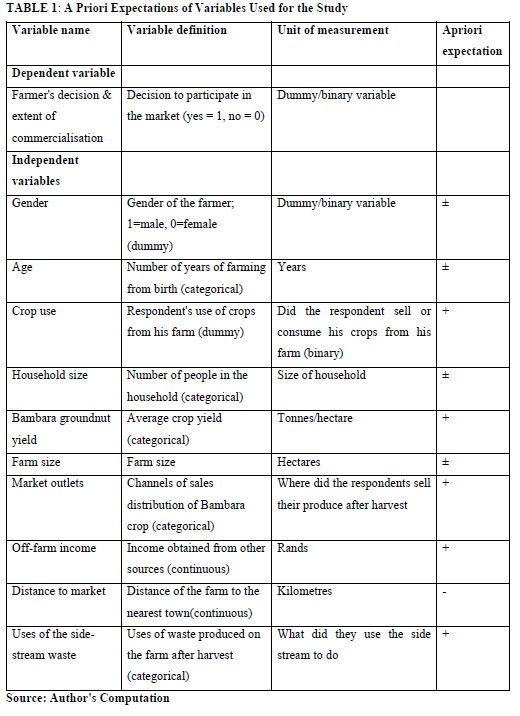
Where Yi denotes the Bambara groundnut sales in percentage (%), ß0 is a constant, ß1, . . . , ßn are the variables to be measured, X1,..., Xn are the set of independent variables, and si is the error term. The two equations for each step are specified as follows: The independent variables used in the Heckman two-step model are shown in Table 1.
Step 1. (Selection Equation)

Step 2. (Outcome Equation)

Where gender is the respondent's sex, age is the number of years from birth of the Bambara groundnut farmer, crop use is the use of Bambara groundnut, household size is the number of people dependent on income in the home, yield is the harvested production per unit of harvested area, farm size is the area cultivated, the market outlet is the where Bambara is sold, off-farm income is the income from other sources, distance to market is the distance of farm to the nearest town, uses of side stream is the use of wastes from the farm after harvest.
2.5. Limitations of the Analysis
The study relied on cross-sectional data, which could not optimise its long-term effects.
3. RESULTS AND DISCUSSION
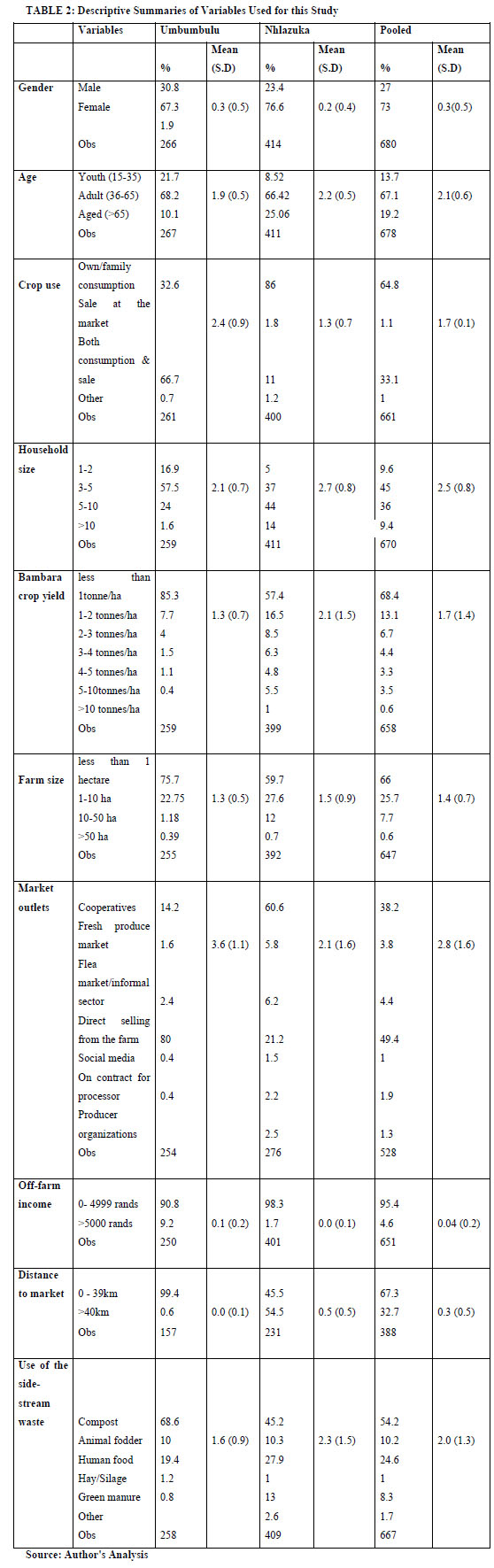
The socio-economic characteristics of Bambara groundnut farmers in two (2) villages in KwaZulu-Natal, South Africa. Most (at least 60%) sampled farmers are female in Umbumbulu, Nhlazuka, and the pooled data. The cultivation and trading of Bambara groundnut in both villages are mostly carried out by rural women farmers. While the farmers of this underutilised crop remained subsistence, females and older people were prominent in crop production (Esan et al., 2023). In Umbumbulu province, about 68% of households were headed by adults (36 & 65 years), while 21% were headed by youth (15 & 35 years). In Nhlazuka province, 66% of the respondents are adults, while the least (8.5%) are youth, based on the pooled data. The breakdown is as follows: 67% are adults, and the least (13.7%) are youth. Youth farmers were expected to be vibrant and energetic in conducting Bambara production activities; however, most youths are not interested in farm activities (Chipfupa & Tagwi, 2021). Evidence suggests that youth are disenchanted with agriculture, often viewing it as unproductive and a fallback option, leading them to turn away from household farming to pursue salaried work in cities (Chipfupa & Tagwi, 2021). In Umbumbulu, approximately 66% of farmers used Bambara for both consumption and market sale. A higher percentage of sampled farmers (86%) used Bambara harvests for family consumption in Nhlazuka, while only 11% used Bambara for both consumption and sale. In the pooled data, 64.8% used Bambara for family consumption, and 33.1% used it for both consumption and sale. Bambara groundnut farmers are semi-commercial orientated or 'emerging smallholders' who partially commercialise their surplus (Cousins, 2013). This group primarily farms for additional income and uses only a small proportion of the produce for personal consumption (Cousins, 2013).
57% of households in Umbumbulu have 3 to 5 family members. In comparison, 44% of respondents in Nhlazuka had 5 to 10 family members, and 36% of respondents in the pooled data also had 5 to 10 family members in their households. The larger household size in rural areas has been attributed to the use of family labour for farm operations (Falola et al., 2022; Mukaila et al., 2020). A larger household size may have contributed to low market participation. In other words, a large household requires more food, limiting the surplus for the market (Siziba et al., 2011). Approximately 85% of Bambara groundnut farmers in Umbumbulu produced less than 1 ton per hectare per season. In comparison, more than 50% of Bambara groundnut farmers in Nhlazuka produced an average of less than 1 ton/ha. In the pooled data, 68.4% of the respondents also produced an average of less than 1 ha. The limited application of organised crop improvement has left the productivity of underutilised crops depressed (<0.85 t ha-1) and stagnant compared with leading species, including rice, maize, wheat, barley, and sorghum (Majola et al., 2021). The majority (75.7%, 59.7% & 66%) of the Bambara groundnut farmers had a farm size of less than 1 hectare in Umbumbulu, Nhlazuka, and the pooled data, respectively. In Umbumbulu, 80% of the respondents sold Bambara groundnuts directly on the farm, 60.6% sold them to cooperatives in Nhlazuka, and 49.4% sold Bambara groundnuts directly from the farm. The majority (90.8%, 98.3% & 95.4%) of farmers in Umbumbulu, Nhlazuka, and the pooled data set had an off-farm income of 0-4999 rand. 99.4% of Bambara groundnut farmers travelled 0-39km to market their crops. Meanwhile, in Nhlazuka, 54.5% of the population travelled more than 40km to market their crops. This could be why many Bambara farmers sold their produce through cooperatives. However, the pooled data showed that 67.3% of the farmers travelled between 0 and 39km to sell their crop produce. Farmers used side streams as compost in Umbumbulu, Nhlazuka and in the pooled data.
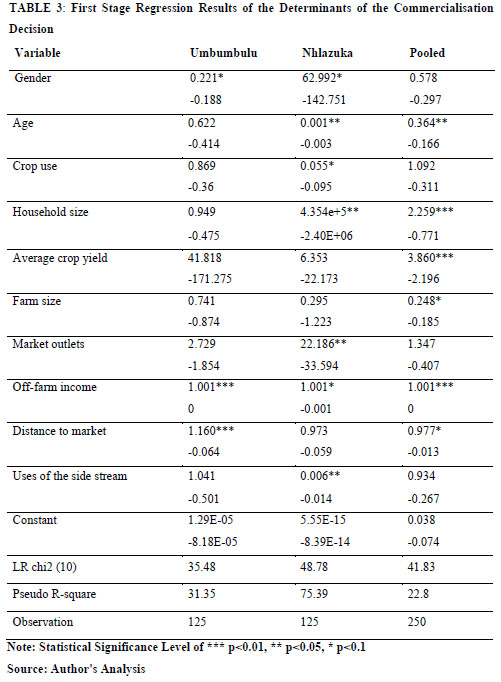
Table 3 presents the logit results for the determinants of the commercialisation decision of Bambara groundnut among sampled farmers. In Umbumbulu, results indicated that off-farm income and distance to market positively influenced farmers' decisions to commercialise Bambara groundnut. In contrast, gender showed a negative sign in explaining the Bambara groundnut commercialisation. The gender of sampled farmers showed a negative association with farmers' market participation decisions at p < 0.1. Findings suggested that women in the sample were 0.221 times as likely to opt for commercialisation as men. This result was consistent with Esan et al. (2023), who reported that women primarily cultivate food crops at the semi-subsistence level to meet family needs, with any excess being sold at the market. However, Zondi et al. (2022) found evidence contrary to male-headed households. The coefficient of off-farm income for sampled farmers was positively associated with the decision of farmers to commercialise Bambara groundnut at a p < 0.01 level of significance. Findings implied that farmers with more income from off-farm work were 1.001 times more likely to take part in Bambara groundnut trading. Farmers who participate in off-farm activities would have a greater incentive to market their farm produce in the area where the off-farm work is located. The results aligned with those reported by Zondi et al. (2022), who emphasised that the engagement in off-farm work provides a market for underutilised crops in Mpumalanga and Limpopo. However, there may be time trading between the two duties, affecting the farmers' overall income. Estimated distance to market positively influenced the farmers' decision to commercialise Bambara groundnut at a p < 0.01. These results were contrary to a priori expectations, as households accessing far-distant markets could participate in the Bambara groundnut market. Yet, the findings revealed that the implications of transaction costs for crop commercialisation and market profitability warrant further research.
In Nhlazuka, Gender, household size, market outlets, and off-farm income were positive and statistically significant factors influencing farmers' decisions to commercialise Bambara groundnut. Only crop use, age, and the use of side streams were negatively and statistically significantly influenced the decision to commercialise Bambara groundnut. Gender positively affected farmers' decision to commercialise at a significance level of p < 0.1. This finding further indicated that women sampled farmers were 62.922 times less likely to commercialise Bambara groundnut than men. The results aligned with those reported by Zondi et al. (2022), which favoured male households. Still, they were contrary to the results from Umbumbulu in column 1 (Table 2). Zondi et al. (2022) posited that men held more responsibility for household market participation than women in female-headed households. The coefficient of the farmer's age influenced the decision to commercialise Bambara groundnut (p < 0.05). The youth farmers were 0.001 times as likely to commercialise as adults and aged households. Even though young farmers were a minority in the study's population, they would decide to commercialise because of their disposition to access more resources, such as social media, to obtain market information, mobile money transactions, and offer other delivery methods to consumers. Young farmers usually have greater physical strength for agricultural production than their older counterparts (Jansuwan & Zander, 2022). This is in line with the findings of Osabohien (2023), which highlighted that older farmers have less energy than young people to engage in agricultural and commercialisation activities.
In contrast, gender displayed a negative association with the commercialisation of Bambara groundnuts. The gender of the sampled farmers negatively influenced their decision to commercialise at 10%. The finding implied that female sampled farmers were 0.221 times more likely to decide to commercialise than their male counterparts. This finding aligns with Esan et al. (2023), who found that women primarily grow food crops for consumption but sell off any surplus at the market. However, Zondi et al. (2022) found evidence to the contrary regarding male-headed households. Off-farm income was a significant positive predictor of farmers' decision to commercialise Bambara groundnuts at 1%. The finding indicated that farmers with higher off-farm income were 1.001 times more likely to sell their produce in Bambara groundnut markets. Farmers engaging in off-farm activities would have greater incentives to participate in the nearby market. These findings are consistent with Zondi et al. (2022), who emphasise that underutilised-crop farmers' involvement in off-farm work increases the likelihood of selling underutilised crops in Mpumalanga and Limpopo. However, there may be a trade-off between these two responsibilities, affecting farmers' overall income. Distance to market was a significant positive influence on farmers' decisions to commercialise Bambara groundnuts at 1%. These findings were contrary to expectations, as households accessing distant markets could still participate in the Bambara groundnut market. However, the findings revealed the necessity to explore the implications of transaction costs on crop commercialisation and market profitability in future research.
In Nhlazuka, gender, household size, market outlets, and off-farm income were statistically significant and positively associated with farmers' decisions to commercialise Bambara groundnut. Only crop use, age, and use of side streams were statistically significant and negatively influenced the decision to commercialise Bambara groundnut. The gender of the sampled farmers had a 10% positive effect on the decision to commercialise. The result implied that female sampled farmers were 62.992 times less likely to commercialise Bambara groundnut than their male counterparts. These findings were consistent with the results reported by Zondi et al. (2022), which favoured male households. Still, they were contrary to the results from Umbumbulu in column 1 (Table 1). Zondi et al. (2022) posited that men held more responsibility for household market participation than female households. The age of the sampled farmers was significantly negative at 5%. Young farmers were 0.001 times more likely to commercialise than adults and aged households. Even though young farmers were the minority in the study's population, they chose to commercialise because of their access to more resources, such as social media for market information, mobile money transactions, and alternative delivery methods for reaching consumers. Young farmers usually have greater physical strength for agricultural production than their older counterparts (Jansuwan & Zander, 2022). This supports the findings of Lindsjö et al. (2021), which highlighted that older farmers have less energy than younger farmers to engage in agricultural and commercialisation activities.
Bambara groundnut consumption (as a proxy for crop use) at home is a significant negative predictor of farmers' decision to commercialise at 10%. The sampled farmers were 0.055 times less likely to sell their Bambara groundnut produce at the market if the output's consumption purpose exceeds its sales. Food crops are primarily grown for home consumption, with any excess is taken to market for sale. Market outlets positively influence farmers' decisions to commercialise at the 5% level (p<0.05). Household size was a significant positive factor in the decision to commercialise Bambara groundnut at 5%. Sampled farmers with larger households were more likely to commercialise their Bambara groundnut with a low family size.
Contrary to the result in Umbumbulu, any increase in household size implies an increase in output, which provides more Bambara nut surplus for the market. Most farming households use family labour; hence, more family members provide it for increased farming activities, higher yields, and marketable surpluses (Hlatshwayo et al., 2021). However, a larger family reduces the household's ability to support several agricultural activities, including the commercialisation of Bambara groundnuts, as feeding more mouths could hinder the commercialisation of the crop (Olayide et al., 2018).
The off-farm income of sampled farmers was significantly positive and influenced farmers' decision to commercialise at 10%. The finding implied that farmers who got off-farm income from other sources were 1.001 times more likely to commercialise Bambara groundnut. The results are consistent with Umbumbulu (in column 1; Table 3) and Zondi et al. (2022), who state that more off-farm opportunities increase the commercialisation decision for crops. The coefficient of side stream usage was statistically significant and negatively related to the commercialisation decision for Bambara groundnut (p<0.05). The result implied that Bambara groundnut farmers were 0.006 times less likely to commercialise Bambara groundnut if there was a market for Bambara groundnut waste. This result revealed the importance of adding value not only to the actual crop but also to the side streams of the crop, contributing to post-harvest practices for underutilised crops (Olanrewaju et al., 2022).
The pooled results showed that household size, average crop yield, and off-farm income significantly increased farmers' decision to commercialise Bambara groundnut. The pooled results also revealed that age, farm size, and distance to market significantly reduced farmers' willingness to commercialise Bambara groundnut. Household size was significant at the 1% level, implying that a larger household size would be 2.259 times more likely to increase the likelihood of commercialising Bambara groundnut. This result was similar to the location-specific findings of the Umbumbulu and Nhlazuka districts in KwaZulu-Natal. The pooled results confirmed that more household sizes would contribute to the commercialisation decision of food crops (Hlatshwayo et al., 2021). The coefficient of average crop yield was statistically and positively significant at the 1% level, indicating that it increases the decision to commercialise Bambara groundnut. This finding was not significant for the location-specific results, indicating that a large sample size could increase the power of the average crop yield to influence the commercialisation decision for Bambara groundnut.
Meanwhile, farm size was a significant negative factor at 10%, influencing the decision to commercialise Bambara groundnut. The high average crop yields from small farm sizes indicated that households adopted more yield-enhancing inputs rather than expanding farmland to increase yields. The findings confirmed the farm size-output inverse relationship (IR) proposition, whereby larger farm sizes are associated with lower output and vice versa. The off-farm income was significantly positive at 1%, indicating that households earning from off-farm work at the market may have been 1.001 times more likely to commercialise Bambara groundnut, as reported in the location-specific results. The coefficients for age and farm distance had negative effects on market at 5% and 1%, respectively. Farm distance was contrary to the results from the Umbumbulu district, where farmers' distance increased the likelihood of a commercialisation decision. The pooled results for farm distance were consistent with the a priori expectation that the market's proximity to the Bambara groundnut farm would increase farmers' willingness to commercialise Bambara groundnut. However, the increase in age did not support the commercialisation decision for Bambara groundnuts, meaning that older households would instead consume Bambara groundnuts rather than commercialise the crop.
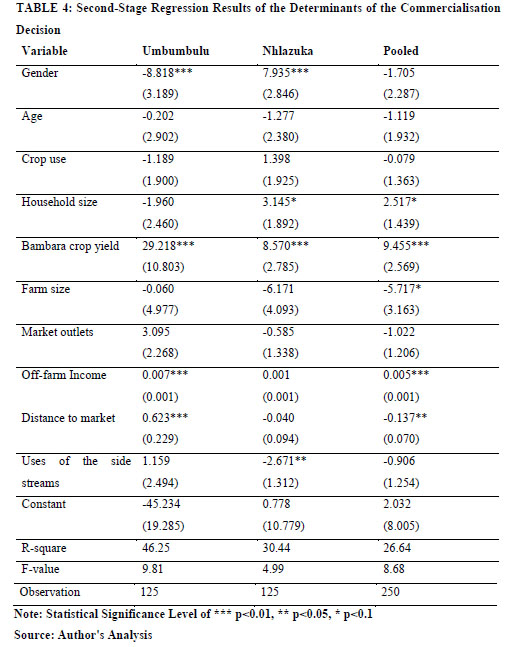
Table 4 presents the OLS results of the Heckman two-stage method for examining the extent of commercialisation of Bambara groundnut. In the Umbumbulu districts, the results showed that gender, Bambara crop yield, off-farm income, and farm distance were factors in the extent of commercialisation of Bambara groundnut.
The female sampled farmers commercialised Bambara groundnut 8.88 times more than the male sampled farmers. The result was consistent with the commercialisation decision findings in Table 3 and with the study by Esan et al. (2023), in which female households sold their produce in the market. The sampled farmers who earned more off-farm income in Umbumbulu commercialised more Bambara groundnut, by 0.007, at the 1% significance level. The results confirm that off-farm income is significant in the increased commercialisation of Bambara groundnut. The income may cushion the negative effect of financial constraints on transaction costs, thereby smoothing the commercialisation of crops. Distance to market was negatively influenced commercialisation level by 1% in Umbumbulu. A 1-unit increase in farm distance was associated with a 0.62 increase in the commercialisation of Bambara groundnut in Umbumbulu. This finding was inconsistent with the apriori expectation that proximity to the market would increase the commercialisation of Bambara groundnut in Umbumbulu. While the sampled farmers' potential lies in having more surplus, demand for Bambara groundnut was not close to the Umbumbulu, which may reduce the returns to commercialising the crop. The coefficient of average crop yield was positively influenced by the commercialisation of Bambara groundnut by 1% in the Umbumbulu district. This result is important even if the district is far from the market. More surplus to sell would promote preference for the market, where farmers can earn high farm income.
In Nhlazukha, gender, household size, average, and the use of side streams were statistically significant factors influencing the commercialisation of Bambara groundnut. Side-stream waste negatively affected commercialisation by 5%. An additional increase in stream waste led to a 2.67 decrease in commercialisation. The results implied that most Bambara groundnuts were demanded raw from farmers, allowing them to sell Bambara groundnuts and their by-products. The gender results were contrary in Nhlazuka, where male-sampled farmers commercialised Bambara groundnut by 7.94 more than the female-sampled farmers. The contribution of male households to crop commercialisation has been recorded in other regions (Zondi et al. 2022; Hlatshwayo et al. 2021). The household size of sampled farmers positively influenced commercialisation by 10% in the Nhlazuka and pooled datasets. Any additional member in the family led to an increase in the level of commercialisation by 3.15 and 2.52, respectively. After pooling the dataset, a 1-unit increase in off-farm income raises the extent of commercialisation of Bambara groundnut by 0.005 at the 1% significance level. Farm size negatively influenced the extent of commercialisation of Bambara groundnuts by 10%. The results implied that any additional increase in farm size in the pooled data set led to a decrease in the level of commercialisation by 5.72. Generally, the extent of Bambara commercialisation among local farmers increased by 29.22, 8.57, and 9.46 when local farmers had an additional average crop yield in Umbumbulu, Nhlazuka, and pooled data locations, respectively. The results confirm that high crop yield significantly influences Bambara groundnut's commercialisation level. Like the results from Umbumbulu, the pooled location datasets revealed that high off-farm income and farmers' distance significantly affected the commercialisation of Bambara groundnut among sampled farmers.
4. POLICY IMPLICATIONS
Relevant stakeholders in the South African policy realm emphasise the importance of the commercialisation of small-scale agriculture in addressing the challenges faced in food value chains. However, the low yields of Bambara groundnut pose a major challenge in realising its commercialisation potential. Policy objectives must address the prospect of Bambara groundnut production for a transformative change in its commercialisation.
The commercialisation of Bambara groundnut production has the potential to mitigate poverty and malnutrition in KwaZulu-Natal, South Africa. However, the low yields and subsistence-oriented production of Bambara groundnut limit its potential for market engagement. To promote the commercialisation of Bambara groundnut in KwaZulu-Natal, policies should target the key constraints identified in this study. Access to improved seed varieties should be expanded to increase yields and marketable surplus, while training on agronomic practices and commercialisation should reach farmers to enhance productivity and reduce losses. Market access can be strengthened through cooperatives and links to formal markets, and value addition of by-products should be promoted to diversify income. Targeted programs for youth and women, including digital tools, market information, and small grants, can increase participation and innovation, supporting sustainable commercialisation, poverty reduction, and improved nutrition.
5. CONCLUSION AND RECOMMENDATIONS
Commercialisation for Bambara groundnut farmers can mitigate poverty alleviation and malnutrition in KwaZulu-Natal, South Africa. This study found that the commercialisation of Bambara groundnut among rural farmers was statistically significantly influenced by gender, age, use of side streams, crop yield, household size, farm size, off-farm income, and average crop yields in the districts of Umbumbulu and Nhlazuka in KwaZulu-Natal province. Crop yield is a pivotal factor in their ability to commercialise Bambara Groundnut. Enhanced income from successful commercialisation through increased yield can mitigate poverty and malnutrition and improve living standards in Africa. Two significant novelties can be derived from this study. This study has contributed to the literature that prioritises reviving underutilised crops for achieving food security. The study findings inform policy decisions that support the sustainability of underutilised crops. Policies and interventions should prioritise empowering rural farmers by addressing these socio-economic determinants. Sensitisation to adding value to side-stream waste will enable farmers to sell Bambara groundnut and its by-products. Farmers also need support to scale up their production of Bambara groundnut for commercialisation. Promoting awareness about Bambara Groundnut's nutritional benefits and market potential can encourage its production among farmers of varying genders.
6. DISCLOSURE STATEMENT
The authors declare no conflicts of interest.
With grant agreement No 862170, funding was received from the European Union's research and innovation program (2020) for the InnoFood Africa project. The authors are grateful for the funding.
8. ETHICS APPROVAL
All participants gave informed consent to take part in the study. Ethical approval, with protocol reference number HSSREC/00001499/2021, was granted by the Humanities and Social Sciences Research Ethics Committee (HSSREC) for the study at the University of KwaZulu-Natal, South Africa. HSSREC (REC-040414-040) is registered with the South African National Research Ethics Council.
REFERENCES
- AKINOLA, R., PEREIRA, L.M., MABHAUDHI, T., DE BRUIN, F.M. & RUSCH, L., 2020. A review of indigenous food crops in Africa and the implications for more sustainable and healthy food systems. Sustain., 12(8): 3493.
- CESAR, R.G., LUIZA, T., FAICAL, A. & IAN, D., 2022. Exploring the effects of increasing underutilised crops on consumers' diets: The case of millet in Uganda. Agric. FoodEcon., 10(1): 1.
- CHIPFUPA, U. & TAGWI, A., 2021. Youth's participation in agriculture: A fallacy or achievable possibility? Evidence from rural South Africa. S. Afr. J. Econ. Manag. Sci., 24(1): 1-12.
- ESAN, V.I., OKE, G.O. & OGUNBODE, T.O., 2023. Genetic variation and characterisation of Bambara groundnut [Vigna subterranea (L.) verdc.] accessions under multi-environments considering yield and yield components performance. Sci. Rep., 13(1): 1498.
- FALOLA, A., MUKAILA, R. & AHMED, A.O., 2022. Commercialisation of Bambara Nut Production in Nigeria. Yuz. Yil Univ. J. Agric. Sci., 32(2): 351-361.
- HILLOCKS, R.J., BENNETT, C. & MPONDA, O.M., 2012. Bambara nut: A review of utilisation, market potential and crop improvement. Afr. Crop Sci. J., 20(1).
- HLATSHWAYO, S.I., NGIDI, M., OJO, T., MODI, A.T., MABHAUDHI, T. & SLOTOW, R., 2021. A typology of the level of market participation among smallholder farmers in South Africa: Limpopo and Mpumalanga Provinces. Sustain., 13(14): 7699.
- HLATSHWAYO, S.I., SLOTOW, R. & NGIDI, M.S.C., 2023. The role of smallholder farming on rural household dietary diversity. Agric., 13 (3): 595.
- JANSUWAN, P. & ZANDER, K.K., 2022. Multifunctional farming as successful pathway for the next generation of Thai farmers. PLoS One., 17(4): e0267351.
- JIDEANI, V.A. & JIDEANI, A.I., 2021. Bambara groundnut: Utilization and prospects. Springer.
- KHAN, M.M.H., RAFII, M.Y., RAMLEE, S.I., JUSOH, M. & AL-MAMUN, M., 2021. Bambara Groundnut (Vigna subterranea L. Verdc): A crop for the new millennium, its genetic diversity, and improvements to mitigate future food and nutritional challenges. Sustain., 13(10): 5530.
- LI, X., YADAV, R. & SIDDIQUE, K.H., 2020. Neglected and Underutilised crop species: The key to improving dietary diversity and fighting hunger and malnutrition in Asia and the Pacific. Front. Nutr., 7: 593711.
- LINDSJÖ, K., MULWAFU, W., ANDERSSON DJURFELDT, A. & JOSHUA, M.K., 2021. Generational dynamics of agricultural intensification in Malawi: Challenges for the youth and elderly smallholder farmers. Int. J. Agric. Sustain., 19(5-6): 423-436.
-
LUBUNGU, M., CHAPOTO, A. & TEMBO, G., 2012. Smallholder farmers' participation in livestock markets: The case of Zambian Farmers. Available from http://dx.doi.org/10.22004/ag.econ.140902
» http://dx.doi.org/10.22004/ag.econ.140902 - MABHAUDHI, T., CHIBARABADA, T., CHIMONYO, V., MURUGANI, V., PEREIRA, L., SOBRATEE, N., GOVENDER, L., SLOTOW, R. & MODI, A., 2019. Mainstreaming underutilised indigenous and traditional crops into food systems: A South African perspective. Sustain., 11(1): 172.
- MABHAUDHI, T., CHIMONYO, V. & MODI, A., 2017. Status of underutilised crops in South Africa: Opportunities for developing research capacity. Sustain., 9(9): 1569.
- MAJOLA, N.G., GERRANO, A.S. & SHFMELIS, H., 2021. Bambara groundnut (Vigna subterranea [L.] Verdc.) production, utilization and genetic improvement in Sub-Saharan Africa. Agronomy., 11(7): 1345.
- MAYES, S., HO, W.K., CHAI, H.H., GAO, X., KUNDY, A.C., MATEVA, K.I. & AZAM-ALI, S.N., 2019. Bambara groundnut: An exemplary underutilised legume for resilience under climate change. Planta., 250: 803-820.
- MEEMKEN, E.M. & BELLEMARE, M.F., 2020. Smallholder farmers and contract farming in developing countries. Proc. Natl. Acad. Sci., 117: 259-264.
- MUBAIWA, J., FOGLIANO, V., CHIDEWE, C., BAKKER, E.J. & LINNEMANN, A.R., 2018. Utilization of bambara groundnut (Vigna subterranea (L.) Verdc.) for sustainable food and nutrition security in semi-arid regions of Zimbabwe. PloS One., 73(10): e0204817.
- MUDAU, F.N., CHIMONYO, V.G.P., MODI, A.T. & MABHAUDHI, T., 2022. Neglected and underutilised crops: A systematic review of their potential as food and herbal medicinal crops in South Africa. Front Pharmacology., 12: 809866.
- MUKAILA, R., FALOLA, A. & OMOTESHO, O.A., 2020. Food security status: Its drivers and coping strategies among vegetable farming households. Cercetãri Agronomice în Moldova., 53(4): 414-425.
- OLANREWAJU, O.S., OYATOMI, O., BABALOLA, O.O. & ABBERTON, M., 2022. Breeding potentials of Bambara groundnut for food and nutrition security in the face of climate change. Front. Plant Sci., 12: 3186.
- OLAYIDE, O.E., DONKOH, S.A., ANSAH, I.G.K., ADZAWLA, W., O'REILLY, P.J., MAYES, S. & ALABI, T., 2018. Assessing socio-economic factors influencing production and commercialisation of Bambara groundnut as an Indigenous climate resilient crop in Nigeria. Switzerland: Springer Nature.
- PAWLAK, K. & KOLODZIEJCZAK, M., 2020. The role of agriculture in ensuring food security in developing countries: Considerations in the context of the problem of sustainable food production. Sustain. Develop. Rural Areas Agric., 12(13): 1-20.
- REVOREDO-GIHA, C., TOMA, L., AKAICHI, F. & DAWSON, I., 2022. Exploring the effects of increasing underutilised crops on consumers' diets: The case of millet in Uganda. Agric. Food Econ., 70(1): 1.
- SENYOLO, G.M., 2018. Value chain analysis and determinants of production and consumption of African leafy vegetables in Limpopo Province of South Africa. Doctoral thesis, University of KwaZulu-Natal.
- SIZIBA, S., NYIKAHADZOI, K., DIAGNE, A., FATUNBI, A.O. & ADEKUNLE, A.A., 2011. Determinants of cereal market participation by sub-Saharan Africa smallholder farmer. J. Agric. Environ. Studies., 2: 180-193.
- SMÝKAL, P., COYNE, C.J., AMBROSE, M.J., MAXTED, N., SCHAEFER, H. & BLAIR, M.W., 2015. Legume crop phylogeny and genetic diversity for science and breeding: Critical Review. Plant Sci., 34: 43-104.
- ZONDI, N.T.B., NGIDI, M.S.C., OJO, T.O. & HLATSHWAYO, S.I., 2022. Impact of market participation of indigenous crops on household food security of smallholder farmers of South Africa. Sustain., 14(22): 15194.