Enhancing Agricultural Advisory Services Through Field Surveys and Interpretation of Soil Physicochemical Properties for Efficient Productivity
Abstract
Small-scale agriculture advisors play a crucial role in supporting farmers, yet gaps often hinder their effectiveness in soil knowledge and interpretation. To address this challenge, a research project was initiated by the South African Sugarcane Research Institute (SASRI) in two rural districts of KwaZulu-Natal, the Midlands and Zululand, home to several struggling small-scale farming communities. The study aimed to equip small-scale agriculture advisors with essential skills to interpret and apply soil information, ultimately improving farm productivity and sustainability. The study used soil classification as the foundation for determining soil potential, guiding key production decisions such as variety selection, seed-cane production, farmer training, and income enhancement. The study followed a structured 9-point methodology focused on stakeholder engagement, capacity building, practical soil sampling and analysis, and the sustainable application of soil information through training, mapping, and the development of regional soil databases to support informed decision-making in small-scale grower (SSG) regions. The initiative began with a baseline assessment to identify knowledge gaps among small-scale agricultural advisors, followed by soil classification and soil mapping to determine soil potential and guide production decisions. Training workshops, field demonstrations, and digital tools were introduced to enhance advisors' ability to interpret and apply soil data in real farming scenarios. The study emphasised knowledge sharing, documentation of best management practices, and strategies for scaling up to other districts. This holistic approach ensured that advisors were well equipped to support SSGs in making informed, soil-based decisions to improve farm productivity and sustainability. Overall, the findings indicate that enhancing agricultural advisors' soil knowledge significantly improves farm management decisions, leading to improved productivity and sustainability for SSGs. While challenges such as access to technology and ongoing support remain, the positive impact on advisory services and grower outcomes underscores the importance of investing in knowledge-based agricultural extension. Continued mentorship and collaboration with the private organisation is key to sustaining these gains and expanding the initiative to other farming communities.
Management Practices; Small-Scale Farming; Soil Classification; Soil Potential
1. INTRODUCTION
Small-scale agriculture forms the backbone of rural economies in many developing countries, including South Africa (Aliber & Hall, 2012; FAO, 2019). Amongst economic crops in South Africa, the sugarcane industry, especially the small-scale growers (SSGs) sector, accounts for a significant portion of production, particularly in KwaZulu-Natal and Mpumalanga provinces (SASA, 2022). The sector supports thousands of rural households. In the country, over 25,000 sugarcane growers are SSGs (SACGA, 2024). However, these SSGs often face numerous challenges, including limited technical capacity, low productivity, poor soil health, and suboptimal land-use practices (Magingxa & Kamara, 2003; DAFF, 2019). A key contributor to these constraints is the lack of localised, science-based agricultural advisory services tailored to small-scale systems. Agricultural advisors (AAs) serve as a critical link between research institutions like the South African Sugarcane Research Institute (SASRI) and sugarcane growers. Their ability to interpret and apply scientific knowledge, particularly regarding soil properties and fertility, is essential for making appropriate land-use decisions, applying inputs sustainably, and improving crop performance (Vanlauwe et al., 2014). Despite their importance, many small-scale AAs are constrained by limited training, insufficient access to data, and gaps in their understanding of soil science. This knowledge gap impedes their ability to provide site-specific recommendations, often resulting in generalised advice that fails to address the diverse needs of smallholder systems.
While soil is a fundamental resource for agricultural productivity, its variability across landscapes presents a challenge for uniform management practices, particularly in heterogeneous smallholder systems (Steward et al., 2020). In many rural South African farming contexts, historical underinvestment in soil mapping, classification, and advisory infrastructure has resulted in a limited understanding of local soil potential (Paterson et al., 2015). Consequently, critical production decisions, such as variety selection, soil fertilisation strategies, and land preparation techniques, are often made without reference to soil type or condition. The disconnection between soil science and on-the-ground practices undermines yield potential and threatens the long-term sustainability of farming systems (Tittonell & Giller, 2013). Addressing this issue requires targeted interventions that not only generate localised soil information but also build the capacity of extension personnel to interpret and apply such knowledge in practical, actionable ways. The SASRI-led initiative described in this paper represents a novel approach to bridging this gap by empowering small-scale AAs with soil literacy and decision-making tools tailored to their regional contexts.
Recognising this challenge, SASRI launched a capacity-building initiative in 2021 to equip AAs with practical skills in soil classification, interpretation, and application. The study was implemented across the sugarcane industry; however, for this paper, we focus on two rural regions in KwaZulu-Natal Midlands and Zululand, both of which are home to struggling SSG farming communities. By embedding soil classification as the foundation for determining land potential, the study sought to enhance decision-making around soil suitability, variety selection, seed-cane production, fertiliser recommendations, and farmer training. This paper outlines the design, implementation, and outcomes of this initiative, highlighting the transformation in advisor capacity and the subsequent impact on farming practices. It also reflects on the barriers encountered and identifies opportunities to scale and sustain such initiatives in similar agroecological and socio-economic contexts.
2. MATERIALS AND METHODS
2.1. Study Area
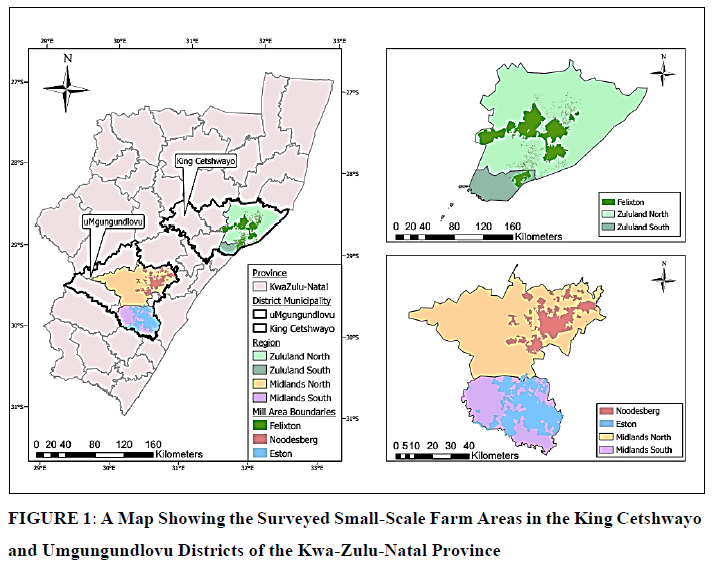
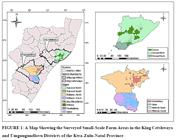
The study was conducted in two rural districts within KwaZulu-Natal, South Africa, namely the King Cetshwayo District Municipality and the uMgungundlovu District Municipality, both of which are characterised by significant small-scale sugarcane production. The Zululand region was surveyed under the King Cetshwayo District Municipality, whereas the Midlands North and Midlands South regions were surveyed within the uMgungundlovu District Municipality (Figure 1). These areas present varied agroecological conditions, including differences in rainfall, soil types, and farming practices, making them ideal for evaluating soil-based decision support systems.
2.2. Participant Selection and Baseline Assessment
The project targeted small-scale AA affiliated with the Department of Agriculture and Rural Development (DARD), South African Sugarcane Growers Association (SACGA), South African Farmers Development Association (SAFDA), local growers, and provincial mill extension offices. An initial baseline assessment was conducted using structured interviews and knowledge-based surveys to identify gaps in soil literacy, soil classification knowledge, and the application of soil information in advisory contexts. During the surveys, as the standard practise, two kinds of soil information were recorded, namely: 1) properties that characterise soil and 2) properties that characterise landform features. This baseline informed the design of the training and capacity building components.
2.3. Soil Classification and Mapping
A field-based soil classification campaign was implemented to characterise and map soil types, texture, soil moisture, and selected nutrients across selected areas. The South African Soil Classification System: A Natural and Anthropogenic System for South Africa (Soil Classification Working Group, 2018) and Identification and Management of the Soils of the South African Sugar Industry were used to describe soil profiles, horizon properties, and associated land capability. Soil profiles and auger holes were used as reference points, with soil profiles comprising one or more distinct horizons. Soils were classified to the soil form level, where for each horizon, the thickness, clay content, sand grades, colour, mottles, structure, moisture status, consistence, cementation, nodules, coarse fragments, cutans and slickensides, if present, were recorded. In all the representative soil profiles, samples were collected for laboratory tests. Routine/standard soil analysis, as per the Fertiliser Advisory Service's (FAS) laboratory tests, was performed. However, for this project, only soil pH, phosphorus (P), potassium (K), clay%, and organic matter (OM) were considered as key measures of soil potential (Yang et al., 2020). For the mapping, the free method, which involves using landscape features to locate observation points, was used. The free methods were guided by the pedosystem concept, which denotes land over which terrain form and soil pattern each display a marked degree of uniformity.
2.4. Capacity Building and Training Workshops
A structured 9-step training program was developed, focusing on soil identification, interpretation of classification data, and practical application to farming decisions. The training included:
Field-based workshops for hands-on soil profile description and classification on soil formation, morphology, and fertility principles.
Digital literacy sessions introducing GIS-based tools and soil data capturing (Survey 123). Training materials were developed in collaboration with SASRI soil scientists, the GIS department, and the Knowledge Management Unit as part of SASRI project 19TD03 (Soil Conservation Learning Resources for Small-Scale Grower Extension).
Feedback training session for growers on soil types, soil fertility, and fertiliser recommendations. All the training documents were translated into isiZulu to enhance accessibility for participants.
2.5. Integration into Advisory Practice
Participants were guided in using soil classification and potential data to make informed recommendations on variety selection, site-specific fertiliser application, and sustainable land preparation. For each soil form, an estimated yield potential was determined using expert knowledge and field data, and the most suitable sugarcane varieties were then recommended to achieve that potential. Agriculture Advisors were encouraged to apply their knowledge in ongoing extension visits with local growers, with feedback mechanisms established to capture progress, challenges, and learning needs.
2.6. Monitoring and Evaluation
Continuous monitoring of AA performance and grower outcomes was conducted through field observations, semi-structured interviews, and follow-up workshops. Key indicators included improvement in soil knowledge, changes in advisory recommendations, and observed changes in farm management practices by small-scale growers. Best management practices and lessons learned were documented to support knowledge sharing and potential scale-up in other regions.
3. RESULTS
3.1. Improved Agriculture Advisor Knowledge and Confidence
Post-training assessments revealed a marked improvement in the soil knowledge and confidence of participating agriculture advisors. Most participants demonstrated the ability to correctly identify key soil forms in their districts or regions and explain how soil characteristics influence crop performance. In follow-up field visits, AA confidently applied soil information to guide decisions on variety selection, fertiliser recommendations, and land preparation techniques.
3.2. Site-Specific Soil Mapping and Yield Potential Estimation
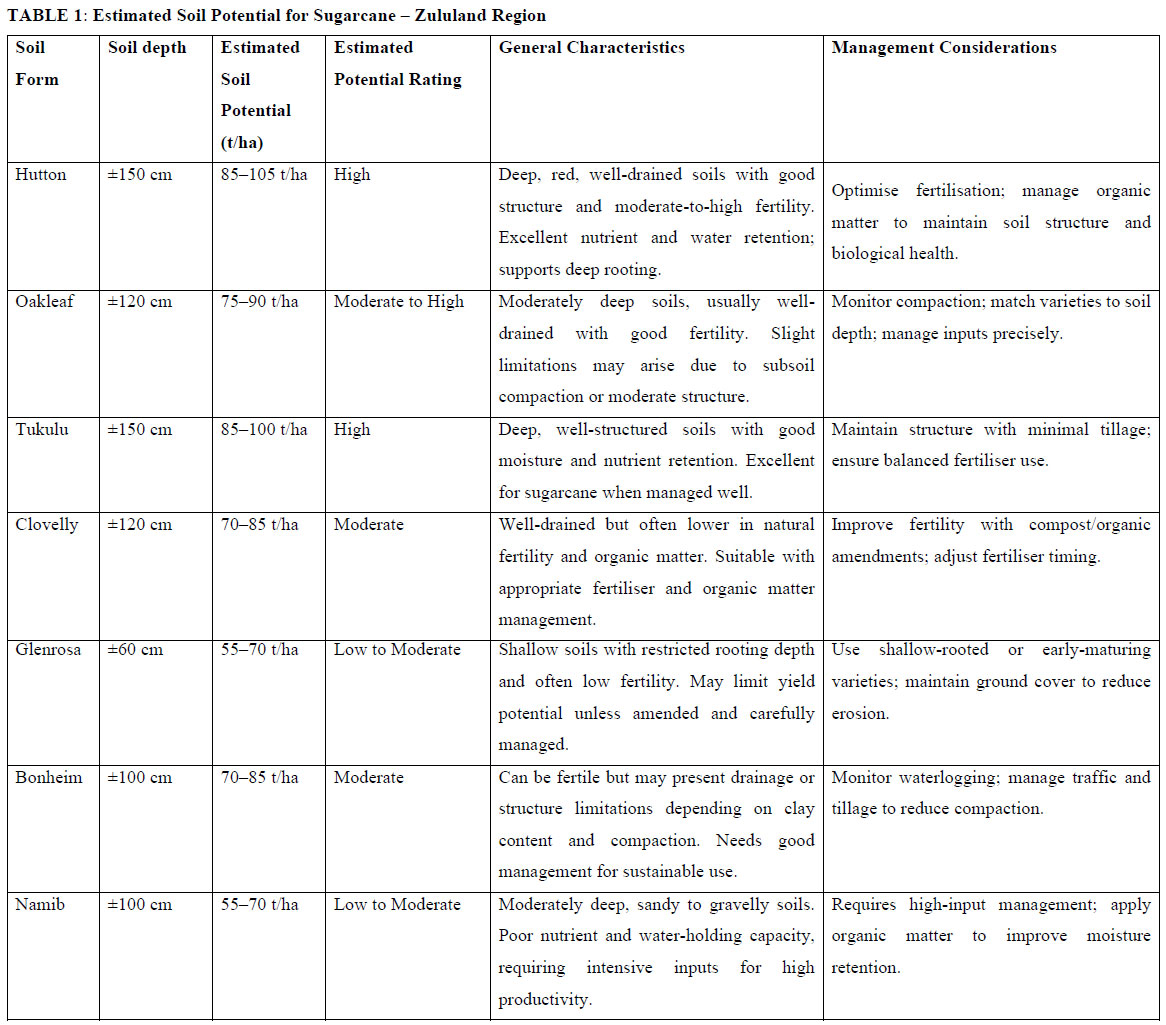
Soil classification and mapping across demonstration plots identified a diversity of soil forms, with major groups. A total of 357 soil samples were collected from 103 auger points across the Zululand region. The number of samples collected per auger point varied depending on soil depth. Soils were classified into seven forms, with Oakleaf (32.35%), Glenrosa (29.4%), and Tukulu (16.67%) the most dominant. Sampling reached depths of up to 100 cm, with effective rooting depths (ERD) varying by soil form. Hutton soils reached up to 80 cm, while Glenrosa soils were shallower (40 - 50 cm). Estimations of yield potential were highest on Hutton and Tukulu; moderate to high on Oakleaf; moderate on Clovelly and Bonheim; low to moderate on Glenrosa and Namib soil forms (Table 1).
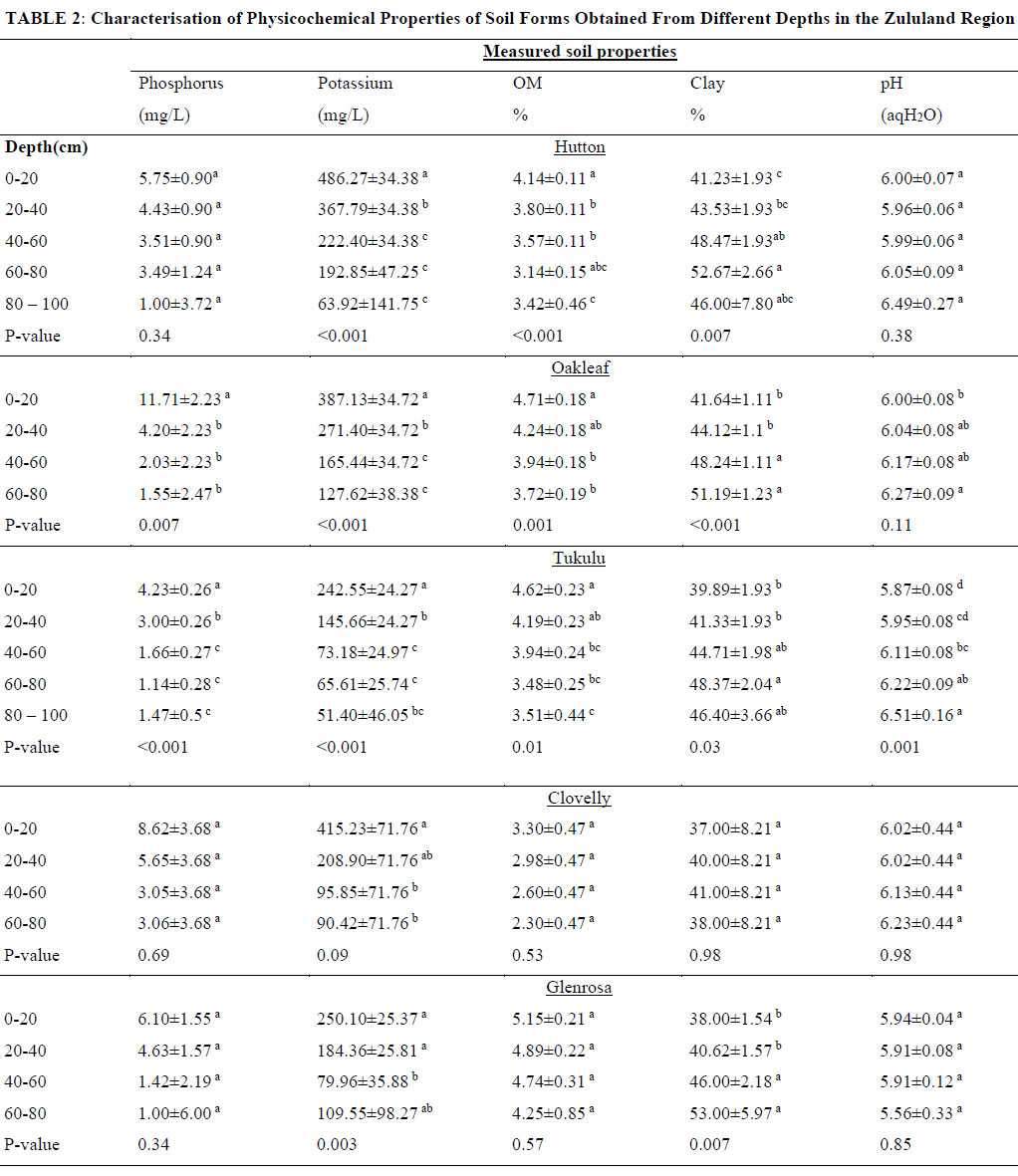
Laboratory analysis of soil parameters revealed that phosphorus, potassium, and organic matter concentrations generally declined with depth across all soil forms, whereas clay content typically increased with depth up to 60-80 cm. Soil pH ranged from slightly acidic to near-neutral (5.85-6.54), varying with soil type and depth (Table 2). These findings highlight the variability in soil fertility and rooting depth across soil types and underscore the importance of soil-specific management strategies to support sugarcane productivity in the Zululand region.
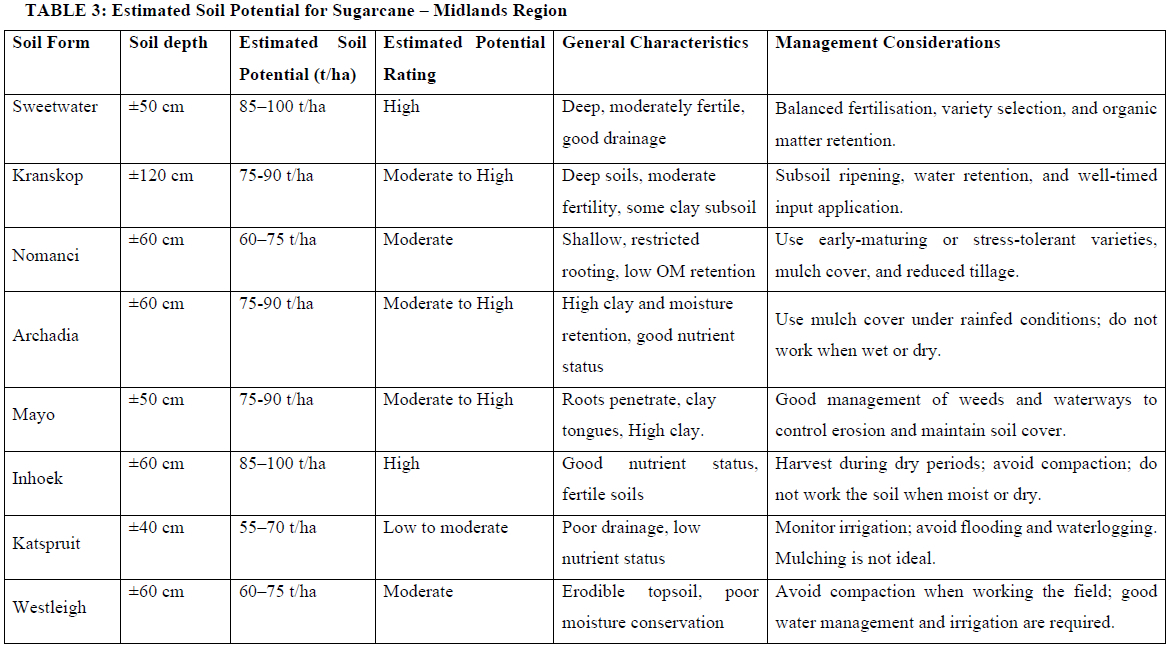
The Midlands region had high soil variability and was generally dominated by Glenrosa, Oakleaf, Sweetwater, and Tukulu soil forms. In particular, the Midlands North had Sweetwater and Kranskop dominating over Nomanci, Inanda and Magwa soil forms (Figure 2A). However, the Midlands South comprised relatively high variability in soil types and depths. Most surveyed fields had Tukulu, Oakleaf, and Glenrosa soil forms with approximate effective rooting depths (ERDs) of 75 cm, 70 cm, and 55 cm, respectively. Some fields had shallow soil depth (≤ 35 cm) with high clay content, classified as Archadia soil form (Figure 2B). This relates to varying productivity potential and necessitates different in-field management practices for efficient productivity. Yield potential estimations were rated high for Sweetwater; Moderate to high for Kranskop; and Moderate for Nomanci soil forms (Table 3). Moreover, the newly classified soil forms were incorporated into Table 3, and the remaining forms were similar to those found in the Zululand region, as highlighted in Table 1. A total of 224 auger holes were drilled, and 902 soil samples were collected from the Midlands for analysis (i.e. Midlands South had 128 and 448; Midlands North had 96 and 454 auger holes and soil samples collected, respectively). However, due to the high variability of soil types, only soil forms classified in more than three auger holes were presented and identified as common in the region.
Pertaining to soil nutrients as well as soil properties in response to depth and soil forms, similar trends to those of the Zululand region were observed in the Midlands. Nutrient depletion increased with depth, while clay accumulation was enhanced (results not presented). Notably, numerous growers continued to plant older varieties like N37, while a few were adopting more productive options such as N48 and N54. Variety selection remains limited by seed-cane availability, despite its critical importance for yield and long-term profitability.
Similar letters indicate insignificant differences, whereas different letters indicate significant differences among the tested parameters. P-values less than 0.05 indicate significant differences at the 95% confidence level.
Based on these classifications, yield potential models were developed for key sugarcane varieties, enabling more targeted extension advice. Advisors reported that these models supported more credible and practical discussions with growers about site-specific production limitations and potential interventions.
3.3. Grower Practice Change and Early Impact
Small-Scale growers who participated in the trainings, demonstrations and advisory sessions reported increased awareness of the role of soil in determining variety (crop) performance. Several growers had to adopt site-specific fertiliser regimes, adjust variety choices and/or selection, and alter planting depths based on soil profile characteristics. In some cases, growers reported visible improvements in crop vigour and early-season growth, particularly where previous mismanagement of sandy or shallow soils had led to poor stand establishment.
3.4. Adoption of Tools and Feedback Systems
Digital tools introduced during the training, including Survey 123 (GIS), Optifert (fertiliser application app), simplified soil data apps, soil maps, and a variety of guides, were used by all participating AAs within four months post-training. Agriculture advisors shared that the tools enhanced their ability to provide data-backed recommendations to their growers. Additionally, feedback sessions revealed that AA and the growers valued the structured support network established through SASRI, which enabled peer learning and access to technical expertise when needed.
3.5. Challenges and Constraints
Despite positive outcomes, several challenges were encountered. Limited access to smartphones or reliable internet in some rural areas hindered the consistent use of digital tools. In a few cases, advisors faced scepticism from growers accustomed to traditional practices, which delayed adoption of new recommendations. Advisors also indicated the need for continued refresher training and mentoring, particularly in interpreting more complex soil profiles and linking them to nutrient management plans.
4. DISCUSSION
Soil information such as texture, colour, depth, OM, and fertility status influences decisions regarding cultivation time and type, crop suitability and sowing density, input amounts, and possible outputs per arable field (Yang et al., 2020). This, therefore, necessitates field surveys conducted through soil classification within specific farm areas to establish suitable agronomic management for optimised crop production and land use (Bhat et al., 2023). However, the SSGs are not knowledgeable about soil assessments; thus, guidance from the AAs is essential for informed decision-making (Zulu et al., 2019). Moreover, the capabilities of AAs in using soil information for effective advisory services are of paramount importance, hence the need for their training and capacity building on the subject matter. The SASRI project has demonstrated benefits from AAs and SSGs training in soil information through knowledge sharing and in-field practical soil surveys, as discussed in this study.
4.1. Impact of Capacity Building for Improved Advisory Services
This project has demonstrated that targeted capacity building in soil classification and interpretation can significantly enhance the effectiveness of small-scale agricultural advisory services. The noticeable improvement in knowledge retention and application highlights the effectiveness of the training methodology, which emphasised both theoretical understanding and practical field application. These findings are consistent with previous studies that reported on the use of extension support and localised advisory models (Aker, 2011; Kariuki, 2018). Moreover, the data suggest that empowered AAs are more confident and better able to deliver site-specific guidance, leading to tangible improvements in small-scale farming practices (Nchare, 2007; Simonyan et al., 2011; Ambetsa et al., 2020). This could potentially address the lack of SSGs' adaptive capacity, which has been extensively discussed in the literature (Ofoegbu et al., 2016; Karienye & Macharia, 2020). The surveyed farm areas with high soil variability support the initiative of site-specific management and provide data-backed reasoning for managing fields entirely based on observed requirements.
4.2. Site-Specific Soil Surveys
The presented laboratory results for the Zululand region were due to its similar soil types that varied only in nutrient distribution across different soil depths. Certain fields, particularly those of the Oakleaf soil form, had relatively high accumulations of Phosphorus (P), with most fields of varying soil forms registering low P levels (<11.6 mg/L), which may have been adsorbed by the soil or extracted by plants during previous seasons (Balemi & Negisho, 2012). The available potassium (K) that was sufficiently above the Fertiliser Advisory Service's (FAS) threshold (125 mg/L) throughout the surveyed fields presented high suitability for sugarcane cultivation.
Impressively, the measured soil pH was within the acceptable range for the Zululand region, as opposed to the early reports of acidic subsoils in the Coastal and Midlands to Midlands South regions by Singels et al. (2015). These might have been improved by the recommendation to apply lime and gypsum to correct soil acidity during the preceding seasons. The adequate distribution of soil organic matter (SOM) across the topsoil of various fields, as estimated by mid-infrared (MIR) spectroscopy, was due to the accumulation and surface decomposition of organic material. This phenomenon has been reported by various studies that demonstrated high SOM in the topsoil (Franzluebbers, 2002; Emiru & Gebrekidan, 2013; Knebl et al., 2017). Clay eluviation is believed to have contributed to the improved clay percentage with increasing soil depth. In support, Zhang et al. (2023) presented soil clay content and its variability with soil depth. Varying nutrient distributions across different soils likewise justify the need for AAs and growers to be knowledgeable about identifying constraints to soil productivity and be mindful of their control to optimise production.
The Midlands region comprised high variability in soil types; hence, the presented results were limited to soil form and depth only. The differences in soil forms and productivity potential of the Midlands region are attributed to the inherent spatial variability of soils arising from their development (parent material) (Gülser et al., 2016; Nebo et al., 2020; Nonxuba et al., 2025). However, the observed similarities within varying soil forms having the same clay type (Kaolinite and Montmorillonite) and ERD (≥60 cm and ≤35 cm) enabled moderate to high production estimates. Also, because of the nature of the dominant low-clayey soils, which have deep ERD relative to the shallow, high-clayey soils, the overall region's productivity potential was estimated to be moderate to high. Hirzel and Matus (2013) elaborated on increased yields with increasing soil profile depth. Numerous studies have likewise linked soil depth to crop productivity and reported increased productivity in deep soils (Gardner et al., 1999; Zhang et al., 2021; Schreiner-McGraw & Baffaut, 2023; Bai et al., 2024). Additionally, clay particles affect soil potential; highly clayey soils are more productive, with high nutrient and moisture retention capacity influenced by the clay minerals (Wang et al., 2022). AAs capacitation with soil information improves understanding of the processes governing soil properties, it ultimately contributes to efficient advisory services and, in turn, to the proper implementation and adoption of necessary farming practices by growers.
4.3. Effectiveness of Capacity Building for Advisory Services
The training sessions, hands-on workshops, and digital tools provided AAs with a deeper understanding of soil properties, fertility management, and site-specific recommendations. For each soil type, an estimated yield potential was determined using expert knowledge and field data, and the most suitable sugarcane varieties were recommended to achieve it. Notably, local growers had never classified or collected soil samples for testing prior to these trainings. Growers who participated in the project reported noticeable improvements in yield and soil health due to better-informed soil management practices. The introduction of site-specific fertilisation and land preparation strategies led to increased efficiency in the use of inputs and reduced environmental impact. Soil tests before planting are essential practices that help farmers identify the type and amount of fertilisation required by the soil for efficient crop productivity (Ambetsa et al., 2020). Jamoza et al. (2013) and Amolo et al. (2017) are among the authors who made similar recommendations. Hussain and Khattak (2008) also found a significant difference in crop yield when chemical fertiliser was applied at the appropriate time and at the correct application rate.
Furthermore, the integration of advisory services with ongoing monitoring and feedback mechanisms ensured continuous learning and refinement of soil management techniques. The use of soil classification as an entry point to broader agronomic decision-making proved particularly effective. It provided a structured framework for understanding and communicating land potential, supporting decisions related to crop variety selection, input application, and land preparation. The development of site-specific yield potential models also enhanced the credibility of recommendations and deepened growers' understanding of the soil's role in productivity, a finding consistent with the literature that emphasises the importance of context-specific interventions in smallholder systems (Tittonell & Giller, 2013).
4.4. Limitations to Efficient Adoption of Advised Techniques by Growers
The project also highlighted structural challenges. Limited access to digital tools and infrastructure remains a barrier to full adoption of modern advisory systems, particularly in rural or resource-limited regions. Some identified challenges include the initial resistance to adopting new practices. Ambetsa et al. (2020), in a study on Kenyan SSGs' technical efficiency in sugarcane production, reasoned that farmers' age impacts the adoption of modernly advised practices, with older farmers resisting the adoption of improved technologies due to a lack of mental and physical capacity to participate in sugarcane production efficiently. Khan and Saeed (2012) similarly reported that older farmers were less technically efficient than younger farmers. Conversely, Getahun and Geta (2017), as well as Binam et al. (2004), assumed that the adoption efficiency of new methods increased with experience; Nyagaka et al. (2010), Mulwa et al. (2014), and Mburu et al. (2014) reported similar observations. However, high adoption is achieved through increased interest in the newly introduced/advised technique (Thabethe & Mungatana, 2014); hence, the reports contradict. Behavioural resistance from growers rooted in traditional practices or previous negative experiences underscores the importance of sustained advisor-grower relationships and ongoing support, as well as the need for support beyond the training period. Addressing these barriers will require continuous mentorship and improved access to digital resources. Long-term partnerships with SASRI, South African Sugar Cane Growers, South African Farmers Development and government agencies (Ncoyini-Manciya & Manciya, 2024) will be crucial for scaling up the success of such projects. Overall, the findings indicate that enhancing agricultural advisors' soil knowledge significantly improves farm management decisions, leading to improved productivity and sustainability for small-scale growers. The integration of digital tools into advisory services holds considerable promise but requires complementary investment in infrastructure and training. Agricultural technologies formed through participatory research have a greater chance of adoption (Ashby & Lilja, 2004; Asiedu-Darko, 2014; Tena et al., 2016), hence the positive gains from the project. Feedback loops, peer learning opportunities, and long-term mentorship were critical to the sustained use of newly acquired skills and should be formalised in future scaling efforts.
5. CONCLUSION
The findings of this project affirm that improving small-scale agricultural advisors' understanding and application of soil information can significantly enhance advisory services and lead to better decision-making by growers. The successful implementation of soil classification, the development of soil and yield potential models, and the uptake of digital tools contributed to improvements in farming practices, with early indicators of yield and efficiency gains. These outcomes reinforce the value of investing in knowledge-driven extension systems. While challenges remain, particularly in access to technology and the need for continuous support, the foundation laid by this initiative demonstrates a scalable model for improving agricultural productivity in small-scale contexts. Future efforts should focus on embedding this soil-focused advisory model into national extension strategies, ensuring long-term support mechanisms, and expanding the approach to other agroecological zones. This will help in combating constraints on SSGs' adaptive capacity. Continued collaboration with SASRI and other stakeholders will be key to ensuring the sustainability and broader national impact of this initiative.
REFERENCES
- ADOLPH, B., 2015. Making agricultural advice work for smallholder farmers. International Institute for Environment and Development (IIED).
- AFRICAN FORUM FOR AGRICULTURAL ADVISORY SERVICES (AFAAS)., 2022. Training of trainers integrating the Tropical Agricultural Platform Framework into African research and extension organizations.
- AKER, J.C., 2011. Dial "A" for agriculture: a review of information and communication technologies for agricultural extension in developing countries. Agric. Econ., 42(6): 631-647.
- ALIBER, M. & HALL, R., 2012. Support for smallholder farmers in South Africa: Challenges of scale and strategy. Dev. South. Afr., 29(4): 548-562.
- AMBETSA, F.L., MWANGI, S.C. & NDIRANGU, S.N., 2020. Technical efficiency and its determinants in sugarcane production among smallholder sugarcane farmers in Malava sub-county, Kenya. Afr. J. Agric. Res., 15(3): 351-360.
- AMOLO, R.A., SIGUNGA, D.O. & OWUOR, P.O., 2017. Evaluation of soil properties of sugarcane zones and cropping systems for improved productivity in Western Kenya. Int. J. Agron. & Agric. Res., 11(3): 1-16.
- BAI, X., SMIDT, S.J., FAN, Y., BROPHY, T., HER, Y.G., MANIRAKIZA, N., LI, Y. & BHADHA, J.H., 2024. Farming shallow soils: impacts of soil depth on crop growth in the Everglades agricultural area of Florida, USA. Field Crops Res., 316: 109523.
- BALEMI, T. & NEGISHO, K., 2012. Management of soil phosphorus and plant adaptation mechanisms to phosphorus stress for sustainable crop production: a review. J. Soil Sci. Plant Nutr., 12(3): 547-562.
- BHAT, S.A., HUSSAIN, I. & HUANG, N.F., 2023. Soil suitability classification for crop selection in precision agriculture using GBRT-based hybrid DNN surrogate models. Ecol. Inform., 75: 102109.
- BINAM, J.N., TONYE, J., NYAMBI, G. & AKOA, M., 2004. Factors affecting the technical efficiency among smallholder farmers in the slash and burn agriculture zone of Cameroon. Food Policy., 29(5): 531-545.
- DEPARTMENT OF AGRICULTURE FORESTRY AND FISHERIES (DAFF)., 2019. Strategic Plan for Agriculture, Forestry and Fisheries. Department of Agriculture, Forestry and Fisheries, South Africa.
- EMIRU, N. & GEBREKIDAN, H., 2013. Effect of land use changes and soil depth on soil organic matter, total nitrogen and available phosphorus contents of soils in Senbat Watershed, Western Ethiopia. ARPN J. Agric. Biol. Sci., 8(3): 206-212.
- FOOD AND AGRICULTURE ORGANIZATION OF THE UNITED NATIONS (FAO)., 2019. Smallholders and family farmers. Rome: Food and Agriculture Organisation of the United Nations.
- FRANZLUEBBERS, A.J., 2002. Water infiltration and soil structure related to organic matter and its stratification with depth. Soil Tillage Res., 66(2): 197-205.
- GARDNER, C.M., LARYEA, K.B. & UNGER, P.W., 1999. Soil physical constraints to plant growth and crop production (Vol. 11). Rome, Italy: Land and Water Development Division, Food and Agriculture Organisation.
- GETAHUN, W. & GETA, E., 2017. Technical efficiency of smallholder barley farmers: The case of Welmera district, Central Oromia, Ethiopia. Afr. J. Agric. Res., 12(22): 1897-1905.
- HIRZEL, J. & MATUS, I., 2013. Effect of soil depth and increasing fertilization rate on yield and its components of two durum wheat varieties. Chil. J. Agric. Res., 73(1): 55-59.
- HUSSAIN, A. & KHATTAK, N., 2008. Economics of sugarcane crop in District Charsadda. J. Agric. Res., 49(1): 153-163.
- JAMOZA, J.E., AMOLO, R.A. & MUTURI, S.M., 2013. A baseline survey on the status of sugarcane production technologies in Western Kenya. In Proc. Int. Soc. Sugar Cane Technol., 28: 66-71.
- KARIENYE, D. & MACHARIA, J., 2021. Adaptive capacity to mitigate climate variability and food insecurity of rural communities along River Tana Basin, Kenya. In W.L. Filho, N. Oguge, D. Ayal, L. Adeleke & I. da Silva (eds.), African Handbook of Climate Change Adaptation. Cham: Springer International Publishing, pp. 49-60.
- KARIUKI, A.N., 2018. Upgrading strategies and food security implications on smallholder farmers in Sub-Saharan Africa: A value chain review. J. Food Secur., 6(4): 141-15.
- KHAN, H., 2012. Measurement of technical, allocative and economic efficiency of tomato farms in Northern Pakistan. J. Agric. Sci. Technol., B2(10B): 1080.
- KNEBL, L., LEITHOLD, G., SCHULZ, F. & BROCK, C., 2017. The role of soil depth in the evaluation of management-induced effects on soil organic matter. Eur. J. Soil Sci., 68(6): 979-987.
-
MAGINGXA, L.L. & KAMARA, A.B., 2003. Institutional perspectives of enhancing smallholder market access in South Africa. Paper presented at the 41st Annual Conference of the Agricultural Economics Association of South Africa, 2-3 October, CSIR conference centre, Pretoria. Available from https://ageconsearch.umn.edu/record/19077/?ln=en&v=pdf
» https://ageconsearch.umn.edu/record/19077/?ln=en&v=pdf - MBURU, S., ACKELLO-OGUTU, C. & MULWA, R., 2014. Analysis of economic efficiency and farm size: A case study of wheat farmers in Nakuru District, Kenya. Econ. Res. Int., 2014(1): 802706.
- MULWA, R., EMROUZNEJAD, A. & MUHAMMAD, L., 2014. Economic efficiency of smallholder maize producers in Western Kenya: A DEA meta-frontier analysis. Int. J. Oper. Res., 4(3): 250-267.
- NCHARE, A., 2007. Analysis of factors affecting technical efficiency of Arabica coffee producers in Cameroon. AERC., 163(6): 501-509.
- NCOYINI-MANCIYA, Z. & MANCIYA, S., 2024. Validating small-scale sugarcane farmers' climate perceptions through scientific climate data to enhance awareness of climate change: The case of Swayimana area in KZN Midlands, South Africa. S. Afr. Jnl. Agric. Ext., 52(3): 36-54.
- NYAGAKA, D.O., OBARE, G.A., OMITI, J.M. & NGUYO, W., 2010. Technical efficiency in resource use: Evidence from smallholder Irish potato farmers in Nyandarua North District, Kenya. Afr. J. Agric. Res., 5(11): 1179-1186.
- OFOEGBU, C., CHIRWA, P.W., FRANCIS, J. & BABALOLA, F.D., 2016. Assessing forest-based rural communities' adaptive capacity and coping strategies for climate variability and change: The case of Vhembe district in South Africa. Environ. Dev., 18: 36-51.
- PATERSON, G., TURNER, D., WIESE, L., VAN ZIJL, G., CLARKE, C. & VAN TOL, J., 2015. Spatial soil information in South Africa: Situational analysis, limitations and challenges. S. Afr. J. Sci., 111(5/6): 1-9.
- SCHREINER-MCGRAW, A.P. & BAFFAUT, C., 2023. Quantifying links between topsoil depth, plant water use, and yield in a rainfed maize field in the US Midwest. Agric. Water Manag., 290, p.108569.
- SIMONYAN, J.B., UMOREN, B.D. & OKOYE, B.C., 2011. Gender differentials in technical efficiency among maize farmers in Essien Udim local government area, Nigeria. IJEMS., 1(2): 17-23.
- SINGELS, A., LESLIE, G.W., MCFARLANE, S.A., MILES, N., GABRIEL, A. & NICHOLSON, R., 2015. Review of South African sugarcane production in the 2014/2015 season from an agricultural perspective. Proc S Afr Sug Technol Ass., 88: 1-22.
- SOUTH AFRICAN SUGAR ASSOCIATION (SASA)., 2022. Annual Report 2021/2022. South African Sugar Association.
-
SOUTH AFRICAN SUGARCANE GROWERS., 2024. Sustainable small-scale sugarcane growers vital to SA sugar industry. Available from https://sacanegrowers.co.za/2024/08/06/sustainable-small-scale-sugarcane-growers-vital-to-sa-sugar-industry/
» https://sacanegrowers.co.za/2024/08/06/sustainable-small-scale-sugarcane-growers-vital-to-sa-sugar-industry/ - TENA, E., MEKBIB, F., SHIMELIS, H. & MWADZINGENI, L., 2016. Sugarcane production under smallholder farming systems: Farmers preferred traits, constraints and genetic resources. Cogent Food Agric., 2(1): 1191323.
- THABETHE, L. & MUNGATANA, E., 2014. Estimation of technical, economic and allocative efficiencies in sugarcane production in South Africa: A case of Mpumalanga growers. JESD., 5(16): 86-96.
- TITTONELL, P. & GILLER, K.E., 2013. When yield gaps are poverty traps: The paradigm of ecological intensification in African smallholder agriculture. Field Crops Res., 143: 76-90.
- VANLAUWE, B., COYNE, D., GOCKOWSKI, J., HAUSER, S., HUISING, J., MASSO, C., NZIGUHEBA, G., SCHUT, M. & VAN ASTEN, P., 2014. Sustainable intensification and the African smallholder farmer. Curr. Opin. Environ. Sustain., 8(0): 15-22.
- YANG, T., SIDDIQUE, K.H. & LIU, K., 2020. Cropping systems in agriculture and their impact on soil health-A review. Glob. Ecol. Conserv., 23: e01118.
- ZHANG, L., HUANG, Y., RONG, L., DUAN, X., ZHANG, R., LI, Y. & GUAN, J., 2021. Effect of soil erosion depth on crop yield based on topsoil removal method: A meta-analysis. Agron. Sustain. Dev., 41: 1-13.
- ZHANG, X., ZHANG, W.C., WU, W. & LIU, H.B., 2023. Horizontal and vertical variation of soil clay content and its controlling factors in China. Sci. Total Environ., 864: 161141.