Closing the Gender Gap in Marula (Sclerocarya Birrea) Food Value Chains: A Gendered Analysis of Women's Participation in Enhancing Household Food and Income in Southeastern Lowveld, Zimbabwe
Abstract
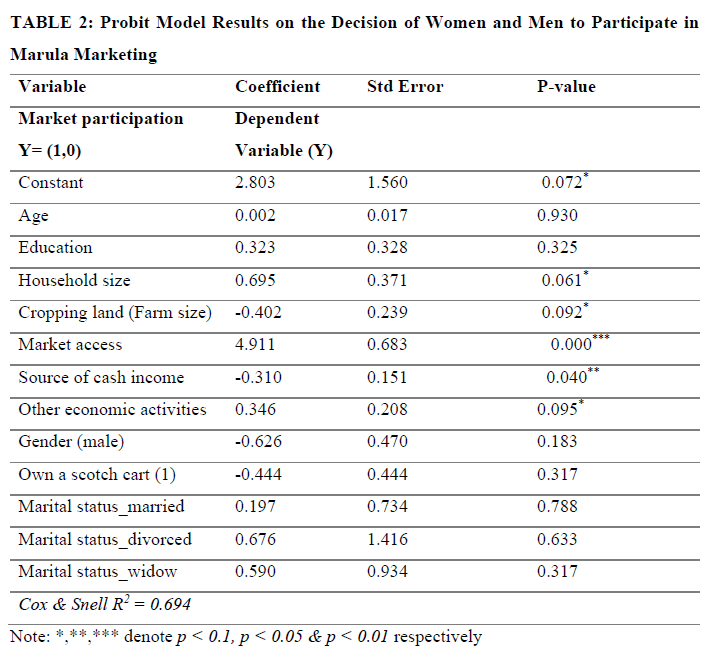
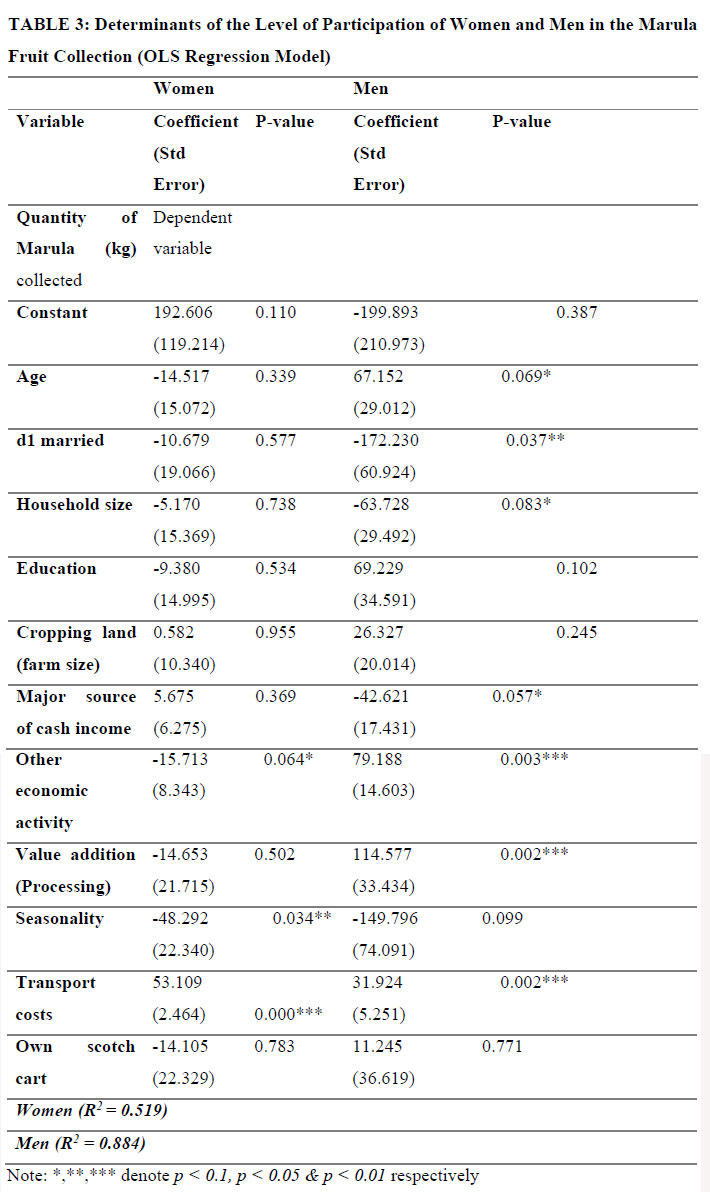
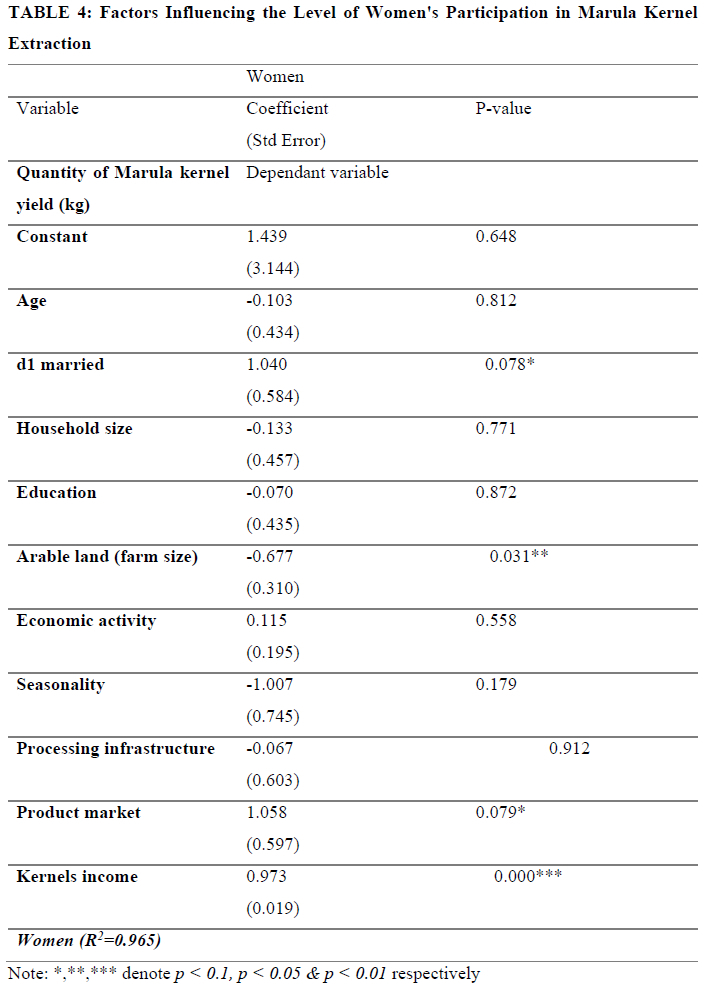
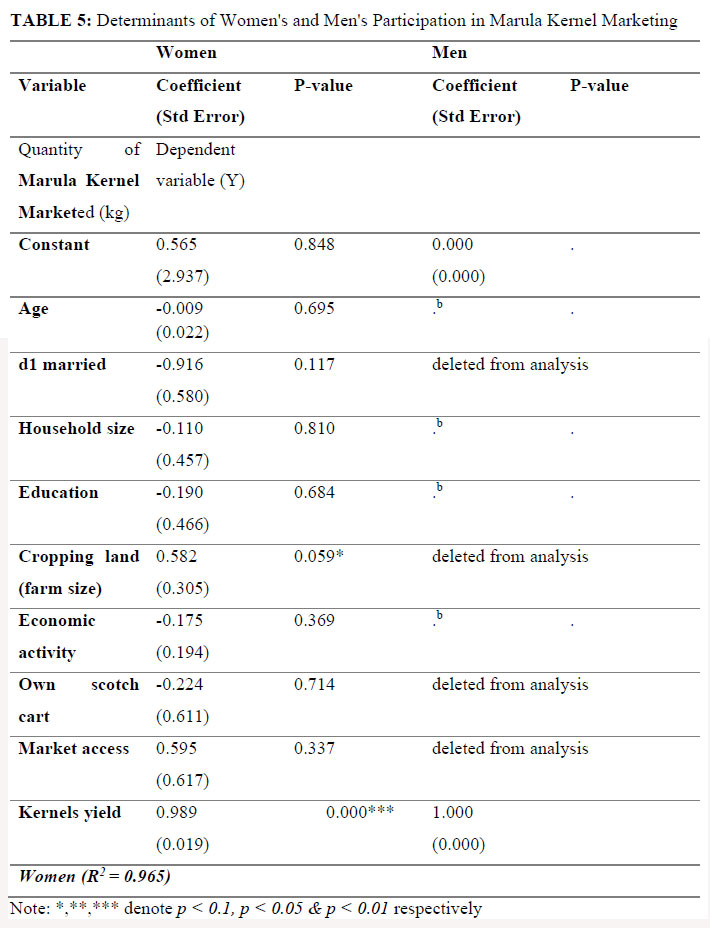
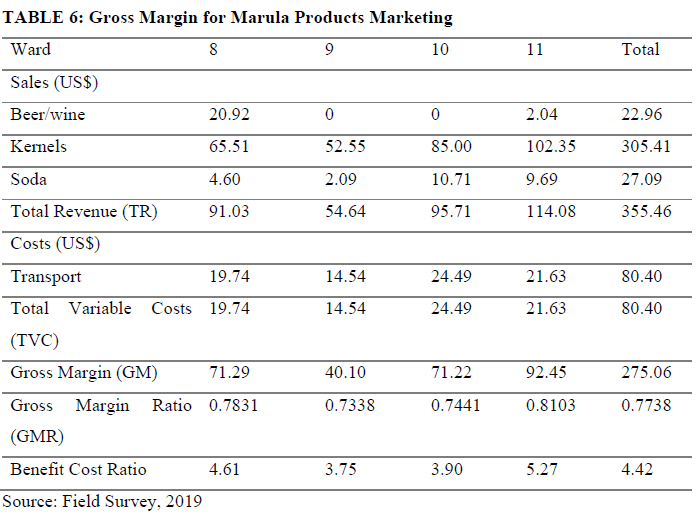
Women's participation in utilising Non-Timber Forest Products for household income and food availability has gained global attention. However, there is a lack of gender-disaggregated empirical evidence on Marula collection, processing and marketing, their contribution to household food and income. The study was conducted among communities adjacent to Gonarezhou National Park, Chiredzi District. A survey of 280 respondents, four focus group discussions, and six key informant interviews were conducted. Qualitative data were analysed using content analysis, while probit and OLS regression models were used to analyse quantitative data. Market access, farm size and household size were significant determinants for women, whilst age, household size, and source of income influenced men's participation. Other economic activities, transport costs and seasonality of Marula influenced both women's and men's participation. Women dominated the Marula processing and marketing. Marula marketing is profitable; hence, interventions targeting reducing the gap should consider utilising Marula food value chain development.
Marula; Food Availability; Household Income; Gender Gap; Women; Men
 Thumbnail