Revisiting the benefits of animal traction to subsistence smallholder farmers: a case study of Ndabakazi Villages in Butterworth, Eastern Cape Province of South Africa
Abstract
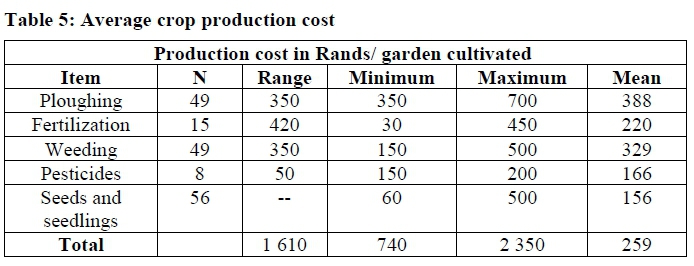
Animal traction has long been a pillar of agricultural production up until the invention of mechanical power which diverted attention to modern mechanical power and led to many perceiving it as backwards, irrelevant and less important. The objective of this article is to relate the known, but forgotten, benefits of animal traction to smallholder farming by presenting evidence of how these benefits still relate to subsistence smallholders using a case study of Ndabakazi villages in the Eastern Cape Province of South Africa. Primary data were drawn from a sample of 80 subsistence farming households. These were randomly selected and a semi-structured questionnaire was administered using a local language. Focus group discussions were used to supplement the questionnaire. The overall finding is that animal traction is indeed still relevant to subsistence farming households. It cuts arable production costs relating mainly to ploughing, planting and weeding, which are the major costly activities. Finally, the adoption of donkeys, horses and mules is recommended, since cattle are not widely kept. Moreover, cattle are labour intensive compared to the recommended animals.
Animal traction; Butterworth; Eastern Cape; Subsistence farmers
 Thumbnail
 Thumbnail