Gender Differentials in Information Needs and Access to Information Communication Media Among Women and Men Fish Farmers in Southern Malawi
The study was carried out to assess information needs and access to information communication media among male and female fish farmers in southern Malawi. Specifically, the study investigated the socioeconomic characteristics of fish farmers, the degree of their information needs, and their access to information communication media (ICM), differentiated by gender, age, and literacy levels. A checklist was used to collect data in focus groups and key informant interviews, while a semi-structured questionnaire was employed to collect data from a proportionally random sample of 178 households in a household survey. Qualitative data were analysed using content analysis, while quantitative data were analysed using frequencies, percentages, t-tests, and logistic regression. Fish farmers had information gaps regarding pest and disease management, farm feed formulation, and pond site selection and preparation, regardless of gender, age, or literacy level. The most widely available ICMs among the fish farmers were mobile phones and radios. Gender, literacy levels, age and group membership significantly influenced fish farmers' access to ICM. It was recommended that extension agents intensify their efforts to contact fish farmers and disseminate useful information to them via mobile phones, while considering gender considerations in the use of the ICM.
Gender Differences; Access; Aquaculture Information Needs; Information Communication Media; Mobile Phone
Gender Differentials in Information Needs and Access to Information Communication Media Among Women and Men Fish Farmers in Southern Malawi
Chanza C.I; Chimombo M.II; Mgalamadzi L.M.III
IExtension Senior Lecturer: Lilongwe University of Agriculture and Natural Resources, Extension Department, P.O. Box 219, Lilongwe. Email:
IILecturer: Lilongwe University of Agriculture and Natural Resources, Extension Department, P.O. Box 219, Lilongwe. Email:
IIILecturer: Lilongwe University of Agriculture and Natural Resources, Extension Department, P.O. Box 219, Lilongwe. Email:
The study was carried out to assess information needs and access to information communication media among male and female fish farmers in southern Malawi. Specifically, the study investigated the socioeconomic characteristics of fish farmers, the degree of their information needs, and their access to information communication media (ICM), differentiated by gender, age, and literacy levels. A checklist was used to collect data in focus groups and key informant interviews, while a semi-structured questionnaire was employed to collect data from a proportionally random sample of 178 households in a household survey. Qualitative data were analysed using content analysis, while quantitative data were analysed using frequencies, percentages, t-tests, and logistic regression. Fish farmers had information gaps regarding pest and disease management, farm feed formulation, and pond site selection and preparation, regardless of gender, age, or literacy level. The most widely available ICMs among the fish farmers were mobile phones and radios. Gender, literacy levels, age and group membership significantly influenced fish farmers' access to ICM. It was recommended that extension agents intensify their efforts to contact fish farmers and disseminate useful information to them via mobile phones, while considering gender considerations in the use of the ICM.
Keywords: Gender Differences, Access, Aquaculture Information Needs, Information Communication Media, Mobile Phone.
1. DEFINITION OF THE PROBLEM
Fish is crucial for economic development and food security in Malawi, providing 28% of animal protein intake (Munthali et al., 2022) and contributing 7.2% to the Gross Domestic Product (Torell et al., 2020). However, overfishing, driven by population growth and limited income options for fishers, has led to a decline in fish stocks (Mulumpwa, 2020), reducing per capita fish intake from 14 kg in the 1970s to 12.6 kg in 2018 (Tran et al., 2022). To address this decline, fish farming is being promoted as a key strategy to sustain fish production in Malawi (Munthali et al., 2022). Aquaculture in Malawi has grown from 2,632 metric tonnes in 2010 to 9,400 mt in 2020 (FAO, 2022). Despite this, the increase in local fish production has not met rising domestic demand, leading to over 5,000 mt of imports in 2019 (FAO, 2020).
Smallholder farmers represent the majority of fish producers but often do not maximise their output, with average productivity at only 1 metric ton per hectare, compared to a potential of 6 (CASA, 2020). Aquaculture currently accounts for only 5.2% of total national fish production and faces challenges such as climate change, post-harvest losses, and inadequate access to inputs (Tran et al., 2022). Inadequate extension services hinder fish farmers' technical capabilities (Njera et al., 2017), while many lack essential information to operate effectively (Khan et al., 2020). Extension workers are scarce and often lack support, forcing farmers to rely on one another for information (Ragasa et al., 2020). Women farmers face additional barriers, including limited access to resources, information, and services, resulting in lower productivity in female-managed ponds (Mussa et al., 2020). Age and literacy also influence access to information, with older male farmers generally having more access than their younger counterparts (Lawal et al., 2017). Addressing the varied information needs of fish farmers by accounting for gender, age, and literacy can improve the delivery of aquaculture messages. This could enhance technology uptake and increase production, ultimately narrowing gender inequalities in aquaculture. Understanding farmers' information needs and access to Information Communication Media (ICM) will support the development of gender-responsive aquaculture extension services in Malawi.
This study analyses the information needs and access to ICM among fish farmers in Thyolo and Zomba districts, Malawi. It focuses on how these factors vary by gender, age, and literacy levels. The research will address two main questions: (i) How do fish farmers' information needs differ by gender, age, and literacy? (ii) How does access to ICM vary among fish farmers based on these factors, and why?
1.1. Theoretical Framework
The study explores gendered access to ICM using the Feminist Political Economy (FPE) and the Gendered Food Systems Framework (GFSF). FPE analyses how patriarchal structures and capitalism create gender inequalities in Malawi's smallholder aquaculture. It pinpoints that unpaid care work restricts women's access to ICM. For example, women fish farmers struggle with time poverty due to caregiving, restricting their ability to engage with aquaculture media (UN Women, 2020). This exclusion limits their access to vital information. The financialisation of food systems further widens the gender gap in income and access to information. Many women cannot afford internet access and smartphones, preventing them from utilising ICM effectively (Kruijssen et al., 2018). Despite representing about 50% of the aquaculture workforce, women are often underrepresented in high-value chains (Adam & Njogu, 2023). The GFSF, developed by Njuki et al. (2023), examines gender inequities in the division of labour, access to resources, decision-making power, and social norms. Women primarily handle post-harvest processing but have limited access to information, while men control marketing and pond management and benefit from digital platforms. This imbalance means that aquaculture information often reaches men only, despite women's need for it. Though 54% of women own mobile phones compared to 64% of men (National Statistical Office, 2018), control over phone usage often requires spousal approval, further restricting women's access to resources (Zougmoré & Partey, 2022). This dynamic reinforces gender productivity gaps, as women's access to information does not translate into decision-making power or practical application (Adam et al., 2024). Consequently, male-dominated farmer committees often design systems that favour men, leading to the neglect of women in essential climate adaptation advisories (UN Women, 2020).
1.2. Conceptual Framework
Aquaculture involves the cultivation of aquatic organisms (FAO, 1990), with this study focusing specifically on fish farming. This practice includes interventions such as regular stocking, feeding, and predator protection. In Malawi, smallholder aquaculture predominantly uses collectively owned pond-based systems, as individual farmers often struggle to afford the necessary investments to establish fishponds (CASA, 2020). Communication media refers to the channels used for delivering and receiving information, including television, radio, print, and the internet (Techpedia, 2014). Patriarchy describes social structures where male perspectives dominate, leading to gender inequalities that disadvantage women in various areas, including agriculture (FAO, 2023). Globally, women farmers often face restricted access to essential resources, including agricultural information. Studies indicate that many women encounter limited and low-quality information sources, often relying on face-to-face interactions within their communities (Hassan et al., 2007). Access to information requires the ability to identify and comprehend relevant content, which must be presented in functional, understandable formats. Gender, age, and literacy influence access; older farmers tend to favour radio, while younger farmers prefer mobile devices and computers. Although mobile phone ownership is increasing, only those under 40 primarily use this technology for agricultural information. Individuals with low literacy skills can only access information through visual or audio formats (Mburu, 2013). Gender dynamics further complicate access, as men usually have more leisure time to engage with information sources than women, whose time is often consumed by domestic responsibilities (Mtega, 2012). Women's social networks, unlike men's, are typically more limited, restricting their learning opportunities (Sebstad & Manfre, 2011). However, if designed with gender-specific constraints in mind, Information Communication Technologies (ICTs) could enhance agricultural practices and mitigate gender disparities in productivity (Manfre et al., 2013). Women often face constraints in decision-making due to cultural and traditional factors, despite being a significant part of the agricultural workforce (FAO 2023). Improving access to knowledge can help address these socio-political challenges and promote advancement in the sector (Petrics et al., 2015).
2. PROCEDURE
2.1. Study Area
This study was conducted in the Thyolo and Zomba districts of Malawi, which were selected due to their high concentration of fish ponds. In Thyolo, 635 households operated 688 fish ponds, with 140 female-headed, 314 male-headed, and 181 youth-headed households. In Zomba, 662 households managed 669 fish ponds, comprising 176 female-headed, 371 male-headed, and 115 youth-headed households.
2.2. Sampling Design
The research focused on two Extension Planning Areas (EPAs): Masambanjati in Thyolo and Chingale in Zomba. These EPAs were purposively chosen for having the highest number of female fish farmers. Masambanjati consisted of 168 households: 41 female-headed, 86 male-headed, and 41 youth-headed. Chingale had 350 households, including 118 female-headed, 208 male-headed, and 24 youth-headed households. Sample sizes were calculated using Cochran's (1977) formula, yielding 78 households from Thyolo and 100 from Zomba. Households were selected using proportionate random sampling based on the sex of the household head. In total, 178 households participated, consisting of 132 male-headed and 46 female-headed households.
2.3. Data Collection Methods and Tools
A mixed methods approach was employed to collect both qualitative and quantitative data. Qualitative data were collected through focus group discussions (FGDs) and key informant interviews (KIIs), using a checklist, while quantitative data were gathered via a semi-structured household survey. KIIs provided information on the general status of fish farming, stakeholders and their roles, the ICM used by fish farmers for extension messages, challenges faced by men and women in fish farming, and the types of fish kept locally. FGD participants brainstormed explanations for pond ownership, the information needs of male and female fish farmers, their access to ICM, and the challenges they encounter. The survey supplied quantitative data on socioeconomic and demographic characteristics of fish farmers, production details, their information needs, and access to ICM among both men and women.
2.4. Data Analysis
Qualitative data were analysed using the thematic framework analysis developed by Ritchie and Spencer (1994). This involved analysing the content of the transcribed interviews by examining the underlying themes in the text that relate to the research's themes. Quantitative data were analysed using descriptive statistics, including percentages, frequencies, and means. The study used a t-test to assess the significance of differences in group means. Pearson's chi-square tests and p-values were used to analyse the degree of association between variables. The logit regression model analysed factors influencing fish farmers' access to ICM. The dependent variable, access to ICM, was equal to 1 if the fish farmers had access to ICM and 0 if they did not. The dependent variable was dichotomous, taking values of 1 or 0.
The logit model takes the form:

where:
Li = the log of the odds ratio, which is a linear function of the explanatory variables (X).
(Pi / 1-Pi) = the odds ratio in favour of access to ICM - the ratio of the probability that the fish farmers will have access to ICM to the probability that the fish farmers will not.
Zi= Yi = ß0+ ßi Xi represents the (cumulative) logistic distribution function
where:
i = 1, 2, ..........,178.
Yi = Fish farmer's access to ICM.
ß0 = the intercept, is the value of the log-odds in favour of access to ICM if the value of X is zero.
ßi = the slope, measures the change in L for a unit change in X, that is, it tells how the log-odds in favour of fish farmer's access to ICM changes as the value of X changes by a unit.
X = is the vector of explanatory variables about the fish farmer, such as education, gender, household size, age, group membership, annual income, literacy, extension services access,
ui = is the error term.
3. FINDINGS AND DISCUSSIONS
3.1. Socioeconomic and Demographic Characteristics
The study surveyed 178 fish farmers (94 females, 84 males). Among these, 74% were male-headed, and 26% were female-headed households. The majority of respondents were married (76%), had a primary school education (57%), and were literate (77%). While more women could read and write than men (71 vs 66), more women were also completely illiterate (20 vs 15). The low levels of formal education in many rural communities are often linked to the vicious cycle of poverty (Akongo & Chonde, 2020). Most farmers belonged to a fish farming club (78%) and listed farming as their main occupation (86%). The mean age was 52 years, and the average household size was 6.6 people. On average, each household had 2.3 ponds, totalling 1,167 m2. Most respondents lived in homes with burnt brick walls, mud floors, and iron sheet roofs (45%), and 50% reported being food insecure. With only 26% of households headed by women, the study suggests that fewer women are involved in fish farming. This may be because fish farming is labour- and capital-intensive, and socioeconomic constraints often limit female participation in sub-Saharan Africa (Ibrahim & Yahaya, 2011).
3.2. The Status of Aquaculture in the Study Area
Results from both FGDs and KIIs showed that fish farming is relatively more developed in Zomba than in Thyolo. In Thyolo, fish farming is a recent enterprise for most farmers. It was adopted as an alternative after their main cash crop, bananas, was attacked by the rapidly spreading banana bunchy top virus (BBTV). At the government's directive, farmers were forced to uproot and burn their existing banana plants and were given new seeds to replant. However, as the new plants were still in their infancy, they were not yet generating income. Fish farming in Thyolo was, for most farmers, therefore, a recent enterprise they engaged in as an alternative to the fallen banana enterprise.
In contrast, Zomba's Chingale area has a long history of fish farming, supported by its abundant wetlands and rivers. This historical difference is also seen in government support. Zomba has five fisheries assistants for its eight EPAs, while Thyolo has none for its six. This shortage of qualified aquaculture staff in Thyolo means extension services are either absent or provided by less specialised agricultural officers, likely leading to substandard advice. In both districts, farmers reported that their ponds were smaller than the recommended 200m2. While they perceived their ponds as too shallow, Munthali et al. (2022) found that smallholder fish ponds in Malawi generally meet the ideal depth of 1.5m, which is important for air circulation (Boyd et al., 2020).
Despite their enthusiasm, farmers face significant challenges. Lack of access to and the unaffordability of commercial fish feed were the top concerns. Farmers stated that they could only afford to feed their fish maize husks. This issue was particularly severe in Thyolo, where consecutive poor harvests have forced households to consume maize husks themselves, creating competition with their fish. This is problematic, as research shows that maize husks are not nutritionally sufficient for optimal fish growth (Opiyo et al., 2018). Another recurring challenge was theft. Farmers complained that thieves would empty their ponds just before harvest, turning an entire season into a total loss. This aligns with findings from Ndah et al. (2011), who showed that fear of theft can discourage farmers from investing in modern technologies and expensive feed. If left unchecked, this problem could disincentivise farmers from continuing with aquaculture.
3.3. Information Needs of Fish Farmers
This study assessed the specific information needs of fish farmers to help them better manage their enterprises. The findings, which combine quantitative survey data and qualitative insights from FGDs, were analysed based on respondents' age, gender, and literacy levels. Fish farmers across all three age categories frequently required information on fish pests and diseases management (youth, 83%; middle age, 85%; and old age, 87%) and on on-farm feed formulation (youth, 84%; middle age, 81%; and old age, 82%). Similarly, most male and female fish farmers reported a frequent need for information on fish pest and disease management (female, 82%; male, 89%) and on-farm feed formulation (female, 80%; male, 85%). Regarding literacy, 88% of literate respondents and 77% of illiterate respondents frequently needed information on fish pests and diseases. Furthermore, 84% of literate respondents and 71% of illiterate respondents frequently needed information on on-farm feed formulation.
Regardless of age, gender, or literacy, pest and disease management was the most frequently needed information, followed by on-farm feed formulation. Other needs included pond site selection and preparation, species selection, fish breeding, and the type and amount of feed to apply. Social differences did not appear to affect fish farmers' information needs for managing their enterprises. These findings were confirmed by the FGDs, where participants most urgently needed information on feed making, followed by marketing and pond construction. Both the household survey and FGDs indicate that farmers most frequently requested information on on-farm feed formulation and pond site selection. This is not surprising, as a lack of access to and the unaffordability of commercial fish feed were among the top challenges farmers reported.
3.3. Access to ICM Among Fish Farmers
The study further examined the availability of ICM for use among fish farmers, differentiated by age, gender, and literacy level.
3.3.1. Availability of ICM Among Fish Farmers by Age
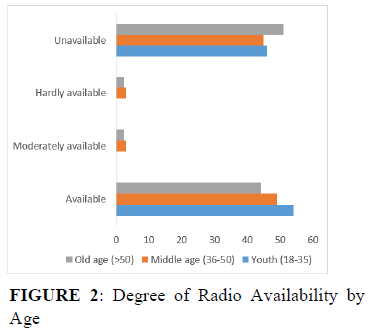
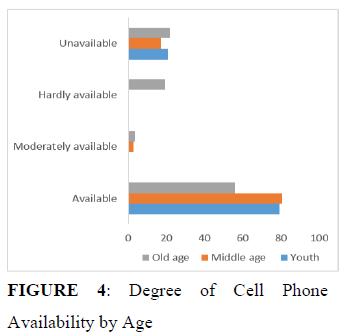
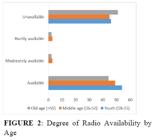
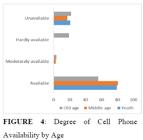
This study assessed the availability of radio, television, mobile phones, computers, and print media among fish farmers. Radio was available to about half of all age groups, with 54% of youth, 49% of middle-aged, and 44% of older farmers having access (Figure 2). Mobile phones were the most available ICM overall. They were common among youth (79.3%) and middle-aged farmers (80.5%), but less so among older farmers (56%) (Figure 3). These findings suggest that mobile phones are more prevalent among younger farmers than their older counterparts.
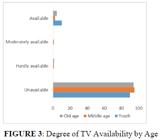
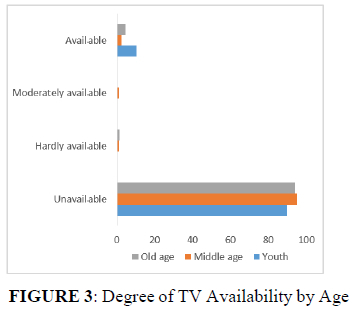
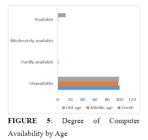
In contrast, computers and televisions were largely unavailable. Both were almost nonexistent across all age groups, with over 90% of farmers reporting a lack of access. The lack of computers was especially notable, with 100% of youth, 98% of middle-aged, and 99% of older respondents reporting unavailability (Figures 4 and 5). As a result, disseminating aquaculture extension services through these platforms is not feasible without significant investment. FDGs confirmed this, with participants laughing at the idea of owning a computer.
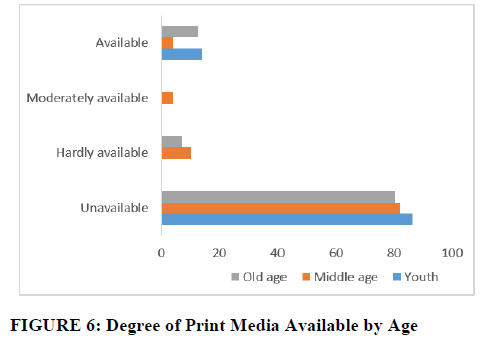
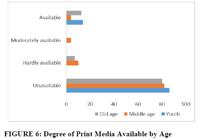
Reasons for this lack of access included high costs and a lack of skills, mirroring a 2015 Malawi Communications Regulatory Authority (MACRA) study that found that only 1.3% of rural households in Malawi had a computer. Finally, print media (Figure 6) was also unavailable to the majority of respondents (over 80% across all age groups). However, FGDs and KIIs revealed that farmers who belonged to fish farming clubs had access to a comprehensive "Fish Farm Record Keeping Book." This suggests that belonging to an organisation can provide farmers with greater access to crucial aquaculture information.
3.3.2. Access to ICM Among Fish Farmers by Gender
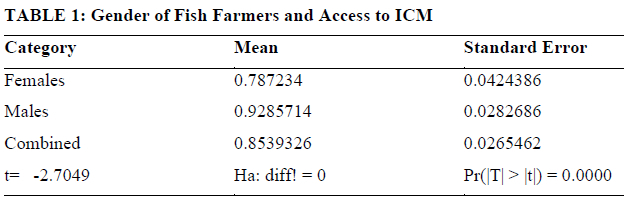
Table 1 presents the t-test results, which reveal a statistically significant difference in ICM access by gender (P-value = 0.0000). The mean difference shows that male fish farmers have considerably better access to ICM than female fish farmers. These gender-based disparities in access are also buttressed by the findings from the logit regression analysis (Table 3).
Research in Sub-Saharan Africa shows that men are more likely to own and use ICTs than women due to disparities in education, income, and patriarchal traditions (Alozie & Akpan-Obong, 2017). Our study's KIIs and FGDs revealed a similar trend: some married women were prevented from using mobile phones by their husbands, who feared infidelity. As a result, these women were unable to use mobile technology to access valuable aquaculture information and extension services.
3.3.3. Literacy Levels of Fish Farmers and Access to ICM
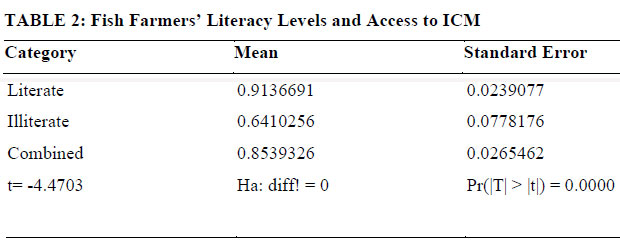
The t-test results in Table 2 show that ICM access is significantly higher among literate fish farmers (P-Value = 0.0000). This finding, supported by logit regression analysis (Table 3), indicates that literacy is a crucial factor in determining ICM access. FGDs confirmed that an inability to read aquaculture messages from print media and mobile phones limited their use. Research by Deen-Swarray (2016) supports this, noting that increased literacy is associated with greater adoption of ICTs such as mobile phones and the internet. Furthermore, low literacy often leads to limited income, which reduces a farmer's ability to afford ICM gadgets. This aligns with a study in Ethiopia that found that higher levels of education were associated with greater use of ICTs for cereal marketing (Abebe & Cherinet, 2019).
3.4. Factors Influencing Fish Farmers' Access to ICM
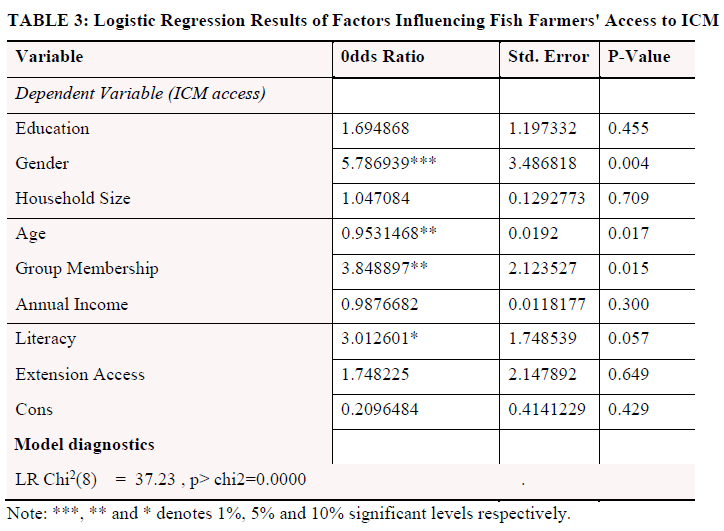
The results of the logistic regression model in Table 3 indicate a good fit, as indicated by the LR Chi-square. The model is statistically significant with an estimated p-value of 0.0000.
Group membership, literacy, gender, and age were found to be significant determinants of ICM access among fish farmers. Group membership was statistically significant (P-Value = 0.015), increasing the odds of ICM accessibility by 3.85. This is because groups provide the necessary conditions for information uptake. For example, in the study area, a booklet detailing aquaculture practices was available only to members of a fish farming club. This finding aligns with Krell et al.'s (2021) finding that membership in farmers' organisations increased the likelihood of using mobile phone services and other ICT platforms. Literacy also had a positive and significant influence (Odds Ratio = 3.013). This indicates that literacy skills increase the odds of ICM access. As noted by Koc and Barut (2016), literacy is essential for individuals to benefit from communication media. Furthermore, low literacy often leads to limited income, reducing a farmer's ability to afford ICM gadgets. This point is supported by Mdoda and Mdiya (2022), who found that low-literacy farmers in South Africa cited a lack of skills as a reason for not using ICTs.
Gender had a significant positive influence (Odds Ratio = 5.79), revealing that being male increases the odds of ICM access. KIIs and FGDs found that men had greater access to ICMs, such as mobile phones and radios, which were often considered their property. The finding concurs with feminist political ecology, which argues that patriarchal power structures create systemic barriers that prevent women and girls from having access to and control over resources, including ICMs (Ossome & Naidu, 2021). Furthermore, some married women were discouraged from using mobile phones due to baseless accusations of infidelity. Limiting women's access to ICMs hinders them from receiving crucial aquaculture information. Age showed a statistically significant inverse relationship with ICM access (Odds Ratio = 0.95). This means that as age increases, an individual's likelihood of accessing and using ICMs decreases. This corroborates the findings of Mburu (2013) and Jabir (2012), who suggest that younger farmers are more flexible and open to adopting new technologies than their older counterparts.
4. CONCLUSION
This study determined that fish farmers most needed information on pest and disease management, on-farm feed formulation, and pond site selection, regardless of their age, gender, or literacy level. The most available ICMs were mobile phones and radio, while computers, televisions, and print media were the least available. Higher ICM access was significantly associated with younger, male, literate farmers and membership in a fish farming club. Given the acute shortage of trained aquaculture extension staff, using available ICMs to disseminate aquaculture information could help serve more farmers, particularly in areas without a dedicated aquaculture extension worker.
5. RECOMMENDATIONS
The study recommends that the Fisheries Department's extension services should leverage the most accessible ICMs-mobile phones and radio-to reach both male and female fish farmers in Thyolo and Zomba districts. The focus should be on delivering extension messages on fish pests and diseases, on-farm feed formulation, and pond site selection, with an emphasis on gender, age, and literacy considerations to improve productivity. With internet-enabled smartphones becoming more accessible, extension workers can move beyond traditional phone calls and SMS messages by creating WhatsApp groups for farmers. This strategy enables overstretched, often immobile extension workers to efficiently disseminate a wide range of information, including PDF documents, typed messages, videos, and audio, to a large audience. These platforms would also enhance peer learning as farmers can interact and exchange ideas and best practices. To bridge the existing digital divide, interventions should provide female fish farmers with access to finance, enabling them to afford ICMs. Furthermore, to ensure all farmers are included, deliberate, strategic measures are needed to increase the literacy and digital skills of those with limited education.
The authors have no conflict of interest of any kind.
6. ACKNOWLEDGEMENTS
The authors are very grateful to the Africa Centre of Excellence in Aquaculture and Fisheries Science (AquaFish) at Bunda College, Lilongwe University of Agriculture and Natural Resources, in Malawi, for funding the research.
REFERENCES
- ABEBE, A. & CHERINET, M.Y., 2019. Factors affecting the use of information and communication technologies for cereal marketing in Ethiopia. J. Agric. Food Chem., 20(1): 59-70.
- AKONGO, T. & CHONDE, C., 2020. Gendered adaptation and coping mechanisms to climate variability in Eastern Uganda Rice Farming Systems. In B. Singh, A. Safalaoh, N. Amuri, L. Eik, B. Sitaula & R. Lal (eds.), Climate impacts on agricultural and natural resource sustainability in Africa. Cham: Springer, pp. 61-92.
- ADAM, R., LAM, R.D., LOZANO LAZO, D.P., MCDOUGALL, C., RAJARATNAM, S., OUKO, K., PASANI, C., FORSYTHE, L. & ROSSIGNOLI, C.M., 2024. Using a sustainable food systems framework to examine gender equality and women's empowerment in aquatic food systems. Front. Sustain. Food Syst., 8: 1327798.
- ADAM, R. & NJOGU, L., 2023. A review of gender inequality and women's empowerment in aquaculture using the reach-benefit-empower transform framework approach: A case study of Nigeria. Front. Aquac., 1: 1052097.
- ALOZIE, N.O. & AKPAN-OBONG, P., 2017. The digital gender divide: Confronting obstacles to women's development in Africa. Dev Policy Rev., 35: 137-160.
- BOYD, C.E., 2020. Pond water aeration system. Aquacult Eng., 18(1): 9-40.
- COCHRAN, W.G., 1977. Sampling Techniques. 3rd edn. New York: John Wiley & Sons.
-
COMMERCIAL AGRICULTURE FOR SMALLHOLDER AND AGRIBUSINESS., 2020. Aquaculture sector strategy Malawi. Available from https://www.casaprogramme.com/wp-content/uploads/CASA-Malawi-AquacultureSector-analysis-report.pdf
» https://www.casaprogramme.com/wp-content/uploads/CASA-Malawi-AquacultureSector-analysis-report.pdf - DEEN-SWARRAY, M., 2016. Toward digital inclusion: Understanding the literacy effect on adoption and use of mobile phones and the internet in Africa. ITID., 12(2): 29-45.
- FAO., 2020. Global Fish Trade Statistics. FAO Fisheries Division. Rome: FAO.
- FAO., 2022. Fishery and Aquaculture Statistics. Global Aquaculture Production 1950-2020 (FishStatJ). FAO Fisheries Division. Rome: FAO.
-
FAO., 2023. The Status of Women in Agrifood Systems. Rome. Available from https://doi.org/10.4060/cc5343en
» https://doi.org/10.4060/cc5343en - FAO., 1990. The definition of aquaculture and the collection of statistics. FAO Aquacult. Min., (7): 4.
- HASSAN, M.Z.Y., ALI, T. & AHMAD, W., 2007. Determination of participation in agricultural activities and access to sources of information by gender: A case study of district Muzaffargarh. Pak. J. Agric. Sci., 44(4): 664-669.
-
IBRAHIM, H.Y. & YAHAYA, H., 2011. Women Participation in Homestead Fish Farming in North Central Nigeria. Livest. Res. Rural Dev., 23(35). Available from http://www.lrrd.org/lrrd23/2/ibra23035.htm
» http://www.lrrd.org/lrrd23/2/ibra23035.htm - JABIR, A., 2012. Factors Affecting the adoption of Information and Communication Technologies (ICTs) for farming decisions. J. Agric. Food Inf., 13(1): 78-96.
- KHAN, N.A., GAO, Q., ALI, S., SHAHBAZ, B., KHAN, P. & ABID, M., 2020. Analysing ICT-enabled agricultural advisory services in Pakistan: Evidence from A marginalized region of Punjab Province. Electron Commer Res., 22: 1107-1129.
- KOC, M., & BARUT, E., 2016. Development and validation of New Media Literacy Scale (NMLS) for university students. Comput. Hum. Behav., 63: 834-843.
- KRELL, N.T., GIROUX, S.A., GUIDO, Z., HANNAH, C., LOPUS, S.E., CAYLOR, K.K. & EVANS, T.P., 2021. Smallholder farmers' use of mobile phone services in Central Kenya. Clim. Dev., 13(3): 215-227.
- LAWAL, A., ALABI, O. & OLADELE, A., 2017. Elements of rural economics: Access to agricultural information among rural women farmers in Abuja, Nigeria. J. Agric. Sci., 12(2): 63.
- MANFRE, C., RUBIN, D., ALLEN, A., SUMMERFIELD, G., COLVERSON, K. & AKEREDOLU, M., 2013. Reducing the gender gap in agricultural extension and advisory services. Modernising extension and advisory services. Discussion Paper. United States Agency for International Development.
- MBURU, P., 2013. Factors influencing access to agricultural information by smallholder farmers through ICT channels in Deiya Location, Kiambu County. Doctoral dissertation, University of Nairobi.
- MDODA, L. & MDIYA, L., 2022. Factors affecting the using Information and Communication Technologies (ICTs) by livestock farmers in the Eastern Cape province. Cogent Soc. Sci., 8(1): 1-16.
- MTEGA, W.P., NGOEPE, M. & DUBE, L., 2015. Factors influencing access to agricultural knowledge: The case of smallholder rice farmers in the Kilombero District of Tanzania. S. Afr. J. Inf. Manag., 18(1): a679.
- MULUMPWA, M., 2020. Potential of smart aquaculture technologies on improving fish production in Malawi. In W. Leal Filho (ed.), Handbook of Climate Change Resilience. Springer International Publishing, pp. 1161‒1168.
-
MUNTHALI, M.G., CHILORA, L., NYIRENDA, Z., SALONGA, D., WINEMAN, A. & MUYANGA, M., 2022. Challenges and opportunities for small-scale aquaculture development in Malawi. MwAPATA Institute Report. Lilongwe, Malawi. Available from www.mwapata.mw/reports
» www.mwapata.mw/reports - MUSSA, H., KAUNDA, E., JERE, W. & NG'ONG'OLA, D., 2020. Resource use efficiency in tilapia production in Central and Southern Malawi. Aquac. Econ. Manag., 24(3): 213-231.
- NATIONAL STATISTICAL OFFICE., 2018. Malawi Demographic and Health Survey 2015-16. Zomba, Malawi.
- NDAH, H., KNIERIM, A. & NDAMBI, O., 2011. Fish pond aquaculture in Cameroon: A field survey of determinants for farmers' adoption behaviour. J. Agric. Educ. Ext., 17: 309-323.
- NJERA, D., CHONDE, C., KAMBEWA, D. & DZANJA, J., KAYAMBAZINTHU, D. & MISSANJO, E., 2017. Perceptions of small-scale fish farmers on aquaculture development in Dowa and Mchinji Districts in Central Malawi. J. Basic Appl. Res. Int., 23: 151-160.
- NJUKI, J., EISSLER, S., MALAPIT, H.J., MEINZEN-DICK, R.S., BRYAN, E. & QUISUMBING, A.R., 2023. A review of evidence on gender equality, women's empowerment, and food systems. Glob. Food Secur., 33: 100622.
- OPIYO, A.M., MARIJANI, E., MUENDO, P., ODEDE, R., LESCHEN, W. & CHARO-KARISA, H., 2018. A review of aquaculture production and health management practices of farmed fish in Kenya. Int. J. Vet. Sci. Med., 6(2): 141-148.
- OSSOME, L. & NAIDU, S., 2021. The agrarian question of gendered labour. In P. Jha, W. Chambati & L. Ossome (eds.), Labour Questions in the Global South. Singapore: Palgrave Macmillan, pp. 63-86.
- PETRICS, H., BLUM, M., KAARIA, S. TAMMA, P. & BARALE, K., 2015. Enhancing the Potential of Family Farming for Poverty Reduction and Food Security Through Gender Sensitive Rural Advisory Services. Rome: FAO.
- RAGASA, C., AGYAKWAH, S.K., ASMAH, R., MENSAH, E.T.D. & AMEWU, S., 2020. Characterization of fish farming practices and performance: Baseline study and implications for accelerating aquaculture development in Ghana. IFPRI Discussion Paper 01937. Washington, DC: IFPRI.
- RITCHIE, J. & SPENCER, L., 1994. Qualitative data analysis for applied policy research. In A. Bryman & R.G. Burgess (eds.), Analyzing qualitative data. London: Routledge, pp. 173 - 194.
- SEBSTAD, J. & MANFRE, C., 2011. Behavior change perspectives on gender and value chain development: A framework for analysis and implementation. FIELD Report 12. Prepared for FIELD-Support LWA, USAID.
-
TECHPEDIA., 2014. Communication Media. Available from http://www.techopedia.com/definition/14462/communication-media.
» http://www.techopedia.com/definition/14462/communication-media - TORELL, E., MANYUNGWA, P.C., BILECKI, D., GUMULIRA, I. & YIWOMBE, G., 2022. Assessing and advancing gender equity in Lake Malawi's small-scale fisheries sector. Sustain., 13(23): 1-17.
- TRAN, N., PEART, J., RODRIGUEZ, U.E., CHAN, C.Y., HOONG, Y., SIAMUDAALA, V., NJAYA, F. & KAFAKOMA, R., 2022. The future of fish supply-demand in Malawi and its implications for nutrition security and poverty reduction. Working Paper: 2022-21. Penang, Malaysia: WorldFish.
-
UN WOMEN., 2020. Understanding gender differences in availability, accessibility and use of climate information among smallholder farmers in Malawi. Available from https://wrd.unwomen.org/practice/resources/understanding-gender-differences-availability-accessibility-and-use-climate
» https://wrd.unwomen.org/practice/resources/understanding-gender-differences-availability-accessibility-and-use-climate - WAWIRE, A.W., WANGIA, S.M. & OKELLO, J.J., 2017. Determinants of use of information and communication technologies in agriculture: The Case of Kenya Agricultural Commodity Exchange in Bungoma County. Kenya. J. Agric. Sci., 9: 128.
- ZOUGMORÉ, R.B. & PARTEY, S.T., 2022. Gender Perspectives of ICT utilization in agriculture and climate response in West Africa: A review. Sustain., 14(19): 12240.