Determinants of Adaptation Amongst Street Vendors Towards COVID-19 Restrictions in Ephraim Mogale Municipality, Limpopo Province
Abstract
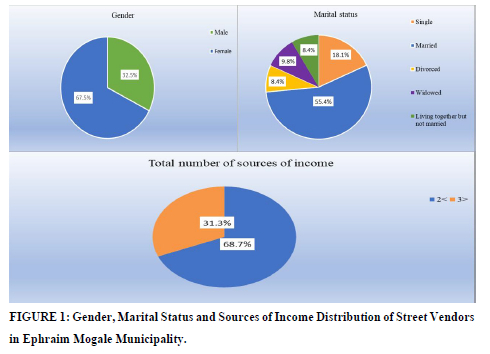
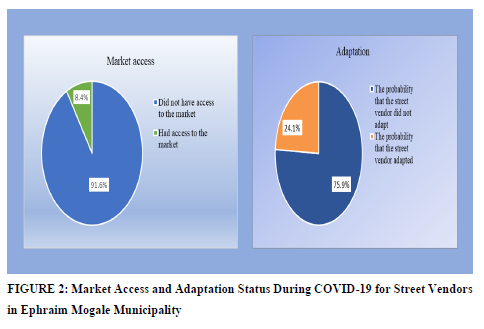
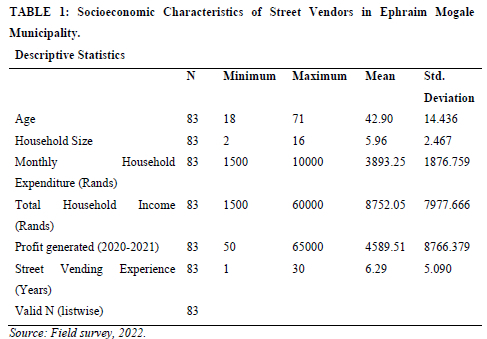
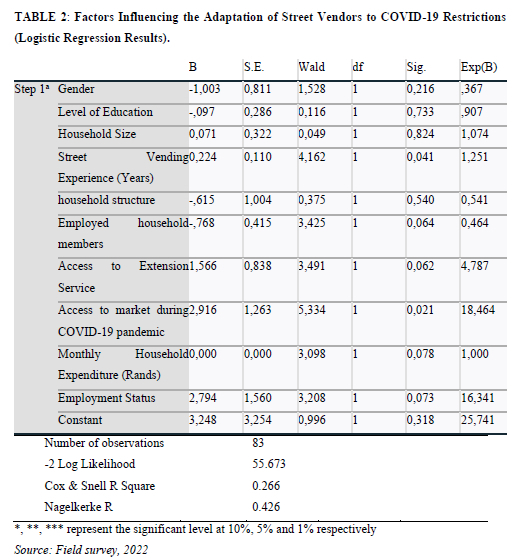
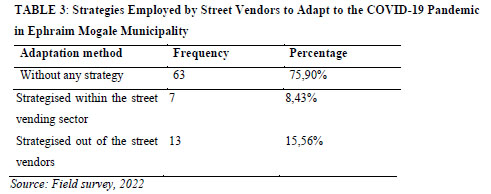
The COVID-19 pandemic severely disrupted the livelihoods of informal workers globally, with street vendors among the most affected due to restrictions on movement and market access. This study investigated the socioeconomic determinants influencing street vendors' adaptation strategies in Marble Hall, Ephraim Mogale Municipality, Limpopo Province, South Africa. Using primary data collectedfrom 83 vendors through structured interviews, the study applied descriptive statistics and binary logistic regression to examine relationships between socioeconomic variables and adaptation to COVID-19 restrictions. Results revealed that only 24.1% of vendors adapted their business practices during the pandemic. Key positive predictors of adaptation included years of vending experience (p = 0.041), access to markets during lockdowns (p = 0.021), access to extension services (p = 0.062), employment status (p = 0.073), and monthly household expenditure (p = 0.078). Conversely, the presence of employed household members was negatively associated with adaptation (p = 0.064). Gender, education level, and household size were not significant predictors. The findings highlight the importance of experience, market accessibility, and targeted support services in enhancing informal traders' resilience. Policy recommendations include maintaining safe market operations during crises, strengthening extension services, promoting peer learning, encouraging livelihood diversification, and integrating informal sector realities into urban and public health planning. By addressing both individual and household-level factors, interventions can better support street vendors' adaptive capacity in future economic disruptions.
Determinants; COVID-19; Street Vendors; Informal Economy; Adaptation Strategies; Binary Logistic Regression
 Thumbnail
 Thumbnail