Comparison of Udder Health Risk Factors in Small-Scale Cattle Farming Systems in Two South African Provinces
Abstract
Mastitis and tick infestation of udders remain a challenge for small-scale farmers. This study aimed to investigate and compare the prevalence of udder health problems in cattle owned by small-scale farmers in two South African districts: Amathole in the Eastern Cape and Sedibeng in Gauteng. This research comprises a three-part cross-sectional study: a farmer survey; assessment of udder cleanliness and lesions; conformation, parenchyma damage, and tick burden; and milk testing methods using cow-side and laboratory tests. The findings reveal that 27.0% of participants from Amathole and 4.2% from Sedibeng were aged 70 or above. Farmers from Sedibeng did not keep animals solely for cultural purposes, while 40.9% of farmers from Amathole did. The prevalence of inactive quarters was higher (16.3%) in Amathole than in Sedibeng (3.9%). Subclinical mastitis was more prevalent in Amathole, and a higher number of bacteria, mainly non-aureus staphylococci and Staphylococcus aureus, were isolated from milk samples in Amathole (58.3%) compared to Sedibeng (30.0%). Sedibeng farmers, who prioritised economic benefits, were motivated to care for their animals more effectively. Udder health problems and suboptimal animal care were more prevalent in Amathole. Extension services should prioritise educating and encouraging small-scale farmers.
Mastitis; Small-Scale Farmers; Udder Tick Burden; Udder Lesions; Microbiology
1. INTRODUCTION
Udder diseases are a primary concern in the cattle industry because untreated diseases may cause significant losses for farmers. Udder health is vital for producing safe and healthy milk for calf and human consumption. Previous studies identified mastitis as a major disease affecting udder health in the dairy industry (Waller et al., 2014; O'Rourke, 2009; Sharif & Muhammad, 2008). The Eastern Cape reportedly has the highest number of cattle in South Africa, with an estimated 3,050,000, while Gauteng has the lowest, with 246,000. Although Gauteng has fewer cattle, it is responsible for a higher percentage (17%) of beef production in South Africa, compared to 7% in the Eastern Cape (DAFF, 2019; DALRRD, 2021). This difference can be attributed to more intensive farming methods and enhanced access to markets and resources within the province.
Some of the most prevalent diseases affecting small-scale cattle farmers are tick-borne illnesses, such as anaplasmosis and babesiosis, and heartwater, which can induce severe illness and death in cattle. External parasites, such as ticks, lice, and mites, can cause skin irritation and anaemia, while worm infestations may lead to growth deficiencies, weight loss, and anaemia. Farmers need to practice proper management, pursue regular veterinary care, and implement preventive measures to maintain healthy livestock and ensure optimal production (Ocaido et al., 2009).
Most studies on subclinical mastitis or intramammary infections (IMI) have been conducted in the United States (Waller et al., 2014). Management practices and resources in commercial dairy herds differ profoundly from those in small-scale farming. Studies on commercial dairy herds often overlook the unique challenges small-scale farmers encounter, such as limited access to veterinary services, inadequate infrastructure, and financial constraints. A general assumption exists that animals in small-scale farming are often kept in suboptimal conditions, which can elevate health risks, including subclinical mastitis, udder lesions, tick infestations, and blind quarters. It is essential to identify the risk factors associated with udder health management in small-scale farming to prevent deficient udder health (Ivemeyer et al., 2009).
This study aimed to investigate mastitis as a disease hindering production among smallholder farmers. By focusing on small-scale farmers, the study intended to understand how mastitis affects their productivity and profitability. It also guides effective management practices and interventions that are explicitly tailored to the needs and limitations of small-scale farming operations. This research can help bridge knowledge gaps and assist small-scale farmers in improving livestock health and overall production.
1.1. Problem Statement
Mastitis is an inflammation of the udder parenchyma. In lactating cows, assessment is based on measuring the somatic cell count (SCC) in milk. It is a complex condition influenced by factors such as mastitis pathogens, host characteristics, and environmental and management conditions, often resulting in low treatment success rates (Petzer et al., 2016). Clinical symptoms of affected udder quarters include swelling, heat, redness, pain, and occasionally cyanosis and coldness (Cockroft, 2015). The milk's colour, consistency, and smell can change, exhibiting clots or flakes or appearing discoloured, and may occasionally contain blood (Wattiaux, 1995). During severe mastitis, the cow may exhibit general symptoms, including fever, rapid pulse, loss of appetite, and a significant decline in milk production, which could even lead to death (Wattiaux, 1995).
Mastitis is the leading global multifactorial disease contributing to production and economic losses, udder health problems, and a high culling rate in dairy cows (Waller et al., 2014; O'Rourke, 2009; Sharif & Muhammad, 2008). Since mastitis is not limited to dairy herds, it is necessary to investigate its prevalence in small-scale cattle farming systems and identify risk factors. This analysis will help develop effective preventive strategies to enhance productivity in small-scale cattle farming systems. Several small-scale farmers primarily engage in beef farming and maintain a limited number of dairy cows, with the milk mainly used for calf rearing. It has become essential to identify problems and establish risk factors, including management practices and treatments used in small-scale farming, to develop effective preventive measures against poor udder health (Ivemeyer et al., 2009).
1.2. Objective of the Study
The primary objective of this study was to investigate the prevalence of udder health concerns in small-scale cattle farming systems within the Amathole and Sedibeng District Municipalities.
2. METHODOLOGY
2.1. Research Design
A cross-sectional study is an observational study of a population at a single point in time. It is efficient, cost-effective, and enables variable comparison without long-term sequels (Pandis, 2014; Wang & Cheng, 2020). This method was selected to provide an overview of udder health risk factors among small-scale farmers, helping to identify prevalent issues and risk factors to inform targeted interventions and improve livestock management practices. The study comprises three parts: (1) administering a questionnaire, (2) examining cows' udders and teats, and (3) milk testing on the farm and through laboratory analysis.
2.2. Research Location
The study was conducted in two South African provinces-the Eastern Cape and Gauteng-focusing on the Amathole and Sedibeng District Municipalities. Amathole is a rural, coastal district located in the Eastern Cape, while Sedibeng is an inland, semi-urban district south of Gauteng. These provinces were selected owing to differences in environmental, economic, social, and educational factors, as well as differences in the levels of education among farmers, to determine how these factors influence farming practices.
The research was conducted in Amathole from April 2021 to June 2021 and in Sedibeng from November 2019 to February 2020. The differing timeframes were owing to the COVID-19 pandemic lockdowns at Levels 4 and 5 in South Africa, which restricted data collection in 2020 and 2021.
2.3. Study Population and Sampling Selection
A database of small-scale cattle farmers in the designated areas was obtained from the state veterinary services. Farmers on those databases were randomly sorted using Excel's random selection formula. The 30 farmers, randomly selected from each province using the formula, were included in the study.
Among the initial group of 60 small-scale farmers, 46 chose to participate in the study-22 from Amathole, managing 100 cows and 69 heifers, and 24 from Sedibeng, overseeing 260 cows and 135 heifers. Comprehensive background information was collected for each participant, including their name, age, gender, education level, and farming experience. Trained personnel interviewed all farmers to reduce the chances of miscommunication.
The selected farmers for the study had varying herd sizes, ranging from two to 79 animals, including calves, weaners, and bulls. To be eligible for the study, farmers needed to have cows and heifers older than 15 months, regardless of breed, parity, or lactation stage. In herds with over 20 cows and heifers, animals were placed in a crush pen, and every second animal was selected to participate. This approach was used to ensure that the sample is evenly distributed across the population and to minimise the risk of selection bias (Noor et al., 2022). Selecting every second animal is a practical and effective method for obtaining a representative sample, particularly in larger herds.
In Amathole, 69 female cattle were examined, comprising eight heifers and 61 cows. Among these, 23 cows were lactating, while 38 were dry during the study period. In Sedibeng, 79 female cattle were examined, including 6 heifers and 73 adult cows; 21 were lactating and 52 were dry. The cattle included Jersey, Brahman, Nguni, Bonsmara, and mixed breeds.
2.4. Examining the Udders and Sampling Strategy
During the farm visit, the udders of the sampled animals were visually and physically evaluated for cleanliness using an udder hygiene score chart (Cockroft, 2015). The presence and extent of manure and dirt on the udder surfaces were assessed using the method described by Cook and Reinemann (2007).
The depth of a cow's udder was defined by measuring the distance between the udder floor and the hock. A score of 1 indicates that the udder floor was on or above the hock, while a score of 2 indicates that the udder floor was below the hock. Udder suspension was assessed by focusing on the median ligament of the udder. The scores were assigned according to the method described by Rasby (2011). A fifth score was added to the Rasby (2011) method to indicate the presence of asymmetry in udders.
Udders were also examined for skin lesions, including cuts, tick bites, and cauliflower-like papillomas. Additionally, the number of ticks on each udder was recorded and categorised as follows: no infestation for udders with no ticks, moderate infestation for udders with one to five ticks, and severe infestation for udders with more than five ticks. Udders of lactating cows were palpated to check for parenchyma nodules and fibrosis (Abd-El-Hady, 2015). Inactive quarters were identified by milking lactating cows, with the number and position of these quarters duly recorded. The stages of lactation-early, mid, and late-were examined, and the total number of calves produced by each cow was recorded.
2.5. Milk testing
The California mastitis test (CMT), also known as Mastest, was used to evaluate SCC levels in the milk of 23 lactating cows in Amathole and 21 in Sedibeng. Milk samples were collected from each active udder quarter using a calibrated CMCT spatula. An equal volume of reagent was added to the sample milk for each test conducted. The spatula was rotated to mix the reagent with the milk sample (Petzer et al., 2013). After approximately 10 seconds of mixing, the gel formation was observed and scored as 0 (no gel formation), trace (appearing and disappearing gel), 1 (weak positive), 2 (distinctly positive), or 3 (strong positive gel formation) (Petzer et al., 2013). A cow was considered to have subclinical mastitis if it had a CMCT score of 1, 2, or 3 in one or more udder quarters (Petzer et al., 2013).
Composite cow milk samples were collected aseptically by combining milk from all four quarters into one sample tube (Smith et al., 2001). Milk samples were collected from 12 of the 23 lactating cows in Amathole and 20 of the 21 in Sedibeng. The reason for not sampling all lactating cows was that calves were with the cows, and insufficient milk remained in the udder after conducting the CMCT test. The samples were kept on ice and sent to a SANAS-accredited milk laboratory (the University of Pretoria, Faculty of Veterinary Science, Onderstepoort) within 48 hours for microbiological analysis (Smith et al., 2001; Karzis et al., 2017). Antibiotic susceptibility testing was conducted using the Kirby-Bauer disc diffusion method (Bauer, 1966) with Clinical Laboratory Standard Institute (CLSI) breakpoints (CLSI M31-A3, 2015b; M100-S25, 2015). The antibiotics tested included β-lactams (penicillin G 10 IU, ampicillin 10 μg, cloxacillin 5 μg); cephalosporins (cefuroxime 30 μg, cephalothin 30 μg, cefoxitin 30 μg); and tetracyclines (oxytetracycline 30 μg), which were products available for livestock use in South Africa at the time of the study.
2.6. Data Analysis
The data were analysed using Jeffreys's Amazing Statistics Program (JASP), Version 0.14.1.0 (JASP, 2020). The Chi-squared test results were reported at the p < 0.05 significance level.
3. RESULTS AND DISCUSSION
3.1. Socioeconomic Characteristics
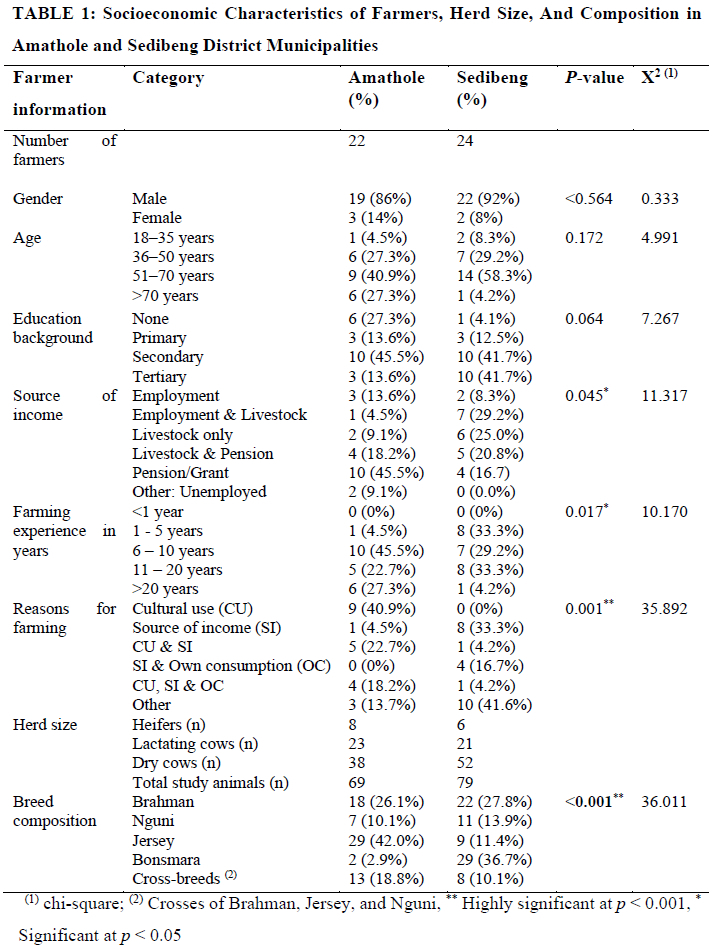
Table 1 presents the socioeconomic characteristics of farmers, herd size, and composition. Most farmers in both provinces were male, aged 51 to 70. The Amathole district has a higher number of farmers aged 70 and above compared to the Sedibeng District. Farmers below 70 were predominantly reported to rear cattle for status-related reasons, often leaving the animals to fend for themselves without adequate care (Waller et al., 2014). The study found that cattle farming was predominantly conducted by males, with older men particularly involved. This result aligns with the findings of Malusi et al. (2021) and Yawa et al. (2020).
The literacy rate was higher in Sedibeng (95.9%) compared to Amathole (72.7%). This difference suggests that Sedibeng likely has advanced educational facilities and greater access to learning resources. Literacy can significantly affect farming practices, as literate farmers are more inclined to adopt modern techniques, use advanced devices, and remain informed about best farming practices. This aspect contrasts with Musemwa et al. (2010), who found that 50% of households in the Eastern Cape had no educational background; however, more farmers in Sedibeng (41.7%) had tertiary education than in Amathole (13.6%). More farmers (p < 0.05) in Amathole (81.8%) were full-time farmers compared to those in Sedibeng (62.5%). The primary reason for cattle farming varied significantly across districts (p = 0.001). In Amathole, 40.9% of farmers kept cattle primarily for cultural use, and 31.8% for income. Conversely, in Sedibeng, no farmers raised cattle for cultural reasons; 75.0% raised them for income. Education enhances the ability to adapt to innovative information and technology and improves record-keeping (Cheteni & Mokhele, 2019). The education level of Sedibeng farmers may be an attributing factor in their decision to consider farming as a business and to rely on livestock as a source of income.
There was a significant difference in cattle breed between the two districts (p < 0.001). In Amathole, 42.0% of the cattle were Jersey cows, whereas Sedibeng primarily had mixed breeds (36.7%). Amathole is situated in one of South Africa's three main dairy areas, which may explain the higher prevalence of Jersey cows. The province commonly uses Jersey-cross animals for farming owing to their hardiness, disease resistance, heat-stress tolerance, and adaptability to areas with limited water resources (Opoola et al., 2022).
3.2. Visual and Physical Examination of Cows' Udders
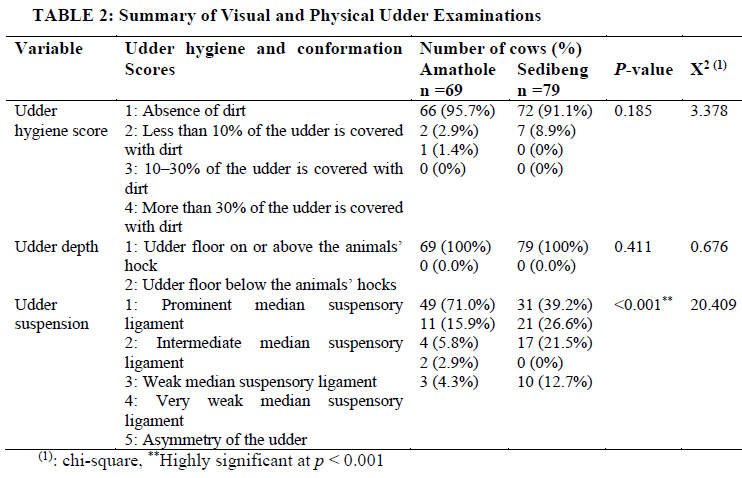
Visual and physical examinations were conducted on all animals, revealing that 95.7% of the Amathole animals, and 91.1% of the Sedibeng animals had clean udders, as determined by udder hygiene scores (Table 2). Environmental factors influence the cleanliness of the udder, with cows in confined spaces or during rainy seasons being at a higher risk of dirty udders. Dirty udders can increase the likelihood of environmental mastitis (Azevedo et al., 2015).
A significant difference (p < 0.001) was observed in the number of animals with significant udder suspension (median ligaments) between Amathole and Sedibeng. This observation suggests that cows in Amathole typically had enhanced udder support, as indicated by the median udder ligament, compared to those in Sedibeng. This difference could be attributed to the higher percentage of Jersey and crossbreed cows in Amathole, which typically have better udder conformation than Bonsmara cows, which are more prevalent in Sedibeng. As a result, cows in Amathole are likely to have a lower risk of udder injury and mastitis.
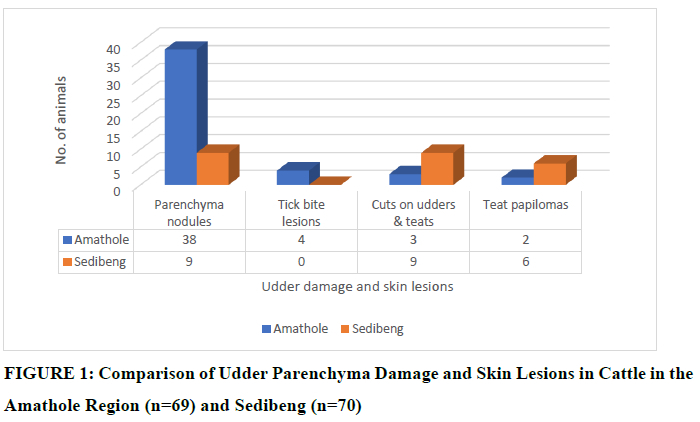
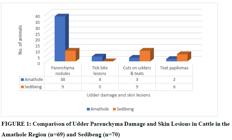
FIGURE 1 compares the udder parenchyma damage and udder skin lesions. Cows from Amathole (38) had more chronic parenchyma damage (nodules) compared to cows from Sedibeng (nine). Additionally, Amathole cows had more tick bite lesions on their udders, while Sedibeng cows had more cuts and papillomas. Previous studies signify that skin lesions on udders and teats increase the risk of mastitis. Breeds such as Holstein-Friesians and Jerseys are more susceptible to udder diseases than other breeds (Sharma et al., 2020; Biffa et al., 2005; Husein et al., 1993).
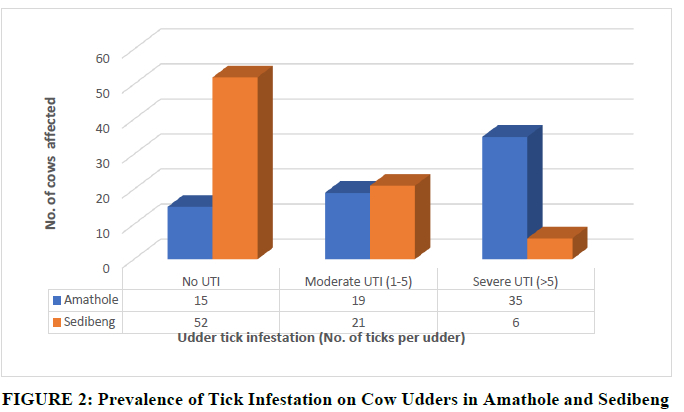
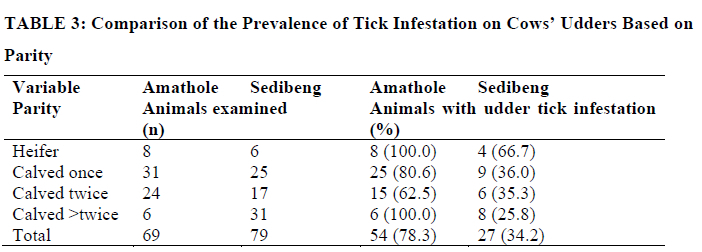
The prevalence of tick infestation on udders was higher in cows in Amathole (78.3%) than in Sedibeng (34.2%). (Error! Reference source not found.). The higher incidence of tick bite lesions in Amathole could be attributed to its warm and humid climate, dense vegetation, and limited access to effective tick control resources, such as acaricides. Farmers in Amathole may also lack the resources or knowledge to consistently implement tick control measures. A high tick burden on animals can lead to anaemia, decreased feed intake, and overall poor health, resulting in economic losses. Studies in Ethiopia and Zimbabwe report tick infestations of 89.9% and 81.5%, respectively (Ayana et al., 2021; Ndhlovu et al., 2009). In Sedibeng, the lower udder tick infestation rate (34.2%) without udder lesions may be attributable to more regular animal dipping and enhanced access to tick control products and veterinary services.
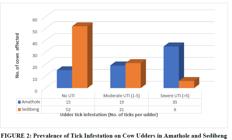
Tick bites mainly caused udder lesions in Amathole, while cuts on udders and papillomas were more common in Sedibeng (Table 3). Cattle in regions with high tick infestations are more prone to tick bites. Cows in Sedibeng, with their environment characterised by thorny bushes, sharp rocks, and uneven terrain, are at a higher risk of udder cuts owing to these hazardous conditions.
In Amathole, tick infestations were observed in heifers and cows with more than two lactations. Conversely, in Sedibeng, heifers had the highest tick infestation rate at 66.7%. This reflection suggests that young cattle in Amathole might lack sufficient attention and dipping treatment. The prevalence of udder skin lesions caused by tick bites in Amathole was significantly lower at 5.8% than in Zimbabwe, where it was 57.1% (Ndhlovu et al., 2009). The differences in tick burden may arise from various factors, including environmental conditions, farmer management practices, dipping regimens, and compliance with veterinary services. According to a study in the Eastern Cape, improper concentration of acaricides in dip tanks contributed to tick survival (Mekonnen, 2006). Farmers mistakenly believed that increasing product concentration during peak tick seasons would be more effective, unaware that it could lead to tick resistance. Ticks can transmit diseases such as babesiosis and anaplasmosis, which can severely affect livestock health by causing weight loss, decreased milk production, and even death; therefore, tick-borne diseases have been identified as a primary reason for limiting cattle production in the Eastern Cape (Malusi et al., 2021).
Udder lesions increase the risk of new intramammary infections (IMI) caused by bacteria. Cut wounds on udders were more common in Sedibeng (11.4%) than in Amathole (4.3%). Udder skin lesions were detected in first-lactating cows and heifers before calving. Hormonal changes before calving can lead to udder enlargement and increased skin tension, making the udder more susceptible to lesions and irritation. Heifers and first-lactating cows may be more prone to being active or less skilled at avoiding environmental hazards, which can lead to injuries. These animals are subjected to highly stressful conditions as they are expected to maintain growth and well-being while lactating without additional feed or supplements. According to Uddin (2009), the prevalence of teat papilloma was 4.5% higher than in Amathole (2.9%) but lower than in Sedibeng (7.5%). Teat papillomas are contagious and can cause skin lesions, facilitating bacterial entry into the udder parenchyma and increasing the risk of mastitis.
Table 4 demonstrates that the prevalence of inactive quarters was higher in Amathole (16.3%) than in Sedibeng (3.6%). Most cows with inactive quarters were in early lactation, with 14.3% in Amathole and 2.7% in Sedibeng. It is concerning that seven of the 23 cows examined in Amathole had inactive quarters, with four having three inactive quarters per udder, which could be fatal for their calves. In Sedibeng, 2 of the 21 cows examined had inactive quarters. One had a single inactive quarter, while the other had two. Substantial inactive quarters resulted in a significant loss of calves before weaning owing to starvation. Coetzee et al. (2005) suggest that cultural values and inadequate production practices among farmers influenced udder management. Insufficient colostrum intake in calves can increase their susceptibility to disease, thereby reducing their survival chances.
The prevalence of inactive quarters in Sedibeng (3.6%) was similar to that reported in studies from Ethiopia (Amin et al., 2017; Girma et al., 2012) and lower than the rate reported by Khan and Muhammad (2005). In Amathole, the 16.3% inactive quarters were higher than those reported by Girma et al. (2012). This research implies a correlation between tick burden and the incidence of inactive quarters.
3.3. Milk sample testing
The CMT was used to test milk from active quarters of lactating cows in this study. In Amathole, 77 quarters from 23 cows were tested, whereas in Sedibeng, 81 quarters from 21 were tested. The prevalence of subclinical mastitis in lactating cows, based on CMT scores, was 73.9% in Amathole and 38.1% in Sedibeng. The prevalence of subclinical mastitis at the cow level, as determined by CMCT results in both districts, was higher than that reported in other studies: 21.0% by Uddin et al. (2009), 23.18% by Girma et al. (2012), 34.9% by Biffa et al. (2005), and 36.0% by Khan and Muhammad (2005); however, the prevalence of subclinical mastitis in Sedibeng was lower than the 49.2% reported in Ethiopia (Amin et al., 2017). The variation in prevalence could be attributed to variances in the susceptibility of cattle breeds to mastitogenic pathogens, environmental conditions, and inadequate management practices (Girma et al., 2012). Subclinical mastitis may result from various factors, including inadequate management practices, excessive tick infestations, insufficient knowledge or motivation to care for livestock, and stress-induced immunosuppression.
TABLE 5 presents the bacterial results of composite milk samples from 12 cows in Amathole and 20 cows in Sedibeng. Despite the small sample sizes, the data provide significant insights into the probable bacteria responsible for mastitis. Non-aureus staphylococci were identified as the most common bacteria, with six of 12 cows in Amathole and four of 20 in Sedibeng testing positive. Staphylococcus aureus (S. aureus) was isolated from one cow in each district. The prevalence of bacteria-positive milk samples in Amathole (58.3%) and Sedibeng (50.0%) was greater than the findings reported in Ethiopia (19.79%) (Girma et al., 2012). Non-aureus staphylococcus (NAS) is primarily an environmental pathogen, whereas S. aureus is contagious and can be transmitted among cows or from humans to cows (Karzis & Petzer, 2012).
This study established a link between high udder tick infestations and udder damage, suggesting that ticks in first parity may contribute to increased udder infections in both districts. Non-aureus staphylococci were the most prevalent bacteria in the Amathole and Sedibeng districts, followed by S. aureus, consistent with a study by Petzer et al. (2017). Conversely, Girma et al. (2012) and Khan and Muhammad (2005) identified S. aureus as the most prevalent bacterium. Udder parenchyma nodules are a typical lesion in cows with chronic S. aureus intramammary infections or mastitis, but not in those with non-aureus staphylococci intramammary infections.
The non-aureus staphylococci isolates from both districts did not exhibit resistance to the tested antibiotics; however, S. aureus isolates from Amathole and Sedibeng showed ampicillin resistance at 12.5%. In Sedibeng, S. aureus also indicated resistance to penicillin G (12.5%) and oxytetracycline (12.5%). None of the non-aureus staphylococci isolates in this study was resistant to the tested antibiotic groups. Previous studies reported resistance of non-aureus staphylococci to various antibiotics, including penicillin G, oxacillin, erythromycin, amoxicillin, ampicillin, streptomycin, and doxycycline (Siddiki et al., 2019; Gentilini et al., 2002). Differences in antibiotic resistance patterns may be attributed to treatment practices for udder-related problems in cows from rural areas, such as Amathole, compared with those in commercial dairy herds.
The S. aureus isolates in this study were resistant to ampicillin. Additionally, the S. aureus isolated in Sedibeng indicated resistance to penicillin G and oxytetracycline. Conversely, Waller et al. (2014) found no resistance of S. aureus to penicillin G. Farmers in South Africa can easily access intramammary antibiotics without a prescription. Staphylococcus aureus often causes chronic udder infections, which are difficult to treat during lactation. Participants in Sedibeng had easier access to antibiotics for mastitis treatment, which could lead to increased resistance to β-lactams and oxytetracyclines.
The lack of treatment for mastitis can increase the risk of chronic udder infection and parenchymal damage, leading to a permanent decline in milk production in offspring. If a calf dies shortly after calving, the udder must dry up to prevent complications. The pressure within the udder can cause the teat canal to open, increasing the risk of new intramammary infections from environmental pathogens; therefore, it is essential to ensure that the teat sphincter and canal are consistently intact and kept in a clean environment to prevent potential intramammary infections (de Pinho Manzi et al., 2012).
4. CONCLUSIONS AND RECOMMENDATIONS
Udder health challenges were more severe in the rural areas of the Amathole District than in the Sedibeng District. Farmers of advanced age showed reduced interest in disease prevention and management, leading to elevated tick burdens on their livestock. These conditions caused an increase in udder skin lesions and parenchyma damage owing to mastitis. High tick burdens in young animals also present a risk to the herd's future, increasing the likelihood of udder damage and inactive quarters before calving. Ticks not only cause physical harm but also transmit tick-borne diseases, which can reduce milk production, lead to illness, and potentially result in death if left untreated.
To address these challenges, it is crucial to focus on education, motivation, and training in tick control measures, especially in the Amathole District. It is also essential to raise awareness about the responsible use of antibiotics, particularly β-lactams and tetracyclines. Farmers should be encouraged to implement primary animal healthcare practices and promptly address any health issues to safeguard animal well-being. It is also recommended to remove cows with poor udders and irreversible udder damage, such as inactive quarters, from the herd.
REFERENCES
- ABD-EL-HADY, A., 2015. Clinical observations on some surgical udder and teat affections in cattle and buffaloes. Sch. J. Agric. Vet. Sci., 2: 270-281.
- AMIN, B., DENEKE, Y. & ABDELA, N., 2017. Bovine mastitis: Prevalence, risk factors and isolation of streptococcus species from small holders dairy farms in and around Haramaya Town, Eastern Ethiopia. Glob. J. Med. Res., 17: 27-38.
- AYANA, M., GELAYE, A., FESSEHA, H. & MATHEWOS, M., 2021. Study on the distribution of ixodid ticks of cattle in pastoral areas of Yabello district, Borana zone, Oromia, Ethiopia. Parasite Epidemiol. Control., 12: e00200.
- AZEVEDO, C., PACHECO, D., SOARES, L., ROMÃO, R., MOITOSO, M., MALDONADO, J., GUIX, R. & SIMÕES, J., 2015. Prevalence of contagious and environmental mastitis-causing bacteria in bulk tank milk and its relationships with milking practices of dairy cattle herds in São Miguel Island (Azores). Trop. Anim. Health Prod., 48(2): 451-9.
- BAUER, A., 1966. Antibiotic susceptibility testing by a standardised single disc method. Am. J. Clin. Pathol., 45: 149-158.
- BIFFA, D., DEBELA, E. & BEYENE, F., 2005. Prevalence and risk factors of mastitis in lactating dairy cows in Southern Ethiopia. Int. J. Appl. Res. Vet. Med., 3: 189-198.
- CHETENI, P. & MOKHELE, X., 2019. Small-scale livestock farmers' participation in markets: Evidence from the land reform beneficiaries in the central Karoo, Western Cape, South Africa. S. Afr. J. Agric. Ext., 47: 118-136.
- CLINICAL AND LABORATORY STANDARDS INSTITUTE (CLSI)., 2015a. Performance standard for antimicrobial susceptibility testing. Twenty-fifth information supplement. CLSI document M100-S25. Wayne, P.A., Clinical and Laboratory Standards Institute.
- CLINICAL AND LABORATORY STANDARDS INSTITUTE (CLSI)., 2015b. Performance standards for antimicrobial disc and dilution susceptibility tests for bacteria isolated from animals. Approved Standard. 3rd Edition. CLSI document M31-A3, Wayne, P.A., Clinical and Laboratory Standards Institute.
- COETZEE, L., MONTSHWE, B. & JOOSTE, A., 2005. The marketing of livestock on communal lands in the Eastern Cape Province: Constraints, challenges and implications for the extension services. S. Afr. J. Agric. Ext., 34: 81-103.
- COOK, N.B. & REINEMANN, D.J., 2007. A toolbox for assessing cow, udder and teat hygiene. Madison, Wisconsin: University of Wisconsin-Madison.
- COCKROFT, P., 2015. Bovine Medicine. Oxford: JohnWiley & Sons, Inc.
- DEPARTMENT OF AGRICULTURE FORESTRY AND FISHERIES (DAFF), 2019. A profile of the South African beef market value chain.
- DEPARTMENT OF AGRICULTURE, LAND REFORM AND RURAL DEVELOPMENT (DALRRD)., 2021. Statistics, Economic Publications, and Reports. Republic of South Africa.
- DE PINHO MANZI, M., NÓBREGA, D.B., FACCIOLI, P.Y., TRONCARELLI, M.Z., MENOZZI, B.D. & LANGONI, H., 2012. Relationship between teat-end condition, udder cleanliness and bovine subclinical mastitis. Res. J. Vet. Sci., 93: 430-434.
- GENTILINI, E., DENAMIEL, G., BETANCOR, A., REBUELTO, M., FERMEPIN, M.R. & DE TORRES, R., 2002. Antimicrobial susceptibility of coagulase-negative staphylococci isolated from bovine mastitis in Argentina. J. Dairy Sci., 85: 1913-1917.
- HUSEIN, N., YEHUALASHET, T. & TILAHUN, G., 1993. Prevalence of Mastitis in different local and exotic breeds of milking cows. National Livestock Improvement Conference. Addis Abeba (Ethiopia), 13-15 November.
- IVEMEYER, S., WALKENHORST, M., HEIL, F., NOTZ, C., MAESCHLI, A., BUTLER, G. & KLOCKE, P., 2009. Management factors affecting udder health and effects of a one-year extension program in organic dairy herds. J. Anim., 3: 1596-1604.
-
JASP., 2020. (Version 0.14.1.0) [Computer software]. Available from https://jasp-stats.org/2020/12/17/jasp-0-14-1-minor-updates/
» https://jasp-stats.org/2020/12/17/jasp-0-14-1-minor-updates/ - KARZIS, J. & PETZER, I.M., 2012. Curb mastitis with fast diagnosis. The Dairy Mail., 2012: 73-79.
- KHAN, A. & MUHAMMAD, G., 2005. Quarter-wise comparative prevalence of mastitis in buffaloes and crossbred cows. Pak. Vet. J., 25: 9-12.
- MALUSI, N., FALOWO, A. & IDAMOKORO, E., 2021. Herd dynamics, production and marketing constraints in the commercialization of cattle across Nguni Cattle Project beneficiaries in Eastern Cape, South Africa. Pastoralism., 11: 1-12.
- MEKONNEN, S., 2006. Acaricide resistance profiles of single and multi-host ticks in commercial and communal farming areas in the Eastern Cape and North-West Provinces of South Africa. Doctoral dissertation, University of Pretoria.
- MUSEMWA, L., MUSHUNJE, A., CHIMONYO, M. & MAPIYE, C., 2010. Low cattle market off-take rates in communal production systems of South Africa: Causes and mitigation strategies. J. Agric. Res., 12: 209-226.
- NDHLOVU, D.N., MAKAYA, P. & PENZHORN, B.L., 2009. Tick infestation, and udder and teat damage in selected cattle herds of Matabeleland South, Zimbabwe. Onderstepoort J. Vet. Res., 76: 235-248.
- NOOR, S., TAJIK, O. & GOLZAR, J., 2022. Simple Random Sampling. Int. J. Educ. Langu. Studies., 1(2): 78-82.
- OCAIDO, M., OTIM, C.P. & KAKAIRE, D., 2009. Impact of major diseases and vectors in smallholder cattle production systems in different agro-ecological zones and farming systems in Uganda. Livest. Res. Rural Dev., 21: 155.
- OPOOLA, O., SHUMBUSHO, F., HAMBROOK, D., THOMSON, S., DAI, H., CHAGUNDA, M.G.G., CAPPER, J.L., MORAN, D., MRODE, R. & DJIKENG, A., 2022. From a documented past of the Jersey breed in Africa to a profit index linked future. Front. Genet., 13: 1-20.
- O'ROURKE, D., 2009. Nutrition and udder health in dairy cows: a review. Ir. Vet. J., 62: 1-6.
- PANDIS, N., 2014. Cross-sectional studies. Am. J. Orthod Dentofacial Orthop., 146(1): 127-9.
- PETZER, I.M., KARZIS, J., MEYER, I.A. & VAN DER SCHANS, T.J., 2013. A cost-benefit model comparing the California Milk Cell Test and Milk Electrical Resistance Test. Onderstepoort J. Vet. Res., 80: 6.
- PETZER, I.M., KARZIS, J., DONKIN, E.F., WEBB, E. & ETTER, E.M.C., 2017. Validity of somatic cell count as indicator of pathogen-specific intramammary infections. J. S. Afr. Vet. Assoc., 88: a1465.
- PETZER, I.M., KARZIS, J., DONKIN, E.F. & WEBB, E.C., 2016. A pathogen-specific approach towards udder health management in dairy herds: Using culture and somatic cell counts from routine herd investigations. Onderstepoort J. Vet. Res., 83(1): 12.
- RASBY, R., 2011. A guide to udder and teat scoring beef cows. Angus J., 2011: 112-115.
- SHARIF, A. & MUHAMMAD, G., 2008. Somatic cell count as an indicator of udder health status under modern dairy production: A review. Pak. Vet. J., 28: 194-200.
- SHARMA, S., GUPTA, D. & BANSAL, B., 2020. Udder and teat skin lesions in bovines. Int. J. Livest. Res., 10: 1-14.
- SIDDIKI, S., SAMAD, M., SAHA, S., BADIUZZAMAN, M. & ISLAM, M., 2019. Comparison of bacterial pathogens associated with different types of bovine mastitis and their antibiotic resistance status in Bangladesh. J. Vet. Med. Res., 1: 17-27.
- GIRMA, S., MAMMO, A., BONGELE, K., SORI, T., TANDESI, F. & JIBAT, T., 2012. Study on prevalence of bovine mastitis and its major causative agents in West Harerghe zone, Doba district, Ethiopia. J. Vet. Med. Anim. Health, 4: 116-123.
- SMITH, K., HILLERTON, J. & HARMON, R., 2001. NMC guidelines on normal and abnormal raw milk based on SCC and signs of clinical mastitis. National Mastitis Council, Madison, WI.
- UDDIN, M., KAMAL, M. & HAQUE, M., 2009. Epidemiological study of udder and teat diseases in dairy cows. BJVM., 7: 332-340.
- WALLER, K.P., PERSSON, Y., NYMAN, A.K. & STENGÄRDE, L., 2014. Udder health in beef cows and its association with calf growth. Acta Vet. Scand., 56: 1-8.
- WANG, X. & CHENG, Z., 2020. Cross-Sectional Studies: Strengths, weaknesses, and recommendations. Chest., 158(1S): S65-S71.
- WATTIAUX, M.A., 1995. Mastitis: Prevention and detection. Babcock: Institute for International Dairy Research and Development.
- YAWA, M., NYANGIWE, N., JAJA, I.F., KADZERE, C.T. & MARUFU, M.C., 2020. Communal cattle farmer's knowledge, attitudes and practices on ticks (Acari: Ixodidae), tick control and acaricide resistance. Trop. Anim. Health Prod., 52: 3005-3013.