An Investigation into the Smallholder Agricultural Entrepreneurs' Irrigation Water Supply and Utilisation in Vhembe District Municipality, Limpopo Province of South Africa
Abstract
The irrigated smallholder agricultural enterprises led by women and youth (ISHAEs-WY) are operating their businesses in transition from traditional to modern farming systems. The greatest increases in water use in ISHAEs-WY have not come from improved irrigation technology or management, but rather from higher crop yields, driven by more efficient water application to preferred field crops. The purpose of the study was to investigate the insights of irrigated smallholder agricultural entrepreneurs led by women and youth (ISHAEr-WY) towards irrigation water supply and utilisation in their smallholder irrigation schemes in Vhembe District. A simple random sampling was used to select respondents, with a total of 294 units in this study. Primary data were collected using a questionnaire. The results show that surface water was generally the most used (55.4%); groundwater (used by 44.2% of respondents) was also an important source of irrigation water. Groundwater provides a better supply quantity than surface water and is always available. Irrigation scheduling was generally poor, based on intuition and rotation practices rather than on science. In conclusion, competition for irrigation water appeared to be an issue, though not yet at a level that would cause major conflicts among the ISHAEr-WY.
Irrigation; Water-use; Entrepreneurs
1. INTRODUCTION
Farming has traditionally been a thriving sector; in the current situation, many depend on the entrepreneurial direction of the individual farming enterprises. Agriculture in our country, South Africa, is a long-term investment that must consider factors such as ecological conditions, i.e., the availability of water to ISHAEs-WY. Water is a primary input to every economic good (Birol, Karousakis, & Koundouri, 2006). According to Machethe, Mollel, Ayisi, Mashatola, and Anim Vanasche (2004), the unavailability of water for crop growth and development during the growing season is a major limiting factor in crop production in the semi-arid Vhembe District. Growing scarcity and competition for water threaten advances in poverty eradication, public health and food production (Warde, 2011). The situation is further worsened by the increasing human population, which has led to a simultaneous increase in demand for water for domestic and productive use. The general assumption was that there is a desire to maximise the expected utility of adopting new technologies, such as small-scale irrigation farming, given the persistent drought in the region (Mango, Makate, Tamene, Mponela & Ndengu, 2018). In harmony with the above, farmers in the traditional schemes have adopted some knowledge and technological aspects of improved irrigated agriculture (Mosha, Vedeld, Kajembe, Tarimo & Katani, 2016). The increasing demand for water from alternative users and the prevailing poverty and unemployment in rural areas of South Africa mean that there is a strong need to increase the efficiency of resource utilisation and productivity in smallholder irrigation farming (Hedden-Dunkhorst & Mphahlele, 2000; Backeberg, 2006).
In agriculture, more especially in smallholder irrigation schemes, water is one of the most indispensable substances for human daily life and survival (Aiga & Umenai, 2002). Access to adequate water supplies is a universal indicator of human well-being and development (Potter & Darmame, 2010). Water use management on the ISHAEs-WY can be increased by increasing production with the same amount of water, or by reallocating water to preferred field crops to achieve higher yields. The lack of access to safe, improved water supplies in developing countries is a major concern, as water is a basic need for sustenance (Mazvimavi & Mmopelwa, 2006). Therefore, there is a need for information on irrigation water supply and utilisation at ISHAEs. The objective of this study was to investigate the insights of irrigated smallholder agricultural entrepreneurs (ISHAEr-WY) regarding irrigation water supply and utilisation in their smallholder irrigation schemes in the Vhembe District. Effective water use is necessary for the success of ISHAEr-WY. Water use methods, including irrigation frequency and efficiency, as well as the use of conservation practices and measures, must be considered.
2. RESEARCH METHODOLOGY
2.1. Description of Study Area
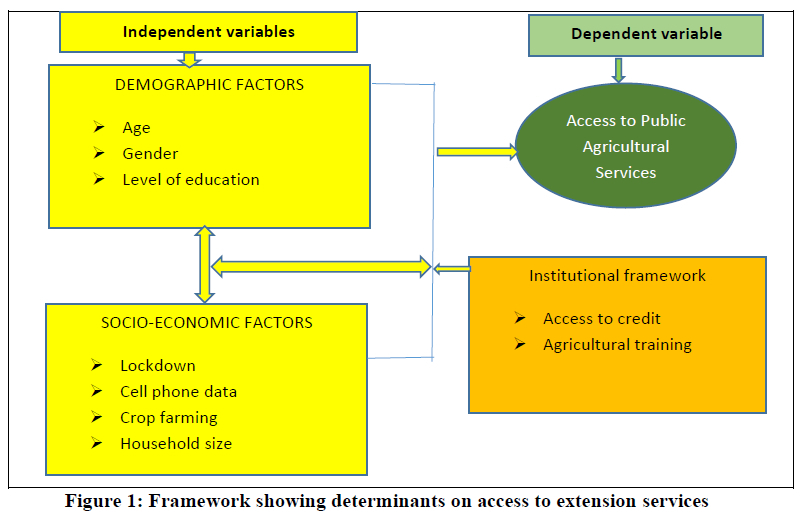
The study area was described based on locality and ecological description, with an analysis of the situation. The focus is on the ISHAEs-WY's water supply and use in Vhembe District. All water resources are linked to one another (Figure 1) and are influenced by the biophysical environment and human activities.
Water use must be managed in light of the relationships between water and ecological factors. Environmental and natural resource conditions in Vhembe District Municipality are generally sub-tropical but show considerable local variation. The variation is triggered by an elevation gradient in the region where the difference drops from the top of the mountains to the river valley. This vast elevation difference causes significant variability in microclimate and affects water use in ISHAEs-WY. The research project was specifically conducted at Madimbo Corridor and Upper Mutale Valley ISHAEs-WY.
2.2. Sample Frame and Sample Procedure
2.2.1. Sample Frame
A sampling frame is defined as a complete list of units of analysis in which each unit is mentioned only once (Welman, Kruger, & Mitchell, 2005). The sampling frame for this study was drawn from Vhembe District Municipality in Limpopo province. Two smallholder irrigation schemes were identified: the Madimbo Corridor and the Upper Mutale Valley. The Madimbo Corridor irrigation scheme covers Ha-Gumbu, Malale, Masea, Ngwele, Tshipise, and the Musina-Nwanedi villages, and the Upper Mutale Valley covers areas such as Tshiombo, Matangari, Maraxwe Mutshenzheni, and Rambuda villages. A representative sample was based on the total ISHAEr-WY available in both ISHAEs-WY.
2.2.2. Sample Procedure
To ensure the proper selection of respondents who represent the total population as well as possible, a two-stage simple random sampling process was conducted using the SURVEYSELECT procedure in SAS. According to Statistical Analysis System (SAS), 2009, PROC SURVEYSELECT allows selection of probability-based random sampling, where sampling in different categories or classes depends on the number of units within that class and is appropriate for handling selection bias. This includes primary area selection for municipalities (both district and local municipalities), location selection for irrigation schemes, and respondents who serve as ISHAEr-WY.
In simple random sampling, study units are selected at random. A simple random sampling was used to select respondents, and a total of 294 units were randomly selected for this study. In total, 294 participants took part: 223 adult women and 71 youth. Out of 294 as the total number, 15 were male youth, and 279 were females (adult and youth). This means that female youth were 56. The respondents were also selected with an emphasis on gender and age. Youth were aged 18-35. The numbers were (a) Youth female (age 18-35 years), where N=56; youth male (age 18-35 years), where N=15, Adult-female (age 36-59 years), where N= 153 and Pensioner female (age above 60), where N=68. Sampling is the process of selecting units from a population of interest, so that by studying the sample, the results obtained can be generalised to the population from which the sample was chosen (Leedy & Ormrod, 2005). The best time for sampling was immediately after harvest, when the farmers still remembered most of what happened during the production period.
2.3. Data Collection and Analysis
The study applied both primary and secondary data collection instruments. Primary data was collected using a questionnaire and transactions. The questionnaire was developed to collect qualitative and quantitative data. A semi-structured questionnaire was used to collect primary data on ISHAEr-WY at these two smallholder irrigation schemes. The questionnaires were administered via face-to-face interviews, including both open- and closed-ended questions. As revealed by Leedy and Ormrod (2010), closed-ended questions collected quantitative data, while open-ended questions collected qualitative data. The questionnaire was developed based on environmental, social, and economic characteristics, as well as other assets of the livelihoods framework and household food security.
The transact is a primary data collection instrument, carried out through physical observation of points of interest related to social and economic characteristics. The transact was carried out with a group of representatives from the Madimbo Corridor and Upper Mutale Valley irrigation schemes, who explained the relevant social and economic aspects of their schemes. During the transact, the physical observations regarding social and economic characteristics were noted. Some of these verified the information furnished on the questionnaire. Informal interviews with people encountered along the way also formed part of the primary data collected. In many cases, it was useful to have informal talks with enterprise representatives or persons accompanying the walk to further explore how ISHAEs-WY survived.
For secondary data collection, existing related documents were collected from some NGO offices, government departments and ministries, academic or research institutions, and journals, and personal contacts were used to reach scholars, researchers, and friends who have conducted research on these issues, in order to gain an in-depth understanding of this study. The above documents and information collected also served as a means of triangulation for the information furnished by ISHAEs-WY.
Collected primary and certain secondary raw data were cleaned, captured using MS Excel and put into the statistical analysis Package 9.1 version (SAS 9.1) software (SAS Institute Inc., 2009) and transcribed. The PROC FREQ procedure in SAS was used to generate simple frequency tables for variables of interest. Selected data was summarised in an Excel spreadsheet to develop figures. Descriptive analysis techniques were used in the study to capture respondents' perceptions-primarily through qualitative data.
3. RESULTS AND DISCUSSION
The supply of water in an area depends on the quantity of runoff, which, in turn, is influenced by rainfall (Tshikolomo, Walker & Nesamvuni, 2013). In addition to the amount of water supply, the availability of storage infrastructure, such as dams, affects the amount of water supply (Mostert, 2008). The quantity of the water source usually has a significant impact on the ISHAEs-WY. Field crop water use must be continuous and is best utilised through an irrigation system that delivers frequent applications during the production season. ISHAEs-WY often require technological interventions in the smallholder agricultural system to improve field production yields. New technologies mean new directions and increased efficiency in the field crop production. If the ISHAEr-WY are not sufficiently adaptable to change, some irrigation water may be misused.
3.1. Water Resource Supply in ISHAEs-WY
3.1.1. Overview of the Main and Alternative Water Sources at ISHAEs-WY
The ISHAEs-WY usually obtain water from surface and underground water sources. Farmers with secure access to water have higher agricultural productivity than those without, the difference being attributable to increased area under cultivation, greater crop intensity, and fewer crop losses (Namara et al., 2010). In Table 1, more participants (55,6%) reported surface water as their main irrigation source than groundwater (44,4%). Surface water was perceived to have relatively less operational costs than groundwater (Stevens, 2007). In groundwater sources, conservation and recharge are necessary to prevent rapid declines in aquifer levels, as such declines could have significant negative implications for the sustainability of irrigated agriculture (Rouhi Rad, Araya & Zambreski, 2020).
More participants are using a surface water source because ISHAEs-WY obtains bulk water from the Nwanedi-Luphephe Dams. These release water to the Cross Dam (Gondoza Dam). The Cross Dam provides balancing storage and also distributes water to ISHAEs-WY. Those who obtain bulk water from the Mutale River use the water weir to distribute water to ISHAEs-WY. ISHAEr-WY at Madimbo Corridor uses electric and diesel pumps to convey water to their ISHAEs-WY, while Upper Mutale Valley uses canals. Some of the other areas, like Gumbu in the Madimbo Corridor, use underground water because there are no rivers; the surface water next to their ISHAEs-WY is part of the groundwater. According to de Lange (1998), as much as 95% of irrigation water is used by large-scale farmers, while smallholder farmers have access to only the remaining 5%. Intensification of water sources may increase the sustainability of water for ISHAEs-WY. Even though it may cost to have infrastructure for different water sources, in the end, irrigation water can be available in reliable quantities. Harvesting rainwater can be an alternative to supplement available water sources and can also relieve the burden on preferred water sources. At Garside, spring water was used as a supplementary source (van Averbeker, 2012). The principle of using alternative sources was acknowledged by Paudel, Pandit, and Hinson (2016), who showed that water sources for nursery crops in the United States included surface, ground, recycled, and piped water from municipal sources. Table 1 indicates that 27.0% of the ISHAEr-WY require and/or use more water during irrigation than their water source can provide.
The results show that the intensification of water sources in the remaining 73.0% is low or poor. Poor intensification of irrigation water indicates that if the preferred or main water sources dry up, ISHAEs-WY's activities will cease, and business will be halted for a period of time. Water scarcity seriously affects agricultural production, especially in arid and semi-arid areas (Abdelkhalik et al., 2020).
3.1.2. Variability Water Supply Evaluation during Production Season
The availability of water from the main source in all production seasons stabilises enterprise production practices and income. It also enhances the chances of producing off-season when climatic conditions allow. According to Keller, Sakthivadivel, and Seckler (2000), water is stored in dams during rainfall seasons when its economic value is low; it is reallocated at times and places when its economic value is high. This increases the likelihood of high profits by driving demand when the product is unavailable in the market.
The variability in water supply evaluation during the production season on the ISHAEs-WY depends on the quantity of water in the water source; this, in turn, is influenced by rainfall in that area. Schulze (1995) stated that rainfall is the fundamental driving force and an important input to most hydrological processes. In Table 2, the ISHAEs-WY valued the variability in water supply during the winter (70.2%) production season as high and during the summer (58.9%) as low for surface water sources. As far as underground water is concerned, the ISHAEs-WY appreciated the variability in water supply during winter (34.7%) production season as very high or always the same, and during summer (56.2%) as very high. The reason for this may be rainfall in this area, which tends to occur late summer, with water supply still available in winter. This is an advantage for the ISHAEr-WY because, in winter, it is warm, allowing them to produce summer crops.
3.1.3. Power Source and Conveyance Technology of Water Supply from the Main Source to ISHAEs-WY
The irrigation water from the water source to the ISHAEs-WY needs to flow. There should be a source of energy to boost the flow to the desired place. Different ISHAEr-WY use different methods of conveyance. This depends on the nature and resources of the entrepreneurs. Many ISHAEs-WY are being irrigated directly from rivers and springs or from earth furrows. Some ISHAEs-WY have pumping equipment, and water is pumped either into a reservoir or directly into a distribution network of pipes and tap stands. In Table 3, most participants whose main source was surface water (57.2%) indicated that it was powered by gravity; participants whose main source was groundwater (94,5%) indicated that it was powered by electricity. Those who prefer diesel/petrol engines are minimal.
Most participants whose main source was surface water (67.41%) used pipes for conveyance, whereas all participants whose main source was groundwater (100.0%) did so. The sharing of a common water source by a group of entrepreneurs limits members' irrigation flexibility, but choosing suitable know-how can be important to ensure as much flexibility as possible for each individual entrepreneur.
3.2. Water Use in the ISHAEs-WY
3.2.1. Water Source Utilisation by ISHAEs-WY
Effective management of water source utilisation is necessary for the success of ISHAEs-WY. Important aspects of water source utilisation include intensifying water sources, using alternative sources for irrigating ISHAEs-WY, and evaluating water supply variability during the production season.
According to Danison and Manona (2007), the conventional technical approach to water supply is to provide water for a single purpose, either domestic or irrigation. They further explore that evidence in both the irrigated and the domestic water supply scenarios shows that people use whatever water is available for many things, such as domestic use, gardening, car washing, animal watering and brick fabrication. In addition to the above idea, Table 4 shows that 81.40% use ISHAEs-WY water sources for domestic use, and some also use them for other productive uses, such as livestock drinking. The main drivers of envisaged water shortages are population growth, leading to greater domestic and other productive use, and global warming, which, in combination, are driving both greater demand for and reduced supply of water.
3.2.2. Irrigation Water Use Management at ISHAEs-WY
An important aspect of irrigation water management in ISHAEs-WY is to improve water efficiency by increasing crop yield per unit of irrigation water applied. Knowledge of irrigation water management and practical irrigation scheduling at the scheme level in South Africa is weak (Fanadzo, Chiduza, & Mnkeni, 2010). Fanadzo et al. (2010) further indicated that farmers at the Zanyokwe irrigation scheme did not practice irrigation scheduling and seemed ignorant of the dangers of over-irrigation.
Concurring with the above, Stevens (2007) stated that irrigation water is the major production constraint for most irrigators in South Africa, and that potential savings in water through on-farm irrigation scheduling could expand the areas that can be irrigated, thereby increasing total net income. Proper irrigation scheduling can prolong irrigation capacity and may be an important method for improving crop production (Crouch, Guerrero, Amosson, Marek, & Almas, 2020). Prolonged irrigation capability would result from increased water use efficiency associated with proper irrigation scheduling (Levidow et al., 2014). The majority of ISHAEr-WY reported that they irrigated twice (surface water (45.63%) and groundwater (52.30%)) when the water source had water in a period of one week, implying that there might be cases where irrigation was once a week (Table 5). The ISHAEr-WY probably irrigated weekly when the water supply did not allow more frequent irrigation. With the prospects of less frequent irrigation, low crop yields would be obtained. The persistent dependence on intuitive and rotational scheduling could be exacerbated by their lack of knowledge of crop yield responses to different water management practices (Levidow et al., 2014).
3.2.3. ISHAEs-WY's Water Use Competition from other Sectors
Irrigated smallholder agriculture is regarded as one of the water-intensive sectors during production, but ISHAEs-WY have been, and will continue to be, critical to achieving food security. Many irrigation systems appear to use water inefficiently, so that field crops themselves consume a relatively low fraction of the water. For example, in surface water applications, only 1 to 2/3 of the water applied at the field level is used directly for crop growth, with the rest seeping away or evaporating.
In Table 6, most participants whose main source was surface water (67.1%) indicated that the water sources are used by farmers and other sectors, whereas most participants whose main source was groundwater (73.8%) indicated that water sources are used by farmers only. Groups of farmers commonly use the surface water. Therefore, water demand is not limited to irrigation, but also includes recreational activities, livestock, car washing, and small-industry uses such as salons. As far as groundwater is concerned, irrigation use is privately owned and used only for that purpose.
3.2.4. ISHAEs-WY' Water Use Agricultural Technology Adaptation
Studies on agricultural technology applications have in the past focused on commercial irrigated agriculture, which was the domain of white farmers. This tactic has deprived ISHAEs-WY of appropriate technologies for their production systems. To determine whether ISHAEs-WY were aware of available technologies, they were asked whether they knew, used, or still use each technology.
The responses are outlined in Table 7. The participants (69.0%) knew about mulching; 49.0% had used it, and fewer (19.0%) were currently using it. Mulching reduces evaporation in the soil. This indicates that through mulching, more water is retained in the soil and, during irrigation, more water will be available for field crop use.
This will also assist in soil conservation. Among participants who used an evaporation pan, fewer participants (19.0%) knew about an evaporation pan, fewer participants (19.7%) had used one, and fewer participants (4.1%) were currently using one. This shows that the technology is aged-those who knew and used it may be old farmers. This technology is no longer popular in ISHAEs-WY because it has been replaced by weather stations. As far as a tensiometer is concerned, fewer participants (22.1%) knew about it, fewer (21.1%) had used one, and only a small number (10.2%) were using one. This seems expensive and is mostly used by commercial farmers. ISHAEs-WY who are illiterate can find it difficult to use this technology. Regarding water harvesting, most participants (77.9%) knew about it, most (70.1%) had used it, and fewer (29.3%) were currently using it. In surface water sources, the adoption of new technology is hindered by the location of the ISHAEs-WY production areas.
The layout of these areas makes it difficult for agricultural entrepreneurs to irrigate their production areas according to their individual requirements, due to the shared water sources. Subsequently, it seems that either increasing irrigation efficiency or reducing water losses (e.g., through new irrigation technologies or management practices) would free up significant water for other uses, especially in surface water sources. Therefore, overall basin-level efficiencies are generally much higher than they seem, leaving less "unused" water than is assumed (Seckler & Amaransinghe, 2000).
4. CONCLUSIONS AND RECOMMENDATIONS
4.1. Conclusions
The exploration revealed that a system of simple agreements governing irrigation water among ISHAEs-WY and the routine use of the irrigation system could provide an appropriate basis for sustainable water-use efficiency by ISHAEr-WY. A glaring weakness was the lack of adequate expertise to manage water use in their irrigation system-clearly, appropriate training on irrigation water use enterprise is needed. The responsible use of water has a major effect on irrigation sustainability. Careful water management can improve yield and reduce water waste during irrigation in the schemes. The water capacity must be maintained to absorb and retain moisture, which saves water. This can be achieved by increasing soil organic content and reducing crusting or compaction. All this aims to ensure that the soil can act as a reservoir for moisture during periods of water and nutrient stress.
Based on the study's results, the following conclusions were drawn. Surface water was generally the most used (55.4%); groundwater (used by 44.2% of respondents) was also an important source of irrigation water. Groundwater has a greater supply quantity than surface water and is always available. Irrigation scheduling was generally poor, based on intuition and rotation practices rather than on science-based information. The competition for irrigation water seemed to be an issue, though not yet at a level that would cause major conflicts among the ISHAEs-WY. The fact that the ISHAEs-WY (across gender and age categories) reported their main sources as having the most supplies indicated that they explored the best sources (with the highest supplies) in the area under study and should be regarded as a positive result.
4.2. Recommendations
Based on the study's findings, four major policy recommendations could be made. They are: (a) ISHAEs-WY should be capacitated to use water harvesting techniques, which can reduce the surface water supply to their schemes. Such capacity development could include the provision of techniques and skills-based information, together with materials for moisture storage where possible; (b) With supplies from surface water mostly regarded as moderate and at times clearly reported to be insufficient, it would be recommended for runoff and available storage capacity of river catchments in the study area to be assessed, to determine prospects for development of additional storage capacity that would increase the volume of surface water availed for irrigation. Similar studies conducted by Tshikolomo, et al., (2013), in fact, already revealed that the Mutale River had sufficient streamflow to allow construction of a dam; hence, it would be necessary for policy implementers to consider the above, to ease the burden of Upper Mutale Valley ISHAEs-WY with irrigation water; (c) Although supplies from groundwater sources were regarded to be very high, the sources are not inexhaustible. It would therefore be recommended that the aquifers be monitored, and ISHAEs-WY be guided on strategies for increasing water use efficiency so as not to deplete the aquifers; and (d) ISHAEs-WY should be capacitated to apply science-based irrigation scheduling, as the current intuition and rotational-based schedules would be expected to be highly inefficient with regard to water use. Such capacity development could include the provision of science-based information, along with, where possible, equipment for moisture measurement.
5. ACKNOWLEDGEMENT
The authors would like to thank the Water Research Commission (WRC) for the funding of the study.
REFERENCES
- ABDELKHALIK, A., PASCUAL, B., NÁJERA, I., DOMENE, M.A., BAIXAULI, C. & PASCUAL-SEVA, N., 2020. Effects of deficit irrigation on the yield and irrigation water use efficiency of drip-irrigated sweet pepper (capsicum annuum l.) under Mediterranean conditions. Irrig Sci., 38: 89-104.
- AIGA, H. & UMENAI, T., 2002. Impact of improvement of water supply on household economy in a squatter area of Manila. Soc. Sci. Med., 55: 627- 641.
- BACKEBERG G.R., 2006. Reform of user charges, market pricing and management of water: Problem or opportunity for irrigated agriculture. Irrig. Drain., 55: 1-12.
- BIROL, E., KAROUSAKIS, K. & KOUNDOURI, P., 2006. Using economic valuation techniques to inform water resources management: A survey and critical appraisal of available techniques and an application. Sci. Total Environ., 365: 105-122.
- CROUCH, M., GUERRERO, B., AMOSSON, S., MAREK, T. & ALMAS, L., 2020. Analysing potential water conservation strategies in the Texas Panhandle. Irrig Sci., 38: 559-567.
- DE LANGE, M., 1998. Irrigation Policy Draft 4.1. Unpublished Discussion Paper.
- DENISON, J. & MANONA, S., 2007. Principles, Approaches and guidelines for participatory revitalisation of smallholder irrigation schemes, a rough guide for irrigation development practitioners. WRC Project No. K5/1463. Water Research Commission.
- FANADZO, M., CHIDUZA, C. & MNKENI, P.N.S., 2010. Overview of smallholder irrigation schemes in South Africa: Relationship between farmer crop management practices and performance. Afr. J. Agric. Res., 5(25): 3514-3523.
- HEDDEN-DUNKHORST, B. & MPHAHLELE, R.E., 2000. Where to go? A socio-economic analysis of smallholder irrigation farming in South Africa's Northern Province. Proceedings of the 6th International Micro-Irrigation Congress on Micro-Irrigation Technology for Developing Agriculture, South Africa, 22 - 27 October.
- KELLER, A., SAKTHIVADIVEL, R. & SECKLER, D., 2000. Water scarcity and the role of storage in development. Research Report 39. Colombo, Sri Lanka: International Water Management Institute.
- LEEDY, P.D. & ORMROD, J.E., 2005. Practical research: Planning and design, 8th edn. Upper Saddle River, NJ: Prentice Hall.
- LEEDY, P.D. & ORMROD, J.E., 2010. Practical research, planning and design. 8th edn. New Jersey: Prentice Hall.
- LEVIDOW, L., ZACCARIA, D., MAIA, R., VIVAS, E., TODOROVIC, M. & SCARDIGNO, A., 2014. Improving water-efficient irrigation: Prospects and difficulties of innovative practices. Agric. Water Manag., 146: 84-94.
- MACHETHE, C.L., MOLLEL, N.M., AYISI, K., MASHATOLA, M.B., ANIM, F.D.K. & VANASCHE, F., 2004. Smallholder irrigation and agricultural development in the Olifants River Basin of Limpopo Province: Management transfer, productivity, profitability and food security issues. Report to the Water Research Commission on the Project "Sustainable Local Management of Smaller Irrigation in the Olifants River Basin of Limpopo Province". Pretoria: Water Research Commission.
- MANGO, N., MAKATE, C., TAMENE, L., MPONELA, P. & NDENGU, G., 2018. Adoption of small-scale irrigation farming as a climate-smart agriculture practice and its influence on household income in the Chinyanja Triangle, Southern Africa. Land., 7: 49.
- MAZVIMAVI, D. & MMOPELWA, G., 2006. Access to water in Gazetted and Ungazetted rural settlements in Ngamiland, Botswana. Phys. Chem. Earth., 31: 713-722.
- MOSHA, D.B., VEDELD, P., KAJEMBE, G.C., TARIMO, A.K.P.R. & KATANI, J.Z., 2016. Reflections on evolving water management institutions and institutional bricolage: A case of irrigation schemes in Iringa Rural and Kilombero districts, Tanzania. Water Policy., 18: 143-160.
- MOSTERT, E., 2008. Managing water resources infrastructure in the face of different values. Phys. Chem. Earth., 33: 22-27.
- NAMARA, R.E., HANJRA, M.A., CASTILLO, G.E., RAVNBORG, H.M., SMITH, L. & VAN KOPPEN. B., 2010. Agricultural water management and poverty linkages. Agric. Water Manag., 97(4): 520-527.
- PAUDEL, K.P., PANDIT, M. & HINSON. R., 2016. Irrigation water sources and irrigation application methods used by U.S. plant nursery producers. Water Resour. Res., 52: 698-712.
- POTTER, R.B. & DARMAME, K., 2010. Contemporary social variations in household water use, management strategies and awareness under conditions of water stress: The Case of Greater Amman, Jordan. Habitat Int., 34: 115-124.
- ROUHI RAD, M., ARAYA, A. & ZAMBRESKI, Z.T., 2020. Downside risk of aquifer depletion. Irrig Sci., 38: 577-591
- SAS INSTITUTE INC., 2009. SAS 9.1.2 User's Guide. Cary, NC: SAS Institute Inc.
- SCHULZE, R.E., 1995. Hydrology and agro-hydrology. A text to accompany the ACRU - 3.00 Agro-hydrological Modelling System. School of Bio-resources Engineering and Environmental Hydrology, University of KwaZulu-Natal, Pietermaritzburg, South Africa.
- SECKLER, D. & AMARANSINGHE, U., 2000. Water Supply and Demand, 1995 to 2025. Colombo, Sri Lanka: International Water Management Institute.
- STEVENS, J.B., 2007. Adoption of irrigation scheduling methods in South Africa. Unpublished Doctoral thesis. Department of Agricultural Economics, Extension and Rural Development. University of Pretoria, South Africa.
- TSHIKOLOMO, K.A., WALKER, S. & NESAMVUNI, A.E., 2013. Prospect for developing water storage through analysis of runoff and storage capacity of Limpopo and Luvuvhu Letaba water management areas of South Africa. Int. J. Appl. Sci. Technol., 3(3): 70-79.
- VAN AVERBEKE, W., 2012. Performance of Smallholder Irrigation Schemes in the Vhembe District of South Africa. In M. Kumar (ed.), Problems, perspectives and challenges of agricultural water management. InTech Open, pp. 413-438.
- WARDE, P., 2011. The invention of sustainability. Mod Intellect Hist., 8: 153-170.
- WELMAN, C., KRUGER, F. & MITCHELL, B., 2005. Research Methodology, 3rd edn. Cape Town: Oxford.