Wool Sheep Farming in the Communal Areas of the Eastern Cape Province: A Summative Technical Overview of Four Research Projects
Abstract
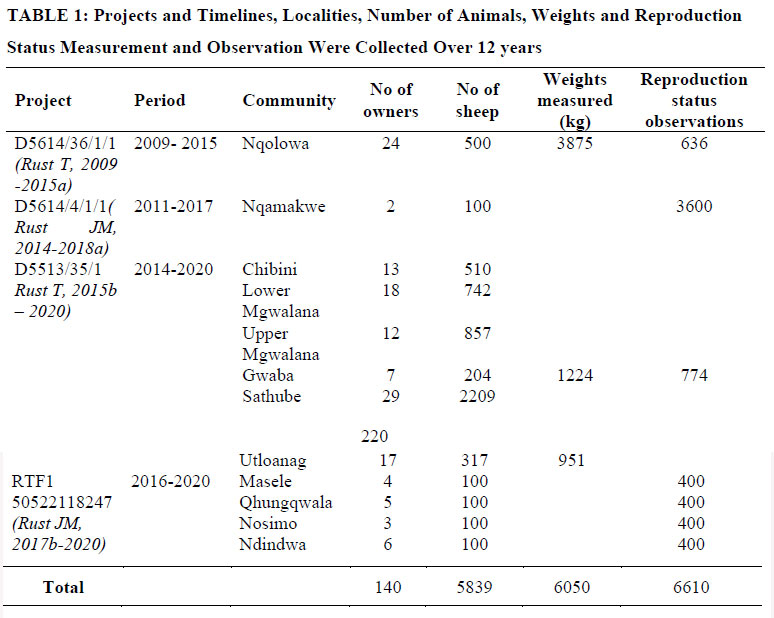
Wool sheep farming dominates the agricultural sector in South Africa's Eastern Cape Province, with a significant proportion of these sheep being managed by communal farmers. Despite suboptimal management practices, the contribution of sheep to rural income and broader socio-economic circumstances is substantial. A thorough understanding of communal wool sheep production systems is essential for developing effective improvement strategies. Accessible, concise, and practical empirical information remains incomplete and undocumented. To address this, 4 research projects, spanning 12 years, were reviewed in the Eastern Cape Province. Results presented are based on data collected from 5839 sheep owned by 140 farmers in 13 communal communities representing various agro-ecological regions. The research addresses key aspects of wool sheep production, including ownership patterns, flock composition, seasonal trends, reproductive practices, general husbandry and the impact of technology transfer. While not exhaustive, it provides relevant information on key factors influencing wool sheep farming. The aim is to serve as a foundation for informed recommendations that benefit farmers, extension personnel, and academic stakeholders, ultimately contributing to enhanced productivity and sustainability in the communal wool sheep sector.
Fibres; Livestock Production; Rural Farming; Small Stock; Subsistence Agriculture
 Thumbnail
 Thumbnail
 Thumbnail
 Thumbnail
 Thumbnail