Creating Livelihoods Through Land Redistribution: Evidence from the One Household - One Hectare Programme in Kokstad
Abstract
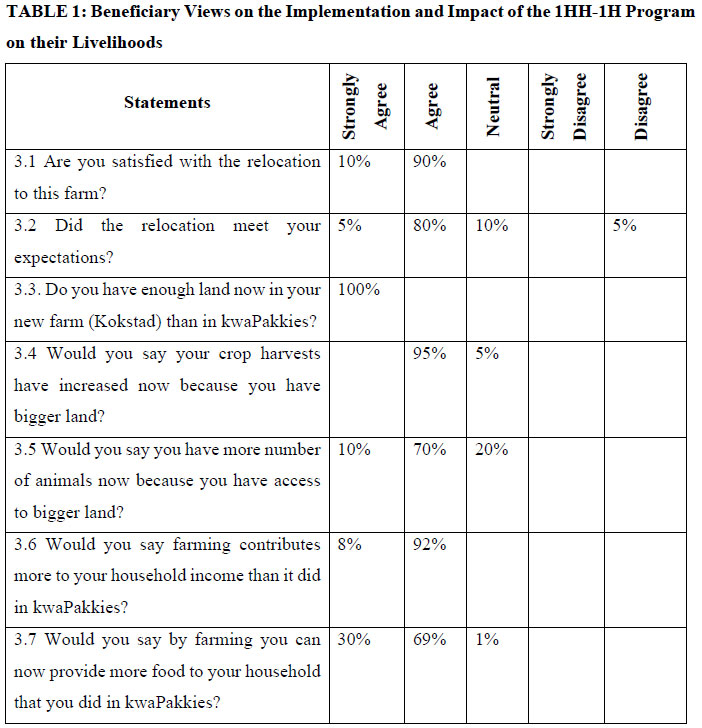
The South African land redistribution programme has been criticised for solely focusing on redistributing land for commercial farming while ignoring land demand for small-scale farming and settlement. This study reports on implementing the One Household-One Hectare (1HH-1H ) programme in two Kokstad beneficiary villages. The study's first objective was to understand how the programme implementation works on the ground. The other objective was to assess the capacity of the programme to create livelihoods. Our analysis was based on household survey data from 20 beneficiary household heads and two agricultural advisors. The data was analysed using descriptive statistics. Findings show that the programme implementation was need-based and was a joint effort by various government departments. The implementation led to a village setup, where each beneficiary household has a residential area for buildings, kraals and a garden in their one-hectare plot. The remainder of the land was shared as grazing common and forest, while the other arable land was used for cooperative farming and individual arable field lands. In general, beneficiaries were content with the programme's implementation and reported a significant increase in their livestock herd and crop outputs. Additionally, beneficiaries now enjoy access to clean drinking water, irrigation water, and primary healthcare, among other benefits.
Land Reform; Rural Development; Public Services; Aspirations