Agricultural Extension's Role in Enhancing Climate Resilience: Insights from Farmers' Perceptions in Gqumashe Village, South Africa
Abstract
This article explores farmers' perceptions and coping strategies regarding climate change in Gqumashe Village, Eastern Cape, South Africa. Climate change poses significant threats to agricultural productivity. The study aims to understand farmers' awareness and responses to these challenges. Data from 50 respondents, collected through convenience sampling and analysed with SPSS, reveals that farmers recognise climate change as a significant threat to agriculture. Challenges include gender disparity (64% female), ageing population (68% over 50), low education levels (4% with tertiary education), and high unemployment rates. Farmers' awareness of climate change is high (90%), with varied perceptions of its causes (46% human activities and 54% natural factors). Indigenous knowledge is valued by 60%, though 36% find it unreliable. Coping strategies include crop rotation, operation timing, crop variety, irrigation, and awareness. Recommendations to enhance climate resilience include targeted training programmes, consistent information dissemination, and promoting innovative techniques like drought-resistant crops and advanced irrigation. Improving market access and storage facilities is also crucial. Further research should explore digital tools and remote training to make extension services more efficient and accessible, strengthening climate resilience in farming communities.
Climate Change; Adaptation; Climate Variability; Climate Resilience; Agricultural Extension; Farmers' Perceptions; South Africa
1. INTRODUCTION
Climate change and its associated variability significantly challenge agricultural systems worldwide, impacting food security, livelihoods, and rural economies. The agricultural sector is particularly vulnerable to the adverse effects of changing weather patterns, which can lead to reduced crop yields, altered growing seasons, and increased pest and disease pressures (FAO, 2016). Addressing these challenges is essential to ensure the sustainability of agricultural practices and the resilience of farming communities. Agricultural extension services have emerged as crucial intermediaries in disseminating knowledge, technologies, and adaptive strategies to farmers (Sumberg & Thompson, 2012). These services facilitate the transfer of scientific insights into practical applications, enabling farmers to make informed decisions and optimise their farming practices. By bridging the gap between research institutions and rural communities, agricultural extension services play a vital role in equipping farmers with the information they need to navigate the complexities of climate change and variability.
Extensive research has emphasised the importance of understanding farmers' perceptions and experiences in shaping effective climate adaptation strategies (Recha et al., 2015). Farmers' knowledge, attitudes, and practices are deeply rooted in local contexts and traditional wisdom, which can contribute valuable insights for developing context-specific interventions. By acknowledging and incorporating farmers' perspectives, extension services can tailor their efforts to align with farming communities' specific needs and challenges. According to Kumar, Malik & Kamboj (2022), advisory services facilitate capitalising on favourable weather conditions and mitigating the adverse effects of unfavourable weather patterns. By providing advice and information, agricultural extension and advisory services play a pivotal role in tackling challenges encountered by farmers (Davis, Babu & Ragasa, 2020). Raj and Garlapati (2020) suggest that extension and advisory services have the potential to narrow the knowledge disparity by offering insights into the components of climate-smart agriculture and its associated matters. Emphasising the importance of agricultural extension in addressing climate change impacts, Yusuf et al. (2020) mention that a comprehensive extension service will enhance the ability to manage the effects of climate change.
This study explores farmers' perceptions of climate-related challenges and their engagement with extension agents, aiming to provide actionable recommendations for enhancing the effectiveness of extension services in fostering local climate resilience. By comprehensively understanding the dynamics of climate change and variability in Gqumashe village, Eastern Cape, South Africa, the research seeks to offer practical strategies for strengthening the role of agricultural extension services in addressing the adverse effects of climate change on the farming community. Farmers in Gqumashe are increasingly aware of the detrimental effects of climate change on their agricultural production and report these issues to their extension workers and other agricultural officials (Maka et al., 2019).
The study holds considerable significance in advancing our understanding of the pivotal role that agricultural extension services play in enhancing climate resilience within vulnerable farming communities. By focusing on the specific context of Gqumashe village, this research provides localised insights into the challenges and opportunities faced by farmers in the region. It highlights the critical link between farmers' perceptions and effective climate adaptation strategies, offering practical pathways for improving agricultural extension services. By advocating for targeted training programs, regular interaction between extension agents and farmers, and addressing market-related needs, the study proposes actionable steps to bolster extension services' effectiveness in mitigating climate change impacts. The insights gained from this research have the potential to inform strategies that empower farmers in Gqumashe village and similar contexts to adapt, thrive, and sustain their livelihoods in the face of climate change.
2.1. Conceptualising Climate Change and Variability in Agriculture
Climate change and its associated variability have emerged as critical factors affecting agricultural systems worldwide. These phenomena pose multifaceted challenges to farming practices, food security, and rural livelihoods. Understanding the impacts of climate change on agriculture requires a comprehensive grasp of the complex interactions between atmospheric processes, temperature shifts, precipitation patterns, and ecological dynamics (IPCC, 2014). Climate variables such as temperature, rainfall, and humidity can significantly alter crop growth cycles, pest and disease patterns, and overall agroecosystem stability (Hatfield & Praeger, 2015). The conceptual framework for addressing climate change in agriculture necessitates integrating meteorological data, ecological models, and socioeconomic considerations to design adaptive strategies that enhance resilience, sustainable productivity, and livelihood security for farming communities (Vermeulen et al., 2012). Bontsa et al. (2023) suggest that smallholder farmers in the Eastern Cape struggle to adapt to climate change due to inadequate access to climate-related extension services, making them more vulnerable than commercial farmers. However, this cannot be generalised as smallholder farmers vary in socioeconomic characteristics, access to services, and agroecological zones, leading to differences in the quality and accessibility of extension services (Bontsa et al., 2023).
2.2.
Role of Agricultural Extension Services in Climate ResilienceAgricultural extension services are crucial in enhancing climate resilience within farming communities. They act as intermediaries, bridging the gap between scientific knowledge and practical applications. By providing farmers with up-to-date information, innovative technologies, and best practices, extension services empower them to adapt to and mitigate the adverse effects of climate change. These services facilitate the dissemination of climate-smart agricultural techniques, such as drought-resistant crop varieties, efficient irrigation methods, and soil conservation practices (Lema, Hassen & Malkie, 2018). Furthermore, extension agents engage in capacity building, enabling farmers to understand climate patterns, identify risks, and make informed decisions. Extension services strengthen local resilience, food security, and sustainable livelihoods in changing climate conditions through this knowledge transfer. Improving the accessibility and spread of extension services and enhancing extension training is essential to improve the quality of service delivery (Bontsa et al., 2023).
2.3.
Importance of Farmers' Perceptions in Shaping Adaptation StrategiesFarmers' perceptions are instrumental in shaping effective adaptation strategies to address the challenges posed by climate change and variability. These perceptions encompass farmers' cognitive, experiential, and contextual understanding of climatic changes, influencing their decision-making processes and adaptive behaviours (Adger et al., 2007). Farmers' experiential knowledge, acquired through generations of interacting with their environment, provides insights into localised climate patterns, crop responses, and ecosystem dynamics (Speranza, 2010). Such insights contribute to the design of context-specific adaptation measures that are practical, relevant, and aligned with local knowledge systems (Roncalli et al., 2009). Furthermore, farmers' perceptions are a key determinant of their willingness to adopt modern technologies and practices for climate resilience (Feder et al., 2015). Understanding farmers' risk perceptions and their assessment of potential benefits and costs plays a critical role in promoting the uptake of adaptive strategies (Deressa et al., 2011). Farmers' engagement in participatory research and co-learning initiatives, where their perceptions are acknowledged and integrated, fosters ownership of adaptation strategies and increases their effectiveness (Scoones et al., 2015). Incorporating farmers' perceptions in shaping adaptation strategies enhances the overall adaptive capacity of communities, fostering resilience and sustainable development in the face of climate uncertainties (Reitsma et al., 2010).
2.4. Gaps in Current Literature
While existing literature has made significant strides in understanding the importance of farmers' perceptions in shaping adaptation strategies, several notable gaps warrant further exploration. Firstly, there is a need for more comprehensive investigations into the socio-cultural factors that shape these perceptions, such as cultural norms, local knowledge systems, and community dynamics (Kuruppu & Liverman, 2011). Understanding these influences is crucial, particularly in regions like Africa and South Asia, where climate change impacts are pronounced. Secondly, most research focuses on smallholder farmers, leaving a gap in understanding how larger-scale commercial farmers perceive and respond to climate-related changes (Scoones et al., 2015). Exploring the differential impacts of climate change on diverse farming systems is essential for developing inclusive and holistic adaptation strategies.
Additionally, the literature often emphasises qualitative aspects of farmers' perceptions, lacking a quantitative dimension that can provide insights into the prevalence and distribution of specific perceptions within a population (van der Linden, 2015). Integrating quantitative methods can offer a more nuanced understanding of adaptation trends. Lastly, there is a need for more research on the extent to which farmers' perceptions translate into practical adaptive actions and practices (Bryan et al., 2018). Investigating this linkage can provide valuable insights into the efficacy of adaptation strategies. This study aims to address some of these gaps by examining the socio-cultural factors influencing farmers' perceptions, incorporating both qualitative and quantitative methods, and exploring the translation of perceptions into adaptive actions within the context of Gqumashe Village in South Africa. Doing so seeks to contribute to a more holistic understanding of the interplay between farmers' perceptions, adaptation strategies, and climate resilience.
3. METHODOLOGY
Due to its socioeconomic and climatic context, the study focused on smallholder farmers residing in Gqumashe Village, located in the Raymond Mhlaba Local Municipality of the Eastern Cape, South Africa. The region has a predominantly rural population, with agriculture as a primary livelihood source. It faces significant climate challenges, including variable rainfall patterns and increasing temperatures. The research employed a convenience sampling method to gather data from 50 respondents, acknowledging the potential for selection bias but mitigating it by including a diverse range of farmers. The sample size, while small, was deemed adequate for exploratory purposes. A survey research design was utilised, with semi-structured questionnaires developed from relevant literature and validated through a pilot test. These questionnaires included closed-ended and open-ended questions to capture comprehensive data on climate change awareness, adaptation strategies, and socioeconomic factors. Data collection occurred at various village locations, with interviews lasting 30-45 minutes, ensuring convenience and comfort for respondents. The data was coded and entered in Microsoft Excel, then analysed using SPSS for descriptive statistics and thematic analysis. Ethical procedures were strictly followed, with informed consent obtained, confidentiality maintained, and ethical review board approval secured. This study aims to understand smallholder farmers' perceptions of climate change in Gqumashe Village, contributing valuable insights into their challenges and adaptation strategies.
4. RESULTS
4.1. Overview of Respondents' Demographics
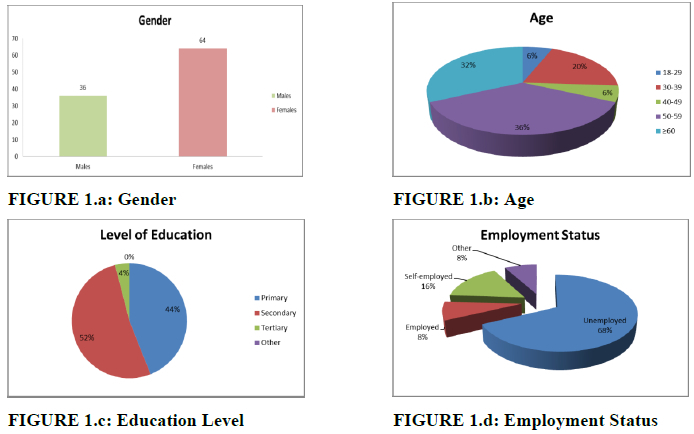
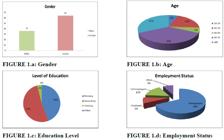
The demographic overview of respondents in Gqumashe Village highlights the unique characteristics of its farmers, emphasising the predominant role of females in agriculture, the challenges posed by an ageing population and rural youth migration, and the critical importance of farming as both a livelihood and source of employment. The significant gender disparity (64% of respondents being female) suggests that women are primarily responsible for crop production, likely due to cultural norms and the migration of males to urban areas for better employment opportunities. The age distribution reveals that most farmers are older, with 36% aged 50-59 and 32% over 60, indicating that rural youth migration leaves older individuals to manage agricultural responsibilities. Education levels among farmers vary, with only 4% having tertiary education, 44% with primary education, and 52% with secondary education, highlighting limited access to higher education, particularly among the older generation. This impacts farming practices and climate resilience, as higher education levels are associated with adopting innovative agricultural practices. The high unemployment rate, with 68% of farmers not employed, underscores the significance of farming as a primary source of livelihood. These demographic insights are crucial for developing effective climate adaptation strategies, as they influence farmers' capacity to adopt new practices, access resources, and engage with extension services. Policy recommendations include promoting gender-inclusive policies, addressing youth migration, improving education access, and supporting diversified livelihoods to enhance the resilience and sustainability of the farming community in Gqumashe Village.
4.2. Farmers' Awareness and Perceptions of Climate Change and Variability
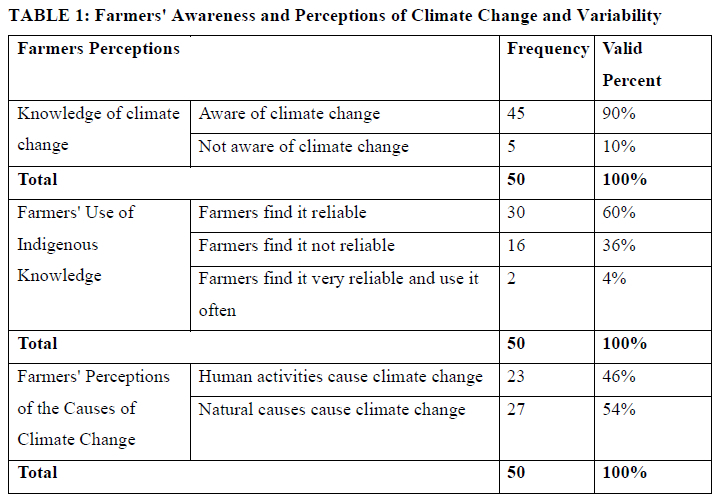
The findings in Table 1 highlight the farmers' awareness of climate change, their varying degrees of trust in indigenous knowledge, and their diverse perceptions regarding the causes of climate change. These results underscore the complexity of farmers' viewpoints and the importance of considering these diverse perceptions when designing adaptive strategies and extension services tailored to the local context. Among the surveyed farmers, 90% demonstrated awareness of climate change, while 10% were unaware. This indicates a relatively high familiarity with climate change within the study area. Regarding indigenous knowledge, 60% of farmers find it reliable for addressing climate-related issues.
On the other hand, 36% of farmers reported that they do not consider indigenous knowledge reliable. Additionally, a small proportion (4%) finds Indigenous knowledge very reliable and utilises it frequently. This suggests that many farmers value traditional knowledge systems for climate adaptation, although a notable proportion remains sceptical about their reliability. Regarding the causes of climate change, the results show a nearly even split among the surveyed farmers. Approximately 46% of farmers attribute climate change to human activities, suggesting an understanding of anthropogenic contributions to climate change. The remaining 54% perceive climate change as primarily caused by natural factors. This divergence in perspectives reflects a mixture of scientific understanding and potentially existing beliefs in natural climate variations.
4.3. Coping Strategies for Climate Change Associated Challenges in Gqumashe Village
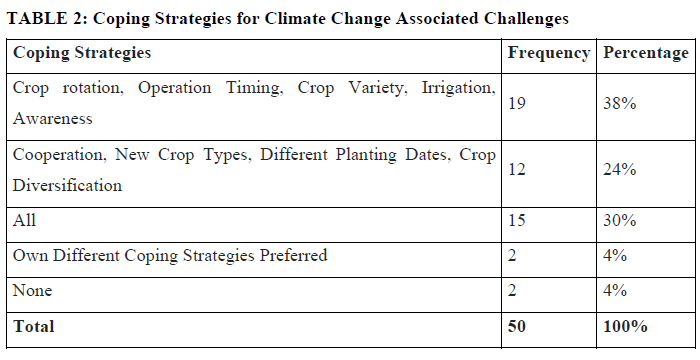
Farmers in Gqumashe Village face several challenges associated with climate change, including unpredictable weather patterns, prolonged droughts, and increased frequency of extreme weather events. These challenges significantly impact agricultural productivity and necessitate the development of effective coping strategies. Farmers in Gqumashe Village have developed various strategies to cope with climate change and variability. These strategies include practising crop rotation, adjusting the timing of operations, introducing new crop varieties, increasing irrigation, promoting climate change awareness and education, collaborating with other farmers, introducing new crop cultivars, using different planting dates, and promoting crop diversification. The study results indicate that 4% of respondents do not use any coping strategy, while another 4% prefer planting drought-resistant crops and constructing dams for irrigation. A significant portion, 38%, of farmers employ strategies like crop rotation, operation timing, crop variety, irrigation, and awareness.
Additionally, 24% of smallholder farmers in Gqumashe use cooperation, new crop types, different planting dates, and crop diversification. Notably, 30% of farmers utilise all the coping strategies when circumstances allow. These findings highlight the diverse and adaptive approaches farmers in Gqumashe Village employ to mitigate the impacts of climate change on their agricultural practices.
4.4. Access to Extension Services
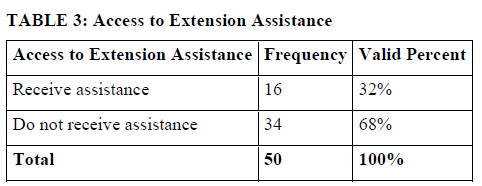
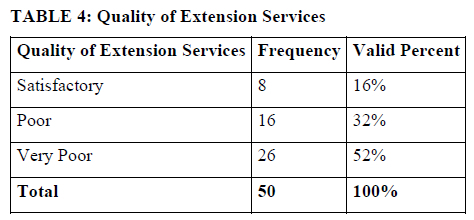
During the data collection period, farmers in Gqumashe Village expressed awareness of climate change and variability, which concerns them, notably as many received inadequate services from extension agents then. This situation may have improved post-COVID-19, as more assistance has been provided to meet farmers' needs. The ability to observe climate change is crucial for farmers to adapt effectively. Farmers need knowledge and opinions on climate change to adapt to mitigation strategies quickly. Indigenous knowledge encompasses people's skills, experiences, and insights and is vital for maintaining or improving livelihoods. While 60% of farmers strongly believe indigenous knowledge is reliable, 36% do not, and 4% find it very reliable. During this data collection, the South African agricultural extension service faced challenges associated with human capital. Extension officers are tasked with disseminating helpful information to farmers and helping them gain knowledge to improve their standard of living. However, only 32% of interviewed farmers receive assistance from extension workers, with 68% not receiving any help. Poor assistance from extension workers likely leads to poor production, as farmers lack the knowledge to cope with climate change. The quality of extension services is perceived as satisfactory by 16% of farmers, poor by 32%, and very poor by 52%, with some farmers having never received any assistance or not having been visited by extension agents for years. Extension services may be provided in these areas, but farmers may perceive them as inadequate due to certain expectations.
To mitigate challenges faced by farmers, in 2022, the Department of Agriculture, Land Reform, and Rural Development launched a programme to appoint 10,000 unemployed agricultural graduates as Assistant Agricultural Practitioners (AAPs), aiming for a 1:250 extension officer-to-farmer ratio. These AAPs provided general agricultural services and technical support, promoted partnerships and sustainable production, and performed administrative functions. This initiative seems to have significantly improved service delivery, reduced the workload of Extension Practitioners, and lowered the graduate unemployment rate in the sector. By recruiting agricultural graduates, the programme provided them with valuable work experience, enhancing the capacity of agricultural extension services and addressing both agricultural and employment challenges.
5. DISCUSSION
This study highlights the significant impact of climate change and variability on agricultural systems, highlighting the sector's vulnerability and the crucial role of agricultural extension services in disseminating knowledge and technologies to farmers. The importance of farmers' perspectives and experiences in developing effective adaptation strategies is emphasised, demonstrating the need for context-specific approaches. The study identifies existing research gaps, stressing the importance of understanding socio-cultural aspects, including the experiences of larger-scale commercial farmers, the quantitative dimensions of perceptions, and the relationship between perceptions and adaptive actions. The findings, detailed in the results section, begin with a demographic analysis of respondents, highlighting the critical roles of gender, age distribution, education levels, and employment status in Gqumashe Village. This demographic insight is essential for tailoring adaptation strategies to the unique characteristics of the farming community. By addressing these factors, agricultural extension services can better support farmers in enhancing their resilience to climate change.
6. CONCLUSION AND RECOMMENDATIONS
This study emphasises the importance of tailored training programmes by extension practitioners to enhance farmers' understanding of climate change. While it is commendable that both the public and private sectors provide support and extension and advisory services, this paper advocates for increased regular visits by extension practitioners and the provision of up-to-date information on various agricultural subjects aligned with changing technological advancements. The study highlights the critical role of agricultural extension services in enhancing climate resilience. The localised insights gained from Gqumashe Village can inform policymakers, practitioners, and researchers in developing effective strategies. The study builds climate resilience within vulnerable farming communities by bridging the gap between academic research and practical realities. Through its analysis of farmers' perceptions, challenges, and coping strategies, the study advances our understanding of the relationship between farmers' awareness, adaptation strategies, and climate resilience. By proposing actionable steps grounded in farmers' experiences, the study offers a pathway for strengthening the role of agricultural extension services in mitigating climate change impacts.
Based on the research findings, several key recommendations emerge to strengthen agricultural extension services' role in enhancing climate resilience. Targeted training programmes should cater to the high awareness of climate change among farmers, focusing on the specific impacts of climate change on local agricultural practices and equipping farmers with practical adaptation strategies. Consistent information dissemination is crucial, with extension agents ensuring regular visits to keep farmers updated on technological advancements, best practices, and climate change mitigation strategies, empowering them to navigate changing conditions effectively. Promoting novel agricultural techniques, such as drought-resistant crops, soil conservation, and advanced irrigation methods, is essential to proactively empower farmers to counter climate impacts. Additionally, addressing farmers' market-related needs and improving storage facilities is vital, with extension services providing insights into market access, buyer connections, and storage improvements to reduce post-harvest losses and ensure food security. Further research should explore integrating digital tools and platforms in agricultural extension services, such as mobile applications for real-time weather updates, market prices, and best practices, as well as the effectiveness of remote training programmes and virtual extension services in reaching a broader audience. By embracing technological advancements, agricultural extension services can become more efficient and accessible, ultimately strengthening climate resilience in farming communities.
REFERENCES
2. LITERATURE REVIEW
- ADGER, W.N., AGRAWALA, S., MIRZA, M.M.Q., CONDE, C., O'BRIEN, K., PULHIN, J. & TAKAHASHI, K., 2007. Assessment of adaptation practices, options, constraints and capacity. Climate Change 2007: Impacts, Adaptation and Vulnerability. Contribution of Working Group II to the Fourth Assessment Report of the Intergovernmental Panel on Climate Change, pp. 717-743.
- BONTSA, N.V., GWALA, L., NGARAVA, S., MDIYA, L. & ZHOU, L., 2023. Quality of climate change extension services provided to smallholder farmers in Raymond Mhlaba Local Municipality, Eastern Cape Province, South Africa. SAfr. Jnl. Agric. Ext., 51(2): 114-127.
- BRYAN, E., DERESSA, T.T., GBETIBOUO, G.A. & RINGLER, C., 2018. Adaptation to climate change in Ethiopia and South Africa: Options and constraints. Environ Sci Policy., 15(4): 393-404.
- DAVIS, K., BABU, S.C. & RAGASA, C., 2020. Agricultural extension: Global status and performance in selected countries. Synopsis.
- DERESSA, T.T., HASSAN, R.M. & RINGLER, C., 2011. Perception of and adaptation to climate change by farmers in the Nile basin of Ethiopia. J. Agric. Sci., 149(01): 23-31.
- FAO., 2016. Climate-Smart Agriculture Sourcebook. Rome: Food and Agriculture Organization of the United Nations.
- FEDER, G., JUST, R.E. & ZILBERMAN, D., 2015. Adoption of agricultural innovations in developing countries: A survey. Econ. Dev. Cult. Change., 33(2): 255-298.
- HATFIELD, J.L. & PRUEGER, J. H., 2015. Temperature extremes: Effect on plant growth and development. Weather Clim. Extrem., 10: 4-10.
- IPCC., 2014. Climate Change 2014: Impacts, Adaptation, and Vulnerability. Part A: Global and Sectoral Aspects. Contribution of Working Group II to the Fifth Assessment Report of the Intergovernmental Panel on Climate Change.
- KUMAR, A., MALIK, J.S. & KAMBOJ, M., 2022. Relevance of extension advisory services in climate-smart agriculture: A review. MAUSAM., 73(3): 695-704.
- KURUPPU, N. & LIVERMAN, D., 2011. Mental preparation for climate adaptation: The role of cognition and culture in enhancing adaptive capacity of water management in Kiribati. Glob. Environ. Change., 21(2): 657-669.
- LEMA, Z.A., HASSEN, I.A. & MELKIE, S.T., 2018. Enhancing the adaptive capacity of smallholder farmers to climate change through extension services: Evidence from Southern Ethiopia. Environ. Syst. Res., 7(1): 1-11.
- MAKA, L., IGHODARO, I.D. & NGCOBO-NGOTHO, G.P.T., 2019. Capacity development for scaling up Climate-Smart Agriculture (CSA) innovations: agricultural extension's role in mitigating climate change effects in Gqumashe community, Eastern Cape, South Africa. S Afr. Jnl. Agric. Ext., 47(1): 45-53.
- RAJ, S. & GARLAPATI, S., 2020. Extension and Advisory Services for Climate-Smart Agriculture. In V. Venkatramanan, S. Shah & R. Prasad (eds.), Global Climate Change: Resilient and Smart Agriculture. Singapore: Springer.
- RECHA, C.W., KIMELI, P., RADENY, M. & MUNGAI, C., 2015. Perceptions of and adaptation to climate change by farmers in the Nile Basin of Ethiopia. Reg. Environ. Change., 15(5): 881-892.
- REIDSMA, P., EWERT, F., LANSINK, A.O., LEEMANS, R. & VAN ITTERSUM, M.K., 2010. Scenarios for climate change impact assessment at the farm level: An overview. Wagen. J. Life Sci., 57(4): 375-386.
- SCOONES, I., THOMPSON, J. & CHIBUDU, C., 2015. Beyond producer heterogeneity: The cultural and social bases of differentiation in Zimbabwe's new resettlement areas. J. Agrar. Change., 15(3): 360-381.
- SUMBERG, J. & THOMPSON, J., 2012. On systems of innovation and rural development. Outlook Agr., 41(3): 149-155.
- VAN DER LINDEN, S., 2015. The social-psychological determinants of climate change risk perceptions: Towards a comprehensive model. J. Environ. Psychol., 41: 112-124.
- VERMEULEN, S.J., AGGARWAL, P.K., AINSLIE, A., ANGELONE, C., CAMPBELL, B.M., CHALLINOR, A.J., HANSEN, J.W., INGRAM, J.S.I., JARVIS, A., KRISTJANSON, P., LAU, C., NELSON, G.C., THORNTON, P.K. & WOLLENBERG, E., 2012. Options for support to agriculture and food security under climate change. Environ Sci Policy., 15(1): 136-144.
- YUSUF, A.S., ADEYEMI, T.O., ADELEYE, A.S., MANGODO, C., BAKPOLOR, V.R., ADETOLA, O.O. & ADEGBOYEGA, D.A., 2020. Impacts of agriculture and forestry in climate change control: The role of extension services. Int. J. Incl. Educ., 3(5): 3-7.