Relating Household Food Systems to Food Security Indicators: An Overview
Abstract
Demand for food security measurement tools is greater than ever, not only in research and policymaking but also in programmes aimed at improving household food systems and intervening to enhance food security. The study aimed to review household food systems and their relation to household food security indicators. Published studies were retrieved from online databases from 2018 to 2022. The findings indicated that household food systems face various challenges in accessing nutritious food available for the period required or purchased. This was linked to the lack of household food security indicators (access, availability and utilisation) that focus on the stability dimension. The study developed a framework for measuring stability among households participating in crop production. The study also noted the need to fit cultural factors when measuring householdfood security. The study concluded that an indicator focusing on the stability dimension is required, and this will help create well-rounded government intervention programmes for food security. The study's findings are relevant for targeted interventions in agricultural extension services. The study also contributes to policy development to support sustainable agricultural practices.
Food Security Dimensions; Food Systems; Household; Stability Measurement
1. BACKGROUND AND INTRODUCTION
Securing food is essential for existence, making its accessibility a fundamental human right (Eme et al., 2019). Global food security and agricultural sustainability have been identified as being related to the Sustainable Development Goals (FAO, 2019). These goals, combined with well-informed actions and responses, can effectively end hunger, achieve food security, improve nutrition, and promote sustainable agriculture (Hervieux & McKee, 2022). Yet, this is in conjunction with projections set for the next 10 to 50 years, which has placed significant pressure on the environmental sustainability of food security amid pandemics such as COVID-19 and environmental challenges such as climate change (White & Gardea-Torresdey, 2018; Wiebe et al., 2019).
Globally, the Food and Agricultural Organisation (FAO) reported that a staggering 2.37 billion individuals could not access adequate food (FAO, 2021). In 2018, approximately 821.6 million people worldwide were estimated to be malnourished, and the global prevalence of malnutrition was 10.8 percent (Chadare et al., 2022), where Africa ranked highest in the latter category at 19.9 percent (Chukwudum & Dioggban, 2022). Similarly, in developing countries, household food insecurity remains a serious public policy concern (van Dijk et al., 2021). Within Africa, despite Nigeria's and South Africa's agriculture policies and goals, food insecurity remains a basic concern in both countries. In Nigeria, for example, agriculture remains a critical component of the economy, accounting for approximately 41% of the Gross Domestic Product (GDP) and employing approximately 70% of the active population, although it receives less than 10% of yearly budgetary expenditures (Frayne et al., 2010; Abu, 2012).
In South Africa, food security is guaranteed in sections 26 and 27 of the constitution. However, household food security varies from 20% to 80% across the country's different provinces (Akinboade et al., 2016). The reasons for variation include economic disparities, agricultural productivity, access to markets, climate environmental factors and implementation of government policies. Through the years, the most common solution to poverty and, thus, food insecurity has been increased production among community gardens and emerging and smallholder farming without consideration of other dimensions of household food security (Crush et al., 2012). It is important to understand that food production is not a key determinant of household food security but rather whether food is continuously accessible and has stability for households (Gil et al., 2019; Chakrabarty, 2022). This focus on increasing production without recognising other required resources has resulted in agricultural underperformance among households compared to its enormous potential (Matemilola & Elegbede, 2017; Drysdale et al., 2021; Dasgupta & Robinson, 2022).
Different measures have yet to be developed to reflect the variety of obstacles to household or individual food security. The evolution of food security has sparked various extensive debates around measurement, which reflect all four dimensions (availability, access, utilisation, and stability) that have not yet been fulfilled (Cafiero et al., 2014). Food security measurement grew increasingly difficult in the 1990s as the number of conceptual elements included in widely recognised definitions increased. Nevertheless, recent advancements in the development of simple, valid measurements of food access must not be overlooked (Coates, 2013; Smith and Frankenberger, 2018; Manikas et al., 2023). Current findings on the multifaceted nature of food security have yielded a variety of analytical knowledge. Still, measurement issues remain a significant barrier to research and targeting vulnerable households, programmes, monitoring, and review. According to Smith and Frankenberger (2018), the effects of resilience capacity in reducing household food security shocks use several months of inadequate household food access as a significant measure of food security. Demand for food security measurement tools is greater than ever, not only in research and policymaking but also in programmes aimed at identifying vulnerable populations, intervening to enhance food security, and demonstrating impact over time (Maxwell et al., 2014). According to several articles, the search for viable indicators is motivated by the absence of a gold standard measure of food security (Carletto et al., 2013; Jones et al., 2013; Bruck & d'Errico, 2019).
The way in which studies conceptualise and quantify food security is quite varied (Haysom & Tawodzera, 2018). This challenges scientific advancement and raises the question of whether they assess one identical idea with various methodologies or measure multiple understandings of food security (Ansah et al., 2019). While some of the measures that are currently offered (nationally/households/individuals) as indicators of food security and others are combined in a variety of ways to create indexes, uncertainty remains about whether they can truly be regarded as adequate measurements (Cafiero et al., 2014; Bakker et al., 2018). Throughout the extensive debate over food security measurement, it has become evident that the requirement for food security measures that effectively reflect the various dimensions of availability, access, utilisation, and stability has not yet been met. This ongoing discussion has been described in several recent articles examining indicators (Carletto et al., 2013; Gil et al., 2019). Although South Africa has several kinds of research on food security, it is limited geographically as none of the studies cover the different variations between provinces and areas.
This paper reviews the evolving household food systems concerning food security measures limited in research studies produced in the Sub-Saharan African countries and South African context. While current measures are acknowledged, this paper focuses on the factors impeding the increase of the food stability dimension measures or indicators. It fits current known measures in the country's food culture concept.
2. METHODOLOGY
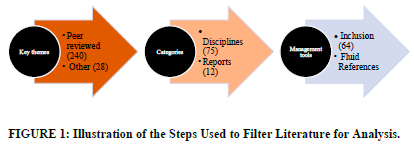
A qualitative systematic approach was adopted for the current review. Several databases were used to search for key references, including Google, Google Scholar, UNICEF website, WHO website, Science Direct, Pub Med, and Scopus. The keywords that were used included; "food security measures", "challenges in measuring food security", "measuring food security concerning agricultural systems", "food security modelling", "metrics of sustainable diets food systems", "measuring food security in our current food systems in South Africa". There were over 3018 hits for the above keywords. This produced 268 publications. The search window was from 2018 to 2022, with restrictions on items published in English. It was further filtered to include only those studies conducted in Africa specifically (64 publications). Within the retrieved papers, the search was further narrowed by disciplinary focus, including economics, social science interdisciplinary (e.g., economics and sociology), agricultural economics and policy, and multidisciplinary agriculture. Both peer-reviewed works and appropriate publications from the grey literature (such as conference proceedings and technical reports) were included as long as they met all the inclusion criteria (Figure 1).
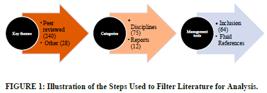
Key themes were used to establish the broader cluster (peer-reviewed and other publications). Categories reduced the broad clusters to a sub-cluster of disciplines and other relevant reports. Reference management created the final cluster focusing on the topic of the study and the list of references, which was revised during source analysis according to Manikas et al. (2023).
Only scientific articles, books, and official websites were selected for the review. Where international literature was cited, it was used to support local literature. Similar approaches to review the measuring of food security such as Ruel (2003), Maxwell et al. (2014), Jones et al. (2013), Ansah et al. (2019), Tuholske et al. (2020), and Rabbitt et al. (2021), have been done. These papers identify different gaps; however, they neglect the stability dimension and vaguely review how these metrics fit or do not fit the ever-changing cultural and socioeconomic perspectives and perceptions of the individuals who are the main participants of these metrics. The specific objectives were to (i) Review the evolving household food system concerning household food security related to Sub-Saharan African countries as indicated by published literature, (ii) Using identified gaps in filtered literature, discuss the untapped indicators for measuring the stability dimension among households and develop a framework for future use; (iii) To review the cultural fit of the current household food security measures to provide recommendations for future research.
3. RESULTS AND DISCUSSION
3.1. Household Food Systems
Food systems include all components and activities related to production, processing, distribution, preparation, and consumption. The outputs of these activities have a key role in delivering high-quality diets to people in low-income countries (Melesse et al., 2019; Trisburg et al., 2019). The organisation of food systems mirrors and responds to social, cultural, political, economic, health, and environmental conditions. Food systems are differentiated at various scales, such as national, local, and household, where national food systems should deliver continuous annual access to foods that cover individual nutrient requirements and encourage healthy dietary practices (Trisburg et al., 2019). Based on the literature search, studies continue to emphasise that food systems are continually under pressure to improve and assist nutritional issues among low and middle-income countries, which continues to exacerbate micronutrient deficiencies (Eme et al., 2019; Abdul-Mumin & Abdulai, 2022; Chukwudum & Dioggban, 2022; Davis et al., 2022; Hemerijckx et al., 2022). This is suggested because the daily requirements of calories and proteins are limited to the production of 12 to 20 species (Akinola et al., 2020; Chanza & Musakwa, 2022). Generally, cereals dominate food systems and have replaced legumes due to their higher yield, tolerance to biotic stresses, and wide adaptability. This is shown in African countries such as South Africa where continuously, maize, wheat and rice food systems are commonly practised (Ayyam et al., 2019; Hossain et al., 2021; Ullah et al., 2020; Rao et al., 2020).
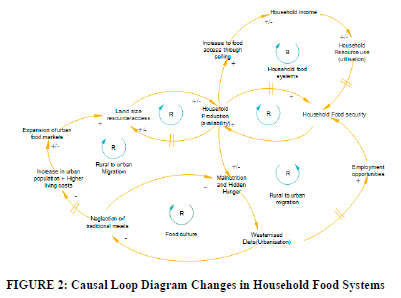
This is further emphasizsd by studies by Blekking et al. (2022), Ebenezer (2022), Masters et al. (2022), Ruiz & Haile (2021) and Owusu et al. (2022), where rural populations were similarly found to historically prepare meals within the household using locally cultivated crops such as cassava, sorghum, and pulses. These crops were cultivated and gathered for household use; however, because of fast population expansion, vast urbanisation, and increasing disposable incomes, consumption of exotic crops has rapidly expanded and displaced traditional meals. This shift has caused significant challenges to household economic, food, and nutrition insecurity (Noort et al., 2022). Furthermore, challenges that affect African food systems have been identified as insistent malnourishment, demographic growth, poor livelihoods, dietary shifts, and climate change (Drysdale et al., 2018; OECD/UN-Habitat, 2022; Wiggins et al., 2022; Woodhill et al., 2022). Transformation through addressing these challenges at a community to household level in food systems can assist in positively evolving the food systems at a household level. A causal loop diagram was constructed to illustrate the different household food system challenges discussed in other studies and how it shapes food security levels.
The causal loop diagram (Figure 2) shows how household food systems and security are interconnected and have evolved through urbanisation. Household food systems commonly undergo systemic change when altered. This systemic change is frequently associated with a shift away from traditional or local, largely rural systems based on local market connections and employment opportunities in agriculture and toward a system with more complex market connections and more diverse employment opportunities throughout the food value chain and beyond, such as in research and development. Sub-Saharan African countries like South Africa have a high migration rate from rural to urban areas. When household food systems increase in urban populations, it results in an expanding urban food market and demand for various products, including higher-value and processed items. Food markets can become more complex because of increasing and diverse demand, which is still mostly satisfied through informal market connections in Africa.
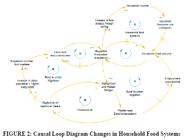
The ever-changing household food systems significantly impact household food security, as shown in Figure 2. Increasing land size and other resources may increase household production and food security as households can sell their produce. Household food insecurity within household food systems may also be associated with the level of income and employment opportunities. An increase in household production may have a negative effect on household food security because households may not have access to other inputs and cannot cultivate a wide variety of crops. This, in turn, can cause malnutrition and hidden hunger. Through the literature retrieved and the depiction of Figure 2, it can be determined current household food systems require a change in the focus of westernised exotic crops-based systems. Traditional diets using locally cultivated crops need to be promoted. This can improve the use of land access, diets and ultimately, household food security.
3.2. Lack of Efficient Stability Measures/ Indicators
Measurement is unquestionably a critical component of the process through which knowledge is advanced. It is the foundation of decision-making in programmes, policy development, and the progression of goals, such as the second sustainability development goal. However, measurement must be valid and trustworthy to add to knowledge and allow for accurate judgments. It offers two fundamental but distinct difficulties surrounding what is measured and how it is done (Haysom & Tawodzera, 2018; Tuholske, 2020). The practice has largely remained unaltered despite the FAO's awareness of the need to modify measuring methods (FAO et al., 2019; FAO, 2021). While some innovation in measurement is visible, this paper argues that food security's availability and access aspects receive more attention than the stability dimensions, particularly since stability is not measured across longer periods than it is presently (i.e., 7 days, 31 days).
Within the literature retrieved, although several articles throughout the world have shown and reviewed measures of food security on global, national, and household scales (Tuholske et al., 2020; Rabbitt et al., 2021), most food security measures only show the current situation or present situations of households. As a result, the real scope of food insecurity and malnutrition remains unclear (Nicholson et al., 2021). Africa has the lowest food security, yet an in-depth quantitative analysis of its food system is lacking (Chukwudum & Dioggban, 2022). Over time, indices have been developed to measure the different parts of household food systems, but are limited as they are. It is worth noting that within the literature identified by the study, there is only one paper that tackles food security measures within the Sub-Saharan African countries, particularly in South Africa, although these measures/indicators have been reviewed and/ or used in the past within Sub-Saharan countries and South African studies (Wamboko et al., 2018; Fraval et al., 2019; Ngema et al., 2019; Blekking et al, 2020; Ogunniyi et al., 2021; Gasparatos et al., 2022). Reviews that challenge a multifaceted measure that also applies to the stability dimension of household food security have been published (Nicholson et al., 2021; Nicholson et al., 2021b). Several studies suggest that (Haysom & Tawodzera, 2018; Galie et al., 2019; Ragasa et al., 2019; Otekunrin et al., 2019; Drysdale et al., 2021) measures can be used interchangeably or together yet place focus on household food access and utilisation dimension whilst marginalising stability. All these four dimensions are equally important but are not reviewed and analysed equally.
On the other hand, only four studies discuss and review how resilience can be used as a form of food security status within Sub-Saharan countries (Ansah et al., 2019; Tuholske et al., 2020; Upton et al., 2022) but negate that a household can be food insecure whilst surviving by using coping mechanisms that may not last as the household members require them so.
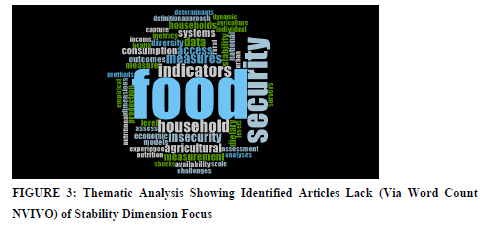
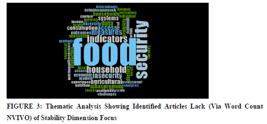
This demonstrates that food security indicators remain a critical problem on today's international political agenda and a serious concern for governments worldwide due to misrepresenting national, community, household, and individual food security states in past and current times. Figure 3 represents a word cloud constructed in the NVivo software to show a lack of stability measures or indicators. The term "word cloud" refers to a graphic depiction of the frequency of words. The larger the keyword appears in the graphic generated, the more frequently it appears in the analysed text. Word clouds are becoming more popular as a simple technique for determining the topic of written text. The terms "food security", "household" and "indicators" were the main discussed and analysed concepts. The identified articles for this paper confirmed that measures have been developed in previous studies; however, there has been little focus on measuring stability. This led to some relevant measures being overlooked, nationally and globally. The access dimension and its measures were discussed and analysed in 71% of the papers, whereas the stability dimension was mentioned in 41%.
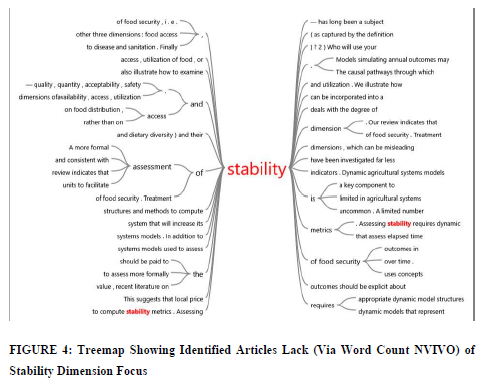
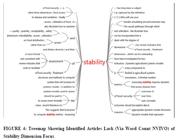
The treemap extends this discussion by showing how stability is discussed in papers, as shown in Figure 4. The stability dimension is commonly described as a part of food security, well defined, and how current assessments have been a long subject. Although stability relates to all three other dimensions; it is a vast dimension that can change how development programmes are run to achieve the second sustainable development goal of ending hunger, particularly in disadvantaged groups in disadvantaged communities and households.
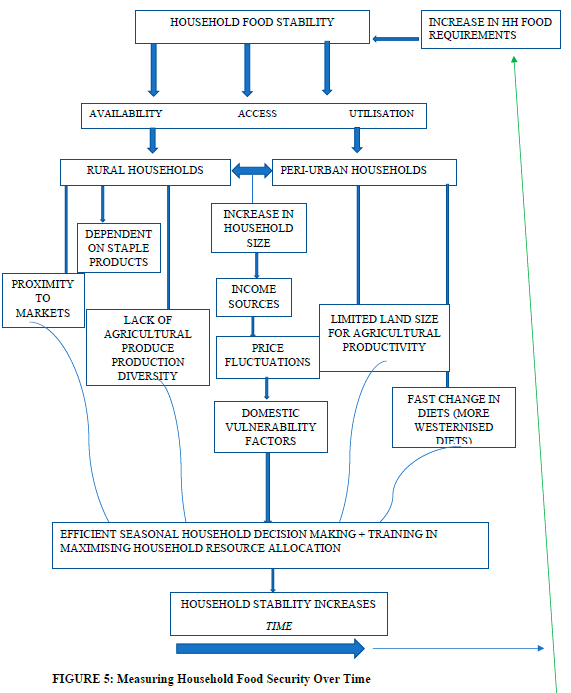
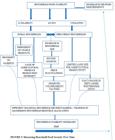
This paper proposes stability measurement via seasonal harvest variation concerning use and how much income a household incurs, as well as other variables laid out in the model above. The stability measure will have a threshold, resilience, how long yield will last, alternatives other than yield, how income is diversified by household, the decisions in land use and how profitable those decisions will be.
The above framework depicted in Figure 5 is designed to show the main factors contributing to household food security stability over time when a household participates in crop production. The framework is driven by household food requirements depending on the household size, which directly requires a household to have enough food consistently over a long period. The variables that affect food security stability differ. However, there are some things in common, such as household size, income sources, price fluctuations, and dependency on staple products. In contrast, factors such as restricted land size for agricultural productivity are limited and more challenging in peri-urban households than in rural households. In turn, efficient seasonal household decision-making combines agricultural production and other income streams with proper training in maximising domestic resources after acquiring and accessing food. It is important to zoom in on the decision made thereafter. Certain strategies can be implemented to increase the probability of household food security for a longer period, such as training on how to maximise resource allocations whilst not sacrificing food quality over quantity, leading to better planning and stability.
3.3. Fitting Measures Within African Cultures
Culture's impact on food security is a complex and challenging issue that has received little study. Little is known about the dynamics of cultural impacts and their relative relevance to food security. Nonetheless, culture, eating habits, and lifestyle impact physical and economic access to, preparation of, and selection of household food baskets. Rather than that, culture can pave the way for a more effective implementation of food security measures (Akbari et al., 2022). Cultural variables significantly influence dietary choices on a regional and global scale. Foods that violate societal norms are frequently deemed socially or culturally unacceptable. Even when meals are nutritious, inexpensive, and environmentally friendly, consumers may reject them. In vulnerable communities, food quality is a proxy for food security. Elderly people are frequently nutritionally vulnerable, but it is unclear how much of this is reflected in food quality and determined by financial status (Oldewage-Theron & Egal, 2021). Food insecurity indicators have been presented in one general way for all nations. This is difficult when realising the different cultures represented within the world. Fitting the indicators within the different settings across Sub-Saharan African countries, particularly South Africa,, leads to either underpinned or exaggerated data due to respondent perception and bias.
The full screening of articles retrieved could not show papers explicitly discussing how food culture can help better contribute to more accurate food security measuring. Based on the literature search, it is consistently shown that through the years, not much development has progressed in indicators to cater to different scenarios and areas (Poudel & Gopinath, 2021; Guma et al., 2022). Some studies highlighted that cultural food preferences are significant environmental factors influenced by social background and behaviours influencing food choices and intake (Alonso et al., 2018; Uhlmann et al., 2018; Vonthron et al., 2020). Yet it is less often recognised that adequately gauging household food security requires taking into account ethnic and cultural food preferences and adjustments that are compatible with nutritional requirements. Moreover, it is possible that while developing food aid programmes, assessing cultural factors around food choices will help increase dietary adherence to recommendations.
The preservation of culture in modern times has unfortunately become difficult as countries are becoming more Westernised (Ndalilo et al., 2020; Noort et al., 2022; Renzaho, 2020). The history of food insecurity is problematic to trace, as there has been a variety of production systems from the colonial period to current times that may have involved cultural traditions. When cultural food systems are not retained, the traditional diet is lost from one generation to the next, which is more diverse and nutritious when compared to modern diets highly influenced by migration, media, and processed foods provided in government-subsidised stores, chemical inputs, and low labour requirements of current crops grown (Ruben et al., 2021; Blekking et al., 2022; Davies et al., 2022).
4. CONCLUSIONS AND RECOMMENDATIONSThe study investigated the relationship between household food systems and food security measures/ indicators relationships in Sub-Saharan countries. This was carried out by reviewing relevant papers over five years, from 2018 to 2022. The study showed a great need for extension research to investigate how the stability dimension can be measured and the integration of cultural factors. When a community is better equipped to understand what factors lead to success, stakeholders can work toward incorporating applicable strategies within their food system development. This can improve general sustainability and give a clearer and more accurate picture of how households cope with socioeconomic challenges such as high unemployment rates, smallholder farming market barriers, lack of youth participation in agriculture, malnutrition, land productivity, and lack of knowledge. Finding a more defined place for the stability dimension and culture in food security measures can better equip community engagement research and aid extension programmes to be better equipped. There is a high potential for experiential food security scales that can also capture the cultural aspect. The study proposed a stability measurement framework via seasonal harvest variation (in households participating in crop production) concerning their use and how much income a household procures. This will better measure how long a household is food secure and generate useful information results for agricultural extension and food science interdisciplinary approach to food security goals. Monitoring and evaluation are the direct implications of this study for agricultural extension theory and practice. Household food security indicators provide a means to monitor and evaluate the impact of agricultural extension programs. By tracking changes in food security over time, extension services can assess the effectiveness of their interventions and make necessary adjustments. Data from this study are helpful for policy development. Data from household food security indicators can inform policy development at local, regional, and national levels. Policies address the root causes of food insecurity and support sustainable agricultural practices.
N. Shelembe contributed to the conceptualisation, methodology, research, and writing of the original draft. A.T. Modi contributed to conceptualisation, methodology, reviewing and editing. M.S.C Ngidi contributed to conceptualisation, methodology, reviewing and editing.
The authors declare no conflict of interest.
8. ACKNOWLEDGEMENTS
This work was based on the research supported by the National Research Foundation.
REFERENCES
- ABDUL MUMIN, Y. & ABDULAI, A., 2022. Informing food security and nutrition strategies in Sub-Saharan African countries: An overview and empirical analysis. AEPP., 44(1): 364-393.
- ABU, O., 2012. Food Security in Nigeria and South Africa: Policies and Challenges. Hum. Ecol., 38(1): 31-35.
- AKBARI, M., FOROUDI, P., SHAHMORADI, M., PADASH, H., PARIZI, Z.S., KHOSRAVANI, A., ATAEI, P. & CUOMO, M.T., 2022. The evolution of food security: Where are we now, where should we go next? Sustainability., 14(6): 3634.
- AKINBOADE, O.A., MOKWENA, M.P. & ADEYEFA, S.A., 2016. Determinants of food insecurity among the urban poor in the city of Tshwane, South Africa. J. Econ. Dev., 4(2): 101-114.
- AKINOLA, R., PEREIRA, L.M., MABHAUDHI, T., DE BRUIN, F.M. & RUSCH, L., 2020. A review of indigenous food crops in Africa and the implications for more sustainable and healthy food systems. Sustainability., 12(8): 3493.
- ALONSO, E.B., COCKX, L. & SWINNEN, J., 2018. Culture and food security. GFSI., 17: 113-127.
- ANSAH, I.G.K., GARDEBROEK, C. & IHLE, R., 2019. Resilience and household food security: A review of concepts, methodological approaches and empirical evidence. Food Secur., 11(6): 1187-1203.
- AYYAM, V., PALANIVEL, S. & CHANDRAKASAN, S., 2019. Alternative Farming Systems for Diversification and Conservation of Agro-biodiversity. In V. Ayyam, S. Palanivel & S. Chandrakasan (eds.), Coastal Ecosystems of the Tropics-Adaptive Management. Singapore: Springer, pp. 319-361.
- BAKKER, C., ZAITCHIK, B.F., SIDDIQUI, S., HOBBS, B.F., BROADDUS, E., NEFF, R.A., HASKETT, J. & PARKER, C.L., 2018. Shocks, seasonality, and disaggregation: Modelling food security through the integration of agricultural, transportation, and economic systems. Agric. Syst., 164: 165-184.
- BLEKKING, J., WALDMAN, K., TUHOLSKE, C. & EVANS, T., 2020. Formal/informal employment and urban food security in Sub-Saharan Africa. Appl Geogr., 114: 102131.
- BLEKKING, J., GIROUX, S., WALDMAN, K., BATTERSBY, J., TUHOLSKE, C., ROBESON, S.M. & SIAME, G., 2022. The impacts of climate change and urbanization on food retailers in urban sub-Saharan Africa. Cosust., 55: 101169.
- BRÜCK, T. & D'ERRICO, M., 2019. Food security and violent conflict: Introduction to the special issue. World Dev., 117: 167-171.
- CAFIERO, C., MELGAR-QUIÑONEZ, H.R., BALLARD, T.J. & KEPPLE, A.W., 2014. Validity and reliability of food security measures. Ann. N.Y. Acad. Sci., 1331(1): 230-248.
- CARLETTO, C., ZEZZA, A. & BANERJEE, R., 2013. Towards better measurement of household food security: Harmonizing indicators and the role of household surveys. Glob Food Secur., 2(1): 30-40.
- CHAKRABARTY, M., 2022. Climate change and food security in India: Domestic and global solutions. In R. Beri, A.S. Upadhyaya & Å. Kolås (eds.), Food Governance in India: Rights, Security and Challenges in the Global Sphere. India: Routledge, pp. 155-172.
- CHADARE, F.J., AFFONFERE, M., AIDÉ, E.S., FASSINOU, F.K., SALAKO, K.V., PEREKO, K., DEME, B., FAILLER, P., KAKAÏ, R.G. & ASSOGBADJO, A.E., 2022. Current state of nutrition in West Africa and projections to 2030. Glob FoodSecur., 32: 100602.
- CHANZA, N. & MUSAKWA, W., 2022. Revitalizing indigenous ways of maintaining food security in a changing climate: Review of the evidence base from Africa. Int. J. Clim. Change Strateg. Manag., 14(3): 252-271.
- CHUKWUDUM, Q.C. & DIOGGBAN, J., 2022. Food security: an analysis of food systems within Africa. Int. J. Food Syst. Dyn., 13(1): 69-84.
- COATES, J., 2013. Build it back better: Deconstructing food security for improved measurement and action. Glob Food Secur., 2(3): 188-194.
- CRUSH, J., FRAYNE, B. & PENDLETON, W., 2012. The crisis of food insecurity in African cities. J. Hunger Environ. Nutr., 7(2-3): 271-292.
- DASGUPTA, S. & ROBINSON, E.J., 2022. Impact of COVID-19 on food insecurity using multiple waves of high-frequency household surveys. Sci. Rep., 12(1): 1-15.
- DAVIS, J., MAGADZIRE, N., HEMERIJCKX, L.M., MAES, T., DURNO, D., KENYANA, N., LWASA, S., VAN ROMPAEY, A., VERBURG, P.H. & MAY, J., 2022. Precision approaches to food insecurity: A spatial analysis of urban hunger and its contextual correlates in an African city. World Dev., 149: 105694.
- DRYSDALE, R.E., BOB, U. & MOSHABELA, M., 2021. Coping through a drought: The association between child nutritional status and household food insecurity in the district of iLembe, South Africa. Public Health Nutr., 24(5): 1052-1065.
- EBENEZER, M., 2022. Urban household food security: An assessment of the correlates of micronutrient sensitive dietary diversity. J. Dev. Areas., 56(2): 119-140.
- EME, P.E., DOUWES, J., KIM, N., FOLIAKI, S. & BURLINGAME, B., 2019. Review of methodologies for assessing sustainable diets and potential for development of harmonised indicators. Int J Environ Res Public Health., 16(7): 1184.
-
FAO, IFAD, UNICEF, WFP & WHO., 2019. The State of Food Security and Nutrition in the World 2019. Safeguarding Against Economic Slowdowns and Downturns. Rome: FAO. Available from http://www.fao.org/-3/ca5162en/ca5162en.pdf.
» http://www.fao.org/-3/ca5162en/ca5162en.pdf -
FAO, ECA & AUC., 2021. Africa Regional Overview of Food Security and Nutrition, 2020: Transforming Food Systems for Affordable Healthy Diets. Accra: FAO. Available from https://www.fao.org/documents/card/en/c/cb4831en/.
» https://www.fao.org/documents/card/en/c/cb4831en/ - FRAVAL, S., HAMMOND, J., BOGARD, J.R., NG'ENDO, M., VAN ETTEN, J., HERRERO, M., OOSTING, S.J., DE BOER, I.J., LANNERSTAD, M., TEUFEL, N. & LAMANNA, C., 2019. Food access deficiencies in sub-Saharan Africa: Prevalence and implications for agricultural interventions. Front. Sustain. Food Syst., 3: 104.
- FRAYNE, B., PENDLETON, W., CRUSH, J., ACQUAH, B., BATTERSBY-LENNARD, J., BRAS, E., CHIWEZA, A., DLAMINI, T., FINCHAM, R., KROLL, F. & LEDUKA, C., 2010. The state of urban food insecurity in southern Africa. Urban Food Security Series, 2.
- GALIÈ, A., TEUFEL, N., GIRARD, A.W., BALTENWECK, I., DOMINGUEZ-SALAS, P., PRICE, M.J., JONES, R., LUKUYU, B., KORIR, L., RASKIND, I. & SMITH, K., 2019. Women's empowerment, food security and nutrition of pastoral communities in Tanzania. Glob Food Secur., 23: 125-134.
- GASPARATOS, A., MUDOMBI, S., BALDE, B.S., VON MALTITZ, G.P., JOHNSON, F.X., ROMEU-DALMAU, C., JUMBE, C., OCHIENG, C., LUHANGA, D., NYAMBANE, A. & ROSSIGNOLI, C., 2022. Local food security impacts of biofuel crop production in southern Africa. Renew. Sustain. Energy Rev., 154: 111875.
- GIL, J.D.B., REIDSMA, P., GILLER, K., TODMAN, L., WHITMORE, A. & VAN ITTERSUM, M., 2019. Sustainable development goal 2: Improved targets and indicators for agriculture and food security. Ambio., 48(7): 685-698.
- GUMA, I.P., RWASHANA, A.S. & OYO, B., 2022. Food Security Indicators for Subsistence Farmers Sustainability: A System Dynamics Approach. Research Anthology on Strategies for Achieving Agricultural Sustainability., 7: 413-435.
- HARTWIG DE HAEN, S.K. & MATIN, Q., 2011. What do we really know? Metrics for food insecurity and undernutrition. Food Policy, 36(6): 760-769.
- HAYSOM, G. & TAWODZERA, G., 2018. Measurement drives diagnosis and response: Gaps in transferring food security assessment to the urban scale. Food Policy., 74: 117-125.
- HEMERIJCKX, L.M., JANUSZ, K., VAN EMELEN, S., TUMWESIGYE, S., DAVIS, J., LWASA, S. & VAN ROMPAEY, A., 2022. Food accessibility of different socioeconomic groups in sub-Saharan African cities: A mixed-method analysis in Kampala, Uganda. Food Security., 14(3): 677-694.
- HERVIEUX, C. & MCKEE, M.C., 2021. Mapping SDGs in Sub-Saharan Africa: Highlighting System Effects. Social Impact Measurement for a Sustainable Future: The Power of Aesthetics and Practical Implications. In R. Hazenberg & C. Paterson-Young (eds.), Social Impact Measurement for a Sustainable Future: The Power of Aesthetics and Practical Implications. Cham: Palgrave Macmillan, pp. 79-299.
- HOSSAIN, A., SARKAR, S., BARMAN, M., GARAI, S., BHATT, R., ISLAM, M. & MEENA, R.S., 2021. Natural Resources Intensification and Footprints Management for Sustainable Food System. In A. Banerjee, R. S. Meena, M.K. Jhariya & D.K. Yadav (eds.), Agroecological Footprints Management for Sustainable Food System. Singapore: Springer, pp. 25-61.
- JONES, A.D., NGURE, F.M., PELTO, G. & YOUNG, S.L., 2013. What are we assessing when we measure food security? A compendium and review of current metrics. Adv. Nutr., 4(5): 481-505.
- MANIKAS, I., ALI, B.M. & SUNDARAKANI, B., 2023.A systematic literature review of indicators measuring food security. Agric. Food Secur., 12(10): 1-31.
- MASTERS, W.A., FINARET, A.B. & BLOCK, S.A., 2022. The economics of malnutrition: Dietary transition and food system transformation. Handb. Agric. Econ., 6: 4997-5083.
- MATEMILOLA, S. & ELEGBEDE, I., 2017. The challenges of food security in Nigeria. Open Access Library Journal., 4: 1-22.
- MAXWELL, D., VAITLA, B. & COATES, J., 2014. How do indicators of household food insecurity measure up? An empirical comparison from Ethiopia. Food Policy., 47:107-116.
- MELESSE, M.B., VAN DEN BERG, M., BÉNÉ, C., DE BRAUW, A. & BROUWER, I.D., 2020. Metrics to analyze and improve diets through food Systems in low and Middle Income Countries. Food Security., 12: 1085-1105.
- NDALILO, L., WEKESA, C. & MBUVI, M.T., 2020. Indigenous and local knowledge practices and innovations for enhancing food security under climate change: Examples from Mijikenda communities in coastal Kenya. In A. Gasparatos, M. Naidoo, A. Ahmed, A. Karanja, K. Fukushi, O. Saito & K. Takeuchi (eds.), Sustainability Challenges in Sub-Saharan Africa II: Insights from Eastern and Southern Africa. Singapore: Springer, pp. 63-82.
- NGEMA, P.Z., SIBANDA, M. & MUSEMWA, L., 2018. Household food security status and its determinants in Maphumulo local municipality, South Africa. Sustainability., 10(9): 3307.
- NICHOLSON, C.F., STEPHENS, E.C., KOPAINSKY, B., THORNTON, P.K., JONES, A.D., PARSONS, D. & GARRETT, J., 2021. Food security outcomes in agricultural systems models: Case examples and priority information needs. J. Agric. Syst., 188: 10-30.
- NICHOLSON, C.F., STEPHENS, E.C., KOPAINSKY, B., JONES, A.D., PARSONS, D. & GARRETT, J., 2021. Food security outcomes in agricultural systems models: Current status and recommended improvements. J. Agric. Syst., 188: 103030.
- NOORT, M.W., RENZETTI, S., LINDERHOF, V., DU RAND, G.E., MARX-PIENAAR, N.J., DE KOCK, H.L., MAGANO, N. & TAYLOR, J., 2022. Towards sustainable shifts to healthy diets and food security in Sub-Saharan Africa with climate-resilient crops in bread-type products: A food system analysis. Foods., 11(2): 135.
-
OECD/UN-HABITAT., 2022. Intermediary cities and climate change: An opportunity for sustainable development. Paris: OECD Publishing. Available from https://doi.org/10.1787/23508323-en.
» https://doi.org/10.1787/23508323-en - OGUNNIYI, A.I., OMOTOSO, S.O., SALMAN, K.K., OMOTAYO, A.O., OLAGUNJU, K.O. & AREMU, A.O., 2021. Socioeconomic drivers of food security among rural households in Nigeria: Evidence from Smallholder maize farmers. Soc. Indic. Res., 155(2): 583-599.
- OLDEWAGE-THERON, W. & EGAL, A.A., 2021. Is food insecurity a problem among the elderly in Sharpeville, South Africa?. Food Security., 13(1): 71-81.
- OTEKUNRIN, O.A., OTEKUNRIN, O.A., MOMOH, S. & AYINDE, I.A., 2019. How far has Africa gone in achieving the zero hunger target? Evidence from Nigeria. Glob Food Secur., 22: 1-12.
- OWUSU, S.M., CHEN, J., MERZ, E. & FU, C., 2022. Progressing towards nutritional health in Sub-Saharan Africa: An econometric analysis of the effect of sustainable food production on malnutrition. Int. J. Health Plann. Manage., 37(4): 2266-2283.
- POUDEL, D. & GOPINATH, M., 2021. Exploring the disparity in global food security indicators. Glob Food Secur., 29(70): 100549.
- RABBITT, M.P., ENGELHARD, G. & JENNINGS, J.K., 2021. Assessing the dimensionality of food-security measures. J Econ Soc Meas., 45(11): 1-31.
- RAGASA, C., ABERMAN, N.L. & MINGOTE, C.A., 2019. Does providing agricultural and nutrition information to both men and women improve household food security? Evidence from Malawi. Glob Food Secur., 20: 45-59.
- RAO, C.S., PRASAD, J.V.N.S., CHOUDHARI, S.K. & SINGH, A.K., 2020. Mainstreaming climate resilient villages in national programmes towards sustainability of agriculture and environment in India. CCES., 8(2): 116-133.
- RENZAHO, A.M., 2020. The need for the right socioeconomic and cultural fit in the COVID-19 response in sub-Saharan Africa: Examining demographic, economic political, health, and socio-cultural differentials in COVID-19 morbidity and mortality. Int J Environ Res Public Health., 17(10): 3445.
- RUBEN, R., CAVATASSI, R., LIPPER, L., SMALING, E. & WINTERS, P., 2021. Towards food systems transformation-five paradigm shifts for healthy, inclusive and sustainable food systems. Food Security., 13: 1423-1430.
- RUEL, M.T., 2003. Is dietary diversity an indicator of food security or dietary quality? A review of measurement issues and research needs. Food Nutr. Bull., 24(2): 231-232.
- RUIZ, V. & HAILE, S., 2021. Food systems, climate change and intermediary cities.
- SMITH, L.C. & FRANKENBERGER T.R., 2018. Does resilience capacity reduce the negative impact of shocks on household food security? Evidence from the 2014 foods in Northern Bangladesh. World Dev., 76: 358-76.
- TRIJSBURG, L., TALSMA, E.F., DE VRIES, J.H., KENNEDY, G., KUIJSTEN, A. & BROUWER, I.D., 2019. Diet quality indices for research in low-and middle-income countries: a systematic review. Nutr. Rev., 77(8): 515-540.
- TUHOLSKE, C., ANDAM, K., BLEKKING, J., EVANS, T. & CAYLOR, K., 2020. Comparing measures of urban food security in Accra, Ghana. Food Secur., 12: 417-431.
- UHLMANN, K., LIN, B.B. & ROSS, H., 2018. Who cares? The importance of emotional connections with nature to ensure food security and well-being in cities. Sustainability., 10(6): 18-44.
- ULLAH, A., SHAH, T.M. & FAROOQ, M., 2020. Pulses production in Pakistan: Status, constraints and opportunities. Int. J. Plant Prod., 14(4): 549-569.
- UPTON, J., CONSTENLA-VILLOSLADA, S. & BARRETT, C.B., 2022. Caveat utilitor: A comparative assessment of resilience measurement approaches. J. Dev. Econ., 10: 28-73.
- VAN DIJK, M., MORLEY, T. & RAU, M.L., 2021. A meta-analysis of projected global food demand and population at risk of hunger for the period 2010-2050. Nat Food., 2: 494-50.
- VONTHRON, S., PERRIN, C. & SOULARD, C.T., 2020. Foodscape: A scoping review and a research agenda for food security-related studies. PLoS One., 15(5): 0233218.
- WAMBOGO, E.A., GHATTAS, H., LEONARD, K.L. & SAHYOUN, N.R., 2018. Validity of the food insecurity experience scale for use in sub-Saharan Africa and characteristics of food-insecure individuals. Curr. Dev. Nutr., 2(9): nzy062.
-
WIGGINS, S., HENLEY, G. & KEATS, S., 2022. Competitive Or Complementary?: Industrial Crops and Food Security in Sub-Saharan Africa. Available from https://www.jstor.org/stable/resrep50756#:~:text=Growing%20industrial%20crops%20is%20often,between%20industrial%20and%20food%20crops.&text=Several%20qualifications%20apply%20however.,crop%20to%20alleviate%20their%20poverty.
» https://www.jstor.org/stable/resrep50756#:~:text=Growing%20industrial%20crops%20is%20often,between%20industrial%20and%20food%20crops.&text=Several%20qualifications%20apply%20however.,crop%20to%20alleviate%20their%20poverty - WHITE, J.C. & GARDEA-TORRESDEY, J., 2018. Achieving food security through the very small. Nat. Nanotechnol., 13(8): 627-629.
-
WIEBE, K., ROBINSON, S. & CATTANEO, A., 2019. Climate change, agriculture and food security: Impacts and the potential for adaptation and mitigation. Sustain. Agric. Res., 55-74. https://doi.org/10.1016/B978-0-12-812134-4.00004-2
» https://doi.org/10.1016/B978-0-12-812134-4.00004-2 - WOODHILL, J., KISHORE, A., NJUKI, J., JONES, K. & HASNAIN, S., 2022. Food systems and rural wellbeing: Challenges and opportunities. Food Security., 14(5): 1099-1121.