The Correlation Between Urban Land Demarcation and Household Food Insecurity Among Formal and Informal Settlements in the South of Durban City, KwaZulu-Natal Province
Abstract
The study investigated the relationship between urban land demarcation and household food insecurity across three neighbourhoods: Malukazi Informal Settlement (MIS), Uganda Informal Settlements (UIS), and Isipingo Hills (IH). Interviews with 90 households revealed that 80% of participants from MIS and 66% from UIS considered vegetable gardens crucial for enhancing food availability. Many expressed dissatisfaction with inadequate housing and limited land, which hindered their ability to establish gardens, especially in areas designated under the Reconstruction and Development Plan (RDP) and in informal settlements. Household food insecurity was primarily linked to high unemployment rates and low incomes. Conversely, respondents from IH reported greater satisfaction with their employment and income levels, surpassing the poverty threshold. Distinct disparities emerged: 66% of households in MIS were classified as "poor" in terms of food consumption, while UIS households managed to consume only three out of eight food groups. In IH, 56% of households had borderline scores, and 33% achieved acceptable scores. These findings underscore the pressing need for enhanced institutional support and effective government policies to improve urban food security and address land inequality issues.
Food Insecurity; Urban Land Demarcation; Urban Formal and Informal Settlements
1. INTRODUCTION
The global trend of urbanisation is driving significant increases in urban populations and poverty rates. Poulsen et al. (2015) highlighted the vulnerability of the urban poor in low-income countries to household food insecurity and advocated for urban agriculture to alleviate this issue. Moreover, backyard gardens have been shown to improve household resilience by reducing dependence on volatile food markets and enhancing nutritional intake. However, in informal settlements, land demarcation policies prioritise housing density over food production, leaving little room for subsistence agriculture (AfriCGE, 2023). Food insecurity, which has risen globally in 2023, is particularly affecting migrant populations due to limited access to employment, livelihoods, and housing, according to the Food Security Information Network (FSIN, 2024). Albu (2019) noted that approximately 79.5 million individuals are forcibly displaced, particularly in regions with critical food insecurity. Bird et al. (2019) argued that food security interventions can enhance migrants' living conditions in urban areas.
Additionally, Abu and Soom (2016) pointed out that most programs focus on household food security rather than a broader community approach. Meanwhile, land scarcity in urban areas poses further challenges, limiting opportunities for agricultural engagement. National statistics indicate that over 60% of food-insecure households reside in urban areas, with informal settlements disproportionately affected (South African Journal of Science, 2021). These households are net consumers and are highly vulnerable to food price shocks and supply disruptions. To address this, urban land demarcation policies must evolve to include provisions for household-level food production. Notably, in South Africa, the Reconstruction and Development Programme (RDP) commenced in 1994 but has struggled to resolve the ongoing housing crisis (DoHS, 1994; 2023; AgriSA, 2024; DALRRD, 2023). Many human settlement projects fail to provide timely housing, particularly in informal settlements, which the Government Gazette (1996) has recognised as violations of constitutional rights. Rudolph et al. (2021) said that while South Africa can produce sufficient food, this does not guarantee access at the household level, reflecting the focus of interventions on households rather than communities.
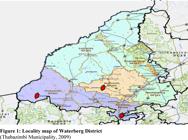
However, in Cape Town's Belhar and Gugulethu settlements, community-driven gardening initiatives have demonstrated the potential of small-scale food production, even in land-scarce environments. Supported by organisations such as SEED and SOIL FOR LIFE, these projects emphasise participatory planning, composting, and rainwater harvesting to overcome spatial and resource limitations (UCT Knowledge Brief, 2022). Despite their success, such initiatives remain the exception rather than the norm, largely due to policy and institutional barriers. This study examines livelihoods in three specific settlements, both formal and informal, within the context of land demarcation policies and food insecurity. The researcher selected Malukazi Informal Settlement (MIS), Uganda Informal Settlement (UIS), and Isipingo Hills (IH) formal settlement in southern Durban to capture a comparative view of how urban land demarcation affects household food insecurity across different settlement types. Key questions include: How do participants perceive their land, livelihoods, and food security? What interventions are suggested to address food insecurity? How will findings inform land policy revisions? The research activity planning, initiated in mid-2023 and involving 90 household surveys, analyses demographics, perceptions of housing and land, and food security status. The neighbourhoods studied include Malukazi Informal Settlement (MIS), Uganda Informal Settlement (UIS), and Isipingo Hills (IH). This work aims to shed light on food insecurity and land inequality in South Africa, offering insights for policymakers and future food security research.
2. DATA COLLECTION
The study employed structured face-to-face interviews using a bilingual questionnaire in English and IsiZulu to accommodate diverse populations in Malukazi, Uganda, Informal Settlements, and Isipingo Hills. Ethical clearance was obtained from the Mangosuthu University of Technology Research Ethics Committee, and community leader consent was secured in native languages to build trust. Research was conducted in three Durban neighbourhoods: Malukazi Informal Settlement (MIS), 3.38 km2, population: 19,520, households: 6,144 Uganda's informal settlement (UIS) has mixed housing types. Isipingo Hills (IH) 1.79 km2, population: 6,291, and the total number of households: 1,650. These sites were selected due to the lack of recent data on land demarcation and food insecurity. Each settlement hosted awareness sessions led by the researcher and community leaders, with 273 participants forming the primary sample unit (PSU). In the second stage, 90 households were randomly selected and interviewed across the three areas. A quantitative descriptive approach was used, incorporating the Household Food Insecurity Access Prevalence (HFIAP) tool, a 24-hour recall, and food security indices derived from responses to questions on food availability and dietary habits across eight food groups.
2.1. Data Analysis
The descriptive statistical test model was selected for the data analysis on three main categories: demographics of the area, perceptions of housing plans related to land demarcation and urban farming, and household food security status. Key research questions were formulated, addressing the impact of housing plans on residents, the influence of food availability on food security, perceptions of landholding sizes for home gardens, proposed interventions for food insecurity, potential revisions to land demarcation policies based on findings, and measures to address data gaps in future food security studies. Additionally, demographic information was collected, and food security was assessed using three indices: the Household Dietary Diversity Scale (HDDS), the Household Food Consumption Scale (HFCS), and the Household Food Insecurity Access Scale (HFIAS), providing insights into households' dietary habits and food security.
3. FINDINGS AND DISCUSSION
3.1. Socioeconomic Characteristics of the Respondents
The study found that 73% of respondents were female, confirming women's central role in caregiving and household food management in informal settlements. Household sizes ranged from 5 to 7 members, contributing to food insecurity due to high consumption needs and limited income. Research supports the link between larger households and increased food insecurity (Drammeh et al., 2019; Akello & Mwesingwa, 2023; Tambe et al., 2023). Spatial constraints and poor housing design further limit food production in informal settlements. Half of the respondents have lived in these settlements for over 20 years, yet they face persistent challenges. Educational attainment is low, though literacy levels suggest potential for development interventions. The World Bank Group (2024) highlights education as key to reducing food insecurity and promoting equity. Unemployment is high, with over a third relying on government grants, which offer limited food security (Akello, 2015; Mazenda et al., 2022). In contrast, Isipingo Hills shows 46% full-time employment, with many earning above R4000, contributing to better food security. However, Stats SA (2017) reported a national unemployment rate of 27.7%, and the Department of Human Settlements (2023) highlights ongoing urban poverty and inequality, especially in informal settlements.
3.2. Land Demarcation and Urban Farming
3.2.1. Urban Farming
Urban farming plays a vital role in household food provisioning. The study found that 93% of Isipingo Hills (IH) respondents and just over 50% from Malukazi (MIS) and Uganda Informal Settlement (UIS) obtain food primarily from supermarkets and informal traders (see Table 4). This highlights the reliance on external food sources across both formal and informal settlements, with implications for food access and urban agriculture potential
3.2.2. Perception of Soil Fertility and the Household's Available Space
Figure 3 shows that 70% of (UIS) and 50% of (MIS) respondents believe their soils have agricultural potential, despite limited space for gardening. Figure 4 visually illustrates the spatial constraints and overcrowded conditions in MIS and UIS, which hinder backyard gardening due to poor land demarcation. In contrast, Figure 5 depicts well-organised vegetable gardens in Isipingo Hills, highlighting better land use and food production potential.
The study shows that 93% of (MIS) and 63% of (UIS) respondents have less than 3x3 meters of land for vegetable cultivation (Table 6), a size traditionally sufficient for small-scale gardening. In contrast, 53% of (IH) respondents own more than 4x4 meters, offering better potential for food production. Cruz (2010) and Valdés et al. (2010) highlight the reliance of food-insecure households on land for sustenance. Thomas and Terblanche (2021) emphasise that vegetable gardens are vital for reducing poverty, mitigating food scarcity, and improving livelihoods in disadvantaged communities.
3.2.3. Respondents' Housing Satisfaction Level
Table 8 reveals widespread dissatisfaction among informal settlement residents regarding housing and land conditions. 73% are unhappy with lot sizes, limiting home expansion and gardening, while 63% are dissatisfied with RDP house sizes and 56% with housing types. In (MIS), 70% expressed dissatisfaction with the house's location and lot size, which directly impacted gardening aspirations. Eighty percent of MIS respondents are unhappy with lot sizes, 63% with house types, and 73% with home sizes. Despite proximity to shopping facilities, less than half of respondents are satisfied with market access, and limited job opportunities contribute to food insecurity. Magubane (2024) notes that many informal homes lack essential services, and the EThekwini Municipality's IDP identifies hazards like unsafe electrical connections. Bisaga et al. (2019) stress that sustainable settlements must support safe environments and livelihoods. In contrast, (IH) respondents report high satisfaction, viewing their properties as valuable investments due to proximity to urban infrastructure and shopping centres. However, the Department of Human Settlements (DoHS, 2011) warns that current urban development trends are unsustainable, exacerbating unemployment and inequality.
3.3. Household Food Security Status
3.3.1. Food Security Status
The findings presented in Table 9 reveal alarming levels of food insecurity in the two informal settlements surveyed (MIS) and (UIS). Approximately 36.66% of MIS and 30% of UIS respondents reported experiencing food insecurity in the past month, compared with 56.66% of (IH) respondents who were food secure. Among MIS respondents, 20% scored 1-9, indicating low food insecurity. Similarly, 43% of IH and 23% of UIS participants reported low levels of food insecurity. For scores between 10 and 18, 13% of MIS, 10% of IH, and 23% of UIS respondents experienced moderate food insecurity. Notably, 43% of UIS and 40% of MIS respondents scored above 18, indicating severe food insecurity, whereas none of the IH respondents did. According to Statistics South Africa (2021), poverty is closely linked to food insecurity, with severely inadequate access to food increasing from 18.8% in 2019 to 20.6% in 2020. The Household Food Insecurity Access Scale (HFIAP) further underscores the severity of the issue in MIS, where 30% were mildly food-secure, 26% moderately food-insecure, and 36% severely food-insecure. In contrast, IH showed better outcomes, with 50% food secure, 36% mildly food secure, and only 6% moderately food insecure, with no cases of severe food insecurity. These results underscore the disparities in food security between formal and informal settlements and highlight the urgent need for targeted interventions in areas most affected by poverty and spatial inequality.
3.3.2. Food Security Coping Strategies of Participating Residents
Table 10 highlights significant food security challenges in (MIS) and (UIS), with a total challenge weight of 253.32 and a weighted score of 236. A notable 64 individuals reported limiting food intake due to financial constraints. In MIS, the dominant concern was anxiety over dwindling food supplies, while UIS respondents primarily struggled to afford undesirable foods due to budget constraints, reflected in a weighted score of 209.96. Limited employment opportunities and low income levels largely drive these challenges. Wallingford et al. (2024) advocate using affordable, locally available foods to guide dietary choices and enhance nutrition support. Loopstra et al. (2019) found that food-insecure households often rely on ultra-processed foods, leading to diets deficient in fruits, vegetables, protein, and fibre. Johnstone & Lonnie (2023) emphasise that food insecurity is a social determinant of health, rooted in broader systemic issues such as poverty.
Additionally, Mkhize et al. (2023) note that evolving food consumption patterns are influencing food production and household resilience. In (IH), the primary food security challenge was consuming disliked foods due to financial limitations, particularly during the July 2021 looting incident, with a weighted score of 136.65. Addressing these challenges is essential for improving household food security and overall community well-being.
3.3.3. Food Consumed a 24-Hour Recall
The findings from Tables 11, 12, 13, and Figure 7 reveal distinct meal consumption patterns across the three study sites. A notable 36% of (IH) and 30% of (UIS) respondents reported snacking throughout the day, while lunch participation varied: 63% in IH, 50% in UIS, and 36% in (MIS). Despite these variations, all groups consistently prepared supper, indicating a shared commitment to family nutrition. The use of overnight leftovers was common, with 30% of MIS and 40% of UIS respondents engaging in this practice. Additionally, 80% of UIS and 60% of MIS respondents reported skipping lunch, instead consuming reheated leftovers known as "Umfudumezo".
In contrast, IH respondents demonstrated greater meal variety and a stronger preference for cooking, reflecting relatively better food access. These patterns align with research by Coleman-Jensen et al. (2021), which links very low food security to reduced food intake and disrupted eating habits due to financial constraints. Similarly, The Food Foundation (2024) found that food-insecure households often consume smaller meals, skip meals, or go without food despite hunger. Jenkins et al. (2021) further confirmed that many households experience moderate to severe food insecurity. Overall, while food insecurity remains a pressing issue, the presence of adaptive practices such as meal sharing and the use of leftovers suggests potential avenues for improving nutrition and resilience in these communities.
3.3.4. Seven-Day Frequency Food Consumption
The data in Table 14 clearly illustrate food consumption patterns among different resident groups, highlighting significant differences in variety and preferences. The formal residents demonstrate a higher dietary diversity, reflecting their access to a wider range of food options. This information is crucial for understanding dietary behaviours and addressing nutritional needs within these communities. According to Muonde et al. (2024), the dynamics of global nutrition are characterised by a spectrum of challenges, including food insecurity.
3.3.5. Household Food Consumption Score (HFCS)
Data from Table 15 reveal significant differences in food security across settlement types. Most informal households fall under the "Poor" score, indicating a need for targeted support and resources, while formal households show a higher percentage in the "Acceptable" range, suggesting better food security. These findings support tailored interventions to improve food consumption and security based on household type. As emphasised by Cafiero et al. (2018), such food security indicators are essential tools in guiding research and policy aimed at addressing nutritional challenges.
3.3.6. Household Dietary Diversity Score (HDDS)
The results presented in Figure 8 indicate low dietary diversity among respondents in MIS, where 55% consumed fewer than three food groups, 26% consumed four, and only 16% consumed more than six. Similarly, in (UIS), 40% consumed fewer than three food groups, 36% consumed four, and 16% consumed more than six. These figures reflect significant food insecurity, consistent with the World Health Organisation's (WHO, 2024) emphasis on the importance of diverse and nutritious diets for health. In contrast, (IH) respondents demonstrated moderate food security, with 53% consuming four food groups, 16% more than six, and only 10% fewer than three. The higher prevalence of low dietary diversity in MIS and UIS is attributed to limited financial resources and high unemployment, as supported by Mazenda et al. (2022), who link food insecurity to socioeconomic inequality affecting food availability and accessibility. Additional contributing factors include low household incomes (Table 3), minimal participation in government food security programs (Table 5), and challenges related to land scarcity and poverty (Table 2). These findings underscore the urgent need for targeted interventions to improve dietary diversity and food security in informal settlements
3.3.7. Reasons for Not Eating the Kinds of Food the Household Wanted
The findings in Table 16, based on follow-up questions from Table 10, explore the reasons behind low food consumption among households, particularly the inability to purchase preferred foods due to financial constraints. A significant proportion of respondents (90% from UIS, 76% from MIS, and 40% from IH) identified a lack of money as the primary barrier to accessing preferred foods. This aligns with Mkhawani et al. (2016), who noted that high food prices render necessities unaffordable for many households. Craveiro et al. (2016) further explain that urbanisation contributes to nutritional transitions, increasing access to low-quality, inexpensive foods, thereby altering dietary patterns and raising the risk of non-communicable diseases. Additionally, 36% of MIS, 26% of UIS, and 16% of IH respondents reported difficulty accessing shops due to unsafe routes and insufficient taxi fares, further limiting food acquisition. The Food Research and Action Centre (FRAC, 2021) supports these findings, confirming that many households struggle to obtain adequate food due to resource limitations. In IH, 16% of respondents sometimes could not access preferred foods, and 6% reported shortages of quality food. These results underscore the multifaceted nature of food insecurity, shaped by economic hardship, urban infrastructure challenges, and limited access to nutritious food, necessitating targeted interventions to improve food access and dietary quality in vulnerable communities.
4. CONCLUSION AND RECOMMENDATIONS OF THE STUDY
This study highlights critical constraints on land availability in informal settlements and areas designated for the Reconstruction and Development Programme (RDP), which limit households' ability to establish vegetable gardens despite their importance for food security. To address these challenges, advisory services should promote space-efficient urban agriculture techniques such as container gardening, vertical farming, and hydroponics, and implement training programs tailored to high-density urban environments. The dissatisfaction with housing and land allocation reveals a disconnect between urban development policies and household food security needs. As such, advisory services must engage in policy advocacy and collaborate with municipal authorities to integrate urban agriculture into housing initiatives and land-use planning, thereby positioning food production as a critical component of sustainable urban development. Elevated unemployment and low-income levels are significant drivers of food insecurity in Malukazi informal settlements (MIS) and Uganda informal settlements (UIS), hindering access to diverse diets. A comprehensive strategy is recommended, linking agricultural initiatives with livelihood support programs such as skills development and micro-enterprise promotion to enhance household resilience. Context-specific approaches are essential given the diversity of settlement types. In MIS and UIS, the focus should be on nutrition education, crop diversification, and cost-effective production methods. Conversely, in more stable-income IH, strategies should emphasise value addition, market linkages, and urban agribusiness development. The findings underscore the need for robust institutional frameworks and policy reforms to combat urban food insecurity and land inequality. Advisory services should participate in policy dialogues to integrate urban agriculture into housing and land allocation schemes while revising land-use policies to reduce inequities. Finally, ongoing monitoring is crucial. Therefore, implementing tools such as the Household Dietary Diversity Score (HDDS) will facilitate real-time assessments and adaptive programming, improving the effectiveness of advisory interventions.
5. ACKNOWLEDGEMENTS
I am grateful to the community participants for their involvement in this study and to Professor T. Davies for his motivation and support. I also thank Professor A. Msomi and Dr B.E. Mthembu for their guidance on ethical compliance, which was essential to the completion of this research.
REFERENCES
- ABU, G.A. & SOOM, A., 2016. Analysis of factors affecting food security in rural and urban farming households of Benue State, Nigeria. Int. J. Food Agric. Econ., 4(1): 55-68.
-
AfriCGE., 2023. Food gardens: A potential solution to urban food insecurity. African Centre for Green Economy. Available from https://africancentre.org/food-gardens-a-potential-solution-to-urban-food-insecurity/
» https://africancentre.org/food-gardens-a-potential-solution-to-urban-food-insecurity/ -
AGRISA., 2024. Toward sustainable human settlement. Available from https://agrisa.org.za/center-of-excellence-land-affairs/toward-sustainable-human-settlements/
» https://agrisa.org.za/center-of-excellence-land-affairs/toward-sustainable-human-settlements/ - AKELLO, J., 2015. Determinants of Household Food Security in Kisubi Parish, Katabi Sub County, Wakiso District, Uganda. Doctoral dissertation, International Health Sciences University.
- AKELLO, M.C. & MWESINGWA, D., 2023. Household size and Household food security in Ngetta Ward, Lira City, Northern Uganda. Int. J. Dev. Country Stud., 5(1): 88-109.
- ALBU, D., 2019. UNHCR Global trends report: Forced displacement in 2018. UNHCR: The UN Refugee Agency.
- BIRD, A.B., PRADHAN, A., BHAVANI, R.V. & DANGOUR, A.D., 2019. Interventions in agriculture for nutrition outcomes: A systematic review focused on South Asia. J. Food Policy., 82: 39-49.
- BISAGA, I., PARIKH, P. & LOGGIA, C., 2019. Challenges and opportunities for sustainable urban farming in South African low-income settlements: A case study in Durban. Sustain., 11(20): 5660.
- CAFIERO, C., VIVIANI, S. & NORD, M., 2018. Food security measurement in a global context: The food insecurity experience scale. Measurement., 116: 146-152.
-
COLEMAN-JENSEN, A., RABBITT, M.P., GREGORY, C.A. & SINGH, A., 2021. Household food security in the United States 2020. Available from https://www.ers.usda.gov/media/8970/err-298.pdf?v=61703
» https://www.ers.usda.gov/media/8970/err-298.pdf?v=61703 -
CURRAN, M. & HARTLEY, R., 2021. Food security and policy effects by family size: How does quality of well-being depend on quantity of children? Available from https://ukcpr.uky.edu/sites/default/files/2025-09/dp2021-04.pdf
» https://ukcpr.uky.edu/sites/default/files/2025-09/dp2021-04.pdf - CRAVEIRO, I., ALVES, D., AMADO, M., SANTOS, Z., FORTES, A.T., DELGADO, A.P. & GONÇALVES, L., 2016. Determinants, health problems, and food insecurity in urban areas of the largest city in Cape Verde. Int. J. Environ. Res. Public Health., 13(11): 1155.
- CRUZ, L., 2010. Responsible governance of land tenure. An essential factor for the realization of the right to food. Land Tenure Working Group Discussion Paper 15. Rome: FAO.
- DEPARTMENT OF HUMAN SETTLEMENTS (DoHS)., 1994. RDP (Reconstruction and Development Programme Transition 1990-1994. Pretoria: Human Settlement.
- DEPARTMENT OF HUMAN SETTLEMENTS (DoHS)., 2011. Informal Settlement Eradication Strategy for KwaZulu-Natal. Project Preparation Trust (PPT) of KwaZulu-Natal (KZN). Pretoria: South African Government.
- DEPARTMENT OF HUMAN SETTLEMENTS (DoHS)., 2023. White paper on Housing Act of 1997. Pretoria: South African Government.
-
DEPARTMENT OF HUMAN SETTLEMENTS (DoHS)., 2023. Human settlements. Available from https://www.dhs.gov.za/sites/default/files/publications/HUMAN
» https://www.dhs.gov.za/sites/default/files/publications/HUMAN - DEPARTMENT OF AGRICULTURE, LAND REFORM and RURAL DEVELOPMENT (DALRRD)., 2023. National Food and Nutrition Security Survey. North West Province Report. Pretoria.
-
DRAMMEH, W., HAMID, N.A. & ROHANA, A.J., 2019. Determinants of household food insecurity and its association with child malnutrition in Sub-Saharan Africa: A review of the literature. Curr Res Nutr Food Sci., 7(3). https://bit.ly/35WOmg5
» https://bit.ly/35WOmg5 -
ETHEKWINI MUNICIPALITY., 2018. Integrated Development Plan. 5 Year Plan: 2017/2018 To 2021/22. Available from http://www.durban.gov.za/City_Government/City_Vision/IDP/Documents/IDP%202017%202018.PDF.
» http://www.durban.gov.za/City_Government/City_Vision/IDP/Documents/IDP%202017%202018.PDF - FOOD RESEARCH & ACTION CENTER (FRAC)., 2021. Hunger, poverty, and health disparities during Covid -19 and federal nutrition programs' role in an equitable recovery.
- FOOD SECURITY INFORMATION NETWORK (FSIN)., 2023. Global Report on Food Crisis. Annual Report, Joint Analysis For A Better Report.
- GOVERNMENT GAZETTE.,1996. No, 26 of 1996: Constitution of the Republic of South Africa; Third Amendment Act of 1996.
- JENKINS, R.H., ALIABADI, S., VAMOS, E.P., TAYLOR-ROBINSON, D., WICKHAM, S., MILLETT, C. & LAVERTY, A.A., 2021. The relationship between austerity and food insecurity in the UK: A systematic review. EClinicalMedicine., 33: 100781.
- LOOPSTRA, R., REEVES, A. & TARASUK, V., 2019. The rise of hunger among low-income households: an analysis of the risks of food insecurity between 2004 and 2016 in a population-based study of UK adults. J Epidemiol Community Health., 73(7): 668-673.
-
MAGUBANE,T., 2024. IOL: Concerns over the pace of a housing project in Durban. Available from https://www.iol.co.za/mercury/news/
» https://www.iol.co.za/mercury/news/ -
MAZENDA, A., MANZI, P., MUSHAYANYAMA, T. & NGARAVA, S., 2022. Household-level determinants of food security in the City of Tshwane, South Africa. Available from https://repository.up.ac.za/handle/2263/89005
» https://repository.up.ac.za/handle/2263/89005 - MKHAWANI, K., MOTADI, S.A., MABAPA, N.S., MBHENYANE, X.G. & BLAAUW, R., 2016. Effects of rising food prices on household food security on female headed households in Runnymede Village, Mopani District, South Africa. S. Afr. J. Clin. Nutr., 29(2): 69-74.
- MKHIZE, X., MTHEMBU, B.E. & NAPIER, C., 2023.Transforming a local food system to address food and nutrition insecurity in an urban informal settlement area: A study in Umlazi Township in Durban, South Africa. J. Agric. Food Res., 12: 100565.
- MUONDE, M., OLORUNSOGO, T.O., OGUGUA, J.O., MADUKA, C.P., OMOTAYO, O., MUONDE, M., OLORUNSOGO, T.O., OGUGUA, J.O., MADUKA, C.P. & OMOTAYO, O., 2024. Global nutrition challenges: A public health review of dietary risks and interventions. World J. Adv. Res. Rev., 21(1): 1467-1478.
- NENGOVHELA, R., BELETE, A., HLONGWANE, J. & OLUWATAYO, I.B., 2022. Measuring rural households' food consumption pattern using HDDS: A case of Mopani district municipality, Limpopo province, South Africa. J. Agribus. Rural Dev., 63(1): 15-24.
- POULSEN, M.N., McNab, P.R. & Clayton, M.L., 2015. A Systematic review of Urban Agriculture and Food Security impacts in low-income countries. Food Policy., 55: 131-146.
- RUDOLPH, M., KROLL, F., MUCHESA, E., PAIKER, M. & FATTI, P., 2021. Food security in urban cities: A case study conducted in Johannesburg, South Africa. Food Secur., 9(2): 46-55.
-
SOUTH AFRICAN JOURNAL OF SCIENCE., 2021. Home gardening and food insecurity in South Africa. Available from https://scielo.org.za/scielo.php?script=sci_arttext&pid=S0038-23532021000500013
» https://scielo.org.za/scielo.php?script=sci_arttext&pid=S0038-23532021000500013 - STATISTICS SOUTH AFRICA., 2017. Whither a Demographic Dividend South Africa: The Overton Window of Political Possibilities. Pretoria: Statistics South Africa.
- STATISTICS SOUTH AFRICA., 2021. Focus on food inadequancy and hunger in South Africa in 2021. Pretoria: Statistics South Africa.
-
STATISTICS SOUTH AFRICA. ., 2020. General Household Survey. Pretoria: Statistics South Africa. Available from http://www.statssa.gov.za/publications/P0318/P03182020.pdf
» http://www.statssa.gov.za/publications/P0318/P03182020.pdf - TAMBE, B.A., MABAPA, N.S. & MBHATSANI, H.V., 2023. Household socioeconomic determinants of food security in Limpopo Province of South Africa: A cross-sectional survey. Agric & Food Secur., 12: 19.
-
THE FOOD FOUNDATION., 2024. Food Insecurity Tracking. Available from https://foodfoundation.org.uk/initiatives/food-insecurity-tracking (open in a new window).
» https://foodfoundation.org.uk/initiatives/food-insecurity-tracking -
THOMAS, M. & TERBLANCHE, S., 2021. The impact of backyard gardening on livelihoods of households in Sedibeng District Municipality in Gauteng Province, South Africa. S. Afr. Jnl. Agric. Ext., 49(1): 30-41. https://doi.org/10.17159/2413-3221/2021/v49n1a10776
» https://doi.org/10.17159/2413-3221/2021/v49n1a10776 -
UCT KNOWLEDGE BRIEF., 2022. Food gardens in Cape Town: Lessons from Belhar and Gugulethu. University of Cape Town. Available from https://salearningnetwork.uct.ac.za/sites/default/files/content_migration/salearningnetwork_uct_ac_za/2150/files/Knowledge%2520sharing_Brief%2520_Food%2520and%2520nutrition_MP.pdf
» https://salearningnetwork.uct.ac.za/sites/default/files/content_migration/salearningnetwork_uct_ac_za/2150/files/Knowledge%2520sharing_Brief%2520_Food%2520and%2520nutrition_MP.pdf - VALDÉS, A., FOSTER, W., ANRÍQUEZ, G., AZZARRI, C., COVARRUBIAS, K., DAVIS, B., DIGIUSEPPE, S., ESSAM, T., HERTZ, T, DE LA O, P.A., QUIÑONES, E., STAMOULIS, K., WINTERS, P. & ZEZZA, A., 2010. A Profile of the Rural Poor. A Background paper for IFAD Rural Poverty Report. Rome: IFAD.
- WALLINGFORD, K., DE PEE, S., HERFORTH, A.W., KURI, S., BAI, Y. & MASTER, W.A., 2024. Measuring food access using least-cost diets: Results for global monitoring and targeting of interventions to improve food security, nutrition and health. Glob. Food Secur., 41: 100771.
-
WORLD BANK GROUP., 2024. Education overview: Development news, research and data. Available from https://www.worldbank.org/en/topic/education/overview.
» https://www.worldbank.org/en/topic/education/overview -
WORLD HEALTH ORGANIZATION., 2024. Healthy Diet [Internet]. Geneva, Switzerland: World Health Organisation. Available from https://www.who.int/initiatives/behealthy/healthydiet#:~:text=A%20healthy%20diet%20is%20essential,are%20essential%20for%20healthy%20diet
» https://www.who.int/initiatives/behealthy/healthydiet#:~:text=A%20healthy%20diet%20is%20essential,are%20essential%20for%20healthy%20diet

ABBREVIATIONS
Department of Agriculture, Land Reform & Rural Development (DALRDD); Department of Human Settlements (DoHS); Food and Agriculture Organization (FAO); Food;; Insecurity Experience Scale (FIES); Food Research & Action Centre (FRAC); Food and Security Information Network (FSIN); Household Dietary Diversity (HDDS); Household Food Consumption Score (HFCS); Household food Insecurity Access Prevalence (HFIAP); Human Science Research Council (HSRC); Integrated Development Plan (IDP); Isipingo Hills (IH); KwaZulu Natal (KZN); Malukazi Informal Settlements (MIS); Mangosuthu University of Technology (MUT; Reconstruction and Development Plan (RDP); Statistics South Africa (Stats, SA); The Republic of South Africa (RSA); Uganda Informal Settlements (UIS); World Health Organization (WHO).