Evaluation of Farmer' Skills for Informed Capacity Development Towards Resilient Food Systems: The Case of the State Land Allocation Beneficiaries in North West Province of South Africa
Abstract
Various institutions have offered a range of training to smallholder farmers. These trainings have been geared towards improving farming skills to improve yields and management of their farms. However, despite the training, smallholder farmers are reported to produce below the potential of their farms. Such information is paramount to enable the creation and design of effective capacity-building interventions. A skills audit was carried out on 179 smallholder farmers to evaluate socio-economic factors that drive the existing skills of smallholder farmers in the North West province. The North West province was purposively chosen because it had the highest percentage of beneficiaries from state land allocation projects, accounting for 65% of the total. Chi-square tests and discriminant analysis were performed to analyse data. Research findings revealed that 2% of the farmers rated their planting and crop maintenance proficiency above average. Few (39.3%) farmers indicated average to excellent animal reproduction and health care skills. Gender, tertiary education, age, and fluency in speaking English and Afrikaans were socio-economic factors that drove farmers' choice of skills. It is recommended that a comprehensive training plan for each allocated farm be developed for viable and thriving enterprises geared towards building sustainable, inclusive, resilient agri-food systems, including technical support, mentorship, and coaching. Participation of youth in training and offering training in languages that farmers can speak fluently is recommended.
Food Systems; North West; Resilient; Skills
1. INTRODUCTION
Developing and enhancing skills among smallholder farmers in developing countries are critical to addressing food security challenges, particularly in Africa. The ability of smallholder farmers to adopt innovative farming techniques and manage agricultural enterprises effectively is key to improving productivity, sustainability, and resilience in the agri-food sector. As global food demand continues to rise, driven by rapid population growth, projected to reach 8.6 billion by 2030 and 9.8 billion by 2050 (United Nations, 2017), equipping farmers with the necessary skills has become more urgent. The complexity of modern agricultural systems, coupled with the threats of climate change, places a premium on skills development as a strategy for building resilient agricultural practices. The capacity of farmers to manage agricultural risks, including climate extremes, depends significantly on their knowledge and skills. Implementing ecosystem-based adaptation strategies that enhance the resilience of agricultural systems may assist farmers in coping with climate extremes to achieve sustainable agricultural production (Grigorieva, Livenets & Stelmakh, 2023).
Meanwhile, nations globally face climate change-induced shocks that have varying impacts on different industries, including agriculture. The recent global shocks, such as the Covid-19 pandemic and the Russia-Ukraine war on food and commodity prices, have brought about a new realisation of the need for risk preparedness. These recent shocks have revealed the extent to which marginalised communities and actors in the food system are highly affected and vulnerable to exogenous shocks. Subsequently, there is a growing concern about the resilience and sustainability of both local, regional and global agri-food systems (FAO, 2021). Resilient food systems are defined as those in which "people, communities, countries and global institutions prevent, anticipate, prepare for, cope with and recover from shocks and not only bounce back to where they were before the shocks occurred but become even better off" (Alinovi, Mane & Ramano, 2010: 15). Food insecurity, financial crisis, slow economic growth, high food prices, high fuel prices, and natural disasters can be listed as shocks that can reduce the stability and resilience of the food systems in developing countries (Mallappa & Babu, 2021). Developing innovative interventions is essential to enhance resilience, ensuring that responses to shocks lead to transforming food systems into ones that are sustainable, equitable, and inclusive.
In South Africa, responding to the aftereffects of the COVID-19-induced national lockdown, the Ministry for Agriculture, Land Reform and Rural Development (DALRRD) identified agriculture as a key sector to re-ignite the economy. DALRRD prioritised the release and allocation of state-owned land as a key intervention to address the issues surrounding the underutilisation of agricultural land. The release of state land aligns with the 2012 National Development Plan (NDP) goals of a decent standard of living, an economy that creates more jobs, an inclusive and integrated rural economy, improving infrastructure, and building environmental sustainability and resilience.
It is, therefore, paramount that the state intervenes to accord the farmers benefits from the state land with support to springboard them to commercial production. Among other forms of intervention, smallholder farmers need to be capacitated with skills to increase their farm productivity and participation in the market. Developing smallholder farmers' capacity towards resilient food systems will enable them to prevent, anticipate, prepare, cope, and recover from shocks. (Babu & Blom, 2014). If the farmers' knowledge increases, it can also indirectly increase their skills and competence (Freeman, 2017), thereby enhancing their resources and capacity to accomplish their business goals (Tamsan & Yusriadi, 2022). Various government, private sector, and non-government institutions have offered training to smallholder farmers. The training has been geared towards improving the farming knowledge of land reform beneficiaries and smallholder farmers in general, improving yields, and managing farms effectively and efficiently. For instance, over the 2018-2021 period, the Agricultural Research Council (ARC) has trained about 1 666 farmers in areas of crop and animal production to utilise their farming practices to improve the income potential of their farms towards profitable production and enhanced value chains for food and nutrition security (ARC, 2020). However, despite these capacity development interventions, studies conducted by ARC revealed that 54% of Proactive Land Acquisition Strategy (PLAS) beneficiaries did not produce anything significant on their farms, indicating that the desired impact has not been achieved. One of the contributing factors highlighted was the inadequacy in the selection of beneficiaries (ARC, 2019).
A literature review has revealed limited information on the skill set possessed by smallholder farmers in South Africa. Such information is paramount to enable the creation and design of effective capacity-building interventions (Van der Waldt, 2020). Therefore, this paper seeks to evaluate smallholder farmers' existing capacity by outlining the existing and further skills needed by the farmer to ensure that their farms achieve their optimum potential. Based on the literature, no studies have been carried out in the country that detailed the existing skills possessed and needed by smallholder farmers to inform the nature of skills development interventions. It is envisaged that the results of this paper will assist the state in designing a comprehensive training plan for each allocated farm for viable and thriving enterprises geared towards building sustainable, inclusive, resilient agri-food systems, including technical support, mentorship, and coaching. Farmer socio-economic attributes such as education, age, and experience are reported to have the most influence on adopting agricultural technologies. For instance, the education of a farmer has been reported to positively influence the farmer's decision to adopt modern technology (Mwangi & Kariuki, 2015). This paper, therefore, evaluates the socio-economic factors that drive the existing skills of smallholder farmers.
2. METHODOLOGY
2.1. Study Area
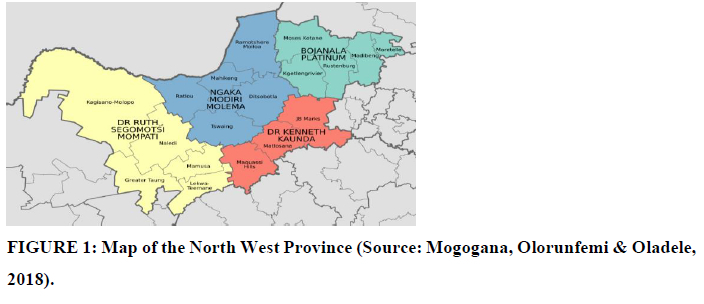
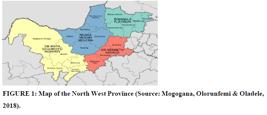
The study was conducted in the North West province of South Africa. North West is spatially a medium-sized province, covering 9.7% of the total surface of South Africa with a population of about 3 804 548 (Stats SA, 2022). It is mostly rural, with much of the region comprising flat areas of scattered trees and grasslands (Cloete, 2010). The province's main economic sectors include agriculture, tourism, and mining. Mining is the major contributor to the province's economy, accounting for nearly a quarter of South Africa's mining industry. In terms of the agricultural sector, North West is well known for cattle farming and is the country's leading producer of white maize. Three districts, Bojanala Platinum, Ngaka Modiri Molema, and Dr Ruth Segomotsi Mompati municipality District, were selected in this study as state land allocation project beneficiaries were available.
2.2. Research Design and Theoretical Framework
This paper is part of the State Land Allocation Project, co-funded by ARC and the National Agricultural Marketing Council (NAMC). The North West province was purposively chosen because it had the highest percentage of beneficiaries from state land allocation projects, accounting for 65% of the total. A list of the farms to be audited and a draft questionnaire to be used for the skills audit survey were supplied by DALRRD. The census method was therefore employed to interview all the beneficiaries. In collaboration with ARC experts, the received questionnaire was modified to adjust its length and content. A total of 179 smallholder farmers who are the beneficiaries of the state land allocation program were interviewed from 2021 to 2022. Data collected included current technical competencies, managerial/business skills, behavioural competencies, a prioritised list of training interventions, production and operational-related challenges, and socio-economic attributes. In addition, information regarding the farmers' knowledge was collected using a Likert scale (1-2= very poor, 3-4= poor, 5-6= average, 7-8= above average, 9-10= excellent). Likert scale was a preferred technique for measuring the farmers' knowledge (Joshi, Kale, Chandel & Pal, 2015; Batterton & Hale, 2017).
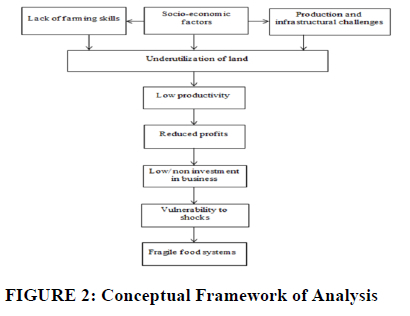
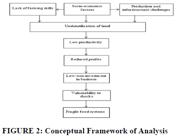
An economic theory of consumer behaviour guides this paper's theoretical framework of analysis. Farmers can enhance efficiency and increase yield and income by applying their skills effectively. They can select from various skills based on personal preferences, goals, and socioeconomic characteristics. Nevertheless, their choice of enterprise and skills is shaped by several socio-economic factors. Conventionally, several empirical studies have been conducted using multinomial logit (MNL) and multinomial probit (MNP) models to analyse various aspects of human behaviour in terms of implementation decisions (Ziegler, 2005). Some studies are mostly descriptive and usually presented as frequency distribution in bar graphs or tables, sometimes combined with univariate analysis and a chi-square test. Data analysis is premised on the framework of analysis developed in this paper (Figure 2). Data analysis in this paper was performed using qualitative and quantitative methods.
2.3. Analysis Tools
After completing the field survey, data was captured and stored on a specially designed Excel spreadsheet. Validation and exploration were performed to check for inconsistencies in the captured data. In addition, thematic coding was created and used for questions that required post-coding. The chi-square test (X2) for the equal proportion technique was used to describe smallholder farmers socio-demographic and economic characteristics (Sullivan & Artino, 2013). The descriptive statistics included tables, graphs, and charts demonstrating percentages and mean values (Trochim, Donelly & Arora, 2016). To evaluate drivers of farmers' skills, the study applied a discriminant analysis (DA) multivariate technique to understand the relationship between the dependent and independent variables (Ogbogo, 2019). The dependent variables are the skills. In contrast, the independent variables are socio-economic demographics. DA is accomplished by classifying observations into categories and outlining the relative significance of different variables for identifying different groups (Ogbogo, 2019).
A generalised Fisher's linear discriminant analysis (QDA) used in this study assumed that the density for X follows a Gaussian distribution for each class k:

Where k is the covariance matrix, ρ dimension is the prior probability. The square root of the matrix's determinant is a component of the function. Both the mean vector (k) and the vector X are column vectors. DA analysis was performed using XLSTAT, while the Chi-square test was applied using SAS.
3. RESULTS AND DISCUSSIONS
3.1. Demographics of Beneficiaries
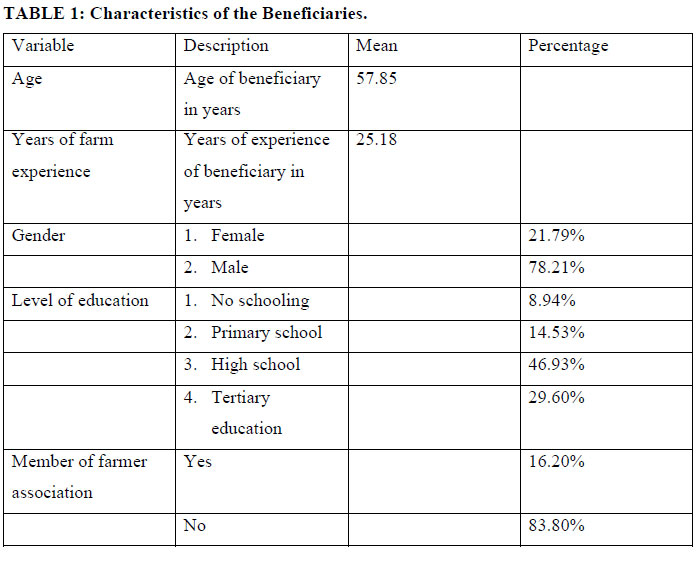
Table 1 shows that the average age of beneficiaries was 57.85 years. This indicates that the beneficiaries were elderly, with limited involvement of younger individuals who were beneficiaries of the state land allocation program. The average years of beneficiaries' experience in farming is 25.18 years. This suggests that the majority of the beneficiaries are relatively experienced in farming. These results align with Rugube, Nursuraya and Faziha (2019), who found that most smallholder farmers have experience with farms and farming activities because they were typically born into farming families. They would either join the family business or simply decide to look for jobs on the farms at a young age to support their families. Table 1 revealed that out of 179 beneficiaries interviewed, 78% were male, and 22% were females.
Most beneficiaries have completed high school (46.93%), followed by tertiary education (29.60%). A smaller percentage had a primary education (14.53%) or no schooling (8.94). This suggests a respectable level of education, but challenges can still hinder them from accessing advanced agricultural knowledge and technologies. However, the results are in contrast to those of Boza, Francisco and Eulogio (2020), who indicate that smallholder farmers generally have no educational background, which has implications for their literacy capabilities.
Results also revealed that a majority (83.80%) of beneficiaries are not members of farmer associations, while 16.20% indicated to be part of an association (Table 1). This implies limited involvement of beneficiaries in group organisations that could provide farmers support, resources and knowledge. According to Sennuga and Oyewole (2020), farmers' organisations play a crucial role in improving farmers' knowledge and skills, promoting agricultural modernisation, increasing crop yields, enhancing farmers' livelihoods, and driving the development of rural economies.
3.2. Skills that Beneficiaries' Knowledge Was Tested On
This section represents the skills the beneficiaries' knowledge was tested using the Likert scale. Most farmers were involved in single-commodity farming, mainly livestock production, and very few were involved in mixed commodity production at 90% and 10%, respectively. Given the limited infrastructure, machinery and equipment, and costly inputs for crop production, livestock production became an easy enterprise to initiate.
3.2.1. Plant Production Skills
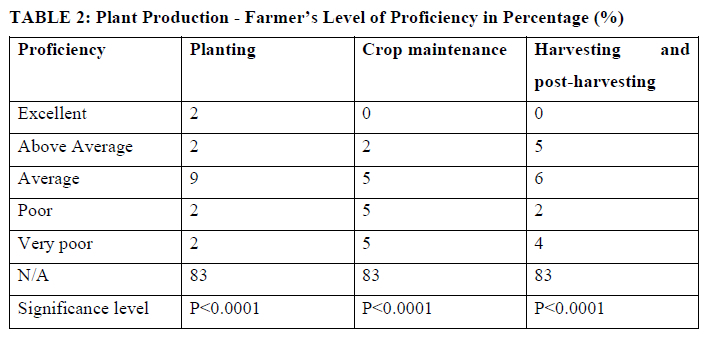
The few (37%) farmers involved in crop production exhibited an average proficiency in planting, crop maintenance, harvesting, and post-harvesting at 9%, 5%, and 6%, respectively (Table 2). Results also revealed that only 2% of the farmers rated their proficiency in planting and crop maintenance to be above average (Table 2). These results align with Fan and Rue (2020), who reported that most smallholder farmers do not have access to training, information, farm inputs and financial support to improve their yields, making production difficult and risky. The investigated plant production skills included the farmer's level of knowledge in terms of (i) kinds of soil water and climatic conditions required for growing specific crops, (ii) preparation of soil for each specific crop (mechanically, chemically), (iii) application of fertilisers and (iv) planting techniques, i.e. row width, plant spacing, trellising, etc. The crop maintenance skills included knowledge of (i) the application of efficient irrigation practices and scheduling, (ii) pruning and thinning fruit, (iii) calibrating spraying equipment, and (iv) pest and disease control measures. The highly significant p-values imply that these findings are not due to random chance and reflect real disparities in proficiency levels.
3.2.2. Animal Production Skills
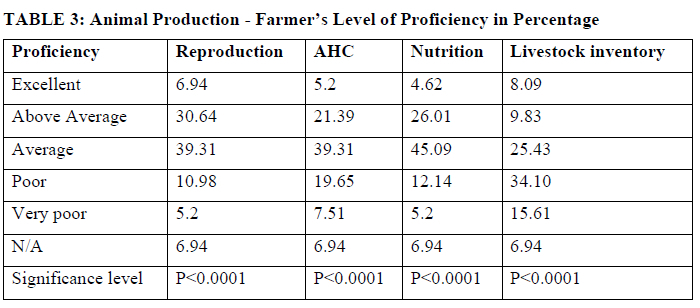
Most (90%) farmers reported livestock production as their main occupation and source of income. Most of the farmers indicated average skills in reproduction, animal health care and nutrition at 39.31%, 39.31% and 45%, respectively (Table 3). Most beneficiaries indicated a poor proficiency in livestock inventory at 34.10%. Although farmers reported livestock production as their main occupation and source of income, the analysis revealed that they still lack the minimum knowledge and ability to execute some animal production activities. Such skills included livestock inventory, application of biosecurity measures, and handling animal injuries. These results are in line with those of Ngoshe, Etter, Gomez-Vazquez and Thompson(2023), Hirwa, Mujawamariya, Shimelash and Shyaka (2024), Ayele and Leta (2021), who reported that many farmers lack essential knowledge and skills in areas such as zoonotic disease awareness, biosecurity measures, and reproductive disorder management, which adversely affects their livestock management practices.
Evaluation of the farmer's proficiency in animal reproduction was focused on the ability to (i) manage all types of animals (breeding, suckling, pregnant, weaned, and dry), (ii) select bulls, rams, and boars for breeding and (iii) perform artificial insemination. Nutrition investigated the farmer's knowledge of the ability to manage animal nutrition on the farm and the ability to determine the type and number of animals to be kept in the farm (in terms of veld and pastures). Animal health care included questions about farmers' ability to apply biosecurity measures, vaccines, correct vaccine protocols, and manage animal injuries.
3.2.3. Agricultural Business Management Skills
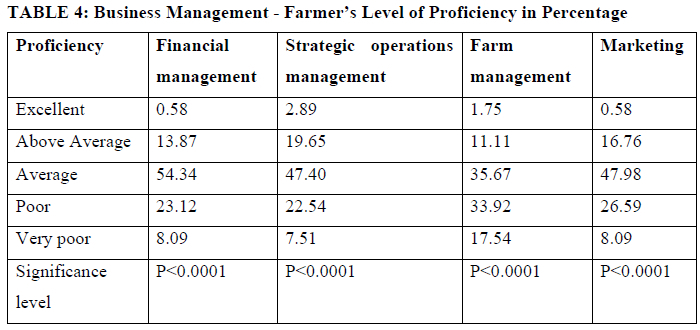
Agricultural business management uses business fundamentals to improve the agricultural industry and farm production. It applies business theories and practices to the agricultural sector to lower costs, increase profits and ensure that farm or food products are grown and distributed effectively. Most farmers indicated an average knowledge of financial management, strategic operation management, farm management and marketing skills at 54.34%, 47.40%, 35.67%, and 47.98, respectively (Table 4). However, farmers will need to be capacitated in business management skills as a large portion still falls into the poor proficiency category. The highly significant p-values suggest that these differences in proficiency levels are real and not due to random chance.
3.2.4. Information Technology
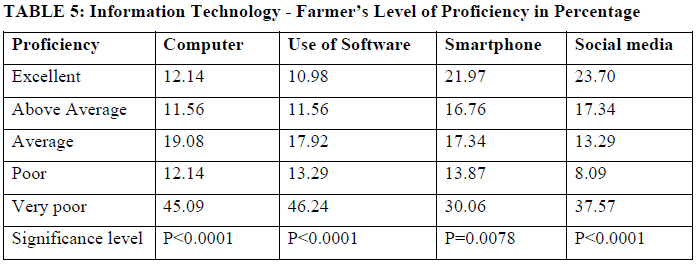
Information technology (IT) uses smart devices such as computers, smartphones, and the internet to aid in the processing, managing, and exchanging of data, information, or knowledge with a target audience (Turban, Pollard & Wood, 2018). Farmers, therefore, use ICT as a decision support system to stay updated with all recent information. This includes data about weather, agriculture, crop and livestock production techniques, and improved sustainable practices. Most beneficiaries reported a very poor ability to use information technologies such as computers, software, smartphones and social media at 45.09%, 46.24%, 30.06%, 37.57%, and 37.57%, respectively (Table 5). Even when farmers could operate computers, they reported a very poor ability to utilise software such as MS Word, MS Excel, and MS PowerPoint. There is a rising importance of self-directed learning for acquiring digital skills (Pogorelskaia & Varallyai, 2020). Therefore, farmers must be equipped with basic computer skills. This lack of digital skills hinders farmers from farming efficiently. There is a wide affirmation that education is crucial for the development of agriculture as it enhances the farming skills of the farmer and their productive capabilities (Paltasingh, 2018). Education level increases the ability of a farmer to understand, process and use the information they have obtained.
3.2.5. Behavioural Competences
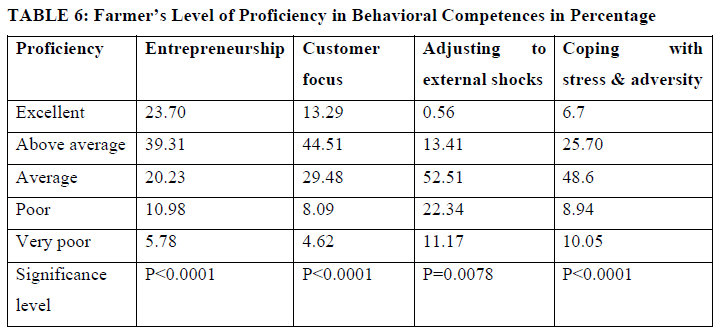
Behavioural competency refers to any behavioural attributes and personality traits a farmer might have, such as knowledge and skills, which are imperative to systematically foster professional farmers who can cope with the rapidly changing environment (Wong, 2020). Generally, farmers reported an average to above-average rating for behavioural competencies (Table 6). These competencies included (i) Customer focus, which involves the delivery of high-quality products and services that meet the needs of customers; (ii) Entrepreneurship, which is looking at the ability of the farmer in terms of being self-motivated to formulate new ideas or to adapt or use existing ideas to achieve business goals. (iii) Ability to adjust to shocks, such as natural disasters and financial shocks, and (iv) Ability to cope with stress and adversity. High proficiency level in behavioural competencies was found in entrepreneurship and customer focus, with most beneficiaries rating their proficiency as above average at 39.31% and 44.51%, respectively. Beneficiaries indicated an average ability to adjust to external shocks and cope with stress and adversity at 52.51% and 48.60%, respectively. The significance levels indicate these findings are statistically significant. The extremely low p-values imply that the variations in proficiency levels are not the result of chance.
3.3. Discriminant Analysis Results
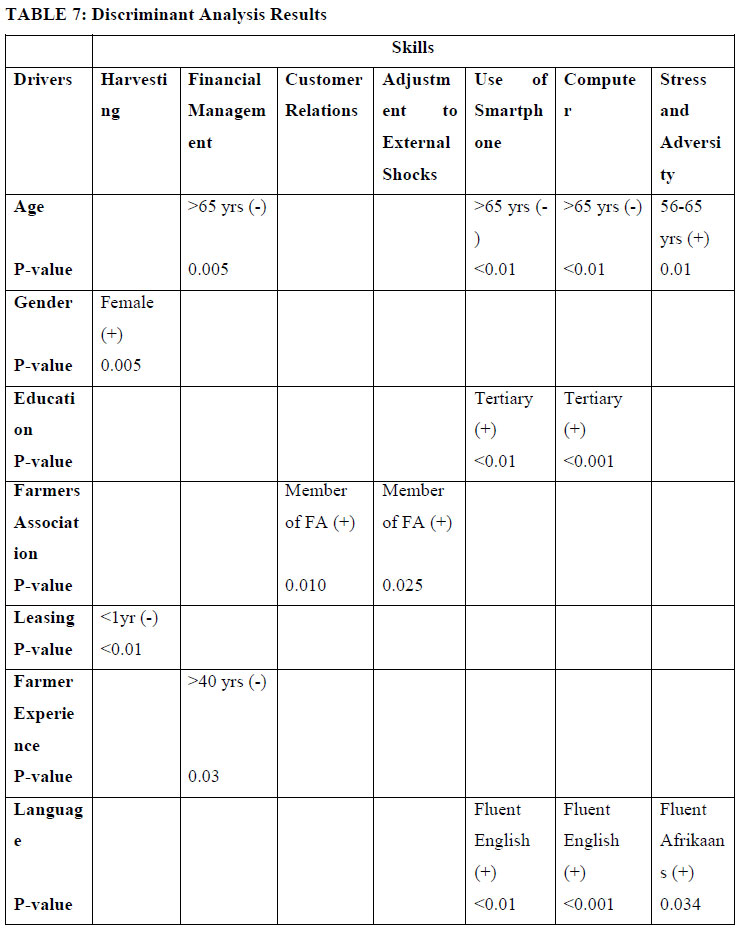
Table 7 depicts the socio-economic factors that drove the choice of skills identified by the farmers.
Harvesting included the ability to successfully harvest and handle crops correctly and post-harvest techniques. Being a female farmer had a positive impact on harvesting knowledge. Of the 35 farmers involved in crop production, females were the minority at 28.5%, while their male counterparts were the majority at 71.5%. Farmers over 65 years of age significantly influenced a farmer's knowledge of financial management. The age group was categorised into five groups. Of those groups, the category of > 65 years of age had a large (39.31%) representation of farmers, with the least (9.25%) representation in the category of less than 35 years of age. This age distribution demonstrates that older adults are involved in farming across the province. This is in line with the findings of Habiyaremye, Maziya, Chaminuka, and Mdlulwa (2017), who reported that about 71% of livestock farmers were above 50 years of age. This poses a problem as elderly farmers are mostly content with their old ways of doing things and are hesitant to accept new operations (Jansuwan & Zander, 2021).
A majority of elderly farmers indicated poor ability in terms of utilising computers and smart devices. Their tertiary education positively influenced the farmer's ability to effectively use computers, while the ability to use smartphones was positively driven by having a tertiary education and speaking English fluently. Approximately 30.64% of farmers had tertiary education, and 73.41% indicated they were fluent in English. The ability to adjust to shocks was positively driven by being a member of a farmers' association, with 16.76% of farmers being members of a farmer organisation. Being able to cope with stress was positively influenced by being between 56 and 65 and speaking Afrikaans fluently. Approximately 17.34% of farmers fell within the age group of 56-65 years of age, while 45.09% of farmers indicated to be fluent in speaking Afrikaans. During the survey, farmers indicated that they seek advice and guidance from their neighbouring Afrikaans-speaking commercial farmers when faced with adversities.
Leasing farmland for 6-10 years and being a member of the farmers' association influenced the farmers to increase their knowledge of customer relations. The age group between 56 and 65 positively influenced the farmers to be interested in learning to be an entrepreneur. Further analysis identified that knowledge of animal health care was positively driven by the ability to speak English. A majority (73.41 %) of farmers indicated they spoke English fluently. It is assumed that English enabled them to articulate themselves when they sought advice from the service providers.
3.4. Farmers Prioritised Skills Needed to Improve Their Business Operations
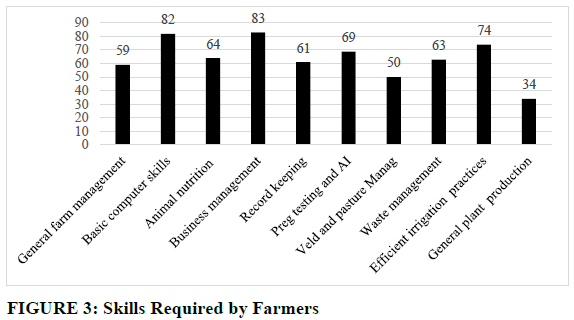
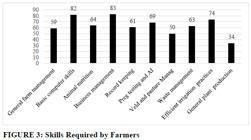
Farmers were asked to prioritise their own training needs. Figure 3 illustrates that business management (83%), computer skills (82%), efficient irrigation practices (74%), pregnancy testing and artificial insemination (69%) and animal nutrition (64%) were among the most required skills by farmers. Although farmers were found to have an average knowledge of business management, they still felt they needed to be capacitated further with skills like marketing, sourcing of markets and the ability to handle external shocks. Elderly farmers indicated that when training sessions are organised, they will send representatives who are young and able to learn, as the training will assist them in operating their farms efficiently. Although not specified by the farmers, during the survey, a need for firefighting and first aid training was identified.
3.5. Challenges Faced by Farmers
Smallholder farmers in South Africa face many challenges that limit their participation in the modern economy, subsequently affecting their productivity and rendering them vulnerable to shocks.
Production-related challenges included limited capital, market access, high transaction costs, stock theft, predatory animals, and poor crop production equipment and machinery. Infrastructure-related challenges ranged from housing for farm owners and farm workers, animal handling facilities, lack of access to clean and drinking water for animals, and electricity to bad access roads. Poor perimeter fences and grazing camps made it difficult for farmers to practise rotational grazing, and bush encroachment reduced the grazing capacity of the farms. These findings align with those reported by von Loeper, Musango, Brent and Drimie (2016) and Ngcobo and Lungwana (2023).
Frequently, smallholder farmers face feed scarcity, especially during dry seasons, producing low-quality livestock (Mmbengwa, Nengovhela & Ngqangweni, Spies, Baker, Burrow & Griffith, 2016). In NW, bush encroachment was the main contributor to decreased livestock grazing capacity. Farmers reported that due to bush encroachment, their grazing land had nutrition deficiencies, and they lacked the capital to buy supplementary feed for a balanced diet for livestock. Veld fires also contributed to decreased livestock grazing capacity, as most farms had no fire belts.
Compounding these challenges is the accessibility of the farms due to demarcation that forces other farmers to drive through other farms. These farms used to be one farm, but the state divided them into several portions to accommodate those looking for land to farm. Most of the main entrance points or gates remain locked due to a high rate of stock theft, and those who have keys to those gates do not share the keys with others. During veldt fires, it becomes extremely difficult to control them, and some resort to cutting fences. This problem also causes a rift amongst farmers. Consequently, a majority of farmers did not stay in the farms.
4. CONCLUSION AND RECOMMENDATIONS
A list of skills farmers require to operate sustainable, commercially viable farms was identified. Business management, computer skills, efficient irrigation practices, pregnancy testing, artificial insemination, and animal nutrition were the skills farmers required the most. Elderly farmers indicated that they would send representatives who are young and able to learn. Gender, tertiary education, and age fluency in speaking English and Afrikaans were socioeconomic factors that drove farmers' choice of skills. It is recommended that a comprehensive training plan for each allocated farm be developed for viable and thriving enterprises geared towards building sustainable, inclusive, resilient agri-food systems, including technical support, mentorship and coaching. Participation of youth in training and offering training in languages that farmers can speak fluently is recommended.
As none of the visited farms were involved in agro-processing, there is a need to create awareness regarding benefits associated with agro-processing, related training, and the provision of capital and infrastructure. It is recommended that the government and private sector effectively allocate funds towards the training and development of the beneficiaries of the state land allocation. This will assist the government in realising the positive desired outcomes of the land allocation for building resilient, inclusive, sustainable food systems. Furthermore, the government should provide the beneficiaries with water, animal handling facilities, and electricity. This would create an environment enabling farmers to use the acquired skills effectively on the farm and achieve the goal of optimal production. Infrastructure development (such as access roads) is critical since this negatively impacts the marketing of farm products. Quick and effective resources that can be used to control veld fires are recommended. Overall, after the implementation of the training, an assessment of the socioeconomic impact of the intervention needs to be undertaken.
REFERENCES
-
AGRICULTURAL RESEARCH COUNCIL (ARC)., 2020. Annual Report 2020-2021. Available from: https://www.arc.agric.za/Documents/Annual%20Reports/AR2021-low%20res-OCT%202021.pdf
» https://www.arc.agric.za/Documents/Annual%20Reports/AR2021-low%20res-OCT%202021.pdf -
AGRICULTURAL RESEARCH COUNCIL (ARC)., 2019. A scientific analysis of the Pro-Active Land Acquisition Strategy (PLAS). Availble from: https://www.arc.agric.za/Documents/Agrimetrics/National%20PLAS%20Report%20-%20August%202019.pdf.
» https://www.arc.agric.za/Documents/Agrimetrics/National%20PLAS%20Report%20-%20August%202019.pdf - ALINOVI, L., MANE, E. & ROMANO, D., 2010. Measuring household resilience to food security: application to palestinian households. In R. Benedetti, M. Bee, G. Espa & F. Piersimoni (eds.), Agricultural survey methods. John Wiley & Sons, pp. 341-368.
- AYELE, B. & LETA, S., 2021. Knowledge and preventive practices of livestock farmers on infectious causes of reproductive disorders in dairy cows in the Kembata Tambaro zone, southern Ethiopia. Animal Diseases., 1(13): 1-8.
- BABU, S.C. & BLOM, S., 2014. Capacity Development For Resilient Food Systems. Building Resilience for Food and Nutrition Security.
- BATTERTON, K.A. & HALE, K.N., 2017. The Likert scale what it is and how to use it. Mil. Oper. Res. Soc., 50(2): 32-39.
-
BOZA, S., FRANCISCO, T. & EULOGIO, M., 2020. Characteristics and attitudes of smallscale vegetable farmers in Chile. Cienc. Rural., 50(10): https://doi.org/10.1590/0103-8478cr20191025.
» https://doi.org/10.1590/0103-8478cr20191025 - CLOETE, P.C., 2010. Economic growth and development through agriculture: The case of the North West Province of South Africa. Doctoral thesis, University of the Free State.
- FAN, S. & RUE, C., 2020. The role of smallholder farms in a changing world. In S.G. Paloma, L. Riesgo & K. Louhichi (eds.), The role of smallholder farms in food and nutrition security. Springer Nature, pp.13-28.
-
FOOD AND AGRICULTURE ORGANIZATION OF THE UNITED NATIONS (FAO)., 2021. The State of Food and Agriculture 2021: Making agri-food systems more resilient to shocks and stresses. Available from: https://www.fao.org/policy-support/tools-and-publications/resources-details/en/c/1457191/
» https://www.fao.org/policy-support/tools-and-publications/resources-details/en/c/1457191/ - FREEMAN, S., 2017. An investigation of soft skill development of California Agricultural Education students participating in an FFA career development event. Doctoral thesis, Texas Tech University.
- GRIGORIEVA, E., LIVENETS, A. & STELMAKH, E., 2023. Adaptation of agriculture to climate change: A scoping review. Climate., 11(10): 202.
-
HABIYAREMYE, A., MAZIYA, M., CHAMINUKA, P. & MDLULWA, Z., 2017. Smallholder livestock farmers' Knowledge, Attitudes, Practices and Perceptions towards vaccinations: The case of five provinces in South Africa, South Africa. Available from: https://idl-bnc-idrc.dspacedirect.org/bitstreams/d658b108-cc76-457d-8264-7cd5053f340a/download
» https://idl-bnc-idrc.dspacedirect.org/bitstreams/d658b108-cc76-457d-8264-7cd5053f340a/download - HIRWA, E.M., MUJAWAMARIYA, G., SHIMELASH, N. & SHYAKA, A., 2024. Evaluation of cattle farmers' knowledge, attitudes, and practices regarding antimicrobial use and antimicrobial resistance in Rwanda. Plos One., 19(4): p.e0300742.
- JANSUWAN, P. & ZANDER, K.K., 2021. What to do with the farmland? Coping with ageing in rural Thailand. J. Rural Stud., 81: 37-46.
- JOSHI, A., KALE, S., CHANDEL, S. & PAL, D.K., 2015. Likert scale: Explored and explained. British J. Appl. Sci. Tech., 7(4): 396-403.
- MALLAPPA, H. & BABU, S., 2021. Building a resilient food system: Challenges and a way forward. In V.K.H. Mallappa & M. Shirur (eds.), Climate Change and Resilient Food Systems: Issues, Challenges, and Way Forward. Springer Nature, pp. 1-35.
-
MMBENGWA, V., NENGOVHELA, N., NGQANGWENI, S., SPIES, D., BAKER, D., BURROW, H. & GRIFFITH, G., 2016. Developing new value chains for small-scale and emerging cattle farmers in South Africa. Available from: https://www.namc.co.za/wp-content/uploads/2018/10/Developing-new-value-chains-for-smallholder-farmers.pdf
» https://www.namc.co.za/wp-content/uploads/2018/10/Developing-new-value-chains-for-smallholder-farmers.pdf - MOGOGANA, B.P., OLORUNFEMI, O.D. & OLADELE, O.I., 2018. Knowledge and adoption of water use efficiency techniques among women irrigators: evidence from South Africa. J. Agric. Environ. Int. Dev., 112(2): 271-296.
- MWANGI, M. & KARIUKI, S., 2015. Factors determining adoption of new agricultural technology by smallholder farmers in developing countries. J. Econ. Sustain. Develop., 6(5): 208-216.
-
NGCOBO, N. & LUNGWANA, M., 2023. Helping women to become part of the livestock value chains. Farmers Weekly. Available from: https://www.farmersweekly.co.za/agri-technology/farming-for-tomorrow/unlocking-opportunities-for-women-in-sas-livestock-value-chains/.
» https://www.farmersweekly.co.za/agri-technology/farming-for-tomorrow/unlocking-opportunities-for-women-in-sas-livestock-value-chains/ - NGOSHE, Y.B., ETTER, E., GOMEZ-VAZQUEZ, J.P. & THOMPSON, P.N., 2022. Knowledge, Attitudes, and Practices of Communal Livestock Farmers regarding Animal Health and Zoonoses in Far Northern KwaZulu-Natal, South Africa. Int J Environ Res Public Health., 20(1): 511.
- OGBOGO, S., 2019. Discriminant analysis: An analysis of its predictship function. J. Educ. Pract., 10(5): 50-57.
- PALTASINGH, K.R. & GOYARI, P., 2018. Impact of farmer education on farm productivity under varying technologies: Case of paddy growers in India. Agric. Food Econ., 6: 3056.
- POGORELSKAIA, I. & VARALLYAI, L., 2020. Agriculture 4.0 and the role of education. J. Agric. Infor., 1(1): 45-51.
- RUGUBE, L. M., NURSURAYA, M.A. & NURUL FAZIHA, I., 2019. Factors affecting profitability of smallholder vegetable farmers in the Shiselweni Region, Kingdom of Eswatini (Swaziland). Sustain. Agric. Res., 8(1): 104.
- SENNUGA, S.O. & OYEWOLE, S.O., 2020. Exploring the effectiveness of agricultural technologies training among smallholder farmers in Sub-Saharan African communities. Eur. J. Train. Dev. Stud, 7(4): 1-15.
-
STATISTICS SOUTH AFRICA (STATS SA)., 2022. South African Population. Available from: https://census.statssa.gov.za/#/.
» https://census.statssa.gov.za/#/ - SULLIVAN, G.M. & ARTINO, A.R., 2013. Analyzing and interpreting data from Likert-type scales. J Grad Med Educ., 5(4): 541-542.
- TAMSAN, H. & YUSRIADI, Y., 2022. Quality of agricultural extension on productivity of farmers: Human capital perspective. Uncertain Supply Chain Manag., 10(2): 625-636.
- TURBAN, E., POLLARD, C. & WOOD, G., 2018. Information technology for management: On-demand strategies for performance, growth and sustainability. John Wiley & Sons.
-
UNITED NATIONS., 2017. World population projected to reach 9.8 billion in 2050, and 11.2 billion in 2100. Available from: https://www.un.org/en/desa/world-population-projected-reach-98-billion-2050-and-112-billion2100#:~:text=The%20current%20world%20population%20of,Nations%20report%20being%20launched%20today.
» https://www.un.org/en/desa/world-population-projected-reach-98-billion-2050-and-112-billion2100#:~:text=The%20current%20world%20population%20of,Nations%20report%20being%20launched%20today - VAN DER WALDT, G., 2020. Conducting skills audits in local government. Administratio Publica., 28(2): 42-60.
- VON LOEPER, W., MUSANGO, J., BRENT, A. & DRIMIE, S., 2016. Analysing challenges facing smallholder farmers and conservation agriculture in South Africa: A system dynamics approach. S. Afr. J. Econ. Manag. Sci., 19(5): 747-773.
- WONG, S.C., 2020. Competency definitions, development and assessment: A brief review. Int. J. Acad. Res. Progress. Educ. Dev., 9(3): 95-114.
- ZIEGLER, A., 2005. A comparison between multinomial logit and probit models. In R. Scarpa & A. Alberini (eds.), Applications of simulation methods in environmental and resource economics. Dordrecht: Springer, pp. 97-116,