Farmers Perceptions of the Role of Social Capital on the Performance of Agricultural Cooperatives in Ekurhuleni Metropolitan, Gauteng Province, South Africa
Abstract
This study examines the factors influencing the development of cooperatives in Ekurhuleni Municipality, South Africa, emphasising the importance of cooperatives in local economic development and community empowerment. The study highlights the critical role of social capital (networks, trust, and cooperation among members) and human capital (skills, knowledge, and leadership capacity) in enhancing the sustainability of cooperative projects. A sample of 65 individuals from agricultural cooperatives across four regions of Ekurhuleni (Thokoza, Vosloorus, Tembisa, and Katlehong) was randomly selected for data collection. The findings highlight several challenges hindering the sustainability of agricultural cooperatives, including inadequate agricultural knowledge, limited market access, insufficient equipment, poor cooperation, and a lack of managerial skills. To address these issues, the study proposes recommendations to foster an environment conducive to cooperative growth. It suggests a comprehensive needs assessment involving local communities, stakeholders, and cooperative members to tailor solutions to the specific challenges and opportunities in the local context, thereby ensuring the sustainable development of agricultural cooperatives in Ekurhuleni Municipality.
Cooperatives; Ekurhuleni Municipality; Eradication; Growth
1. INTRODUCTION
Agricultural cooperatives are recognised as business organisations in both developed and developing nations, competing in markets alongside other large-scale entities. They offer small-scale farmers a combined and opposing influence in the marketplace (Abate, 2018). Agricultural cooperatives are of significant importance in numerous national economies, contributing to employment opportunities in Africa and around the world. These cooperatives have a distinct advantage in job creation compared to other business models. This advantage stems from their inherent labour-intensive nature and cost-effectiveness, facilitated by the commitment and active participation of their members, thereby ensuring the sustainability of job creation (Brixiová, Kangoye & Yogo, 2020). As a result, the dedication and involvement of cooperative members foster agricultural cooperatives as an effective instrument for enhancing agricultural production by developing new farming skills and improving access to markets (Mwadzingeni et al., 2020). They provide small-scale farmers with collective, countervailing power in the marketplace (Abate, 2018).
The objectives of this study are to assess farmers' perceptions of the role of social capital in influencing cooperative performance, to examine the influence of human capital on the performance of agricultural cooperatives, and to investigate key operational challenges affecting cooperative performance in Ekurhuleni Metropolitan Municipality.
Specifically, the study aims to identify the key barriers faced by cooperatives, such as limited market access, inadequate agricultural knowledge, insufficient equipment, and weak managerial skills. It also seeks to assess the role of member networks, trust, and leadership capacity in enhancing cooperative effectiveness. Ultimately, the study aims to provide evidence-based recommendations to support the development of strategies and interventions that strengthen cooperatives, improve farmers' productivity and income, and contribute to sustainable local economic development.
The purpose of this study is to examine farmers' perceptions of the role of social capital in influencing the performance of agricultural cooperatives in Ekurhuleni Metropolitan Municipality, South Africa. The study focuses on examining how social capital (networks, trust, and cooperation among members), human capital (skills, knowledge, and leadership capacity), and operational challenges (such as limited market access, inadequate agricultural knowledge, insufficient equipment, and weak managerial skills) influence the performance of agricultural cooperatives in Ekurhuleni Metropolitan Municipality, South Africa. The study aims to identify key barriers and opportunities to provide evidence-based recommendations that strengthen cooperative structures, improve farmers' productivity and income, and contribute to sustainable local economic development.
In the conceptual framework, the dependent variable, cooperative performance, was operationalised through specific indicators, as were the independent variables. These indicators include the cooperative's productivity, members' incomes, the profitability of cooperative activities, and access to markets for produce. By clearly specifying these performance indicators, the study establishes a measurable link between independent variables such as social capital (networks, trust, and cooperation), human capital (skills, knowledge, and leadership capacity), and operational challenges (market access, equipment availability, and managerial capacity) and the outcomes of cooperative performance, allowing for a structured assessment of how these factors influence the effectiveness and sustainability of agricultural cooperatives in Ekurhuleni Metropolitan Municipality.
A significant research gap exists in the literature on the growth dynamics of agricultural cooperatives within specific regional contexts, particularly in areas such as the Ekurhuleni Metropolitan in Gauteng Province, South Africa. However, understanding these factors can be crucial for promoting sustainable agricultural practices and enhancing local economic development.
A key benefit for farmers from this study is that it provides strategies to improve their market access through strengthened cooperative structures, enabling them to sell their produce more effectively, secure better prices, and increase their income.
The current state of the South African economy is unsustainable, as evidenced by the decline in real GDP per capita (Makrelov et al., 2023). Productivity growth has been sluggish and appears to be decelerating further. Additionally, the unemployment rate has recently surged to a record high of 34.4% (National Treasury SA, 2021). This adversely affects the functioning of agricultural cooperatives. Sluggish economic growth leads to a decline in revenue and reduced operational effectiveness and efficiency. Slow economic growth threatens the survival of agricultural cooperatives, which are meant to contribute to job creation and poverty alleviation. Agricultural cooperatives enhance not only production but also income for emerging and small-scale farmers in developing and developed nations. Xaba (2018) confirms that agricultural cooperatives are effective and profitable entities capable of withstanding economic shocks and delivering economic benefits to their members, leading to higher incomes.
Agricultural cooperatives often face challenges in accessing resources, navigating markets, and improving rural livelihoods. To address these issues, policy frameworks such as the Cooperative Act of 2005 have been implemented. This Act provides institutional support to identify opportunities and barriers affecting cooperative development, thereby improving access to essential assets such as capital (Food and Agriculture Organisation, 2021). Food insecurity trends worldwide are delaying progress toward meeting the Sustainable Development Goal to end hunger by 2030, as reflected in legal structures in developing nations. Ibnu, Offermans, and Glasbergen (2018) assert that public support measures should be implemented to reinforce the policy and the legal framework supporting struggling agricultural cooperatives. The outcomes suggest that the efficacy of these measures is linked to capacity building, particularly in human capital, which is necessary for enhanced financial support and the promotion of farmer organisations (Ribašauskienė et al., 2019).
Agriculture within the Ekurhuleni Municipality is a sector that is not fully recognised for its potential. There is a need to develop solutions that strengthen the role of smallholder farmers in becoming economically active entrepreneurs. This shift in perspective could potentially contribute to poverty reduction. Like other municipalities, the city is falling behind in strategically repositioning agriculture as a sector that offers viable economic and growth opportunities, rather than being viewed solely as a subsistence sector. The municipality's economic and development priorities lean more towards other sectors such as manufacturing, construction, or services. This prioritisation can lead to limited attention and investment in agriculture, resulting in its undervaluation. Addressing these issues and highlighting the importance of agriculture for food security, rural development, and economic growth can help uplift and value the agricultural sector in the Ekurhuleni Municipality.
2. METHODOLOGY
2.1. Study Area
The Ekurhuleni Metropolitan Municipality serves as the industrial hub of Gauteng Province, and Gauteng, in turn, is the economic core of South Africa, contributing approximately one-third of the national gross domestic product (Easy Data, 2021). The Ekurhuleni Metropolitan Municipality plays a significant role both within the province and nationally, accounting for approximately 23.7% of the provincial gross value added (GVA) and around 8.2% of the national GVA (Easy Data, 2021). Key cities within the municipality include Tembisa, Boksburg, Germiston, and Benoni. Renowned for its bustling transport system, thriving industrial sectors, and diverse recreational and cultural attractions, the municipality predominantly contributes to the provincial and national economy in the secondary sector, followed by the tertiary and primary sectors. The climate in the Ekurhuleni Municipality is classified as humid subtropical, characterised by hot summers and mild winters. Average daily temperatures typically hover around a mild 26°C, with some days reaching up to 30°C (SAWS, 2018). Evenings tend to be cooler, averaging a pleasant 16°C. Johannesburg, within Gauteng, receives an annual average rainfall exceeding 800mm (SAWS, 2018). Humidity levels, particularly in the morning and evening during the summer months, can be relatively high.
2.2. Data Collection
The interview was conducted based on the developed questionnaires. This was done to obtain firsthand information directly from the cooperatives. The questionnaire was comprised of a series of items addressing pertinent research issues, to which respondents were expected to provide informed responses. For data collection, the questionnaire was open- and closed-ended. The respondents are members of agricultural cooperatives. The questionnaire was composed in English but translated into IsiZulu, the local language of the area.
The research was conducted directly with fifteen selected groups of cooperatives, one from each area. A proportionate stratified random sampling method was used to gather data from the cooperatives. This method involves dividing the population into distinct strata, in this case, the cooperative groups and then randomly selecting participants from each stratum in proportion to its size.
The total sample size was 65 individuals. To ensure fair representation across the fifteen cooperative groups, each cooperative was treated as a separate stratum. Since the cooperatives varied in membership size, a proportional number of participants was randomly selected from each group based on its total membership. This ensured that both larger and smaller cooperatives were adequately represented in the sample.
Within each cooperative, participants were randomly selected from an updated membership list to minimise selection bias. This stratified approach accounted for potential heterogeneity among the cooperatives and enhanced the representativeness and validity of the study's findings.
This technique was used because it is quite easy to implement, cheap to use, and it requires the least knowledge of the population to be sampled. It also allows for large sampling, as larger samples are more accurate in representing the population, whereas smaller samples yield less accurate results and are less representative of the population. The idea behind simple random sampling is that it allows the researcher to draw inferences about the entire population from data collected from a representative subset. This made it the most appropriate method for achieving balanced, accurate, and inclusive data collection across diverse cooperative settings.
3. RESULTS AND DISCUSSION
3.1. Demographic Characteristics of Respondents
3.1.1. Gender of Respondents
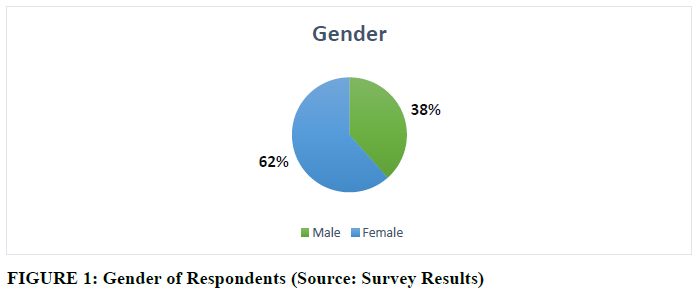
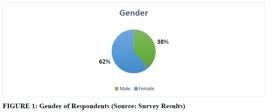
A significant proportion (n=40; 62%) of the sampled respondents were female, while the remainder were male (n=25; 38%) (Figure 1). Simelane (2011) found a predominance of women in cooperatives, suggesting that the cooperative's structure and character are shaped by women's influence. According to Chebet (2023), women in agricultural cooperatives have emerged as trailblazers, innovators, and champions for change. Their dedicated efforts have not only enhanced the quality of life for their families and communities but have also paved the way for more inclusive and equitable agricultural practices.
3.1.2. Age of Respondents
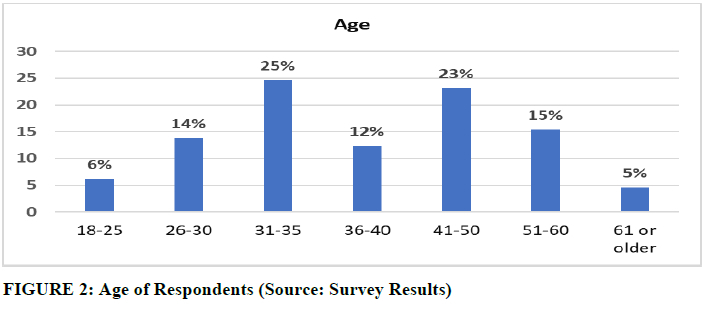
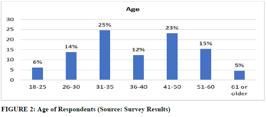
Figure 2 indicates the age of respondents. Of the 65 participants (n=16), 25% were aged 18 to 35 years and can be classified as "youth". The remainder of the respondents were in the following age categories: 36-40 years (n=8), 12%; 41-50 years (n=15), 23%; 51-60 years (n=10), 15%; and above 60 years old (n=3), 5%. The literature emphasises that effectively involving youth in agriculture is crucial to addressing youth unemployment and ensuring the sector's sustainability. This is particularly important as the farming community ages, food demand increases, and technology advances (Kumeh & Omulo, 2019). Despite these potential benefits, youth engagement in the sector remains hindered, resulting in low participation rates (Geza et al., 2021). Limited access to livelihood assets is a significant constraint preventing youth from actively participating in farming and related agricultural activities. The level of cooperative governance in the CoE surpasses that of Gauteng, indicating greater dependence on the city for socio-economic support. The youthful demographic poses challenges related to poverty, unemployment, and access to health.
3.1.3. Racial Group of Respondents
The majority (n=63), 97% of the sampled cooperatives are a community of black people, with (n=1) 2% of the Indian community. One respondent participant did not answer the question. Okem (2023) posits that in South Africa, cooperatives have a historical presence dating back to the 1800s, with early examples such as stokvels, which were predominantly informal cooperatives formed by individuals of black descent. In contemporary times, cooperative operations involve individuals pooling money regularly, whether monthly or quarterly, to be utilised for various social purposes, such as funerals, birthday celebrations, weddings, and family gatherings.
3.1.4. Education Level of Respondents
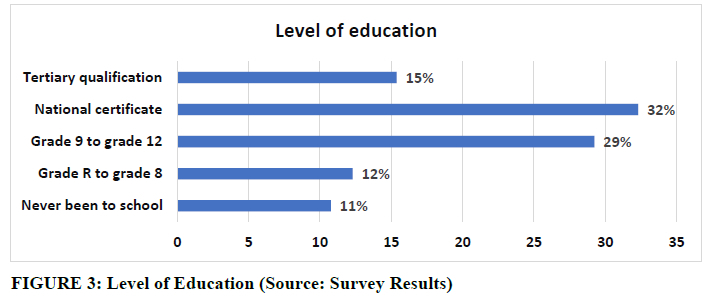
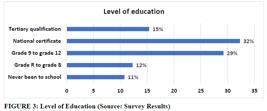
The survey results show that 32% (n=21) of respondents have Matric, while 11% (n=7) have never attended school (Figure 3). The remaining respondents have the following educational qualifications: Grade 9 to Grade 12 (n=19), 29%; tertiary education (n=10), 15%; and Grade R to Grade 8 (n=8), 12%. South Africa, including Ekurhuleni Municipality, has been working to improve access to and quality of education, but challenges such as economic disparities, resource allocation, and infrastructure limitations persist. The prevalence of poverty and the unemployment rate in Ekurhuleni have escalated significantly. Furthermore, the region is characterised by low levels of education, resulting in a skills shortage. The issue of a low level of education leading to a shortage of skills in a region can have profound implications for the functioning and success of cooperatives and other local organisations. When a significant portion of the population lacks the necessary skills and education, it can exacerbate members' reluctance to take on leadership roles within cooperative bodies.
3.1.5. Years of Farming Practice of Respondents
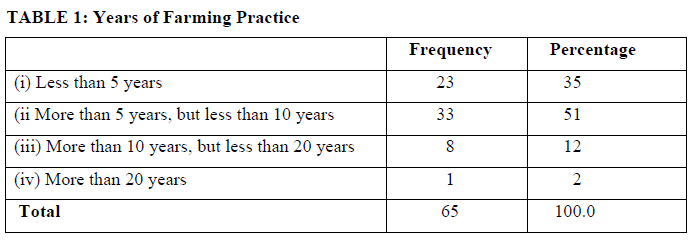
The number of years the agricultural cooperatives have been involved in farming will determine the skills farmers acquire, even if farmers are illiterate. Table 1 indicates the number of years each respondent has been involved in farming. Out of 65 farmers who participated in the survey (n=33), 51% have been involved in farming for more than 5 years but less than 10 years, and 2% have been involved in farming for more than 20 years (n=1). This means these farmers may have adequate farming skills. Cooperatives over the age of 50 might resist change. Bouslama and Bouteiller (2019) state that in agriculture, more experience is more valuable than more education. The resistance to change among older cooperatives, particularly in the agricultural sector, is a complex issue, however. While experience is indeed invaluable in agriculture, providing a deep understanding of local conditions, crop management, and traditional practices, the interplay between experience and education is crucial for adapting to the changing landscape of modern farming.
3.2. Information About Cooperatives
3.2.1. Area of Respondents
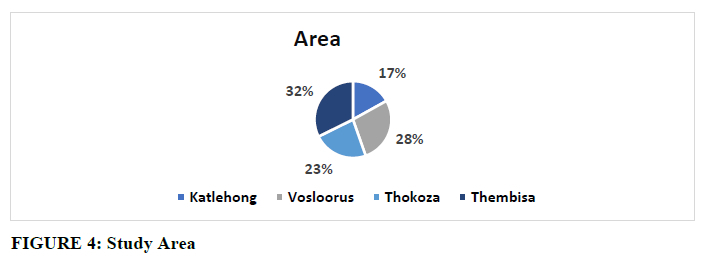
According to the data, Tembisa has the highest percentage of respondents who participated in the study, at 32 (n=21), compared to other areas such as Vosloorus (n=18, 28%), Thokoza (n=15, 23%), and Katlehong (n=11, 17%), which is the lowest (Figure 4). This shows that community-driven initiatives and support for agriculture may be stronger in Tembisa, leading to a higher number of agriculture cooperative businesses. Tembisa has more available agricultural land than other areas in Ekurhuleni, so it could attract individuals and communities interested in agriculture. According to one of the cooperative members in Tembisa, there is strong support from government officials, making it more viable than in other areas of the Ekurhuleni Municipality. Agriculture is seen as a viable economic opportunity in Tembisa, motivating people to engage in cooperative farming ventures.

3.3. Social Capital on the Sustainability of the Projects
3.3.1. Working with Government Departments Improves Production and Market Access
Government departments are instrumental in formulating and enforcing regulations about agriculture. Agricultural cooperative institutions aim to provide smallholder farmers with an increased share of the value chain for their products. These institutions are designed to empower farmers to negotiate more effectively with buyers and offer improved access to networks and new skills through capacity development. These cooperatives have the potential to grow not only themselves but also the communities where they are located (Dlamini & Huang, 2019). Collaborating ensures that farmers or cooperatives stay compliant with standards and regulations, fostering a more favourable business environment. The survey results indicate that 80% of respondents (n=52) strongly agree that working with government departments improves production and market access, while 8% (n=5) strongly disagree. However, (n=4) 6% just agree. The remainder (n=3), 5%, are neutral, while (n=1), 2%, disagree.
The above response emphasises the need for local primary agricultural cooperatives to access commercial markets to become sustainable. Various role players, such as the private sector, agricultural forums, and businesses, are critical stakeholders that primary agricultural cooperatives must be linked with to access commercial markets. It is recommended that the government create networking platforms through which primary agricultural cooperatives can actively engage with prospective commercial market entities.
3.3.2. Working with Private Companies Improves Production and Access to Markets
The survey results indicate that 80% of respondents (n=52) strongly agree that working with private companies improves production and market access, while 6% (n=4) strongly disagree. However, (n=5) 8% just agree. The remainder (n=2), 3%, are neutral, while (n=2), 3%, disagree. Numerous studies have been conducted to understand the underlying obstacles hindering the performance of entrepreneurs in South Africa's townships (Nambiar et al., 2019). For example, findings from the IFC (2019) indicate that small firms have difficulty accessing credit compared with established firms, mainly because they are not deeply integrated into value chains. The IFC (2019) suggests that both the government and financial institutions must play a crucial role in fostering entrepreneurship. Additionally, it is imperative for agriculture extension officers to collaborate with other stakeholders, including the private sector, to address challenges faced by small firms, such as limited access to financial resources and markets, thereby facilitating their growth and creating employment opportunities.
3.3.3. Working as Farmer Groups/Cooperatives Improves Production and Access to Markets
The survey indicates that 75% of the respondents (n=49) strongly agree that working as farmer groups/cooperatives improves production and access to markets, while 3% (n=2) strongly disagree. However, (n=9) 14% just agree. The remainder (n=4), 6%, are neutral, while (n=1), 2%, disagree. An increasing body of research has assessed the impacts of farmers' organisations, emphasising their diverse roles in promoting sustainable development. Being a member of various types of farmers' organisations contributes to the enhancement of farm productivity and food security (Lin et al., 2022), strengthens member farmers' bargaining power (Mwambi et al., 2021), improves farm management skills (Addai et al., 2022) raises household welfare and livelihoods (Bachke, 2019; Seneerattanaprayul & Gan, 2021), enhances product quality and value chain integration (Francesconi & Wouterse, 2015; Tray et al., 2021), boosts rural income growth (Zou & Wang, 2022), as well as reduces poverty and cropland abandonment (Maertens, 2015., Ma & Zhu, 2020). The Department of Agriculture, Forestry and Fisheries should focus on capacity-building initiatives to improve its members' skills in modern farming techniques, sustainable practices, and business management. Workshops, training programmes, and access to expert advice can help farmers adopt innovative practices that increase efficiency and productivity.
3.3.4. Group Membership Eases Access to Farm Labour and Improves Production and Marketing
The results of the survey indicate that 75% (n=49) of the respondents strongly agree that group membership eases access to farm labour and improves production and marketing, while 5% (n=3) strongly disagree. However, (n=8) 12% just agree. The remainder (n=2), 3%, are neutral, while (n=3), 5%, disagree. Cooperative membership tends to increase crop yields, household income, and household assets, and to reduce transaction costs in accessing input and output markets (Ma & Abdulai, 2016; Mojo et al., 2017). This is so because, in most cases, cooperatives are associated with collective action and social capital and are therefore considered better placed to reduce poverty than other types of institutional innovations. A collective ownership structure encourages members to actively participate in decision-making, ensuring that the cooperative's activities align with members' needs and interests.
3.3.5. Access Farm Implements When Belonging to a Farmer Group, a Company, or the Government
The Ministry of Agriculture offers grants to farmer groups for tools and machinery, aiming to expedite agricultural mechanisation and serve as capital for the business unit's transformation into a farmer-owned enterprise, ensuring independence and heightened competitiveness. Mechanisation is advantageous in addressing labour shortages, elevating agricultural productivity, and mitigating the adverse impacts of climate change. Harvesting operations may become more efficient in terms of labour, cost, and time, leading to reduced yield losses with mechanisation. However, it is important to note that while mechanisation enhances productivity by substituting labour, it can adversely affect farmers without access to capital equipment. To mitigate potential negative impacts, agricultural mechanisation should consider economic, agroclimatic, and social factors (Daum & Birner, 2020). The results of the survey indicate that 66% (n=43) of the respondents strongly agree that they can easily access farm implements when they belong to a farmer group, company, or the government, while 6% (n=4) strongly disagree. However, (n=7) 11% just agree. The remainder (n=2) 3% are neutral, while (n=3) 5% disagree, and the other (n=4) 6% strongly disagree. The distribution of responses indicates that while a majority find affiliation beneficial for accessing farm implements, a small but notable portion of respondents do not share this view. This divergence could be due to varying personal experiences, differences in the efficiency or support levels of the groups or programmes in question, or other contextual factors influencing access.
3.3.6. Access to Information from Fellow Farmers is Vital in Production and Output Marketing
The results of the survey indicate that 72% (n=47) of respondents strongly agree that access to information from fellow farmers is vital for production and marketing of output, while 5% (n=3) strongly disagree. However, (n=4) 6% just agree. The remainder (n=4) 6% are neutral, while (n=1) 2% disagree, and the other (n=3) 5% strongly disagree. Disseminating timely and accurate information to farmers is a challenging yet crucial task, especially in promoting commercialised agriculture and enhancing productivity and income for rural farmers (Nyarko & Kozári, 2021). Access to up-to-date, useful agricultural information can ultimately improve farmers' quality of life. Zhang, Wang and Duan (2016) indicate that providing agricultural information on enhanced farming practices can reduce costs and motivate improvements in agricultural production and productivity. Farmers express a significant need for agricultural information, especially on new and more efficient farming practices and technologies, current pests and diseases, and market prices.
3.3.7. The Support of Fellow Farmers in Times of Hardships
When cooperatives/fellow farmers support each other in times of hardship, it typically means these organisations collaborate to provide mutual assistance during challenging circumstances. If cooperatives do not support one another in times of hardship, it suggests a lack of collaboration, solidarity, or mutual assistance within the cooperative community (Cheney et al., 2023). Several implications may arise from a lack of support among cooperatives during challenging circumstances. The survey shows that 12% (n=8) of the respondents strongly agree that they support each other through hardships, while 8% (n=5) strongly disagree. However, (n=15) 23% just agree. The remainder (n=23), 35%, are neutral, while (n=14), 22%, disagree, and the other (n=5), 8%, strongly disagree. This suggests there might be underlying issues affecting community cohesion and mutual support. Therefore, it is important to maintain regular communication with community members to ensure sustained involvement and support.
3.3.8. Group Membership Eases Access and Adoption of New Technologies
Numerous limitations and obstacles have impeded the adoption of digital technologies among smallholder farmers in South Africa. The results of the survey indicate that 77% (n=49) of the respondents strongly agree that group membership eases access to and adoption of new technologies, while 3% (n=2) strongly disagree. However, (n=8) 12% just agree. The remainder (n=3) 5% are neutral, while (n=2) 3% disagree, and the other (n=2) 3% strongly disagree. The survey results strongly suggest that group membership is perceived as a key factor in facilitating the adoption of new technologies. The data underlines the importance of social structures in driving change and innovation. Efforts to enhance group cohesion and address minority concerns could further amplify the positive outcomes associated with group dynamics in technology adoption. The literature indicates that smallholder farmers in South Africa possess knowledge of digital technologies (Dlamini & Ocholla, 2018; Jere & Maharaj, 2016). Smallholder farmers in South Africa utilise various digital technologies, with the most prevalent being mobile phones, TV, and radio. Additionally, more advanced technologies such as GIS, Radio Frequency Identification (RFID), Precision Agriculture, and GPS are also employed (Makaula, 2021; Zantsi & Nkunjana, 2021).
3.3.9. Contribution of Money to Achieve a Shared Objective
Participation in cooperatives often encourages participation in other community projects and in state and local government (Stelzer & Heins, 2021). The results of the survey indicate that 72% (n=47) of respondents strongly agree that they can contribute money toward a common community goal, while 2% (n=1) strongly disagree. However, (n=6) 9% just agree. The remainder (n=4), 6%, are neutral, while (n=5), 8%, disagree. Cooperatives frequently contribute funds to community events such as fairs, health centres and fundraising activities. The collaborative work within cooperatives enhances members' ability to unite and address community issues collectively. Moreover, leaders nurtured within cooperatives often assume leadership roles in other community organisations.
3.3.10. Culture Rules and Norms are Vital in Group Formation, Farm Production and Marketing
Cultural norms and values are deeply embedded in the fabric of agricultural communities (Koohafkan & Price, 2020). Recognising, respecting, and leveraging these cultural elements are essential for the successful formation and operation of agricultural groups, as well as for optimising farm production and marketing strategies within diverse cultural contexts. According to the survey (n=51), 78% of the respondents strongly agree that culture rules and norms are vital in group formation, farm production, and marketing, while 3% (n=5) strongly disagree. However, (n=5) 8% just agree. The remainder (n=4), 6%, were neutral, while (n=3), 5%, disagreed, and the other (n=2), 3%, strongly disagreed. These results underscore the crucial role cultural norms play in shaping agricultural and marketing practices, revealing the diverse perspectives within the community. This insight is instrumental in developing future initiatives and strategies. By understanding and leveraging these cultural dynamics, we can tailor our agricultural projects to better align with community values and practices, thereby maximising their effectiveness and impact.
3.4. Human Capital on the Sustainability of Projects
3.4.1. Trying a New Technique Improves the Productivity of the Projects
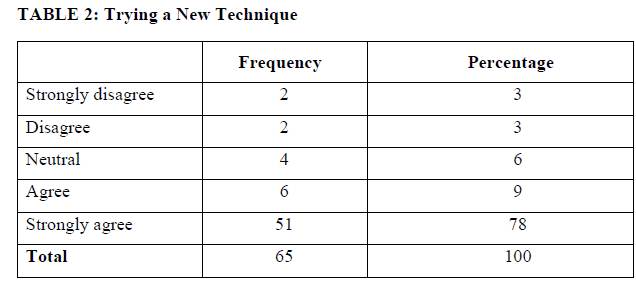
New techniques often bring innovation and efficiency gains. They may involve using updated tools, technologies, or methodologies to streamline processes and reduce the time required for project tasks. Introducing new techniques may lead to the identification and implementation of optimised workflows. This can result in a more logical and efficient sequence of tasks, reducing bottlenecks and improving overall project efficiency. Digital technologies in smallholder agriculture have become imperative for achieving the 2030 Sustainable Development Goals (SDGs) (Adeola, 2020). As presented in Table 2, the survey results (n=51) indicate that 78% of respondents strongly agree that trying a new technique improves project productivity. However, (n=2) 3% strongly disagree. The remainder (n=4), 6%, were neutral, while (n=2), 3%, disagreed, and the other (n=6), 9%, just agreed. As per Manda et al., (2020), empirical evidence indicates a strong correlation between cooperative membership and the adoption of agricultural technologies in developing nations.
3.4.2. Continuous Effort Until the Solution is Achieved Boosts Productivity
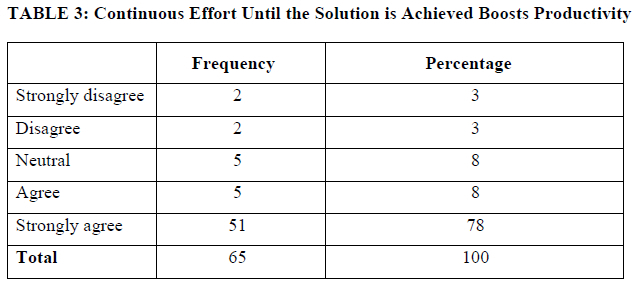
According to Fulton (2019), perseverance and a commitment to trying until a solution is found can indeed contribute positively to project productivity and success. The quality of the projects will improve when tasks are assigned to the best possible employees, when obstacles are foreseen and prevented, and when everyone is kept on the same page. As presented in Table 3, the survey results (n=51) indicate that 78% of respondents strongly agree that trying until the solution is achieved improves project productivity. However, (n=2) 3% strongly disagree, (n=2) 3% disagree, and (n=5) 8% just agree, while the remainder (n=5) 8% are neutral. These results underscore the consensus on the value of persistence in problem-solving for improving project outcomes, while also highlighting a minority that either holds a neutral stance or disagrees.
3.4.3. Organising Available Resources to Achieve a Goal Increases the Productivity of the Projects
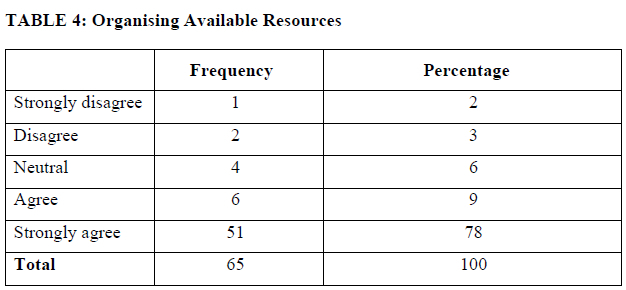
According to Fulton (2019), organising available resources effectively is a fundamental aspect of project management and can significantly increase productivity. Proper resource organisation ensures that the right tools, personnel, time, and materials are allocated efficiently to achieve project goals. As presented in Table 4, the survey results (n=51) indicate that 78% of respondents strongly agree that organising available resources to achieve a goal increases project productivity. However, (n=1) 2% strongly disagree, while (n=2) 3% disagree, (n=6) 9% just agree, and the remainder (n=4) 6% are neutral. The survey clearly suggests that efficient resource organisation is widely viewed as a key factor in project productivity. However, the small percentages of disagreement and neutrality highlight the complexity of project management and the need for tailored strategies that consider the specific contexts and needs of individual projects. These results could be valuable for agriculture extension officers looking to optimise resource allocation strategies and improve overall project efficiency.
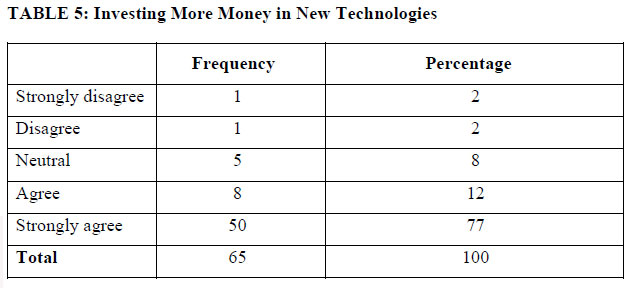
3.4.4. Investing More Money in New Technologies Increases the Productivity of Projects
As presented in Table 5, the survey results (n=50) indicate that 77% of respondents strongly agree that investing more money in new technologies increases project productivity. However, (n=1) 2% strongly disagree, (n=1) 2% disagree, and (n=8) 12% just agree, while the remainder (n=5) 8% are neutral. To achieve the objectives of the Fourth Industrial Revolution (4IR), there is a need to implement digital applications or social hubs that enable all farmers to access agricultural information freely (Akintunde & Oladele, 2019). As a result, establishing digital apps for information exchange can improve farmers' access to agrarian resources (Diallo & Wouterse, 2022). Farmers require capital to acquire assets and manage operations (Merkel, 2019). This suggests that small-scale agriculture should prioritise generating capital as an investment in economic development. The formation of capital increases per capita income and boosts farmers' purchasing power, thereby enhancing yield.
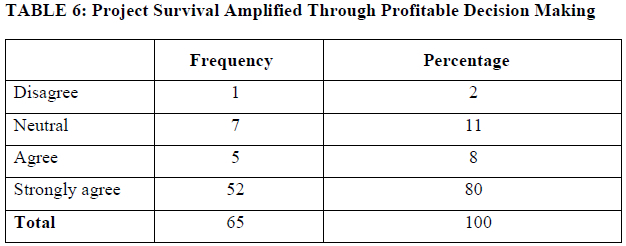
3.4.5. Project Survival Amplified Through Profitable Decision-Making
Making decisions based on what is perceived as profitable can indeed be a strategic approach to increase the survival and success of agricultural cooperative projects (Merkel, 2019). Prioritising profitability ensures that the cooperative is financially sustainable. This sustainability is crucial to the project's long-term survival, enabling it to cover costs, reinvest in operations, and weather economic challenges. Focusing on profitability encourages efficient use of resources. Agricultural cooperatives can optimise their use of land, labour, and capital to maximise output and returns. As presented in Table 6, the survey results (n=52) indicate that 80% of respondents strongly agree that always acting based on what they perceive as profitable increases project survival. However, (n=1) 2% disagree, (n=5) 8% just agree, and the remainder (n=7) 11% are neutral. This data underscores the critical role that a focus on profitability plays in the successful management and sustainability of agricultural projects. Overall, the data underscores the critical role that a focus on profitability plays in the successful management and sustainability of agricultural projects. However, it also opens avenues for further exploration of how profitability interacts with other elements of project management, potentially paving the way for a more holistic approach to achieving long-term success in agricultural projects.
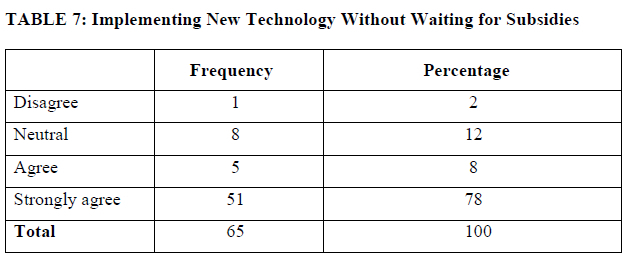
3.4.6. Implementing New Technology without Waiting for Subsidies
Adopting new technology without delay allows the cooperative to experience immediate productivity gains (Jere & Maharaj, 2016). This can positively impact operations, reduce costs, and enhance overall efficiency. As shown in Table 7, 78% (n=51) of respondents strongly agree. However, (n=1) 2% disagree, (n=5) 8% just agree, and the remainder (n=8) 12% are neutral. These findings suggest that while the majority are in strong favour of immediate technology adoption, there are varied opinions within the cooperative that need to be considered. The cooperative must consider these differing views and potentially explore the reasons behind the disagreement and neutrality. This approach could help tailor the implementation strategy to ensure broader acceptance and address any concerns that may be affecting some members' views on immediate adoption of the technology.
4. CONCLUSIONS AND RECOMMENDATIONS
The findings of this study underscore the critical role of cooperative membership, social capital, and collaborative networks in enhancing agricultural productivity, market access, and project sustainability among smallholder farmers. Survey results indicate that group affiliation facilitates access to labour, information, technology, and financial resources, while promoting collective problem-solving and community engagement. The study also highlights the importance of government support, private sector collaboration, cultural norms, and capacity-building initiatives in strengthening the effectiveness of cooperatives. Additionally, the adoption of new techniques, prudent investment in technologies, effective resource organisation, and profit-oriented decision-making are identified as key factors in boosting productivity and ensuring the long-term survival of agricultural projects. These findings demonstrate that a holistic approach that integrates human capital, social structures, and institutional support is essential for fostering resilient, efficient, and sustainable agricultural enterprises in rural South Africa.
Based on the findings of this study, several recommendations can be made to enhance the effectiveness and sustainability of agricultural cooperatives. Firstly, government departments and agricultural extension officers should continue to provide targeted support, including capacity-building programmes, access to mechanised equipment, and guidance on best practices to strengthen cooperative productivity.
Secondly, fostering strong linkages with private sector actors, financial institutions, and market networks can improve access to credit, inputs, and commercial markets, thereby enhancing income generation for smallholder farmers. Thirdly, cooperative groups should prioritise knowledge sharing and peer-to-peer learning to facilitate technology adoption, information dissemination, and collective problem-solving.
Additionally, cultural norms and social cohesion should be leveraged to promote active participation, mutual support during hardships, and contribution towards shared community objectives. Finally, investing in new technologies, adopting innovative techniques, and making profit-oriented decisions should be encouraged to boost productivity and ensure the long-term sustainability of agricultural projects.
By implementing these recommendations, the cooperatives in Ekurhuleni Municipality can overcome existing challenges and pave the way for sustainable economic development and community empowerment.
REFERENCES
- ABATE, G.T., 2018. Drivers of agricultural cooperative formation and farmers' membership and patronage decisions in Ethiopia. J. Co-op. Organ. Manag., 6(2): 53-63.
- ABDUL-RAHAMAN, A. & ABDULAI, A., 2020. Farmer groups, collective marketing and smallholder farm performance in rural Ghana. J. Agribus. Dev. Emerg. Econ., 10(5): 511-527.
- ADDAI, K.N., TEMOSOE, O. & NG'OMBE, J.N., 2022. Participation in farmer organizations and adoption of farming technologies among rice farmers in Ghana. Int. J. Soc. Econ., 49(4): 529-545.
- ADEOLA, O., 2020. The Digital Gender Divide and women's empowerment in sub-Saharan Africa: Achieving the UN's 2030 sustainable development goals. In O. Adeola (eds.), Empowering African Women for Sustainable Development. Cham: Palgrave Macmillan, pp. 145-156.
- ARIZAL, N. & SESWANDI, A., 2019. The effect of service quality on satisfaction and its impact on loyalty of cooperative members. Russ. J. Agric. Soc. -Econ. Sci., 95(11): 228-236.
- AKINTUNDE, M., ABIOLA. & OLADELE, O.I., 2019. Use of information communication technologies among agricultural extension officers in Lesotho. J. Agric. Ext., 23(3): 50-65.
- BACHKE, B.M., 2019. Do farmers' organizations enhance the welfare of smallholders? Findings from the Mozambican National Agricultural Survey. Food Policy., 89: 14.
- BRIXIOVA, Z., KANGOYE, T. & YOGO, T., 2020. Access to finance among small and medium-sized enterprises and job creation in Africa. Struct. Change Econ. Dyn., 5(5): 177-189.
- BOUSLAMA, G. & BOUTEILLR, C., 2019. Human capital and credit risk management: Training is more valuable than experience. Probl. Perspect. Manag., 17(1): 67-77.
- CHEBET, N., 2023. The role of women on agricultural sector growth. Int. J. Agric., 8(1): 41-50.
- DAN, S., IVANA, D., ZAHARIE, M., METZ, D. & DRAGAN, M., 2021. Digital talent management: Insights from the information technology and communication industry. London: Palgrave.
- DAUM, T. & REGINA, B., 2020. Agricultural mechanization in Africa: Myths, realities and an emerging research agenda. Glob. Food Secur., 26: 100393.
- DEMON, T., 2022. Coping with shocks: How Self-Help Groups impact food security and seasonal migration. World Dev., 155: 105892.
- DHAKAL, D., O'BRIEN, D. & MUESER, P., 2021. Government policy and performance of agricultural cooperatives: A case study in Chitwan District, Nepal. Sustainability., 13: 12282.
- DIALLO, M. & WOUTERSE, F., 2022. HOW CAN CAADP implementation help countries achieve the SDGS and become resilient to climate change? A tale of six African countries. AKADEMIYA2063 Working Paper Series (AWPS), No. 2.
- DI MARCANTONIO, F., HAVARI, E., COLEN, L. & CIAIAN, P., 2022. Do producer organizations improve trading practices and negotiation power for dairy farms? Evidence from selected EU countries. Agric. Econ., 53(1): 121-137.
- DLAMINI, S.I. & HUANG, W., 2019. Agricultural cooperatives in the Kingdom of Eswatini: Financial efficiency, challenges, and opportunities. Int. J. Community Coop. Stud., 7: 1-16.
-
EASY DATA., 2021. RSA regional indicators. Quantec. Available from https://www.quantec.co.za/easydata/
» https://www.quantec.co.za/easydata/ - ESTHER, O.O., IFEOMA, O.P. & SCHOLASTICA, U.C., 2018. Role of women cooperatives in agricultural development: A study of women cooperative members in Awka South. IJTSRD., 2(5): 548-557.
- FRANCESCONI, G.N. & WOUTERSE, F., 2015. Promoting the role of farmer-based organizations for value chain integration: The tension between a program's targeting and an organization's investment strategy. Agric. Econ., 46(4): 527-536.
- FRESE, M. & GIELNIK, M.M., 2014. The Psychology of Entrepreneurship. Annu. Rev. Organ. Psychol. Organ. Behav., 1(1): 413-438, 2014.
- FULTON, B., 2019. Engaging differences: How socially diverse organizations can effectively mobilize their resources. Acad. Manag. Annu. Meet. Proc., 2019(1): 19133.
-
FOOD AND AGRICULTURE ORGANISATION., 2021. From the forum on operationalizing, sustainable livelihoods approaches. Available from https://openknowledge.fao.org/server/api/core/bitstreams/88e93953-d8ea-4f59-99ff-2756213ed465/content/x9371e00.htm
» https://openknowledge.fao.org/server/api/core/bitstreams/88e93953-d8ea-4f59-99ff-2756213ed465/content/x9371e00.htm - GAVA, O., ARDAKANI, Z., DELALIC, A., AZZI, N. & BARTOLINI, F., 2021. Agricultural cooperatives contributing to the alleviation of rural poverty. The case of Konjic (Bosnia and Herzegovina). J. Rural Stud., 82: 328-339.
- GEZA, W., NGIDI, M., OJO, T., ADETORO, A.A., SLOTOW, R. & MABHAUDHI, T., 2021. Youth participation in agriculture: A scoping review. Sustainability., 13: 9120.
- GONCHAROV, V.D., 2022. Farming and households of the population in ensuring food security. Economy of Agric. Processing Enterprises., (10): 72-78.
- GREEN, G.P. & HAINES, A., 2015. Asset building and community development. 4th edn. Singapore: Sage Publications.
- HO, A.K., SIDANIUS, J., PRATTO, F., LEVIN, S., THOMSEN, L., KTEILY, N. & SHEHEEHY-SKEFFINGTON, J., 2012. Social dominance orientation: Revisiting the structure and function of a variable predicting social and political attitudes. Pers. Soc. Psychol. Bull., 38: 583- 606.
- IBNU, M., OFFERMANS, A. & GLASBERGEN, P., 2018. Certification and farmer organization: Indonesian smallholder perceptions of benefits. Bull. Indones. Econ. Stud., 54(3): 387-415.
- IFC., 2019. The Unseen Sector: A Report on the MSME Opportunity in South Africa. Washington DC: International Finance Corporation.
- KOOHAFKAN, P. & PRICE, T.L., 2020. Agricultural Heritage Systems: Their resilience and climate smart communities. Communities and Cultural Heritage, 57-66.
- KUMEH, E.M. & OMULO, G., 2019. Youth's access to agricultural land in sub-Saharan Africa: A missing link in the global land grabbing discourse. Land Use Policy., 89: 104210.
- LIN, B., WANG, X., JIN, S., YANG, W. & LI, H., 2022. Impacts of cooperative membership on rice productivity: Evidence from China. World Develop., 150: 105669.
- LOEPER, W.J., DRIMIE, S. & BLIGNAUT, J., 2018. The struggles of smallholder farmers: A cause of modern agricultural value chains in South Africa. In G. Egilmez (ed.), Agricultural Value Chains in South Africa. London: Intech Open, pp. 162-180.
- MAKAULA, Z., 2021. Information and communication technologies (ICT) towards agricultural development in rural areas: Case of smallholder farmers in Umzimvubu local municipality of the Eastern Cape Province in South Africa. S. Afr. J. Agric. Ext., 49(1): 81-90.
- MAKRELOV, K., PILLAY, N. & MORULE, B., 2023. Fiscal risks and their impact on banks' capital buffers in South Africa. S. Afr. J. Econ., 91(1): 116-134.
- MA, W. & ABDULAI, A., 2016. Does cooperative membership improve household welfare? Evidence from apple farmers in China. Food Policy., 58: 94-102.
- MA, W. & ZHU, Z., 2020. A note: Reducing cropland abandonment in China - Do agricultural cooperatives play a role? J. Agric. Econ., 71(3): 929-935.
- MANDA, J., KHONJE, M.G., ALENE, A.D., TUFA, A.H., ABDOULAYE, T., MUTENJE, M., SETIMELA, P. & MANYONG, V., 2020. Does cooperative membership increase and accelerate agricultural technology adoption? Empirical evidence from Zambia. Technol. Forecast. Soc. Change., 158: 120160.
- MARTENS, D., 2015. Research and evaluation in Education and Psychology: Integrating diversity with quantitative, qualitative, and mixed methods. 4th edn. Thousand Oaks, CA: Sage Publications.
- MERKEL, R., 2019. Stallholder livestock commercialization. Indonesian Bull. Anim. Vet. Sci., 29(1): 37-46.
- MOJO, D., FISCHER, C. & DEGEFA, T., 2017. The determinants and economic impacts of membership in coffee farmer cooperatives: Recent evidence from rural Ethiopia. J. Rural Stud., 50: 84-94.
- MULWA, C., MARENYA, P., BAHADUR, D. & KASSIE, M., 2017. Climate risk management response to climate risks among smallholder farmers in Malawi: A multivariate probit assessment of the role of information, household demographics, and farm characteristics. Clim. Risk Manag., 16: 208-221.
- MWAMBI, M., BIJMAN, J. & GALIE, A., 2021. The effect of membership in producer organizations on women's empowerment: Evidence from Kenya. Women's Stud. Int. Forum., 87: 102492.
- MWADZINGENI, L., MUGANDANI, R. & MAFONGOYA, P., 2020. Factors affecting the performance of the Tshiombo irrigation scheme in Limpopo Province, South Africa. J. Agribus. Rural Dev., 3: 269-277.
- NATIONAL TREASURY, SOUTH AFRICA., 2021. Budget review.
- NGWAMBA, M.P., 2017. Assessing the operations of agricultural cooperatives at Nkomazi Municipality, Mpumalanga Province. Doctoral thesis, University of Zululand.
- OKEM, A., 2023. Barriers to cooperation among cooperatives: Evidence from cooperatives in Umgungundlovu District Municipality, South Africa.
- ORTMANN, G.F. & KING, R.P., 2007. Agricultural cooperatives I: History, theory and problems. Agrekon., 46(1): 40-68.
- REBELO, J., CALDAS, J. & MATULICH, S.C., 2011. Performance de las cooperativas tradicionales: Las cooperativas portuguesas de Viño del Duero. Econ Agrar Recur Nat., 10(2): 143-158.
- RIBASAUSKIENEi, E., ŠUMYLE, D., VOLKOV, A., BALEZENTIS, T., STREIMIKIENE, D. & MORKUNAS, M., 2019. Evaluating public policy support for agricultural cooperatives. Sustainability., 11(14): 376.
- SENEERATTANAPRAYUL, J. & GAN, C., 2021. Effects of agricultural cooperative services on rural household welfare in Thailand. Int. Soc. Sci. J., 71(241-242): 243-260.
- TRAY, B., GARNEVSKA, E. & SHADBOLT, N., 2021. Linking smallholder producers to high-value markets through vegetable producer cooperatives in Cambodia. Int. Food Agribus. Manag. Rev., 24(6): 905-920.
- WANG, Z., WEI, S.J., YU, X. & ZHU, K., 2017. Characterizing global value chains: Production length and upstreamness. NBER. Working paper, No.w 23261.
- XABA, S.T., MARWA, N. & MATHUR-HELM, B., 2018. Efficiency evaluation of agricultural cooperatives in Mpumalanga. Afr. J. Econ. Manag. Stud., 11(1): 51-62.
- ZANTSI, S., 2021. Why do agricultural cooperatives fail to attract youth and create rural employment? Evidence from a case study of Zanokhanyo in Butterworth, Eastern Cape. S. Afr. J. Agric. Ext., 49: 183-197.
- ZEULI, K.A. & RADEL, J., 2005. Cooperatives as a community development strategy: Linking theory and practice. J. Reg. Anal. Policy., 35(1100-2016-89741).
- ZHANG, S., SUN, Z., MA, W. & VALENTINOV, V., 2020. The effect of cooperative membership on agricultural technology adoption in Sichuan, China. China Econ. Rev., 62: 101334.
- ZOU, Y. & WANG, Q., 2022. Impacts of farmer cooperative membership on household income and inequality: Evidence from a household survey in China. Agric. Food Econ., 10(1): 1-17.