Agricultural Extension and Advisory Services, Stock Theft and Smallholder Communal Farmers in Mnquma Local Municipality, Eastern Cape Province
Abstract
In South Africa, stock theft is one of the most significant problems facing livestock farmers, and it has serious repercussions, particularly for communal smallholder farmers. Subsequently, extension and advisory services play a critical role in helping farmers obtain information, develop their knowledge and abilities and engage in agricultural production to address issues associated with farming, including stock theft. The study seeks to evaluate the role of agricultural extension and advisory services in preventing stock theft among smallholder communal farmers in Mnquma Local Municipality. A multistage random sampling technique was used, and data were collected from 120 farmers using structured questionnaires. Multinomial Logistic Regression (MLR) was utilised to examine the factors contributing to stock theft. The findings indicate that the distance between village borders, the number of livestock owned by a farmer and livestock identification significantly influence stock theft at the 5% and 10% probability levels, respectively. The study suggests collaboration among key industry players, including government agencies, the South African Police Service, and farmers' associations, to reduce stock theft. Moreover, the formation of community policing forums, the enhancement of police visibility in rural areas , and investment in security technology, such as tracking devices, to mitigate stock theft.
South Africa; Stock Theft; Communal Farmers; Agricultural Extension and Advisory Services; Multinomial Logistic Regression
1. INTRODUCTION
Agriculture remains the dominant economic sector in most rural populations in both developed and developing countries (Morris, 2023). Agriculture is also an economic activity that not only ensures national or global food security but also helps to improve family food security and alleviate poverty through small-scale cooperative farming. Lombard and Van Rooyen (2017) observed that commercial agriculture occupies a significant 37.9% of South Africa's land area, amounting to 46.4 million hectares, underscoring the sector's importance. This territory is predominantly designated for grazing, with 36.5 million hectares, in addition to 7.6 million hectares of arable land. Grazing land serves as the cornerstone for livestock and game farms. This highlights the essential contribution and critical significance of livestock farming in South Africa's agriculture.
However, stock theft is a serious concern in South Africa's smallholder farming systems (Zantsi & Nkunjana, 2021; Maluleke, Mokwena & Motsepa, 2016). Every sector of the farming community, including commercial farmers, stud breeders, and emerging farmers, is impacted by the growing, unsettling and damaging reality of stock theft. According to Clack (2024) and Clack (2018), stock theft also affects rural small-scale and subsistence farmers, who may possess one or two heads of cattle. Stock theft occurs more frequently than other criminal activities and poses a far more severe threat in South African regions bordering neighbouring countries, including the Eastern Cape (EC), Free State (FS), KwaZulu-Natal (KZN), and Limpopo (LIM). Moreover, stock theft is not an uncommon crime in South African communities; some regard it as old as agriculture itself. Consequently, cross-border stock theft has escalated throughout the 1990s, becoming increasingly prevalent, coordinated, and violent.
Stock theft in South Africa is a complex issue that threatens food security, rural livelihoods, and agricultural sustainability. It has evolved from an opportunistic crime to an organised criminal operation, resulting in annual losses of R1.3 billion for farmers (Parliament of South Africa, 2024; Clack, 2024; Chelin, 2019). Unregulated stock theft intensifies vulnerabilities in rural communities, leading to social unrest and reduced trust in the criminal justice system. Maluleke, Mokwena and Motsepa (2016) asserted that the pattern of stock theft has shown significant instability over time, with the 2015-16 financial year resulting in costs exceeding R870 million for local farmers. Stock theft also undermines the local agricultural economy and national food security, as South Africa is a net importer of red meat.
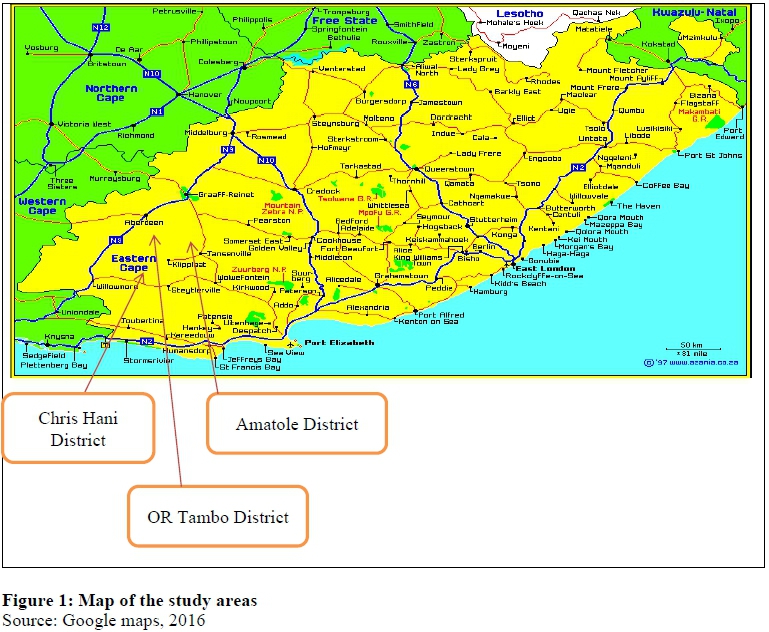
Pasiwe, Earl-Taylor, and Sinefu (2021) observed that the Eastern Cape Province has a higher prevalence of stock theft than other provinces in South Africa, attributed to its numerous borders and the associated crime in rural areas. Qumbu, Tsolo, Mthatha, and Ngqamakwe are among the areas most impacted by stock theft, situated within the OR Tambo and Amathole district municipalities, respectively. Stock theft is increasingly problematic in the Eastern Cape, with cattle, goats, and sheep being the most susceptible livestock due to their market value and ease of trade in the black market. Many smallholder farmers in the province engage in rituals involving livestock prior to selling them, particularly goats, which are commonly utilised for such practices (Lombard & Van Niekerk, 2017). According to DRDAR (2024), the Eastern Cape Province has experienced significant losses from stock theft, with over 18,000 livestock valued at R58 million reported. Resolving this crisis requires collaboration among the Department of Agriculture, Local Municipality, SAPS (Stock Theft Unit), traditional leaders and innovative technology developers to strengthen borders, enhance specialised policing, implement Livestock Identification and Traceability System (LITS) and regulate informal livestock markets (DRDAR, 2024; Ndzungu & Jaja, 2024).
Law enforcement agencies have recently stepped up their efforts to address stock theft across the Eastern Cape. In February 2025, specialised police units conducted a large operation that recovered 208 stolen cattle, valued at approximately R2.8 million in the Sulenkama area and its vicinity (South African Police Service, 2025). The inter-district operation, spanning three days from 12 to 14 February, involved cooperation between the Stock Theft and Endangered Species Units, supported by Vispol, Mounted, and K9 units. The operation highlighted the magnitude of stock theft issues in the region, with officials from Alfred Nzo, Joe Gqabi, and OR Tambo districts collaborating to locate stolen livestock and enforce branding regulations (South African Police Service, 2025).
According to Maluleke, Tshabalala and Tolla (2021), stock theft exerts a severe impact on farmers, resulting in financial losses, lower agricultural production, and higher transaction costs. It also results in fewer agricultural networks, decreased availability of goods and increased pricing and transaction costs. Numerous cases of animal theft negatively impact the nation's food security by costing farmers money, destroying good genetics and limiting employment prospects. Furthermore, as farmers lose money when their animals are taken, frequent stock theft can induce market instability, with serious consequences for revenue (Ndzungu & Jaja, 2024). Media outlets frequently address the growing problem of stock theft. The prevalence of livestock theft has exacerbated insecurity for both smallholder and commercial farmers. Annually, the agricultural industry allocates portions of its income and resources to bolster protection against the escalating issue of stock theft. Mabunda et al. (2021) revealed that 87% of stock theft involves organised crime, whereas 13% is attributed to survival needs. The initial planning of this crime requires sophistication, organisation and resourcefulness, driven by recklessness.
Agricultural extension and advisory services are essential in addressing stock theft by providing farmers with contemporary security techniques, encouraging community cooperation, and facilitating technology adoption (Nkosi, 2017). These services facilitate the integration of conventional agricultural methods with modern security requirements in several significant ways. Therefore, the study intends to examine the magnitude, social and economic implications and problematic communities as primary indicators of livestock theft in Mnquma Local Municipality, Eastern Cape Province. Additionally, the study will provide insights that will help law enforcement, government policymakers, and farmer organisations develop targeted initiatives to reduce the prevalence of stock theft.
2. RESEARCH METHODOLOGY
2.1. Description of the Study Area
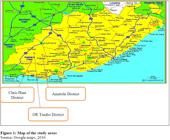
The research examined the socio-economic demographics and effects of agricultural extension and advisory services on smallholder communal farmers in Mnquma Local Municipality, Eastern Cape Province. The municipality consists of three towns: Butterworth, Centane and Ngqamakwe, with Butterworth serving as the primary economic centre, contributing 75% to Mnquma's GDP. The municipality, comprising a population of 252,390, battles elevated rates of poverty, illiteracy and unemployment (Statistics South Africa, 2019). The economy contracted from 2008 to 2010, mainly due to a worldwide recession. The primary economic sectors encompass community services, wholesale trade, manufacturing, agriculture, and mining (Mnquma Integrated Development Plan, 2020).
2.2. Sampling Procedure
A multistage random sampling method was employed to identify/select 120 smallholder communal farmers for interviews within Mnquma Local Municipality. Ngqamakwe accounts for the majority of the identified farmers, as it is considered the epicentre of stock theft in the Mnquma Local Municipality. Multistage random sampling is a probabilistic sampling technique that involves selecting samples in multiple stages (Etikan & Bala, 2017; Gattone et al., 2016). At each phase, the population is separated into smaller groups or clusters, and random sampling is used to select units for subsequent analysis. According to Cholo, Oluwatayo and Chaminuka (2017), this method is especially beneficial for research involving geographically distributed populations where establishing a comprehensive sampling frame is unfeasible. The study's target demographic comprises smallholder communal farmers impacted by stock theft. These farmers are generally located in remote areas with limited access to resources and law enforcement support. The study seeks to encompass diverse perspectives by incorporating farmers from various geographical regions, socio-economic categories, and agricultural techniques.
2.3. Data Collection
The data were gathered from a sample of 120 farmers using structured questionnaires in the local IsiXhosa language to understand their perceptions of agricultural extension and advisory services for preventing stock theft. The obtained data include socio-economic and demographic characteristics, farmers' perspectives on stock theft, and the influence of agricultural extension and advisory services on stock theft prevention.
2.4. Data Analysis
Data were recorded and organised in Microsoft Excel spreadsheets to make it easier for the researcher to identify unforeseen errors; thereafter, exported to the data analysis software STATA 18 for analysis. Descriptive statistics, including means, standard deviations, percentages, and frequencies, were used to examine the socio-economic and demographic attributes of the farmers. Descriptive statistics are essential for understanding the properties of sample units. Multinomial Logistic Regression was used to examine the factors contributing to stock theft and the impact of agricultural extension and advisory services on its prevention.
2.4.1. Multinomial Logistic Regression
Multinomial Logistic Regression, as defined by Mustafa et al. (2015), is utilised when the dependent variable is categorical with more than two levels. The multinomial logistic regression model is a widely utilised econometric framework for elucidating the choice of an option from a set of mutually exclusive alternatives. Multinomial Logistic Regression was deemed suitable for this study as it does not assume normality, linearity, or homoscedasticity. This model estimates the probabilities of several potential outcomes of a categorically dependent variable, based on the known independent factors. The Multinomial Logistic Regression model predicts an individual binary logistic regression model for each indicator variable (Aziz et al., 2016) and is the predominant model for nominal outcomes, typically utilised when a dependent variable has more than two options (Long, 2014). Moreover, the model is described as an extension of binary logistic regression. Senyefia, Adams, and Prah (2019) asserted that Multinomial Logistic Regression addresses a single nominal or ordinal response variable with several categories, regardless of whether the variable is nominal or ordinal.
This study utilised Multinomial Logistic Regression to identify the variables affecting stock theft prevention among smallholder communal farmers. The model was selected for the study because it provides empirical estimates of the influence of independent variables (socio-economic and demographic factors, rural constraints, and infrastructure accessibility) on the probability of the dependent variable (stock theft prevention measures) among smallholder communal farmers. Accordingly, the Multinomial Logistic Regression is structured as follows:

Let Yi be a random parameter representing stock theft prevention chosen by any sample household in order to define the Multinomial Logistic Regression model.
In this context, j represents stock theft prevention, x signifies explanatory factors, and Bj indicates estimated parameters. The parameter estimates of the Multinomial Logistic Regression model indicate the direction of the impact of the explanatory variables on the dependent variable (stock theft prevention), but do not convey the actual magnitude of change or probability. The marginal effects are expressed as follows to elucidate the influence of explanatory factors on probabilities:

3. RESULTS AND DISCUSSIONS
This section presents the results and discussion of the analyses conducted on a sample of 120 households in Mnquma Local Municipality. The socio-economic and demographic characteristics of the households were analysed using descriptive statistics. Multinomial Logistic Regression was employed to analyse the determinants of stock theft in the study area.
3.1. Socio-Economic and Demographic Characteristics of the Households
The characteristics analysed and subsequently discussed include socio-economic and demographic factors such as age, gender, marital status, employment status, level of education, household size, and the household head's income. The results are shown in Table 1 below.
The study's findings indicate that the majority of respondents were male (72%), perhaps due to the physical demands of livestock management, which require personnel for livestock care and treatment. The findings align with the research conducted by Loki (2022) in the Eastern Cape and KwaZulu-Natal provinces of South Africa. Nonetheless, it is imperative to recognise the critical role that women play in agricultural productivity. They are frequently seen as the backbone of farming communities, making a substantial contribution to rural development and food security.
The findings indicate that age is a significant factor in livestock ownership. The findings reveal that a significant proportion (38%) of the surveyed farmers were aged 41 to 50 years. In a manner similar to the study conducted by Manyike, Taruvinga, and Zhou (2025), there is an observed correlation between the age of the household head and the ownership of livestock, including cattle and sheep, as a source of income. Economic factors, including the migration of young individuals from rural areas to urban centres in pursuit of improved opportunities, frequently result in older individuals remaining as communal farmers.
The study's results indicate that a majority (63%) of the surveyed farmers were married. The findings show that married communal farmers have greater access to extension services than unmarried communal farmers. The findings align with the research conducted by Maluleke, Mokwena, and Motsepa (2016) about rural farmers' perspectives on livestock theft. Gwala, Monde, and Muchenje (2016) contended that a substantial proportion of both married and unmarried farmers lack access to extension services, underscoring the necessity for enhanced service delivery.
A significant majority (42%) of farmers in the study had completed 6 to 10 years of formal schooling. The level of education and the accessibility of extension and advisory services significantly influence the incidence of stock theft. Access to education, along with efficient extension services, enables communal farmers to improve livestock management, mitigating theft risk and augmenting overall agricultural productivity (Nkosi, 2017).
According to the findings, the majority of respondents (52%) had households with 1 to 5 people. The results imply that larger families may possess greater labour resources for livestock management, including security measures, while smaller households may have diminished manpower for such management. On the other hand, Ogunkoya (2014) argued that households with larger family sizes may experience greater resource strain and increased susceptibility to theft.
The study's findings indicate that the majority of households (38%) earn between R1000 and R5000. The findings indicate that household income and agricultural extension are significant factors influencing communal farmers' vulnerability to stock theft. An increase in household income may lead to a rise in the value of livestock, thereby rendering them a more appealing target for theft (Clack & Minnaar, 2018; Elhassab & Elhassab, 2017). Agricultural extension services can provide information and resources to help farmers safeguard their livestock and mitigate the risk of theft.
3.2. Livestock Ownership
The table below illustrates the results of livestock ownership among communal farmers in the study area. The farmers raise various types of livestock, including cattle, goats, and sheep. The livestock are identified due to their heightened vulnerability to stock theft within the Mnquma Local Municipality.
The results reveal that the majority of farmers (47%) own cattle compared to sheep and goats in the study area. Ownership of livestock is essential for the sustenance of rural livelihoods, providing both food security and income. The findings align with the research conducted by Taruvinga et al. (2022) on household-level livestock ownership in the rural OR Tambo District Municipality of the Eastern Cape Province. Agricultural extension is essential for supporting livestock farmers, especially in managing risks such as stock theft, which carries considerable economic and social implications (Mapiye et al., 2021).
3.3. Number of Years in Livestock Farming
The number of years of livestock farming is illustrated in the chart below. Communal farmers in the study area have varying durations and experiences in livestock farming, which, in turn, is necessary to prevent stock theft.
The study's findings demonstrate that the majority of farmers (44%) had owned livestock for 11-20 years, followed by 21-30 years (28%). Years of livestock ownership by farmers, agricultural extension services, and efforts to prevent stock theft are all related in ways that combine institutional support, practical experience, and changing criminal issues. While extension services offer systematic knowledge transfer that might assist all farmers regardless of experience level, experienced farmers may benefit from their accumulated knowledge of local theft patterns and preventive measures (Donnermeyer, 2018).
3.4. Reasons for Livestock Farming
Communal farmers in Mnquma Local Municipality keep livestock for various significant purposes, including household consumption, cultural practices, income generation, and animal traction.
The study's findings indicate that the majority of respondents (40%) kept livestock in order to generate revenue. According to Tenrisanna and Kasim (2021), livestock are preserved to store wealth that can be turned into cash in the event of crop failure or other emergencies, as well as to generate revenue through sales. Livestock also produces necessary food items for domestic usage, such as milk and meat.
3.5. Challenges Facing Communal Farmers
This section outlines several challenges faced by communal farmers in Mnquma Local Municipality, including limited access to funding, insufficient infrastructure, constraints on capacity growth and outbreaks of disease and pests.
The study's findings demonstrate that the majority of participants (38%) struggle with the problem of stock theft. As in Clack and Minnaar's (2018) study, rural community farmers face multiple challenges, particularly stock theft, which can jeopardise livelihoods and negatively impact the broader economy. Furthermore, stock theft significantly undermines the livelihoods, food security, and economic stability of communal farmers in the Eastern Cape and across South Africa. This results in considerable financial losses, diminishes the supply of meat and other livestock products , and may ultimately force farmers out of the industry.
3.6. Roles of Agricultural Extension and Advisory Services on Stock Theft
The primary objective of agricultural extension and advisory services is to provide knowledge and technology to farmers, relay feedback to researchers to enhance services, thereby enabling farmers to utilise available information for improved decision-making and goal attainment (Zantsi & Nkunjana, 2021).
The above results demonstrate that a majority of respondents (29%) indicated that agricultural extension and advisory services promote animal identification and traceability as established by the Department of Agriculture (DOA). The findings align with the Animal Identification Act (Act no. 6 of 2002), which requires the mandatory marking of animals to combat stock theft and enhance the tracking and identification of livestock (Maluleke, 2018). The legislation mandates that all animals get a registered identification mark within two weeks of ownership. Although branding is very successful at creating permanent markers that enable the identification of stolen livestock, farmers exhibit scepticism about the efficacy of removable identification systems (Maluleke, Mokwena & Motsepa, 2016).
3.7. Factors Contributing to Stock Theft
This section presents the findings from the Multinomial Logistic Regression analysis regarding the factors influencing stock theft in the Mnquma Local Municipality. The results of the regression model demonstrate that the distance between village borders, the livestock identification systems employed, and the total number of livestock units owned are significant factors determining stock theft in the Mnquma Local Municipality, as illustrated in Table 2.
The distance between village borders significantly influenced the intensity of livestock theft at the 5% probability level, with a p-value of 0.024. Decreasing the distance from the border by one unit results in an increase of 15.775 units in stock theft. The survey revealed that 80.7% of households were situated near the border, within 5 to 15 km, whereas 19.3% were located farther away, at 20 to 30 km from the border. Border locations are more susceptible to livestock theft due to the porous nature of many borders, which reduces the traceability of animals relocated to another country. The negative standardised beta coefficient for distance to the border indicates that a shorter distance is associated with a higher risk of stock theft. Rustlers appropriate livestock on one side of the border and subsequently hide them on the opposite side. Consequently, farmers closer to the border face a higher risk of stock theft than those farther away.
The systems used for livestock identification significantly affected the intensity of stock theft in Mnquma Local Municipality (p-value = 0.050). The implementation of livestock identification systems was statistically significant at the 5% level as a factor influencing stock theft. The negative coefficient of −11.042 indicates an inverse relationship: implementing livestock identification systems, such as ear tags for cattle, decreases the likelihood of stock theft, whereas the absence of these strategies increases it. Enhancing livestock identification by 1 unit reduces stock theft by 11.042 units. Branding and tattooing played a significant role in livestock identification, although they could not definitively establish ownership. This occurs because each farmer possesses a unique brand for their livestock, and those who engage in theft may specifically target unbranded animals for rustling. Moreover, brand marks become increasingly challenging to interpret over time. However, branding is an effective way to mitigate stock theft, particularly of larger livestock such as cattle (Maluleke, 2018). Documents for the clearance of traded livestock were identified as the sole solution for addressing stock theft enforcement.
The total number of livestock a farmer possesses has affected the prevalence of stock theft. The total number of livestock owned exhibited a p-value of 0.072, indicating significance at the 10% level. The negative coefficient of -0.184 indicates an inverse relationship between the total number of livestock stolen and the total number of livestock owned by the farmer. It can be asserted with 90% confidence that farmers possessing a greater number of livestock units are less susceptible to livestock theft compared to those with fewer units. This finding contradicts Ogunkoya (2014), who reported that 3.2% of respondents expressed no interest in increasing their stock holdings due to high levels of stock theft.
4. CONCLUSIONS AND RECOMMENDATIONS
This research examines the impact of agricultural extension and advisory services on the prevention of stock theft in the Mnquma Local Municipality, Eastern Cape Province, South Africa. However, the province, along with the local municipality, struggles to control stock theft due to inadequate infrastructure. The research indicated that farmers predominantly depend on livestock as their main source of income. Respondents expressed dissatisfaction with the government's and SAPS's efforts to address stock theft. Farmers demonstrated a notable awareness of preventive measures and employed various strategies to safeguard their livestock, including enhanced fencing, livestock identification systems, guard dogs, and community watch programs. Nonetheless, limited resources and financial constraints frequently hindered the implementation of these measures, especially for smallholder communal farmers.
Based on the research findings, the study makes recommendations to the communal farmers' organisations, the South African Police Service (SAPS), and the spheres of government (Local, Provincial, and National).
Enhanced collaboration among farmers' associations/organisations, local communities, government agencies, and law enforcement agencies is essential for effectively combating stock theft.
Formation of community policing forums, enhancement of police visibility and investment in security technology such as tracking devices to mitigate stock theft.
Law enforcement agencies should establish additional roadblocks in high-risk areas to identify any unusual stock movements.
Policing strategies should be adaptive and technology-driven to enhance the detection, prevention, and reduction of theft-related crimes.
The government should allocate additional resources to law enforcement in border regions to mitigate livestock rustling.
The government should enhance research on the application of technology, specifically electronic tracking devices for livestock.
The government should implement awareness campaigns targeting stock theft in high-risk areas.
Additional research is required to assess the efficacy of community-based initiatives and the impact of technology in addressing stock theft in this region.
5. ACKNOWLEDGEMENTS
The author acknowledges the South African Society for Agricultural Extension (SASAE) for the opportunity to present research findings at the 58th Annual Conference, co-hosted with Tshwane University of Technology. Additionally, the study participants are highly appreciated for their cooperation and willingness to take part.
REFERENCES
- AZIZ, N.A.A., ALI, Z., NOR, N.M., BAHARUM, A. & OMAR, M., 2016. Modeling multinomial logistic regression on characteristics of smokers after the smoke-free campaign in the area of Melaka. AIP Conference Proceedings., 1750(1): 060020.
-
CHELIN, R., 2019. Organised crime moves in on South Africa's livestock industry. Available from https://issafrica.org/iss-today/organised-crime-moves-in-on-south-africas-livestock-industry
» https://issafrica.org/iss-today/organised-crime-moves-in-on-south-africas-livestock-industry - CHOLO, M.S., OLUWATAYO, I.B. & CHAMINUKA, P., 2017. Economic analysis and perception of integrated wildlife/livestock farming as an alternative land use option in rural areas of Mopani District in Limpopo Province, South Africa. Master's thesis, University of Limpopo.
- CLACK, W., 2024. An analysis of livestock theft in South Africa (2013-2023): Towards a deeper understanding of livestock dynamics for enhanced countermeasures. Int. J. Rural Criminol., 8(3): 335-371.
- CLACK, W., 2018. Livestock theft: A global and South African perspective. Presented at the National Red Meat Producers Congress, 11 and 12 September, Royan Elephant Hotel and Conference Centre, Pretoria.
- CLACK, W. & MINNAAR, A., 2018. Rural crime in South Africa: An exploratory review of 'farm attacks' and stocktheft as the primary crimes in rural areas. Acta Crim: Afr. J. Crim. Victimology., 31(1): 103-135.
-
DEPARTMENT OF RURAL DEVELOPMENT AND AGRARIAN REFORM (DRDAR)., 2024. Premier Lubabalo Oscar Mabuyane on stock theft costing Eastern Cape farmers millions. Available from https://www.gov.za/news/media-statements/premier-lubabalo-oscar-mabuyane-stock-theft-costing-eastern-cape-farmers.
» https://www.gov.za/news/media-statements/premier-lubabalo-oscar-mabuyane-stock-theft-costing-eastern-cape-farmers - DONNERMEYER, J.F., 2018. The impact of crime on farms: An international synthesis. Acta Crim: Afr. J. Crim. Victimology., 31(4): 1-22.
- ELHASSAB, A. & ELHASSAB, M., 2017. Compensatory livestock thievery: A new trend in economic crime in Dilling/South Kordofan State (2014-2016). Sudan Working Paper SWP 2017:3. Bergen: Chr. Michelsen Institute.
- ETIKAN, I. & BALA, K., 2017. Sampling and sampling methods. Biom. Biostat. Int. J., 5(6): 00149.
- GATTONE, S.A., MOHAMED, E., DRYVER, A.L. & MÜNNICH, R.T., 2016. Adaptive cluster sampling for negatively correlated data. Environmetrics., 27(2): E103-E113.
- GWALA, L., MONDE, N. & MUCHENJE, V., 2016. Effect of agricultural extension services on beneficiaries of the Nguni cattle project in the Eastern Cape Province, South Africa: A case study of two villages. Appl. Anim. Husb. Rural Develop., 9(1): 31-40.
- LOKI, O., 2022. Farmers' perceptions towards privatisation of extension services in Eastern Cape and KwaZulu-Natal provinces of South Africa. J. Int. Agric. Ext. Educ., 29(4): 27-53.
- LOMBARD, W.A. & VAN ROOYEN, F.M., 2017. Stock theft trends and the role of unmarked livestock. Stockfarm., 7(4): 8-9.
- LOMBARD, W.A. & VAN NIEKERK, H.N., 2017. Assessing the economic impact of livestock theft in the Eastern Cape Province of South Africa. Presented at the 21st Congress International Farm Management Association, 2-7 July, Edinburgh, Scotland.
- LONG, J.S., 2014. Regression models for nominal and ordinal outcomes. In H. Best & C. Wolf (eds.), The SAGE handbook of regression analysis and causal inference. Sage Publications, pp.173-204.
- MABUNDA, M.V., MALULEKE, W., BARKHUIZEN, J. & CLACK, W.J., 2021. Stock theft: Rural livestock farmers' entrepreneurial perspectives. Int. J. Criminol. Sociol., 10: 929-943.
- MALULEKE, W., TSHABALALA, N.P. & TOLLA, A.D., 2021. Perspectives on stock theft prevention in the selected provinces of South Africa: Failures and successes. Int. J. Criminol. Sociol., 10: 1029-1038.
- MALULEKE, W., 2018. The integration of conventional and technological methods in combating stock theft by selected stakeholders in the KwaZulu-Natal Province. Acta Crim: Afr. J. Crim. Victimology., 31(4): 123-146.
- MALULEKE, W., MOKWENA, R.J. & MOTSEPA, L.L., 2016. Rural farmers' perspectives on stock theft: Police crime statistics. S. Afr. J. Agric. Ext., 44(2): 256-274.
- MANYIKE, J.Z., TARUVINGA, A. & ZHOU, L., 2025. Factors influencing livestock ownership and herd intensity among smallholder farmers in the Eastern Cape, South Africa. Heliyon., 11(2).
- MAPIYE, O., MAKOMBE, G., MOLOTSI, A., DZAMA, K. & MAPIYE, C., 2021. Towards a revolutionized agricultural extension system for the sustainability of smallholder livestock production in developing countries: The potential role of icts. Sustain., 13(11): 5868.
-
MNQUMA LOCAL MUNICIPALITY., 2020. Mnquma Integrated Development Plan. Available from https://www.cogta.gov.za/cgta_2016/wp-content/uploads/2020/11/Mnquma-Local-Municipality-2020-2021.pdf
» https://www.cogta.gov.za/cgta_2016/wp-content/uploads/2020/11/Mnquma-Local-Municipality-2020-2021.pdf -
MNQUMA LOCAL MUNICIPALITY., 2016. Mnquma Spatial Development Framework. Available from https://www.cogta.gov.za/cgta_2016/wp-content/uploads/2020/11/MNQUMA-LOCAL-M-2020-2021.pdf.
» https://www.cogta.gov.za/cgta_2016/wp-content/uploads/2020/11/MNQUMA-LOCAL-M-2020-2021.pdf - MORRIS, M.L., 2023. The development of capitalism in South African agriculture: Class struggle in the countryside. In H. Wolpe (ed.), The Articulation of Modes of Production. Routledge, pp. 202-253.
- MUSTAFA, A.M., COOLS, M., SAADI, I. & TELLER, J., 2015, June. Urban development as a continuum: A multinomial logistic regression approach. Presented at the 25th Interntional Conference, 30 June - 3 July, Istanbul, Turkey.
- NDZUNGU, K. & JAJA, I.F., 2024. Farmers' perceptions on stock theft in some districts of the Eastern Cape Province, South Africa. Plos One., 19(9): e0310881.
- NKOSI, N.Z., 2017. Level of access to agricultural extension and advisory services by emerging livestock farmers in Uthungulu District Municipality, KwaZulu-Natal Province. Master's thesis, University of South Africa, KwaZulu-Natal.
- OGUNKOYA, F.T., 2014. Socio-economic factors that affect livestock numbers: A case study of smallholder cattle and sheep farmers in the Free State province of South Africa. Doctoral dissertation, University of South Africa.
-
PARLIAMENT OF SOUTH AFRICA., 2024. Without intervention, increased stock theft can be death knell for farmers. Available from https://www.parliament.gov.za/press-releases/media-statement-without-intervention-increased-stock-theft-can-be-death-knell-farmers.
» https://www.parliament.gov.za/press-releases/media-statement-without-intervention-increased-stock-theft-can-be-death-knell-farmers - PASIWE, Q.S., EARL-TAYLOR, M. & SINEFU, A., 2021. Unintended consequences of stock theft on victims: Findings from Alice, Amathole District, Eastern Cape, South Africa. Acta Crim: Afr. J. Crim. Victimology., 34(1): 154-169.
- SENYEFIA, B.A., ADAMS, F.H. & PRAH, K.A., 2019. Survival and multinomial logistic regression analyses of Sekondi-Takoradi District level national health insurance data in Ghana. Am. J. Math. Stat., 9(2): 109-114.
-
SOUTH AFRICAN POLICE SERVICE., 2025. 208 Cattle worth R2.8 Million recovered as police tackle stock theft head on. Available from https://www.saps.gov.za/newsroom/msspeechdetail.php?nid=59043.
» https://www.saps.gov.za/newsroom/msspeechdetail.php?nid=59043 -
STATISTICS SOUTH AFRICA., 2019. Towards measuring food security in South Africa: An examination of hunger and food inadequacy. Available from https://www.statssa.gov.za/publications/03-00-14/03-00-142017.pdf.
» https://www.statssa.gov.za/publications/03-00-14/03-00-142017.pdf - TARUVINGA, A., KAMBANJE, A., MUSHUNJE, A. & MUKARUMBWA, P., 2022. Determinants of livestock species ownership at household level: Evidence from rural OR Tambo District Municipality, South Africa. Pastoralism., 12(1): 1-11.
- TENRISANNA, V. & KASIM, K., 2021. Livestock farming income analysis of farm households in Indonesia. IOP Conf. Ser.: Earth Environ. Sci., 788(1): 012218.
- ZANTSI, S. & NKUNJANA, T., 2021. A review of possibilities for using animal tracking devices to mitigate stock theft in smallholder livestock farming systems in rural South Africa. S. Afr. J. Agric. Ext., 49(1): 162-182.