Factors Affecting Smallholder Farmers' Production and Marketing of Tomatoes (Solanum Lycopersicum L.) in North-Central Namibia
Abstract
Smallholder horticultural farmers in Namibia grow tomatoes for the global market as tomatoes offer higher returns when compared to other cash crops. The present study aimed to assess the factors constraining the production and marketing of the tomato industry in north-central Namibia. A structured questionnaire was used to collect data from 77 smallholder farmers selected through purposive sampling. The characteristics of the respondents were summarised using descriptive characteristics. Most farmers in the study area were males (78%). On average, farmers cultivated tomatoes on a farm size of about four ha under irrigation. Farmers produced yields at different levels that indicated less than five tonnes/ha (65.7%), 5-10 tonnes/ha (20%), and more than 10 tonnes/ha (14.3%). The decision on what to produce is based on market demand (55%). Most (86%) farmers indicated that postharvest loss due to lack of market is a problem. The main production challenges experienced by tomato producers are pests and diseases, expensive seeds, postharvest loss, and limited access to water. The study recommended that the government should have capacity-building programmes through the practical training of farmers on cultivating improved varieties of tomatoes and training on good agricultural practices, including how to reduce postharvest losses and meet global market standards.
Extension Services; Good Agricultural Practices; Postharvest Loss; Market Standards; Yields
1. INTRODUCTION
Namibia is a semi-arid country, and most regions can be classified as less-favoured areas facing agroecological and socioeconomic constraints. Less favoured areas include those that are limited in the potential for agricultural production because of biophysical constraints such as low and uncertain rainfall, steep slopes, and poor soils, as well as areas that face socioeconomic constraints such as limited access to infrastructure and markets (Pender & Hazell, 2000).
The agricultural sector is the backbone of many households in Namibia. It employs about 70% of the working population and has contributed an annual average of 5.1% to GDP (gross domestic product) since 1990 (Namibia Statistics Agency, 2019a). The Namibian crop subsector has contributed an average of 2.2% to overall agriculture growth since 1990 (Namibia Statistics Agency, 2019a). Tomatoes are one of the major vegetables grown under smallholder irrigation along the perennial rivers of Kavango, Kunene, Zambezi, and Orange at the borders of Namibia with Angola, Zambia, and South Africa. Moreover, smallholding vegetable gardens are also found where either dams feed irrigation schemes or where sub-artesian water can be utilised, with water for crop irrigation mostly taken from underground (boreholes), ephemeral wetlands, rivers, or earth dams (Mendelsohn, Jarvis, Roberts & Roberson, 2002). As a result, the Namibian tomato industry is relatively young, with the potential to grow in cropped areas, produce, and have an average yield under irrigation where access to water is ensured. As a result, Namibia's relatively young tomato industry shows some potential to grow in production area and yield where irrigation water is accessible.
Moreover, the factors affecting the production and marketing of horticultural crops are categorised as social, economic/financial, biophysical, information, technological or institutional (Ojiem, De Ridder, Vanlauwe & Giller, 2006). Social factors include human capital, physical capital, gender, age, experience, wealth, marital status, and migration status. In contrast, institutional factors include farm size, marketing information, extension services, training, 'farmers' associations or cooperatives, and water resources (Kaldaru & Parts, 2008). Moreover, technological capital includes machinery, equipment, and communication. In contrast, economic factors include guaranteed market, inputs (seeds and fertilisers), good prices, off-farm income, and credit (Alam, Hossain & Barua, 2021).
In 2019, the world's total production of tomatoes was 181 million tonnes, with an average yield of 36 tonnes/ha. In this regard, Africa produced 13.4 tonnes/ha, and Southern Africa produced 53 tonnes/ha (FAO, 2021). However, the average yield for Namibia is very low at about 6.1 tonnes/ha, hardly reaching seven tonnes per hectare from 1997 to 2019 (FAO, 2021). The average yield of tomatoes in north-central Namibia has been significantly low, with an average yield of less than 20 tonnes/ha (Togarepi, Thomas, Hangula, Samundengu & Kambatuku, 2018). In Namibia, the annual production in 2018 was about 2914 tonnes, and its imports were about 1356 tonnes (32%), mainly from South Africa (Namibia Agronomic Board, 2018). Under an efficient production system, tomato yields range from 50 to 90 tonnes/ha depending on varieties and agroecological and socioeconomic factors (Togarepi et al., 2018). In Namibia, tomatoes are produced mainly for commercial purposes, and households produce insignificant amounts for consumption (Togarepi et al., 2018).
In Namibia, smallholder vegetable farmers have increased in recent years owing to government support in investing in the physical, marketing, and processing infrastructure facilities, thus creating market access for domestic farmers (Togarepi et al., 2018; Thomas & Vink, 2020). As a result, smallholder vegetable farmers compete with larger fresh produce farmers, as well as some fresh produce imported from neighbouring countries such as South Africa for the same domestic market. The smallholder vegetable farmers in northern Namibia preferred to sell their horticultural produce, including tomatoes, through informal markets, for example, on the local open markets, at roadside stalls, within the community (local trade) and in urban settlements. The vegetables are mainly sold to customers by women, children or young men. Farmers sell directly to buyers or informal traders such as hawkers and vendors, who are important actors in the trading of fresh produce (Thomas, 2020). Though rural village markets are small, they nevertheless form the primary outlet for farmers in communal areas due to the associated transport costs being relatively low; the farmers concerned being able to sell their produce directly to the consumers, the absence of commission costs, and the relatively low inspection costs (Development Consultancy for Southern Africa (Decosa), 2001). The largest urban market for horticultural produce, including tomatoes, is Windhoek, the capital city of Namibia, which is mainly supplied by imports from South Africa and is increasingly served by local commercial farmers. Other urban markets in regional towns across the country are also substantially provided by imports, though the local producers play a more significant role than they do in Windhoek. Worth noting is that the northern markets suffer from the disadvantage that, despite being accessible to a large percentage of the population, the purchasing power available is not as high as it is in Windhoek (Decosa, 2001). The main locally produced vegetables such as tomatoes, cabbages, onions, peppers, sweet melons and butternuts are mainly exported to South Africa and Angola (Thomas, 2020).
Various studies on high-value crops, including tomatoes, cover different aspects of production and marketing of these crops, such as (a) the scarcity of agricultural raw materials and the efficiency of smallholder producers (Shrestha, Huang, Gautam & Johnson, 2016), (b) good agricultural practices and sustainable farming practices (Estrada-Acosta, Jiménez, Chaidez, León-Félix & Castro-del Campo, 2014), (c) postharvest losses (Rehman, Khan & Inayatullah, 2007), and (d) value chain analysis (Svubure, Struik, Haverkort & Steyn, 2017). These studies investigated the opportunities associated with tomato production and marketing and indicated several agroecological and socioeconomic constraints related to the crop. The tomato crop production challenges include pests and diseases (Jacobi, 2008) as well as access to inputs such as fertilisers and improved seeds (Ortmann & King, 2010; Thomas &Vink, 2020) and high labour costs (Weldegiorgis, Mezgebo, Gebremariam & Kahsay, 2018), including increases in minimum wages. Other challenges include climatic changes (Shikwambana, Malaza & Ncube, 2022; Steenkamp & Thebuho, 2022; Shiimi, Charamba, Bello & Lutaaya, 2023; Spear, Zaroug, Daron, Ziervogel, Angula, Haimbili, Hegga, Baudoin, New, Kunamwene, & Togarepi, 2018), lack of water and irrigation policies (Marherbe & Marais, 2015) such as changes in water tariffs, water rights (Cele & Wale, 2018) and licensing (Yokwe, 2009). Moreover, producing organic tomatoes will satisfy consumers that harmful pesticides (chemicals) have not been used (Gatahi, 2020). Yet, questions are raised about the relative economic performance of organic versus conventional farming when feeding large populations (Abebe, Traboulsi & Aoun, 2022). As a result, tomato production efficiency is key to the industry's survival, as different geographical locations, climatic conditions and resource capabilities lead to various approaches to production and marketing.
The marketing challenges include high risks such as disease outbreaks and postharvest losses, poor infrastructure, weak provision of finance, limited access to information, economies of scale and weak systems of contract enforcement, market uncertainty, and markets that are often constrained by inadequate property rights and high transaction costs (Ortmann & King, 2010; Jordaan, Grové & Backeberg, 2014). In addition, the stringent requirements for fresh and processed food products by global supermarkets and wholesalers demand vertical coordination, consistent quantity (volume), high quality, food safety specifications, timely deliveries, size requirements and type of product, thereby posing special challenges for smallholder farmers wishing to compete in international markets (Emongor & Kirsten. 2009). Most smallholder farmers cannot compete in formal agri-food chains and high-value agricultural markets because of their limited capacity to adapt to market risks (Tobin, Glenna & Devaux. 2016). This is because, in most cases, the predominant philosophy of many smallholder farmers is to 'produce first and then look for the 'market' instead of analysing the market beforehand, making the necessary contractual arrangements with buyers, and then producing what the market wants (Blandon, Henson & Islam, 2009). In addition, the need for quality control in terms of high perishability and safe handling involves specialised production, packing techniques, and refrigerated transport, all of which require large capital investment (Kirsten & Sartorius, 2002; Thomas & Vink, 2020). Smallholder producers find these financial commitments very difficult to make.
Moreover, limited studies have been carried out on the development of the tomato industry in Namibia. As a result, the tomato industry is not well understood. Therefore, this study's objective was to assess the factors constraining the development of the tomato industry in north-central Namibia. Understanding these factors is essential for farmers to apply improved agricultural practices that can significantly enhance their competitiveness in the tomato industry in global markets and, as a result, transform smallholder tomato farmers into entrepreneurs.
2. RESEARCH METHODOLOGY
This study was conducted among smallholder vegetable producers in the Omusati region of north-central Namibia near the Olushandja dam. The study employed a mixed-methods approach, with qualitative and quantitative data collected as per Creswell (2014). Cross-sectional data were also collected through a structured and semi-structured survey questionnaire administered to 77 smallholder farmers, and the head of the household was interviewed. These smallholder 'farmers' average farm size was 6ha (Thomas & Vink, 2020).
The questionnaire captured data on smallholder tomato producers' agroecological and socioeconomic factors. Due to the small number of participating farmers in the region's vegetable sector, the study's sampling procedure was to purposefully sample all smallholder vegetable farmers around the Olushandja dam. The purposive sampling method has disadvantages, such as being highly prone to researcher bias and the fact that the sample may not represent the entire population (Creswell, 2014). However, the purposeful method was deemed useful for this study because it identifies cases of interest from people who know information-rich people and provides good examples for the study (Milagrosa, 2007). The data analysis used the Statistical Package for Social Sciences (SPSS) version 25.
3. RESULTS AND DISCUSSION
3.1. Socio-Demographics Characteristics of Producers
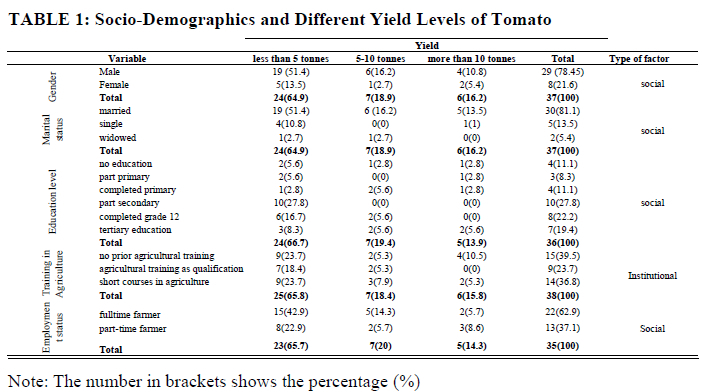
Table 1 presents the socio-demographic characteristics of tomato producers. The results were presented based on the level of production of the farmer as either low (less than 5 tonnes/ha), medium (between 5 and 10 tonnes/ha), high yield (more than 10 tonnes/ha), and the types of factors for each variable were assigned as either social, technological, economic/financial or institutional.
The gender of farmers (heads of household) was 78% male and 22% female, of which 81% were married, 14% were widowed, and 5% were single (Table 1). Most farmers (28%) had spent an average of 9 years in school (Table 1), and this might have affected the adoption of good agricultural practices among farmers to meet international standards as demanded by retailers and supermarkets. Most of the heads of households were employed as full-time farmers (63%), and the remainder were part-time farmers who were employed in public, private, and self-employment sectors (37%) (Table 1).
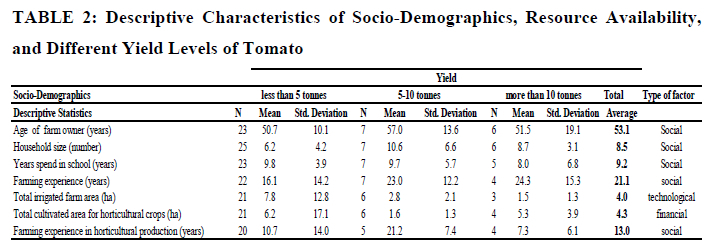
Table 2 indicates the seven key socio-demographic factors, of which five are classified as social factors, while financial and technological factors have 1 factor each.
The average age of farm owners is 53 years (Table 2). Older farmers are expected to have more farming experience and to farm better than young farmers, which corroborates the findings of Brown (2012) and Zagata & Sutherland (2015). On average, farmers had farming experience of 21 years, with an average of 13 years in horticultural production. The average irrigated farm area with the cultivated area in horticultural crops is 4 ha (Table 2). The area irrigated for tomatoes is less than 1 ha, and tomatoes are normally cultivated with other horticultural crops, but the hectares fluctuate according to 'farmers' available resources. These findings are consistent with Helfand and Taylor (2021) and Van Zyl, Binswanger and Thirtle (1995), who argue that there is an inverse relationship between farm size and efficiency in commercial farming; as a result, efficiency could improve if commercial crop farms were smaller.
3.2. Tomato Production and Challenges Faced by Producers
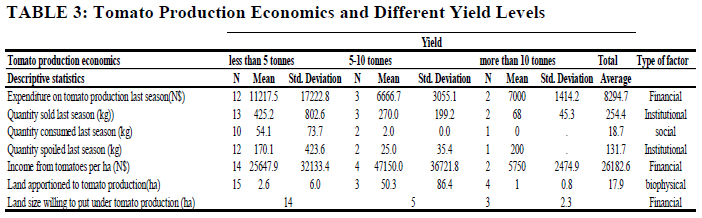
Table 3 presents the tomato production economics and different yield levels.
The average expenditure was N$ 8,294.70, and an average income of N$26,182.60 from tomato production in 2018 was attained, giving a gross income of N$17,887.90. This shows how lucrative tomato production is for smallholder farmers in Northern Namibia. However, farmers experience high quantities of spoilage of tomatoes (Table 3).
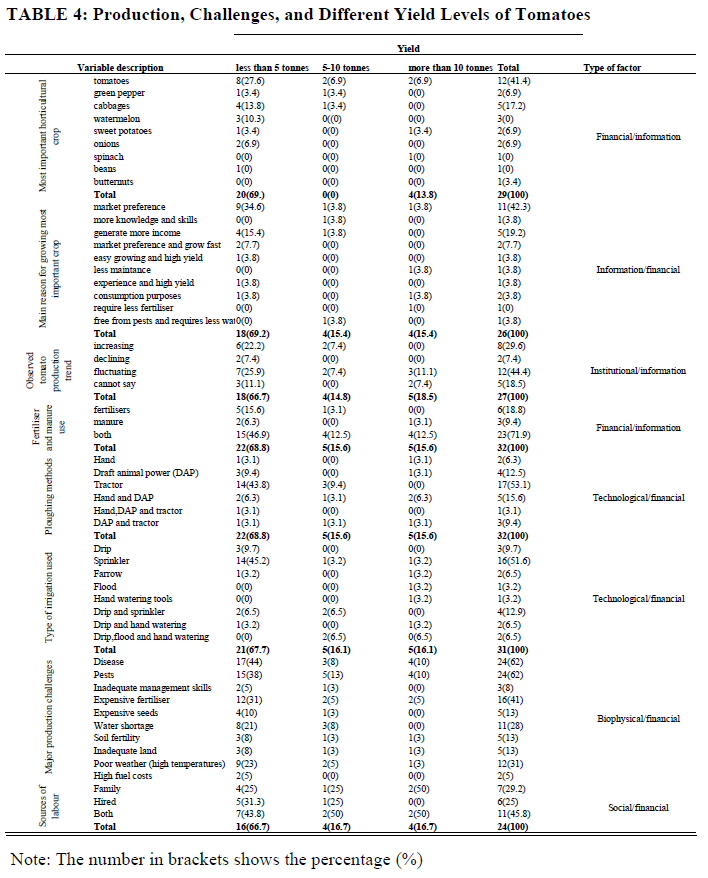
Table 4 presents tomatoes' production, challenges, and different yield levels.
Table 4 shows that the most important horticultural crops farmers produce are tomatoes and cabbages, respectively. The main reason for growing these crops, as stated by the farmers, is that these crops are preferred in the domestic market and generate more income. According to Thomas (2020) and Thomas and Vink (2020), these crops have a short maturing duration, thus resulting in earlier and more regular marketability. However, 44% of the farmers stated that they observed tomato production trends fluctuating in the domestic market. Table 4 also shows that tractors are used as a method of ploughing (52%), and a sprinkler system is the most used irrigation type for tomato production. Most farmers said they apply chemical fertilisers and manure (72%) to enhance crop nutrients. As emphasised in the literature, the most important determinants of agricultural productivity are fertiliser and improved seed (Mason & Jayne, 2013). Regarding the provision of inputs (seeds, fertilisers, and pesticides), farmers experience high transport and other transaction costs as these inputs are imported from the Republic of South Africa (Fiebiger et al., 2010).
Moreover, the 'region's climatic conditions allow for tomatoes to be produced free from serious crop diseases and pests, and they are exposed to minimal frost, unlike in other vegetable-producing areas of Namibia where tomatoes cannot be produced throughout the year (Togarepi et al., 2018). However, most farmers (62%) indicated that the prevalent existence of pests and diseases as well as high temperatures (31%), and the shortage of water (28%) were some of the challenges (Table 4). This is consistent with the findings of Malherbe and Marais (2015) in South Africa and Ochilo et al. (2019) in Kenya for areas where tomatoes are grown during the summer rainfall season while experiencing high temperatures and high occurrence of diseases, which ultimately lowered production. It was observed in this study that whitefly (Aleurodicus dispersus) is a common pest in the area where farmers have minimal control over this pest, which then serves as an obstacle in their production process. Similar findings were observed by Nzanza & Mashela (2012) and Tosh and Brogan (2015).
Forty-one per cent (41%) of the farmers in the study area indicated that tomato was the most important horticultural crop they farm with (Table 4). For large commercial farmers, the average tomato yield is 50 t/ha. Still, the farmers indicated average actual yields of less than 20 t/ha (Togarepi et al., 2018) due to high incidences of postharvest loss in the field and production inefficiencies causing a huge yield gap (Malherbe & Marais, 2015). This agrees with the findings of McKenzie, Singh-Peterson & Underhill (2017), who found that the highest incidence of postharvest loss of tomatoes occurred at the harvesting and grading stages of the supply chains, including in field and packing shed losses, accounting for between 90.3% and 97.5% of overall losses. Most countries in Southern Africa have an estimated average yield of over 10 t/ha) (Mango et al., 2015). Other factors contributing to low tomato production include low levels of fertiliser intensity, use of low-yielding crop seed varieties, high costs of agricultural inputs, and high transport costs (Mango et al., 2015; Malherbe & Marais, 2015).
3.3. Tomato Marketing and Challenges Faced by Producers
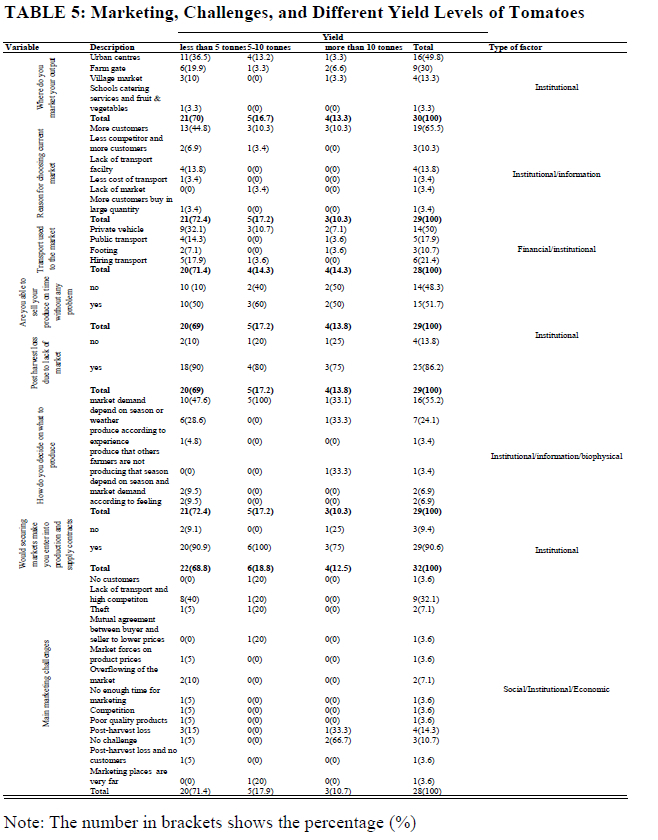
Table 5 presents marketing, challenges, and different yield levels of tomatoes.
Fifty percent (50%) of farmers indicated that the most important market is urban centres, and of these farmers, 38% produced a yield of less than five tonnes per hectare (Table 5). Moreover, some supply the informal markets, such as local open markets, and sell at roadside stalls within the community and urban settlements. In contrast, others provide formal markets, such as retailers, supermarkets, and institutional buyers (catering and restaurants). The reason for choosing urban centre markets is the high number of customers (66%) for the farmers' fresh tomatoes. The results confirm the findings of Maliwichi, Pfumayaramba & Katlego (2014), who found that the distance to markets in South Africa was far, and farmers sold produce closer to their farms.
Furthermore, Maliwichi et al. (2014) found that in most cases, the choice of markets for producers was influenced by the distance to the market and the number of customers. According to Eaton, Meijerink & Bijman (2008), in contrast to market distance/formal marketing, the spot market-based coordination mechanism is the 'default' marketing option for smallholder farmers in rural areas. In this marketing option, the vegetables are mainly sold to the customers by women, children, or young men. Moreover, farmers sell directly to buyers or informal traders, such as hawkers and vendors, who are important actors in the trading of tomatoes and other fresh produce. In informal markets, the prices obtained are generally low when compared to formal markets such as supermarkets, shops, and petrol station outlets. Nonetheless, smallholder farmers prefer the informal marketing channel because they cannot meet the stringent international quality standards and consistently meet the quantity demands of modern supermarkets and retailers (Ortmann & King, 2010). Most (86%) farmers indicated a high incidence of postharvest loss due to a lack of access to formal markets. However, a study in the Southern Hemisphere by McKenzie et al. (2017) indicated that the lowest postharvest loss in tomato supply chains in Queensland, Australia, occurred after farm-gate, accounting for 2.55 and 9.7% of overall loss.
In observing the transportation used by smallholder farmers in the survey data, it can be seen (Table 5) that the primary mode of transportation used is private vehicles (50%). In the absence of their vehicle, farmers opted to hire (22%) alternative means of transport (Table 5) and, to a limited extent, made use of public transport (taxis). Interviews with the farmers also revealed that public transport, in most cases, was unreliable, with much negotiation/bargaining regarding transport costs, and that producers experienced regular delays in reaching local markets. Farmers considered public transport expensive at about N$12.50 (US$0.93) per km during the 2018 season. Tomato farmers also lacked access to refrigerator trucks to transport their fresh produce from the farm directly to the supermarkets or retailers, which agrees with the findings of Thomas and Vink (2020) and Fiebiger et al. (2010). The lack of transport is also associated with a lack of market information and increased transaction costs, which impacts farmers' production levels (Manishimwe et al., 2019). It was observed in the study that a small quantity of tomatoes was traded across the border to relatively large markets in Angola. Namibian farmers can produce tomatoes throughout the year, thus satisfying demand in neighbouring Angola during its off-season from October to November (Togarepi et al., 2018). It was observed that when farmers sell their produce, the contractual relationship is limited, with most farm households deciding individually what crops to grow and where to sell them (mainly local informal markets). Farmers indicated they would agree to contract production if the market for fresh produce (tomato) is secured. In addition, 55% of farmers reported that the decision on what to produce is based on market demand.
3.4. Extension Services and Training Challenges for the Tomato Industry
The study results show that very few farmers (40%), representing 31 out of 77 farmers, received extension services at least once a year. Only three (4%) farmers received extension services weekly. This observation indicates the need for more intensification of extension services, which the government in Namibia provides. Only 15 (20%) of the respondents received training regarding good agricultural practices. Extension officials' most important contribution is sharing information that increases crop production and marketing (Jona & Terblanché, 2015). Thus, extension officials should be knowledgeable and have practical experience and skills in horticultural production and management. However, it was observed that the extension officials were not trained specialists in horticultural production but general agronomists who lacked some basic practical farming expertise and skills, making it challenging to provide farmers with appropriate information and advice. The relaying of proper advice and information from extension officers to smallholder tomato producers served as an obstacle for farmers in this study. This is due to the persistent misinformation, where farmers neglect horticultural production advice and information from extension officials. This agrees with Ofoegbu and New's (2021) findings from a study on collaboration relations in climate information production and dissemination to subsistence farmers in northern Namibia.
The results of this study show that 40% of farmers received regular advice and information on agricultural production and marketing from extension officials. This is higher than the national average of 1.3% of all agricultural households that received extension services from the Department of Agricultural Production and Engineering and Extension Services (Namibia Statistics Agency, 2019b), and approximately 20% of farmers indicated that they were trained in good agricultural practices. Extension officials should be able to train farmers on the following topics: soil fertility, plant diseases, pests, irrigation systems, fertiliser applications, farm management (bookkeeping of expenditures and revenues), and product marketing (Fiebiger et al., 2010). It was also observed that extension officials for farmers at the Etunda Irrigation Project were located at the project site. In contrast, the extension officials for the Olushandja area were located at a maximum distance of around 40 km from the site in Outapi Town. In most cases, the extension officials in Outapi did not have transport to visit farmers. Lack of transport by extension officials to visit farmers was, therefore, one of the constraints in farmers' access to extension services. These findings corroborate those from a study by Maliwichi et al. (2014), which found that although extension personnel provide information, it is sometimes ineffective or trusted and may not address their direct problems.
3.5. Interaction of the Different Factors to Mitigate the Challenges that Tomato Farmers Face
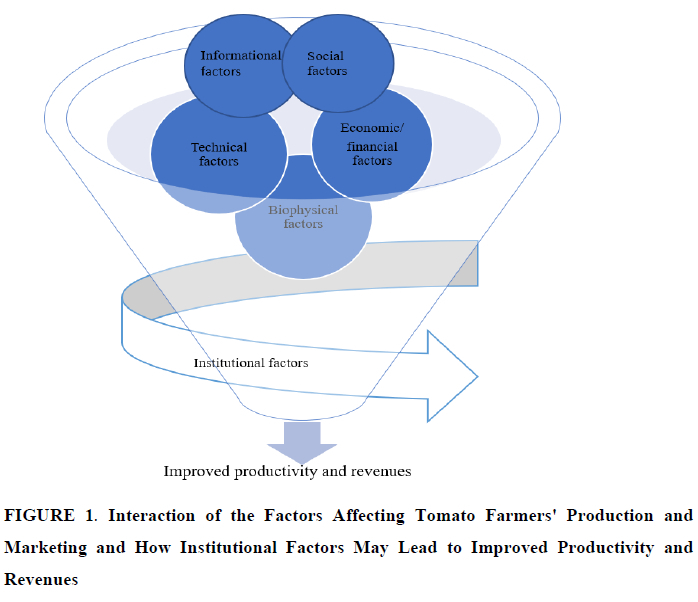
Figure 1 represents the interaction of the different factors affecting tomato farmers' production and marketing.
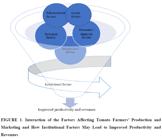
The individual factors and the interaction between these factors may affect the production and marketing of tomatoes (Figure 1). The institutional factors such as access to training, access to market information, ownership of land, water rights, being a member of farmers associations or cooperatives, access to credit (loan) facilities and access to extension services, if well-aligned and strengthened, will enable the interaction of all the other factors to yield positive outcomes for the tomato farmers and mitigate the challenges that farmers face in tomato production. A poorly managed institutional environment negates the efforts of individuals to improve their lives and livelihoods. This discussion on how individual factors and their interactions affect the production and marketing of tomatoes in north-central Namibia can be summarised as depicted in Figure 1.
4. CONCLUSIONS AND POLICY IMPLICATIONS
The study concludes that smallholder production in the tomato industry is associated with high costs of seeds, fertilisers, and pesticides and high transaction costs. This necessitates the government and the private sector to initiate the local production and supply of seeds, fertilisers, and pesticides. Another main problem with tomato production is the high incidence of pests such as the whitefly. Thus, extension officials need to be trained in entomology, amongst other skills regarding the production of tomatoes. There is also a need to research sustainable traditional and organic methods of controlling pests and how to implement them. Institutional factors such as access to credit, information, specialised extension services, and access to inputs (affordable inputs) and markets were found to have the greatest impact on the production and marketing of tomatoes produced by farmers, and strengthening these would greatly enhance farmers' incomes. The study found high postharvest losses on farms and during the selling of tomatoes. Thus, there is a need for on-farm training on good agricultural practices. On the market side, there is a need for proper handling, packaging, maintaining the cold chain, and initiating value addition through agro-processing. The farmers also experience high transport costs to distant markets for their produce. Initiating bilateral agreements between Angola and Namibia for horticultural trade would facilitate the free flow of products to the larger Angolan market.
5. RECOMMENDATIONS
• The study recommends that the government (extension officials) should have capacity-building programmes through practical training of farmers on cultivating improved varieties of tomatoes and training on good agricultural practices, including how to reduce postharvest losses and meet global market standards.
• In addition, since government extension officers are generalists and not specialists, there is a need to train specialised extension officers in horticulture that can work with horticultural farmers. However, those who can afford to pay may be encouraged to seek private extension services which may be timely.
• The farmers should organise themselves for cooperative buying and marketing and capitalise on the importance of cooperation. Farmers would benefit from bulk buying to reduce the costs of inputs if they buy together, as well as marketing as a group to meet market quantities or for their market stalls. During the harvest season, all farmers will be allowed to market their produce at their established group market outlet, where they will have improved control over prices and quantities, which gives them leverage in bargaining as a group compared to doing this as individuals.
• The study recommends that other related research be conducted in other regions of north Namibia, such as the Kavango and Zambezi regions, where access to water is ensured to determine the production and marketing challenges and yield levels of tomato crops.
• Amongst the study's limitations is that the sample may not represent the entire population, and some respondents answered questions based on their expectations from the study based on limited records. Thus, farmers should be trained in record-keeping and financial management.
7. AUTHORS CONTRIBUTION
B. Thomas collected the data for this study and wrote the initial draft of the manuscript. C. Togarepi conducted data analysis. Both authors have read and approved the finalised manuscript.
The author declares no conflict of interest regarding this research paper.
6. ACKNOWLEDGEMENTS
The author thanks and greatly appreciates the materials and financial contributions for the study from the University of Namibia (UNAM), as well as the contributions of reviewers.
REFERENCES
- ABEBE, G.K., TRABOULSI, A. & AOUN, M., 2022. Performance of organic farming in developing countries: A case of organic tomato value chain in Lebanon. Renew. Agri. and Food Sys., 37: 217-226.
- ALAM, M.J., HOSSAIN, M.I. & BARUA, S., 2021. Factors determining the smallholder milk producers participation in contractual agreements: The Case of North-West Bangladesh. Int. J. of Sus. Agric. Res., 8(3): 164-179.
- BLANDON, J., HENSON, S. & ISLAM, T., 2009. Marketing preferences of small-scale farmers in the context of new agri-food systems: A stated choice model. Agrib., 25(2): 251-267.
-
BROWN, L., 2012. Supporting the Participation of Young People in Agriculture and Rural Development. National Youth Development Agency (NYDA): Available from: www.nyda.gov.za/.../Supportingpercent20thepercent20participationpercent20ofpercent20you.
» www.nyda.gov.za/.../Supportingpercent20thepercent20participationpercent20ofpercent20you - CELE, L. & WALE, E., 2018. The role of land and water use rights in smallholders productive use of irrigation water in KwaZulu-Natal, South Africa. Afr. J. of Agric. and Res. Econ., 13(4): 345-356.
- CRESWELL, J.W., 2014. Research Design: Qualitative, Quantitative, and Mixed Methods Approaches. 4th Ed. Thousand Oaks: CA Sage.
- DEVELOPMENT CONSULTANCY FOR SOUTHERN AFRICA (DECOSA) 2001., Consultancy on the prospects of domestic import substitution in various agricultural commodities. Windhoek: DECOSA.
- EATON, D., MEIJERINK, G. & BIJMAN, J., 2008. Understanding institutional arrangements: Fresh fruit and vegetable value chains in East Africa. Markets, chain and sustainable development strategy & policy paper. No. XX. Wageningen: Stichting DLO.
- EMONGOR, R. & KIRSTEN, J., 2009. The impact of South Africa supermarkets on agricultural development in SADC: A case study in Zambia, Namibia, and Botswana. Agrekon., 48(1): 60-84.
- ESTRADA-ACOSTA, M., JIMÉNEZ, M., CHAIDEZ, C., LEÓN-FÉLIX, J. & CASTRO-DEL CAMPO, N., 2014. Irrigation water quality and the benefits of implementing good agricultural practices during tomato (Lycopersicum esculentum) production. Envir. Mon. and Ass., 186: 4323-4330.
-
FAO., 2021. FAOSTAT. Available from: http://www.fao.org/faostat/en/#data/QC
» http://www.fao.org/faostat/en/#data/QC - FIEBIGER, M., BEHMANESH, S., DREUBE, M., HUHN, N., SCHNABEL, S., WEBER, A.K., DIEZ, G., HAMUTENYA, L., KANYANGELA, S. & KAUFILUA, L., 2010. The small-scale irrigation farming sector in the communal areas of Northern Namibia: An assessment of constraints and potential. SLE Publication Series - S 242: Zerbe Druck & Werbung: Windhoek/Berlin
- HELFAND, S.M. & TAYLOR, M.P.H., 2021. The inverse relationship between farm size and productivity: Refocusing the debate. Food Pol., 99(2021): 1-12.
- GATAHI, D.M., 2020. Challenges and opportunities in tomato production chain and sustainable standards. Int. J. of Hort. Scien. and Tech., 7(3): 2588-3143.
- JACOBI, I., 2008. Crop production. Windhoek: Joint Presidency Committee (NAU and the NNFU).
- JONA, C.N. & TERBLANCHÉ, S.E., 2015. Farmers' perception on contact frequency, adequacy, relevance, and quality of agriculture support services (ASS) in Oshikoto Region in Namibia. S. Afr. J. Agric. Ext., 43(1): 107-121.
- JORDAAN, H., GROVÉ, B. & BACKEBERG, G.R., 2014. Conceptual framework for value chain analysis for poverty alleviation among smallholder farmers. Agrekon., 53(1): 125.
- KALDARU, H. & PARTS, E., 2008. Social and institutional factors of economic development: Evidence from Europe: Baltic J. of Econ., 8(1): 29-51.
- KIRSTEN, J.F. & SARTORIUS, K., 2002. Linking agribusiness and small-scale farmers in developing countries: Is there a new role for contract farming? Dev. Sout. Afr., 19(4): 503-529.
- MALHERBE, S. & MARAIS, D., 2015. Economics, yield, and ecology: A case study from the South African Tomato Industry. Outl. on Agri., 44(1): 37-47.
- MALIWICHI, L.L., PFUMAYARAMBA, T.K. & KATLEGO, T., 2014. An analysis of constraints that affect smallholder farmers in the production of tomatoes in Ga-Mphahlele, LepelleNkumbi Municipality, Limpopo Province. South Africa. J. of Hum. Eco., 47(3): 269-274.
- MANGO, N., MAPEMBA, L., TCHALE, H., MAKATE C., DUNJANA, N. & LUNDY, M., 2015. Comparative analysis of tomato value chain competitiveness in selected areas of Malawi and Mozambique. Cog. Econ. & Fin., 3(1088429): 1-15.
- MANISHIMWE, R., NIYITANGA, F., NSABIMANA, S., KABAYIZA, A. & MUTIMAWURUGO, M.C., 2019. Socioeconomic and institutional factors influencing the potato (Solanum tuberosum L.) production at smallholder farmers level in the Gicumbi District in Rwanda. Trop., 37(2): 1-10.
- MASON, N.M. & JAYNE, T.S., 2013. sFertiliser subsidies and smallholder commercial fertilizer purchases: Crowding out, leakage and policy implications for Zambia. J. of Agric. Econ, 64(3): 558-582.
- MCKENZIE, T.J., SINGH-PETERSON, L. & UNDERHILL, S.J.R., 2017. Quantifying postharvest loss and the implications of market-based decisions: A case study of two commercial domestic tomato supply chains in Queensland, Australia. Hort., 3(44): 1 - 15.
- MENDELSOHN, J.M., JARVIS, A., ROBERTS, C. & ROBERTSON, T., 2002. Atlas of Namibia: A portrait of the land and its people. Cape Town, South Africa: David Philip Publishers.
- MILAGROSA, A., 2007. Institutional economics analysis of vegetable production and marketing in Northern Philippines: Social capital, institutions, and governance. Doctoral dissertation, Wageningen University.
- NAMIBIA AGRONOMIC BOARD (NAB)., 2018. Annual Report. Windhoek: Namibia Agronomic Board.
- NAMIBIA STATISTICS AGENCY(NSA)., 2019a. Quarterly Report on GDP. Windhoek: Namibia Statistics Agency.
- NAMIBIA STATISTICS AGENCY (NSA)., 2019b. Namibia Census of Agriculture 2013/14, Communal Sector Revised report. Windhoek: Namibia Statistics Agency.
- NZANZA, B. & MASHELA, P.W., 2012. Control of whiteflies and aphids in tomato (solanum lycopersicum l.) by fermented plant extracts of the neem leaf and wild garlic. Afric. J. of Blotch., 11(94): 16077-16082.
- OCHILO, W.N., NYAMASYO, G.N., KILALO, D., OTIENO, W., OTIPA, M., CHEGE, F., KARANJA, T. & LINGEERA, E.K., 2019. Characteristics and production constraints of smallholder tomato production in Kenya. Sci. Afric., 2: 1-10.
- OJIEM, J.O., DE RIDDER, N., VANLAUWE, B. &. GILLER, K.E., 2006. Socio-ecological Niche: A conceptual framework for integration of legumes in smallholder farming systems. Int. J. of Agric. Sust., 4(1): 79-93.
- OFOEGBU, C. & NEW, M., 2021. Collaboration relations in climate information production and dissemination to subsistence farmers in Namibia. Environ. Mag., 67: 133-145.
- ORTMANN, G.F. & KING, R.P., 2010. Research on agri-food supply chains in Southern Africa involving small-scale farmers: Current status and future possibilities. Agrekon., 49(4): 397-417.
- PENDER, J. & HAZELL, P., 2000. Promoting sustainable development in less-favoured areas. Focus No. 3 Policy Brief. Washington, DC: International Food Policy Research Institute (IFPRI).
- REHMAN, M., KHAN, N. & INAYATULLAH, I., 2007. Postharvest losses in tomato crop: A Case of Peshawar Valley. Sarh. J. of Agr., 23(4): 1279-1284.
- SHACKLETON, S. & LUCKERT, M., 2015. Changing livelihoods and landscapes in the rural Eastern Cape, South Africa: Past influences and future trajectories. Land., 4(4): 10601089.
- SHIIMI, D.K., CHARAMBA, V., BELLO, H.M. & LUTAAYA, E., 2023. Factors affecting smallholder subsistence farmers' drought adaptation and resilience: A case study from Northern Central Namibia. Nam. J. of Environ., 7: 21-38.
- SHIKWAMBA, S., MALAZA, N. & NCUBE, B., 2022. Enhancing the resilience and adaptive capacity of smallholder farmers to drought in the Limpopo Province, South Africa. Canser., 2: 435-449.
- SHRESTHA, R.B., HUANG, W.C., GAUTAM, S. & JOHNSON, T.G., 2016. Efficiency of small-scale vegetable farms: Policy implications for the rural poverty reduction in Nepal. Agric Ecan - Czech., 62(4): 181-195.
- SPEAR, D., ZAROUG, M.A., DARON, J.D., ZIERVOGEL, G., ANGULA, M.N., HAIMBILI, E.N., HEGGA, S.S., BAUDOIN, M., NEW, M., KUNAMWENE, I. & TOGAREPI, C., 2018. Vulnerability and responses ta climate change in drylands: The case af Namibia: CARIAA-ASSAR Working Paper.
- STEENKAMP, L.A. & THEBUHO, W., 2022. Understanding smallholder farmers' perceptions of and adaptions to climate change. In N. Benkeblia (ed.), Climate change and agriculture: Perspectives, sustainability and resilience. John Wiley & Sons.
- SVUBURE, O., STRUIK, P.C., HAVERKORT, A.J. & STEYN, J.M., 2017. Analysis of the Potato (Salanum tuberosum L.) Value Chain in Zimbabwe. Outl. an Agr., 46(1): 4956.
- TOBIN, D., GLENNA, L. & DEVAUX, A., 2016. Pro-poor? Inclusion and exclusion in native potato value chains in the central high lands of Peru. J. af Rur. Stud., 46: 71-80.
- THOMAS, B., 2020. Dynamics af Institutianal Arrangements far Small-scale Vegetable Farmers in Namibia: An Analysis af Market, State and Cammunity Institutians. Doctoral Dissertation, Stellenbosch University.
- THOMAS, B. & VINK, N., 2020. The development vegetables enterprises in the presence of transaction costs among farmers in Omusati Region of Namibia: An assessment. J. af Agri. and Food Res., 2: 1-6.
- TOGAREPI, C., THOMAS, B., HANGULA, M., SAMUNDENGU, C. & KAMBATUKU, J., 2018. Feasibility Assessment af Establishing a Tamata Pracessing Plant at Epalela. Namibia: Omusati Regional Council.
- TOSH, C.R. & BROGAN, B., 2015. Control of tomato whiteflies using the confusion effect of plant odours. Agron. for Sust. Dev., 35: 183-193.
- VAN, ZYL J., BINSWANGER, H. & THIRTLE, C., 1995. The Relationship between farms farm size and efficiency in South African agriculture. Washington DC: The World Bank, Agriculture, and Natural Resources Department.
- WELDEGIORGIS, G., MEZGEBO, G.K., GEBREMARIAM, H.G. & KAHSAY, Z.A., 2018. Resources use efficiency of irrigated tomato production of small-scale farmers. Inter. J. of Veg. Scie., 24(5): 456-465.
- YOKWE, S., 2009. Water productivity in smallholder irrigation schemes in South Africa. Agric. Water Mag, 96: 1223-1228.
- ZAGATA, L. & SUTHERLAND, L.A., 2015. Deconstructing the 'young farmer problem in Europe': Towards a research agenda. J. of Rur. Stud., 38: 39-51.