Determinants of Farmer Participation in the Implementation Phase of Revitalisation Programme of Selected Smallholder Irrigation Schemes in KwaZulu-Natal, South Africa
Abstract
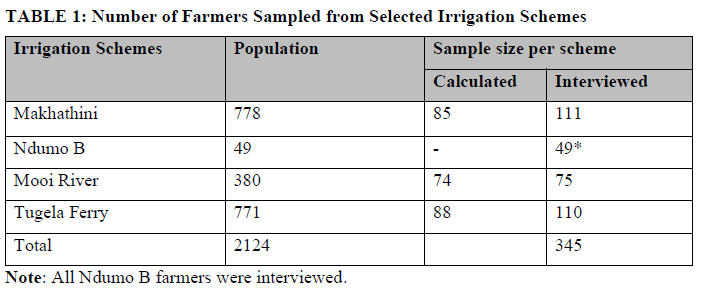
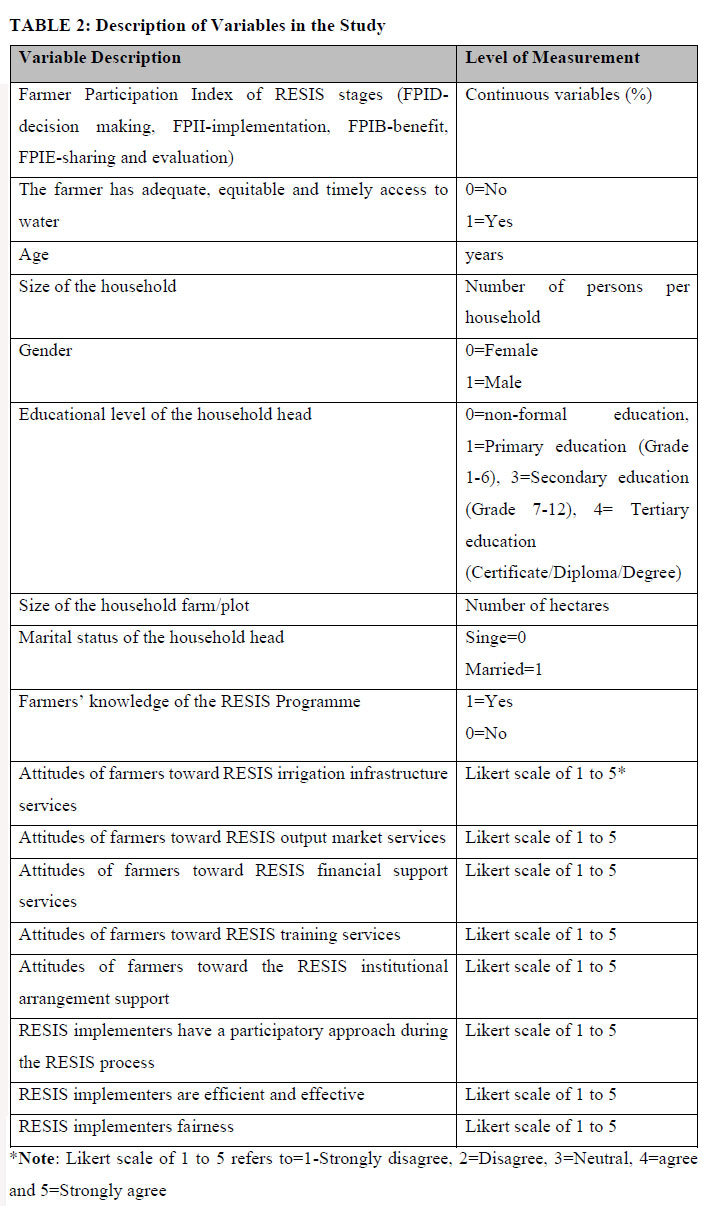
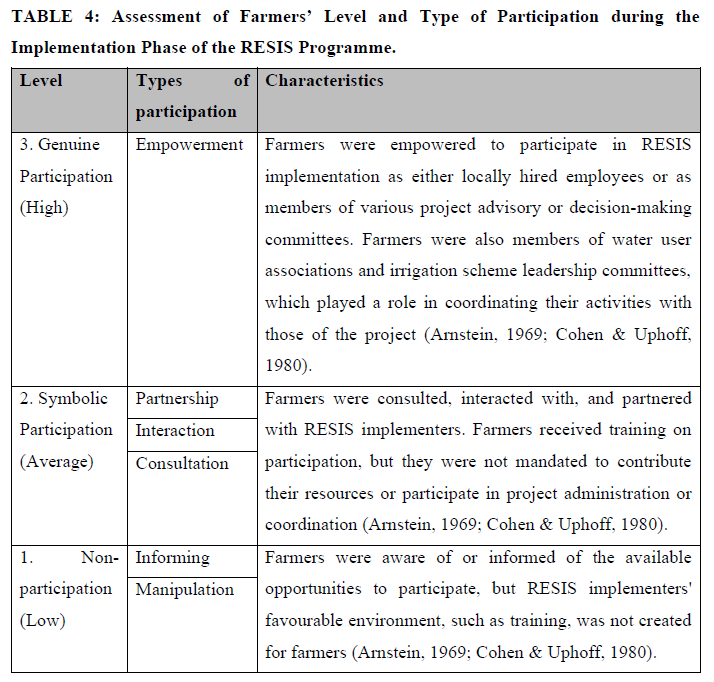
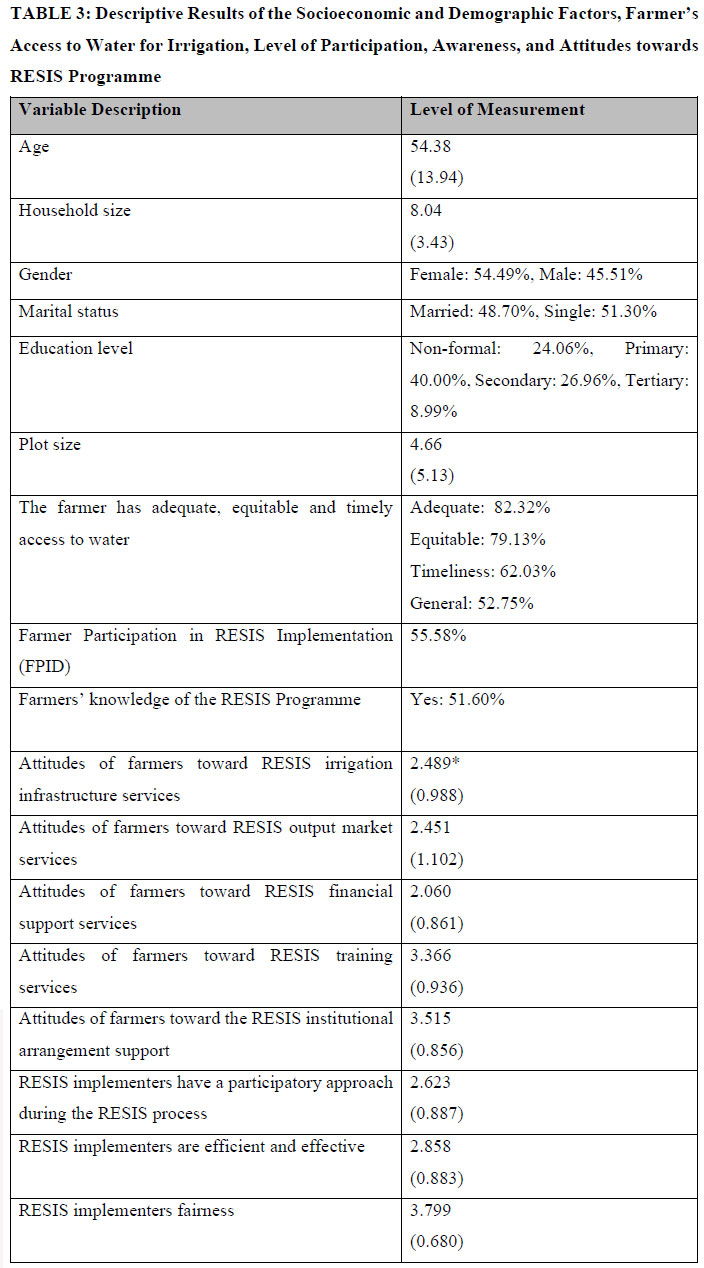
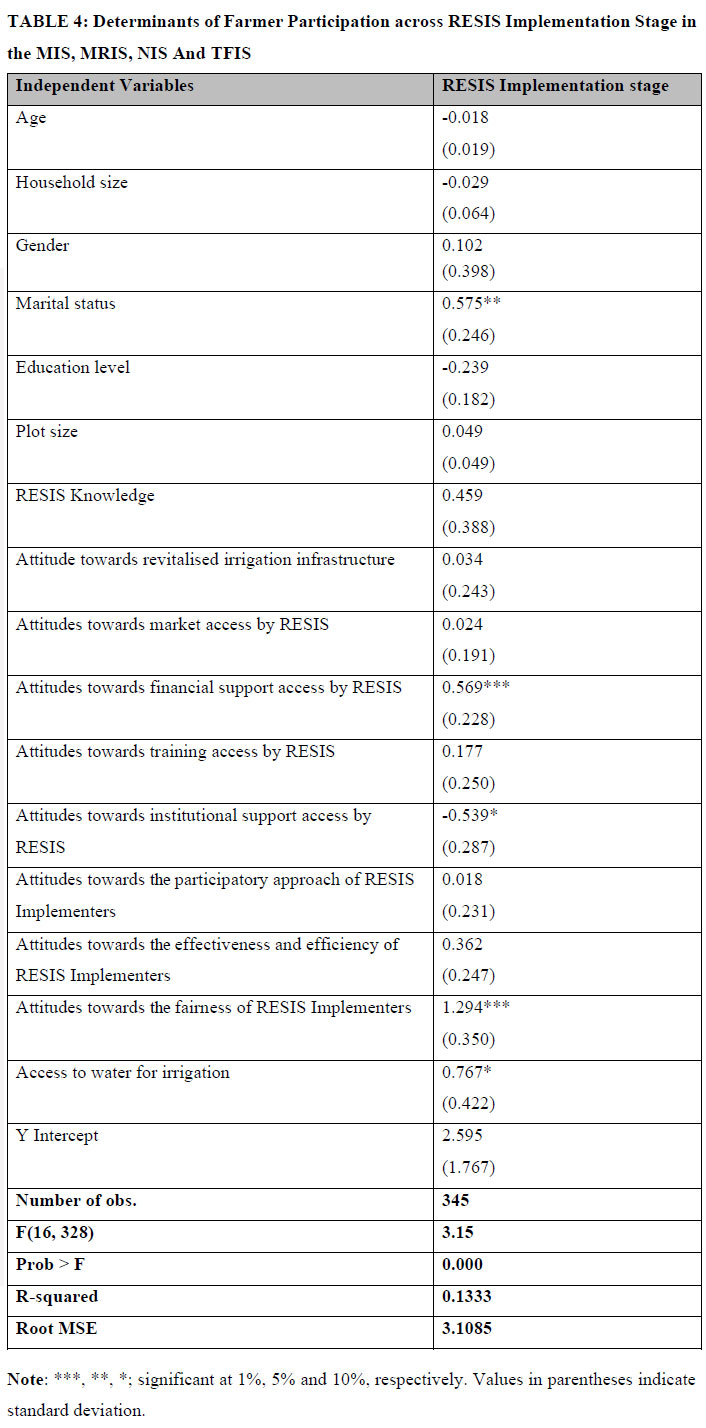
The current irrigation schemes in Sub-Saharan Africa perform below expectations, resulting in unreliable, inadequate, and inequitable access to water. It was reported that revitalised smallholder irrigation schemes with high levels of farmer participation have performed better than supply-driven schemes with low levels of farmer participation. The purpose of the study is to investigate how certain socioeconomic and demographic factors, farmer attitudes, RESIS awareness, and access to irrigation water affect a farmer's level of participation in the RESIS implementation phase. Survey results from 350 irrigation farmers in four selected schemes in KwaZulu-Natal province revealed that marital status, farmer attitudes, and access to water all had a statistically significant effect on farmer participation levels during the RESIS implementation phase. It is essential to note that these factors may vary across different irrigation schemes due to variations in biophysical and socioeconomic factors. The implementation guidelines for the RESIS programme should therefore take these variations into account.
Irrigation Schemes; Farmer Participation; Smallholder Farmers; Revitalisation