Evaluating Food Security Strategies Implemented by Smallholder Farmers at Mthonjaneni Local Municipality Under King Cetshwayo District, South Africa
Abstract
This study evaluated food security strategies implemented by the KwaZulu-Natal (KZN) Department of Agriculture for smallholder farmers in Mthonjaneni Local Municipality. A total of 49 respondents were interviewed using structured questionnaires. Livestock farmers faced constraints, including stock theft (53%), parasites/diseases (39%), and inadequate labour (4.8%). Crop production was affected by lack of implements (24%), temperature (29%), rainfall (23%), soil fertility (16%), and pests/diseases (8%). Households employed various coping strategies for food shortages, such as limiting meal portions (42%), skipping meals or days without eating (42%), borrowing food (39%), and reducing adult consumption to prioritise children (42%). Viable food security strategies identified included agricultural inputs from the Department of Agriculture (61%), poultry projects (20%), household and community gardens (18%), and drought-resistant seeds (10%). Alarmingly, 98% of respondents experienced food insecurity severe enough to go to bed hungry. The study highlights the critical need for extension practitioners to revise food security strategies to enhance support for smallholder farmers. This includes strengthening agricultural input supply, improving market access, supporting land tenure rights, and promoting diversified farming systems. Extension services must prioritise tailored interventions that address systemic barriers while building resilience to climatic and socio-economic challenges in rural communities.
Food Security; Determinants; Interventions; Coping Strategies; Households; Mthonjaneni; South Africa
1. INTRODUCTION
Poverty and food security remain two of the biggest problems facing South Africa and the rest of the African continent (Dinbabo, Belebema, & Mensah, 2019). South Africa is one of the African nations with the best-performing and most promising emerging economies (World Bank, 2018). Despite its potential for future growth and past progress, South Africa's economy is stagnant due to high unemployment, particularly among young people (Adeniyi & Dinbabo, 2019). The COVID-19 pandemic has significantly impacted the global economy, food security, and nutrition, with South Africa and many other countries being no exception (Swinnen & McDermott, 2020). In 2020, over 23.6% of South Africans experienced moderate to severe food insecurity, and approximately 14.9% had severe food insecurity (Statistics South Africa, 2019).
The people in rural South Africa are migrating to urban areas to search for better living conditions, increasing the influx into urban areas. The migration tends to flow agricultural labour from rural to urban areas, enlarging the urban population's size (Mthiyane et al., 2022). This dualism also exists within countries, causing unequal distribution of economic benefits, especially food. The South African government has taken on an enabling responsibility of ensuring that all citizens have access to food and water under its supreme law, the Constitution, section 27(1) (b).
King Cetshwayo District (KCD) is faced with low agricultural productivity, which threatens the existence and sustainability of the small-scale production of crops (Stats SA, 2019). In South Africa, the community of rural households relies primarily on government grants (Cheteni et al., 2020). The harsh climatic conditions make it challenging to practise subsistence farming, contributing to food insecurity (Rankoana, 2023; Zenda, 2024). The KZN Department of Agriculture and Rural Development needs to actively assist the community with strategies to alleviate poverty to remain food secure even if conditions change. The KZN Department of Agriculture and Rural Development (KZN DARD) has developed a Comprehensive Food Security programme for rural communities, especially vulnerable groups (women, youths, and disabled) and food-insecure households. The traditional authorities are encouraged to provide households with a piece of land to promote food production at the ward level. Agricultural support is important in assisting the land beneficiaries with marketing and producing agricultural products (Lukhalo and Zwane, 2022). Additionally, agricultural support can promote and support the establishment and development of smallholder farmers from previously disadvantaged backgrounds. Ngema, Sibanda, and Musemwa (2018) conducted a similar study, providing evidence indicating that food security remains an issue for rural smallholders of South Africa.
Limited studies specifically examine food security strategies the Department of Agriculture implemented to support smallholder crop and livestock farmers in enhancing food security. Understanding these strategies is critical, as it allows us to identify what has worked and has not and how agricultural extension can be improved to equip beneficiaries. The current study addresses this gap by contributing to the limited literature and raising awareness among agricultural extension advisors. This focus on agricultural extension is central to the study's objectives, as it seeks to examine how extension services can play a transformative role in supporting smallholder farmers to achieve food security.
Recent and relevant studies were considered to strengthen the research problem. For instance, Van der Berg, Patel, and Bridgman (2022) provide evidence on food insecurity trends in South Africa using data from the National Income Dynamics Study - Coronavirus Rapid Mobile Survey, while Dlamini et al. (2023) explore the association between food insecurity, coping strategies, and mental health outcomes in South Africa. These works underscore the multidimensional nature of food insecurity and its relevance in designing effective food security strategies.
2. METHODOLOGY
2.1. Study Area
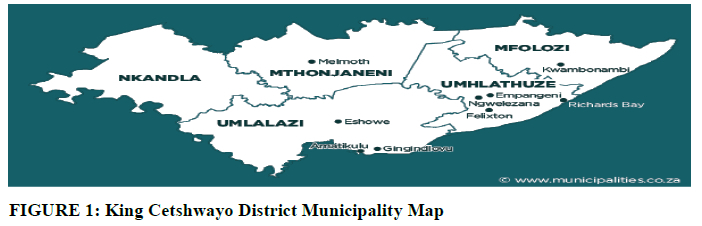
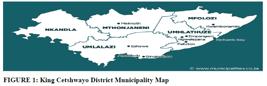
Mthonjaneni Local Municipality is found in King Cetshwayo District in the province of KwaZulu-Natal in South Africa. The District Municipality has five local municipalities: Mthonjaneni, Nkandla, uMlalazi, uMfolozi and uMhlathuze (See Figure 1). The Mthonjaneni Local Municipality consists of 13 wards, and all wards were selected for inclusion in this study based on their different agricultural potentials.
2.2.
Data Collection and Analysis TechniquesA questionnaire was used to collect data from 49 smallholder farmers. The questionnaires were translated into their official language (isiZulu). The questionnaire was distributed in person and offered closed questions with limited options. The main questions related to the paper's central argument are those aimed at investigating the effectiveness of agricultural extension strategies in enhancing food security among smallholder farmers. These questions included:
o What is your household's current food security situation (e.g., availability, access, utilisation, and stability)?
o Have you experienced food shortages in the past year?
o What are the main constraints affecting crop and livestock production in smallholder households?
The instrument used for quantitative data analysis was the Statistical Package for the Social Sciences (SPSS), a statistical software program. Descriptive statistics, the specific analytical tool employed, was used to summarise and interpret the data collected. This distinction highlights SPSS as the software used to perform the analysis, while descriptive statistics represents the analytical method applied (Zenda & Malan, 2021). The data obtained from questionnaires was analysed and interpreted. The descriptive statistics method briefly summarised the samples obtained from the smallholder crop farmers within Mthonjaneni Municipality. Data interpretation assisted in making sense of the numerical data collected.
2.3.
Sampling Procedure and Sample SizeThe study targeted smallholder crop and livestock farmers within Mthonjaneni Local Municipality under King Cetshwayo District at KwaZulu-Natal. According to the KZN Department of Agriculture and Rural Development database, there were about 60 smallholders. The researcher collected data from at least 49 of them within the Mthonjaneni Local Municipality, representing a fair sample of the smallholder population in the area. Farmers were selected based on their availability and consent to participate in the study, ensuring voluntary involvement and ethical compliance. The study focused on four wards, namely wards 2, 3, 4, and 7. The non-probability sampling method was selected for this study because it was based on non-random criteria, and not everyone has a chance of being included (Fowler, 2002). The selection criteria focused on households actively engaged in smallholder farming, ensuring that participants had relevant experience with agricultural extension services. This approach allowed the study to target farmers directly impacted by the evaluated services. Hence, these wards were selected based on their different agricultural potential.
3. RESULTS AND DISCUSSION
3.1. Demographic Characteristics of Respondents
3.1.1. Gender of Respondents
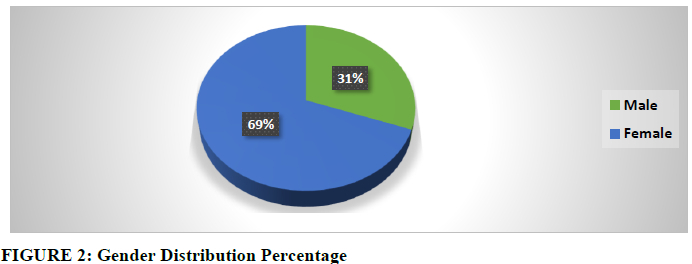
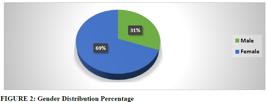
A total of 49 respondents were sampled in four wards from Mthonjaneni Local Municipality under King Ceshwayo District in KwaZulu-Natal province, South Africa. A majority proportion (n= 34, 69%) of the respondents who were sampled were female, while the remainder were male (n= 15, 31%) (Figure 2). Cele and Mudhara (2022) assert that women have a high dependency rate and are probably less likely to engage in other income-generating activities, such as agro-processing businesses, which will likely negatively impact food insecurity. Doss et al. (2020) and Mavhungu et al. (2021) found similar results, , women are responsible for agricultural production. The study demonstrates that men tend to participate less in agricultural activities because they may be working other jobs to provide for their households and families. Gender equality in the ownership of agricultural resources is vital in improving food security, productivity and the livelihoods of smallholder farmers (Maziya, Tirivanhu, Kajombo & Gumede, 2020).
3.1.2. Age Group of Respondents
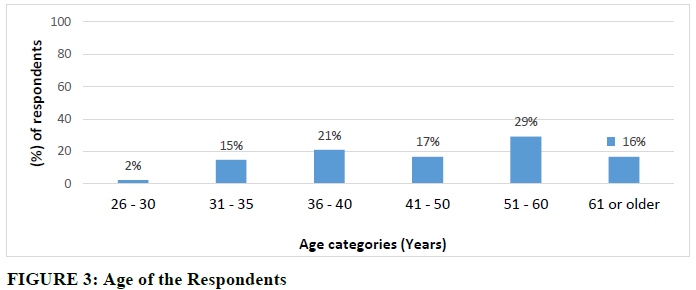
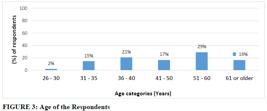
The results present that the highest age of the respondents was (n=14, 29%), ranging from 5160 years, while the lowest was (n=1, 2%), ranging from 26-30 years (Figure 3). This suggests that youth in Mthonjaneni Local Municipality might not be interested in agriculture. This agrees with the results of Zenda and Malan (2021), who reported that youth in South Africa are not interested in agriculture.
3.1.3. Education Level of Respondents
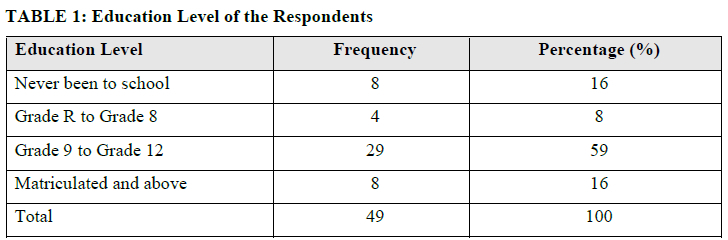
Education is important in the success of agricultural projects. The level of education influences the extent to which farmers can have access to technology and information, not only through improved literacy that enables smallholder farmers to access written information but also through increased ability to search for information with the use of modern technologies (Mavhunga et al., 2021). Table 1 presents the education level of the respondents. It was found that most respondents attended school from grade 9 to grade 12 (59%), while at least 8% attended school from grade R to grade 8. These results indicate that farmers' education level is sufficient to understand and interpret the basic crop and livestock farming principles and practices.
3.1.4. Farming Experience
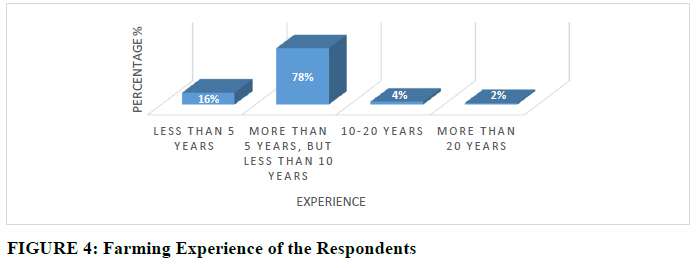
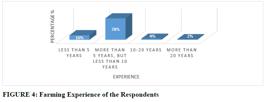
Farming experience is of paramount importance for farming systems. When smallholder farmers are experienced, they can easily adopt new ideas. Additionally, the farming experience encourages people to participate in agriculture activities (Siphesihle & Lelethu, 2020). The more individuals engage in agricultural activities, the more they recognise the benefits of purchasing everything from marketplaces. Most households (n= 38; 78%), as indicated in Figure 4, have a farming experience of more than five years but less than ten years, while the minority (n= 1; 2%) have more than 20 years' of experience in farming activities. The results of this study differ from those of Sambo et al. (2017), who reported that most (40.1%) farmers had between 16 and 20 years of experience in farming.
3.1.5. Ownership of the Farmland
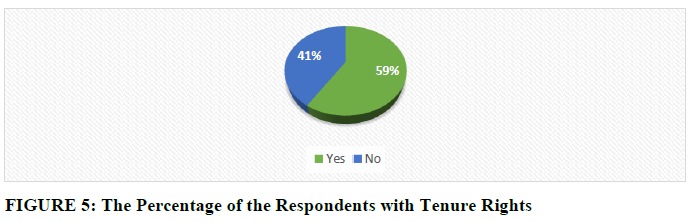
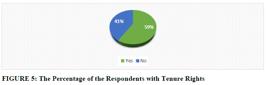
Secure tenure rights are important to enhance the food security of smallholder farming systems. When agricultural land is primarily communal, there would be few incentives to practice sustainable land management (Zenda & Malan, 2021). Figure 5 illustrates that 59% of the sampled households own land, while 41% of the respondents do not own land. The issue of tenure rights is a concern in South Africa if future food security is to be achieved. Concerning land tenure, the land ownership belongs to the Ingonyama Trust, which gives them permission to use the land. Households are permitted to occupy (PTO) land, which restricts them from using land as collateral to obtain funding. These results indicate that the issue of land tenure is a challenge that needs to be addressed.
3.1.6. Size of the Farmland
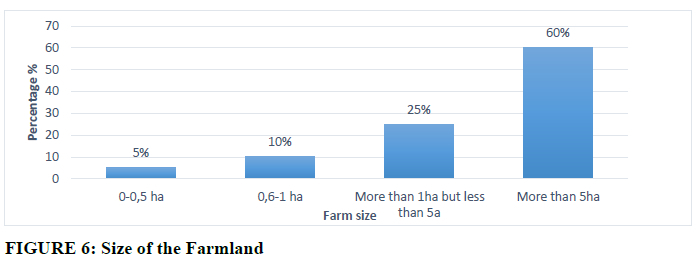
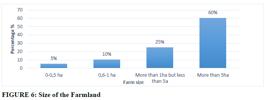
The findings revealed that a high proportion (n=29, 60%) of the respondents in the study had more than five hectares (ha) of land (Figure 6). The respondents with 0 to 0.5 ha recorded 5%, 0.6 to 1 ha was 10% and more than 1 ha but less than 5 ha recorded 25% (Figure 6). According to Khumalo and Sibanda (2019), small plots are associated with low yields that have a negative impact on household food security. Similar to this viewpoint, Jeminiwa et al. (2018) concluded that the farm's size affects productivity rate.
3.2. Livestock Production
3.2.1. Household Livestock Ownership
Livestock is vital in contributing to household crop production and food security. Mulugeta, Tiruneh, and Aderaw (2018) claim that livestock is utilised as safety nets and can be sold to purchase agricultural inputs, increase food purchasing power, and be consumed directly in the form of milk and meat. Table 4.2 indicates that all (n= 49, 100%) households own some livestock. The results showed that all households owned livestock (which included cattle, goats, sheep, pigs and chicken).
3.2.2. Main Constraints for Livestock Production in the Household
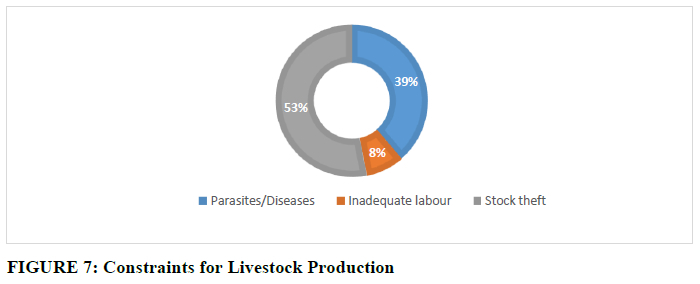
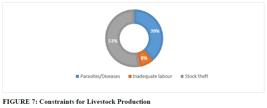
When evaluating the food security strategies implemented by the KwaZulu-Natal Department of Agriculture, it is also important to consider the constraints facing smallholder farmers in the study area. Such constraints are important because they influence these farming systems' productivity and food security. As indicated in Figure 7, the majority (n=26; 53%) of the sampled households indicated that stock theft is the primary constraint for livestock production. The other constraints were parasites/diseases (n=18, 39%) and inadequate labour (n=4, 8%). According to a similar study conducted by Gatwech (2002), the major challenges faced by livestock farmers were diseases, the absence of veterinary personnel, the lack of veterinary services, and inadequate transport facilities, which contradicted the survey results. These results indicate that the issues of parasites, stock theft and inadequate labour have to be addressed. There is limited information about monitoring and evaluation by the Department of Agriculture Extension on land beneficiaries to address the challenges above.
3.3. Crop Production
3.3.1. Factors Affecting Crop Production
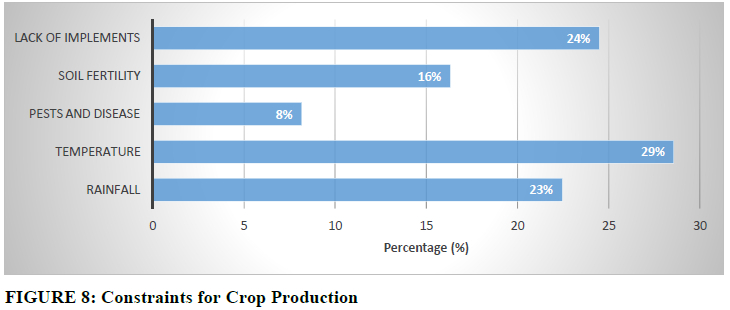
The results revealed that 29% of the respondents indicated that temperature was the major contributing factor that affected crop production (Figure 8). This is because it directly regulates critical plant processes such as germination, photosynthesis, respiration, and reproduction.
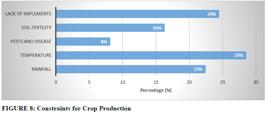
The least important factors were pests and diseases (n=4, 8%). The study further revealed that other factors affecting crop production include lack of implements (n=12, 24%), rainfall (n=11, 23%) and soil fertility (n=8, 16%). Future investments in improving soil fertility should support an "equitable green revolution" that promotes resilient and sustainable livelihoods that give both the nutrition and economic benefits necessary to increase social and economic well-being through the improvement of food security (Musumba et al., 2017). Infrastructure (implements) for irrigation lowers the likelihood that crops would fail, and if managed effectively, the increase in yields can be significant (Sikwela, 2013), providing household food security. Global agricultural production has already been significantly impacted by climate change due to its effects on soil fertility, carbon sequestration, microbial activity and variety, plant growth, and productivity (Reckling et al., 2018).
3.3.2. Agricultural Production Plans Applied by Small-Scale Crop Farmers to Enhance Food Security
3.3.2.1. Use of Different Seed Varieties
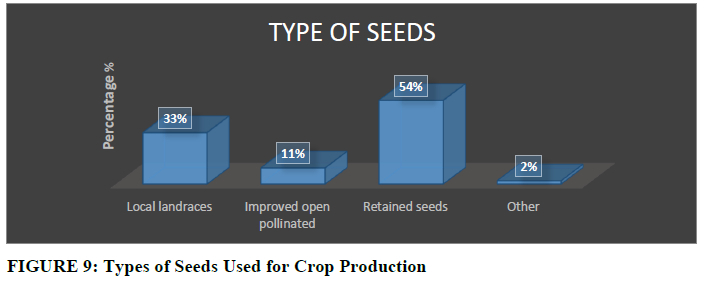
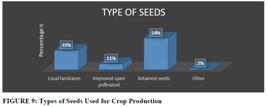
The majority of the respondents (54%) indicated that they use seeds that were retained, and the least respondents (n=1, 2%) indicated that they use other seeds (Figure 9). This suggests that smallholder crop farmers in the area use mostly retained seeds followed by local landraces, improved open-pollinated variety, and other seeds. According to Sibanda et al. (2016), farmers choose the accessible variety of seeds over improved pollinated ones, resulting in a low use rate. Retained seeds were mostly used, and many farmers complained of poor yield from using them. Many farmers complained of poor yield from this type of maize variety.
3.3.2.2. Use of Fertilisers to Enhance Crop Productivity
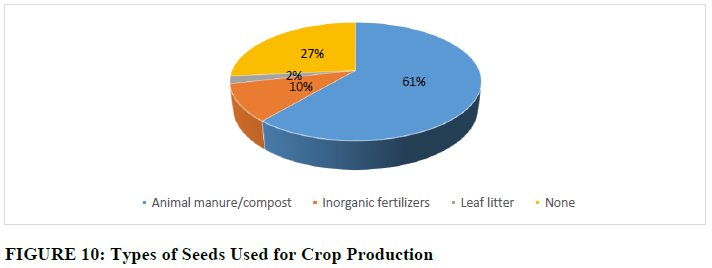
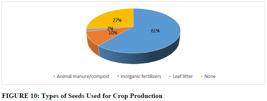
Most households (n= 30; 61%), as indicated by Figure 10, are using animal manure/compost as fertilisers, while 2% of the respondents use leaf litter. The study further shows that 27% of the respondents did not use any inputs, while 10% stated they used inorganic fertilisers. The integrated nutrient management system strategy uses a mix of organic manure and inorganic fertiliser to improve soil fertility and boost crop production potential (Kumar et al., 2013). Chemical fertilisers often result in imbalanced nutrient availability, which can stagnate crop yields and negatively impact the nutritional quality of the produce (Yu et al., 2020; Pandey & Singh, 2021). The findings indicated that respondents used manure/compost fertilisers, which are cheaper and easily available since most respondents own livestock.
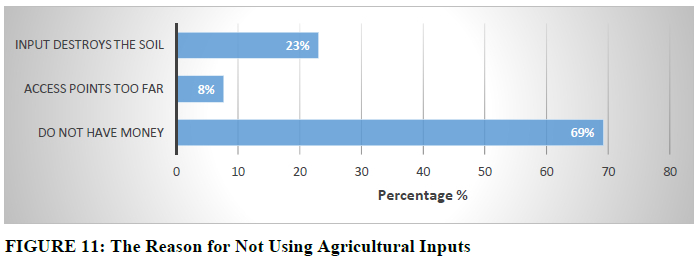
3.3.2.3. Results of the Respondents on the Reason for Not Using Agricultural Inputs
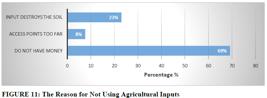
The reasons farmers are not using agricultural inputs are shown in Figure 11. The present study found that 23% of the respondents indicated that input destroys the soil, while 8% cite that access points for agricultural inputs are too far, and 69% do not have money. The findings indicated that most respondents do not have money to buy agricultural inputs, which corresponds with Altman et al.'s (2009) results from a study conducted in KwaZulu-Natal. The findings by Musemwa et al. (2013) support that few employment options remain, particularly in South Africa's rural areas, where most residents depend on government grants to sustain their households. The residents of the rural areas are low-income earners, so they cannot afford agricultural inputs.
3.4. Household Coping Strategies
3.4.1. Challenges to Accessing Enough Food in the Past Six Months
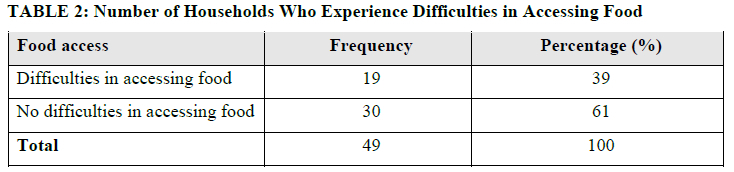
Regarding access to food, respondents were asked to provide perceptions on whether they had access to food. The survey revealed that 39% of the respondents had difficulties accessing food (Table 2), but the majority of the respondents (n=30, 61%) had not experienced such difficulties in the past six months (Table 2). Food accessibility refers to people's economic and physical capacity to obtain food (Gallaher & Furness, 2019). The engagement between community members will lead to the exchange of food goods among them. Gallaher & Furness (2019) reported that increasing food accessibility in the area is important to address food accessibility challenges. These results indicate that access to food is an issue that needs to be addressed.
3.4.2. Strategies to Deal with Food Access Difficulties
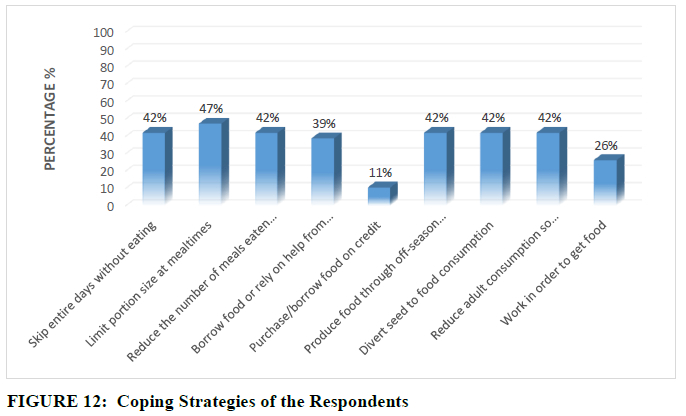
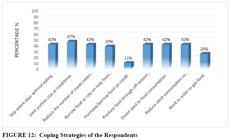
Figure 12 shows the results of coping strategies employed by respondents at Mthonj aneni Local Municipality to cope with the presence of a shortage of food. Food insecure households employed different strategies to deal with the food shortage. A household may choose from several coping strategies to reduce the effects of food insecurity and accessibility and availability. The households used nine different strategies to cope with the shortage of food (Figure 12). The first strategy was to limit portion size at mealtime (47%). The second strategy was to skip an entire day without eating (42%). The third strategy was to reduce the number of meals eaten daily (47%). The fourth strategy was to produce food through off-season cropping (42%). The fifth strategy was to divert seed to food consumption (42%). The sixth strategy was to reduce adult consumption so that children could eat (42%). The seventh strategy included borrowing food or relying on help from friends and relatives (39%). The last strategy used was to purchase/borrow food on credit (11%). These findings contradict the findings of Akerele et al. (2013), who reported that eating less expensive food was ranked top among coping strategies. The report by Akerele et al. (2013) further revealed that coping strategies are coping mechanisms that secure existing life in insecure living situations, such as skipping meals and consuming less expensive foods, rather than addressing food insecurity. The additional research by Norhasmah et al. (2010), Mabuza et al. (2016), Kempson et al. (2003), and Dore et al. (2003) demonstrate that households with food insecurity rely on less expensive meals as a coping mechanism.
3.4.3. Food Security Strategies for Households to Ensure Food Security
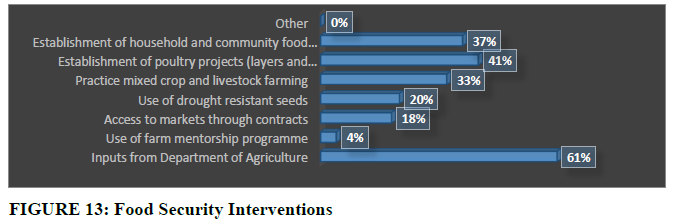
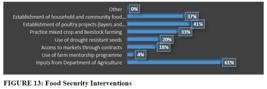
The respondents were asked to indicate intervention(s) or food security strategies they would consider viable livelihood strategies in the household. Figure 13 revealed that most respondents (n=30, 61%) recommend inputs from the Department of Agriculture. The other interventions include the following: establishment of poultry projects (layers and broilers) (n=20, 41%), establishment of household and community food gardens (n=18, 37 %), practise mixed crop and livestock farming (n=16, 33 %), use of drought-resistant seeds (n=10, 20%), access to market through contracts (n=9, 18 %) and use of a farm mentorship programme (n=2, 4%). There is mounting evidence that integrated home/community gardening programmes successfully improve the consumption of nutritious foods by impoverished rural households in developing countries (Tesfamariam et al., 2018).
Home gardens are one of several options accessible to communities with limited resources and institutional support to tackle the scourge of food insecurity. Home gardening is seen as a viable mitigation approach for addressing household food insecurity by Galhena, Freed and Maredia (2013). Furthermore, within the SAIFSS programme, home gardening is an important food security intervention (Mahlangu et al., 2020). According to Rammohan et al. (2019), home food gardens are a cost-effective and long-term strategy for combating food insecurity and malnutrition in under-resourced communities.
The process of achieving food security requires the establishment of household gardens, the practice of mixed farming, the use of drought-resistant seeds, input from the Department of Agriculture, mentorship programmes, and access to markets through contracts. These factors can potentially increase agricultural productivity, hence encouraging poverty alleviation and food security.
3.4.4. The Extent of Household Food Security
The household's response to each question was first coded as either affirmative or negative. Each question had two response categories to select one appropriate response: "Rarely (once or twice)" indicating a negative response, while "Sometimes (three to ten times)" indicating an affirmative response.
3.4.5. Perceived Food Security Concerns Among Smallholder Farmers in Future
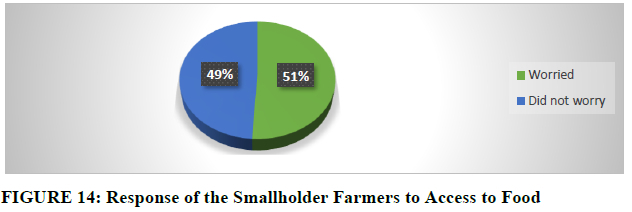
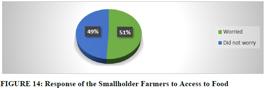
In Figure 14, a total of 49 respondents were sampled. Most (n= 25, 51%) of the respondents stated that they had worried their household would not have enough food in the past four weeks. Additionally, 49% indicated they did not worry that their household would not have enough food. These results suggest that the issue of food security needs to be addressed. Poverty-stricken households typically lack sufficient resources to access enough food; thus, they are likely to be more vulnerable to shocks in food prices (Abdullah et al., 2017). Due to the high food prices, a possible strategy to improve dietary intake could include establishing more food gardens at the community level with land access. These findings revealed that most respondents indicated there was no food to eat in their household because of limited resources. At the global level, more than 800 million people go hungry daily, and two billion lack micronutrients (FAO, 2019). The FAO (2019) report further states that an additional two million people around the world suffer from moderate to severe food insecurity and are at increased risk of health problems and malnutrition. Lack of regular access to nutritious and adequate food remains the leading cause of malnutrition worldwide. The effects of malnutrition on physical and mental development are devastating, resulting in infectious diseases and premature death in unacceptably high numbers (Development Initiatives, 2018).
3.4.6. Incidence of Hunger Among Household Members in the Past Four Weeks
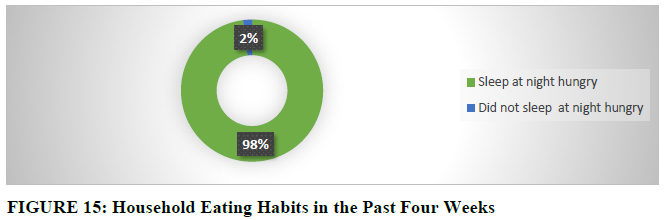
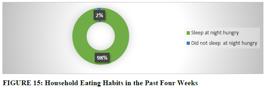
In Figure 15, a majority proportion (n= 48, 98%) of the respondents stated that they went to sleep at night hungry because there was not enough food in the past four weeks, while n= 1, 2% indicated that they did not go to sleep at night hungry because there was not enough food in the past four weeks. These results suggest that the issue of food insecurity needs to be addressed in the study area.
4. CONCLUSION AND RECOMMENDATIONS
The study aimed to evaluate food security strategies used by the KZN Department of Agriculture and Rural Development to assist Mthonjaneni Local Municipality smallholder farmers in King Cetshwayo District in alleviating poverty and malnutrition so they can be food secure.
The findings underscore the importance of strengthening agricultural extension services to address the multidimensional constraints faced by smallholder farmers in the study area. Key lessons include the need to prioritise the provision of agricultural inputs, such as drought-resistant seeds and implements, which were highlighted as critical by respondents. Addressing systemic issues like stock theft, land tenure rights, and inadequate labour is crucial for sustaining livestock farming. Extension services should adopt a participatory approach, promoting diversified farming systems (e.g., mixed crop-livestock farming and poultry projects) and household food gardens to enhance resilience and self-sufficiency. Additionally, creating market access through contracts and mentorship programmes can boost income generation and food availability. The Department of Agriculture can mitigate food insecurity and foster sustainable livelihoods among historically disadvantaged smallholder farmers by revisiting and implementing inclusive, community-based food security policies and reallocating public spending effectively.
Compared to other African nations, the Department of Agriculture Extension needs to implement strong policies to eliminate food insecurity in historically disadvantaged groups through reallocating public spending. Still, these measures have not yet been adequately put into practice.
REFERENCES
- ABDULLAH, A.Y.M., MASRUR, A., ADNAN, M.S.G., BAKY, M.A.A., HASSAN, Q.K. & DEWAN, A., 2019. Spatio-temporal patterns of land use/land cover change in the heterogeneous coastal region of Bangladesh between 1990 and 2017. Remote Sens., 11(7): 2-26.
- ADENIYI, D.A. & DINBABO, M.F., 2019. Factors influencing household food security among irrigation smallholders in North West Nigeria. J. Rev. Global Econ., 1: 291-304.
- AKERELE, D., MOMOH, S., AROMOLARAN, A.B., OGUNTONA, C.R. & SHITTU, A.M., 2013. Food insecurity and coping strategies in South-West Nigeria. Food Secur., 5: 407414.
- ALTMAN, M. & NGANDU, S., 2010. Would halving unemployment contribute to improved household food security for men and women? Agenda Empower. Women, Gender, and Equity., 24(86): 52-65.
- CELE., T. & MUDHARA, M., 2022. Impact of Market Participation on Household Food Security among Smallholder Irrigators in KwaZulu-Natal, South Africa. Agric., 12(1): 613.
- CHETENI, P., KHAMFULA, Y. & MAH, G., 2020. Exploring food security and household dietary diversity in the Eastern Cape Province, South Africa. Sustain., 12(5): 1851.
- DINBABO, M.F., BELEBEMA, M.N. & MENSAH, C., 2019. South African adults at risk of overweight and obesity: An assessment of the Association of Food Choices and Body Mass Index in Khayelitsha and Mitchells Plain. Ghana J. Dev. Stud., 16(3): 51-67.
- DLAMINI, S.N., CRAIG, A., MTINTSILANA, A., MAPANGA, W., DU TOIT, J., WARE, L.J. & NORRIS, S.A., 2023. Food insecurity and coping strategies and their association with anxiety and depression: A nationally representative South African survey. Public Health Nutr., 26(4): 705-715.
- DORE, J.E., LUKAS, R., SADLER, D.W. & KARL, D.M., 2003. Climate-driven changes to the atmospheric CO2 sink in the subtropical North Pacific Ocean. Nature., 424(6950): 754-757.
- DOSS, C., NJUKI, J. & Mika, H., 2020. The potential intersections of Covid-19, gender and food securitiy in Africa. J. Gend., Agric. Food Secur., 5(1): 41-48.
- FOOD AND AGRICULTURE ORGANISATION (FAO)., 2019. The state of food Security and Nutrition in the World. Rome: Food and Agriculture Organization of the United Nations.
- FOOD AND AGRICULTURE ORGANISATION (FAO)., 2021. FAO Stat Sustainability Indicators. Rome: Food and Agriculture Organization of the United Nations.
- FOWLER, F.J., 2002. Survey research methods. 3rd edn. Thousand Oaks: Sage Publications.
- GALHENA, D.H., FREED, R. & MAREDIA, K.M., 2013. Home gardens: a promising approach to enhance household food security and wellbeing. Agric. Food Secur., 2(1): 113.
- GALLAHER, C.M. & FURNESS, W.W., 2019. Food access, food security and community gardens in Rockford, IL. Local Environ., 23(1): 414-430.
- GATWECH, T.D., 2012. Dairy production, processing and marketing system, a case study of Gambela, South West Ethiopia. Doctoral dissertation, Addis Ababa University, Ethiopia.
- JEMINIWA, O.R., OKANLAWON, T.F., TAIWO, D.M., OLAOTI-LAARO, S.O. & JEMINIWA, M.S., 2018. Constraints to agricultural productivity in Kainji Lake National Park, Nigeria. Asian J. Res. Agric. Forest., 2(1): 1-9.
- KEMPSON, K., KEENAN, D.P., SADANI, P.S. & ADLER, A., 2003. Maintaining food sufficiency: Coping strategies identified by limited-resource individuals versus nutrition educators. JNutr Educ Behav., 35(4): 179-188.
- KHUMALO, N.Z. & SIBANDA, M., 2019. Does urban and peri-urban agriculture contribute to household food security? An assessment of the food security status of households in Tongaat, eThekwini Municipality. Sustain., 11(4): 1082.
- KUMAR, A., KUMAR, P. & NADENDLA, R., 2013. A review on: Abelmoschus esculentus (Okra). Int. J. Pharm. Applied. Sci., 3(4): 129-132.
- LUKHALO, T. & ZWANE, E.M., 2022. The influence of budget allocation to implement the policy of extension and advisory services in South Africa. S. Afr. J. Agric. Ext., 50(1): 119.
- MABUZA, M.L., ORTMANN, G.F., WALE, E. & MUTENJE, M.J., 2016. The effect of major income sources on rural household food (in) security: Evidence from Swaziland and implications for policy. Ecol. Food Nutr., 55(2): 209-230.
- MAHLANGU, S.A., MASEMOLA, M., MATSAUNYANE, L.B.T., LUVHENGO, U., LETSAOLO, S. & MOLEBO, T., 2020. Reviewing the role of extension officers in sustaining household food gardens: Evidence from Gauteng Province, South Africa. J Criteria Revision., 7(13): 236-240.
- MAVHUNGU, T.J., NESAMVUNI, A.E., TSHIKOLOMO, K.A., RAMPHULU, T., VAN NIKERK, J.A., MPANDELI, N.S. & NESAMVUNI, A.E., 2021. Characterization of women and youth smallholder agricultural entrepreneur's in rural irrigation schemes in Vhembe district, South Africa. S. Afr. J. Agric. Ext., 49(3): 104-122.
- MAZIYA, M., TIRIVANHU, P., KAJOMBO, R.J. & GUMEDE, N.A., 2020. Gender disparities in poverty among smallholder livestock farmers in South Africa. S. Afr. J. Agric. Ext., 48(2): 21-35.
-
MTHIYANE, D., WISSINK, H. & CHIWAWA, N., 2022. The impact of rural-urban migration in South Africa: A case of Kwadukuza Municipality. J. Local Gov. Res. Innov., 3(0): a56. https://doi.org/10.4102/jolgri.v3i0.56
» https://doi.org/10.4102/jolgri.v3i0.56 - MULUGETA, M., TIRUNEH, G. & ADERAW, Z.A., 2018. Magnitude and associated factors of household food insecurity in Fedis Woreda East Hararghe zone, Oromia region, Ethiopia. Agric. Food Secur., 7(3): 1-8.
- MUSEMWA, L., ZHOU, L., NDHLEVE, S. & AGHDASI, F., 2013. Factors affecting household access to enough food in the Eastern Cape Province of South Africa. J. Dev. Agric. Econ., 5(3): 84-91.
-
MUSUMBA, M., GRABOWSKI, P., PALM, C. & SNAPP, S., 2017. Guide for the sustainable intensification assessment framework. Available from: https://hdl.handle.net/10568/90523
» https://hdl.handle.net/10568/90523 - NABUUMA, D., EKESA, B., FABER, M. & MBHENYANE, X., 2021. Community perspectives on food security and dietary diversity among rural smallholder farmers: A qualitative study in central Uganda. J. Agric. Food Res., 5: 100183.
- NGEMA, P.Z., SIBANDA, M. & MUSEMWA, L., 2018. Household food security status and its determinants in Maphumulo Local Municipality, South Africa. Sustain., 10(9): 33-56
- NORHASMAH, S., ZALILAH, M.S., MOHD NASIR, M.T., KANDIAH, M. & ASNARULKHADI, A.S., 2010. A Qualitative study on coping strategies among women from food insecurity households in Selangor and Negeri Sembilan. Malays. J. Nutr., 16(1): 39-54.
- PANDEY, A. & SINGH, A.K., 2021. Correlation studies of soil properties with yield of rice in a Calciorthents. Int. J. Environ. Clim. Chang., 11(4): 70-74.
- RAMMOHAN, A., PRITCHARD, B. & DIBLEY, M., 2019. Home gardens as a predictor of enhanced dietary diversity and food security in rural Myanmar. BMC Public Health., 19: 1-13.
- RANKOANA, S., 2023. A review of rural communities' vulnerability to climate change: the case of Limpopo Province in South Africa. Int. J. Environ. Sustain. Soc. Sci., 4(6): 17421754.
- SIBANDA, E.L., MUTSETA, M., HATZOLD, K., GUDUKEYA, S., DHLIWAYO, A. & LOPEZ, C., 2016. Community-based distribution of HIV self-test kits: Results from a pilot of door-to-door distribution of HIV self-test kits in one rural Zimbabwean community. 21st International AIDS Society., 18-22.
- SIKWELA, M.M., 2013. The impact of farmer support programmes on market access of smallholder farmers in the Eastern Cape and KwaZulu-Natal provinces, South Africa. Doctoral dissertation, University of Fort Hare.
- SIPHESIHLE, Q. & LELETHU, M., 2020. Factors affecting subsistence farming in rural areas of Nyandeni Local Municipality in the Eastern Cape Province. S. Afr. J. Agric. Ext., 48(2): 92-105.
- STATS SA., 2019. Towards Measuring the extent of food security in South Africa: An examination of hunger and food adequacy. Pretoria, South Africa: Stats SA Library.
- SWINNEN, J. & MCDERMOTT, J., 2020. Covid-19 and global food security. Euro Choices., 19(3): 26-33.
- TESFAMARIAM, B.Y., OWUSU-SEKYERE, E., EMMANUEL, D. & ELIZABETH, T.B., 2018. The impact of the homestead food garden programme on food security in South Africa. Food Secur., 10: 95-110.
- VAN DER BERG, S., PATEL, L. & BRIDGMAN, G., 2022. Food insecurity in South Africa: Evidence from NIDS-CRAM wave 5. Develop. Southern Afr., 39(5): 722-737.
- WORLD BANK., 2018. Poverty and shared prosperity 2018: Piecing together the poverty puzzle. World Bank Group.
- YU, C., GUO, L., LIU, M., GU, X., LI, C. & JIANG, G., 2020. Using organic fertilizers to increase crop yield, economic growth, and soil quality in a temperate farmland. PeerJ., 8: e9668.
- ZENDA, M., 2024. A systematic literature review on the impact of climate change on the livelihoods of smallholder farmers in South Africa. Heliyon., 10(18): 1-13.
- ZENDA, M. & MALAN, P.J., 2021. The sustainability of the small-scale sheep farming systems in the Hantam Karoo, Northern Cape Province, South Africa. S. Afr. J. Agric. Ext., 49(1): 105-121.