How Predatory Animals Influence Small Ruminants' Grazing Patterns in the Eastern Cape
Abstract
Livestock farming in South Africa is a diverse and vital agricultural sector that incorporates both commercial and communal systems for cattle (beef and dairy), sheep, goats, and poultry. This sector is essential for food security and the overall livelihoods of rural communities. However, many farmers face the challenge of livestock predation, a prevalent issue across rangelands worldwide, which often necessitates investments in predator control measures to reduce economic losses. Therefore, this study aimed to assess how predatory animals influence small ruminants' grazing patterns and communal rangeland utilisation in two villages (Matheko and eJojweni) within the Eastern Cape province. The study used a cross-sectional research design. A purposive sampling procedure was used to collect data from 83 livestock farmers using a semi-structured questionnaire. Descriptive statistics were employed for the analysis, and the results revealed that smallholder livestock farmers in the study area pay around R1 500 per month per herder to guard their livestock. Results further show that predation is extensive and significantly affects small ruminant farmers, particularly those who rely on sheep and goats for both cultural and household livelihood needs. Findings also indicate that predation alters grazing behaviour by pushing livestock closer to homesteads and roadsides, increasing the risks of overgrazing, vehicle collisions, and further losses.
Rural Livelihoods; Challenges; Livestock Predation; South Africa
1. INTRODUCTION
Livestock predation is a widespread issue across rangelands globally and typically leads to investments in predator control to minimise economic losses (Turpie & Babatopie, 2018). In South Africa, it remains a primary challenge for livestock farmers. The issue holds both economic and environmental significance (Drouilly et al., 2018). Key livestock predators include caracals, black-backed jackals (Canis mesomelas) and domestic dogs (Canis familiaris), among others.
In the early 20th century, government support played an effective role in reducing livestock predation (Nattrass & Conradie, 2015). However, this began to change in the late 1980s, when support for the commercial agricultural sector started to decline. Consequently, public assistance for predator control diminished, raising concerns among farmers. This shift exacerbated the challenges of livestock farming, which were already growing due to falling product prices, reduced government subsidies, and rising input costs (Turpie & Babatopie, 2018).
In post-apartheid South Africa, the government has sought to balance predator control with broader ecosystem management. Nonetheless, there has been limited research focusing on livestock predation among smallholder farmers in the former homelands-particularly in regions such as Transkei, one of the key livestock-producing areas in the Eastern Cape. Few existing studies in the Eastern Cape include Parker and Murison's (2025) study, which surveyed ranchers in South Africa's Eastern Cape to assess their attitudes toward managing two mesopredators, black-backed jackals (Canis mesomelas) and caracals (Caracal caracal), which are perceived as significant threats to livestock and wildlife due to depredation. They found that ranchers favour lethal control methods for these predators, influenced by extensive human-predator conflicts in the region, which is dominated by wildlife ranches and livestock farms.
Most existing studies have concentrated on other regions, especially the Karoo. For example, Hawkins et al. (2023) used multivariate models to examine how predator management practices (e.g., the presence or absence of shepherds), land tenure, flock characteristics, and environmental factors influence small livestock losses in the Northern Cape. Similarly, Drouilly et al. (2018) conducted interviews with 77 smallstock farmers in the Karoo to assess the spatial and temporal patterns of predation and to explore perceived reasons for changes in predator populations. Their findings revealed that farmers view predation as a serious and escalating problem, attributing the increase in predator numbers to the decline in government support for predator control since the 1990s.
This study aims to expand on existing literature by focusing on the Eastern Cape-an understudied region in this context. Specifically, it seeks to assess the extent of livestock predation in Mthatha and Butterworth. Additionally, the study will examine how predation influences livestock grazing patterns and rangeland utilisation in these areas, along with the associated costs.
2.1. Livestock Production in Smallholder Systems and Sources of Vulnerability
Smallholder livestock production in South Africa plays a critical role in household livelihoods, food security, and asset accumulation, particularly in communal and former homeland areas. Livestock provide multiple functions beyond income generation, including draught power, social status, risk buffering, and cultural value. The typical livestock owner in these systems is characterised by small to medium herd sizes, limited access to capital and formal markets, reliance on communal grazing resources, and constrained labour availability, often due to ageing household structures and labour migration. Livestock ownership is therefore closely intertwined with household demographics, social obligations, and risk management strategies rather than purely commercial production objectives (Moyo et al., 2008; Rust et al., 2019; Manyike et al., 2025).
Productivity in these systems remains constrained by a combination of biophysical, institutional, and socioeconomic factors, including limited access to grazing resources, weak extension support, animal health challenges, and exposure to climatic variability. Recent evidence suggests that herd size and composition reflect farmer responses to risk rather than attempts at intensification. Manyike et al. (2025) show that livestock ownership and herd intensity are shaped by household labour availability, access to grazing, and vulnerability to shocks such as disease and predation. Similarly, Rust et al. (2019) highlight that low reproductive performance and high mortality in communal cattle systems are closely linked to management constraints and environmental stressors rather than farmer inefficiency. These findings underscore the importance of interpreting livestock losses within broader livelihood and vulnerability contexts, a perspective critical to understanding the results presented in this study.
2.2. Grazing Systems, Land Use Change, and Exposure to Predation
Grazing management and land use dynamics play a central role in shaping livestock exposure to predation in communal systems. Unlike commercial farms with fenced camps, communal livestock often graze across open, heterogeneous landscapes with limited spatial control. Empirical evidence shows that grazing frequently occurs in proximity to homesteads, particularly during dry periods and times of labour scarcity. Using spatial tracking data, Gusha, Palmer, and Zondani (2023) demonstrate that livestock in communal rangelands of the Eastern Cape spend a substantial proportion of their grazing time within the settlement matrix, moving between homesteads rather than across distant rangelands. This grazing pattern reflects adaptive responses to labour constraints, water availability, and security concerns, but it also increases exposure to domestic predators, such as free-ranging dogs.
Traditional grazing institutions and herding practices historically played an important role in regulating livestock movements and reducing predation risk, yet many of these arrangements have weakened over time due to socioeconomic change, declining herding labour, and land-use fragmentation (Moyo et al., 2008). Land-use change, particularly the expansion of abandoned croplands and secondary succession under grazing, has further altered predator-prey dynamics. Moyo and Ravhuhali (2022) show that abandoned fields often transition into structurally complex vegetation types that provide cover for predators and reduce visibility for herders, thereby increasing predation risk. These landscape changes interact with settlement-centred grazing patterns to create spatial conditions that heighten vulnerability to both wild and domestic predators, an issue that emerges clearly in the results.
2.3. Livestock Predation in South Africa: Scale, Impacts, and Knowledge Gaps
Livestock predation is widely recognised as a significant but under-quantified constraint on small livestock production in South Africa. Kerley et al. (2017) argue that national debates on predation have long been dominated by anecdotal evidence and polarised narratives, highlighting the need for systematic scientific assessment. Their subsequent comprehensive review (Kerley et al., 2018) demonstrates that predation impacts vary substantially by region, livestock species, predator assemblage, and management system, with small ruminants being particularly vulnerable.
Economic assessments indicate that predation imposes substantial direct and indirect costs on farmers. Van Niekerk (2010) estimates that predation results in significant income losses for small livestock producers, particularly when cumulative losses and prevention costs are considered. Van Niekerk et al. (2010) further note that financial impacts are often underestimated because they exclude opportunity costs, changes in herd structure, and long-term disinvestment responses by farmers. These insights are directly relevant to results showing adjustments in herd size, species choice, and grazing strategies in response to perceived predation risk.
Despite this growing body of work, much of the South African predation literature has focused on wild predators such as jackal and caracal, with comparatively less attention given to the role of domestic dogs. This represents a critical gap, particularly in communal areas where dogs are widespread and often free-ranging.
2.4. Dogs Attacking Livestock: An Emerging and Under-Recognised Threat
Recent international and local evidence indicates that domestic dogs are an increasingly important source of livestock predation, particularly in communal and peri-urban landscapes. Kerley et al. (2018) acknowledge that dogs are frequently reported by farmers as major predators, yet systematic data on their impacts remain limited. This gap is significant, as dog predation differs from wildlife predation in both behaviour and management implications.
Studies outside South Africa provide important insights. Home et al. (2017), working in India, demonstrate that free-ranging domestic dogs can cause livestock losses comparable to those of wild carnivores, often through surplus killing rather than subsistence predation. Similarly, Gonzaga et al. (2024) document severe injuries and mortality in livestock resulting from dog attacks, highlighting welfare and economic consequences that extend beyond immediate losses. Evidence from Sweden further shows that dog attacks generate complex social conflict, regulatory challenges, and enforcement difficulties, particularly where dog ownership is diffuse and responsibility is unclear (Sarenbo & Doane, 2025).
In the South African context, the role of dogs is further complicated by historical and cultural dimensions. Hall (2006) notes that indigenous domesticated dogs have long been embedded in African livestock systems, traditionally playing protective and herding roles. However, changes in settlement patterns, declining herding labour, and increased dog populations have altered these relationships. Free-ranging dogs may now act as predators rather than protectors, a dynamic increasingly reflected in farmer reports and empirical findings.
The inclusion of dog-related predation is therefore essential for interpreting results on livestock losses, farmer coping strategies, and perceptions of insecurity. Failure to distinguish between wild and domestic predators risks misdirecting management responses and policy interventions.
2.5. Farmer Responses and Adaptive Strategies
Farmers respond to predation risk through a range of adaptive strategies, including changes in herd composition, reduced ownership of small stock, altered grazing patterns, and increased reliance on kraaling. However, these strategies often involve trade-offs with labour availability, grazing access, and animal welfare. Van Niekerk et al. (2010) argue that persistent predation can lead to long-term disinvestment in small livestock, a pattern echoed in empirical studies showing declining numbers of sheep and goats in high-risk areas.
Importantly, the effectiveness of responses depends on institutional support, access to information, and collective action. Where communal governance structures are weak, individual farmers face limited options for managing predators, particularly domestic dogs. This institutional dimension provides a critical link between the literature and results showing variation in losses and management outcomes across communities.
2.6. The Role of Agricultural Extension in Predator Management and Control
Agricultural extension plays a potentially critical but underdeveloped role in addressing livestock predation in South Africa, particularly within smallholder and communal systems. Historically, extension services in South Africa have focused primarily on production enhancement, technology transfer, and compliance with sectoral policies, with comparatively limited attention given to complex, cross-cutting challenges such as human-wildlife conflict and predator management (Terblanche, 2013). As a result, livestock predation has often been treated as an individual farmer's problem rather than a systemic issue requiring coordinated advisory, ecological, and institutional responses.
Evidence suggests that weak and uneven extension provision constrains farmers' capacity to adopt effective, context-appropriate predator control measures. Conradie (2016) demonstrates that limited extension presence in Karoo agriculture has contributed to suboptimal productivity outcomes, particularly when management challenges require adaptive, knowledge-intensive responses rather than standard technical prescriptions. Predator control falls squarely within this category, as it requires an understanding of predator behaviour, grazing patterns, animal husbandry practices, and landscape-level dynamics. Where extension support is absent or ineffective, farmers are more likely to rely on ad hoc or reactive strategies that may be costly, environmentally damaging, or socially contentious.
Farmer perceptions of extension effectiveness further shape engagement with predator management interventions. Maake and Antwi (2022) show that farmers' confidence in public extension services is strongly influenced by extension officers' technical competence, availability, and ability to address locally relevant problems. In contexts where predation represents a significant livelihood threat, failure by extension services to engage meaningfully with this issue risks undermining their broader credibility. This is particularly relevant in communal areas, where farmers often face overlapping challenges related to grazing management, animal health, and predation, yet receive fragmented or generic advisory support.
The potential role of extension in predator control extends beyond technical advice to include facilitation, coordination, and knowledge brokerage. Abdu Raheem (2014) highlights the importance of extension in promoting biodiversity conservation through participatory approaches that balance livelihood needs with ecological sustainability. Applied to predator management, this suggests a role for extension in mediating between livestock producers, conservation objectives, and regulatory frameworks, particularly in contexts where lethal control measures are contested or restricted. Extension officers are therefore well-positioned to support non-lethal control options, improved kraaling practices, coordinated grazing strategies, and community-level responses to domestic dog predation.
3. MATERIALS AND METHODS
3.1. Study Area
The study was carried out in the Eastern Cape Province of South Africa, which was selected for its large communal livestock population and longstanding reports of human-predator conflict in smallholder farming systems. Within the province, two villages, Matheko in Mthatha, under the King Sabata Dalindyebo Municipality, and eJojweni in Butterworth, under the Mnquma Local Municipality, were purposively chosen. This decision was informed by the authors' prior engagement in these communities through earlier research activities, which provided preliminary evidence of persistent livestock predation. The two villages also share similar ecological and socioeconomic features. Both fall within the former Transkei, where grazing land is communally owned, unfenced, and openly accessible to all livestock owners. Households typically rely on state transfers as their primary source of income, complemented by small-scale farming and remittances. These shared characteristics provided a suitable basis for comparison and contributed to the selection of these study sites.
3.2. Study Design and Sampling
A cross-sectional mixed-methods design was employed to examine the extent of livestock predation, farmers' perceptions of its drivers and its influence on grazing patterns and rangeland use. The study initially aimed to survey 100 livestock-keeping households; however, 83 households were ultimately interviewed due to time and logistical constraints linked to budget limitations. Permission to conduct the study was obtained from the village leadership first. Thereafter, a team of four researchers visited each village and conducted door-to-door surveys to identify livestock owners willing and available to participate. This approach combined purposive and convenience sampling, ensuring that only active livestock farmers capable of providing relevant information were included. Although the sample is not statistically representative of the broader district, it offers meaningful insights into livestock management and predation within the two communities.
3.3. Data Collection
Data were collected through a semi-structured questionnaire administered to household heads or adult decision-makers. The questionnaire was designed to generate both quantitative and qualitative information. It covered household demographic profiles, livestock ownership and management practices, the occurrence and frequency of predation, perceived predator species, grazing behaviour and rangeland use, as well as the financial implications of predation-including herder wages and other mitigation costs. The interviews were conducted face-to-face in isiXhosa, which helped build rapport and ensured clear communication. While the questionnaire provided a structured guide, respondents were encouraged to elaborate on their experiences, resulting in detailed narratives about predation incidents, herding practices, grazing patterns and adaptation strategies. This approach enabled the researchers to capture a richer, more contextually grounded understanding of how livestock owners experience and respond to predation in their daily farming activities.
3.4. Data Analysis
The analysis combined descriptive statistics with narrative interpretation. Quantitative data, such as household size, herd composition, income levels and costs related to herding and remedies, were analysed using simple descriptive statistics, including measures of central tendency and frequency distributions. These summaries were used to describe the sample's characteristics and to quantify the scale of livestock ownership and predation. Qualitative responses were examined thematically, focusing on recurring patterns in farmers' explanations of predator behaviour, changes in grazing practices influenced by predation and the economic consequences for households. Through this thematic analysis, the study contextualised the statistical findings within participants' lived experiences, offering a more nuanced account of how predation shapes livestock management and rangeland use in communal areas.
4. RESULTS
The findings begin with an overview of the demographic and socioeconomic characteristics of the 83 participating households. This profile provides a foundation for interpreting how households experience predation and manage livestock under communal rangeland conditions.
4.1. Demographic and Socioeconomic Information
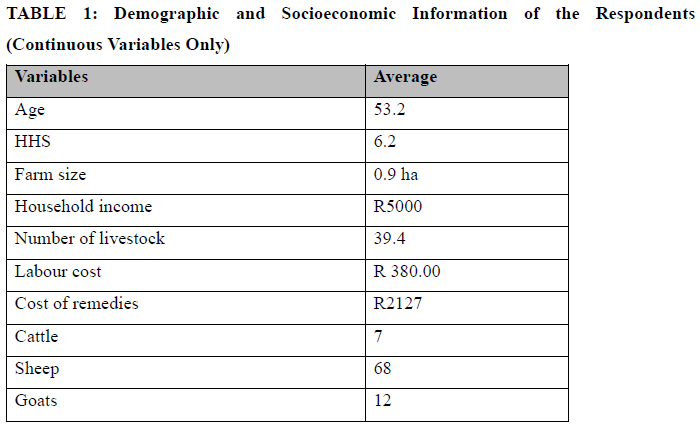
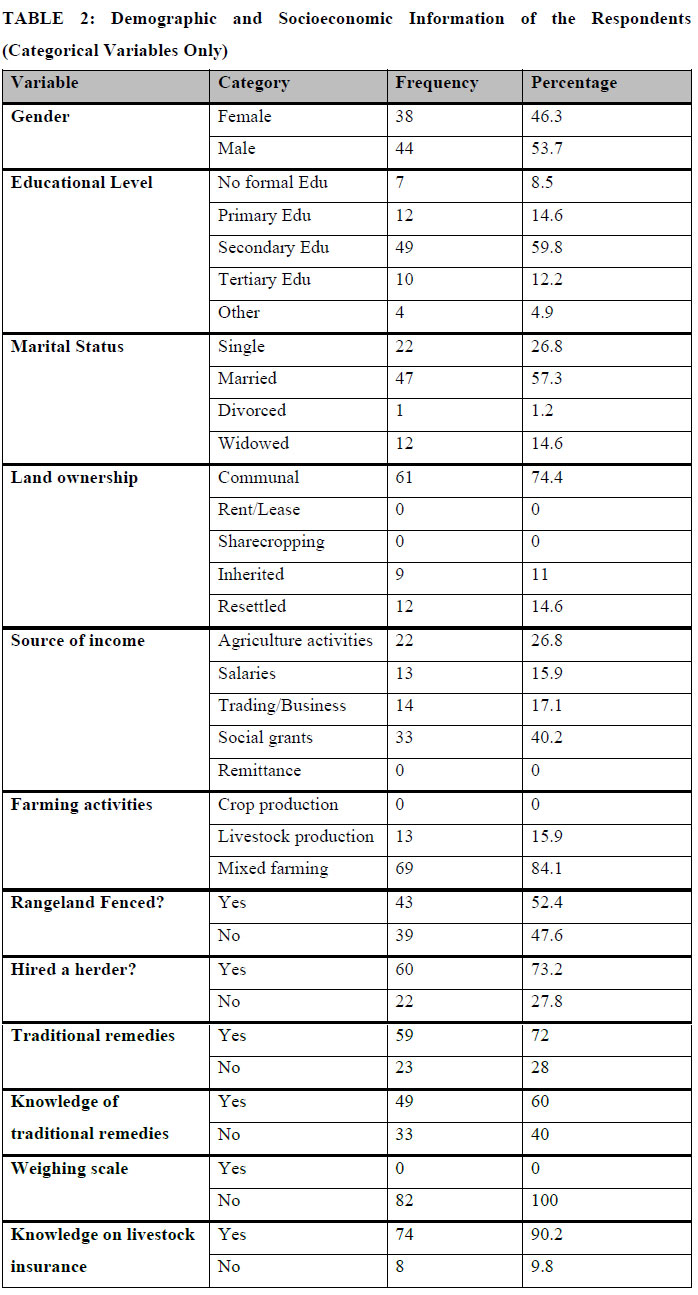
Respondents' demographic and socioeconomic information is presented in Tables 1 and 2. The majority of respondents were men, which reflects the gendered nature of livestock ownership in many rural communities in the Eastern Cape, where small ruminant management is commonly associated with men. The average age of respondents was 53 years, indicating that most livestock owners are older adults or pensioners. Average household income was approximately R5 000 per month, derived mainly from social grants, confirming the heavy dependence on state transfers in both study sites. This amount includes all sources of income. Households were relatively large, averaging six members, and often included grandchildren whose parents were unemployed or working in urban centres (Table 1).
Livestock ownership patterns further illustrate the importance of farming in household livelihoods in the specific communities surveyed. Across respondents, the mean herd sizes were 68 sheep, 12 goats and 7 cattle (Table 1). Small ruminants dominated the livestock composition, consistent with their cultural and economic role in communal areas. Livestock are kept for a mix of purposes-ceremonial uses, home consumption and occasional sales of mature animals-rather than for commercial off-take based on market age or weight. Breeding is largely uncontrolled, as animals mix freely in the rangelands. Households also have access to small plots near homesteads for cultivation, although grazing areas are shared and unfenced.
A significant proportion of respondents (approximately 70%) hired livestock herders, often young men from Lesotho (Table 2). The employment of herders reflects both the need to protect livestock and the absence of fencing, but it also increases household costs. Respondents from Butterworth indicated that they pay around R1 500 per month per herder, and many herders live with the household, increasing food expenses. These costs represent a substantial share of the income generated from livestock.
4.2. Predation and How It Influences Grazing Patterns
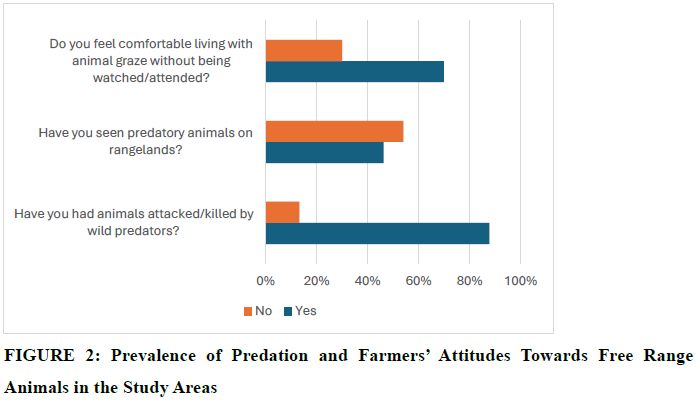
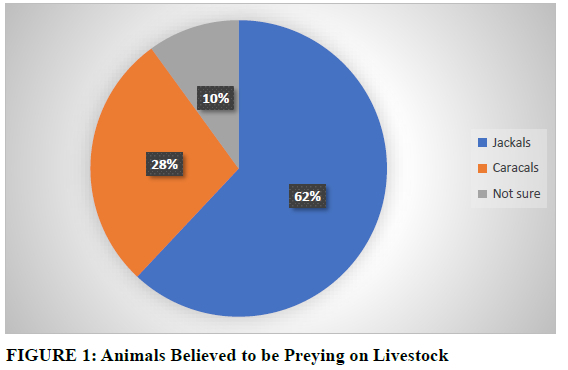
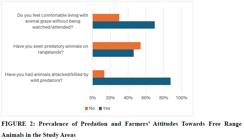
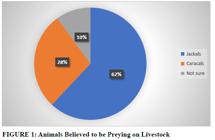
Predation emerged as a widespread problem across both study sites. More than 80% of households reported losing animals to predators (Figure 2). Jackals were the most frequently reported species, identified either by their characteristic night-time calls or by herders' observations (Figure 1).
Predation primarily affected lambs, kids, older animals and livestock that grazed without supervision. Respondents in Butterworth noted that predation has pushed livestock closer to homesteads and, in some cases, to roadsides where palatable grasses grow. This increases the likelihood of vehicle accidents, introducing an additional source of livestock loss. The need to prevent such losses compels many farmers to hire herders, thereby raising labour costs and reducing the net benefits of livestock keeping.
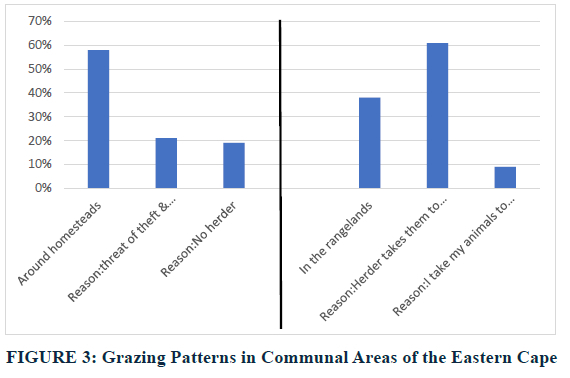
The results in Figure 3 indicate that a majority of livestock owners keep their animals grazing around homesteads, with 58 percent of respondents reporting this practice. This spatial concentration reflects risk avoidance behaviour rather than grazing preference. Among these households, the dominant motivations are the perceived threat of theft and predation at 21 percent, and the absence of herding labour at 19 percent. These findings suggest that decisions about where livestock graze are shaped primarily by security and labour constraints, rather than by rangeland condition or forage availability. Grazing near homesteads allows for informal surveillance and reduces dependence on hired or household herders, but it also alters livestock's exposure to specific predator types, particularly free-ranging domestic dogs.
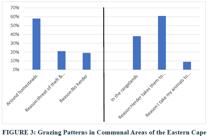
By contrast, 38 percent of respondents graze their livestock on rangelands. Within this group, active herding is the key enabling factor, with 61 percent indicating that a herder takes animals to and from the rangelands. This underscores the central role of labour availability in facilitating access to distant grazing areas. Only nine percent reported personally herding their livestock to rangelands, highlighting both the opportunity cost of labour and the declining feasibility of owner herding in many households. The strong association between rangeland grazing and herder availability reinforces the idea that grazing patterns in communal systems are not simply ecological choices but institutional and labour-mediated outcomes.
Taken together, these results reveal a trade-off between security and grazing access. Households without reliable herding labour prioritise livestock safety by grazing close to homesteads, even when this may increase exposure to domestic predators and limit forage quality. Conversely, households with access to herders are better able to exploit rangeland resources while managing predation risk through supervision. These patterns help explain observed variation in livestock losses and support the argument that effective predator management must address labour constraints, settlement-centred grazing, and institutional support, rather than focusing solely on predator control measures.
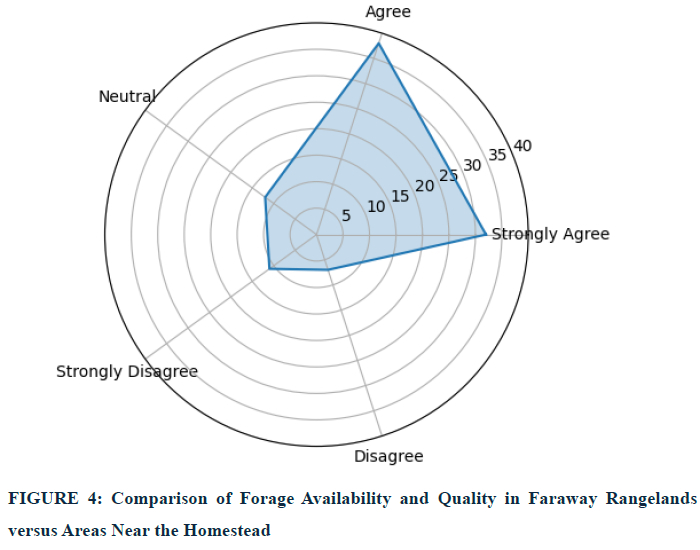
The results in Figure 4 indicate a clear and overwhelming perception among respondents that forage availability and quality are superior in distant rangelands compared to areas around the homestead. A combined 70 percent of respondents either agreed or strongly agreed with the statement, with 38 percent agreeing and 32 percent strongly agreeing. This strong consensus suggests that near-homestead grazing areas are widely perceived as degraded, likely due to continuous grazing pressure, trampling, and limited recovery time. The concentration of livestock around homesteads, particularly during dry seasons and at night, often leads to overutilisation of palatable species, resulting in reduced forage quantity and quality.
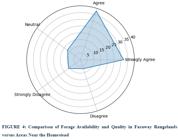
Only 12 percent of respondents expressed a neutral view, which may reflect spatial or seasonal variability in rangeland conditions or differences in herd size and grazing management practices among households. In contrast, a relatively small proportion of respondents disagreed (18 percent combined), indicating that fewer households view homestead-adjacent grazing areas as comparable to distant rangelands. This minority view could be associated with households that practice controlled grazing, have access to private or fenced land, or reside in areas with lower stocking densities. Overall, the findings underscore the uneven distribution of grazing pressure within communal rangeland systems and highlight the need for improved, locally targeted rangeland management interventions around homesteads to reduce degradation and enhance forage availability.
5. DISCUSSION AND IMPLICATIONS FOR AGRICULTURAL EXTENSION
The high prevalence of predation reported in our sample aligns with national assessments that identify black-backed jackal and caracal as the most frequent predators of small stock in South Africa. Several studies confirm that these species account for the majority of small ruminant losses, particularly in unfenced or communal grazing areas where livestock are highly vulnerable (Nattrass & Conradie, 2015; Turpie & Babatopie, 2018). These patterns are consistent with our respondents' reports, in which jackals are the most frequently suspected predators in both study villages.
Empirical work analysing the spatial and temporal dimensions of predator-livestock interactions further supports our findings. Drouilly et al. (2018) documented that predation often disproportionately affects lambs, kids and older or weak animals-similar to the age classes identified by respondents in this study. Hawkins et al. (2023) demonstrated that predator activity is strongly shaped by herding practices, flock composition, and environmental conditions, noting that farmers' perceptions of predator identity, while valuable for understanding local ecological knowledge, may be imperfect in the absence of systematic verification. This echoes our respondents' assumption about jackal attacks, based on jackal calls and herders' observations to identify predators.
The economic burden of predation, and of measures implemented to curb it, is well established. Turpie & Babatopie (2018) estimate that predation imposes substantial direct and indirect financial losses on small stock farmers, and our findings confirm that herder wages, veterinary treatment and traditional remedies form a significant portion of household expenditure. Respondents in Butterworth indicated that herders are paid an average of R1 500 per month, consistent with studies showing that labour constitutes a major cost in communal livestock systems (Conradie et al., 2024). For low-income households dependent on social grants, these expenses reduce the profitability of livestock and limit their ability to invest in improved management.
Recent research on communal rangelands challenges the assumption that hiring a herder always reduces predation. For example, Conradie et al. (2024) found that although herders add value by monitoring animal health and reducing crop damage, their effect on predation losses is context-dependent and not uniformly significant. This explains why, despite 70% of our respondents employing herders, predation remains widespread. Herders alone are therefore unlikely to solve predation challenges unless combined with broader grazing management and predator-specific interventions.
Innovations in tracking livestock movements and monitoring predator patterns offer promising opportunities to enhance rangeland governance. Gusha et al. (2023) used GPS devices to assess livestock movement in Eastern Cape communal rangelands, demonstrating how spatial monitoring can reveal hotspots of grazing pressure and areas of high vulnerability to predators. Such approaches could help diagnose why animals increasingly graze near homesteads and roadsides. Patterns observed in this study could also inform targeted extension support. Integrating spatial monitoring with community-based herding, coordinated grazing and improved kraaling could offer practical, low-cost interventions that address both ecological degradation and livestock safety.
Overall, the literature supports the interpretation that predation interacts with livestock-based livelihood, labour shortages and weak rangeland governance to shape the behaviour of communal livestock farmers. Effective agricultural extension will need to promote integrated approaches that combine improved management practices, community oversight, predator monitoring and support for low-cost protection strategies suited to communal systems.
6. CONCLUSIONS AND RECOMMENDATIONS
This study examined livestock predation and its influence on grazing patterns and rangeland use in two communal villages in the Eastern Cape. The results show that predation is widespread and significantly affects small ruminant farmers. Predation alters grazing behaviour by pushing livestock closer to homesteads and roadsides, increasing the risk of overgrazing, vehicle collisions, and further losses. The financial strain of hiring herders represents an additional challenge, especially for low-income households whose livelihoods depend heavily on social grants and livestock.
The study concludes that addressing predation cannot be achieved solely through predator control but requires an integrated approach that considers the socioeconomic realities of communal livestock systems. Strengthening local grazing management institutions, improving farmer training on rangeland ecology and exploring collective herding models are important steps toward reducing vulnerability. Investments in basic infrastructure-such as community kraals or low-cost fencing, where feasible-may also help reduce losses. Future research should explore seasonal dynamics of predation, quantify economic losses more systematically and assess the feasibility of collaborative rangeland governance models in similar communal settings. The issue of wild dogs attacking livestock is also understudied, and although we did not explore it in our study, future research is recommended.
REFERENCES
2. LITERATURE REVIEW
- ABDU RAHEEM, K.A., 2014. Exploring the role of agricultural extension in promoting biodiversity conservation in KwaZulu-Natal Province, South Africa. Agroecol. Sustain. Food Syst., 38(9): 1015-1032.
- BEINART, W., 2018. An overview of themes in the agrarian and environmental history of the Karoo since c.1800. Afr. J. Range Forage Sci., 35(3-4): 191-202.
- CONRADIE, B., MATTHEWS, N. & BAHTA, Y., 2024. Benefits of herding on communal rangelands in Free State Province, South Africa. S Afr. Jnl. Agric. Ext., 52(5): 36-52.
- DROUILLY, M., TAFANI, M., NATTRASS, N. & O'RIAIN, J., 2018. Spatial, temporal and attitudinal dimensions of conflict between predators and small-livestock farmers in the Central Karoo. Afr. J. Range Forage Sci., 35(3-4): 245-255.
- CONRADIE, B.I., 2016. The implications of a weak public extension service for the productivity performance of Karoo agriculture. S Afr. Jnl. Agric. Ext., 44(2): 99-109.
- GELDENHUYS, C., VAN DER MERWE, H. & VAN ROOYEN, M.W., 2023. Vegetation response to grazing and drought over thirteen years in a conservation area in the Succulent Karoo, South Africa. J. Arid Environ., 219: 105093.
- GONZAGA, M.D.C., BORGES, J.R.J., ALVES, T.S., DE SOUSA, D.E.R., DE CASTRO, M.B. & CÂMARA, A.C.L., 2024. Domestic dog attacks on livestock referred to a veterinary teaching hospital. Front. Vet. Sci., 11: 1342258.
- GUSHA, B., PALMER, A.N. & ZONDANI, T.C., 2023. Assessing livestock grazing distribution in communal rangelands of the Eastern Cape, South Africa: towards monitoring livestock movements in rangelands. Land., 12(4): 760.
- HALL, S. 2006. Indigenous domesticated dogs of Africa. In R. Blench & K. MacDonald (eds.), The Origins and Development of African Livestock: Archaeology, Genetics, Linguistics and Ethnography. Routledge, London, pp. 302-318.
- HAWKINS, H. J., MINNIE, L., VAN NIEKERK, H. W., DE WAAL, H., BALFOUR, D. & KERLEY, G. I. 2023. Shepherding is not a shot in the dark: evidence of low predation losses from the Northern Cape province of South Africa. Afr. J. Range Forage Sci., 40(4): 373-384.
- HOME, C., PAL, R., SHARMA, R.K., SURYAWANSHI, K.R., BHATNAGAR, Y.V. & VANAK, A.T., 2017. Commensal in conflict: Livestock depredation patterns by free-ranging domestic dogs in the Upper Spiti landscape, India. Ambio., 46(6): 655-666.
- HOFFMAN, M.T., SKOWNO, A., BELL, W. & MASHELE, S., 2018. Long-term changes in land use, land cover and vegetation in the Karoo drylands of South Africa: implications for degradation monitoring. Afr. J. Range Forage Sci., 35(3-4): 209-221.
- KERLEY, G.I.H., BEHRENS, K.G., CARRUTHERS, J., DIEMONT, M., DU PLESSIS, J., MINNIE, L. & BALFOUR, D., 2017. Livestock predation in South Africa: the need for and value of a scientific assessment. S. Afr. J. Sci., 113(3-4): 1-3.
- KERLEY, G.I.H., WILSON, S.L. & BALFOUR, D., 2018. Livestock predation and its management in South Africa: a scientific assessment. Centre for African Conservation Ecology, Nelson Mandela University, Gqeberha.
- NATTRASS, N. & CONRADIE, B., 2015. Jackal Narratives: Predator Control and Contested Ecologies in the Karoo, South Africa. J. South. Afr. Stud., 41(4): 753-771.
- MAAKE, M.M.S. & ANTWI, M.A., 2022. Farmers' perceptions of effectiveness of public agricultural extension services in South Africa: An exploratory analysis of associated factors. Agric. Food Secur., 11: 34.
- MANYIKE, J.Z., TARUVINGA, A. & ZHOU, L., 2025. Factors influencing livestock ownership and herd intensity among smallholder farmers in the Eastern Cape, South Africa. Heliyon., 11(2).
- MOYO, B., DUBE, S., LESOLI, M. & MASIKA, P.J., 2008. Communal area grazing strategies: Institutions and traditional practices. Afr. J. Range Forage Sci., 25(2): 47-54.
- MOYO, B. & RAVHUHALI, K.E., 2022. Abandoned croplands: Drivers and secondary succession trajectories under livestock grazing in communal areas of South Africa. Sustainability., 14(10): 6168.
-
PARKER, D.M. & MURISON, M.K., 2025. Attitudes of ranchers to the management of two mesopredators in the Eastern Cape, South Africa. Hum. Dimens. Wildl., 1-9. https://doi.org/10.1080/10871209.2025.2576073
» https://doi.org/10.1080/10871209.2025.2576073 - RUST, T., RUST, J.M., NONGAUZA, N.S., DE RIDDER, C.H., FAKU, N.A., MOSS, S. & MPAHLA, M., 2019. Beef cattle production performance and farmer profile in a communal environment of the Eastern Cape Province. Appl. Anim. Husb. Rural Develop., 12: 22-30.
- SARENBO, S. & DOANE, M., 2025. Dog attacks on livestock: insights from Swedish news articles and experiences of farmers and inspectors. Front. Vet. Sci., 12: 1629966.
- TERBLANCHE, S.E., 2013. An overview of agricultural extension in South Africa. S. Afr. J. Agric. Ext., 41(1): 107-117.
- TURPIE, J.K. & BABATOPIE, A., 2018. The socioeconomic impacts of livestock predation and its prevention. In G.I.H. Kerley, S.L. Wilson & D. Balfour (eds.), Livestock predation and its management in South Africa: A scientific assessment. Port Elizabeth: Centre for African Conservation Ecology, Nelson Mandela University, pp. 53-8.
- VAN NIEKERK, H.N., 2010. The cost of predation on small livestock in South Africa by medium-sized predators. Doctoral dissertation, University of the Free State, Bloemfontein.
- VAN NIEKERK, H.N., BAHTA, Y.T. & DE WAAL, H., 2010. A review and estimation of the financial implications of livestock predation in South Africa. Indago., 37: 31-41.
- WALKER, C., MILTON, S.J., O'CONNOR, T.G., MAGUIRE, J.M. & DEAN, W.R.J., 2018. Drivers and trajectories of social and ecological change in the Karoo, South Africa. Afr. J. Range Forage Sci., 35(3-4): 157-177.