Knowledge and Acceptance of Chemical Ripening to Advance Sugarcane Quality Management by the Small-scale Grower Sector at Umthwalume in South Africa
Abstract
Small-scale sugarcane growers (SSGs) in South Africa face persistent challenges in improving crop quality and profitability, largely due to limited access to knowledge, resources, and appropriate technologies. This study assessed the knowledge, acceptance, and economic potential of chemical ripening as a strategy to enhance sugarcane quality among SSGs in Umthwalume, KwaZulu-Natal. A cross-sectional survey was conducted using purposive sampling, and a semi-structured questionnaire was administered to 65 growers from the Bhekisisa Cooperative to capture demographic data, farming practices, training, yield history, and perceptions of chemical ripeners and farmer field schools. Results revealed that although only 35.4% of participants were aware of chemical ripening, a significant majority (87.3%) expressed willingness to adopt the practice if it were accessible. Major barriers included cost, lack of technical know-how, and field fragmentation. However, the use of drone technology demonstratedpracticalfeasibility and yielded increased income ranging from R3,514 to R11,929 per hectare in demonstration trials. Furthermore, while 66.2% of growers were unaware of farmer field schools, nearly all (97.6%) expressed interest in participating. These findings underscore the importance of targeted training, on-farm demonstrations, and supportive extension services in promoting the adoption of sugarcane quality-enhancement practices in the small-scale sector. The study recommends strengthening extension services through farmer field schools and on-farm demonstrations, coupled with expanded access to drone-based application services and targeted training, to improve the adoption of chemical ripening and enhance sugarcane quality and profitability among small-scale growers.
Small-Scale Growers; Sugarcane; Ripeners; Farming Knowledge
1. INTRODUCTION
Small-scale growers account for approximately 85% of the world's farms (IFAD, 2024). However, sustaining agricultural practices remains challenging due to various constraints (Lowder et al., 2016). Recent data confirm that agriculture remains a primary source of employment and livelihoods in sub-Saharan Africa, engaging a large share of the workforce and underpinning rural economies (World Bank, 2022; FAO, 2023). Empirical and review studies further demonstrate that smallholder farming remains central to rural livelihoods, despite structural changes and diversification pressures (Sithole & Olorunfemi, 2024; Begho & Daubry, 2025). Small-scale growers dominate the agricultural sector, representing nearly 80% of all farms (Hlophe-Ginindza & Mpandeli, 2020). Consistent with global development priorities, improving the productivity and sustainability of farming systems in southern Africa remains essential for enhancing the livelihoods of small-scale growers. While the UN Millennium Project emphasised increased agricultural production as a pathway out of poverty (Sachs et al., 2004), this objective is now embedded within the Sustainable Development Goals, particularly SDG 2.3, which targets increased agricultural productivity and incomes of small-scale food producers, and SDG 2.4, which promotes resilient and sustainable food production systems (United Nations, 2015). In South Africa, these productivity and sustainability challenges are particularly evident among small-scale sugarcane growers, for whom sugarcane remains a critical commercial crop and a primary source of household income, yet it requires effective quality management to maximise returns.
Sugarcane ripening is the natural accumulation of sucrose in cane stalks (Shanthi et al., 2023). This process usually continues until maturity, after which sucrose levels may decline if the harvest is delayed. Sucrose content fluctuates during harvesting, with peak accumulation usually observed late in the crop cycle (Cardozo & Sentelhas, 2013). Environmental factors, such as temperature and rainfall, significantly influence this process (Singh et al., 2020). When excessive or continued crop growth occurs during the ripening phase, chemical ripeners are often applied to suppress growth and to enhance sucrose accumulation and cane quality (de Almeida Silva & Caputo, 2012).
Chemical ripeners are plant growth regulators that modify physiological and morphological traits in sugarcane. In South Africa, their use is well established among commercial growers to improve sugar content (Solomon& Li, 2004). While ripening under normal conditions increases sucrose (van Heerden et al., 2013), the effectiveness of ripeners varies by variety and environment (Morgan, 2003). Different sugarcane varieties respond differently to ripeners (Donaldson, 2001), and high temperatures or soil moisture may result in immature cane (van Heerden et al., 2013). Commonly used ripeners include Ethephon®, Fusilade Forte®, and Moddus®. Chemical ripening has been widely studied and applied in South Africa. Since 2010, on-farm trials have been conducted through collaborations among researchers, extensionists, and growers (van Heerden et al., 2014). Additional benefits include an earlier start to the milling season, reduced residue, higher milling efficiency, and improved cane-to-sugar ratios (Kadwa & Small, 2018). These advantages demonstrate that chemical ripening offers a strong return on investment.
Despite its potential, small-scale growers (SSGs) have struggled to adopt chemical ripening technologies. In 2016, the South African Sugarcane Research Institute (SASRI) introduced the PurEstTM App, which provides ripening recommendations based on Brix% readings (van Antwerpen et al., 2018). However, practical limitations, such as limited expertise and support, have constrained its effectiveness. Successful implementation often requires technical knowledge and support from extension services. Poor farming practices remain a barrier to productivity (Crosby et al., 2000), and many growers lack familiarity with long-established technologies (Van den Berg, 2013). In response, crop-spraying drones have been introduced to support chemical ripener applications. In 2021, SASRI demonstrated the use of drones in Umthwalume through on-farm trials to promote sugarcane quality and showcase the benefits of ripeners for small-scale farmers. The technology offers a more accessible method for applying chemical ripeners, potentially enabling better adoption among SSGs.
This study aimed to assess small-scale growers' acceptance of chemical ripening based on their participation in the 2021 trials. The research focused on (i) identifying challenges in sugarcane quality management, (ii) determining the financial benefits of chemical ripening, and (iii) using SSG fields as educational sites for learning about ripener use.
2. MATERIALS AND METHODS
2.1. Study Area
The study was conducted at Bhekisisa Cooperative in Umthwalume (30°26.14'06"S, 30°32.53'42"E), within Umzumbe Local Municipality in KwaZulu-Natal. The largely rural municipality has a population of about 170,000, 99.6% of whom are Black Africans. Sugarcane accounts for 12% of the district's agricultural GDP (UGu IDP, 2020). Of 26,234 economically active people in Umthwalume, 51.9% are unemployed (UGu IDP, 2020). The area comprises 593 growers who produce sugarcane on 800 hectares and deliver over 40,000 tons of sugarcane to the Sezela Illovo Mill. The site was selected due to the documented expansion of chemical ripening practices among small-scale growers in the area, supported by recent extension-led demonstration trials and the adoption of drone-based application technologies (Van Heerden &Ramusandiwa, 2023).
2.2. Survey Sampling
The study population was an isiZulu-speaking group of small-scale sugarcane growers from Sezela. This group is part of Bhekisisa Cooperative, which comprises 280 sugarcane growers. A representative sample was selected to accurately reflect the characteristics of the larger population. Of the 280 growers, 65 (23%) were selected through purposive sampling for a cross-sectional survey, and all participants provided informed consent. Growers participated voluntarily, and consent was obtained for them to participate in quantitative research using questionnaires.
2.3. Data Collection
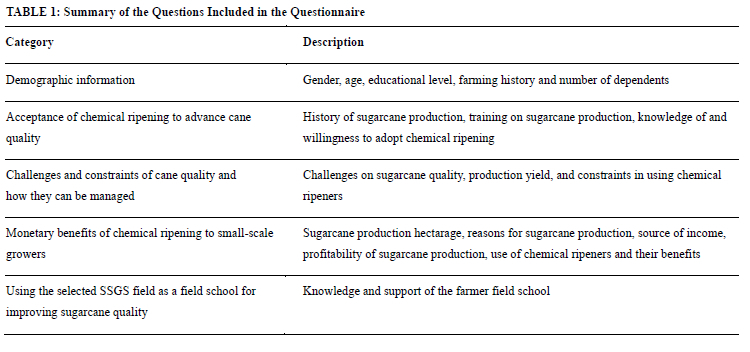
Data was collected from December 2021 to October 2022 using a semi-structured questionnaire administered to sugarcane growers. Originally in English, the questionnaire was translated into isiZulu for participants who preferred it. The researcher assisted respondents when needed to ensure clarity. Table 1 summarises the key quantitative variables selected for their relevance to SSG behaviour. The questionnaire included both open-ended and dichotomous questions: the former captured growers' perspectives, while the latter supported qualitative analysis.
2.4. Data Analysis
Quantitative data from the survey were analysed using descriptive statistics. Data was analysed using the Statistical Package for Social Sciences (SPSS). The results are presented using descriptive tables and graphs. The qualitative data collected are analysed using thematic analysis. The interpretation procedure involved a comprehensive understanding of the data, categorising it into themes, refining those themes, consolidating the data into broader themes, and verifying the findings.
3. RESULTS AND DISCUSSIONS
3.1. Demographic information
3.1.1. Gender
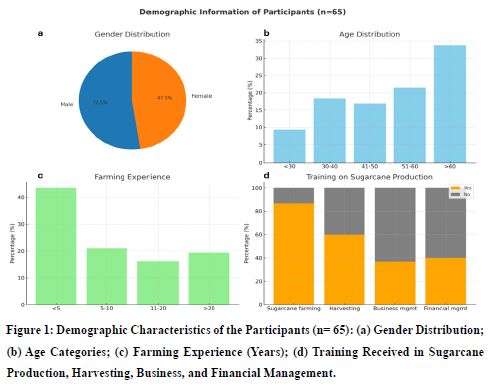
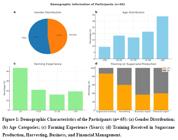
Of the 65 participants, 47.5% were females, while 52.5% were males (Figure 1a). This is a good reflection that most males reside in the area, which is contributing to the local economy through sugarcane farming. Similarly, Loubser (2020) reported that the gap between male and female employees in agriculture has slightly decreased in South Africa. This is due, in part, to male migration to urban areas in search of employment. However, in Umthwalume, the number of male participants was slightly higher.
3.1.2. Age
The results show that most small-scale growers (SSGs) were older individuals (Figure 1b). Approximately 33.8% were over 60 years old, and 21.5% were between 51 and 60 years old. This reflects a broader trend, as the average farmer age is 55 in the USA and over 60 in South Africa (Sihlobo, 2015). Only 18.5% of growers were aged 21-35, a group often deterred from farming by low wages and physical demands (Mibey, 2015). This generational gap poses a threat to the sector's future, as youth are crucial to its long-term sustainability (Okeowo et al., 1999). Despite policies like South Africa's National Development Plan encouraging youth participation (Sinyolo & Mudhara, 2018), 72.2% of SSGs are over 41 years old. Limited youth interest prevents knowledge transfer from older farmers. As the sector remains labour-intensive, the ageing farming population poses risks to productivity, especially given the low level of mechanisation and health vulnerabilities (Magagula & Tsvakirai, 2019).
3.1.3. Farming Experience
Most participants (43.5%) had less than 5 years of farming experience, followed by 21% with 5-10 years (Figure 1c). This suggests that over 50% had more than 5 years of experience, with 19.4% reporting more than 20 years of experience in sugarcane production. In Indonesia, Rosidah and Perwitasari (2023) found that 39% of growers had over 20 years of experience, 29% had 11-20 years, and 32% had 1-10 years, noting that higher education reduces technical inefficiency. Similarly, 35.42% of growers in India had extensive farming experience (Balamurugan & Vetriselvan, 2019). Masuku (2011) observed that experience affects growers' performance in Eswatini, while in Nigeria, 40% had 16-20 years of experience, with an average of 10 years (Girei & Giroh, 2012). Additionally, in South Africa, farming experience has been linked to improved access to formal credit among small-scale sugarcane growers (Sifundza, 2019), highlighting its importance for production and resource access, especially for sugarcane growers in the study area.
3.1.4. Training Received by SSGs
Sugarcane production faces several challenges, including inadequate grower training, which limits productivity improvements (Padilla-Fernandez et al., 2020). As shown in Figure 1d, while most participants had training in sugarcane farming (86.7%) and harvesting (60%), fewer received training in business (36.7%) and financial management (40%), suggesting a knowledge gap in non-agronomic areas, such as the study area. However, according to Ibitoye and Onimisi (2013), training significantly improves production practices and should target older, more receptive farmers and youth for long-term succession (Padilla-Fernandez et al., 2020). Technology adoption is also influenced by information dissemination through training and community interactions (Chi & Yamada, 2002; Nakano et al., 2018). Small-scale agriculture is vital to economic development; however, limited business and financial skills hinder success (Mang'ana et al., 2023; Kirsten, 2018). Thibane et al (2023) also noted the lack of finance as one of the key barriers to sugarcane production in KwaZulu-Natal. Although SASRI offers a five-week training course, wider dissemination of information to untrained growers is essential for the sector's sustainability.
3.2. Reasons for Farming and Income Source
3.2.1. Purpose of Farming
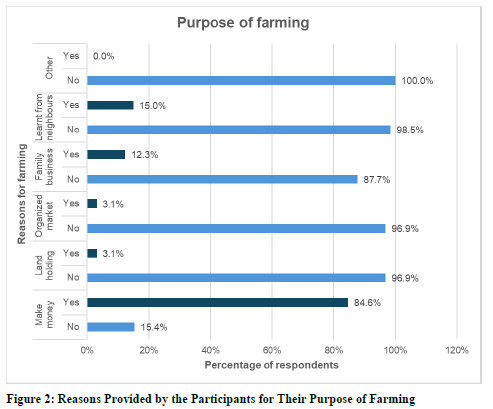
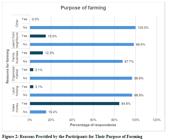
The purposes of farming typically include food security (Beharielal et al., 2022), income generation (Mathinya et al., 2023), employment (Rankoana, 2022), cultural practices (The Guardian, 2024), risk management (Zenda, 2024), sustainability (The Guardian, 2024) and community support (Govender, 2023). Food production and income generation have been the primary purposes of farming for centuries (Chmielewska, 2010). This was evident in this study, as 84.6% of the participants indicated that they were farming sugarcane to make money, among other reasons such as landholding, family business, and participation in the organised market, as noted in the survey (Figure 2). While subsistence remains a primary goal, many small-scale growers sell surplus produce to generate income. In South Africa's former homelands, small-scale farming had the potential to contribute to rural economic growth; however, persistent constraints related to market access and resource availability continue to limit this potential (Mathinya et al., 2023). Small-scale growers play a vital role in enhancing food security by producing diverse, nutritious crops for household consumption. Together, these findings underscore the pivotal role of small-scale farming in supporting household livelihoods, generating income, and ensuring local food security in KwaZulu-Natal. However, the ability of small-scale growers to fully realise these contributions remains constrained by persistent barriers to market access and productive resources, underscoring the need for targeted interventions to strengthen the sustainability and economic viability of small-scale agricultural systems.
3.2.2. Source of Income and Profit Generation
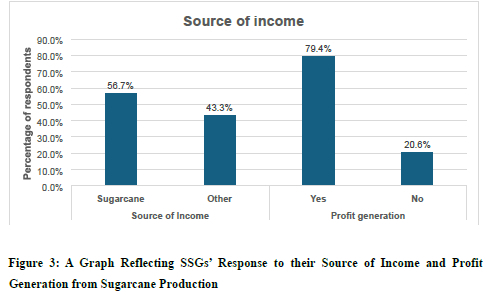
In this study, 56.7% of participants relied on sugarcane proceeds to support their dependents (Figure 3). KwaZulu-Natal, the province with the highest number of sugar mills (12), depends heavily on sugarcane as a primary cash crop (Thibane et al., 2023).
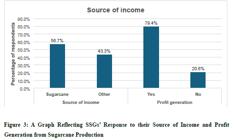
Most participants (79.4%) reported earning income from sugarcane, while 43.3% also had alternative sources of income. Nationally, sugarcane generates over R5 billion in direct income (South African Sugar Association, 2024). Despite this, 20.6% of growers reported not profiting from sugarcane. Over the past 20 years, sugar production in South Africa has declined by nearly 25%, with a 60% reduction in the number of growers (Marais, 2022). This decline is partly due to diversification into more profitable, lower-input crops (Cowling, 2024). These findings highlight the diverse financial outcomes for small-scale growers and the challenges facing the sugar industry.
3.2.3. Production Yield
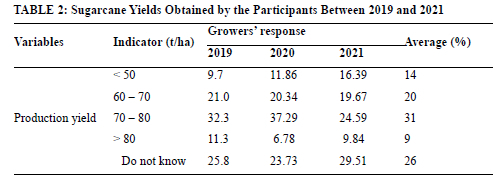
This study examined yields among participants from 2019 to 2021, as shown in Table 2. The highest proportion (31%) reported yields of 70-80 t/ha, while 26% were unsure of their yields, and approximately 34% reported yields below 70 t/ha. Thibane et al. (2023) similarly found an average yield of 75 tons per hectare for small-scale growers in KwaZulu-Natal. Earlier, Mbowa et al. (1999) reported lower yields: 40 t/ha on small farms versus 55 t/ha on larger ones. BFAP (2011) projected yield increases to 65 t/ha by 2020, contingent on climate conditions. Only 30% of participants linked declining yields to reduced profits, and the share of SSGs reporting not knowing their yields increased from 25.8% in 2019 to 29.5% in 2021, highlighting the need for training and technical support. In today's changing agricultural landscape, growers must become more entrepreneurial (Sinyolo and Mudhara, 2018).
Additionally, demonstration trials by van Heerden et al. (2023) showed that chemical ripening, applied via drones, generated additional income for SSGs ranging from R3,514/ha to R11,929/ha. In 2022/23, sugarcane covered 344,000 ha, generating R12.2 billion in gross value from 17.91 million tons produced (DALRRD, 2023). Large-scale growers account for ~80% of production, while SSGs contribute just 12.5% (RSB and SA Canegrowers, 2020). Production decline among SSGs has been linked to extreme weather (Mnisi & Dlamini, 2012; Dubb, 2013), limited adaptive capacity, poor access to resources, and low literacy, all of which hinder crop management (Zulu et al., 2011).
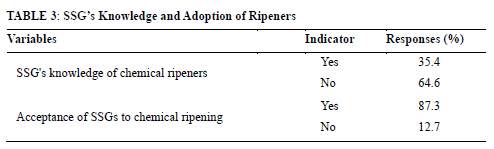
The study found that none of the participants used chemical ripeners, although most expressed willingness to adopt them. Barriers included a lack of knowledge and affordability. Due to small, fragmented plots, drone technology enables SSGs to enhance sucrose content through chemical ripening (van Heerden & Ramusandiwa, 2023). As shown in Table 3, yield awareness among participants was low, with rates of 25.8% in 2019, 23.73% in 2020, and 29.51% in 2021, indicating a lack of knowledge about yields, suggesting poor record-keeping and limited understanding of production capacity. While chemical ripening can improve quality, it does not increase yields. Therefore, SSGs need support from extension officers in record-keeping and best practices to enhance yields. Although unfamiliar to many participants, demonstration trials and field schools could be effective training tools, especially through peer learning and collaboration with extension services.
In the past, applying chemical ripeners required a helicopter or aircraft, which was unsuitable for SSG conditions (Ngcobo et al., 2018). Drone spraying now enables precise ripening in these fragmented landscapes with minimal drift. Chao et al. (2024) found that farm size influences adoption in rural China, a finding that mirrors challenges in South Africa. Similarly, Ntshangase et al. (2018) observed that perceptions and available information shape farmers' adoption decisions. Van Heerden et al. (2015) reported successful uptake of chemical ripening following on-farm trials in Mpumalanga, though primarily among large-scale growers. Targeted demonstrations could similarly improve SSG adoption.
3.3. Use of Farmer Field Schools to Improve Sugarcane Quality
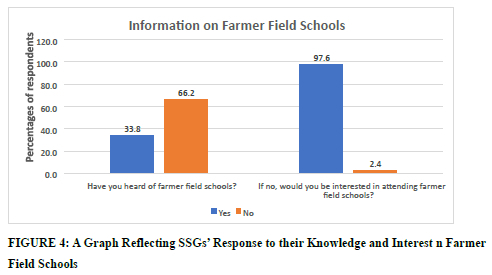
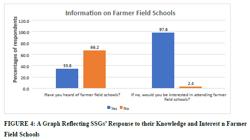
In this study, 66.2% of respondents reported having no knowledge of farmer field schools (FFS); however, 97.6% expressed willingness to participate (Figure 4). This highlights the need for more field demonstrations and on-farm trials, as these platforms allow farmers to learn best practices from peers and extension officers. FFSs are widely used to train growers to adapt agricultural practices to changing field conditions (van den Berg et al., 2021). They are recognised as a participatory extension methodology that strengthens farmers' decision-making capacity, adaptive skills, and confidence through experiential, peer-to-peer learning in farmers' own fields (Pontius et al., 2002). Unlike conventional top-down extension approaches, FFS promote critical observation, local experimentation, and collective problem-solving, making them particularly well suited to small-scale sugarcane systems characterised by fragmented landholdings, production risk, and limited access to technical support (Van den Berg, 2013).
FFS are an established component of agricultural extension and advisory services in many countries and have been formally adopted by public-sector institutions, including South Africa's Departments of Agriculture, as a mechanism to support smallholder development and technology dissemination. In the South African context, FFS align closely with national extension frameworks such as the Comprehensive Agricultural Support Programme (CASP) and the Extension Recovery Plan (ERP), which emphasise participatory learning, on-farm demonstrations, and strengthened farmer-extension-research linkages to improve smallholder productivity and sustainability (DAFF, 2015; DALRRD, 2020).
Evidence from East and Southern Africa shows that FFS have enabled smallholder farmers to adopt new technologies, improve crop and pest management practices, reduce inappropriate input use, and enhance productivity and resilience under variable environmental conditions (Nakano et al., 2018; El Chami, 2020; Finizola e Silva et al., 2024). In sugarcane systems, FFS have been shown to strengthen grower skills in crop and pest management (Khan, 2023), while studies elsewhere have demonstrated reduced pesticide use and improved farming behaviour following FFS participation (Bhuiyan& Maharjan, 2022). FFS also promotes integrated crop management, thereby improving soil health and yields (El Chami, 2020; Hasibuan, 2022). However, regional differences, farmer demographics, and constraints such as high initial costs and limited resources can influence outcomes (Leite et al., 2020).
Overall, the low awareness but very high willingness to participate in FFS observed in this study underscores their strong potential as a platform for introducing chemical ripening and associated technologies, such as drone-based applications, through locally relevant demonstrations. Integrating FFS into extension programmes could therefore play a critical role in improving sugarcane quality management, accelerating technology uptake, and strengthening the long-term sustainability of the small-scale grower sector.
Farmer Field Schools (FFS) represent a participatory extension methodology that strengthens farmers' decision-making capacity, adaptive skills, and confidence in adopting context-specific innovations by emphasising experiential, peer-to-peer learning in farmers' own fields (Pontius et al., 2002). Unlike conventional top-down extension approaches, FFS promote critical observation, local experimentation, and collective problem-solving, making them particularly well suited to small-scale sugarcane systems characterised by fragmented landholdings, production risk, and limited access to technical support (Van den Berg, 2013).
4. CONCLUSION AND RECOMMENDATIONS
This study highlighted the challenges and opportunities associated with advancing sugarcane quality management among small-scale growers (SSGs) in Umthwalume, South Africa. While awareness of chemical ripening practices remains low, the high willingness to adopt such technologies reflects a latent demand for improved sugarcane production methods. Key constraints identified include limited technical knowledge, unaffordable ripeners, and the small, fragmented nature of SSG fields. However, the successful use of drone technology in demonstration trials proves that these barriers can be overcome with the right interventions. Furthermore, most growers lacked exposure to farmer field schools (FFS) but showed strong enthusiasm to participate in such knowledge-sharing initiatives. The findings demonstrate a clear need for more inclusive extension services and practical training approaches to support technology adoption and enhance the quality and profitability of sugarcane for SSGs.
Based on the study findings, several key recommendations emerge to support the adoption of chemical ripening and enhance sugarcane quality management among small-scale growers. First, training and capacity-building initiatives should be expanded to improve growers' knowledge of agronomic practices, the use of chemical ripener, and financial literacy. Special attention should be given to practical, on-farm demonstrations and the establishment of FFS, which offer effective peer-to-peer learning opportunities. Given the small and fragmented nature of SSG fields, drone technology for ripener application should be expanded, with training provided to local youth or cooperatives to manage this service as part of rural enterprise development. Also, Extension services must be strengthened to offer consistent, hands-on support, supplemented by tools such as the PurEstTM app to guide decision-making.
Furthermore, Cooperative purchasing models or government subsidies for chemical ripeners should be explored to address cost-related barriers. Lastly, growers should be equipped with the necessary tools and training to enhance record-keeping and data collection, thereby enabling more effective farm management and facilitating the long-term adoption of precision agriculture technologies. These integrated efforts will empower small-scale growers to sustainably improve sugarcane quality and profitability.
REFERENCES
- BALAMURUGAN, V. & VETRISELVAN, M., 2019. Farming experience and experience in sugarcane cultivation of different categories of sugarcane growers. Plant Arch., 19(1): 593-594.
- BEGHO, T. & DAUBRY, T.P., 2025. A review of the pathway to reducing youth unemployment in Sub-Saharan Africa through agriculture and agribusiness. Discov. Glob. Soc., 3: 81.
- BEHARIELAL, T., THAMAGA-CHITJA, J. & SCHMIDT, S., 2022. Socioeconomic characteristics associated with farming practices, food safety and security in the production of fresh produce-A case study including small-scale farmers in KwaZulu-Natal (South Africa). Sustain., 14(17): 10590.
-
BFAP., 2011. The South African agricultural baseline. Pretoria: Bureau for Food and Agricultural Policy. Available from https://www.sagis.org.za/BFAP_2011.pdf
» https://www.sagis.org.za/BFAP_2011.pdf - BHUIYAN, M.M.R. & MAHARJAN, K.L., 2022. Impact of farmer field school on crop income, agroecology and farmers' behaviour in farming: A case study of Cumilla District in Bangladesh. Sustain., 14(7): 4190.
- CARDOZO, N.P. & SENTELHAS, P.C., 2013. Climatic effects on sugarcane ripening under the influence of cultivars and crop age. Sci. Agric., 70: 449-456.
- CHAO, J., LI, T., YIN, H. & WANG, Z., 2024. Adoption of multiple sustainable agricultural practices among farmers in northwest China. Cogent Food Agric., 10(1): 2300189.
- CHI, T.T.N. & YAMADA, R., 2002. Factors affecting farmers' adoption of technologies in farming systems: A case study in Omon district, Can Tho province, Mekong Delta. Omonrice., 10: 94-100.
- CHMIELEWSKA, B., 2010. Sources of income as an indicator of changes in farm functions. Econ. Sociol., 3(1): 49-65.
-
COWLING, N., 2024. Production of sugar cane in South Africa 2000-2023. Statista. Available from https://www.statista.com/statistics/1140105/production-of-sugar-cane-in-south-africa
» https://www.statista.com/statistics/1140105/production-of-sugar-cane-in-south-africa - CROSBY, C.T., DE LANGE, M., STIMMIE, C.M. & VAN DER STOEP, I., 2000. A review of planning and design procedures applicable to small-scale farmer irrigation projects. Report No. 578/2/00. Water Research Commission, Pretoria, RSA.
- DAFF., 2015. The extension recovery plan: Vision 2015. Pretoria: Department of Agriculture, Forestry and Fisheries.
- DALRRD., 2020. Comprehensive Agricultural Support Programme (CASP): Programme guidelines. Pretoria: Department of Agriculture, Land Reform and Rural Development.
- DALRRD., 2023. Abstract of agricultural statistics 2023. Pretoria: Directorate Statistics and Economic Analysis.
- DE ALMEIDA SILVA, M. & CAPUTO, M.M., 2012. Ripening and the use of ripeners for better sugarcane management. In F.R. Marin (ed.), Crop management: Cases and tools for higher yield and sustainability. InTech, pp. 3-28.
- DONALDSON, R.A., 2001. Effects of Fusilade Super and Ethephon as single or tandem treatments on four sugarcane varieties. Proc. Int. Soc. Sugar Cane Technol., 24: 196-198.
- EL CHAMI, D., 2020. Towards sustainable organic farming systems. Sustain., 12(23): 9832.
- FINIZOLA E SILVA, M., VAN SCHOUBROECK, S., COOLS, J. & VAN PASSEL, S., 2024. Drivers and barriers to the adoption of climate-smart agriculture by smallholder farmers in Africa: A systematic review. Front. Environ. Econ., 3: 1356335.
- GIREI, A.A. & GIROH, D.Y., 2012. Analysis of the factors affecting sugarcane production under the out-growers scheme in Nigeria. JEduc Pract., 3(8): 195-200.
- GOVENDER, N., 2023. Small-scale and subsistence farmers' resilience and sustainable livelihoods due to COVID-19: Possibilities of networking with ICT and WhatsApp. Alternation., 41: 1-20.
- HASIBUAN, A.M., FERRY, Y. & WULANDARI, S., 2022. Factors affecting farmers' decision to use organic fertilisers on Robusta coffee plantations. IOP Conf. Ser. : Earth Environ. Sci., 974: 012105.
- HLOPHE-GININDZA, S.N. & MPANDELI, N.S., 2020. The role of small-scale farmers in ensuring food security in Africa. London: IntechOpen.
- IBITOYE, S.J. & ONIMISI, J.A., 2013. Influence of training on farmers' productivity in poultry production in Nigeria. Int. J. Poult. Sci., 12: 239-244.
-
IFAD., 2024. Resources and bargaining power for rural producers. Rome: International Fund for Agricultural Development. Available from https://www.ifad.org/en/farmer-organizations
» https://www.ifad.org/en/farmer-organizations - KADWA, M. & SMALL, B., 2018. Quantifying the benefit of early season chemical ripening at a mill scale - case study of commercial sugarcane fields in the Umzimkulu supply area. Proc SAfr Sug TechnolAss., 91: 129-133
- KHAN, F., HUMA, Z., SHAH, G.A., UNAL, B.T. & OZTURK, M., 2023. Effect of farmers' knowledge and practices on sugarcane yield in Pakistan. J. Saudi Soc. Agric. Sci., 22(3): 187-194.
-
KIRSTEN, C.L., 2018. The role of financial management training in developing skills and financial self-efficacy. South. Afr. J. Entrep. Small Bus. Manag., 10(1): a211. https://doi.org/10.4102/sajesbm.v10i1.211
» https://doi.org/10.4102/sajesbm.v10i1.211 - LEITE, J.G.D.B., LANGA, F.M., VON MALTITZ, G., LEAL, M.R.L.V. & CORTEZ, L.A.B., 2020. Sugarcane outgrower schemes: Friend or foe? World Dev. Perspect., 19: 100232.
- LOUBSER, G.M., 2020. Women in agriculture: Gender equality in South African agriculture. Cape Town: Western Cape Department of Agriculture.
- LOWDER, S.K., SKOET, J. & RANEY, T., 2016. The number, size and distribution of farms worldwide. World Dev., 87: 16-29.
- MAGAGULA, B. & TSVAKIRAI, C.Z., 2019. Youth perceptions of agriculture and participation in agripreneurship. Dev. Pract., 30(2): 234-243.
- MANG'ANA, K.M., NDYETABULA, D.W. & HOKORORO, S.J., 2023. Financial management practices and performance of agricultural SMEs in Tanzania. Soc. Sci. Humanit. Open., 7(1): 100494.
-
MARAIS, S., 2022. Saving South Africa's sugar industry. Farmers Weekly. Available from https://www.farmersweekly.co.za
» https://www.farmersweekly.co.za - MASUKU, M.B., 2011. Determinants of sugarcane profitability among smallholder farmers in Swaziland. Asian J. Agric. Sci., 3(3): 210-214.
- MATHINYA, V. N., FRANKE, A.C., VAN DE VEN, G.W.J. & GILLER, K.E., 2023. Can small-scale farming systems serve as an economic engine in the former homelands of South Africa? Front. Sustain. Food Syst., 7: 1222120.
- MBOWA, S., NIEUWOUDT, W.L. & DESPINS, P., 1999. Size efficiency of sugarcane farms in KwaZulu-Natal. S. Afr. J. Econ. Manag. Sci., 2(1): 54-76.
- MORGAN, T.E., 2003. Effects of ripeners on early season sugar production in sugarcane. Masters thesis, James Cook University, Australia.
- NAKANO, Y., TSUSAKA, T.W., AIDA, T. & PEDE, V.O., 2018. Is farmer-to-farmer extension effective? The impact of training on technology adoption and rice productivity in Tanzania. World Dev., 105: 336-351.
- NGCOBO, P.M., GIDA, Q., MKHUNGO, L.H., MNYANDU, G.V., NZIMANDE, S.C., HLELA, S., VAN HEERDEN, P.D.R., GILLESPIE, W.A. & MDUNGE, G.M., 2018. The use of the PurEst® application to commercialise small scale sugarcane farmers through synergised extension. Proceedings of the 52nd Conference of the South African Society for Agricultural Extension, 42-44.
- NTSHANGASE, N.L., MUROYIWA, B. & SIBANDA, M., 2018. Farmers' perceptions and factors influencing the adoption of no-till conservation agriculture by small-scale farmers in Zashuke, KwaZulu-Natal Province. Sustain., 10(2): 555.
- OKEOWO, T.A., AGUNBIADE, J.B. & ODEYEMI, L.A., 1999. In assessment of the level of involvement of farm-children in farming decisions in Ikorodu Area of Lagos State. Paper presented at the Second Annual Conference of Children-In- Agricultural Program (CIAP), November 21-24.
- OLUWATAYO, I.B. & OJO, A.O., 2016. Is Africa's dependence on agriculture the cause of poverty? J. Dev. Area., 50(1): 93-102.
- PADILLA-FERNANDEZ, M.D., GONZALES, J.P. & MAMAUAG, M.J., 2020. Improving farm practices and productivity through training needs assessment of sugarcane farmers. Int. J. Agric. Ext., 8(2): 113-129.
- PONTIUS, J., DILTS, R. & BARTLETT, A., 2002. Ten years of IPM training in Asia: From farmer field school to community. Bangkok: IPM and FAO.
- RANKOANA, S.A., 2022. Socio-economic characteristics influencing small-scale farming in a rural community in Limpopo Province, South Africa. Noyam Journals., 3(6): 230-237.
- ROSIDAH, A. & PERWITASARI, H., 2023. Sugarcane production efficiency: A Case study on PTPN X Partner Farmers. J. Manag. Agribisnis., 20(1): 56-56.
-
RSB & SA CANEGROWERS., 2020. The viability of South African sugarcane ethanol as feedstock for sustainable aviation fuel production: Sustainability gap analysis. Available from https://rsb.org/wp-content/uploads/2020/10/Sugarcane-report_Part-II-Gap-analysis_compressed.pdf
» https://rsb.org/wp-content/uploads/2020/10/Sugarcane-report_Part-II-Gap-analysis_compressed.pdf - SHANTHI, R.M., ALARMELU, S., MAHADEVA SWAMY, H.K. & LAKSHMI PATHY, T., 2023. Impact of climate change on sucrose synthesis in sugarcane varieties. In K.K. Verma, X. Song, V.D. Rajput, S. Solomon, Y. Li & G.P. Rao (eds.), Agro-industrial perspectives on sugarcane production under environmental stress. Singapore: Springer Nature, pp. 13-38.
- SIFUNDZA, S.B., 2019. Contract farming and access to formal credit among small-scale sugarcane growers. Master's dissertation, University of Pretoria, South Africa.
- SIHLOBO, W., 2015. The youth are agriculture's future. Mail & Guardian, 19 June.
- SINGH, D., SRIVASTAVA, S. & GURU, G.D.R., 2020. Effect of climate change on sugarcane crop: A review. J. Pharmacogn. Phytochem., 9(6S): 255-261.
- SINYOLO, S. & MUDHARA, M., 2018. Entrepreneurial competencies and household food security among smallholder farmers. Ecol. Food Nutr., 57(2): 1-22.
- SITHOLE, A. & OLORUNFEMI, O.D., 2024. Sustainable agricultural practices in sub-Saharan Africa: Adoption trends, impacts and challenges. Sustain., 16(22): 9766.
-
SOUTH AFRICAN SUGAR ASSOCIATION., 2024. Overview of the South African sugar industry. Available from https://sasa.org.za
» https://sasa.org.za -
THE GUARDIAN., 2024. Africa's small-scale revolution against big agriculture: Five farmers talk greener, better food. Available from https://www.theguardian.com/global-development/2024/oct/03/africas-small-scale-revolution-against-big-agriculture-five-farmers-talk-greener-better-food
» https://www.theguardian.com/global-development/2024/oct/03/africas-small-scale-revolution-against-big-agriculture-five-farmers-talk-greener-better-food - THIBANE, Z., SONI, S., PHALI, L. & MDODA, L., 2023. Factors impacting sugarcane production by small-scale farmers in KwaZulu-Natal Province, South Africa. Heliyon., 9(1): e13061.
- UNITED NATIONS., 2015. Transforming our world: The 2030 Agenda for Sustainable Development. New York: United Nations.
- VAN ANTWERPEN, R., VAN HEERDEN, P.D.R., TWEDDLE, P., CHEONG, R.N. & RIVIERE, V., 2018. Advances in harvesting and transporting sugarcane. In P. Rott (ed.), Achieving sustainable cultivation of sugarcane. Cambridge: Burleigh Dodds, pp. 203-234.
- VAN DEN BERG, H., PHILLIPS, S., POISOT, A.S., DICKE, M. & FREDRIX, M., 2021. Leading issues in the implementation of farmer field schools. J. Agric. Educ. Ext., 27(3): 341-353.
- VAN DEN BERG, J., 2013. Socio-economic factors affecting adoption of improved agricultural practices by small-scale farmers in South Africa. Afr. J. Agric. Res., 8(35): 4490-4500.
- VAN HEERDEN, P.D.R. & RAMUSANDIWA, T., 2023. Advancing sugarcane quality management in the small-scale grower sector. Mount Edgecombe: South African Sugarcane Research Institute.
- VAN HEERDEN, P.D.R., ADENDORFF, M.W., LAGERWALL, G., BOTHA, P., CRONJE, C.P.R. & SMITH, V., 2013. Grower-extensionist-researcher partnerships to facilitate adoption of chemical ripening. Proc. S. Afr. Sugar Technol. Ass., 87: 77-90.
- VAN HEERDEN, P.D.R., EGGLESTON, G. & DONALDSON, R.A., 2015. Ripening and postharvest deterioration in sugarcane. In F.C. Botha & P.H. Moore (eds.), Sugarcane: Physiology, biochemistry and functional biology. Oxford: Wiley-Blackwell, pp. 55-84.
-
WORLD BANK., 2022. Employment in agriculture (% of total employment): Sub-Saharan Africa. World Development Indicators. Available from https://data.worldbank.org
» https://data.worldbank.org - ZENDA, M., 2023. A systematic literature review on the impact of climate change on the livelihoods of smallholder farmers in South Africa. Science Direct., 10(18): e38162.