Benefits of Herding on Communal Rangelands in Free State Province, South Africa
Abstract
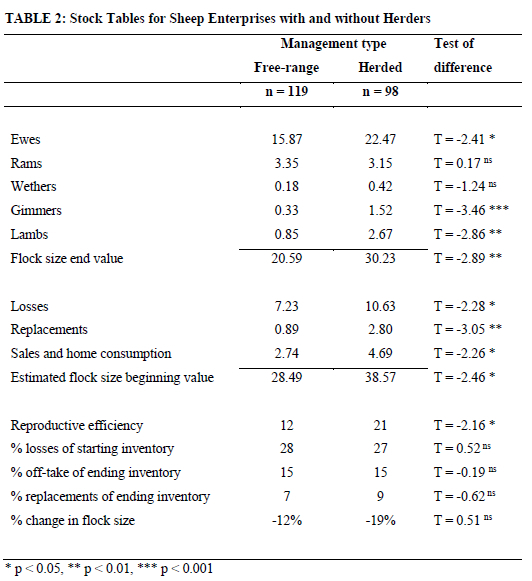
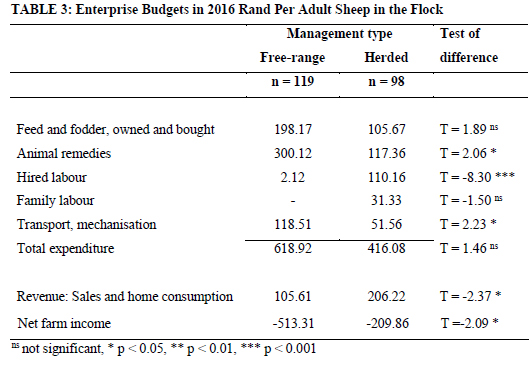
This study used survey data to measure the benefits of paid herding for small stockholders on the communal rangelands of the eastern Free State. Extensionists can recommend herding to their clients because it mitigated the worst of a recent drought by controlling intermediate consumption and facilitating better recruitment. However, the practice did not impact the size or composition of livestock losses. In drought, livestock holders prioritised off-take over accumulation and selectively shed male animals. Off-take was directed to sales rather than to home consumption. Herding affected the cost of production, with herders saving more than their wages on purchased feed and remedies but not enough to make their herds profitable.
Benefits of Herding; Communal Rangeland; Herd Performance