Effectiveness of Extension Services in Addressing Climate Change Production Challenges of Crop Farmers in Southeast Nigeria
Abstract
Existing studies in Southeast Nigeria have documented the effects of climate change on crop production and farmers' adaptation strategies; however, there is limited empirical evidence on the effectiveness of extension services in mitigating climate-induced production challenges among crop farmers. This research gap necessitated evaluating the effectiveness of extension services in addressing climate-related production challenges of crop farmers in Southeast Nigeria. A cross-sectional sample of 301 crop farmers was selected using a multistage sampling procedure. Data collected using a structured questionnaire were analysed using descriptive statistics and a probit regression model. The results show that the farmers sourced extension service information via radio (94.4%), mobile phones (92.5%), farmer-to-farmer (90.6%), and workshops/seminars (88.6%). Respondents attributed climate change primarily to bush burning (98.8%), fossil fuel use (91.7%), overgrazing (82.1%), and deforestation (80.4%). Training on climate change information (99.8%), improved remuneration (98.5%), and welfare packages (92.5%) were identified as medium-level interventions to improve the effectiveness of extension service delivery in mitigating climate change. Capacity development (P<0.01), logistics (P<0.01), distant communities (P<0.01), and inadequate extension officers (P<0.05) were significant factors influencing the efficiency of extension service delivery. In conclusion, capacity-building for extension agents is imperative. The study calls on the government and relevant stakeholders to reinforce extension service delivery in the region by investing in capacity-building, providing sustainable funding, and leveraging modern technology to fulfil their mandates.
Effectiveness; Extension Service; Climate Change; Production Challenges
1. INTRODUCTION
Agriculture is a globally practised enterprise encompassing aquaculture, forestry, crop production, and livestock husbandry (Food and Agriculture Organisation, 2023). Agriculture is one of the most effective means for accelerating economic growth and enhancing national food security. It can help alleviate extreme poverty, raise wages, and improve livelihoods (FAO, 2023). By 2050, it is expected to feed 10 billion people and to induce increased prosperity for all (World Bank, 2024). Agricultural growth has a major impact on gross domestic product (GDP) growth. With agriculture contributing 4% of the world's GDP and up to 25% in some least developed nations (World Bank, 2024). The principal crops farmed in Nigeria's 70.8 million hectares of arable land include rice, millet, yams, beans, cassava, guinea corn, and maize (FAO, 2022). Agriculture's share of GDP increased from 21.66% in 2023 to 26.11%, then fell by 5.04% (FAO, 2023). The need to increase food output to meet the demands of a rapidly growing population, such as Nigeria's, has remained imperative; however, challenges abound due to the growing impact of climate change and weather conditions on crop yields (Osuji, Igberi, & Ehirim, 2023). Empirical research suggests that Nigeria will see more effects of climate change in the coming decades (ADB, 2022; Abbass et al., 2022). Currently, farming households, whose livelihoods and food security depend on rain-fed agricultural systems and other agro-based activities, are being significantly impacted by climate change as evidenced by observable changes in weather patterns, a rise in the frequency and severity of floods and droughts, and disturbing rain and temperature fluctuations (Awiti, 2022; Osuji et al., 2023). For instance, high temperatures lower the rate of crop germination, results in water loss, and hinders photosynthesis (Jones et al., 2023). In addition, it causes the death of crop seedlings and impairs the growth of surviving seeds, thereby lowering output and land yield. An increase in precipitation has an adverse impact on the timing of plant flowering and disrupts reproductive cells, thereby lowering crop yields (Akano et al., 2023). High rainfall causes fields to flood, resulting in increased crop pests and disease infestations and complete crop failure (Kumar et al., 2022). A high evaporation rate results in a loss of soil moisture and soil aeration, leading to soil dryness and the failure of crop seedlings. A high evaporation rate affects plant transpiration and soil infiltration, resulting in abnormal growth conditions and poor yield (Derbile et al., 2022). Therefore, this incident underscores the need to mitigate the rising impacts of climate change on crop production in southeast Nigeria. However, the crop farmers in southeast Nigeria remain at the receiving end of the above climate risks, and this has reduced their agricultural outputs, yields, harvests, farm income, and general economic livelihoods.
Consequently, crop farmers in southeast Nigeria have exploited several means to mitigate the adverse effects of climate change on crops. These include radio, farmer-to-farmer, workshops/seminars, cooperative societies, television, research Institutes, and, most especially, extension services (EBSG, 2023). Extension services are recognised as essential in fostering small-scale farming and achieving household food security (Adeleke et al., 2024). Research has demonstrated that agricultural extension services enhance farmers' agricultural expertise and know-how, spread new technology, and modify farmers' mindsets. They provide innovative, practical support to help farmers optimise their resource inputs and improve crop production (Akinnagbe et al., 2024). In light of climate change, agricultural extension is required to raise public awareness and understanding of changing weather and climate, and to proffer possible ways to minimise climate risks in crop farming to maximise food security and growth. Although previous research (Kumar et al., 2022; Alzahrani et al., 2023; Jamil et al., 2023; Jones et al., 2023; and Adeleke et al., 2024) has indicated the importance of extension services in enhancing farmers' well-being and output, there are still substantial gaps in our understanding regarding capacity building, which enhances the efficiency and effectiveness of extension services in fulfilling their primary objectives. Furthermore, the region has a dearth of extension agents, and those available need to be retrained to help farmers reduce the risks associated with climate change.
2. OBJECTIVES OF THE STUDY
The broad objective of the study is to assess the effectiveness of extension services in addressing climate-related production challenges of crop farmers in Southeast Nigeria. The study achieved the following specific objectives:
1. Identify the level of awareness of climate change among crop farmers in Southeast Nigeria.
2. Identify sources of extension service information among crop farmers.
3. Determine the causes of climate change in the region.
4. Examine procedures to improve the effectiveness of extension service delivery in addressing climate change production challenges.
5. Determine factors influencing the effectiveness of extension service delivery.
3. METHODOLOGY
3.1. Study Area Description
The research was conducted in Southeast Nigeria. The region consists of five States (Imo, Abia, Anambra, Enugu and Ebonyi). The region represents one of the six geopolitical regions in Nigeria. It occupies a total land area of 29,388km2 and is within the latitude 4020ʹ and 7025ʹNorth and longitude 6037ʹ and 8028ʹEast. The region has extensive agricultural land used for crop production and other agricultural activities. The region's population is about 36 million, which is about 18 percent of the country's total population. The region is marked by two discrete seasons: the rainy and dry seasons. Rainfall exceeds 1800mm, with temperatures between 25°C and 30°C. Crop cultivation in the region includes rice, cowpea, cassava, maize, yams, cocoyam, plantain, and vegetables.
3.2. Sampling Procedure and Sample Size
The study used a multi-stage sampling technique to select the sample population. Note that the study was conducted in Southeast Nigeria, comprising five states: Imo, Abia, Anambra, Enugu, and Ebonyi. In the first phase, the researchers selected two local government areas (LGAs) from each of the five states in Southeast Nigeria (Imo, Abia, Anambra, Enugu, and Ebonyi), for a total of 10 LGAs. The selection of these LGAs was based on intensive crop production activities, coupled with observed climate change disturbances, as documented by the Nigeria Bureau of Statistics (NBS, 2023). In the second phase, a random selection of three autonomous communities was made from each of the selected LGAs, for a total of 30 communities. In the third phase, the researchers conducted a random final selection of 12 crop farmers across the 30 autonomous communities, resulting in 360 respondents for the study. The selection of crop farmers was based on their active involvement in crop production activities, as documented by Agricultural Development Programme Officers across the sampled communities. However, from the structured research questionnaire distributed to 360 respondents, the researchers retrieved 301 questionnaires, representing the actual sample size used for the data analysis and the study. The remaining questionnaires were void due to incomplete information and insufficient data.
3.3. Data Collection
The researchers used primary data collected from respondents via a structured questionnaire, carefully designed to capture the study objectives. A structured questionnaire ensures uniform, clear, and easily analysable responses, making data collection cost-effective, time-efficient, and less prone to research bias. The researchers used one-on-one interview schedules, scheduled appointments, and focus group discussions to retrieve the desired information and data from the sampled respondents. Data retrieved from respondents include: the level of awareness of climate change, sources of extension service information, causes of climate change, procedures for the effective delivery of extension services to address climate change production challenges, and factors influencing the effectiveness of extension service delivery in the region. Furthermore, in sourcing the above information and given that the study was carried out in rural areas, the researchers used local (native) dialects to communicate with the respondents. This was made possible by the researchers identifying and engaging one of the rural elites in each community to ease language barriers.
3.4. Data Analysis
The specific research objectives, such as climate change awareness of crop farmers, source of extension service information among crop farmers, causes of climate change, procedures for effectiveness of extension service delivery in mitigating climate change, were analysed using descriptive statistics, while the factors influencing effectiveness of extension service delivery were analysed using an ordered probit model. The researchers extracted the data from the research questionnaire, entered them into an Excel sheet in rows and columns, coded the data as nominal and numerical values, and analysed them using Statistical Package for the Social Sciences (SPSS, version 20). SPSS 20 is preferred because it offers greater stability, enhanced visualisation, wider compatibility, and improved statistical and data management features.
The choice of the ordered probit regression model in this study was informed by the ordinal nature of the dependent variable. In many socio-economic and agricultural studies, including assessments of farmers' perceptions, adoption levels, or effectiveness ratings, responses are typically structured in ordered categories such as "low," "medium," and "high." These outcomes possess a natural ranking but lack precise or equal distances between the categories. Conventional linear regression techniques are inappropriate in such contexts, as they assume a continuous dependent variable with equidistant outcomes, which may lead to biased and inconsistent estimates. The ordered probit model addresses this limitation by explicitly accounting for the ordinal structure of the dependent variable and estimating the probability that an observation falls into a given category as a function of underlying latent variables. Unlike simple descriptive methods, it provides a rigorous econometric framework for identifying the influence of explanatory variables on ordered responses. Its use therefore ensures more reliable, policy-relevant insights, particularly in analysing how different factors shape crop farmers' responses to the effectiveness of extension services. This confirms the findings of Ismael and Duleba (2023), Cele and Mudhara (2024), and Ndiwa et al. (2025). The ordered probit model is expressed as follows;

Where
Yi = Effectiveness of extension services {1 = low effectiveness, 2 = very low effectiveness, 3 = high effectiveness, 4 = very high effectiveness).
X1 = Capacity development (Number of times)
X2 = Logistics (Yes =1, and Otherwise = 0)
X3 = Farmers resistance to change (Yes =1, and Otherwise = 0)
X4 = Distant communities (Yes =1, and Otherwise = 0)
X5 = Tradition & Culture (Yes =1, and Otherwise = 0)
X6 = Inadequate extension officers (Yes =1, and Otherwise = 0)
X7 = Poor remuneration (Yes =1, and Otherwise = 0)
X8 = Extension field tools (Yes =1, and Otherwise = 0)
X9 = Language barrier (Yes =1, and Otherwise = 0)
X10 = Unavailability of farmers during extension visits (Yes =1, and Otherwise = 0)
X11 = Field experience (Yes =1, and Otherwise = 0)
e = error term
4. RESULTS AND DISCUSSION
4.1. Socio-Economic Characteristics of Crop Farmers
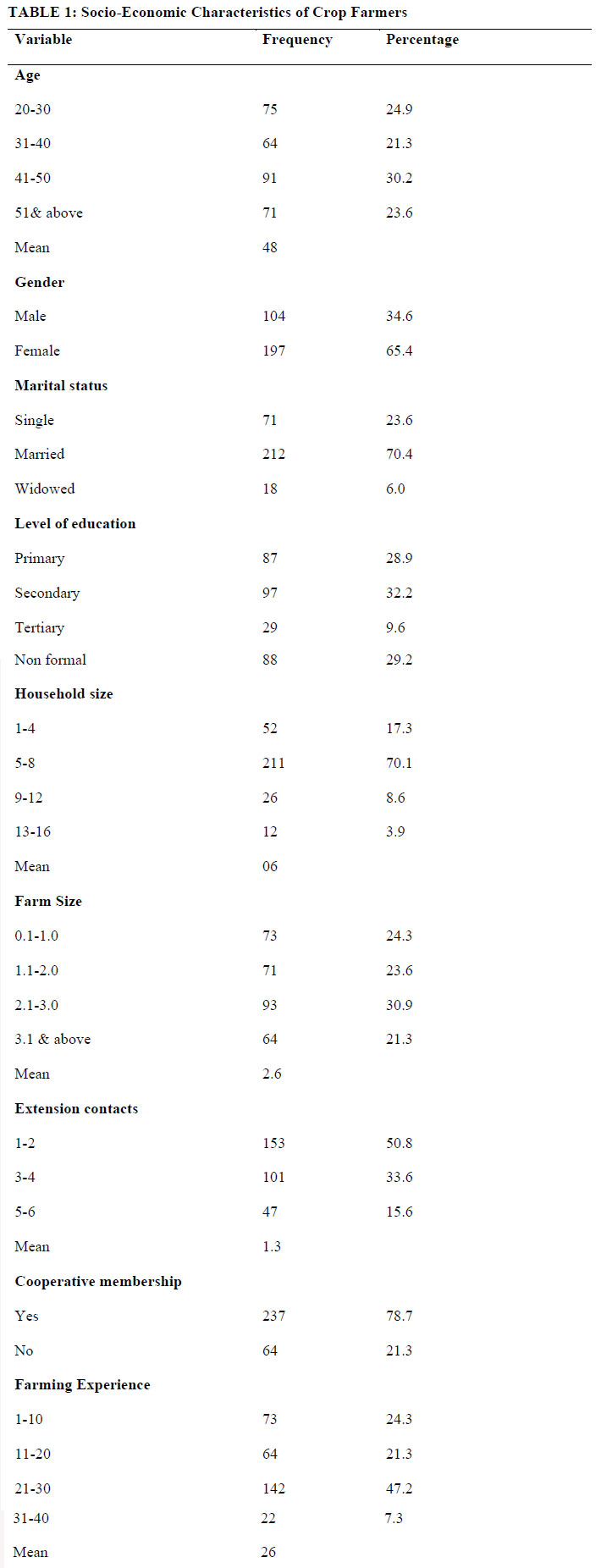
Table 1 reveals the socio-economic characteristics of crop farmers. The age distribution of respondents reveals that the majority of crop farmers fall within the 41-50 years age bracket (30.2%), followed by 20-30 years (24.9%), and 51 years and above (23.6%), while the 31-40 years group (21.3%) constitutes the smallest category. The dataset reports a mean age of 48 years, indicating a predominantly middle-aged farming population. This age structure has significant implications for crop production. First, the dominance of middle-aged farmers suggests that the sector benefits from an active, experienced labour force. Middle-aged individuals often possess both the physical capacity required for farm operations and the farming knowledge accumulated through years of practice (Osuji et al., 2023). The analysis of gender distribution reveals that female farmers constitute the majority (65.4%), while male farmers constitute 34.6%. This finding highlights the central role women play in agricultural production in the study area. Similar patterns have been reported across sub-Saharan Africa, where women contribute significantly to smallholder farming and food security (FAO, 2023). Women are often engaged in labour-intensive aspects of crop production, such as planting, weeding, and post-harvest processing, thereby making them indispensable to household food supply chains. The results indicate that the majority of respondents were married (70.4%), followed by single farmers (23.6%), while widowed farmers accounted for only 6.0% of the sample. This distribution reflects the predominance of family-oriented households in farming communities, consistent with previous findings in rural sub-Saharan Africa, where marriage plays a central role in shaping labour organisation and agricultural decision-making (Adeagbo et al., 2021). The high proportion of married respondents has significant implications for crop production. Married farmers often benefit from household labour support, particularly from spouses and children, which may reduce hired labour costs and enhance farm productivity. In addition, marriage is frequently associated with greater stability and commitment to long-term farming activities, especially when land access and inheritance systems are tied to family status. The findings reveal that a significant proportion of respondents had attained secondary education (32.2%), followed by non-formal education (29.2%) and primary education (28.9%), while only 9.6% had tertiary education. This distribution indicates that the majority of farmers have attained post-primary education, which has leveraged their understanding of farm production operations and techniques. Educational attainment is a critical factor influencing agricultural productivity, as it shapes farmers' ability to acquire, process, and apply information related to improved farming practices (Osuji et al., 2023). The relatively high proportion of farmers with secondary education suggests moderate capacity to understand extension messages, maintain records, and adopt new technologies. The household size distribution shows that the majority of respondents belonged to households of 5-8 members (70.1%), followed by smaller households of 1-4 members (17.3%), while 9-12 members (8.6%) and 13-16 members (3.9%) accounted for relatively small proportions. The reported mean household size was 6 persons, which is consistent with rural households. Household size is an important socio-economic factor in agricultural production, particularly in smallholder farming systems where family labour constitutes the primary source of farm work (Agovino et al., 2019). The predominance of households (5-8 members) suggests a relatively strong labour base for crop production. This household size can provide surplus labour for labour-intensive tasks such as land preparation, planting, and harvesting. The distribution of farm sizes indicates that most respondents cultivated between 2.1 and 3.0 hectares (30.9%), followed by those cultivating 0.1-1.0 hectares (24.3%), 1.1-2.0 hectares (23.6%), and 3.1 hectares and above (21.3%). The reported mean farm size was 2.6 hectares, suggesting that farmers in the study area typically operate at the smallholder to lower-medium scale, which may result in low agricultural outputs (Igberi et al., 2022).
The results show that most respondents had 1-2 extension contacts (50.8%), followed by 3-4 (33.6%), while only 15.6% reported 5-6. The reported mean number of contacts was 1.3, suggesting that farmers had limited access to extension services during the farming season. Extension contact frequency is a vital factor influencing the adoption of improved farming practices. Regular interaction with extension agents enhances farmers' access to agricultural information, training, and innovations, thereby improving crop productivity (Akinnagbe et al., 2024). The findings show that a substantial majority of respondents (78.7%) were members of cooperatives, while 21.3% reported no membership. This indicates a strong level of farmer participation in collective organisations within the study area. Cooperative membership plays a crucial role in enhancing farmers' access to agricultural resources, credit facilities, inputs, and market opportunities. Members often benefit from economies of scale in input procurement and output marketing, improved bargaining power, and access to extension services and training (Jones et al., 2023). The distribution of farming experience shows that nearly half of the respondents (47.2%) had been farming for 21-30 years, followed by 1-10 years (24.3%), 11-20 years (21.3%), and 31-40 years (7.3%). The reported mean farming experience was 26 years, suggesting that most farmers in the study area are highly experienced. Farming experience is a critical determinant of agricultural performance, as it shapes farmers' ability to interpret environmental conditions, manage risks, and adopt innovations (Ikuemonisan et al., 2020).
4.2. Climate Change Awareness of Crop Farmers
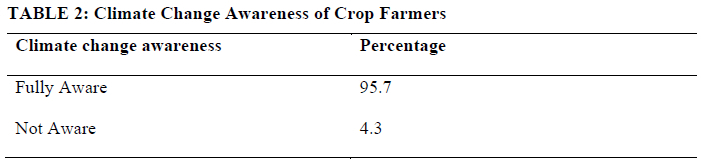
The results in Table 2 indicate that 95.7% of the crop farmers were aware of a changing climate, while 4.3% were not. This implies that the majority of farmers were bedevilled by the adverse effects of climate change on their farming enterprises, which created awareness and/or knowledge of climate change (Osuji et al., 2023), while the least crop farmers probably did not experience any climate issues during the cropping season.
4.3. Source of Extension Service Information
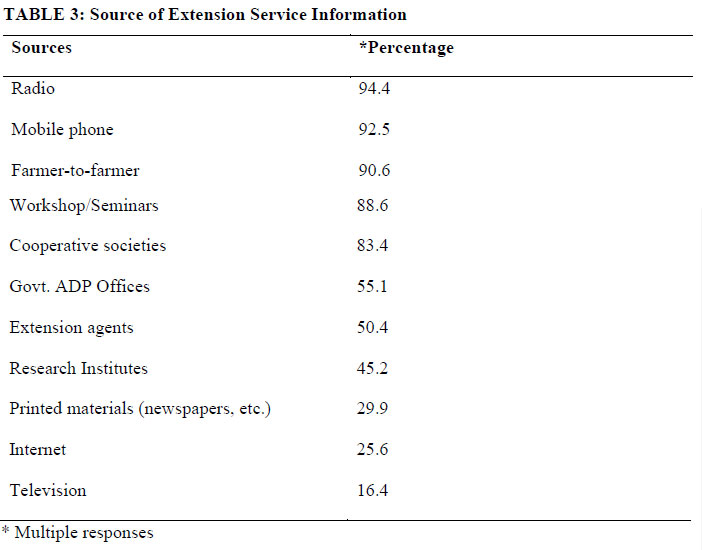
The result in Table 3 depicts that 94.4% of the crop farmers indicated radio. This implies that this group of farmers sourced extension service information via radio stations. Over time, radio has proven to be an important source of extension service communication and information transmission among rural farmers. Nowadays, information on extension services is relayed via the radio system. Radio provides broad coverage of information to a wide audience, even in the most isolated or remote places, making it a potent means of communication (Jones et al., 2023). The use of a mobile phone was indicated by 92.5% of the crop farmers. This implies that the farmers accessed extension service information through their mobile phones. Mobile phones enhance easy communication and faster transmission of extension service information among farmers (Adeleke et al., 2024).
Farmer-to-farmer was indicated by 90.6% of the crop farmers. This implies that the crop farmers obtained extension service information via fellow farmers. This entails the transference of farm information, innovation, skills and farm knowledge from one farmer to another. This process aids better understanding and knowledge acquisition among farmers. Farmers generally learn faster from fellow farmers (Adeleke et al., 2024). Workshop/Seminars were indicated by 88.6% of the crop farmers. This implies that these groups of farmers sourced extension service information by attending agricultural workshops/seminars. Participation in agricultural workshops/seminars exposes farmers to new knowledge about farming activities and/or operations (Waaswa et al., 2024). Cooperative societies were indicated by 83.4% of the farmers. This implies that crop farmers accessed extension service information through the various cooperative societies they belong to. Cooperatives are known to provide vital agricultural information and essential services to rural farmers. Government agricultural development programme offices and research institutes were reported by 55.1% and 45.2% of the crop farmers, respectively. This implies that this group of crop farmers sourced extension service information via agricultural development programme offices and research institutes in their localities. These two agencies are tasked with providing information on farming operations and extension services to rural farmers (Ngigi & Muange, 2022). Extension agents were indicated by 50.4% of the crop farmers. This implies that the farmers sourced information on extension services via available extension agents. Extension agents are reputed agents of communication and dissemination of agricultural and farm-related information that aid farmers' farming operations (Jamil et al., 2023).
Printed materials were indicated by 29.9% of the crop farmers. This implies that these groups of farmers obtained information about extension services through newspapers, bulletins, pamphlets, and magazines. Internet and television were reported by 25.6% and 16.4% of the crop farmers, respectively. This indicates that these smaller groups of farmers sourced extension service information through the internet and television. The Internet provides information on farm extensions on a global scale and with broader coverage (Danjumah et al., 2024). Nowadays, all manner of farm information can be sourced online with a click. Television is an audiovisual means of communication that assists local farmers in perusing displayed farm information, and, in most cases, via visual demonstrations.
4.4. Causes of Climate Change
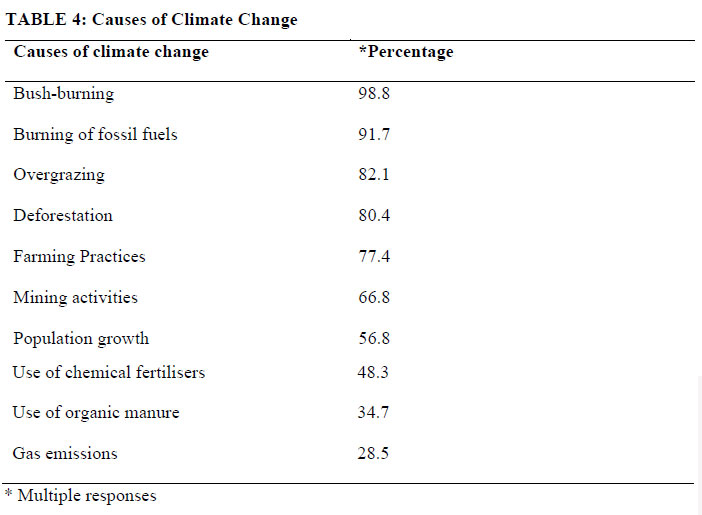
The result in Table 4 depicts the causes of climate change. Bush-burning was indicated by 98.8% of the crop farmers. This implies the intentional burning of bushes and farmlands in preparation for agricultural operations. Large volumes of greenhouse gases, including carbon dioxide, methane, and nitrous oxide, are emitted when bush fires occur. These gases are linked to climate change and global warming (Grigorieva et al., 2023). The burning of fossil fuels was reported by 91.7% of the crop farmers. This suggests that nitrogen oxides and carbon dioxide are often released into the atmosphere. Global warming is caused by greenhouse gases trapping heat in our atmosphere. Overgrazing was indicated by 82.1% of the crop farmers. This implies extensive livestock grazing of arable farmland, which results in emissions of carbon dioxide gas that infiltrate the atmosphere, causing climate change and environmental pollution. For instance, methane and nitrous oxide are specifically produced by ruminant animals, such as cows and goats, during the regurgitation and digestion of food, and this process contributes to climate change (FAO, 2023). Deforestation was indicated by 80.4% of the crop farmers. This implies the intentional felling of mature trees for wood, fuel, etc. Deforestation contributes to climate change by releasing large amounts of carbon stored in trees back into the atmosphere as carbon dioxide. Global warming is caused by 10% of deforestation and forest loss (Abbass et al., 2022).
Farming practices were indicated by 77.4% of the household farmers. This entails using heavy machinery and farm equipment that disturb the soil and land, releasing nitrogen oxides and carbon dioxide into the atmosphere and contributing to climate change, as well as continuous cropping, deep tillage, farming on marginal land, and other unsustainable agricultural practices (Osuji et al., 2023). Mining activities were indicated by 66.8% of the crop farmers. This implies drilling and excavating the soil surface to search for minerals and metals, which destroys ecosystems. Solid mineral resources such as granite, salt, limestone, lead and zinc are currently mined in the State. These Mining activities cause land disturbance and the release of greenhouse gases into the atmosphere. Population growth was indicated by 56.8% of the crop farmers. This implies a tremendous increase in the number of people living in a particular region or locality. Population growth is causing massive pollution through dependence on fossil fuels, indiscriminate waste disposal, construction of more buildings, pressure on farmland, and increased agricultural activities, which are changing the climate by releasing greenhouse gases into the atmosphere (World Bank, 2024). Use of chemical fertilisers and organic manure was reported by 48.3% and 34.7% of the crop farmers, respectively. This implies excessive use of these substances on farmland to enrich the soil and boost yields. The use of fertiliser results in the release of methane (CH4) and nitrous oxide (N2O) into the atmosphere, which contribute to climate change. Global warming is caused by methane released by stored organic waste (Derbile et al., 2022). Gas emissions were indicated by 28.5% of the crop farmers. This implies the release of greenhouse gases, such as carbon dioxide, from frequent vehicular movements, constant use of generators and industrial machinery, and other gas-emitting vehicles. These sources emit greenhouse gases into the atmosphere, contributing to climate change.
4.5. Procedures for Improving the Effectiveness of Extension Service Delivery in Addressing Climate-Related Production Challenges
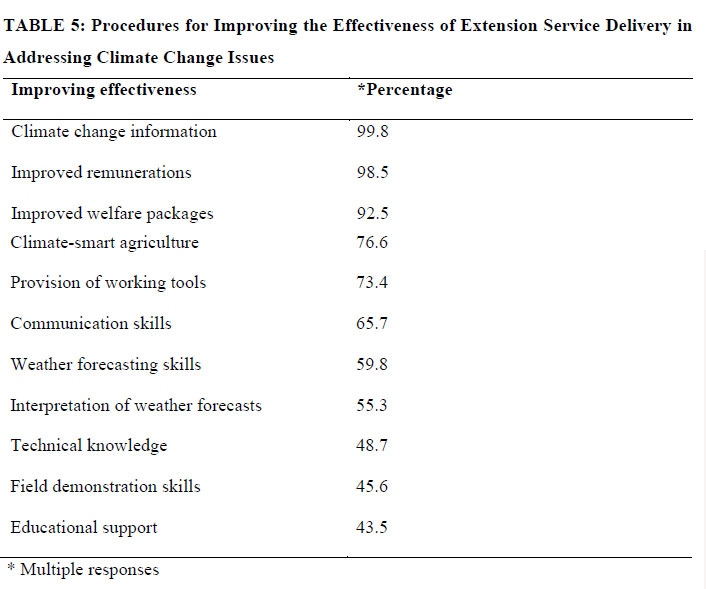
Table 5 presents the procedures for improving the effectiveness of extension service delivery in mitigating climate change production challenges. Training on climate change information was indicated by 99.8% of the crop farmers. This implies training and retraining extension agents on the latest information on climate change and its impacts. There is a need to expose old and newly employed extension agents to new knowledge on the diverse impacts of weather and climate change; this will, in turn, aid them in reaching out to rural farmers to address climate change-related issues (Antwi-Agyei & Stringer, 2021). Improved remuneration was identified by 98.5% of the crop farmers. This implies compensating or rewarding extension agents through improved wages and salaries, as well as other monetary incentives. By doing so, extension agents are motivated to reach out to farmers and assist them in mitigating the adverse effects of climate change on their farming enterprises. This will motivate extension personnel to discharge their services with a high sense of responsibility and value (Adeleke et al., 2024). Improved welfare packages were indicated by 92.5% of the crop farmers. This implies improving the welfare packages for extension agents by providing housing allowances, transportation, health services, family support, career development, and food incentives. No doubt, these welfare packages in place will spur extension agents to deliver their best services on issues related to climate change impacts on crop farmers (Antwi-Agyei & Stringer, 2021). Climate-smart agriculture was identified by 76.6% of the crop farmers. This implies exposing both old and newly employed extension agents to recent climate-smart agricultural interventions, such as precision farming, mechanised farming, digital agricultural tools, and sustainable farming. The knowledge gained by the extension agents will assist them in helping local farmers overcome the impacts of climate change in their localities (Alzahrani et al., 2023). Provision of working tools was identified by 76.6% of the crop farmers. This implies providing extension agents with the necessary tools, such as operational vehicles, safety equipment, mobile phones, measuring tapes, and other extension tools. The provision of these working tools remains a baseline for the efficient administration of extension services to rural farmers who are bedevilled by climatic issues (Akinnagbe et al., 2024). Communication skills were acquired by 65.7% of the crop farmers. This implies training extension personnel in the communication skills required in the 21st century. Information is vital in extension services, and the ability of extension agents to communicate effectively is a prerequisite for assisting local farmers in dealing with climate events. Weather forecasting skills and the Interpretation of weather forecasts were reported by 59.8% and 55.3% of the household farmers, respectively. This implies training and retraining extension agents on weather forecasting and its Interpretation. This training is highly important and necessary for extension personnel to acclimate to the unpredictable weather. By so doing, extension agents can independently forecast weather conditions and communicate them to local farmers to forestall impending events (Igberi et al., 2022). Technical knowledge was indicated by 48.7% of the crop farmers. This implies exposing extension agents to new and recent technical innovations, expertise, outlooks, skills, digital information and advanced practical knowledge. This improvement in technical knowledge equips extension agents to assist local farmers in handling changes in weather patterns (Danjumah et al., 2024). Field demonstration skills and educational support were reported by 45.6% and 43.5% of the crop farmers, respectively. This implies training the extension agents on modern field demonstration operations and activities. Mitigating climatic impacts requires innovative and practical field demonstrations and technical expertise, which extension personnel are expected to acquire to assist local farmers in addressing climatic issues (Danjumah et al., 2024). Moreover, educational support can assist extension agents in furthering their education and knowledge acquisition, and in developing extension service capacity independently. This goes a long way toward benefiting rural farmers by mitigating the hardships caused by weather variability.
4.6. Factors Influencing the Effectiveness of Extension Service Delivery
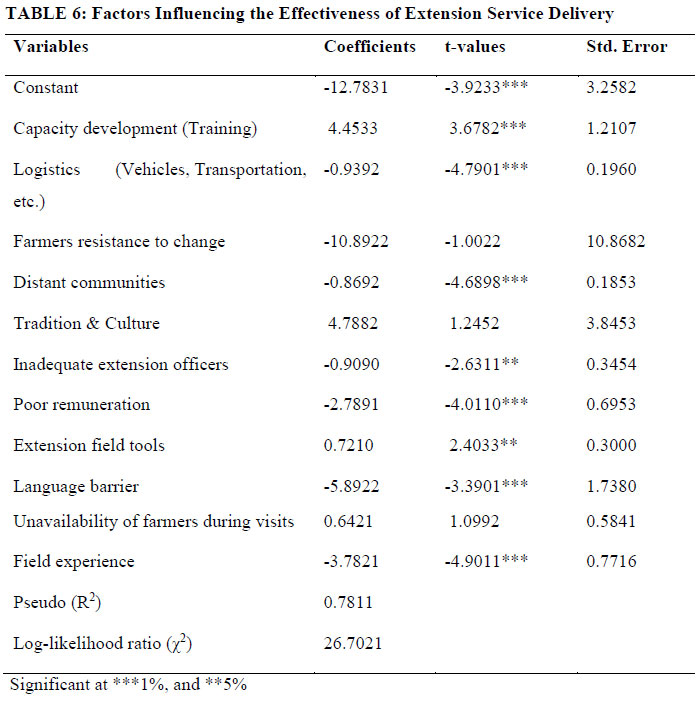
Table 6 presents the factors influencing the effectiveness of extension service delivery. The result shows that the Log-likelihood ratio (χ2) of 26.7021 was significant at the 1% level and confirms the model's fitness and suitability for determining the factors influencing the effectiveness of extension service delivery in the region.
Capacity development was positively significant at 1% statistical level, implying that intensive training and retraining of extension agents regularly aid the effectiveness of extension service delivery. Capacity development significantly enhances the effectiveness of agricultural extension service delivery by strengthening the skills and professionalism of extension agents, improving institutional systems, and promoting the use of modern communication technologies. Through continuous training, organisational reforms, and ICT integration, extension personnel are better equipped to deliver timely, relevant, and farmer-centred services. Moreover, by empowering farmers through participatory learning and cooperative development, capacity building fosters greater adoption of innovations and sustainability of agricultural practices. Ultimately, capacity development creates more responsive, inclusive, and resilient extension systems capable of addressing the complex challenges facing rural livelihoods. (Antwi-Agyei & Stringer, 2021).
Logistics had a negative correlation and was significant at the 1% statistical level, implying that the absence of operational logistics, such as the unavailability of official vehicles to visit rural farmers in remote areas and localities, could impede the effectiveness of extension service delivery. Some rural farmers do not access extension services due to poor road networks and difficulties extension agents face in reaching those areas (Jamil et al., 2023). In addition, weak logistics negatively affect extension service delivery by limiting agents' mobility due to poor transportation, high costs, and poor road networks, thereby reducing the coverage and frequency of farmer visits. Delayed supply of inputs, weak communication systems, and poor coordination further disrupt the timely flow of information, demonstrations, and farmer support. Inaccessible remote areas are often neglected, while irregular or unreliable service delivery undermines farmer trust and adoption of innovations. Altogether, these challenges reduce the reach, efficiency, and overall effectiveness of extension services.
Distant communities showed a negative correlation, significant at the 1% level, suggesting that distant localities and communities' constraints on extension visits negatively affect the efficiency and effectiveness of extension service delivery. Remote areas pose a huge challenge for extension personnel and limit the effectiveness of extension service delivery (Siaw et al., 2024). Furthermore, distant communities affect extension service delivery by creating access and logistical challenges that limit the frequency of visits, increase travel costs, and delay the flow of information between agents and farmers. This often demotivates extension workers, reduces community members' participation and trust, and makes it harder to deliver training, inputs, or follow-up support. Poor communication infrastructure in remote areas further weakens knowledge transfer, leading to low adoption of innovations and overall reduced effectiveness of extension services.
Inadequate extension officers produced a negative correlation coefficient, significant at the 5% level, suggesting that the shortage of extension agents constrains the effectiveness of extension service delivery. The decreasing number of extension agents affects the full delivery of extension service mandates. This could result from the government's inability to recruit new extension personnel to replace retired ones (Antwi-Agyei & Stringer, 2021). In addition, inadequate extension officers negatively affect extension service delivery by limiting farmer coverage, overburdening the few available officers, and reducing the quality and timeliness of advisory services. This results in delayed dissemination of innovations, weak capacity building, and poor follow-up with farmers. Consequently, farmers may lose trust in the system, rely on unreliable information sources, and adopt new practices more slowly, ultimately hindering agricultural productivity, food security, and rural development.
Poor remuneration showed a negative correlation and was significant at the 1% level, suggesting that low wages and salaries for extension agents limit the effectiveness of extension service delivery. The wages received by extension personnel are low, which alone demotivates them from discharging their duties to rural farmers (Lamin et al., 2021). Furthermore, poor remuneration negatively affects the effectiveness of extension service delivery by lowering workers' motivation and commitment, leading to high staff turnover and encouraging absenteeism as officers seek alternative income sources. It can also foster corruption, with staff demanding unofficial payments that erode farmers' trust. Inadequate pay further limits professional development and reduces outreach, especially to remote areas, due to a lack of transport support. Altogether, these factors weaken the quality, consistency, and accessibility of extension services, undermining agricultural innovation and rural development.
Extension field tools showed a positive correlation and were significant at the 5% statistical level, implying that adequate provision of extension field working tools remains a successful bet regarding the full delivery of extension services to local communities. Extension field tools, such as operational vehicles, field demonstration kits, farm-practical gadgets, etc., enhance the effectiveness of extension service delivery (Ngigi & Muange, 2022). Extension field tools positively influence the effectiveness of extension service delivery by clarifying communication, promoting farmer participation, increasing service reach through ICT, and improving efficiency in time and resource use. They enhance trust and credibility by providing visible evidence of results, facilitate monitoring and feedback for better decision-making, and encourage the adoption of innovation by demonstrating practical benefits. Moreover, they motivate extension agents by equipping them with the resources needed to deliver knowledge more confidently and effectively, thereby ensuring greater impact on farmer productivity and livelihoods.
The language barrier produced a negative correlation coefficient and was significant at the 1% statistical level, implying that the language barrier poses a significant hindrance to extension service delivery. In most cases, extension service outreaches are severely undermined because of language barriers. The inability of extension personnel to communicate with local farmers in their dialects hinders the effectiveness of extension service delivery (Buharb et al., 2024). Language barriers negatively affect extension service delivery by creating miscommunication, reducing trust between extension workers and communities, and limiting participation in training or demonstrations. When beneficiaries cannot fully understand or express themselves, important feedback is lost, indigenous knowledge is overlooked, and adoption of innovations becomes low. This weakens the effectiveness of programs, wastes resources, and slows down development goals.
Field experience was negatively significant at the 1% statistical level, implying that extension agents' inexperience impedes the effectiveness of extension service delivery. Lack of technical experience (technical know-how) and practical field expertise (demonstration skills) on the part of extension agents constrains the effectiveness of extension service delivery. Inadequate field experience negatively affects extension service delivery by limiting an agent's practical knowledge, reducing their credibility, and weakening their ability to address farmers' real challenges (Awiti, 2022). Without sufficient hands-on exposure, extension workers may provide advice that is overly theoretical, poorly adapted to local conditions, and difficult for farmers to apply. This reduces trust, lowers innovation adoption, and hinders effective problem-solving, ultimately making extension services less relevant, practical, and impactful in improving farmers' productivity and livelihoods.
5. CONCLUSIONS
The study highlights that crop farmers in the area are predominantly middle-aged, female, and married, with moderate education, medium household sizes, and considerable farming experience. These characteristics provide a strong labour base and practical knowledge that can enhance crop production. However, small farm sizes and limited extension contact remain critical constraints to improving productivity and adoption of modern practices. The findings demonstrate that crop farmers generally possess a high level of awareness of climate change, largely due to their direct experiences with its adverse effects on agricultural production. The low or absent awareness among farmers may be attributed to limited exposure to climate related challenges during the cropping season or to a lack of access to information on climate issues. The findings reveal that crop farmers relied on multiple channels to access extension service information, with radio, mobile phones, and farmer-to-farmer interactions serving as the most prominent sources. Workshops, seminars, and cooperative societies also played significant roles in facilitating knowledge exchange, while government agencies, research institutes, and extension agents provided additional, though less widely used, sources. Printed materials, internet platforms, and television were the least utilised, suggesting that traditional and interpersonal communication channels remain the dominant means of information dissemination among farmers. The results highlight that crop farmers identified multiple anthropogenic factors as major causes of climate change, with bush burning, fossil fuel combustion, overgrazing, and deforestation recognised as the most critical contributors. Unsustainable farming practices, mining activities, and rapid population growth were also acknowledged as significant drivers, reflecting their direct impact on land use, greenhouse gas emissions, and ecosystem degradation.
Additionally, the use of chemical fertilisers, organic manure, and various gas-emitting activities were cited as further contributors, underscoring the diverse human-induced actions linked to climate variability and global warming. The results indicate that crop farmers identified several key procedures to improve the effectiveness of extension service delivery in addressing climate change-related production challenges. Foremost among these are training on climate change information, improved remuneration, and enhanced welfare packages, which reflect farmers' recognition of the need to strengthen the capacity and motivation of extension agents. Additionally, the adoption of climate-smart agricultural practices, the provision of working tools, and the development of communication and weather forecasting skills were emphasised as critical to enhancing service delivery. Other measures, including improved technical knowledge, field demonstration skills, and educational support, were also highlighted as important for building extension agents' competence. Collectively, these procedures underscore the multidimensional approach required to strengthen extension systems that support farmers in coping with climate variability. The results reveal that several factors significantly influence the effectiveness of extension service delivery in the study area. Capacity development and the provision of field tools were positively associated with improved service delivery, underscoring the importance of continuous training, skills enhancement, and adequate working resources for extension agents. Conversely, logistics constraints, distant communities, inadequate extension officers, poor remuneration, language barriers, and limited field experience negatively affected extension performance, highlighting the systemic and operational challenges that weaken outreach and farmer engagement. Collectively, the findings demonstrate that while institutional support and resources can strengthen extension delivery, structural deficiencies and workforce limitations continue to undermine its effectiveness in promoting agricultural innovation and resilience.
6. RECOMMENDATIONS
Based on the study findings, the following recommendations were made;
1. Strengthen Extension Capacity: Regular training and retraining of extension agents on climate change, climate-smart agriculture, and modern farming practices should be prioritised to improve their competence and relevance.
2. Improve Extension Workforce and Motivation: Government and relevant agencies should recruit additional extension officers to reduce the farmer-to-agent ratio. Better remuneration and welfare packages, including transport support and incentives, are essential to motivate extension personnel and improve service delivery.
3. Enhance Communication and Information Access: Since farmers rely heavily on radio, mobile phones, and farmer-to-farmer interactions, extension programs should leverage these platforms while also expanding access to internet-based and digital tools to reach wider audiences.
4.
Provide Adequate Working Tools and Logistics: Extension agents should be equipped with vehicles, field demonstration kits, ICT devices, and other necessary tools to ensure wider coverage, especially in distant and remote communities.5. Promote Climate-Smart and Sustainable Farming Practices: Extension services should intensify campaigns against bush burning, deforestation, and unsustainable practices while promoting climate-smart interventions such as precision farming, conservation agriculture, and sustainable land management.
6.
Strengthen Institutional and Cooperative Support: Cooperative societies should be further empowered as platforms for information sharing, resource mobilisation, and farmer training, while partnerships with government agencies and research institutes should be expanded to ensure timely dissemination of innovations.All authors have contributed sufficiently to the work and take responsibility for the content, including the manuscript's concept, design, analysis, writing, or revision. BGN, OEE, NFO, and UII were involved in the study conception and design; ABN, MIE, AUC, UNE, and AKH were responsible for data collection and curation; OEE, IEE, OCO, and NEU were responsible for analysis and interpretation; OCO, MIA and NCV were responsible for supervision and manuscript intellectual content. All authors read and approved the final manuscript.
The research received no internal or external funding from the public or any third party.
10. DATA AVAILABILITY STATEMENT
Data for the study are available upon reasonable and convincing request.
The authors declare no conflict of interest.
7. ACKNOWLEDGEMENTS
The authors acknowledge the efforts of Agriculture Development Programme Officers (ADP) in the five States in Southeast Nigeria in aiding data collection.
REFERENCES
- ABBASS, K., QASIM, M.Z., SONG, H., MURSHED, M., MAHMOOD, M. & YOUNIS, I. 2022. A review of the global climate change impacts, adaptation, and sustainable mitigation measures. Environ. Sci. Pollut. Res., 29: 42539-42559.
- ADEAGBO, O.A., OJO, T.O. & ADETORO, A.A., 2021. Understanding the determinants of climate change adaptation strategies among smallholder maize farmers in South-west, Nigeria. Heliyon., 7(2): e06231.
-
ADELEKE, O.A., FADAIRO, O.S. & CAMARA, M.L.F., 2024. Adoption of improved varieties among rice farmers in Kindia region of Guinea. J. Agric. Ext., 28(1): 49-61. https://dx.doi.org/10.4314/jae.v28i1.6
» https://dx.doi.org/10.4314/jae.v28i1.6 -
AGRICULTURAL DEVELOPMENT BANK., 2022. Climate change in Africa. African Development Bank Group. Available from https://www.afdb.org/en/cop25/climate-change-africa
» https://www.afdb.org/en/cop25/climate-change-africa -
AGOVINO, M., CASACCIA, M., CIOMMI, M., FERRARA, M. & MARCHESANO, K., 2019. Agriculture, climate change and sustainability: The case of EU-28. Ecol. Indic., 105: 525-543. https://doi.org/10.1016/j.ecolind.2018.04.064
» https://doi.org/10.1016/j.ecolind.2018.04.064 -
AKANO, O.I., ODERINDE, F.O. & OMOTAYO, A.O., 2023. Agricultural yield, food nutrition and dietary energy supply in Nigeria: Evidence from nationally representative data. J. Agric. Food Res., 11: 100525. https://doi.org/10.1016/j.jafr.2023.100525
» https://doi.org/10.1016/j.jafr.2023.100525 - AKINNAGBE, O.M., EJIGA S.A. & AKINBOBOLA T.P., 2024. Perception of agricultural extension workers on privatization of agricultural extension services in Ondo State, Nigeria. J. Agric. Ext., 28(2): 1-8.
- ALZAHRANI, K., ALI, M., AZEEM, M.I. & ALOTAIBI, B.A., 2023. Efficacy of public extension and advisory services for sustainable rice production. Agric., 13(5): 1062.
- ANTWI-AGYEI, P. & STRINGER. L.C., 2021. Improving the effectiveness of agricultural extension services in supporting farmers to adapt to climate change: Insights from northeastern Ghana. Clim. Risk Manag., 32: 100304.
- AWITI, A.O., 2022. Climate change and gender in Africa: A review of impact and gender-responsive solutions. Frontier Climate., 4: 895950.
- BUHARB, S., DAYOUB, M. & AL-NAJJAR, K., 2024. The impact of agricultural extension program effectiveness on sustainable farming: A survey article. Int. J. Agric. Technol., 20(2): 477-492.
- CELE, T. & MUDHARA, M., 2024. Impacts of crop production and value chains on household food insecurity in KwaZulu-Natal: An ordered probit analysis. Sustainability., 16(2): 700.
-
DANJUMAH, P.M., ASIAMAH, M.T., THAM-AGYEKUM, E.K., IBRAHAM, S.A. & MENSAH, L.K., 2024. Dynamics of agricultural extension delivery services to rice farmers in Ghana. Heliyon., 10(5): e26753. doi:10.1016/j.heliyon.2024.e26753
» https://doi.org/10.1016/j.heliyon.2024.e26753 -
DERBILE, E.K., BONYE, S.Z. & YIRIDOMOH, G.Y., 2022. Mapping vulnerability of smallholder agriculture in Africa: Vulnerability assessment of food crop farming and climate change adaptation in Ghana. Environ. Chall., 8: 100537. https://doi.org/10.1016/j.envc.2022.100537
» https://doi.org/10.1016/j.envc.2022.100537 - EBONYI STATE GOVERNMENT., 2023. Report from the Ministry of Agriculture and Natural Resources. Ebonyi State, Nigeria.
- FOOD AND AGRICULTURE ORGANISATION., 2022. Climate and agriculture. Rome, Italy: Food and Agriculture Organisation of the United Nations.
- FOOD AND AGRICULTURE ORGANISATION., 2023. Mainstreaming climate change in Africa. Rome, Italy: Food and Agriculture Organisation of the United Nations.
- GRIGORIEVA, E., LIVENETS, A. & STELMAKH, E., 2023. Adaptation of agriculture to climate change: A scoping review. Climate., 11(10): 202-210.
-
IGBERI, C.O., OSUJI, E.E., ANULI, R.O., PAUL, C.O. & NGOZI, O.E., 2022. Climate-smart adaptive measure of yellow cassava, linkages and implications in Southeast Nigeria. Agrociencia., 56(03): 1-32. https://doi.org/10.47163/1646.Ag.
» https://doi.org/10.47163/1646.Ag./ - /
-
ISMAEL, K. & DULEBA, S., 2023. An integrated ordered probit model for evaluating university commuters' satisfaction with public transport. Urban Science., 7(3): 83. https://doi.org/10.3390/urbansci7030083
» https://doi.org/10.3390/urbansci7030083 - IKUEMONISAN, E.S., MAFIMISEBI, T.E., AJIBEFUN, I. & ADENEGAN, I.K., 2020. Cassava production in Nigeria: Trends, instability and decomposition analysis (1970-2018). Heliyon., 6: e05089.
- JAMIL, M.H., TIKA, N., FUDJAJA, L., TENRIAWARU, A.N., SALAM, M., RIDWAN, M., MUSLIM, A.I. & CHAND, N.V., 2023. Effectiveness of agricultural extension on paddy rice farmer's Baubau City, Southeast Sulawesi, Indonesia. Sustainability., 15(4): 3773.
- JONES, E.O., THAM-AGYEKUM, E.K., ANKUYI, F., ADU-ANKRAH, D., AKABA, S., SHAFIWU, A.B. & RICHARD, F.N., 2023. Mobile agricultural extension delivery and climate-smart agricultural practices in a time of a pandemic: Evidence from southern Ghana. Environ. Sustain., 19: 100274.
- KUMAR, L., HHOGYEL, N., GOPALAKRISHNAN, T., HASAN, M.K., JAYASINGHE, S.L., KARIYAWASAM, C.S., KOGO, B.K. & RATNAYAKE, S., 2022. Climate change and future of agri-food production. Future Foods., 1(1): 49-79.
- LAMIN, K.M.F., IDU, O.O. & BEJAMIN, G.A., 2021. Effectiveness of agricultural extension services to minimize post-harvest losses of horticultural crop produce west coast region of the Gambia. Int. J. Adv. Econ., 3(2): 10-25.
- NIGERIA BUREAU OF STATISTICS (NBS)., 2023. Statistical framework for Nigeria. Abuja Nigeria: Reports of Nigeria Bureau of Statistics.
- NDIWA, A.M., MBURU, J., MULWA, R. & CHUMO, C., 2025. Ordered probit results of determinants of climate change vulnerability across different agricultural enterprises in Kenya. Clim. Serv., 38: 100578.
- NGIGI, M.W. & MUANGE, E.N., 2022. Access to climate information services and climate-smart agriculture in Kenya: a gender-based analysis. Clim. Change., 174(3-4): 21-27.
- OSUJI, E.E., IGBERI, C.O. & EHIRIM, N.C., 2023. Climate change impacts and adaptation strategies of cassava farmers in Ebonyi State, Nigeria. J. Agric. Ext., 27(1): 35-48.
- SIAW, S.Y., NORSIDA, M., RAMLI, N.N., YUSUF, M.S.A. & UMAR, A., 2024. The contribution of agricultural extension to empowerment of women for agricultural development. J. Agric. Ext., 28(2): 66-84.
- WAASWA, A., NKURUMWA, A.O., KIBE, A.M. & KIPKEMOI, J.N., 2024. Adapting agriculture to climate change: Institutional determinants of adoption of climate-smart agriculture among smallholder farmers in Kenya. Cogent Food Agric., 10(1): 1-12.