Adoption Drivers of Climate Smart Irrigation Technologies for Sustainable Production by Smallholder Maize Farmers in Botswana
Abstract
The adoption of climate-smart agricultural technologies by smallholder maize farmers in Botswana remains very low. This study assesses the adoption drivers of the improved irrigation technologies in Botswana and analyses the characteristics of the smallholder maize farmers. Data were collected by administering a structured questionnaire during face-to-face contact with a sample of approximately 270 smallholder maize farmers. A probit regression model was used to determine the factors influencing the adoption of improved irrigation technology, and the results indicate that most farmers are likely to adopt irrigation systems. However, the adoption decision is influenced by socioeconomic characteristics, such as credit constraints, a lack of knowledge about irrigation technologies, and a lack of extension services. Descriptive analysis was employed to identify the attributes of the farmers. The statistics implied that 62% of the respondents were older than 50 years, only 15.87% of the respondents had received a university education, 48% had adopted improved irrigation methods, and 52% relied on rainfed agriculture. Therefore, this study recommends encouraging more young and educated farmers to adopt Climate-Smart Irrigation Technology (CSIT) to mitigate climate change, enhance productivity, ensure food security, and improve the livelihoods of smallholder maize farmers in Botswana. Hence, the study recommends that concerned institutions in Botswana work to improve access to capital, facilitate training and education on improved irrigation methods, encourage more young and educated people to engage in farming activities, and ensure regular extension services to promote irrigation farming.
Adoption; Climate-Smart Agriculture; Irrigation; Maize Farming; Smallholder Farmer; Production; Botswana
1. INTRODUCTION
Climate-smart irrigation technology refers to sustainable and adaptive approaches in agricultural water management that consider the impact of climate change (Kumar et al., 2023). The adoption of climate-smart irrigation technologies addresses both mitigation and adaptation issues, as it reduces greenhouse gas (GHG) emissions while enhancing crop production in drought conditions (TNA Adaptation, 2021). In addition to minimising environmental impact, climate-smart irrigation practices enhance water use efficiency and promote resilience to climate-related challenges. (Sikka et al., 2018; Fawzy & Shedeed, 2020). Climate-smart irrigation technologies normally include drip, central pivot and sprinkler irrigation. These strategies have been beneficial to farmers in various countries, particularly in drought-prone nations like Botswana, by reducing their vulnerability to dry spells, resulting in more stable production and income generation.
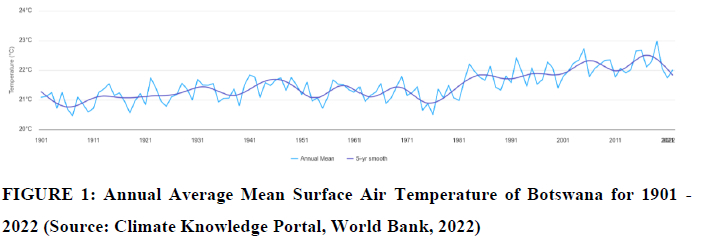
Botswana is one of the world's most drought-prone countries, with several multi-year droughts documented since the 1950s. The country is arid to semi-arid and extremely sensitive to climate change due to its scarce and highly erratic rainfall. The high evaporation rate and the virtual absence of permanent surface water over large parts of the country combine to ensure that water is scarce in Botswana (National Disaster Management Office, 2013). The World Bank Group's Climate Change Knowledge Portal (CCKP, 2022) provides a comprehensive analysis of historical climate data for Botswana, covering the period from 1901 to 2022. The dataset reveals that the air surface temperature has significantly increased over the last century (Figure 1).
Additionally, the mean monthly maximum temperatures range from 29.5 °C to 35 °C in summer. In terms of precipitation, Botswana experiences an average annual rainfall of 396 mm (CCKP, 2022). The most significant rainfall occurs from December to March, while precipitation levels are markedly low from June to August, based on the latest climatological data from 1991 to 2020. The dry spells and rainfall deficits in recent years have led the government to declare a drought emergency in July 2024. This marks the fourth consecutive year of severe drought, affecting almost 70% of the rural population in Botswana who depend on agriculture for their livelihoods, primarily through rain-fed farming. Therefore, they struggle to cope with the consequences of major weather conditions and high climate variability.
Smallholder crop production is a primary source of income for a large section of the population in Botswana, supporting themselves and their families. Smallholder farmers in Botswana are typically found in resource-poor rural areas, where agriculture is the primary means of alleviating poverty. Despite their contributions, the sector is susceptible to the effects of climate change and variability due to its reliance on rainfall.
A comparison study between the national crop yields and the cereal requirements indicates that the yields produced in the country do not fulfil its cereal demand. This has led to the country's overdependence on imports. Low average yields have far-reaching effects on the livelihoods and food security of many people, especially among small-scale farmers. (Statistics Botswana, 2020). On May 24, 2024, the Rural Development Secretariat, under the Ministry of Local Government and Rural Development, released a report that also confirmed a severe reduction in agricultural yields, with a drop from 206,572 tons harvested in 2021/22 to 125,184 tons in 2022/23. In 2022/23, cereal production reached just 67,530 tons, just 23% of the national need. A severe decline in maize production has been observed, with the harvest dropping from 67,000 tons in 2021 to just 29,000 tons in 2022 (FAO, 2023), representing a 56% decrease in maize yield during this period, while the national requirement is 100,000 mt per year (International Trade Administration, 2024).
To address the severe drought, smallholder maize farmers should adopt climate-smart irrigation technologies. The research findings demonstrate that shifting from rainfed to irrigated maize farming on a per-acre basis results in a 53.7% increase in yield and gross production value. Despite the potential benefits of improved irrigation methods, many smallholder maize farmers remain hesitant to adopt these technologies and instead choose to rely on rainfed farming methods. This reluctance can be attributed to a combination of economic, social, environmental, and infrastructural factors. The existing literature suggests that economic constraints are a significant factor influencing farmers' decisions about whether to adopt irrigation technology. Many smallholder farmers operate on limited budgets and often lack access to the necessary financial resources to invest in advanced irrigation systems (Gautam & Bhatta, 2017). Teha and Jianjun (2021) also found a significant positive relationship between credit access and the adoption of CSIT. Farmer's age, years of education, annual income of the household, distance from the selling point, participation in training, access to irrigation, and gender of the household, farm size, income from off-farm activities, and farming experience also impacted the adoption of CSIT (Sakikhaya et al., 2021; Muluki et al., 2022; Fadeyi et al., 2022). Gender roles have a significant impact on agricultural practices in Botswana. Traditionally, men are often seen as the primary decision-makers in farming households, while women are often responsible for handling day-to-day operations. If men are resistant to change or sceptical about the benefits of improved irrigation methods, this can hinder adoption. Studies have confirmed the dominance of males over females in the farming sector in Botswana. Educational levels directly impact farmers' awareness and understanding of improved irrigation techniques. Those with higher education levels are generally more informed about the benefits and operation of advanced irrigation systems. Conversely, lower educational attainment can lead to misconceptions about these technologies or a lack of confidence in using them effectively.
The age of farmers plays a significant role in the adoption of technology. According to the data sample collected, a substantial portion of the farming population, specifically over 60%, is aged 50 years or older. Younger farmers may be more inclined to embrace new methods due to exposure to modern practices through education and social networks. In contrast, older farmers might prefer traditional methods they are familiar with and may view new technologies sceptically due to perceived risks or lack of knowledge.
Lack of knowledge regarding the benefits of improved irrigation methods among farmers is another important factor affecting the adoption level. Without adequate training or extension services that educate them about these technologies, they may not see the value or feasibility of adopting them. Therefore, technical constraints, providing knowledge and technical advice through extension service activities, are effective ways to increase the adoption level of modern irrigation technology (Dong, 2008; Feder & Umali, 1993).
While numerous reports and studies discuss the theoretical benefits of climate-smart agricultural practices in mitigating the impact of drought, there is a lack of empirical data analysing the factors that influence the adoption of climate-smart interventions among smallholder maize farmers in Botswana. Hence, this study primarily aims to identify the determinants of CSIT adoption in Botswana and understand the characteristics of smallholder maize farmers in the country.
2. METHODOLOGY
2.1. Description of the Study Area
Botswana, a landlocked country in Southern Africa, is dominated by the Kalahari Desert and is situated between the Greenwich Meridian and the Equator (Botswana Tourism, 2021). Botswana is divided into 10 districts; however, the study is conducted in five randomly chosen areas: the Central District, the South-East District, the Southern District, the Kgatleng District, and the Kweneng District.
The central district, located at 24.0480° S, 26.7747° E in latitude and longitude, is characterised as a sandveld with a mean annual rainfall of 350mm and high temperatures exceeding 35°C (McLeod, 1992). The south-east district experiences a blend of average winter temperatures, rainfall, and summer temperatures, with a mean annual rainfall of 450mm and high temperatures of 32°C (Scotch, 2008). The Southern district, located at 25.0559° S, 26.0121° E latitude and longitude, experiences highly variable rainfall patterns, averaging about 450 mm annually (Tsheko, 2003). During the summer, the district sees average daily high temperatures of 32°C. Kweneng and Kgatleng districts in Botswana have contrasting climates. Deep Kalahari sandy soils primarily cover Kweneng, while Kgatleng has loamy clay soil. The semi-arid climate has annual rainfall ranging from 350 to 600 mm, with mean daily temperatures ranging from 25 °C to 32.6 °C. Kgatleng experiences annual rainfall between 450 and 550 mm, with winter temperatures ranging from 6°C to 20°C (Bhalotra, 1987).
2.2. Sampling Technique and Method of Data Collection
Data from 270 smallholder maize farmers from five districts in Botswana were collected using a structured questionnaire from December 2023 to January 2024. The survey questionnaire, prepared in English and in Setswana (local language), covered a wide range of information, including demographics, social, economic, farm and institutional characteristics. Trained enumerators, familiar with the rural farming system and competent in the local language (i.e., Setswana), administered the questionnaire to guard against the problem of misinterpretations or misunderstandings of words or questions. A convenience sampling technique was used to select smallholder maize farmers from the purposively chosen five districts within the country.
2.3. Method of Data Analysis
2.3.1. Descriptive Statistics
This study adopts a dual methodological approach that integrates descriptive and econometric analyses. The first phase of the research focuses on descriptive analysis. As Alabi & Bukola (2023) noted, "descriptive statistics serve as a fundamental tool for summarising and analysing data across disciplines", providing a foundational overview of the key characteristics of the sample households. This typically includes socioeconomics and demographic information such as age, education level, income, and farm size. Consequently, descriptive analysis was utilised to generate frequencies and percentages, describing categorical variables related to the socioeconomic demographic characteristics of the smallholder farmers in Botswana.
2.3.2. Probit Regression Model
The study's second phase provides a comprehensive econometric analysis to identify the drivers influencing the adoption of climate-smart irrigation technology among sample households. A probit model was employed to analyse how various factors influence the likelihood of adopting climate-smart technologies. The probit regression model was chosen due to the binary nature of the dependent variable 'Adoption,' which can only have values of 0 or 1. Specifically, the variable takes a value of 1 if smallholder farmers adopt CSIT and assigns a value of 0 if they do not adopt CSIT. Limitations associated with a linear probability model, such as the non-normality of the error and the given probabilities that can exceed 1 or be lower than 0, can be addressed by the probit model, which is grounded in normal cumulative distribution functions (CDFs) (Selejio & Lasway, 2019). The model assumes that smallholder farmers will make adoption decisions based on maximising utility (Shaw, 2014). The theoretical model of the probit model is based on the random utility theory (RUT). Let U0 denote the expected benefits to a farmer from non-adoption, and Uj denote the expected benefits from adopting CSIT. According to the RUT, a farmer i chooses to adopt CSIT, if the expected benefit from adoption is greater than the benefit from non-adoption (Leonardi, 1981; Giorgio & Tadei, 1984; Kreps, 1990).

The probability of a smallholder farmer i's decision to adopt CSIT is determined by the utility of that alternative compared to the utility of the current alternative (Ui1 > Ui0). Therefore, for the smallholder farmer i, the probability of adoption is indicated by:
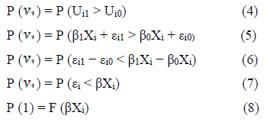
Where, Ui1 = the utility derived from the technology by a farmer from the CSIT; Ui0 = the absence of utility obtained from CSIT, P (1) = Probability of adopting CSIT technology; β0 to β1 = Estimated parameters; Xi = Independent variables; F = is the cumulative distribution function of the standard normal distribution. si = Disturbance term.
The integration of these two methodologies facilitates a thorough understanding of the characteristics of smallholder maize farmers in Botswana and the factors that influence technology adoption, a crucial aspect in addressing the agricultural challenges posed by climate change.
3. RESULT AND DISCUSSION
This section presents the study's main findings and discusses the results. This chapter is organised into two sections. The first section presents a descriptive analysis of the sample households' demographic and socioeconomic characteristics. The second section includes econometric analysis of the factors that determine the adoption of CSIT.
3.1. Descriptive Statistics
3.1.1. Socioeconomic and Demographic Characteristics of the Sample Households in Botswana.
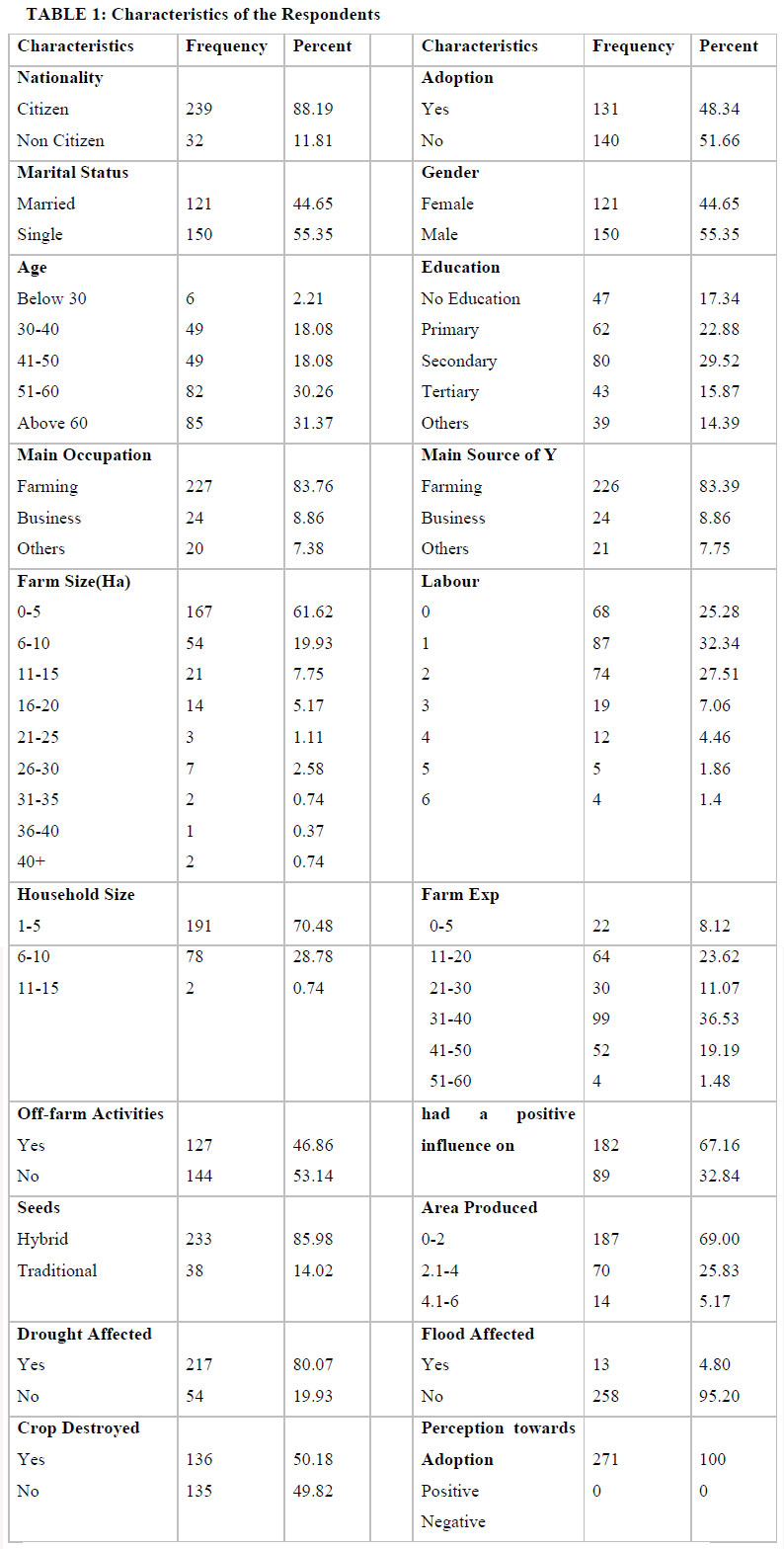
This section presents the descriptive statistics of the smallholder maize farmers in Botswana. As shown in Table 1, the sample included adopters and non-adopters of improved irrigation methods. Based on the results from the survey, 48% of the respondents adopted improved irrigation methods to cope with the changes in climatic conditions, while 52% relied on rainfed. Additionally, 12% of the respondents selected for the study are non-citizens, while the remaining 88% were citizens of Botswana. It is noteworthy that all of the foreign respondents (11.81%) have adopted irrigation technology, and none of them rely on traditional methods. This trend is attributed to various factors: Non-citizens may be more receptive to new technologies and willing to take risks, while citizens may be more cautious and reluctant to try unfamiliar methods.
Furthermore, non-citizens may have different preferences and requirements, making them more inclined to seek out and embrace innovative technologies. Descriptive statistics also reveal that 45% of the respondents were married and played an important role in providing family labour for households. A majority of the respondents (55%) selected for the study were male. The proportion of males in adopter households is greater than that in non-adopter households, while female participation is lower in adopter households; it may be because many women feel less confident in investing money in new things compared to their male counterparts.
The results revealed that 31.37% of the farmers were above 60 years old, followed by 30.26% between 51 and 60 years old. This means that only 20% of the population belonged to the younger age group (below 40 years old), and around 62% of the respondents were aged above 50 years. This means that Botswana's farmers are becoming older and need to be replaced by younger ones. Older farmers on the farm will negatively impact the supply of family labour force and agricultural production, and it was found that young farmers are more flexible than older farmers since the latter are not always willing to abandon old tactics in favour of new ones. Therefore, there is a need to encourage youth participation in adopting improved irrigation methods.
17.34% of the respondents had no formal education, 22.88% of the farmers had primary education, while 29.52% attained secondary education, and 15.87% received university education. The statistics confirm that the majority of respondents (69.74%) possess a lower level of education. Findings show that the highest percentage (70.48%) of farmers belong to families of a maximum of five members, and 28.78% of the respondents have a family size of 6 to 10 members. The majority (69.0%) of the smallholder farmers surveyed, as shown in Table 1, cultivate maize on an area of around 1 to 2 hectares. 25.83% cultivate 2 to 4 hectares of land, while only 5.17% cultivate maize on an area exceeding 4 hectares. However, 62% of the people hold 5 hectares of the area for different types of crops other than Maize. Off-farm activities are a "dummy variable that shows whether the household head participates in off-farm activities. It is expected to positively affect the adoption as participating in off-farm activities can solve the liquidity problem" (Berihun et al., 2014). However, the positive influence of off-farm activities may not always apply when deciding to adopt agricultural technologies. Where the crop is intensive, it adversely impacts adoption by removing the labour from the cultivation. However, 46.86% of the respondents indicated that they participate in off-farm activities because jobs in the agricultural sector are seasonal. Results in Table 1 also demonstrate that a greater proportion (36.53%) of respondents with 31 to 40 years of farming experience have less than 5 years of experience. These statistics imply that the respondents have a long history of farming experience. Farmers were engaged in different income-generating activities. The majority of respondents (83.39%) considered farming to be the main source, while only 16.61% reported that their primary source of income is from business and other types of employment. 67.16% of the respondents reported that they cultivated on their own farm and 85.98% of the respondents used Hybrid maize seeds, 80% of the respondents are affected by the drought and only 5% of respondents are affected by the flood during the period between 2020 to 2024, among those 50% of the respondents claimed crops are being destroyed due to the drought and all the respondents have positive perception towards the adoption of irrigation technology.
3.2. Probit Regression Model
3.2.1. Determinants of Climate Smart Irrigation Technology Adoption
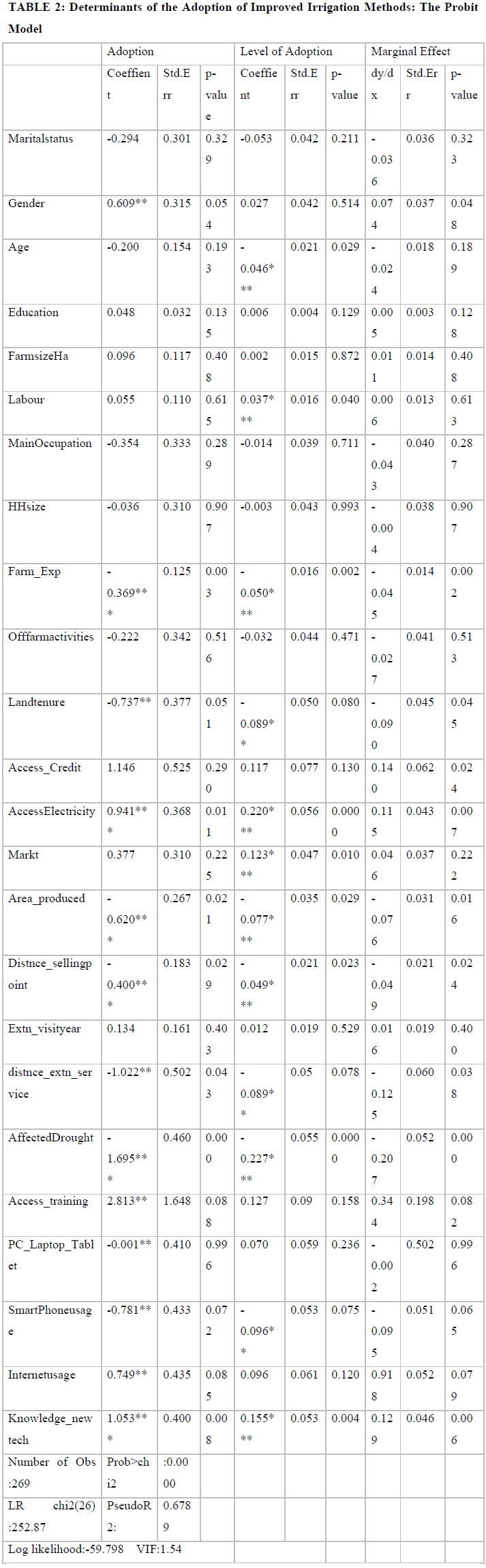
The results indicate that thirteen variables are statistically significant in influencing the probability of adopting climate-smart irrigation technologies. The regression results demonstrated that gender was significant at the 5% level and positively influenced farmers' decisions to adopt CSIT. This implies that the probability of males adopting CSIT increases by 7% compared to their female counterparts; this finding is consistent with Abdul-kareem & Azahinli (2018). This is often a result of dominant cultural biases where males still have exclusive rights to make farm decisions regarding short-term and long-term adjustments (Serote et al., 2021).
The findings of the probit regression demonstrated that age has a negative and significant influence at the 5% level on the adoption choices of smallholder maize farmers regarding CSIT. Specifically, a one-year increase in the farmer's age is associated with a 2% drop in the likelihood of adopting CSIT. This negative association between age and adoption is corroborated by studies from Van der Berg (2013), Lebeta (2017), Kurgat et al. (2020), and Aryal et al. (2018). This suggests that older farmers are less likely to adopt innovations, as they tend to favour conventional production techniques. Older individuals often have a stronger attachment to established practices, which may lead to reluctance to new ideas.
The availability of labour was regarded as an important factor influencing technology adoption among smallholder farmers, as confirmed by Adeoti (2009), Feder et al. (1985), and Quan and Doluschitz (2021). The estimated coefficient of the labour force was positive and significant at 5% level of adoption. As expected, we find a positive association between access to credit and the adoption of CSIT. It suggests that farmers with financial constraints can ease these limitations by utilising credit services.
The study also indicates that the farming experience has a negative influence on the likelihood of CSIT adoption. The results indicate that an increase in farming experience is more likely to result in a 2% decline in the level of CSIT adoption. This is confirmed by Serote et al. (2021) and Tanti (2022). The reason for the negative relationship is that older farmers are typically more experienced and less willing to bear the risk of investing in irrigation technology due to their shorter planning horizons (Dolisca et al., 2006; Anley et al., 2007).
We also found that the land tenure had a negative and significant influence on the smallholder maize farmers' decision to adopt CSIT at the 5% level and the level of adoption at 10%. The negative coefficient suggests that the probability of adoption could increase by 10% for those who do not own property. It may be because those who use leased property want to maximise productivity within a limited time frame, as they do not own land. On the contrary, Maíra (2024), Golla (2020), and Eric et al. (2005) reported that an enterprise with the most owned land is most likely to invest in more efficient irrigation systems during severe droughts.
Another major obstacle to the adoption noticed in this study is the lack of access to electricity. This is because farmers may have used radio and television, but they might have missed important information aired if there hadn't been a sufficient supply of electricity available at the appropriate moment. In addition, electricity enables farmers to adapt and utilise new irrigation techniques. The estimated coefficient indicates a positive correlation between access to electricity (Tanti, 2022) and the decision to adopt, as well as the level of adoption, at a 1% significance level. Market access is also observed as positive and significant at 5% level.
Furthermore, the study revealed that the area produced a negative correlation with adoption at a 5% significance level, influencing both farmers' decisions to adopt and the level of adoption of irrigation technology. The possible explanation could be that farmers with small land areas have a more direct and immediate need for efficient irrigation technology in order to maximise their limited resources. Also, smaller farmers may be more closely connected to their land and have a greater sense of ownership and responsibility for sustainable water management practices, leading them to be more proactive in adopting new irrigation technologies. However, Caswell (1991), Quan and Doluschitz (2021), and many others have reported that the adoption of modern irrigation technology is driven by land size. The results indicate that drought has a negative correlation with the adoption of technology at the 1% level for both the decision and the level of adoption. A possible reason for this is that the initial cost required to implement irrigation technology may be substantial. Farmers already suffering from drought conditions may not have the financial means to invest in such technology. On the contrary, Eric et al. (2005) confirmed the positive relationship between drought and CSIT adoption. Moreover, our findings showed that the distance to the extension service has a significant role in households' decision to adopt. However, there is a negative correlation, indicating that households located further away from the extension offices are less likely to benefit compared to those in proximity. There is a decline in household participation for every one-kilometre increase in distance from the extension service. Suvedi et al. (2017) revealed that the distance to the extension office limited participation in extension activities and adoption.
In addition, the study highlighted the positive influence of access to extension services and training, which enhances the availability of information and improves knowledge regarding various types of climate-smart irrigation technologies, ultimately leading to a positive impact on adoption. The coefficient indicates positive correlation with the decision to adopt at a 10% level. Furthermore, Internet usage and familiarity with new technologies are also positively associated with the adoption of climate-smart irrigation technology. These results corroborate those of Christian et al. (2019) and Awudu et al. (2011).
Table 2 presents the maximum likelihood estimates of the Probit model for the adoption of CSIT. The value of the Pseudo R2 (67%), the log-likelihood (-59.79), and the LR Chi2 (significant at the 5% level) indicate that the model's specifications provide a good fit to the data. The model exhibited no multicollinearity issues, as evidenced by its low average variance inflation factor (VIF) of 1.54.
4. CONCLUSION
This study explored the factors influencing the adoption of CSIT among smallholder farmers in Botswana. The analysis utilised a probit regression model, which identified fifteen variables significantly impacting the likelihood of adopting CSIT. The results indicated that factors such as gender, labour availability, access to electricity and markets, occurrence of drought in the region, availability of training, access to credit, internet usage, and knowledge of other innovative agricultural technologies positively and significantly influence the adoption of irrigation technology. Conversely, age, farming experience, land tenure status, area cultivated, distance to selling points, and proximity to extension services were found to have a negative and significant impact on irrigation technology.
5. RECOMMENDATIONS
These findings indicate that government interventions should ensure farmers have easy access to credit, particularly for those facing liquidity constraints, while maintaining strict oversight. Furthermore, it is essential to enhance internet connectivity for farmers so they can access information regarding the significance and application of various Climate Smart Irrigation Technologies (CSIT) and facilitate connections with fellow farmers. In the agricultural districts, such as Palapye in the Central District and Glenvalley in the South East District, where adoption rates are notably higher, farmers benefit from consistent interactions with extension officers who equip them with vital skills and knowledge related to CSIT. It is crucial to equip extension officers with the necessary infrastructure to facilitate their movement to reach farmers and to increase the number of trained extension officers deployed across the country to alleviate the workload of current agents.
7. DISCLOSURE STATEMENT
The author received financial support from North West University, Mahikeng, South Africa.
6. ACKNOWLEDGMENTS
The authors are very grateful to the smallholder maize farmers in Botswana, who agreed to be part of this study and provided the necessary information. They also express their gratitude to the personnel at the Ministry of Agriculture in Gaborone, Botswana, as well as the extension officers in various agricultural district offices. Also want to extend my gratitude to the NWU for providing the necessary financial support to carry out this research.
REFERENCES
- ABDULAI, A., OWUSU, V. & BAKANG, J.A., 2011. Adoption of safer irrigation technologies and cropping patterns: Evidence from Southern Ghana. Ecol. Econ., 70(7): 1415-1423.
- ABDUL-KAREEM, M.M. & AZAHINLI, M.A., 2018. Demographic and socioeconomic characteristics of cassava farmers influencing output levels in the Savannah Zone of Northern Ghana. Ajr. J. Agric. Res., 13(4): 189-195.
- ADEOTI, A., 2008. Factors influencing irrigation technology adoption and its impact on household poverty in Ghana. J. Agric. Rural Dev. Trop. Subtrop., 109(1): 51-63
-
ALABI, O. & BUKOLA, T., 2023. Introduction to descriptive statistics. IntechOpen. https://doi.org/10.5772/intechopen.1002475
» https://doi.org/10.5772/intechopen.1002475 - ANLEY Y., BOGALE A. & HAILE-GABRIEL A., 2007. Adoption decision and use intensity of soil and water conservation measures by smallholder subsistence farmers in Dedo district, Western Ethiopia. Land Degrad Dev., 18(3): 289-302.
- ARYAL, J.P., RAHUT, D.B., MAHARJAN, S. & ERENSTEIN, O., 2018. Factors affecting the adoption of multiple climate-smart agricultural practices in the Indo-Gangetic Plains of India. Nat. Resour. Forum., 42(1): 141-158.
- BERIHUN, K.H., BIHON, K.A. & KIBROM, A.W., 2014. Adoption and impact of agricultural technologies on farm income: Evidence from southern Tigray, Northern Ethiopia. Int. J. FoodAgric. Econom., 2(4): 1-16.
- BHALOTRA, Y.P.R., 1987. Climate of Botswana, part II, elements of climate. Republic of Botswana: Department of Meteorological Services, Gaborone.
-
BOTSWANA TOURISM., 2021. Location. Available from https://www.botswanatourism.co.bw/location
» https://www.botswanatourism.co.bw/location - CASWELL, M.F., 1991. Irrigation technology adoption decisions: Empirical evidence. In A. Dinar & D. Zilberman (eds.), Economics and management of water and drainage in agriculture. Boston, MA: Kluwer Academic Publishers, pp. 295-312.
- CHRISTIAN, M., OBI, A. & AGBUGBA, I.K., 2019. Adoption of irrigation technology to combat household food insecurity in the resource-constrained farming systems of the Eastern Cape, South Africa. S. Afr. J. Agric. Ext., 47(2): 94-104.
- DINAR, A. & ZILBERMAN, D., 1991. The economics and management of water and drainage in agriculture. New York: Springer Science & Business Media.
- DOLISCA, F., CARTER, R., MCDANIEL, J., SHANNON, D.A. & JOLLY C., 2006. Factors influencing farmers' participation in forestry management programs: A case study from Haiti. Forest Ecology and Management., 236(2): 324-331.
-
DONG, B., 2008. Study on environmental implication of water saving irrigation in Zhanghe irrigation system. Available from http://spm-water-ap.net/wc/modules/news/
» http://spm-water-ap.net/wc/modules/news/ - FADEYI, O., ARIYAWARDANA, A. & AZIZ, A., 2022. Factors influencing technology adoption among smallholder farmers: a systematic review in Africa. J. Agric. Rural Dev. Trop. Subtrop., 123(1): 13-30.
-
FAO., 2023. Food security snapshot, Botswana. Available from https://www.fao.org/giews/countrybrief/country.jsp?code=BWA&lang=es.
» https://www.fao.org/giews/countrybrief/country.jsp?code=BWA&lang=es - FAWZY, Z.F. & SHEDEED, S.I., 2020. Climate-smart agriculture and intelligent irrigation system for management of water resources in arid and semi-arid regions: A review. In A. Haque, A. Ishtiaque & A. Chowdhurywater (eds.), Flood management and water security under a changing climate: Proceedings from the 7th International Conference on Water and Flood Management. Springer International Publishing, pp. 361-370.
- FEDER, G. & UMALI, D.L., 1993. The adoption of agricultural innovations: A review. Technol. Forecast. Social Change, 43(3-4): 215-239.
- FEDER, G., JUST, R. & ZILBERMAN, D., 1985. Adoption of agricultural innovations in developing countries: A survey. Econ. Dev. Cult. Change., 33(2): 255-98.
- GAUTAM, T.K. & BHATTA, D., 2017. Determinants of irrigation technology adoptions and production efficiency in Nepal's agricultural sector. Annual Meeting, 4-7 February, Mobile, Alabama, 252856, Southern Agricultural Economics Association.
-
INTERANTIONAL TRADE ADMINISTRATION., 2014. Botswana - Country Commercial Guide, Agricultural sector. Available from https://www.trade.gov/country-commercial-guides/botswana-agricultural-sectors
» https://www.trade.gov/country-commercial-guides/botswana-agricultural-sectors - KREPS, D., 1990. A Course in Microeconomic Theory. Princeton: Princeton University Press.
- KUMAR, S., YADAV, A., KUMAR, A., HASANAIN, M., SHANKAR, K., KARAN, S., RAWAT, S., SINHA, A., KUMAR, V., GAIROLA, A., PRAJAPATI, S.K. & DAYAL, P., 2023. Climate smart irrigation practices for improving water productivity in India: A comprehensive review. Int. J. Environ. Clim. Chang., 13(12): 333-348.
- KURGAT, B.K., LAMANNA, C., KIMARO, A., NAMOI, N., MANDA, L. & ROSENSTOCK, T.S., 2020. Adoption of climate-smart agriculture technologies in Tanzania. Front. Sustain. Food Syst., 4(55): 1-9.
- LEBETA, T.H., 2017. Participation in and impact of small-scale irrigation practice on household income: The Case of Abay Chomen District of Oromia National, Regional State, Ethiopia. Master's thesis, Haramaya University, Oromia, South Africa.
- LEONARDI, G. & TADEI, R., 1984. Random utility demand models and service location. Reg. Sci. Urban Econ., 14(3): 399-431.
- LEONARDI, G., 1981. The use of random-utility theory in building location-allocation models. IIASA Working paper. WP-81-028. Available from oai:_pure.iiasa.ac.at:_1733.
- MABOHLO, S., AKINYEMI, B. & MUSHUNJE, B., 2021. Drivers of irrigation technology adoption among smallholder farmers in Keiskammahoek, South Africa. Int. J. Clim. Change: Impacts Respond., 13(1): 111-120.
- McLEOD, G., 1992. Environmental change at Bobonong in the central district, Eastern Botswana. Botswana Notes and Records., 24: 87-121.
- MITROVIĆ, I., TODOROVIC, M., MARKOVIC, M. & MEHMETI, A., 2023. Eco-efficiency analysis of rainfed and irrigated maize systems in Bosnia and Herzegovina. J Water Clim Change., 14(12): 4489-4505.
- MULUKI, K., MOGAKA, H., MUGWE, J. & NYARINDO, S., 2022. Factors influencing adoption of irrigation technologies among smallholder Farmers in Machakos County, Kenya. J. Agric. Ext., 26(3): 44-59.
-
NATIONAL DISASTER MANAGEMENT OFFICE., 2013. National Disaster Risk Reduction Strategy 2013-2018. Available from https://www.undp.org/.
» https://www.undp.org/ - QUAN, X. & REINER D., 2021. Factors influencing the adoption of agricultural machinery by Chinese Maize Farmers. Agric., 11(11): 1090.
- SCHUCK, E.C., FRASIER, W.M., WEBB, R.S., ELLINGSON, L.J. & UMBERGER, W.J., 2005. Adoption of more technically efficient system as a drought response. Int J Water Resource Dev., 21(4): 651-662.
- SCOTCH, K.K., 2008. The settlement nexus of the Southern Tswana on Hilltops and Valleys in Present Day South East Botswana in the 19th Century. Masters thesis, University of Pretoria.
- SELEJIO, O. & LASWAY, J.A., 2019. Economics analysis of the adoption of inorganic fertilizers and improved maize seeds in Tanzania. AfJARE., 14: 310-330.
- SEROTE, B., MOKGEHLE, S., DU PLOOY, C., MPANDELI, S., NHAMO, L. & SENYOLO, G., 2021. Factors influencing the adoption of climate-smart irrigation technologies for sustainable crop productivity by smallholder farmers in arid areas of South Africa. Agric., 11(12): 1222.
- SHAW, C.S., 2014.Agricultural technology adoption in West Africa. Master's thesis, Texas A&M University, College Station, TX, USA.
- SIKKA, A.K., ISLAM, A. & RAO, K.V., 2018. Climate-smart land and water management for sustainable agriculture. Irrig. Drain., 67(1): 72-81.
- SILVA, M.F., VAN SCHOUBROECK, S., COOLS, J. & VAN PASSEL, S., 2024. A systematic review identifying the drivers and barriers to the adoption of climate-smart agriculture by smallholder farmers in Africa. Front. Environ. Econ., 3: 1-14
- STATISTICS BOTSWANA., 2020. Botswana environment statistics: Natural and technological disasters digest 2019. Gaborone.
- SUVEDI, M., GHIMIRE, R. & KAPLOWITZ, M., 2017. Farmers' participation in extension programs and technology adoption in rural Nepal: A logistic regression analysis. J. Agric. Educ. Ext., 23(4): 351-371.
- TANTI, P.C., JENA, P.R., ARYAL, J.P. & RAHUT, D.P., 2022. Role of institutional factors in climate-smart technology adoption in agriculture: Evidence from an Eastern Indian state. Environ. Chall., 7: 100498.
- TEHA, D. & JIANJUN, L., 2021. Factors affecting adoption of small-scale irrigation technology: Insights from Sire Woreda, Oromiya Region, Ethiopia. Am. J. Appl. Sci. Res., 7(4): 84-101.
-
THE RURAL DEVELOPMENT SECRETARIAT., The Ministry of Local Government and Rural Development 2024. Available from https://prddsgofilestorage.blob.core.windows.net/api/dref/images/Drought%20Situation%20BW%20(002).pdf
» https://prddsgofilestorage.blob.core.windows.net/api/dref/images/Drought%20Situation%20BW%20(002).pdf -
TNA ADAPTATION., 2021. Preparing a technology action plan. Available from https://tech-action.unepdtu.org/wpcontent/uploads/sites/2/2021/11/tap-report-ukraine-1.pdf
» https://tech-action.unepdtu.org/wpcontent/uploads/sites/2/2021/11/tap-report-ukraine-1.pdf -
TRADE ADMINISTRATION., 2024. Agricultural Sectors. Available from https://www.trade.gov/country-commercial-guides/botswana-agricultural-sectors
» https://www.trade.gov/country-commercial-guides/botswana-agricultural-sectors - TSHEKO. R., 2003. Rainfall reliability, drought and flood vulnerability in Botswana. Water SA., 29(4): 389-392.
- VAN DEN BERG, J., 2013. Socioeconomic factors affecting adoption of improved agricultural practices by small-scale farmers in South Africa. Afr. J. Agric. Res., 8(35): 4490-4500.
-
WB CLIMATE CHANGE KNOWLEDGE PORTAL (CCKP)., 2021. Botswana. Available from https://climateknowled_geportal.worldbank.org/country/botswana/climate-data-historica
» https://climateknowled_geportal.worldbank.org/country/botswana/climate-data-historica - WONDMU, G., 2010. Determinants of drip irrigation technology adoption in Degua Woreda, Tigray Region, Ethiopia: Household Level Analysis. Masters thesis, Mekelle University.