Effectiveness of Strategic Extension Partnership on the Adoption of Agricultural Extension Policy: A Case of Smallholder Farmers in Tshwane and Moretele Municipalities, South Africa
Abstract
This paper explores the perceptions of smallholder farmers and stakeholders regarding the effectiveness of strategic extension partnerships in influencing the implementation and adoption of extension policies, and whether they are a barrier or an enabler in Tshwane and Moretele municipalities. The study utilised a quantitative survey of 124 farmers, followed by a qualitative design that included focus group discussions of 10 pairs and key informant interviews, for a total of 28 stakeholders for both municipalities. SPSS version 25 was used to quantitatively analyse the demographic-socioeconomic factors. The validation of the regression models for both municipalities was conducted using ANOVA and residual analyses to analyse the variables qualitatively. The results revealed that strategic extension partnerships, including collaborative approaches and participatory decision-making, are essential for improving the effectiveness of policy outcomes. The paper recommends encouraging strategic extension partnerships to strengthen extension systems, designing extension policies and programmes that are inclusive of women, and adopting strategies that are sensitive to gender.
Strategic-Extension-Partnerships; Agricultural-Extension-Policy; Smallholder Farmers; Extension Officers
1. INTRODUCTION
Small-scale farming has been central to the agricultural sector, particularly to agricultural economics, extension and is known for enhancing the livelihoods of most African nations (Ncube, 2017; World Bank, 2017; Senyolo & Mudhara, 2018). In Sub-Saharan Africa, small-scale farming depends on extension services to enhance the sector, as they facilitate farmers' interaction with strategic partners, including research, education, agribusiness, and other relevant institutions (Loki & Mdoda, 2023). Literature available has made emphasis on strategic extension partnership as strengthening extension and advisory services as assistance from the agricultural agencies, including public, Non-Government Organisations and private firms via the various extension models developed or implemented as noted by (Anderson, 2008, 2020; Oladele, 2011; Mutimba, 2014; Davis & Terblanché, 2016).
1.1. Definition of Problem Statement
This study examines the intricate relationship between policy implementation with strategic extension partnership and the socio-economic conditions of smallholder farmers in Tshwane and Moretele municipalities, as well as examining the governmental strategies for executing these policies and the elements influencing perceptions of policy development, providing insights into the experiences of smallholder farmers and emphasising potential policy deficiencies that may obstruct sustainable agricultural advancement if neglected (Mdoda, Loki & Sikwela, 2025). The first objective of the paper is to present the socio-economic characteristics of smallholder farmers in the two study areas of Tshwane and Moretele. The second objective is to identify the factors influencing perceptions of agricultural extension policy formulation and implementation in the study areas. The third objective is to identify strategic extension partnerships, the strategies used by the government to implement extension policies, and essential extension strategies.
2. RESEARCH METHODOLOGY
2.1. Description of Study Area
The study was conducted in the City of Tshwane (Gauteng) and Moretele (North-West) municipalities of South Africa, and the areas are indicated in Figures 1 and 2.
2.2. Study Design
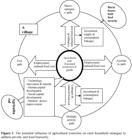
Using the Learning About Livelihood framework taken from de Satgé (2002) and an Agricultural Knowledge and Information Systems (FAO & World Bank, 2000) the study utilised a combination of quantitative and qualitative design which has served and guided data collection on examining the effectiveness of strategic extension partnership on whether it influencing the implementation and adoption of extension policies as to whether they are a barrier or enabler in Tshwane and Moretele municipalities. Elements of the study population were identified through non-probability sampling of smallholder farmers in Tshwane and Moretele municipalities, and those selected were willing to opt in or sign up to be part of a pool of individuals the researcher contacted when interviewing respondents (Lamm & Lamm, 2019). Cochran's formula (1977, cited by Ahmad & Halim, 2017) was used to calculate the intended sample in the study before and after fieldwork. The calculation was as follows:
n=Z2pq / e2
= (1.96)2 (0.5) (1-0.5) / 0.052
=384.16
=385
Where n is the required sample size
Z-score is the value that specifies the level of confidence wanted in the analysis.
Typical confidence levels for surveys are 95%, in which case Z is set to 1.96.
P and q are the population proportions (if one does not know what these are, set them each to 0.5); (p) (1-p)
e is the percentage (%) maximum error required
2.3. Data Collection Methods
The data of this paper is based on the two municipalities of Tshwane and Moretele. The study population comprised smallholder farmers and agricultural sector stakeholders. Therefore, for the Focus Group Discussion (FGD) =50 smallholder farmers were sampled in Moretele (5 pairs, which equals 10 participants each pair) and 50 smallholder farmers were sampled in Tshwane (5 pairs, which equals to 10 participants each pair), with 69 smallholder farmers sampled in Moretele and 55 smallholder farmers sampled in Tshwane for the structured questionnaires, which were administered to participants. For the Key Informant Interview(s) (KII), a total of 21 stakeholders were sampled in Tshwane, and a total of 9 were sampled in Moretele. A total of 254 participants were reached during data collection. KII interviews in the agricultural sector were conducted face-to-face, together with FGD, and structured questionnaires were administered at participants' preferred venues.
2.4. Data Analysis
The data from the study were analysed at two levels: quantitative and qualitative. Quantitative data analysis, as far as the quantitative analysis is concerned, survey data were captured on a Microsoft Office Excel® spreadsheet and analysed using descriptive statistics to describe and analyse the data on the effectiveness of strategic extension partnership on influencing the implementation and adoption of extension policies as to whether they are a barrier or enabler in Tshwane and Moretele municipalities. The data from the survey question were cleaned, coded, and analysed using Statistical Package for the Social Sciences (SPSS) version 25. For the qualitative data, ANOVA software and residual analyses were used to analyse the FGD and KII data. The analyses provide a basis for pinpointing essential variables and their connections to agricultural policy dynamics, thus delivering insights into the distinct socio-economic and operational contexts of the municipalities.
2.5. The Case Study Analysis
The importance of case studies in research has been described as an intensive, systematic investigation of a single individual, group, community, or other unit, in which the researcher examines in-depth data relating to several variables (Heale & Twycross, 2018). The current study also adopted a case study analysis as part of data interpretation, drawing on findings from KII and FGD data.
2.6. Validity and Reliability
The qualitative and quantitative data collected were kept in the Department of Crop Sciences to enhance trustworthiness. The validity and reliability of the major parts of the FGD and KII instruments have been established by other researchers (Ouma et al., 2015; Hirpha, Mpandeli & Bantider, 2020; Ndimbwa, Mwantimwa & Ndumbaro, 2021). To maintain the reliability and validity, both instruments (FGD and KII) have been reviewed by experts in the field of this study. To further enhance and ensure the reliability and validity of the study instruments, data triangulation techniques (qualitative & quantitative tools) were also used. Several research works of Ouma et al. (2015), Kraaijvander, Almekinders and Veldkamp (2016), Hirpha, Mpandeli and Bantider (2020), and Somanje, Mohan and Saito (2021) were also reviewed to further review and include all important variables in the FGD and KII instruments of the study.
The validity and reliability of the major part of the survey instrument have been established by other researchers (Meijer et al., 2015; Cloete et al., 2019; de Satgé, 2020). To further enhance the instrument's validity and reliability, the questionnaire has been pilot-tested with experts in this field. According to Delport and Roesternburg (2011), pilot testing ensures that all errors, of whatever nature, can be rectified immediately at little cost to the research team, thereby improving face and content validity and, most importantly, estimating the time required to complete the questionnaire.
3. FINDINGS AND DISCUSSION
3.1. Demographic and Socio-Economic Characteristics of Smallholder Farmers
The data presented in Table 1 reveal that the predominant gender among respondents in this study is male. Among the 124 respondents, 71 individuals (57.3%) identified as male, whereas 53 (42.7%) identified as female. The valid percent values demonstrate that these proportions are stable when males primarily dominate, even after omitting missing data, while the cumulative percent reflects the incremental inclusion of gender groups. The findings indicate that smallholder farming in the Tshwane and Moretele local municipalities, as men represent a greater proportion of the farming demographic.
These results support the findings of Bodiba et al. (2024), who conducted a study in Moretele municipality and found that 60% of the respondents were male. This is in line with the literature by Kamara et al. (2019), who revealed that in Sub-Saharan Africa, women are disadvantaged compared to men due to existing gender inequalities, which might be the reason for their low participation. The authors further highlighted that women in Africa do not have equal access to resources and opportunities as compared to men, who are highly exposed to such services. Similar results in Tshwane were noted in a study by Chepape and Maoba (2020), which found that 63% of respondents were males.
Whereas the results of Malatsi, Maake and Masekoameng (2023), a study conducted in Tshwane, revealed that women accounted for 73% of the study participants. This contradicts the findings of the current study of women's participation in the City of Tshwane. The notable representation of women at 42.7% in the current study underscores their crucial involvement in smallholder farming operations. The findings highlight the need for agricultural extension policies and strategies that are gender-sensitive, providing equitable support for male and female farmers by recognising their distinct contributions and challenges within the sector.
Diaz and Najjar (2017) previously highlighted that gender equality should be addressed and integrated into agricultural extension development projects to avoid inequalities from continuing. If addressed accordingly, women can acquire advanced agricultural techniques. As a result, they gain access to productive farm inputs and agricultural markets (Agholor, 2019). Moreover, this can be achieved by encouraging collaboration between smallholder farmers, farmer organisations, public extension services, private sector entities, as well as non-governmental organisations, research institutions, as a way of leveraging diverse expertise and resources these strategic partnerships bring to the table to assist the agricultural community (Mendi & Zantsi, 2024).
3.2. Factors That Influence the Perceptions on Agricultural Extension Policy Formulation and Implementation in Tshwane and Moretele Municipalities
Community participation (B = 3.949, β = .872, p = .010) was identified as a crucial factor influencing policy success, whereas perceived roles in agriculture had a detrimental impact on policy implementation (B = -1.658, β = -.859, p = .016) as shown in Table 2.
The current study's findings on community participation align with those of Chepape and Maoba (2020), revealing that in Tshwane, both farmers and community participation increased in agricultural development programmes. Full community participation, including public participation in the initiation and implementation stages, ensures good governance in policy development and that the goals of policy development are met (Yami et al., 2018). The engagement of role players, including community groupings, has been identified as a key tool for successfully implementing advisory services (Zwane, 2009).
Engaging stakeholders fosters a sense of ownership and ensures alignment with policy goals, while unfavourable views of agricultural roles may serve as obstacles. The findings emphasise the complex array of factors that shape agricultural policy, underscoring the need for a comprehensive strategy that addresses obstacles while capitalising on opportunities. Moreover, to ensure this happens, all stakeholders involved in policy planning, including policymakers in South Africa, should use evidence-based research studies from credible sources to help develop effective agricultural policies that are relevant and impactful to the agricultural community (Matjane, Tsvakirai & Tshehla, 2022). Collaboration among stakeholders, including agricultural extension partnerships, is essential to pinpoint and address significant challenges. The findings highlight the need to customise agricultural policies to align with the distinct demographic, socio-economic, and operational contexts of municipalities. The findings offer significant understanding for crafting focused strategies that enhance inclusive and efficient agricultural progress.
Furthermore, support for farming operations was significant (B = .426, β = .358, p = .014), underscoring the crucial role of targeted assistance to farmers in implementing agricultural policies. In support of the study's findings, Mmbengwa et al. (2018), Malatsi, Maake and Masekoameng (2023), and Khanyile, Soundy and Ramashala (2024) all reported on the support received by smallholder farmers in the respective municipalities. Support received by farmers from extension partnerships, including non-governmental organisations, research institutions, private entities, and public extension services, ensures the proper implementation of agricultural extension policies. According to Ngaka and Zwane (2018), they emphasised the advantages of extension partnerships, as they influence the adoption of agricultural technologies, approaches, and initiatives by farmers, making farming inputs easily accessible to the farming community.
Moreover, a key predictor identified was the extent of participation in agricultural activities, which demonstrated a positive and significant correlation (B = 1.204, β = .198, p = .012). This finding indicates that increased involvement in agricultural practices directly facilitates the adoption and execution of agricultural policies. This finding aligns with the previous study by Mgendi, Mao, and Qiao (2022), conducted in Sub-Saharan Africa, who also reported a positive and significant correlation between farmers' participation in agricultural extension training and demonstration programs. Greater involvement enhances understanding and alignment with policy goals, fostering a supportive environment for policy implementation. To further enhance participation by farmers, Ike (2024) noted that strong extension partnerships among stakeholders, including smallholder farmers, should be supported, as they boost the overall impact of agricultural extension services and policies.
3.3. Strategic Extension Partnership and Strategies that the Government Use to Implement the Provision of Extension Policies
3.3.1. Case study 1: Government Approaches to Implementing Extension Policies
Extension policies play a crucial role in enhancing productivity, promoting sustainability, and driving socio-economic development in farming communities. The effectiveness of these policies depends on the strategic extension approaches used by government agencies to address the complex challenges farmers face. This case study explores essential strategies employed by the government to guarantee the effective provision of extension services, utilising insights gathered from stakeholders. Although these strategies show promise, systemic challenges frequently limit their effectiveness.
3.3.2. Recognition of Essential Extension Strategies
3.3.2.1. Allocation of Personnel
A key approach to implementing agricultural extension policy is assigning skilled individuals, such as extension officers and assistant agricultural practitioners (AAPs), to rural farming communities. These experts offer guidance and support, focusing on effective agricultural techniques, including crop rotation and the integration of cash crops such as spinach alongside perennial crops like potatoes. The employment of more extension personnel has been supported by Sennuga, Oyewole and Emeana (2020:10), who previously suggested that the employment of agricultural graduates will gradually reduce the low ratio of extension officers in developing countries.
Furthermore, extension officers play a crucial role in facilitating workshops, conducting farm visits, and organising capacity-building sessions to support farmers. This aligns with the literature of Liao (2020), Msuya (2021), and Adrupio (2023), which has shown the role of extension officers in enhancing farmers' livelihoods. It involves a range of approaches when training farmers, for instance, soil testing technology as a way of advising farmers on using fertilisers scientifically, demonstrations, facilitating focus group discussions, educating farmers on good agricultural practices, ensuring good communication between research institutions and farmers, transferring knowledge, and translating certain terminologies like ''technical'' or ''complex'' in a simpler way.
3.3.2.2. Collaborative and Project-Oriented Methods
Participatory extension approaches have been utilised to actively involve farmers in the design and execution of extension programs. These methods emphasise the importance of engaging farmers and ensuring their insights shape policy actions. For example, initiatives such as the Comprehensive Agricultural Support Programme (CASP) and Ilima Letsema provide vital production inputs, infrastructure, and assistance to disadvantaged farmers. In support of the current study's findings, Diphoko (2023) also indicated that the CASP six pillars have been incorporated into the Mafisa, Ilima Letsema, and other sustainable farming models. Although these initiatives have greatly enhanced access to resources for many farmers, significant disparities remain evident. Individuals without land access are frequently marginalised from these initiatives, thereby reinforcing socio-economic disparities in rural areas. Similarly, the findings of Chepape and Maoba (2020), in a study conducted in the Tshwane municipality, revealed that, for some farmers, access to farm infrastructure, marketing, business development, and financial mechanisms remained the same (as challenges) even after developmental programmes were implemented.
3.3.2.3. Delivery of Technical and Advisory Services
Technical and advisory services play a crucial role in extension. Extension officers provide these services by engaging in mentorship, conducting training sessions, and facilitating knowledge-sharing events, including study groups and farmers' days. Similarly, as reported by Cloete et al. (2019), extension officers indicated that services such as field days, demonstrations, and individual farm visits, among others, were the most effective ways of transferring knowledge to farmers. These platforms promote teamwork and strengthen farmers' ability to embrace cutting-edge agricultural methods.
Nonetheless, it was observed that the availability of these services is inconsistent, especially in more isolated regions. This is in accord with a study by Diphoko (2023), conducted in the Bojanala District, which included Moratele municipality as part of the study site. The findings revealed that it lacks suitable extension services, as the district extension services are insufficient. Similar findings were also noted in studies conducted by Maake and Antwi (2022) and Giwu (2024) in the Gauteng Province, that extension and advisory services were inadequate and perceived as ineffective by farmers. Moreover, Mkhonto and Musundire (2019) also revealed challenges affecting the sector; they stated that in the provinces of South Africa, namely North-West (the study province where Moratele Municipality is found), Eastern Cape, Limpopo, and Northern Cape, a high level of food insecurity was observed.
3.3.2.4. Assessment and Review of Advisory Services Rendered/ Implemented
Robust monitoring and evaluation systems are crucial for overseeing project execution and assessing farmers' progress. Accordingly, monitoring and evaluation in farming communities are necessary, as they enable farmers and extension officers to identify potential shortfalls in extension services and revise the agricultural extension methods they adopt (Maake & Antwi, 2022). Maake and Antwi (2022) further noted that if the process is followed, there will be an improvement in the delivery of agricultural extension services to farmers.
Similar to what Maulu et al. (2021) asserted, they emphasised that evaluation is crucial for assessing the programmes implemented and the extension policies adopted, as this will help determine whether the intended goals or benefits were realised by the intended clientele, namely farmers. Government agencies utilise a range of tools to assess the effectiveness of extension programs and produce reports aimed at tackling challenges. According to Afful and Mabena (2024), in their study conducted in the Capricorn district in the Limpopo Province of South Africa, the authors noted the use of Information and Communication Technology, particularly the tools introduced and used by the departments to monitor and evaluate ICT programmes.
The department's managers use the tools to monitor information on agricultural projects and farm visits conducted by agricultural extension officers as part of the department's monitoring and evaluation systems. The authors further highlighted that the tools included smart pen technology (SPT) and the Extension Suite Online (ESO) system. The aim of the department was to conduct real-time monitoring, ensure proper follow-up on extension officers, and allow officials to write and send timeous reports with proof of fieldwork with farmers, through the display of GPS coordinates and photographs (Afful & Mabena, 2024). More information on the reviewed literature on the utilisation of media and digital platforms is provided in section 3.3.2.5 below.
Nonetheless, in the current study, participants noted notable deficiencies in the tools and initiatives, such as insufficient follow-up and irregular evaluation methods. The absence of accountability jeopardises the long-term viability of extension initiatives. This aligns with the review by Ananda et al. (2024), who found that in Sub-Saharan African countries, there has been a lack of a robust system to monitor and evaluate the effectiveness of agricultural extension programmes delivered to farmers. Similar to the findings of Magadla, Darko, and Enow (2024), who found that the lack of follow-up was an obstacle to farming development.
3.3.2.5. Utilisation of Media and Digital Platforms
The government has progressively leveraged media campaigns and online platforms to broaden outreach, disseminating agricultural information and establishing connections with farmers. Although these initiatives expand access to extension services, the challenges of limited digital literacy and limited technology access in rural regions pose considerable obstacles to their success. In Sub-Saharan Africa (SSA), including South Africa, the use of ''digital extension services'' to disseminate advisory services to smallholder farmers has been acknowledged. According to Yami et al. (2019), Singh et al. (2023), Choruma et al. (2024) and Ananda et al. (2024), pointed out that agricultural extension and advisory services and dissemination of agricultural information have been rendered to smallholder farmers using cell phones, web-based platforms and social media, which included information on crop management, market access and weather forecasting. Consequently, this has enabled the sector to develop solutions for production and marketing constraints and make informed decisions regarding their farming and/or agribusiness (Yami et al., 2019).
Moreover, the use of media and digital platforms has enabled farmers to access these services at any time, regardless of location, thereby enhancing the reach and effectiveness of agricultural extension services delivered to the agricultural community (Anil et al., 2024). In addition, accessing media and digital platforms has been made easier by using the local language of farmers, as most digital tools are designed to cater to diverse linguistic and regional preferences (Singh et al., 2023). The use of media and digital platforms has enabled the agricultural community, including farmers, extension officers, and policymakers, to make informed decisions regarding agricultural productivity and the sustainability of farming operations (Singh et al., 2023).
3.3.2.6. Collaborative and Policy Alignment
Working together with non-governmental organisations (NGOs), stakeholders, and various entities has played a crucial role in merging agricultural extension policies with associated frameworks, including land tenure, natural resource management, and trade policies. In support of the study's findings, Abhijeet et al. (2023) also highlighted the critical role of NGOs in farmers' livelihoods in developing countries. This coordination seeks to tackle the systemic challenges that hinder the advancement of the agricultural sector. This is consistent with the results of Mangeni (2019), who revealed that close collaboration among different stakeholders, including farmers, NGOs, private companies, universities, and government laboratories, is a key mechanism for improving agricultural practices and increasing knowledge transfer by ensuring that farmers benefit from initiatives, projects, and programmes. The reviewed literature is further supported by Nyairo (2020), who highlighted the outstanding collaboration between NGOs and smallholder farmers in some parts of Africa in the delivery of agricultural services, including inputs and other services at no cost to farmers.
Anil et al. (2024), in their research review, suggested that government policies should focus on and encourage private-sector participation and public-private partnerships when providing agricultural extension services to farmers. The literature presented above shows that active engagement by smallholder farmers with government, NGOs, stakeholders, and various entities has yielded positive results. Similar to what Yami et al. (2019) asserted, to realise youth success in agriculture, it is important to encourage active participation between the youth, NGOs, academic institutions, as well as the private sector, as these stakeholders are instrumental and their interventions will have a positive impact on the youth and that it will lead to increased agricultural productivity ensuring employment and more income for the youth.
3.3.2.7. Obstacles in Execution
While the strategies mentioned earlier hold promise, stakeholders who hinder the effective execution of agricultural extension policies have identified various challenges. Mismatches are unavoidable among stakeholders, extensionists, and smallholder farmers regarding the formulation, execution, and implementation of agricultural extension policies within the agricultural community. Cloete et al. (2019) indicated in their concluding remarks that if South Africa is to achieve a turnaround in agricultural performance, it is of paramount importance to ensure that all stakeholders involved share a common understanding of the basic principles of extension. Similarly, a study conducted in sub-Saharan Africa by Jha et al. (2020) pointed out that since farmers are regarded as primary adopters and stakeholders in the agriculture process, it is with due diligence to understand the reasons behind the low uptake of agricultural technologies introduced to them, as this will assist agriculture and policy interventions to promote knowledge dissemination of agricultural technologies better.
3.3.2.8. Inadequate Assistant for Extension Officers
Extension officers frequently encounter challenges, including resource limitations, insufficient training, and limited logistical support, which hinder their ability to deliver services efficiently. Similar challenges were also noted in a study conducted in sub-Saharan Africa by Kathula (2023), where extension officers revealed that sometimes it becomes difficult for them to render advisory services to the farming community, where farmers are faced with myriad issues, such as unclear policies on how to access certain agricultural inputs and unclear protocols on how to apply those inputs once acquired. In addition, the study by Makapela (2015) previously revealed that politicians were responsible for the underperformance of extension officers, as they would insist that extension officers implement a project even if the technical staff did not see its feasibility, leading to the implementation of extension programmes and initiatives in agricultural communities without proper review. Below are the challenges noted from the current study:
a) Approaches for Implementation from the Top Down
Policies are often enacted top-down, overlooking the contributions of extension officers and farmers. This method results in ineffective communication, misguided interventions, and the provision of inadequate agricultural inputs.
b) Emphasise Adherence to Expenditure Rather Than Results
Participants noted that government agencies focus more on complying with spending regulations than on the outcomes of extension programs. For example, funding allocations under CASP frequently prioritise disbursement over quantifiable effects on farmer productivity.
c) Insufficient Oversight and Subsequent Actions
The absence of robust monitoring and evaluation frameworks has led to deficiencies in accountability and sustainability. The lack of adequate follow-up intensifies the difficulties farmers face.
d) Political Influence Programs like Thunsto Leruno frequently operate under political motivations, which diminishes their effectiveness and undermines trust among stakeholders.
4. SUMMARY
The implementation of government agricultural extension policies reveals a combination of encouraging strategies and ongoing obstacles. While deploying personnel, adopting participatory approaches, promoting strategic extension partnerships among various agencies to assist smallholder farmers, and leveraging technical advisory services have proven beneficial, systemic constraints, such as inadequate support for extension officers, insufficient monitoring, and political interference, limit their impact. The results indicate that although these strategic extension partnerships have improved access to resources, technical assistance, and capacity-building opportunities for farmers by making extension services more responsive to farmers' local needs, considerable challenges remain. Farmers have benefited from advancements in infrastructure, financial support, and knowledge-sharing programs, enabling them to adopt better practices and increase productivity. Nonetheless, challenges such as insufficient support for extension personnel and uneven resource allocation highlight fundamental flaws in the implementation of policies. Moreover, political interference and reliance on top-down implementation strategies have frequently obstructed the fair and efficient provision of services.
5. CONCLUSION AND RECOMMENDATIONS
5.1. Conclusion
This paper has emphasised the role of strategic extension partnerships and their diverse effects on agricultural extension policies for farming communities, focusing on stakeholder perceptions, collaborative efforts among NGOs and other entities, including public-private sector partnerships, and smallholder farmers. Findings revealed that involving this partnership in the planning and implementation of extension programs has yielded positive results in the study areas, as services rendered were tailored to the farmers' needs. Moreover, the government's use of media and digital platforms to broaden outreach and support extension by facilitating the flow of agricultural information between farmers and extension agencies, ensuring that farmers receive the latest knowledge on agricultural technologies, climate change, weather, production outcomes, and implementation strategies. Robust monitoring and evaluation to assess the impact and effectiveness of the extension program have been noted.
The paper emphasises the importance of strong monitoring and evaluation systems, a shift from focusing solely on expenditures to prioritising outcomes, and greater inclusivity to meet the needs of marginalised farmers. Strategic extension partnerships, including collaborative approaches and participatory decision-making, are essential to improving the effectiveness of policy outcomes. By tackling these challenges, the ability of agricultural extension policies to reshape farming communities and enhance sustainable rural development can be greatly improved. In the current study, the frameworks adopted, namely the Learning About Livelihood and the Agricultural Knowledge and Information Systems, have served and guided the study and have proven to be beneficial, as the study objectives were met and addressed. The study analysis revealed that socio-economic factors were all significant in influencing smallholder farmers' adoption and/or rejection of extension policies, along with supporting initiatives, approaches, programmes, and strategies. The papers' supported recommendations are as follows.
5.2. Recommendations
The recommendations presented in this paper focus on enhancing policy frameworks to promote agricultural productivity and social equity.
• Promote and encourage strong strategic extension partnerships to strengthen extension systems.
• Design extension policies and programmes that are supportive and inclusive of women, and strategies that are sensitive to gender, aiming to provide equitable support for male and female farmers by considering their distinct contributions and challenges within the agricultural sector.
6. ACKNOWLEDGEMENT
The authors acknowledge financial support from the National Research Foundation (NRF/RISA).
REFERENCES
- ABHIJEET., SAHU, K.K., BARDHAN, R., CHOUHAN, N.S., DIXIT, D., TRIPATHI, S., PANDEY, A. & AHMED, R., 2023. A comprehensive review on role of agricultural extension services in the sustainable development of global agriculture. Int. J. Environ. Clim. Chang., 13(10): 3514-3525.
- ADRUPIO, S., 2023. Exploring the teaching and learning role of agricultural extension workers. Masters thesis, University of Witwatersrand, Johannesburg, South Africa.
- AGHOLOR, A.I., 2019. Gender gap in Sub-Saharan Africa, reminiscence of rural extension and advisory services: Delineation, challenges and strategies. S Afr. J. Agric. Ext., 47(3): 46-60.
- ANANDA, K.R., PAL, A., SHARMA, A., BUNKAR, R.C., SULEKHA, ALI, M.U. & UPADHYAY, L., 2024. A review on scaling up successful agricultural extension techniques for global benefit. J. Exp. Agric. Int., 46(7): 844-860.
- ANDERSON, J.R., 2008. Agricultural advisory services. Agriculture and Rural Development. Washington, DC: World Bank.
- ANIL, K., BHAT, P.P., PRASAD, R., RAJESH, C.M., JADHAV, A., MANOHAR, K.N. & NANDINI, H.M., 2024. A review on impact of modern agricultural extension services on smallholder farm productivity and sustainability in India. J. Exp. Agric. Int., 46(7): 1161-1172.
- BODIBA, K.C., LETSOALO, N.L., TEELE, T. & LEGODU, G.L., 2024. Rangeland management practices and perceptions of communal livestock farmers' towards rangeland degradation in the North West Province of South Africa. S Afr. J. Agric. Ext., 52(4): 66-82.
- CHEPAPE, R.M. & MAOBA, S., 2020. Impact of agricultural developmental programmes on smallholder farmers of Bronkhorstspruit region in Tshwane Metropolitan Municipality. S Afr. J. Agric. Ext., 48(1): 31-41.
- CHORUMA, D.J., DIRWAI, T.L., MUTENJE, M.J., MUSTAFA, M., CHIMONYO, V.G.P. & JACOBS-MATA, I., 2024. Digitalisation in agriculture: A scoping review of technologies in practice, challenges, and opportunities for smallholder farmers in Sub-Saharan Africa. J. Agric. Food Res., 18: 101286.
- CLOETE, P., BAHTA, Y.T., MARUNGA, M. & LOMBARD, W.A., 2019. Perceptions and understanding of agricultural extension: Perspective of farmers and public agricultural extension in Thaba Nchu. S Afr. J. Agric. Ext., 47(3): 14-31.
- DAVIS, K.E. & TERBLANCHE, S.E., 2016. Challenges facing the agricultural extension landscape in South Africa, Quo Vadis? S Afr. J. Agric. Ext., 44(2): 231-247.
- DIAZ, I.I. & NAJJAR, D., 2019. Gender and agricultural extension: Why a gender focus matters. J. Gend., Agric. Food Secur. (Agri-Gender)., 4(2): 1-10.
- DIPHOKO, I.V., 2023. Agricultural commercialisation through market participation by smallholder tomato farmers in Bojanala District, North-West Province. Doctoral dissertation, North-West University, South Africa.
- GIWU, O., 2024. Perceptions, willingness, opportunities, and effects of youth participation in agricultural enterprises. Masters dissertation, University of KwaZulu-Natal, Pietermaritzburg, South Africa.
- IKE, C., 2024. The role of extension services in implementing livestock policies. IJLP., 3(1): 55-68.
- JHA, S., KAECHELE, H., LANA, M., AMJATH-BABU, T.S. & SIEBER, S., 2020. Exploring farmers' perceptions of agricultural technologies: a case study from Tanzania. Sustainability., 12(3): 998.
- KAMARA, A., CONTEH, A., RHODES, E.R. & COOKE, R.A., 2019. The relevance of smallholder farming to African agricultural growth and development. Afr. J. Food, Agric. Nutr. Dev., 19(1): 14043-14065.
- KATHULA, D.N., 2023. Factors impacting agricultural production and the role of agricultural extension services in Kenya. J. Agric., 7(1): 22-44.
- KHANYILE, N., SOUNDY, P. & RAMASHALA, M.A., 2024. Agricultural structures supporting livelihoods of smallholder farmers in Tshwane Metropolitan Municipality, South Africa. IJARBSS., 14(6): 1240-1249.
- LIAO, C., 2020. The role of agricultural extension services and farmers' practices in meeting smallholder farmers' needs in China. Doctoral dissertation, University of Queensland, Australia.
- MAAKE, M.M.S. & ANTWI, M.A., 2022. Farmer's perceptions of effectiveness of public agricultural extension services in South Africa: an exploratory analysis of associated factors. Agric. Food Secur., 11(1): 34.
- MAGADLA, A., DARKO, M.T. & ENOW, S., 2024. The role of small-scale agricultural business on youth employment at a selected district in the Eastern Cape, South Africa. OJBM., 12: 1586-1603.
- MAKAPELA, M., 2015. Effectiveness of agricultural extension organisation in rural areas: The case of Amathole District Municipality. Doctoral dissertation, University of South Africa, Eastern Cape.
- MALATSI, E., MAAKE M.M.S. & MASEKOAMENG, M.R., 2023. Contribution of homestead of food gardens towards food availability in Tshwane Metropolitan Municipality-Region 7, Gauteng Province of South Africa. Afr. J. Food, Agric. Nutr. Dev., 23(4): 22963-22983.
- MANGENI, B., 2019. The role of public-private partnership (PPPs) in ensuring technology access for farmers in sub-Saharan Africa. Afr. J. Food, Agric. Nutr. Dev., 19(1): 14137-14155.
- MATJANE, L.M., TSVAKIRAI, C. & TSHEHLA, M., 2022. An evaluation of factors affecting small, medium, and microenterprises for commercial farming: a case for smallholder farmers in Winterveldt. Proceedings of the 5th International Conference on Advanced Research in Management, Business and Finance, held on 21-23 October. Athens, Greece.
- MAULU, S., HASIMUNA, O.J., MUTALE, B., MPHANDE, J. & SIANKWILIMBA, E., 2021. Enhancing the role of rural agricultural extension programs in poverty alleviation: A review. Cogent Food Agric., 7: 1.
-
MENDI, G. & ZANTSI, S., 2024. Through thick and thin: highlighting the role of agricultural advisors in the public sector. Mobile Harvest SA. Available from https://www.harvestsa.co.za/magazine/71/mobile/
» https://www.harvestsa.co.za/magazine/71/mobile/ - MGENDI, G., MAO, S. & QIAO, F., 2022. Does agricultural training and demonstration matter in technology adoption? The empirical evidence from small rice farmers in Tanzania. Technology in Society, 70: 102024.
- MMBENGWA, V.M., KHOZA, T.M., RAMBAU, K. & RAKUAMBO, J., 2018. Assessment of the participation of smallholder farmers in agro-processing industries of Gauteng Province. OIDA Int. J. Sustain. Dev., 11(02): 11-18.
- MDODA, L., LOKI, O. & SIKWELA, M.M., 2025. Evaluating the economic effect of sustainable agricultural practices on small-scale farmers in the Eastern Cape Province: A propensity score matching analysis. Int. J. Agric. Sustain., 23(1): 1-22.
- MKHONTO, L.P. & MUSUNDIRE, A., 2019. Agricultural production inputs support programme as a socio-economic development strategy. S Afr. J. Agric. Ext., 47(4): 46-58.
- MSUYA, C.P., 2021. Changes in the agricultural sector and extension workers roles: Implications to training sector in Tanzania. Tanz. J. Agric. Sci., 20(1): 126-137.
- MUTIMBA, J.K., 2014. Reflections on agricultural extension and extension policy in Africa. S Afr. J. Agric. Ext., 42: 15-26.
- NCUBE, B.L., 2017. Institutional support systems for small-scale farmers at New Forest Irrigation Scheme in Mpumalanga, South Africa: constraints and opportunities. S Afr. J. Agric. Ext., 45(2): 1-13.
- NGAKA, M.J. & ZWANE, E.M., 2018. The role of partnership in agricultural extension service delivery: a study conducted in provincial departments of agriculture in South Africa. S Afr. J. Agric. Ext., 46(1): 14-25.
- NYAIRO, N.M., 2020. Attitudes and perceptions of smallholder farmers towards agricultural technologies in Western Kenya. Doctoral dissertation, Purdue University, Kenya.
- OLADELE, I.O., 2011. Agricultural Extension Policy: the missing link in Innovations in Extension and Advisory Services. International Conference on Innovations in Extension and Advisory Services-Linking Knowledge to Policy and Action for Food and Livelihoods, held in Kenya on 15-18 November 2011. Nairobi.
- OLADELE, O.I., 2011. Features of agricultural extension models and policy in selected sub-Saharan Africa countries. J. Agric. Environ. Int. Dev., 105 (1): 35 - 44.
- SENNUGA, S.O., OYEWOLE, S.O. & EMEANA, E.M., 2020. Farmers' perceptions of agricultural extension agents' performance in Sub-Saharan Africa. Int. J. Environ. Agric. Res., 6(5): 1-13.
- SINGH, N.K., SUNITHA, N.H., TRIPATHI, G., SAIKANTH, D.R.K., SHARMA, A., JOSE, A.E. & MARY, M.V., 2023. Impact of digital technologies in agricultural extension. AJAEES., 41(9): 963-970.
- WORLD BANK., 2017. Enabling the business of agriculture 2017. Washington, DC: World Bank Group.
- YAMI, M., FELEKE, S., ABDOULAYE, T., ALENE, A.D., BAMBA, Z. & MANYONG, V., 2019. African rural youth engagement in agribusiness: Achievements, limitations, and lessons. Sustainability., 11(1): 185.
- ZWANE, E.M., 2009. Participatory Development of an extension approach and policy for Limpopo Province, South Africa. Doctoral thesis, University of Pretoria, South Africa.