Farmer Satisfaction with Public Agricultural Extension Services in Bojanala Platinum District, North-West Province, South Africa
Abstract
Farmer satisfaction is an important indicator of the quality and relevance of extension services. This study assessed the determinants of farmers' satisfaction with public agricultural extension services (PAES) in the Bojanala Platinum District (BPD) of the North-West Province. A multi-stage probability sampling technique was used to collect data from 108 smallholder farmers using a structured questionnaire. Principal Component Analysis (PCA) and Ordinary Least Squares (OLS) regression were used to analyse data. The findings showed an overall moderate level of satisfaction (3.47) among smallholder farmers with PAES. PCA identified two satisfaction dimensions: group-based support satisfaction and individual-based support satisfaction. OLS results revealed that both satisfactions were influenced by access to credit, land ownership and frequency of extension contact. Furthermore, group-based support satisfaction was influenced by farm location, farming system, and land size. These findings suggest that while support services are reaching farmers, their effectiveness and perceived value vary depending on both individual and structural factors. Support services should be tailored to improve access to farmer-friendly credit, enhance land tenure security, and increase the frequency of extension visits. Group-based interventions must be context-specific, accounting for variations in farm location, farming systems, and farm size to enhance satisfaction among diverse farmer groups.
Farmer Satisfaction; Public Agricultural Extension Services; North West Province; Principal Component Analysis
1. INTRODUCTION
Agriculture remains the most essential sector in South Africa, contributing to economic development and growth, food security, and rural livelihoods (Department of Agriculture, Forestry and Fisheries [DAFF], 2018). However, the sector faces several challenges, including limited market access, low production, climate change, and inadequate resources, particularly for smallholder farmers. These challenges are particularly faced by smallholder farmers who lack technical knowledge, agricultural inputs and information to become competitive (Khapayi & Celliers, 2016). In addressing these challenges, PAES were widely recognised as critical tools for equipping farmers with technical knowledge, advanced farming practices, and the dissemination of information about input and output markets.
PAES are important for providing agricultural training on techniques and information to farmers. They are aimed at enhancing agricultural productivity, sustainability, and diversifying farmer livelihoods (Mwololo et al., 2019). As extension is a service delivered in a dynamic exchange between the provider and a client, its success is dependent on the satisfaction of its clients, the farmers who utilise the service. Understanding farmer satisfaction with extension services is critical to the continuous improvement of these services and the overall success of the Department of Agriculture and Rural Development (DARD) 's agricultural programs. The concept of farmer satisfaction with agricultural extension has various facets. It includes factors such as the technical capabilities of extension officers, the relevance of their work, the accessibility of extension officers/services, their promptness and responsiveness, access to land, economic status, and the trust between farmers and extension workers (Chand & Shukla, 2020).
In South Africa, PAES has undergone different transformations over the past years, moving from a top-down approach, a focus on production, and a demand-driven approach to empower farmers (DAFF, 2018). Despite this transformation, the concern is on the effectiveness and efficiency of the PAES, more especially in reaching farmers in rural areas with timely and relevant information (Davis & Terblanché, 2016; Lukhalo, 2017). Effectiveness in extension is guided by high-quality services, the provision of information, and the availability of technologies required by farmers. Despite global insights on extension effectiveness, farmer satisfaction remains understudied, particularly in service delivery modes. Several challenges have been identified as barriers towards farmers' satisfaction with PAES. These include one extension officer being assigned to many farmers, limited training resources, inadequate monitoring, and irregular service deliveries (Lukhalo, 2017; DAFF, 2018).
Recent studies confirmed that factors influencing farmer satisfaction include the accessibility of extension officers, the relevance and timeliness of the services, economic return, availability of technologies required by farmers, as well as the competence of extension officers as perceived by farmers, and the provision of relevant extension services (Elias, 2016; Maake & Antwi, 2022). These were shown to significantly influence farmers' decisions to adopt practices advised by extension officers (Truong, 2022). For instance, Maake & Antwi (2022) found that farmers who were more satisfied with extension services were more likely to adopt recommended innovations and practices that could increase crop yields or farm efficiency. However, Maoba (2016) reported that a positive perception of extension services does not necessarily translate into the adoption of extension advice.
Even though the agricultural extension service was designed to improve farmers' productivity and enhance their livelihoods, mounting evidence indicates that it faces challenges in meeting farmers' needs and expectations. Studies in South Africa (Makapela, 2015; Cheteni & Mokhele, 2019; Maake & Antwi, 2022) yielded conflicting results, with farmers reporting mixed perceptions of satisfaction with extension services. Some farmers cited inadequate services (Makapela, 2015; Maake & Antwi, 2022). At the same time, others reported satisfaction only when officers provide timely on-site support (Cheteni & Mokhele, 2019). In addition, BPD is a known vital agricultural district with both commercial and small-scale farming; however, there is a lack of empirical evidence on farmers' satisfaction with extension services. Therefore, this study aimed to address the controversies in the literature and to fill an information gap in the study area. The specific objective of the study was to assess the determinants of farmers' satisfaction with PAES in the BPD of the North-West Province. This study aligns with the DARD's strategic objectives to enhance agricultural productivity, promote rural development, and ensure environmental sustainability through improved extension services (DARD, 2020).
2. FACTORS INFLUENCING FARMERS' SATISFACTION WITH AGRICULTURAL EXTENSION SERVICES
A combination of demographic, farming, and other institutional factors mainly influences farmers' satisfaction with PAES. Age has been reported to influence farmers' satisfaction with the quality of extension. Previous studies have reported that older farmers are more satisfied than younger farmers. This is because older farmers are more experienced in farming, hence they expect less services and assistance from extension officers (Oluwasusi & Akanni, 2014; Maake & Antwi, 2022). Gender can also affect farmers' satisfaction levels due to differences in access to information and services. For example, male farmers have reported more frequent contact with extension officers than female farmers (Komba et al., 2018). Maake and Antwi (2022) and Miriti et al. (2024) reported that farmers with higher levels of education were more satisfied with extension services than those without education. Educated farmers are more aware of the roles of extension officers; hence, they expect less from them, leading to greater satisfaction with the services they provide.
Farming characteristics also contribute significantly to farmers' satisfaction with PAES. Land size and ownership also play a role; farmers with secure land ownership have shown a long-term commitment to farming practices, which increases the usefulness of extension advice (Makapela, 2015). Farmers who owned large-scale farmland were less satisfied with extension services. Farmers with large farms expected regular visits from extension officers and special treatment, with more resources allocated to their farms. Thus, since those expectations were not met, these farmers reported that the services offered were less effective (Maake & Antwi, 2022). On the contrary, Komba et al. (2018) and Ovharhe et al. (2020) reported a positive relationship between land size and farmer satisfaction with extension services. Farming experience correlates positively with farmers' satisfaction with public extension services (Komba et al., 2018). The type of farming system a farmer focuses on (crops, horticulture, or livestock) determines the type of support farmers mostly require and may value. Livestock producers may prioritise animal health services, while crop and horticulture farmers may require soil- or irrigation-related services. The number of livestock owned by farmers can also influence farmers' satisfaction, as farmers with more livestock may require more commercialised, specialised, and frequent attention than those with fewer livestock, as suggested by Loki et al. (2021).
Institutional factors may also be determinants of farmer satisfaction. The frequency of extension contact has been consistently linked to higher satisfaction in previous studies (Elias et al., 2016). Regular visits and visibility of extension officers lead to improved trust, better problem diagnosis, and the provision of advice to farmers that aligns with their demands (Okwuokenye & Urhibo, 2019). Additionally, farmers who frequently interact with officers have opportunities to learn new practices that could improve their farming. They have opportunities to ask for clarifications about previously rendered services that failed, thereby building relationships (Miriti et al., 2024). Access to credit is recognised as a critical indicator of a farmer's satisfaction. It allows farmers to implement recommendations provided by extension officers (Kassem et al., 2021). These demographic, farming, and institutional variables provide insight into the factors that can influence and shape farmers' satisfaction with PAES in contexts such as the Bojanala Platinum District.
3. MATERIAL AND METHODS
3.1. Study Area
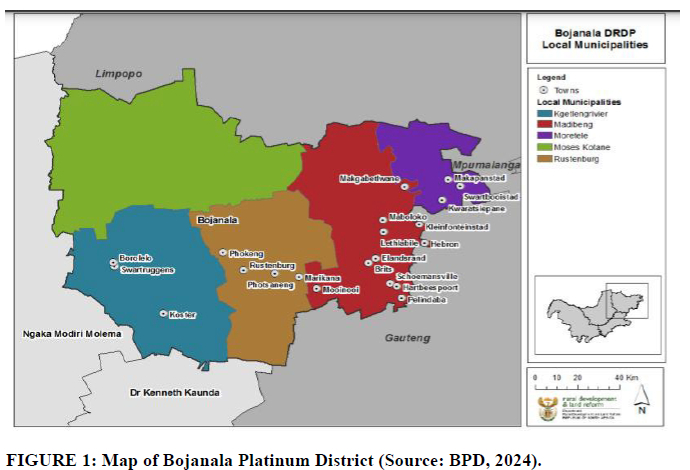
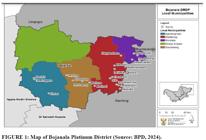
The study was conducted in the BPD of the North West Province. It is one of four districts in the North West Province and has five municipalities: Madibeng, Kgetlengrivier, Moretele, Moses Kotane, and Rustenburg (Figure 1). The BPD borders the provinces of Limpopo and Gauteng. It is bordered by the Dr Kenneth Kaunda district on its south, Gauteng's Tshwane metro municipality on its east, the West Rand district municipality on its southeast, and Limpopo's Waterberg municipality on its north (BPD, 2020). The total area of the BPD is 18,332 km2. BPD has diverse agricultural systems, including crop, livestock, and horticulture. This made it ideal for examining farmer satisfaction.
3.2. Sampling and Data Collection
A multi-stage probability sampling method was used to select 108 farmers from the five municipalities. Sampling was stratified by municipality (Rustenburg and Kgetleng-Rivier were combined because they are managed as one), farming system (crop, horticulture, and livestock), and further by extension officer. Four extension officers were randomly selected from each municipality, and for each officer, three wards representing the different farming systems were chosen. Within the wards, farmers were randomly selected. This approach ensured broad representation across municipalities, farming systems, and extension officer clusters.
Primary data were collected using a structured questionnaire consisting of four sections: farmer demographics, farm characteristics, institutional factors, and extension services. Data collection was conducted through face-to-face interviews, Google Forms, and telephone surveys from September 2024 to November 2024. Ethical approval was obtained from the Tshwane University of Technology ethics committee prior to data collection (Rec2024=06=001 (Sci)).
3.3. Data Analysis
Descriptive statistics such as frequency, percentage, mean, and standard deviation were used to analyse and describe the data. In addition, Principal Component Analysis (PCA) was employed to reduce dimensionality and identify latent satisfaction dimensions. Starting with the first set of n correlated variables, PCA generates uncorrelated components. Each component is a linear, weighted combination of the initial variables (Jolliffe, 2002; Norman & Streiner, 2008). This model was based on the following equation:

where amn represents the weight for the mth principal component (PCm) and the nth variable. The weights for each principal component are given by the eigenvectors of the covariance or correlation matrix (Tsvakirai & Zulu, 2022). The components are ordered so that the first principal component (PC1) explains the largest possible amount of variation in the original data, subject to the constraint that:

The second component (PC2) explains additional, but less variation, than the first component (PC1) and is uncorrelated with it, subject to the same constraint. Subsequent components are uncorrelated with previous components and explain smaller and smaller proportions of the variation in the original variables. The higher the degree of correlation among the original variables in the data, the fewer the components required to capture common information.
Ordinary Least Squares (OLS) regression with robust standard errors was employed to quantify determinants of farmers' satisfaction. This regression model outlined the relationship between farmer satisfaction and different independent factors and expressed it in the equation:

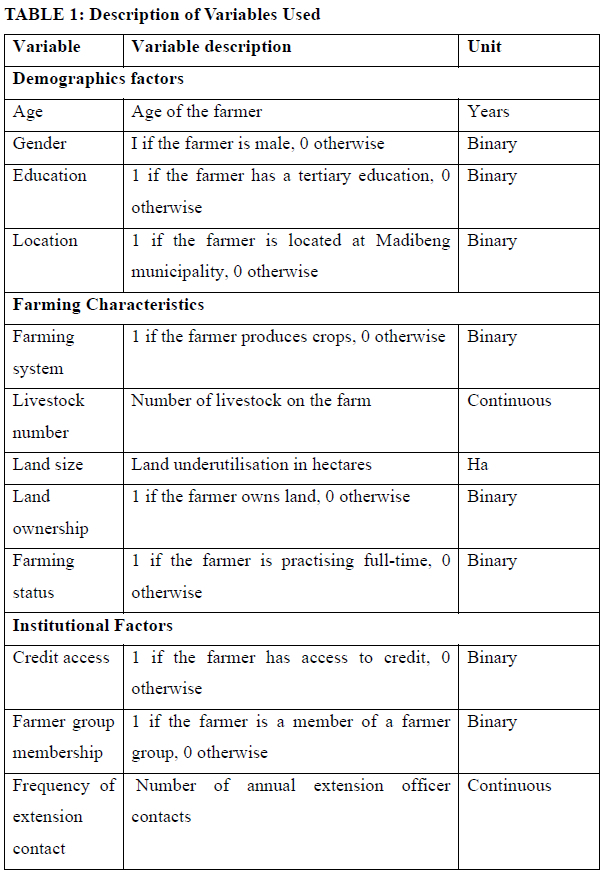
Where Ui* denotes the dependent variable (farmer satisfaction index). B0 is the intercept term (constant term). Bi are the coefficients (parameters) to be estimated. χi are the explanatory variables (independent variables), and εi is the residual term (error term). Robust standard errors (White, 1980) were applied to account for possible heteroskedasticity and to ensure reliable inference despite non-constant error variance. Table 1 provides a description of the variables used in the study.
4. RESULTS AND DISCUSSION
4.1. Socio-Economic Characteristics of Smallholder Farmers
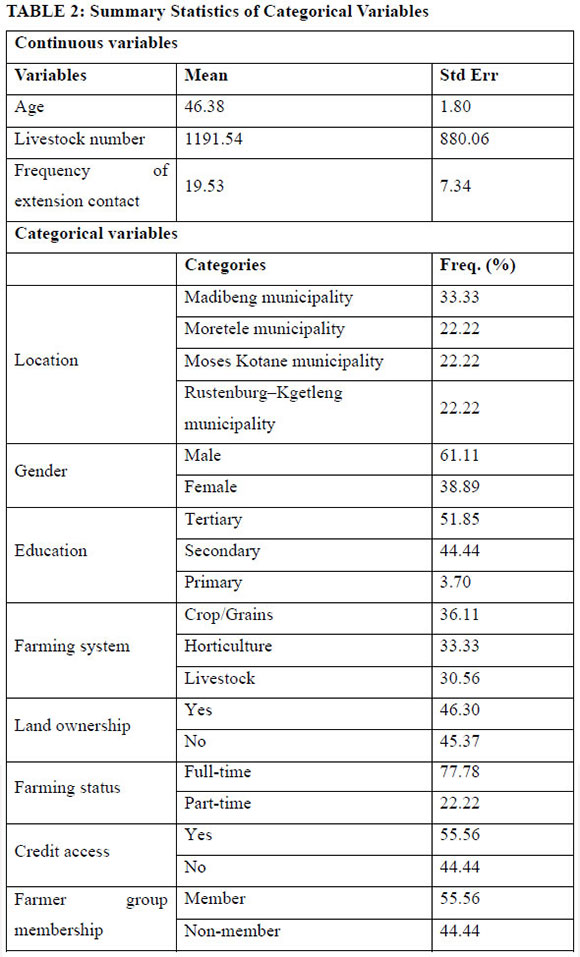
Table 2 shows the descriptive statistics of smallholder farmers in the study area. The results show that the average smallholder farmer in BPD was 46 years old, of whom 61% were male. About 52% of farmers have a tertiary education, with an average of 8 years of farming experience, with crop/grain (36.11%), horticulture (33.33%), and livestock (30.56%) production. About 46% of the smallholder farmers owned land, 56% had access to credit, and 56% were members of farmer groups. On average, a typical farmer is in contact with the agricultural extension officers 19 times a year.
4.2. Farmer Satisfaction Levels by the Type of PAES
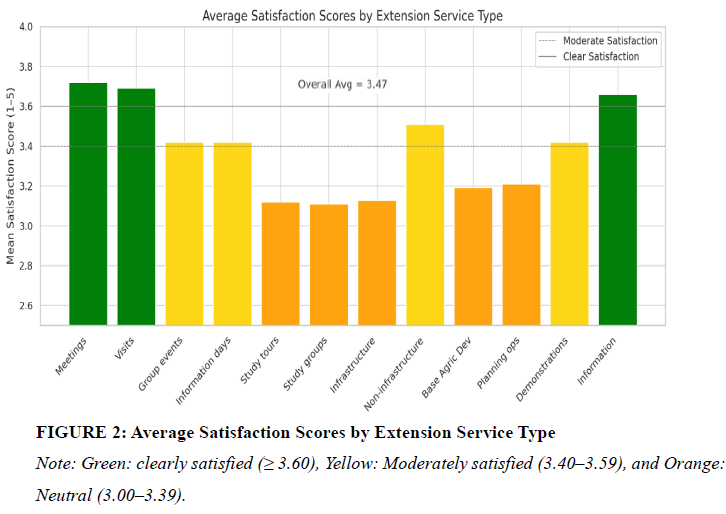
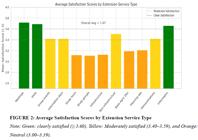
Figure 2 shows the level of satisfaction by smallholder farmers with public extension services. The study followed Boone and Boone (2012) and Joshi et al. (2015), in which Likert scale data were categorised as follows: 1.00-2.99 = Dissatisfied; 3.00-3.39 = Neutral; 3.40-3.59 = Moderately satisfied; and 3.60-5.00 = Clearly satisfied. Results indicate that farmers are generally clearly satisfied with services such as meetings (mean = 3.72) and farm visits (mean = 3.69). Over 60% of farmers reported being satisfied or very satisfied (S+VS) with both (62.5% for meetings, 60.0% for visits). However, services such as group events and information days received mixed responses (mean = 3.42, moderately satisfied), while study tours (3.12 = neutral) and study groups (3.11 = neutral) were rated lowest, with over 50% of farmers reporting non-participation. Infrastructure support and planning operations also had low participation and moderate satisfaction (means = 3.13 and 3.21, respectively), with nearly half of respondents indicating they had never accessed such services. The overall satisfaction score across all services was 3.47. This suggests that farmers are moderately satisfied. These findings suggest that extension services involving direct contact, such as meetings and visits, are more effective at engaging farmers and increasing their satisfaction. This confirms studies emphasising the importance of interpersonal interactions for effective extension (Okwuokenye & Urhibo, 2019). In contrast, services that require group participation or more logistical resources, such as study tours and infrastructure, lead to lower farmer satisfaction. This highlights a need to improve the delivery and relevance of such services to enhance their effectiveness by increasing farmer satisfaction.
4.3. Patterns of Farmer Satisfaction with PAES
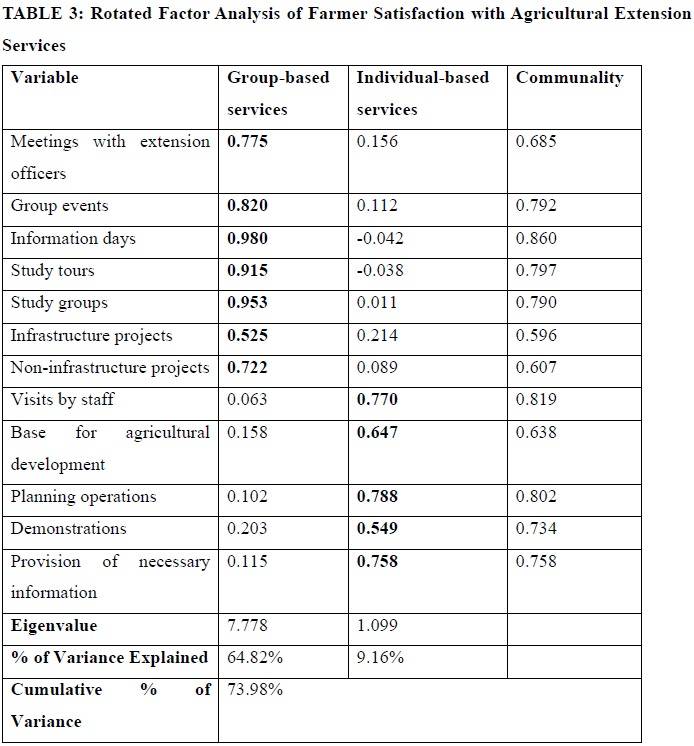
PCA was performed on 12 satisfaction-related variables using the Promax rotation, given expected correlations among the satisfaction dimensions. Following the Kaiser criterion (Field, 2005), PCA revealed two principal components with eigenvalues greater than 1. These components accounted for a cumulative 73.98% of the total variance.
Component 1, named "Group-based services satisfaction", explained 64.82% of variance, which is associated with information days, study groups, study tours, group events, meetings with extension officers, non-infrastructure projects and infrastructure projects. It represents satisfaction with collective extension services offered to farmers in groups. The findings mirror those of Kalogiannidis and Syndoukas (2024), who found that group services, such as workshops and training, positively influenced farm productivity.
Component 2, "Individual-based support satisfaction", explains 9.16% of the variance. Factors that loaded heavily were extension visits, planning operations, information on agricultural development, demonstrations and provision of necessary information. This component reflects satisfaction with personalised extension services. These findings are consistent with those of Kassem et al. (2021), who emphasised that personalised, frequent contact with extension officers improved farmers' knowledge uptake and satisfaction.
Table 3 shows the rotated factor analysis of farmer satisfaction with agricultural extension services.
4.4. Drivers of Farmer Satisfaction with PAES
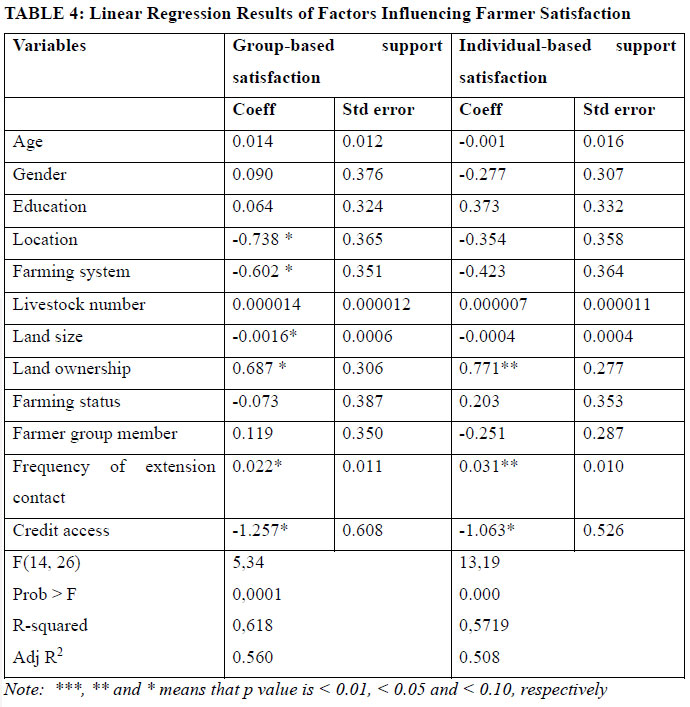
Table 4 shows the factors influencing the farmer's satisfaction with PAES. The farm's location was found to have a statistically significant negative relationship with group-based support satisfaction, with a coefficient of -0.738. This suggests that farmers in the Madibeng municipality were less satisfied with group-based support, possibly due to geographical disadvantages such as remoteness, limited infrastructure, or reduced access to extension and group activities. The results highlight the need for more inclusive, spatially responsive support strategies to ensure equitable service delivery across the district's municipalities.
Crop farming was found to have a statistically significant negative relationship with group-based support satisfaction, with a coefficient of -0.602. This implies that, compared with farmers engaged in other farming systems, such as horticulture or livestock, those involved in crop farming reported significantly lower satisfaction with group-based support. This result suggests that group services may not be tailored or delivered in ways that satisfy the needs of crop farmers.
Farmers' farm size was found to have a statistically significant relationship with group-based support satisfaction, with a coefficient of -0.0016. This implies that a one-unit increase in farm size is associated with a 0.0016-unit decrease in satisfaction with group-based support. This might suggest that smallholder farmers with larger landholdings perceive group-based support structures as less beneficial to their operational needs than those with smaller landholdings. The results are supported by Maake and Antwi (2022), who found a negative relationship between farm size and farmer satisfaction. On the contrary, the results contrast with the findings of Kassem et al. (2021), Komba et al. (2018), and Ovharhe et al. (2020), who reported a positive relationship, indicating that larger farm sizes were associated with farmers' satisfaction. The divergence may be attributed to differences in geographic context, the nature of support services offered and the functioning of farmer groups in the respective study areas.
Land ownership had a statistically significant positive effect on both group-based and individual-based support satisfaction, with coefficients of 0.687 and 0.771, respectively. This suggests that farmers who own land tend to be more satisfied with both forms of extension support compared to those who do not. The positive association may reflect increased security, eligibility, and confidence among landowners in engaging with support services, as ownership often strengthens access to resources, inputs, and institutional recognition. Similar to these findings, Miriti et al. (2024) reported that full land ownership significantly increases farmers' satisfaction with agricultural extension services.
Despite the importance of credit in alleviating farmers' capital constraints, surprisingly, its effect on farmers' satisfaction with the agricultural extension service is negatively significant. The probability of being satisfied with the agricultural extension service is 0.32 times lower for credit users than for non-users. This indicates that farmers with access to credit reported lower satisfaction with both forms of support. The results concur with Elias et al. (2016), who reported a negative relationship between credit access and satisfaction with extension services. Unlike the current findings, Miriti et al. (2024) found a positive relationship between access to credit and farmers' satisfaction.
Frequency of extension contact was positively and significantly associated with both group-based and individual-based support satisfaction, with coefficients of 0.022 and 0.031, respectively. This implies that more frequent interactions with extension officers lead to higher satisfaction levels among farmers. The results were supported by Kassem et al. (2021), Elias et al. (2016), and Miriti et al. (2024), who reported a positive relationship between the frequency of extension visits and farmer satisfaction with PAES. Regular contact likely improves trust, access to timely information, and responsiveness to farmer needs, thereby enhancing the perceived value of both group and individual support services.
5. CONCLUSION AND RECOMMENDATIONS
The study examined factors influencing smallholder farmers' satisfaction with group-based and individual-based support services. The results revealed a moderate level of satisfaction (3.47) by farmers towards PAES. Two types of satisfaction were computed using PCA: group-based support satisfaction and individual-based support satisfaction. Key findings revealed that land ownership significantly enhanced satisfaction with both support types, while access to credit negatively affected satisfaction, suggesting that credit services may not be meeting farmers' needs effectively. Frequency of extension contact was positively associated with satisfaction, highlighting the importance of regular engagement.
In contrast, farm size, farm location, and crop farming were negatively associated with group-based support satisfaction, suggesting that group approaches may not adequately serve farmers with larger farms, those in remote areas, or crop-focused operations. Based on these findings, support services should be tailored to farmer contexts, ensuring credit offerings are more responsive and accessible, extension services are more frequent and inclusive, and group-based programs are adapted to better serve diverse production systems and locations.
6. STUDY LIMITATIONS
The main limitation of this study concerns the sampling method used. Although the study aimed to gather a representative sample across different farmer types and municipalities, this was not fully achieved due to some limitations of the "ward-based" extension system used by the DARD. Future studies should aim to have a more representative sample which includes all farmer types.
7. ACKNOWLEDGMENTS
The authors extend their gratitude to all the farmers and the extension staff in the Bojanala Platinum District who participated in this study and shared their valuable insights, and the North West DARD for the support they provided during the course of the study.
REFERENCES
-
BOJANALA PLATINUM DISTRICT (BPD)., 2020. Profile and analysis district development model. Available from https://www.cogta.gov.za/cgta_2016/wp_content/uploads/2020/12/bojanala-district-municipality-reviewed-idp-2020-21-may tabling-1-1.pdf
» https://www.cogta.gov.za/cgta_2016/wp_content/uploads/2020/12/bojanala-district-municipality-reviewed-idp-2020-21-may tabling-1-1.pdf -
BOJANALA PLATINUM DISTRICT(BPD)., 2024. 2024/25 reviewed integrated development plan (IDP). Available from https://bojanala.gov.za/wp_content/uploads/2024/07/2024_25-BPDM-Reviewed-IDP-2.pdf
» https://bojanala.gov.za/wp_content/uploads/2024/07/2024_25-BPDM-Reviewed-IDP-2.pdf - BOONE, H.N. & BOONE, D.A., 2012. Analysing Likert data. J. Ext., 50(2): 1-5.
- CHAND, S. & SHUKLA, A.P., 2020. Perception of the farmers towards technical capability of public extension personnel in Middle Gujarat. Int. J. Curr. Microbiol. Appl. Sci., 9(12): 356.
- CHETENI, P. & MOKHELE, X., 2019. Small-scale livestock farmers' participation in markets: Evidence from the land reform beneficiaries in the Central Karoo, Western Cape, South Africa. S. Afr. J. Agric. Ext., 47(1): 1-10.
- DAVIS, K.E. & TERBLANCHÉ S.E., 2016. Challenges facing the agricultural extension landscape in South Africa, Quo Vadis? S Afr. J. Agric. Ext., 44(2): 231-247.
-
DEPARTMENT OF AGRICULTURE, FORESTRY AND FISHERIES (DAFF)., 2018. National policy on extension and advisory services. Pretoria, South Africa. Available from https://www.kzndard.gov.za/images/Documents/PolicyDocuments/National-Policy-on-Extension-and-Advisory-Services---PART-C.pdf
» https://www.kzndard.gov.za/images/Documents/PolicyDocuments/National-Policy-on-Extension-and-Advisory-Services---PART-C.pdf -
DEPARTMENT OF AGRICULTURE AND RURAL DEVELOPMENT (DARD)., 2020. Final strategic 2020-25 plan. Northwest, South Africa. Available from http://dard.nwpg.gov.za/wp-content/uploads/2021/07/DARD-Final-Strategic-2020-25-PlanSignatures.pdf.
» http://dard.nwpg.gov.za/wp-content/uploads/2021/07/DARD-Final-Strategic-2020-25-PlanSignatures.pdf - ELIAS, A., NOHMI, M., YASUNOBU, K. & ISHIDA, A., 2016. Farmers' satisfaction with agricultural extension service and its influencing factors: A case study in North West Ethiopia. J. Agric. Sci. Technol., 18(1): 39-53.
- FIELD, A., 2005. Discovering statistics using SPSS. London: Sage.
- JOLLIFFE, I.T., 2002. Principal component analysis, 2nd edn. New York: Springer-Verlag.
- JOSHI, A., KALE, S., CHANDEL, S. & PAL, D.K., 2015. Likert scale: Explored and explained. Br. J. Appl. Sci. Technol., 7(4): 396-403.
- KALOGIANNIDIS, S. & SYNDOUKAS, D., 2024. The impact of agricultural extension services on farm output: A worldwide viewpoint. Res. World Agric. Econ., 5(1): 96-114.
- KASSEM, H.S., ALOTAIBI, B.A., MUDDASSIR, M. & HERAB, A., 2021. Factors influencing farmers' satisfaction with the quality of agricultural extension services. Eval. Prog. Plan., 85: 1-10.
- KHAPAYI, M. & CELLIERS, P.R., 2016. Factors limiting and preventing emerging farmers to progress to commercial agricultural farming in the King William's Town area of the Eastern Cape Province, South Africa. S Afr. J. Agric. Ext., 44(1): 25-41.
- KOMBA, N.C., MLOZI, M.R. & MVENA, Z.S., 2018. Socio-economic factors influencing farmers' perception on effectiveness of decentralized agricultural extension information and services delivery in Arumeru District, Tanzania. Int. J. Agric. Ext. Rural. Dev., 6(2): 594-602.
- LOKI, O., ALIBER, M., & SIKWELA, M., 2021. Assessment of socio-economic characteristics that determine farmers' access to agricultural extension services in Eastern Cape, South Africa. S Afr. J. Agric. Ext., 49(1): 198-209.
- LUKHALO, T., 2017. Evaluation of the agricultural extension system in South Africa. Doctoral thesis, University of Pretoria, South Africa.
- MAAKE, M.M.S. & ANTWI, M.A., 2022. Farmer's perceptions of effectiveness of public agricultural extension services in South Africa: An exploratory analysis of associated factors. Agric. Food Secur., 11(1): 1-12.
- MAKAPELA, M., 2015. Effectiveness of agricultural extension organization in rural areas: The case of Amathole District Municipality, Eastern Cape. Master's dissertation, University of South Africa, Pretoria, South Africa.
- MAOBA, S., 2016. Farmers' perception of agricultural extension service delivery in Germiston Region, Gauteng Province, South Africa. S. Afr. J. Agric. Ext., 44(2): 1-10.
- MIRITI, C.M., NYARINDO, W.N., MBURUGU, K.N. & NTHIWA, D., 2024. Determinants of smallholder farmers' satisfaction with agricultural extension services in Embu County, Kenya. J. Agric. Rural Dev. Trop. Subtrop., 125(2): 209-218.
- MWOLOLO, H.M., NZUMA, J.M., RITHO, C.N. & ASETA, A., 2019. Is the type of agricultural extension services a determinant of farm diversity? Evidence from Kenya. Dev. Stud. Res., 6(1): 40-46.
- NORMAN, G.R. & STREINER, D.L., 2008. Biostatistics: The bare essentials. Hamilton, ON: B.C. Decker.
- OKWUOKENYE, G.F. & URHIBO, F.A., 2019. Performance of the agricultural extension sub-unit of agricultural development Programme in Delta State, Nigeria. Taraba J. Agric. Res., 7(1): 18-27.
- OLUWASUSI, J.O. & AKANNI, Y.O., 2014. Effectiveness of extension services among food crop farmers in Ekiti State, Nigeria. J. Agric. Food. Inf., 15(4): 324-41.
- OVHARHE, O.J., OKWUOKENYE, G.F. & EMAZIYE, P., 2020. Farmers' satisfaction with agricultural extension services in Delta State, Nigeria. Int. J. Agric. Tech., 16(6): 1463-1474.
- TRUONG, D.D., 2022. Farming households' satisfaction with quality of agricultural extension services: A case study of Quang Binh Province, Vietnam. Front. Sustain. Food Syst., 5: 1-12.
- TSVAKIRAI, C.Z. & ZULU, N.M., 2022. Investigating the motivations driving meat analogue purchase among middle-income consumers in Mbombela, South Africa. Agrekon, 61(2): 138-150.
- WHITE, H., 1980. A heteroskedasticity-consistent covariance matrix estimator and a direct test for heteroskedasticity. Econometrica, 48(4): 817-838.