Empowering Smallholder Farmers: Unveiling the Key Drivers of Climate Smart Agriculture Adoption Across Africa: A Systematic Review
Abstract
Climate change poses a serious threat to African agriculture, leading to food shortages; thus, the adoption of climate-smart agricultural (CSA) practices is crucial to ensuring food security and sustainability. However, smallholder farmers, particularly in Africa, have low adoption rates despite the potential benefits, such as higher yields, increased resilience and reduced input costs. This review aims to synthesise existing literature to identify key factors influencing CSA adoption among smallholder farmers, with an emphasis on gender disparities. This study conducted a systematic literature review following PRISMA guidelines, focusing only on peer-reviewed English-language articles and using keywords related to "climate-smart agriculture" (with/without hyphen) or "CSA" AND "smallholder farming/agriculture" OR "small-scale farmers" in titles, keywords, and abstracts. After screening and selection, 39 relevant studies published between 2013 and 2024 were included in the analysis. The review identified over 30 CSA practices, grouped into soil-based (e.g., zero/minimum tillage), crop-based (e.g., crop rotation), and water-based (e.g., irrigation), alongside adoption factors categorised as socio-demographic, institutional, and resource endowment. The findings indicate that factors such as age, gender, education, household size, farm size, income, access to credit, and livestock ownership have mixed effects on CSA adoption, reflecting geographic, practice-specific and cultural variations. In contrast, access to extension services, media exposure, market access, and membership in farmer groups consistently enhance adoption. Notably, many studies report lower adoption rates among female farmers, often linked to structural barriers such as limited land rights and access to inputs. These insights highlight key patterns in CSA adoption and provide a basis for gender-sensitive policy approaches. By providing evidence-based insights, this review can inform targeted extension programs, enabling interventions to promote CSA adoption and address gender disparities among African smallholder farmers.
Adoption; Agricultural Policies; Climate Change; Empowering Farmers; Extension Services; Gender-Sensitive Approaches
1. INTRODUCTION
As global food demand is projected to rise with a population of 9.7 billion by 2050, traditional agricultural practices, often linked to deforestation, excessive water use, and biodiversity loss, are no longer sustainable (Mrabet, 2023). The ecology and environment of sub-Saharan Africa make it especially vulnerable to climate change (Bedeke, 2023). This area is more susceptible due to heavy dependence on agriculture, the most climate-sensitive economic activity (Mutengwa et al., 2023). In urban, peri-urban, and rural settings, climate change poses threats to food security by reducing agricultural output, increasing poverty levels, and elevating risks of food market disruptions (Aboye et al., 2024). Climatic factors such as rising temperatures, erratic rainfall, and shifting weather patterns make it increasingly difficult to produce food (Mirón et al., 2023; Abeysekara et al., 2023).
Various solutions have been recommended and practised to mitigate climate change and enhance food security worldwide, such as policies [e.g., taxes and subsidies] (Perino & Schwickert, 2023), industrial reorganisation (Mi & Sun, 2021; Ma & Rahut, 2024), and adoption of Climate-Smart Agriculture (CSA) practices (Issahaku et al., 2021; Waaswa et al., 2022), among others. Without intervention, emissions from food systems are projected to rise, exacerbating climate change (Dietz et al., 2021). In recent times, global attention has rightly focused on the adoption of these practices (Shilomboleni, 2022). Smallholder farmers are at serious risk from climate change, which causes challenges such as poverty, food insecurity, malnutrition, and low agricultural productivity (Mbuli et al., 2021). To adapt farming methods to climate change, CSA is a widely supported agricultural development strategy in developing countries (Zougmoré et al., 2021).
Although this approach is increasingly recognised as a key means of fostering resilience to climate change and improving food security in Africa, a significant gap remains in understanding the factors that shape its adoption across the continent. Smallholder farmers, who make up the majority of Africa's agricultural labour force, face unique challenges in adopting CSA practices due to diverse socioeconomic conditions, policy frameworks, cultural influences, and access to resources. The existing literature primarily consists of country-specific studies, with limited comparative research on regional disparities, contextual influences, and the determinants of CSA adoption across African countries. While studies across African countries highlight policies aimed at promoting CSA, there is a lack of comparative analysis of how these policies vary across countries and how institutional support mechanisms, such as extension services, subsidies, and credit systems, affect adoption rates. This review synthesises existing research to provide a comprehensive overview of CSA adoption across the African continent, emphasising variations driven by environmental, economic, and institutional factors. This review will provide new perspectives to inform policymakers, smallholder farmers, and other stakeholders on ways to improve technology adoption among smallholder farmers in Africa. This realisation led to this review, which aims to highlight regional differences in CSA adoption, particularly in Southern Africa, where diverse climates and socioeconomic conditions pose unique challenges.
2. REVIEW METHODOLOGY
2.1. Article Identification Strategy
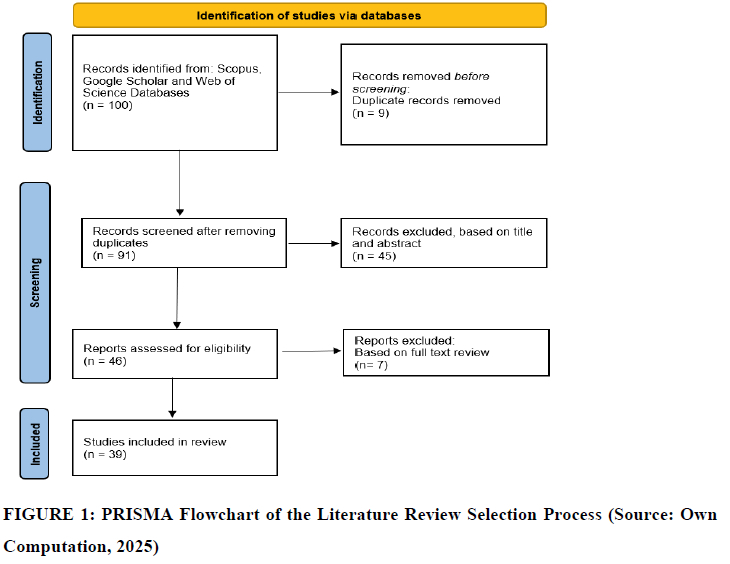
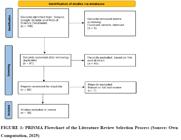
This study employed a systematic literature review following the Preferred Reporting Items for Systematic Reviews and Meta-Analysis (PRISMA) guidelines (Page et al., 2021). The study aimed to identify quality research papers on the drivers of CSA adoption. Based on a recent study examining the relevant and suitable academic system for systematic review (Gusenbauer & Haddaway, 2020). Google Scholar, Scopus, and Web of Science (WoS) databases were used as sources of information. Searches were limited to peer-reviewed articles and used the keywords "climate-smart agriculture" (with/without hyphen) or "CSA" AND "smallholder farming/agriculture" OR "small-scale farmers," restricted to titles, keywords, and abstracts in English. The PRISMA flowchart (Figure 1) outlines the data collection process in accordance with the systematic review protocol. The final sample of 39 studies (focusing on the factors influencing the adoption of CSA technologies) published between 2013 and 2024 was recorded.
2.2. Article Eligibility
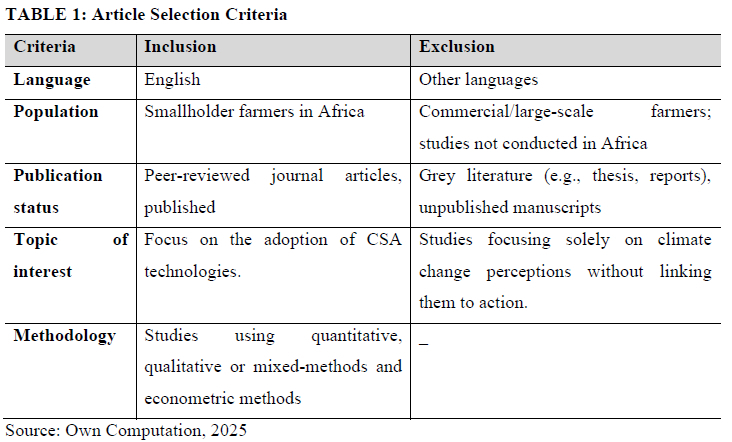
The outcomes of the review depend heavily on the quality of the papers used in the study. The following technique was employed to ensure the quality of the selection. The titles and abstracts of the papers retrieved through keyword searches in the search engines were examined. The entire content was thoroughly examined to ensure that the abstract lacked clarity. The inclusion and exclusion criteria were defined for selecting relevant articles that were used in the study (see Table 1)
2.3. Risk of Bias Assessment
Studies were rigorously assessed for bias risk by examining essential methodological domains, such as sampling techniques, variable measurement, and suitability for analysis. This evaluation was employed to assess the robustness of evidence underpinning the study's conclusions.
3. RESULTS AND DISCUSSION
3.1. The Yearly and Geographical Distribution
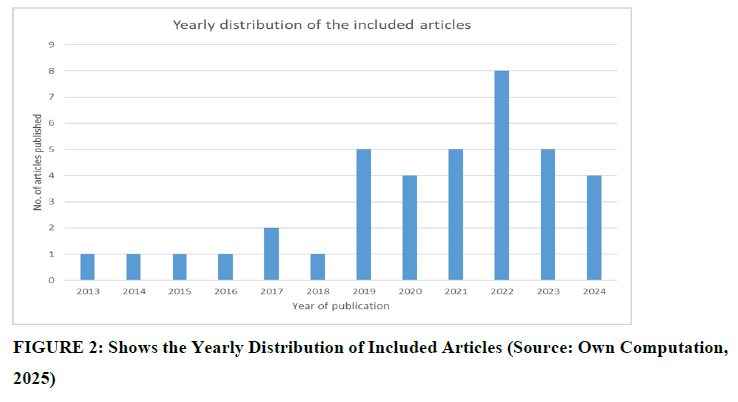
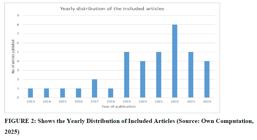
The composition of the selected articles is diverse, with the earliest published in 2013, reflecting the relatively recent emergence of the climate-smart agriculture (CSA) concept. Between 2013 and 2016, the number of published articles remained consistently low, at one per year, indicating limited research interest, a lack of publications, or the nascent stage of the issue within the academic literature. In 2017, there was a slight increase to two publications, signifying a gradual increase in academic activity. Following a decline to one article in 2018, research activity increased significantly, resulting in five publications in 2019, four in 2020, and five in 2021. This general upward trend may indicate heightened awareness, expanded funding opportunities, and a growing research community in the domain.
The highest number of articles was published in 2022, accounting for almost 20% of the total publications (see Figure 2). The factors contributing to this may include the worldwide imperative on climate change, sustainability, and associated technologies, along with heightened regulatory and financial backing for climate-smart and agricultural innovation research. Following this peak, publications declined to five in 2023 and four in 2024. While lower than the peak year, these values remain higher than pre-2019 levels, suggesting a sustained but slightly reduced interest compared to the boom year. This reduction may stem from shifts in funding priorities, academics transitioning to other burgeoning fields, and the completion of several major studies in 2022, which led to a temporary slowdown.
The studies predominantly focus on African nations, which are particularly susceptible to climate change due to limited resources, reliance on rain-fed agriculture, and socioeconomic challenges. These characteristics provide distinct obstacles to the adoption of CSA techniques. Among the 39 papers, Ethiopia, Kenya, and Zimbabwe are the most frequently examined, likely due to their substantial climate-related difficulties and a well-established emphasis on Climate-Smart Agriculture research and policy. The prevalence of research in these nations signifies a broader regional commitment to mitigating the effects of climate change through CSA.
3.2. Discussed CSA practices
According to the analysis of CSA practices in Table 1 below, farmers primarily use crop-focused and soil conservation techniques, though agroforestry and water management also play important roles. The most used methods, crop rotation and mixed/inter/cover cropping, emphasise improving soil fertility and crop resilience. Likewise, mulching and zero - or minimum tillage are frequently used to enhance soil structure and moisture retention. Farmers may prioritise crop and soil management over livestock adaptation strategies, as evidenced by lower adoption rates of livestock-focused practices and of pest and fertiliser management techniques.
3.3. Factors Affecting the Adoption of CSA Technologies
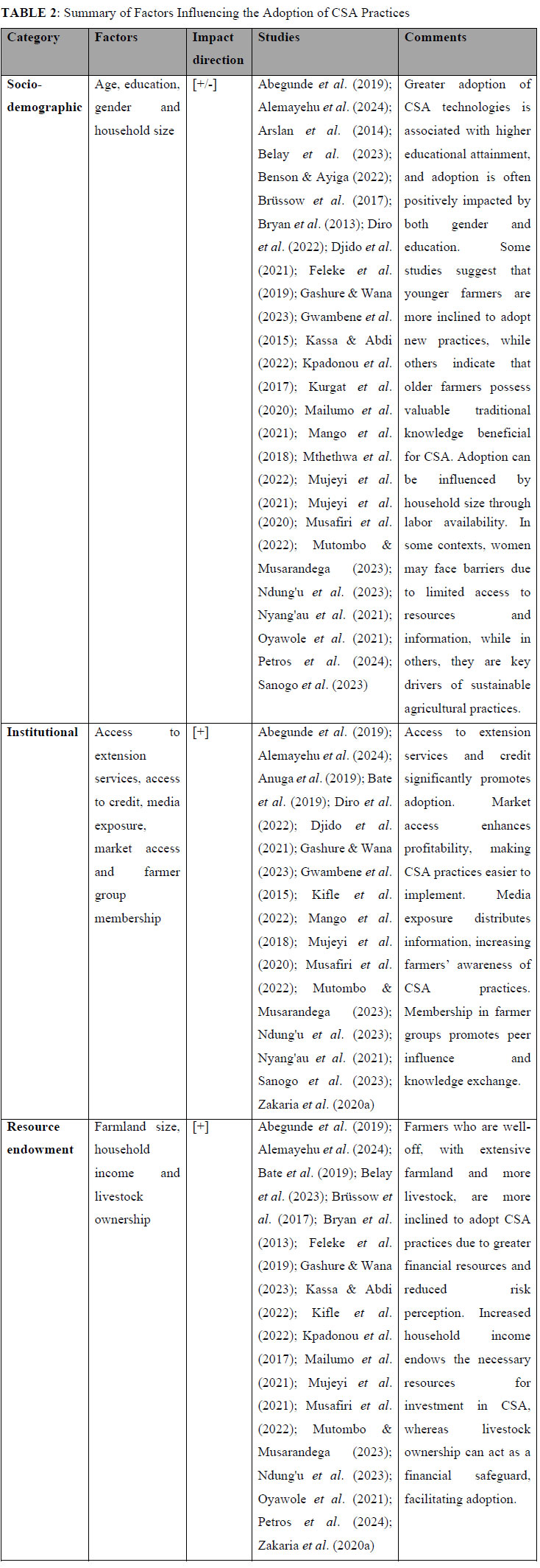
The factors influencing or driving CSA adoption among smallholder farmers in Africa are numerous. The review has shown that these factors can be categorised into socio-demographic, institutional, and resource-endowment factors (Table 2).
3.2.1. Socio-Demographic Factors
3.2.1.1. Age
As farmers age, their physical characteristics, labour supply, and risk tolerance change (Donkor, 2024). As farmers age, both their physical capabilities and labour supply deteriorate (Zheng et al., 2021). Older farmers tend to be less likely to adopt CSA practices, probably due to lower risk tolerance, inadequate access to information, labour-intensive or resistance to change (Mujeyi et al., 2020). Elderly farmers are afraid to adopt new technologies and practices that entail major risks and higher-return trade-offs (Mango et al., 2018; Petros et al., 2024; Mujeyi et al., 2021; Alemayehu et al., 2024). On the contrary, younger farmers are usually more receptive to adopting new technologies, most likely because of their greater access to information, higher educational attainment, and familiarity with information and communication technologies and modern farming methods (Bryan et al., 2013; Djido et al., 2021). (Kpadonou et al., 2017) found that households with more members aged 6 to 14 were more likely to adopt CSA practices.
Petros et al. (2024) identified age as a significant factor influencing CSA adoption, with older farmers demonstrating higher adoption rates within the study area, as their accumulated resources could enable them to invest in CSA practices. Similarly, Mailumo et al. (2021) found that older farmers with more farming experience and experience in assessing long-term benefits were more likely to adopt mixed cropping as a CSA practice to alleviate the adverse effects of climate change on crop production. Kalu and Mbanasor (2023) also reported a positive and important connection between age and CSA adoption, indicating that each additional year of a farmer's age increases the chances of adopting CSA practices by 0.64%, as farmers may use CSA practices as risk mitigation strategies in response to past climate shocks. Age interacts with other socioeconomic factors such as education, income, and household size. Gwambene et al. (2015) found that older farmers were less likely to adopt specific CSA practices because they had more farming experience.
3.2.1.2. Education
The adoption of CSA practices is frequently acknowledged to be positively influenced by education (Mazhar et al. 2021). Farmers with advanced levels of education comprehend the value of CSA practices in adapting to climate change and improving input use (Kpadonou et al., 2017). Farmers' willingness to embrace CSA practices can be enhanced by higher education (Kassa & Abdi, 2022; Sanogo et al., 2023; Gwambene et al., 2015; Belay et al., 2023).
The adoption of practices such as soil and water conservation and agroforestry is strongly influenced by education (Mujeyi et al., 2021; Alemayehu et al., 2024; Ndung'u et al., 2023). This aligns with findings from Zakaria et al. (2020a) and Feleke et al. (2019), which state that higher education levels positively influence CSA adoption.
Some studies indicate that higher education levels may divert farmers toward non-agricultural livelihoods, decreasing their CSA adoption (Mthethwa et al., 2022). Offer an alternative argument, suggesting that education negatively affected CSA adoption. This demonstrates the complex nature of education's role in CSA adoption: while it typically encourages willingness and adoption, in some situations it may steer farmers toward other sources of income. Similarly, Mailumo et al. (2021) demonstrated a negative connection between education and adoption of multiple planting dates, suggesting that more educated farmers might prefer uniform planting.
3.2.1.3. Gender
In many African societies, women may lack control over critical farm resources [land, credit, labour], which can limit their ability to implement CSA practices. For instance, Kurgat et al. (2020) highlighted that female control over farm resources was a determinant in CSA adoption.
Due to substantial differences in social capital, labour endowments, and biological traits, males and females are exposed to and perceive CSA practices differently (Waroga, 2019). This contributes to lower adoption rates among women (Mutombo & Musarandega, 2023; Benson & Ayiga, 2022). However, women's empowerment, including increased access to education, has started to shift this dynamic (Brüssow et al., 2017). Studies indicate that as women gain more decision-making power, they are increasingly adopting CSA practices (Musafiri et al., 2022; Oyawole et al., 2021).
Zakaria et al. (2020b) emphasised the significance of training programs that enhanced access to knowledge regarding CSA practices for both genders, thereby addressing the gender disparity in CSA adoption. Similarly, Kpadonou et al. (2017) found that engagement in collaborative activities, such as cooperative membership, enhanced access to CSA technologies for both men and women. Involving women in extension programs that provide CSA knowledge tailored to their needs has increased adoption among female farmers. Bryan et al. (2013) found that involving women in policy development and ensuring they have access to both land and capital were crucial for enhancing CSA adoption.
3.2.1.4. Household Size
Larger households often provide more labour, which can facilitate the adoption of labour-intensive CSA technologies such as intercropping, minimum tillage, and soil conservation practices (Sanogo et al., 2023; Phiri et al., 2022; Mogaka, Bett, & Karanja Ng'ang'a, 2021).
Several studies across different regions consistently highlight household size as a significant factor driving CSA adoption (Kifle et al., 2022; Nyang'au et al., 2021; Belay et al., 2023; Feleke et al., 2019).
However, some studies suggest that the influence of household size can be conditional, depending on other factors like income levels, gender roles, access to extension services, and credit availability. Musafiri et al. (2022) found that household size negatively influenced the adoption of agroforestry. The results indicated that larger households were less inclined to adopt agroforestry practices. Household size is a crucial variable, as it indicates the labour capacity to implement an agricultural practice. The results corroborated those of Kpadonou et al. (2017), who stated that household size negatively affects agricultural practices.
3.2.2. Institutional Factors
3.2.2.1. Access to Extension Services
Extension services in developing nations with underdeveloped agricultural markets are usually the principal source of CSA practices for farmers (Osumba et al., 2021). These services enable CSA adoption in three important ways: first, by raising farmers' awareness of climate change and CSA practices through the provision of information; second, by making available critical inputs like machinery and transport to simplify the adoption of CSA practices; and third, by speeding up the general adoption of CSA practices among farmers (van Asseldonk et al., 2023).
Several studies emphasise the important role of extension services in promoting CSA adoption. Digital extension services, including mobile phones, radio, and television, provide essential information on CSA techniques, weather patterns, and market prospects, greatly enhancing farmers' capacity to implement CSA practices. Diro et al. (2022) discovered that access to extension services and possession of communication devices [e.g., radio] positively impacted the adoption of CSA, indicating that digital extension tools can effectively disseminate CSA knowledge. Similarly, Djido et al. (2021) highlighted the importance of information sources such as radio and TV in influencing CSA adoption, demonstrating the potential of digital platforms for extension service delivery.
3.2.2.2. Access to Credit
Studies indicate that credit availability enhances farmers' capability to capitalise on CSA technologies. For example, Alemayehu et al. (2024) observed that access to credit significantly promoted the use of row planting, crop rotation, and improved wheat varieties. In the same vein, Kalu and Mbanasor (2023) emphasised the need to enhance farmers' access to credit to promote CSA adoption.
Although credit is essential for advancing CSA practices, numerous farmers in developing nations face substantial credit constraints, limiting their ability to invest in sustainable agriculture (Kifle et al., 2022; Mutombo & Musarandega, 2023). Informal credit sources, such as borrowing from landlords, may have adverse effects and limit farmers' investments in long-term sustainability, whereas formal credit sources, such as bank loans, have been shown to promote the adoption of CSA (Musyoki et al., 2022).
3.2.2.3. Media Exposure
The digital era of today has brought about new cultural phenomena such as social media, radio, and television (Casciani et al., 2022). Abegunde et al. (2019) indicated that farmers with ample exposure to media information are better equipped to cope with the effects of climate change and respond quickly to them.
Djido et al. (2021) found that information sources such as radio and TV play an essential role in shaping CSA implementation by influencing farmers' perceptions of climate change. Abegunde et al. (2019) emphasised that media exposure, along with climate change education and extension services, strengthens farm activities and improves farm income. It is possible to mitigate the impacts of climate change by implementing weather-smart farming practices and using mobile phones or the internet to access weather information (Anuga et al., 2019).
3.2.2.4. Market Access
Market accessibility allows farmers to invest in CSA practices with greater confidence, as they can secure better prices for climate-resilient crops and livestock products (Tesfaye et al., 2023). Farmers with reliable market access are more likely to adopt CSA practices. Mujeyi et al. (2021) found that improved market access incentivised investment in labour-intensive CSA practices by ensuring financial returns. Feleke et al. (2019) also reported that proximity to markets facilitated access to essential CSA inputs, such as organic fertilisers and improved seeds, thereby increasing adoption rates.
Conversely, limited market access presents a barrier to CSA adoption. Kifle et al. (2022) observed that remote farmers faced higher transaction costs and struggled to obtain necessary inputs, which restricted adoption. Mujeyi et al. (2021) also emphasised that inadequate market infrastructure and weak extension services constrained the integration of CSA into farming systems.
3.2.2.5. Farmer Group Membership
Empirical evidence from reviewed studies highlights the positive influence of farmer group membership on CSA adoption. For example, Zakaria et al. (2020b) found that membership in a farmers' group significantly influenced the intensity of CSA adoption. These organisations create an enabling environment where farmers can exchange best practices, gain technical knowledge, and collectively negotiate for better access to resources such as inputs, credit, and market linkages (Sanogo et al., 2023; Abegunde et al., 2019).
Beyond disseminating knowledge, farmers' organisations help reduce the financial and logistical barriers associated with CSA adoption. Additionally, participation in cooperatives and associations has been linked to increased resilience and improved access to climate-related information (Gashure & Wana, 2023; Bate et al., 2019; Anuga et al., 2019).
3.2.3. Resource Endowment Factors
3.2.3.1. Farmland Size
Farm size is an indicator of wealth and social status that influences within the community. Bigger farms often enable economies of scale, which can reduce the per-unit production costs associated with CSA adoption, thus making it more feasible for farmers (Akinyi et al., 2022). A larger farm size not only generates greater agricultural outputs but also provides a solid foundation for the benefits of CSA practices, as it offers more land for implementing diverse technologies (Zakaria, Alhassan, et al., 2020; Kifle et al., 2022; Muriithi et al., 2023).
Several studies have reported that farm size directly influences the probability of adopting CSA practices (Petros et al., 2024; Kifle et al., 2022; Alemayehu et al., 2024). This was observed by Zakaria et al. (2020a), who found that larger farms exhibited lower adoption intensity due to the high input costs associated with extensive farm management practices.
Kassa and Abdi's (2022) study indicated that farmers with larger agricultural holdings were more likely to implement CSA techniques, suggesting that promoting CSA adoption among farmers is beneficial. The results support the findings of Petros et al. (2024) and Gashure and Wana (2023), who found that land fragmentation may be a barrier to CSA implementation.
3.2.3.2. Household Income
Higher income allows farmers to access resources, inputs, and services that facilitate adoption. Mthethwa et al. (2022) identified that farm income, particularly on-farm income, positively influenced CSA adoption, whereas off-farm income sources had a negative effect. The findings suggest that farmers with higher on-farm income are more likely to invest in technologies. The impact of household income on adoption is also evident in the study by Abegunde et al. (2019), in which farm income was a key determinant of CSA adoption alongside farming experience and media exposure.
Belay et al. (2023) observed that higher per-hectare farm income improved both food consumption and farm income among CSA adopters. This connection between income and adoption is further supported by Kurgat et al. (2020), who noted that household income was crucial for CSA adoption. Similarly, Musyoki et al. (2022) and Nyang'au et al. (2021) showed that household income, combined with land ownership and access to climate information, significantly influenced CSA adoption, especially in agroforestry and crop diversification.
3.2.3.3. Livestock Ownership
Farmers with more livestock have better access to credit; those with more livestock are likely to adopt more innovations than those with fewer animals. Musafiri et al. (2022) found that livestock was also a key determinant in the uptake of CSA practices. This suggests that livestock owners might have more resources to diversify their farming practices and invest in sustainable agricultural techniques. Studies by Kurgat et al. (2020) and Musyoki et al. (2022) highlighted that livestock owners with better access to resources and greater financial stability are more likely to engage in CSA practices. According to Petros et al. (2024) and Alemayehu et al. (2024), livestock owners may have more resources to invest in sustainable agricultural techniques and to support the implementation of climate-smart practices.
Although there are trade-offs between irrigation adoption and livestock diversity, Kurgat et al. (2020) also discovered that livestock diversity is an important CSA practice. Furthermore, Feleke, Regasa, and Muche (2019) highlighted that home feeding and forage conservation are two essential adaptive strategies for sustaining livestock in CSA systems.
3.3. Comparing Studies Conducted in South Africa with Other African Countries on Factors Influencing CSA Adoption by Smallholder Farmers
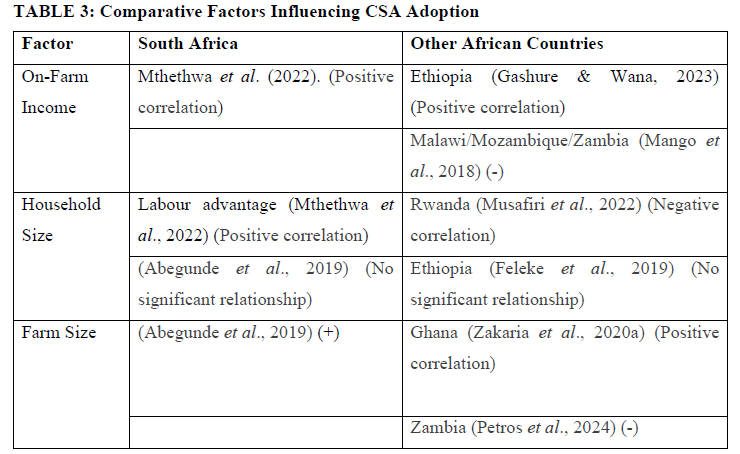
Studies on CSA adoption highlight both similarities and differences between South Africa and other countries. Mthethwa et al. (2022) found a positive association between on-farm income and CSA adoption in South Africa, indicating that farmers who earn income from selling agricultural products are likely to adopt CSA practices. Similarly, Gashure and Wana (2023) observed in Ethiopia that, because off-farm income contributes minimally to total household earnings, most farmers depend on agriculture as their primary livelihood, thereby encouraging CSA adoption. In contrast, Mango et al. (2018) found that in Malawi, Mozambique, and Zambia, off-farm employment negatively affected CSA adoption, as these farmers were less likely to invest in CSA practices.
Mthethwa et al. (2022) in South Africa also identified a positive correlation between household size and CSA adoption, suggesting that larger families benefit from increased labour availability and access to diverse information sources, enhancing climate adaptation strategies. However, contrasting results were observed in Rwanda, where Musafiri et al. (2022) found that larger families have a lower likelihood of adopting labour-intensive CSA practices, while smaller households tended to hire labour for CSA implementation. Additionally, Abegunde et al. (2019) in South Africa and Feleke et al. (2019) in Ethiopia found no significant relationship between household size and CSA adoption.
In South Africa, Abegunde et al. (2019) reported a positive association between farm size and CSA adoption, with larger farms more likely to adopt CSA practices. This aligns with Zakaria et al. (2020), who found similar trends in Ghana. However, conflicting evidence from Petros et al. (2024) suggests that larger farms may hinder CSA adoption, as farmers in Zambia with extensive landholdings may prioritise conventional methods over climate-smart innovations. Likewise, Kpadonou et al. (2017) found that smallholder farmers in the West African Sahel encounter challenges such as constrained access to funding and information, which hinders CSA adoption.
4. CONCLUSION AND RECOMMENDATIONS
Empowering smallholder farmers is essential for enhancing the implementation of CSA. This emphasises the need for targeted educational initiatives that equip these farmers with the knowledge and skills to adopt CSA innovations. Smallholder farmers can increase their resilience to climate change by making better decisions if they have a better understanding of CSA and its advantages.
Gender disparities in CSA adoption also emerged as a key finding, with female farmers adopting CSA at lower rates compared to their male counterparts. A variety of resources could be offered to women, such as credit, land, and training, and efforts could be made to ensure that both men and women benefit equally from agricultural activities. Smaller farms may struggle to access funding and information for CSA because they lack the resources of larger farms. This highlights the need for targeted policies and financial mechanisms to support smallholder farmers, especially those in resource-constrained areas. Creating a permitting framework that enables farmers to adopt CSA involves providing them with tools, information, and financial support, regardless of farm size.
Policies and stakeholders can cultivate an environment that encourages the adoption of CSA, resulting in more resilient agricultural systems and improving food security and climate resilience throughout Africa.
5. DISCLOSURE STATEMENT
No potential conflict of interest was reported by the author(s).
No funding was received for this research.
REFERENCES
- ABEGUNDE, V.O., SIBANDA, M. & OBI, A., 2019. Determinants of the adoption of climate-smart agricultural practices by small-scale farming households in King Cetshwayo District Municipality, South Africa. Sustainability., 12(1): 195.
- ABEYSEKARA, W.C.S.M., SIRIWARDANA, M. & MENG, S., 2023. Economic consequences of climate change impacts on the agricultural sector of South Asia: A case study of Sri Lanka. Econ. Anal. Policy., 77: 435-450.
- ABOYE, B.H., GEBRE-EGZIABHER, T. & KEBEDE, B., 2024. Peri-urban food insecurity and coping strategies among farm households in the face of rapid urbanization in Sub-Saharan Africa: Evidence from Ethiopia. Res. Glob., 8: 100200.
- AKINYI, D.P., KARANJA NG'ANG'A, S., NGIGI, M., MATHENGE, M. & GIRVETZ, E., 2022. Cost-benefit analysis of prioritized climate-smart agricultural practices among smallholder farmers: Evidence from selected value chains across sub-Saharan Africa. Heliyon., 8(4).
- ALEMAYEHU, S., AYALEW, Z., SILESHI, M. & ZELEKE, F., 2024. Determinants of the adoption of climate smart agriculture practices by smallholder wheat farmers in northwestern Ethiopia. Heliyon., 10(13).
- ANUGA, S.W., GORDON, C., BOON, E. & SURUGU, J.M.I., 2019. Determinants of climate smart agriculture (CSA) adoption among smallholder food crop farmers in the Techiman Municipality, Ghana. Ghana J. Geogr., 11(1): 124-139.
- VAN ASSELDONK, M., GIRVETZ, E., PAMUK, H., WATTEL, C. & RUBEN, R., 2023. Policy incentives for smallholder adoption of climate-smart agricultural practices. Front. Polit. Sci., 5: 1112311.
- BATE, B.G., KIMENGSI, J.N. & AMAWA, S.G., 2019. Determinants and policy implications of farmers' climate adaptation choices in rural Cameroon. Sustainability., 11(7): 1921.
- BEDEKE, S.B., 2023. Climate change vulnerability and adaptation of crop producers in sub-Saharan Africa: a review on concepts, approaches and methods. Environ. Dev. Sustain., 25(2): 1017-1051.
- BELAY, A., MIRZABAEV, A., RECHA, J.W., OLUDHE, C., OSANO, P.M., BERHANE, Z., OLAKA, L.A., TEGEGNE, Y.T., DEMISSIE, T., MUTSAMI, C. & SOLOMON, D., 2024. Does climate-smart agriculture improve household income and food security? Evidence from Southern Ethiopia. Environ. Dev. Sustain., 26(7): 16711-16738.
- BENSON, T. & AYIGA, N., 2022. Classifying the involvement of men and women in climate smart agricultural practices in Kayonza sub-county, Kanungu District, Uganda. Int. J. Energy Environ. Sci., 7(1): 7-12.
- BRÜSSOW, K., FAßE, A. & GROTE, U., 2017. Implications of climate-smart strategy adoption by farm households for food security in Tanzania. Food Security., 9: 203-1218.
- BRYAN, E., RINGLER, C., OKOBA, B., RONCOLI, C., SILVESTRI, S. & HERRERO, M., 2013. Adapting agriculture to climate change in Kenya: Household strategies and determinants. J. Environ. Manag., 114: 26-35.
- CASCIANI, D., CHKANIKOVA, O. & PAL, R., 2022. Exploring the nature of digital transformation in the fashion industry: opportunities for supply chains, business models, and sustainability-oriented innovations. Sustain. Sci. Pract. Policy., 18(1): 773-795.
- DIETZ, K.J., ZÖRB, C. & GEILFUS, C.M., 2021. Drought and crop yield. Plant Biol., 23(6): 881-893.
- DIRO, S., TESFAYE, A. & ERKO, B., 2022. Determinants of adoption of climate-smart agricultural technologies and practices in the coffee-based farming system of Ethiopia. Agric. Food Secur., 11(1): 1-14.
- DJIDO, A., ZOUGMORÉ, R.B., HOUESSIONON, P., OUÉDRAOGO, M., OUÉDRAOGO, I. & DIOUF, N.S., 2021. To what extent do weather and climate information services drive the adoption of climate-smart agriculture practices in Ghana?. Clim. Risk Manag., 32: 100309.
-
DONKOR, E., 2024. Impact of producer groups on the adoption of sustainable agricultural practices. Available from https://theses.cz/id/ol70kl/zaverecna_prace_Archive.pdf.
» https://theses.cz/id/ol70kl/zaverecna_prace_Archive.pdf - FELEKE, A., REGASA, G. & MUCHE, M., 2019. Factors influencing adoption of improved potato (Belete) variety: Evidence from Ethiopian smallholder farmers. J. Agric. Sci., 2: 85-92.
- GASHURE, S. & WANA, D., 2023. Smallholders' adoption of climate-smart practices in Konso, Ethiopia. Int. J. Environ. Stud., 80(5): 1349-1360.
- GUSENBAUER, M. & HADDAWAY, N.R., 2020. Which academic search systems are suitable for systematic reviews or meta-analyses? Evaluating retrieval qualities of Google Scholar, PubMed, and 26 other resources. Res. Synth. Methods., 11: 181-217.
- GWAMBENE, B., SARIA, J.A., JIWAJI, N.T., PAULINE, N.M., MSOFE, N.K., MUSSA, K.R., TEGEGE, J.A., MESSO, I., MWANGA, S.S. & SHIJA, S.M.Y., 2015. Smallholder farmers' practices and understanding of climate change and climate-smart agriculture in the Southern Highlands of Tanzania. J Resour Dev Manag., 13: 37-47.
- ISSAHAKU, G., ABDUL-RAHAMAN, A. & AMIKUZUNO, J., 2021. Climate change adaptation strategies, farm performance and poverty reduction among smallholder farming households in Ghana. Clim. Dev., 13(8): 736-747.
- KALU, C. A & MBANASOR, J. A., 2023. Factors Influencing the Adoption of Climate Smart Agricultural Technologies Among Root Crop Farming Households in Nigeria. FARA Research Report., 7(57): 744-753.
- KASSA, B.A. & ABDI, A.T., 2022. Factors influencing the adoption of climate-smart agricultural practice by small-scale farming households in Wondo Genet, Southern Ethiopia. Sage Open., 12(3): 21582440221121604.
- KIFLE, T., AYAL, D.Y. & MULUGETA, M., 2022. Factors influencing farmers adoption of climate smart agriculture to respond climate variability in Siyadebrina Wayu District, Central highland of Ethiopia. Clim. Serv., 26: 100290.
- KPADONOU, R.A.B., OWIYO, T., BARBIER, B., DENTON, F., RUTABINGWA, F. & KIEMA, A., 2017. Advancing climate-smart-agriculture in developing drylands: Joint analysis of the adoption of multiple on-farm soil and water conservation technologies in West African Sahel. Land Use Policy., 61: 196-207.
- KURGAT, B.K., LAMANNA, C., KIMARO, A., NAMOI, N., MANDA, L. & ROSENSTOCK, T.S., 2020. Adoption of climate-smart agriculture technologies in Tanzania. Front. Sustain. Food Syst., 4: 55.
- MA, W. & RAHUT, D.B., 2024. Climate-smart agriculture: adoption, impacts, and implications for sustainable development. Mitig. Adapt. Strateg. Glob. Change., 29(5): 44.
- MAILUMO, S.S., ONUWA, G.C. & OYEWOLE, S., 2021. Adoption of climate smart agriculture among food crop farmers in Birnin-Kudu Local Government Area, Jigawa State, Nigeria. Russ. J. Agric. Soc.-Econ. Sci., 110(2): 168-176.
- MANGO, N., MAKATE, C., TAMENE, L., MPONELA, P. & NDENGU, G., 2018. Adoption of small-scale irrigation farming as a climate-smart agriculture practice and its influence on household income in the Chinyanja Triangle, Southern Africa. Land., 7(2): 49.
- MAZHAR, R., GHAFOOR, A., XUEHAO, B. & WEI, Z., 2021. Fostering sustainable agriculture: do institutional factors impact the adoption of multiple climate-smart agricultural practices among new entry organic farmers in Pakistan?. J. Clean. Prod., 283: 124620.
- MBULI, C.S., FONJONG, L.N. & FLETCHER, A.J., 2021. Climate change and small farmers' vulnerability to food insecurity in Cameroon. Sustainability., 13(3): 1523.
- MIRÓN, I.J., LINARES, C. & DÍAZ, J., 2023. The influence of climate change on food production and food safety. Environ. Res., 216: 114674.
- MOGAKA, B.O., BETT, H.K. & KARANJA NG'ANG'A, S., 2021. Socioeconomic factors influencing the choice of climate-smart soil practices among farmers in western Kenya. J. Agric. Food Res., 5: 100168.
- MRABET, R., 2023. Sustainable agriculture for food and nutritional security. In M. Farooq, N. Gogoi & M. Pisante (eds.), Sustainable agriculture and the environment. Academic Press, pp. 25-90.
- MTHETHWA, K.N., NGIDI, M.S.C., OJO, T.O. & HLATSHWAYO, S.I., 2022. The determinants of adoption and intensity of climate-smart agricultural practices among smallholder maize farmers. Sustainability., 14(24): 16926.
- MUJEYI, A., MUDHARA, M. & MUTENJE, M., 2021. The impact of climate smart agriculture on household welfare in smallholder integrated crop-livestock farming systems: evidence from Zimbabwe. Agric. Food Secur., 10: 1-15.
- MUJEYI, A., MUDHARA, M. AND MUTENJE, M.J., 2020. Adoption determinants of multiple climate smart agricultural technologies in Zimbabwe: Considerations for scaling-up and out. Afr. J. Sci. Technol. Innov. Dev., 12(6): 735-746.
- MURIITHI, C., MWONGERA, C., ABERA, W., CHEGE, C.G. & OUEDRAOGO, I., 2023. A scalable approach to improve CSA targeting practices among smallholder farmers. Heliyon., 9(10).
- MUSAFIRI, C.M., KIBOI, M., MACHARIA, J., NG'ETICH, O.K., KOSGEI, D.K., MULIANGA, B., OKOTI, M. & NGETICH, F.K., 2022. Adoption of climate-smart agricultural practices among smallholder farmers in Western Kenya: do socioeconomic, institutional, and biophysical factors matter?. Heliyon., 8(1).
- MUSYOKI, M.E., BUSIENEI, J.R., GATHIAKA, J.K. & KARUKU, G.N., 2022. Linking farmers' risk attitudes, livelihood diversification and adoption of climate-smart agriculture technologies in the Nyando basin, South-Western Kenya. Heliyon., 8(4).
- MUTENGWA, C.S., MNKENI, P. & KONDWAKWENDA, A., 2023. Climate-smart agriculture and food security in southern Africa: a review of the vulnerability of smallholder agriculture and food security to climate change. Sustainability., 15(4): 2882.
- MUTOMBO, P. & MUSARANDEGA, H., 2023. Unpacking the determinants of climate-smart agriculture adoption by smallholder farmers in Ward 10, Zvimba District, Zimbabwe. Eur. J. Dev. Res., 3(1): 74-84.
- NDUNG'U, S., OGEMA, V., THIGA, M. & WANDAHWA, P., 2023. Factors influencing the adoption of climate smart agriculture practices among smallholder farmers in Kakamega County, Kenya. Afr. J. Food Agric. Nutr. Dev., 23(10): 24759-24782.
- NYANG'AU, J.O., MOHAMED, J.H., MANGO, N., MAKATE, C. & WANGECI, A.N., 2021. Smallholder farmers' perception of climate change and adoption of climate smart agriculture practices in Masaba South Sub-County, Kisii, Kenya. Heliyon., 7(4).
- OSUMBA, J.J., RECHA, J.W. & OROMA, G.W., 2021. Transforming agricultural extension service delivery through innovative bottom-up climate-resilient agribusiness farmer field schools. Sustainability., 13(7): 3938.
- OYAWOLE, F.P., SHITTU, A., KEHINDE, M., OGUNNAIKE, G. & AKINJOBI, L.T., 2021. Women empowerment and adoption of climate-smart agricultural practices in Nigeria. African Afr. J. Econ. Manag. Stud., 12(1): 105-119.
- PAGE, M.J., MCKENZIE, J.E., BOSSUYT, P.M., BOUTRON, I., HOFFMANN, T.C., MULROW, C.D., SHAMSEER, L., TETZLAFF, J.M., AKL, E.A., BRENNAN, S.E., CHOU, R., GLANVILLE, J., GRIMSHAW, J.M., HRÓBJARTSSON, A., LALU, M.M., LI, T., LODER, E.W., MAYO-WILSON, E., MCDONALD, S., MCGUINNESS, L.A., STEWART, L.A., THOMAS, J., TRICCO, A.C., WELCH, V.A., WHITING, P. & MOHER, D., 2021. The PRISMA 2020 statement: an updated guideline for reporting systematic reviews. BMJ., 372(71).
- PERINO, G. & SCHWICKERT, H., 2023. Animal welfare is a stronger determinant of public support for meat taxation than climate change mitigation in Germany. Nature Food., 4(2):160-169.
- PETROS, C., FEYISSA, S., SILESHI, M. & SHEPANDE, C., 2025. Factors influencing climate-smart agriculture practices adoption and crop productivity among smallholder farmers in Nyimba District, Zambia. F1000Research., 13: 815.
- PHIRI, A.T., CHARIMBU, M., EDEWOR, S.E. & GAVETA, E., 2022. Sustainable scaling of climate-smart agricultural technologies and practices in Sub-Saharan Africa: The case of Kenya, Malawi, and Nigeria. Sustainability., 14(22): 14709.
- SANOGO, K., TOURÉ, I., ARINLOYE, D.D.A., DOSSOU-YOVO, E.R. & BAYALA, J., 2023. Factors affecting the adoption of climate-smart agriculture technologies in rice farming systems in Mali, West Africa. Smart Agric. Technol., 5: 100283.
- SHILOMBOLENI, H., 2022. Political economy challenges for climate smart agriculture in Africa. In G. Desa & X. Jia (eds.), Social innovation and sustainability transition. Cham: Springer Nature Switzerland, pp. 261-272.
-
TESFAYE, L., ALEMAYEHU, S., JALANGO, D., KARANJA, S., MAGAMBO, G., GHOSH, A., VYAS, S., NOWAK, A., WAMICWE, P., NEWMAN, R. & GROSJEAN, G., 2023. Climate-smart agriculture investment plan for Ethiopia. Available from https://alliancebioversityciat.org/publications-data/climate-smart-agriculture-investment-plan-ethiopia
» https://alliancebioversityciat.org/publications-data/climate-smart-agriculture-investment-plan-ethiopia - WAASWA, A., OYWAYA NKURUMWA, A., MWANGI KIBE, A. & NGENO KIPKEMOI, J., 2022. Climate-Smart agriculture and potato production in Kenya: review of the determinants of practice. Clim. Dev., 14(1): 75-90.
- WAROGA, V.W., 2019. Gender relations in adoption of climate smart agricultural practices; A Case of Rice Farmers in Kirinyaga County Valentine Wanjiru Waroga Anthropology, Gender and African Studies. Doctoral dissertation, University of Nairobi.
- ZAKARIA, A., ALHASSAN, S.I., KUWORNU, J.K., AZUMAH, S.B. & DERKYI, M.A., 2020a. Factors influencing the adoption of climate-smart agricultural technologies among rice farmers in northern Ghana. Earth Syst. Environ., 4: 257-271.
- ZAKARIA, A., AZUMAH, S.B., APPIAH-TWUMASI, M. & DAGUNGA, G., 2020b. Adoption of climate-smart agricultural practices among farm households in Ghana: The role of farmer participation in training programmes. Technol. Soc., 63: 101338.
- ZHENG, H., MA, W. & LI, G., 2021. Adoption of organic soil amendments and its impact on farm performance: Evidence from wheat farmers in China. Aust. J. Agric. Resour. Econ., 65(2): 367-390.
- ZOUGMORÉ, R.B., LÄDERACH, P. & CAMPBELL, B.M., 2021. Transforming food systems in Africa under climate change pressure: Role of climate-smart agriculture. Sustainability., 13(8): 4305.