Climate change: perception and adaptation responses of poultry smallholder farmers in Amathole District Municipality, Eastern Cape Province of South Africa
Abstract
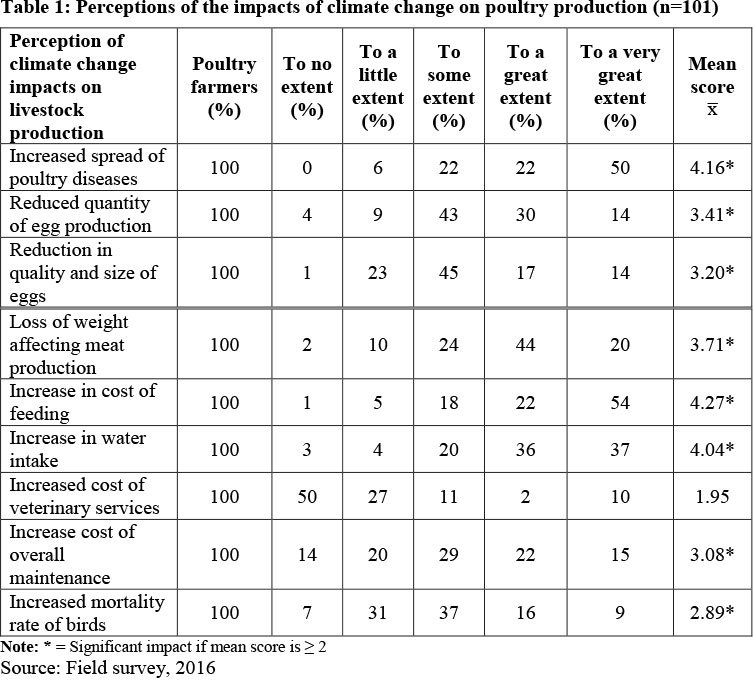
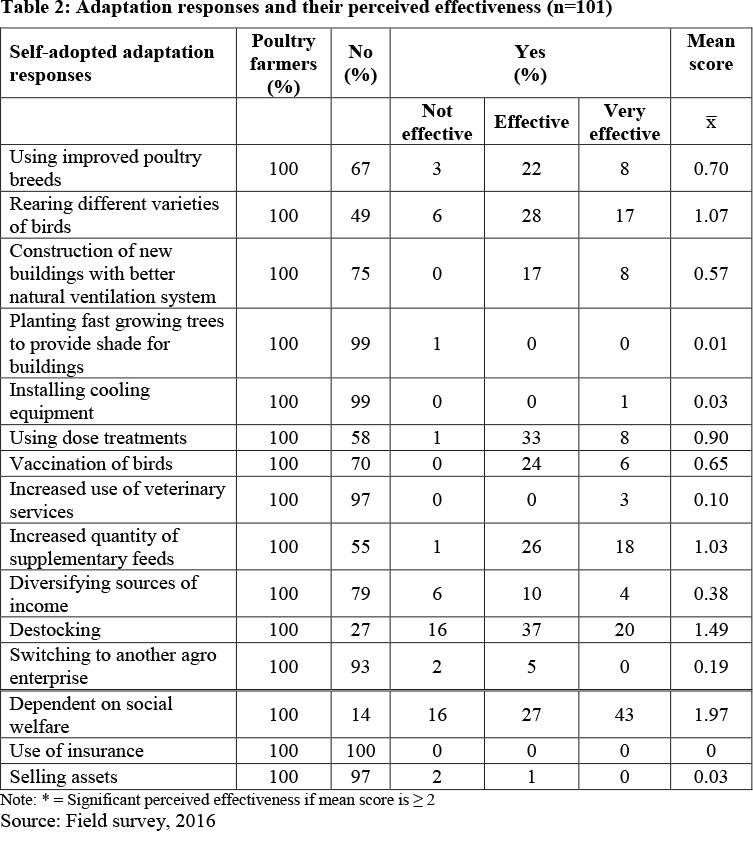
Characterised by high industrialisation, consumption, and trade, poultry production has become a predominant component of the agricultural industry. Climate change, however, is posing a critical challenge to its sustainability and rural sustenance. It has therefore become exigent to assess these impacts and available adaptation efforts put in place to assuage these risks. A multistage sampling procedure was used to select 101 smallholder poultry farmers in 18 villages across the Amathole District Municipality in the Eastern Cape Province of South Africa. An assessment of climate change and perceived impact on production, adaptation responses, and effectiveness of the responses were carried out using simple descriptive and inferential statistical tools. The results show that reduction in quantity of egg production, egg quality and sizes, loss of weight affecting meat production, increase in cost offeeding, disease spread, and mortality rate of birds are the most perceived impacts of climate change. The adaptation responses of the poultry farmers in the area are extremely limited, with only three adaptation measures available. These measures include rearing different varieties of birds, destocking, and dependence on social welfare, which was found to be taken up by more than half of the poultry farmers. However, none of these adaption measures were perceived as effective, suggesting poor adaptation to climate change in the study area.
poultry production; climate change; perceived impacts; adaptation measures; perceived effectiveness
 Thumbnail