Enhancing Conservation Efforts of Indigenous Plants for Medicinal Use: Integrating Traditional Wisdom and Ecological Sustainability for Resilience of Communities
Abstract
The preservation and sustainable management of Indigenous medicinal plant species are vital for maintaining ecological diversity and preventing the loss of threatened flora. In rural South Africa, these plants remain essential resources for smallholder farmers, who depend on them for primary healthcare and supplementary household income. However, increasing pressure from unsustainable harvesting practices, combined with limited awareness of conservation boundaries, poses risks to their long-term availability. Furthermore, the valuable Indigenous knowledge associated with these species is endangered, as it is predominantly shared orally and poorly documented. This study examines the socioeconomic and conservation implications of Indigenous medicinal plant utilisation among smallholder farmers in the Amatole District Municipality of the Eastern Cape Province. A survey was conducted with 150 smallholder farmers using a structured questionnaire and multistage stratified sampling. Results indicate that women are the primary custodians of Indigenous medicinal plant production, with a mean age of 44 years and an average level of schooling of 10 years. Households cultivate approximately one hectare or less for subsistence and income generation, typically supporting five members. On-farm conservation and designated protected areas are the most common preservation practices; however, resource constraints limit broader conservation efforts. The study recommends gender-sensitive extension support and increased government investment in skills development to enhance sustainable utilisation and safeguard Indigenous knowledge.
Community Resilience; Conservation Strategies; Environmental Preservation; Extension Services; Indigenous Medicinal Plants
1. INTRODUCTION
Medicinal plants are gaining recognition as important alternatives to conventional medical treatments across many nations, particularly in South Africa. These plants are among the most important worldwide due to their powerful healing properties (Ndlovu et al., 2023). Ssenku et al. (2022) described the motives for using medicinal plants as providing healing for humans, livestock, and pests; hence, humans feel the need to maintain close cohabitation with these plants. Apart from treating diseases, medicinal plants have numerous uses, including treating malnutrition, healing diseases, and repelling insects and pests. Additionally, they can be used for cosmetic, antimicrobial, and even spiritual purposes, making them invaluable to local communities. Human communities highly value medicinal plants due to their versatility in various applications. However, their most appealing characteristic is that they are more affordable than contemporary medications (Anwar et al., 2022). Astitik et al. (2019) estimated that approximately 80 per cent of the global population has adopted the practice of consuming medicinal plants for therapeutic purposes. This practice is particularly common in developing countries and is more significant in places where access to medication is often beyond residents' means due to its high cost.
Medicinal plant use has created opportunities for trade beyond the African continent and its borders to other continents, such as Europe. On the African continent, the value of plant material extracted from wild resources is projected at USD 150 million, driven by the annual harvesting of 700,000 tons of medicinal plants to meet market demand (Seile et al., 2022). Similarly, Ndhlovu et al. (2021) estimated that South Africa produces approximately 20,000 tons of dried and processed goods, valued at R270 million (US$60 million). The data were intended for the formal medicinal plant market in Southern Africa; however, domestic harvesters are making decent profits from the country's informal markets (Nwafor et al., 2021). The escalation of consumer interest in medicinal plants triggered an upsurge of commercial stakeholders, such as product inventors, merchants and harvesters (Mbelebele, 2024; Nwafor et al., 2021). Thus, communal farmers could propagate medicinal plants and exploit the opportunity in the supply and demand of this lucrative market (Hilonga et al., 2019; Zahra, 2020). Demand for medicinal plants places additional pressure on natural vegetation, as certain species face critical endangerment in their native environments. As a result, these species become more susceptible to extinction, potentially leading farmers to lose valuable medicinal plants.
The cultivation of medicinal plants offers emerging rural farmers an opportunity to grow them as new and alternative crops, thereby sustaining their livelihoods and reducing poverty (Mofokeng et al., 2022). Nwafor et al. (2021) noted that the production of medicinal plants may be regarded as a viable diversification activity for numerous smallholder farmers, as it has high demand in trade. Additionally, Smith-Hall et al. (2012) stated that the value of medicinal plants could be assessed based on the significance consumers give to these plants, demand, and availability. An exemplary species of the prior-specified notion is Agathosma betulina (Buchu), which offers stakeholders a well-known worldwide profit margin and is a significant part of South African exports. Street and Prinsloo (2013) presupposed that since 1761, South Africa has been exporting since the first export of the Cape Aloe to Europe; hence, it becomes obvious that these curative plants form an imperative part of a very crucial export business (Pei et al., 2020; Gonfa et al., 2020). Smallholder farmers near natural resources can play a central role in the medicinal plant industry, as these resources are readily available and on the verge of exploitation. Sustainable profits and immense gains can be achieved through the permanent conservation of medicinal plants, which would require minimal input. Nevertheless, biodiversity in the wild is being degraded, and these plants are therefore becoming increasingly threatened, to the benefit of smallholder farmers. According to Ndhlovu et al. (2021), Seile et al. (2022), and Astutik et al. (2023), medicinal plants are faced with several threats, and very few, or none at all, are well propagated beyond the harvest stage in these settings.
Smallholder farmers will need to overcome several challenges to become crucial stakeholders in the medicinal plant business. The knowledge gap presents a major challenge for smallholder farmers. Limited access to information restricts their awareness of profitable market opportunities and emerging value chains. As a result, they struggle to make informed production and marketing decisions. This constraint ultimately hinders their ability to enhance income levels and improve their overall livelihoods. Knowledge holders are elderly persons in the village, and this information about medicinal plants is passed by word of mouth; therefore, it is subject to loss or fault (Nagothu, 2023). The role that medicinal plants play in the livelihoods and socioeconomic well-being of smallholder farmers is hard to estimate (Chandra et al., 2020). Moreover, the absence of mechanical inputs on smallholder farms reduces their productivity, and these producers cannot compete successfully in the market (Tali et al., 2019). Therefore, without properly assessing the challenges discussed above, it becomes difficult to evaluate how the commercialisation of medicinal plants influences the food and nutrition security of smallholder farmers. Accurate measurement requires a comprehensive understanding of both production constraints and market participation dynamics. In the absence of such information, the contribution of medicinal plant commercialisation to household well-being remains uncertain. This highlights the need for targeted research and systematic data collection to guide evidence-based interventions.
Medicinal plant conservation is integral to global food security and nutrition, as these plants are an essential part of many local diets and healthcare systems, particularly in rural and underserved areas. In Africa, where access to formal healthcare and diverse food sources can be limited, indigenous medicinal plants are critical for combating malnutrition and improving health outcomes. In addition to their medicinal value, many of these plants are rich in nutrients, offering essential vitamins and minerals to vulnerable populations. In South Africa, smallholder farmers and rural communities rely on these plants for healing purposes and as a source of income and food security, enhancing their resilience against economic challenges. However, unsustainable harvesting of medicinal plants, habitat destruction, and climate change threaten the availability of these vital resources. As biodiversity declines, so does the potential to use these plants to combat food insecurity and improve nutrition. Therefore, conserving medicinal plants is crucial for preserving traditional knowledge, supporting sustainable agricultural practices, and ensuring that future generations can continue to benefit from their health and nutritional value.
Despite the well-recognised importance of Indigenous medicinal plants for rural health and livelihoods, there remains a significant gap in the evidence documenting how traditional ecological knowledge can be systematically integrated into modern conservation practices. Current literature largely focuses on either ecological preservation or traditional use, but rarely examines their relationship within a community-based conservation framework. Additionally, insufficient data exist on how local conservation strategies enhance long-term resilience, food security, and income stability for rural communities. The lack of recorded Indigenous knowledge further threatens its transmission to future generations and contributes to unsustainable harvesting patterns. The primary research objective is to balance the effects of conservation policies on the food and nutritional security of smallholder medicinal plant farmers. There is limited consensus on the extent to which conservation strategies affect food and nutrition security. Since the medicinal plant business operates as a self-regulated industry, the impact of conservation strategies on the long-term consequences of overharvesting remains modest.
Furthermore, few studies examine the effect of indigenous conservation knowledge on environmental preservation. Existing evidence from studies such as Hilonga et al. (2019), Seile et al. (2022), and Ramawat and Arora (2021) demonstrates that indigenous knowledge, through practices such as controlled harvesting, domestication, and community-based protection, plays a vital role in maintaining biodiversity and promoting the sustainable use of medicinal plants. However, empirical assessments linking these conservation practices directly to food and nutrition security outcomes remain limited. These interventions require exploration regarding their food and nutrition status. The information addressing these issues is critical, as it illuminates the enhancement of living standards, sustainable income, and food and nutrition security. Hence, the significance of this research lies in its ability to generate evidence supporting the integration of Indigenous knowledge with ecological conservation strategies, thereby ensuring the long-term availability of medicinal plant resources. By examining the link between conservation practices and household food and nutrition security, the study provides critical insights to guide policy interventions that improve rural livelihoods. Furthermore, the research contributes to the preservation of Indigenous knowledge systems, strengthens community resilience, and promotes sustainable economic opportunities for smallholder farmers.
2. METHODOLOGY
2.1. Description of the Study
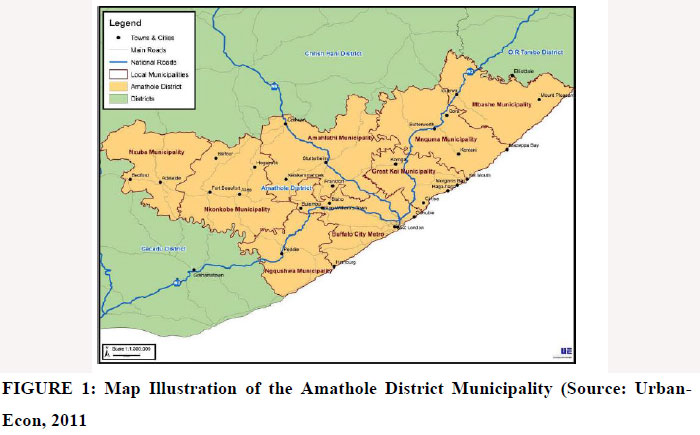
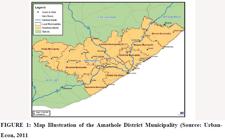
Field research was conducted in the Eastern Cape, South Africa, within the Amatole District Municipality (ADM). The district municipality encompasses the former Transkei and Ciskei areas, which are predominantly rural, with some peri-urban areas (Mujuru & Obi, 2020). The Amatole District Municipality is classified as a Category C2 Municipality consisting of six Local Municipalities: Amahlathi, Great Kei, Mnquma, Ngqushwa, and Raymond Mhlaba. The district municipality has approximately 17 million residents with 91% African, 6% white, and 3% coloured populations (Wintola & Afolayan, 2015; Mudemba et al., 2018). Furthermore, 52% of the population is female, while 48% is male (Mudemba et al., 2018). ADM's climate is characterised by average temperatures ranging from 7°C to 10°C during cool, dry seasons, which may experience snowfall, and from 18°C to 24°C during hot, humid periods. It receives adequate rainfall, ranging from 750 mm to 1050 mm annually (Marume et al., 2013). Within the ADM's territories are well-endowed lands blessed by nature, including grazing land full of succulent grass, forests, and marine life (Mdoda & Obi, 2019).
According to the Amatole District Municipality Integrated Development Plan (ADMIDP), 54% of the population lives below the breadline (ADMIDP, 2016). Moreover, due to high unemployment rates, 66% of the population can subsist on social welfare grants (ADMIDP, 2016). Most district residents engage in primary agricultural production to reduce poverty and achieve income through surplus sales. Common agricultural practices among smallholder farmers in the Amatole District Municipality include seasonal maize cultivation, poultry farming, cattle (dairy and beef), small stock (sheep and goats), and forestry (Mdoda & Obi, 2019). The research region is endowed with abundant native medicinal plants (Nwafor, 2021), and the indigenous people of the dominant Xhosa tribe call these plants Amayeza or Umthi (Nwafor, 2021). This study was conducted in this district to investigate the roles of smallholder farmers in indigenous medicinal plant production and utilisation for achieving sustainable livelihoods. Medical plants are readily available around smallholder farms, owing to the numerous resources; hence, they do not require much input to access.
2.2. Data Collection and Sampling Techniques
The study design was cross-sectional, and the initial data were collected by surveying smallholder farmers only once, without resampling. Self-administered questionnaires were used to collect primary data. The structured questionnaire helped gather information on socioeconomic demographics, problems faced by medicinal plant farmers as smallholders, profitability, conservation plans, and the impact on household welfare. The questionnaires used in the research were tested for reliability before data collection. The trial run of the questionnaire also assisted in training the enumerators who would be handling questionnaires; they were competent in Xhosa (the local language). Participants' decision to participate in the study was voluntary. The researcher communicated well with the extension officers who assisted in getting details of smallholder medicinal plants farmers in the Amatole District Municipality. The participants in the study were selected using a multistage stratified sampling method. The study comprised 150 smallholder medicinal plant farmers. This was done in July and August 2023.
2.3. Data Analysis
The study conducted data analyses through descriptive statistics. The importance of applying descriptive statistics in research was to measure conservation measures employable for continued indigenous medicinal plant use; the measure enabled respondents to rank conservation strategies based on their experience and relationships with them. Total rating points were calculated by multiplying the products of the observations, then summing and dividing by the total sample size, as presented elsewhere (Obayelu and Fadele, 2019). Descriptive statistics were used to analyse and characterise the study's socioeconomic characteristics. Graphs, sums, tables, averages, and frequencies were utilised in the study. These analytical tools explored the social nature of smallholder farmers and their farming structures for conserving natural biodiversity and medicinal plants.
3. RESULTS AND DISCUSSION
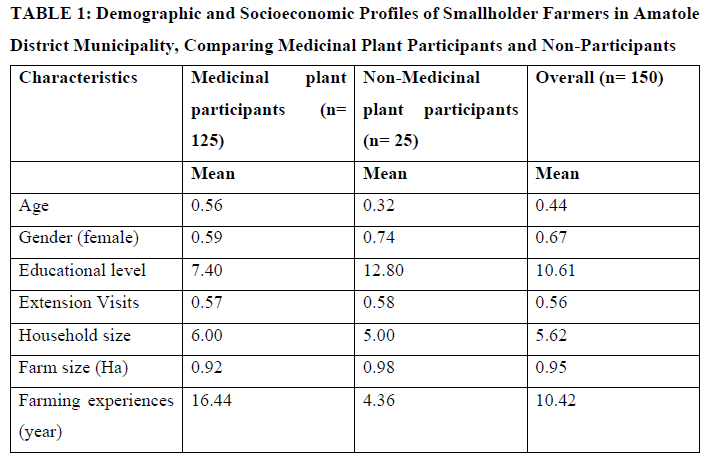
Socioeconomic characteristics of smallholder farmers in the Amatole District were used to estimate sustainable conservation strategies for indigenous medicinal plants through environmental conservation. Table 1 presents the demographic profiles of smallholder medicinal plant farmers at the research site. Approximately 125 farmers participated in medicinal plant farming, while 25 farmers admitted having information about medicinal plants but were not actively engaged in medicinal plant production, including species diversity conservation and environmental preservation.
The study results, as indicated in Table 1 above, revealed that medicinal plant farmers in the Amatole District Municipality (ADM) are predominantly female. This figure was approximately 67%, indicating that women play a central role in indigenous medicinal plant production more than male farmers. These findings align with Sumardjo's (2021) assumptions, which indicate that women play a greater role in medicinal plant cultivation, especially backyard cultivation. Smallholder farmers engaged in medicinal plant production average 44 years of age. These results indicate that most smallholder medicinal plant farmers are middle-aged women who play important roles in increasing food security, as women remain energetic and willing to enhance their productivity to improve household-level food security. Research results aligned with those of Silva et al. (2011), who reported that middle-aged women engage in more medicinal plant use activities because they possess more knowledge than younger generations and greater strength than older generations, leading to greater interest in medicinal plant production.
The findings show that the medicinal plant farmers in ADM had an average of 10 years of schooling. A decade of schooling means a person has a respectable level of literacy, understanding, and intellect to make quality decisions. Gichangi et al. (2019) reported similar results, suggesting that farmers with higher education are more likely to think more sensibly and make worthwhile contributions to their agricultural activities. The findings indicate that the number of extension visits per farmer per annum in the Amatole District Municipality was 5, focusing on production and marketing. One such component group is the provision of extension and advisory services (EAS), which form part of the knowledge and skills base of smallholder farmers of medicinal plants by providing profitable farming information. The findings of the study were in line with those of Emeana et al. (2019), who postulated that the extension system is effective when it provides useful, regular, and pertinent information to farmers, thereby making a crucial difference in the utilisation of valuable medicinal plant resources and sustainable agriculture.
The results of the study were presented through the illustration that, on average, households included 5 members and had a land area of less than 1 ha. The findings indicate that the availability of a labour force to aid smallholder medicinal plant farmers could reduce operational costs. The findings were in agreement with this study conducted by Demissie and Legesse (2013), who found that family members are involved as additional labour force in farms and other activities to earn additional income and also save substantial amounts on labour costs. The outcomes showed that farmers of medicinal plants have 11 years of experience in this farming. These results affect the farmer's decision-making ability, as experience has led to hindsight knowledge of what happened before and how the solutions were achieved. The outcomes of the study are similar to those reported by Xhoxhi et al. (2020): more experienced smallholder farmers are equipped with more effective measures to address the increased challenges and risks.
These findings directly address the first research objective by identifying the socioeconomic factors that influence participation in medicinal plant conservation and utilisation. The predominance of middle-aged, literate women farmers indicates that conservation of indigenous medicinal plants is largely driven by women's experiential knowledge, aligning with the study's title and aim of integrating traditional wisdom with ecological sustainability. The presence of frequent extension contacts and moderate educational levels provides a foundation for targeted conservation training and knowledge transfer to enhance community resilience and sustainable use.
3.1. The Benefits of Having Indigenous Medicinal Plants in Our Society
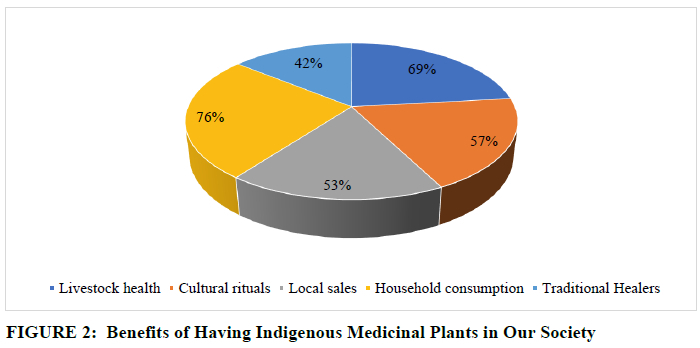
As displayed in Figure 2 above, the most significant of all the benefits that the smallholder medicinal plant producers acquired out of using the medicinal plants was the household consumption in the case of illness. About 76% of rural smallholder farmers used medicinal plants to support the well-being of their household members. This is because medicinal plants are cost-effective alternatives to purchasing manufactured medicine. Correspondingly, rural regions are located far from towns. Therefore, herbal medicine becomes the quickest alternative when family members fall ill. The study findings accorded with those of Chen et al. (2016) and Astutik et al. (2019), who found that herbal medicine is less expensive than synthetic medicine. Therefore, most rural individuals consider them.
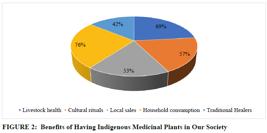
Regarding studies on the availability and benefits of indigenous medicinal plants in communities, keeping livestock healthy ranked second. This aligns with earlier findings showing that medicinal plants are commonly used by indigenous households for the treatment of livestock diseases and for health maintenance (Jayakumar et al., 2018; Hilonga et al., 2019; Wintola & Afolayan, 2015; Seile et al., 2022). Approximately 69% of rural smallholder farmers have significant advantages from using medicinal plants, as they can maintain their herds in good health. This may be because livestock ranks among the major commodities that rural smallholder farmers value as instruments for poverty reduction. Consequently, assets such as livestock and cash for medicine purchases are preserved, providing livelihoods for many smallholder farmers while enabling them to obtain nutrition and save money for other uses. The study rationale was similar to that of Jayakumar et al. (2018), who found that herbal medicine plays a significant role in rural-area livestock health and that the availability of affordable medicine enables farmers to invest in other life spheres, particularly on smallholder farms.
The ability to use medicinal plants in cultural rituals and beliefs is one advantage of medicinal plant availability in the vicinity of people who use them; approximately 57% of smallholder farmers attest to this advantage. Justification for adopting medicinal plant practices as part of rituals and beliefs might stem from the fact that culture sometimes requires specific medicinal plant use. As such, individuals might be tempted to obtain plants from distant lands to fulfil their cultural desires. Also, when the plant supply in markets is low, acquisition costs increase. Price increases demand money previously allocated for household food and nutrition. Nonetheless, smallholder farmers insisted on satisfying cultural needs. The study's findings are similar to those of Mattalia et al. (2020), who stated that religion is a key factor in persuading smallholder farmers to embrace medicinal plants. It pushes them to extremes to satisfy their needs, so they can practice their religion and acquire the plants to support their beliefs.
One advantage of indigenous medicinal plants is their availability in local markets through "Muthi" sales. Smallholder farmers in the Amatole District Municipality of the Eastern Cape confirmed they traded around medicinal plants at approximately 53%. This may be because medicinal plants are a booming market; they can be sold on street corners and do not require a start-up investment, whether you have a large one or not. Smallholder farmers therefore use medicinal plants to generate monetary income to sustainably feed their households. The findings align with those of Shah et al. (2019), who suggested that medicinal plant trade is another source of livelihood for the poor and smallholder farmers and a key source of food and nutritional security for them.
Other benefits of medicinal plants in our communities were found in their use as traditional healers by patients who consulted them. Approximately 42% of the interviewed traditional healers reported additional profit from consultations. This might be explained by the fact that traditional healers know how to navigate life spiritually and can diagnose a person's illness without resorting to trial-and-error. Hence, these assertions attracted more individuals seeking diagnoses based on divine sources of medicinal plants that they were not comfortable disclosing. The research finding aligns with that of Ambu et al. (2020), who found that the incentives traditional doctors offer to cure people are not only extremely lucrative but can also help maintain the households of people who request services from a traditional healer, as long as the healer remains alive.
The observed benefits, ranging from household healthcare to livestock health, income generation, and cultural preservation, demonstrate how medicinal plant use directly contributes to food and nutrition security, thus fulfilling the second research objective. These results show that Indigenous medicinal plant utilisation enhances household welfare and resilience by lowering healthcare costs, diversifying income, and preserving cultural identity. Hence, the findings substantiate the study's overarching aim by confirming that integrating indigenous knowledge and ecological practices strengthens both economic and environmental sustainability among smallholder communities.
3.2. Limitations Confronting Smallholder Farmers in the Use of Medicinal Plants
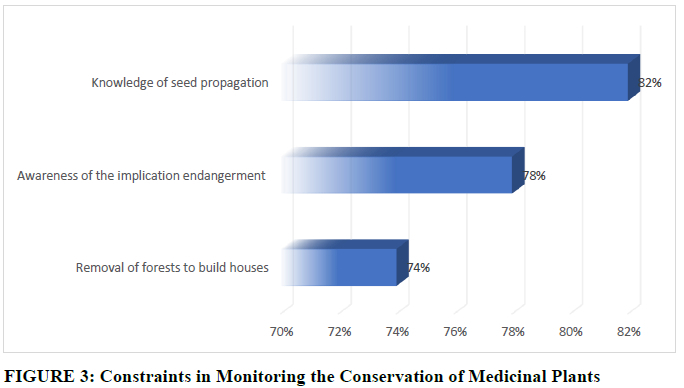
The availability of medicinal plants at the convenience of rural smallholder farmers has provided several benefits. The smallholder farmers, however, do not seem to be doing well at maintaining these medicinal plants to support future generations. Figure 3 below shows the limitations that smallholder farmers face in conserving medicinal plants.
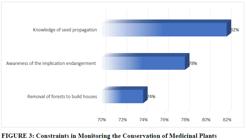
Based on the study's findings, seed propagation knowledge is one of the main constraints that smaller farmers face in preserving medicinal plants. This may be credited to the fact that the majority of ADM farmers have been in school for 10 years. Propagating seeds may be a complicated process, given that few people provide education on how to do so. Besides, medicinal plants are wild species that are not always present around people's homes, so one can always plan to preserve them. The unawareness of the implications of endangerment is also a knowledge factor that limits smallholder farmers' ability to facilitate biodiversity conservation measures (Mbelebele, 2024). About 78% of people attested to not being aware of what would happen if they were to lose medicinal plants, or to having never given it thought. This can be attributed to a lack of education or negligence, and it may leave many smallholder medicinal plant farmers in dire poverty and food and nutritional insecurity. The study aligns with that of Ssenku et al. (2022), who found that knowledge and education are primary factors limiting smallholder farmers' adoption of sustainable conservation approaches.
About 74% of rural smallholder farmers confirmed that removing forests for house construction limits their contribution to biodiversity conservation of indigenous medicinal plants. The conversion of forests, farmland, and rangeland into residential areas is common in rural regions, posing significant challenges across all agricultural sectors. The consequences can be greater for food and nutritional security when the land is so small that it is insufficient to produce enough food and medicinal plants simultaneously to maintain a sustainable way of life. The results of this study are consistent with those of Umar et al. (2020), who stated that deforestation harms the diversity of medicinal plant species, even when the intention is to protect people. Therefore, there is sufficient evidence to show that the clearance of forests for residential purposes harms rural people's livelihoods through agriculture.
These limitations highlight the systemic and knowledge-based barriers that hinder the realisation of sustainable conservation and utilisation of indigenous medicinal plants. The findings indicate that, while smallholder farmers recognise the importance of medicinal plants, insufficient knowledge of propagation and low environmental awareness constrain conservation outcomes. This addresses the research question concerning factors affecting ecological sustainability and reinforces the need for capacity-building interventions, central to the study's aim of enhancing conservation through knowledge integration and improved extension support.
3.3. Conservation Strategies for Indigenous Medicinal Plants in Rural Communities
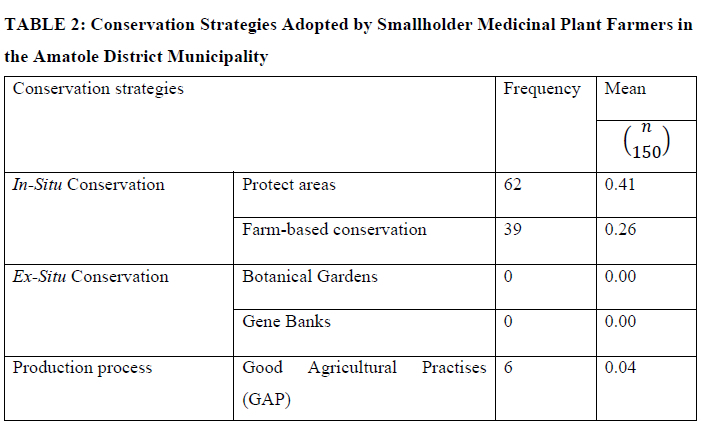
This subsection presents the conservation strategies currently adopted by smallholder farmers to protect Indigenous medicinal plants in rural communities. The analysis focuses on both in-situ and ex-situ approaches, highlighting the extent to which these methods are practised and their contribution to long-term sustainability. Table 2 summarises farmers' responses regarding the use of various conservation strategies.
The most practised conservation strategy, according to Table 2, is in situ conservation. The study includes in situ conservation areas, such as field sites and on-farm conservation. The field survey revealed that 41% of smallholder farmers practised conservation strategies within protected areas. Comparatively, the farm conservation strategy was practised by 26%, and the remaining 23% did not apply any conservation measure. This means that, since then, the conservation strategy for smallholder medicinal plant farmers has been to adopt the most conducive approach (considering the particular conservation area). The case of the Amatole District Municipality has landmarks and dongas (eroded ravines or gullies often caused by water runoff and a frequently recurring environmental issue in rural South Africa) to provide protection to areas. These erosional features can significantly affect land productivity and agricultural practices by degrading soil quality and limiting the availability of arable land.
Dongas create issues of sustainable land use, sometimes causing a decline in crop production, an increase in livestock grazing, and river pollution, in addition to marking boundaries to identify some camps and blocking pathways as a form of conservation. This is one way for people in rural settings to defend themselves against the ever-present intruders who would exploit medicinal plants not available in their lands. In addition, the results of this paper align with those of Gulasau and Mau (2021), who found that barriers, checkpoints, and landmarks also serve as effective segregation tools. Besides, it proves very effective in rural areas for shielding villages from harvesters from other villages.
Approximately 26% affirmed they preserve medicinal plants at their agricultural fields using micro-nurseries and transplanting them to their farms. One such indigenous knowledge characteristic is domestication, practised by their ancestors so that medicinal plants could serve them when needed. These findings supported the study results of Ramawat and Arora (2021), which identified that medicinal plant domestication has positive effects on biodiversity and ecological safety.
The predominance of in-situ conservation methods, such as on-farm protection and community boundary preservation, underscores the practical manifestation of indigenous ecological wisdom. However, the limited use of ex situ strategies (botanical gardens and gene banks) reveals a gap between traditional practices and scientific conservation. These findings directly address the study's aim of integrating traditional knowledge with formal ecological strategies by identifying specific areas where institutional support can complement community-based efforts to ensure long-term sustainability and biodiversity resilience.
3.4. Implications for Extension Services
The possible effects and contributions of agricultural extension services on sustainable utilisation and protection of medicinal plants. In this section, it is evident that extension services would play a critical role in helping smallholder farmers acquire essential knowledge, skills, and resources to enhance their production practices and biodiversity conservation, as well as their market competitiveness. Effective extension services can empower farmers, promote sustainable agricultural practices, and improve livelihoods by integrating medicinal plant cultivation into broader agricultural and environmental management strategies.
Targeted Educational Programs: To effectively support smallholder medicinal plant farmers in the Amatole District Municipality, targeted educational programs are essential. Given that most farmers have an average of 10 years of formal education, extension services should tailor their programs to meet this demographic's specific literacy levels and comprehension. Extension services must be designed to align with the average literacy level (12 years of formal schooling) and the comprehension capacity of smallholder medicinal-plant farmers. First, content should be delivered in simple, local languages, using visual aids (pictures, posters, demonstration plots) rather than text-heavy manuals, so that farmers with modest schooling can easily grasp key concepts (e.g., sustainable harvesting, biodiversity conservation). Second, training activities should be highly participatory, involving on-farm demonstrations, peer-learning groups, storytelling and role-play, which reinforce learning through practice and social interaction rather than only lecture-style delivery. Third, extension messages should emphasise practical economic benefits (for example: how cultivating Indigenous medicinal plants can improve income and nutrition) and integrate these with conservation messages, so farmers see immediate value. These educational initiatives should prioritise sustainable farming practices, biodiversity conservation, and the economic advantages of cultivating indigenous medicinal plants. By providing accessible, relevant information, extension services can empower farmers with the knowledge and skills needed to enhance their agricultural practices, preserve local biodiversity, and capitalise on economic opportunities in medicinal plant cultivation.
Strengthening Extension Visits: Enhancing extension visits is paramount in bolstering the knowledge and capabilities of smallholder farmers in the Amatole District Municipality. Given the pivotal role of these visits in disseminating agricultural information, ensuring their consistency and relevance is imperative. Extension services must prioritise providing valuable insights during these visits, covering essential topics such as medicinal plant farming techniques, conservation strategies, and market opportunities. By offering tailored guidance and support directly to farmers, extension services can empower them to adopt sustainable practices, conserve biodiversity, and capitalise on the economic potential of indigenous medicinal plants.
Gender-Sensitive Approaches: Recognising that women constitute around 67% of medicinal plant farmers in the study area underscores the importance of adopting gender-sensitive approaches within extension services. Empowering female farmers through specialised training and support is essential to address the challenges and opportunities they encounter in medicinal plant farming. Extension services should tailor their programs to cater to women's diverse needs and circumstances, considering factors such as access to resources, land ownership, and traditional gender roles. By promoting gender equity and inclusivity, extension services can foster women's active participation in medicinal plant cultivation, thereby enhancing both individual livelihoods and community resilience.
Collectively, these implications demonstrate how the study's results contribute to achieving its overall goal of enhancing the conservation and utilisation of Indigenous medicinal plants for community resilience. Extension programmes that build on farmers' traditional knowledge, particularly among women custodians, will bridge the gap between Indigenous conservation practices and modern ecological management. This integration ensures sustainable livelihoods, improved nutrition, and strengthened biodiversity, thereby fulfilling the study's aim and affirming the significance of Indigenous knowledge in contemporary conservation frameworks.
3.5. Implications for Food and Nutrition Security
Utilisation of Indigenous Medicinal Plants: The findings underscore the vital role of indigenous medicinal plants in bolstering food and nutrition security, particularly within rural communities. Encouraging the cultivation and consumption of these plants has immense potential to diversify diets and expand access to natural remedies. By promoting the utilisation of indigenous medicinal plants, communities can fortify their resilience against health challenges, tapping into the rich nutritional and therapeutic benefits these plants offer. This approach strengthens local food systems and empowers communities to harness traditional knowledge and resources for improved well-being and sustainability.
Livestock Health Management: The utilisation of indigenous medicinal plants to safeguard livestock health emerges as a significant boon for smallholder farmers. In light of this, extension services and agricultural authorities are pivotal in advocating for the integration of herbal remedies into livestock management protocols. By promoting the use of these natural remedies, farmers can reduce their dependence on expensive pharmaceuticals while simultaneously improving their livestock's overall health and productivity. This strategic approach mitigates financial burdens for farmers and fosters sustainable practices that align with ecological principles, contributing to the long-term resilience and prosperity of agricultural communities.
Community Seed Banks and Medicinal Plant Nurseries: Establishing community-based seed banks could be crucial for conserving indigenous medicinal plants. In these seed banks, seeds would be collected, stored, and distributed, helping safeguard plant species at risk of disappearing from their natural habitats. Local farmers could actively participate in the process, gaining access to high-quality seeds for cultivation and contributing to biodiversity protection. Another effective strategy would be to establish medicinal plant nurseries in rural areas, where native species can be cultivated and propagated under controlled conditions. These nurseries could also serve as educational hubs, teaching farmers and community members about plant identification, proper cultivation techniques, and sustainable harvesting methods. This would ensure a steady supply of medicinal plants, reducing the pressure on wild populations. Additionally, forming partnerships with botanical gardens or research institutions could support the development of ex-situ conservation programs focused on preserving indigenous plants and promoting sustainable practices. These collaborations could include training farmers in propagation techniques and equipping them with the knowledge and skills to effectively conserve and manage medicinal plants.
The introduction of ex-situ conservation activities in the ADM communities in rural regions could increase the availability of these medicinal plants, support community livelihoods, and help preserve biodiversity. Such programs would also enable local communities to acquire the means and knowledge to care for their priceless natural resources.
Economic Empowerment through Trade: The trade in medicinal plants, colloquially known as "Muthi," is a valuable avenue for economic empowerment for smallholder farmers. This trade offers an additional source of livelihood, bolstering the financial resilience of farming communities. To maximise the benefits of this trade, authorities must champion initiatives that promote fair trade practices and facilitate market access for farmers. By doing so, they can empower farmers to harness the economic potential of medicinal plants while contributing to food security at the community level. Through equitable market opportunities and supportive policies, authorities can foster a thriving trade ecosystem that uplifts rural economies and enhances the overall well-being of agricultural communities.
Cultural Preservation: Indigenous medicinal plants carry profound cultural significance, intertwined with traditional rituals and beliefs passed down through generations. These plants are not merely resources but symbols of cultural heritage, representing a profound connection to ancestral wisdom and spiritual practices. Preserving these cultural traditions is paramount, as they strengthen community cohesion and resilience in the face of modern challenges. By recognising and safeguarding these practices, communities can uphold their identity and values, ensuring the continuity of traditional plant use and conservation knowledge. Embracing cultural preservation honours the past and enriches the present, fostering a sense of belonging and collective empowerment among community members.
Lastly, extension services and agricultural policies should focus on the sustainable management and preservation of indigenous medicinal plants, as they play multifaceted roles in maintaining the environment, supporting individuals, and ensuring food and nutrition security. Increasing and improving their food security through best practices in the production of medicinal crops, as well as reducing the obstacles to smallholder farmers, will ensure greater community resilience to food insecurity and can protect priceless cultural heritage and biodiversity. By working hard to bring together traditional knowledge and modern agricultural practices, we can create a more viable and equitable future not only for people but also for the planet.
4. CONCLUSIONThe study examines the socioeconomic and conservation implications of Indigenous medicinal plant utilisation among smallholder farmers in the Amatole District Municipality of the Eastern Cape Province. A survey was conducted with 150 smallholder farmers using a structured questionnaire and multistage stratified sampling. Descriptive statistics were used for analysis. This study highlights the critical role of Indigenous knowledge in the conservation of medicinal plants and its contribution to rural community resilience, food security, and livelihood sustainability. Findings show that while smallholder farmers are aware of certain conservation strategies (such as on-farm preservation and protected areas), their adoption remains limited, and many farmers lack the technical skills or resources to implement them effectively. Traditional conservation practices by community elders exist but are often informal and insufficient to prevent overharvesting and biodiversity loss. The study demonstrates that integrating Indigenous knowledge with formal conservation strategies can enhance the sustainable utilisation of medicinal plants, providing both ecological benefits and economic incentives for smallholder farmers. The implications are twofold: first, targeted government interventions and extension services are needed to provide awareness campaigns, technical support, and practical training on sustainable conservation practices. Second, systematic documentation and transfer of Indigenous knowledge are essential to preserve local biodiversity and improve food and nutrition security. Overall, the study underscores the importance of coordinated application of traditional wisdom and ecological sustainability strategies to enhance the resilience of rural communities reliant on Indigenous medicinal plants.
No specific grant was obtained for this research by the funding agencies, either in the public or commercial (or not-for-profit) sectors.
The authors have nothing to declare regarding conflict of interest.
5. ACKNOWLEDGMENT
The authors express their gratitude to the indigenous medicinal plant farmers who assisted them and provided feedback during data collection, and to the people who came to visit. Finally, the researchers would like to acknowledge their research assistants who assisted in data collection.
REFERENCES
-
AMATOLE DISTRICT MUNICIPALITY INTEGRATED DEVELOPMENT PLAN., 2016. Available from https://www.ecsecc.org/documentrepository/informationcentre/2015-2016-idp-final-10-0615_00518.pdf
» https://www.ecsecc.org/documentrepository/informationcentre/2015-2016-idp-final-10-0615_00518.pdf - AMBU, G., CHAUDHARY, R.P., MARIOTTI, M. & CORNARA, L., 2020. Traditional uses of medicinal plants by ethnic people in the Kavrepalanchok district, Central Nepal. Plants, 9(6): 759.
- ANWAR, S., NADEEM, M.F., PERVAIZ, I., KHURSHID, U., AKMAL, N., AAMIR, K., REHMAN, M.H.U., ALMANSOUR, K., ALSHAMMARI, F., SHAIKH, M.F. & LOCATELLI, M., 2022. A comprehensive phytochemical, biological, and toxicological study of roots and aerial parts of Crotalaria burhia Buch.-Ham. Front. Plant Sci., 13: 988352.
- ASTUTIK, S., PRETZSCH, J. & KIMENGSI, J.N., 2019. Asian medicinal plants' production and utilization potentials: A review. Sustain, 11(19): 5483.
- ASTUTIK, S., PRETZSCH, J., KIMENGSI, J.N. & KAPP, G., 2023. Medicinal plants production systems in rural Indonesia: Management practices and performance insights. For. Policy Econ., 153: 102972.
- CHANDRA, H., KUMARI, P., BONTEMPI, E. & YADAV, S., 2020. Medicinal plants: Treasure trove for green synthesis of metallic nanoparticles and their biomedical applications. Biocatal. Agric. Biotechnol., 24: 101518.
- CHEN, S.L., YU, H., LUO, H.M., WU, Q., LI, C.F. & STEINMETZ, A., 2016. Conservation and sustainable use of medicinal plants: Problems, progress, and prospects. Chin. Med., 11: 1-10.
- DEMISSIE, A. & LEGESSE, B., 2013. Determinants of income diversification among rural households: The case of smallholder farmers in Fedis District, Eastern Hararghe Zone, Ethiopia. J. Dev. Agric. Econ., 5(3): 120-128.
- EMEANA, E.M., TRENCHARD, L., DEHNEN-SCHMUTZ, K. & SHAIKH, S., 2019. Evaluating the role of public agricultural extension and advisory services in promoting agroecology transition in Southeast Nigeria. Agroecol. Sustain. Food Syst., 43(2): 123-144.
- GICHANGI, A., BIRACHI, E., WAMBUA, S., KAVOI, J., KARANJA, D., MURIITHI, F. & MUTUA, M., 2019. Factors influencing smallholder farmers' input use in major bean production corridors in Kenya. J. Agric. Food Sci., 17(1): 136-147.
- GONFA, N., TULU, D., HUNDERA, K. & RAGA, D., 2020. Ethnobotanical study of medicinal plants, its utilization, and conservation by indigenous people of Gera district, Ethiopia. Cogent Food Agric., 6(1): 1852716.
- GÜLZAU, F. & MAU, S., 2021. Walls, barriers, checkpoints, landmarks, and "No-Man's Land." A quantitative typology of border control infrastructure. Hist. Soc. Res., 46(3): 23-48.
- HILONGA, S., OTIENO, J.N., GHORBANI, A., PEREUS, D., KOCYAN, A. & DE BOER, H., 2019. Trade of wild-harvested medicinal plant species in local markets of Tanzania and its implications for conservation. S. Afr. J. Bot., 122: 214-224.
- JAYAKUMAR, S., BASKARAN, N., ARUMUGAM, R., SATHISKUMAR, S. & PUGAZHENTHI, M., 2018. Herbal medicine as a live practice for treating livestock ailments by indigenous people: A case study from the Konar community of Tamil Nadu. S. Afr. J. Bot., 118: 23-32.
- MARUME, U., CHIMONYO, M. & DZAMA, K., 2013. Some insights into the reproductive performance, selection criteria, production and market constraints in communal goat production systems of South Africa. Sci. Res. Essays., 8(30): 1448-1458.
- MATTALIA, G., SÕUKAND, R., CORVO, P. & PIERONI, A., 2020. Blended divergences: Local food and medicinal plant use among Arbëreshë, Occitans, and autochthonous Calabrians living in Calabria, Southern Italy. Plant Biosyst., 154(5): 615-626.
- MBELEBELE, Z., 2024. Economic analysis of conservation and sustainable use of indigenous medicinal plants by smallholder farmers. Master's Dissertation, University of KwaZulu-Natal, RSA.
- MDODA, L. & OBI, A., 2019. Analysis of profitability of smallholder irrigated food plots in the Eastern Cape province of South Africa. J. Agribus. Rural Dev., 53(3): 225-232.
- MOFOKENG, M.M., DU PLOOY, C.P., ARAYA, H.T., AMOO, S.O., MOKGEHLE, S.N., POFU, K.M. et al., 2022. Medicinal plant cultivation for sustainable use and commercialization of high-value crops. S. Afr. J. Sci., 118(7/8): 12190.
- MUDEMBA, R., TARUVINGA, A. & ZHOU, L., 2018. An assessment of community perceptions of IK-based handicrafts in Amathole District Municipality, South Africa. Int. J. Soc. Sci. Humanit., 8(3): 82-85.
- MUJURU, N.M. & OBI, A., 2020. Effects of cultivated area on smallholder farm profits and food security in rural communities of the Eastern Cape Province of South Africa. Sustain., 12(8): 3272.
- NAGOTHU, U.S., 2023. Climate neutral and resilient farming systems: Practical solutions for climate mitigation and adaptation. Taylor & Francis.
- NDHLOVU, P.T., OMOTAYO, A.O., OTANG-MBENG, W. & AREMU, A.O., 2021. Commercialization potential of six selected medicinal plants commonly used for childhood diseases in South Africa: A review. Sustain., 14(1): 177.
- NWAFOR, I., NWAFOR, C. & MANDUNA, I., 2021. Constraints to cultivation of medicinal plants by smallholder farmers in South Africa. Horticulture, 7(12): 531.
- OBAYELU, O.A. & FADELE, I.O., 2019. Choosing a career path in agriculture: A tough calling for youths in Ibadan metropolis, Nigeria. Agric. Trop. Subtrop., 52(1): 27-37.
- PEI, Y., ZHANG, Q. & WANG, Y., 2020. Application of authentication evaluation techniques of ethnobotanical medicinal plant genus Paris: A review. Crit. Rev. Anal. Chem., 50(5): 405-423.
- RAMAWAT, K.G. & ARORA, J., 2021. Medicinal plants domestication, cultivation, improvement, and alternative technologies for the production of high value therapeutics: An overview. Med. Plants: Domestication, Biotechnol. Reg. Import., 1-29.
- SEILE, B.P., BAREETSENG, S., KOITSIWE, M.T. & AREMU, A.O., 2022. Indigenous knowledge on the uses, sustainability and conservation of African ginger (Siphonochilus aethiopicus) among two communities in Mpumalanga province, South Africa. Diversity., 14(3): 192.
- SHAH, G.M., AHMAD, F., PANWAR, S., KHADKA, M.S., ALI, A. & BISHT, S., 2019. Ocimum sanctum [Tulsi]-an alternative additional livelihood option for the poor and smallholder farmers. Sustain., 11(1): 227.
- SILVA, F.D.S., RAMOS, M.A., HANAZAKI, N. & ALBUQUERQUE, U.P., 2011. Dynamics of traditional knowledge of medicinal plants in a rural community in the Brazilian semi-arid region. Rev. Bras. Farmacogn., 21: 382-391.
- SMITH-HALL, C., LARSEN, H.O. & POULIOT, M., 2012. People, plants and health: A conceptual framework for assessing changes in medicinal plant consumption. J. Ethnobiol. Ethnomed., 8(43): 2-11.
- SSENKU, J.E., OKURUT, S.A., NAMULI, A., KUDAMBA, A., TUGUME, P., MATOVU, P., WASIGE, G., KAFEERO, H.M. & WALUSANSA, A., 2022. Medicinal plant use, conservation, and the associated traditional knowledge in rural communities in Eastern Uganda. Trop. Med. Health, 50(1): 39.
- STREET, R.A. & PRINSLOO, G., 2013. Commercially important medicinal plants of South Africa: A review. J. Chem., 2013: 1-16.
- SUMARDJO, A.F., 2021. Organic medicinal plants urban farming based on family empowerment in Bekasi, West Java. J. Hunan Univ. Nat. Sci., 47(12): 34-41.
- TALI, B.A., KHUROO, A.A., GANIE, A.H. & NAWCHOO, I.A., 2019. Diversity, distribution and traditional uses of medicinal plants in Jammu and Kashmir (J&K) State of Indian Himalayas. J. Herb. Med., 17: 100280.
- UMAR, K.Y., ABBA, H.M. & UMAR, I., 2020. Impact of medicinal plants and deforestation on communities in Wawa-Zange Forest Reserve, Gombe State, Nigeria. Dutse J. Pure Appl. Sci., 6: 102-112.
- WINTOLA, O.A. & AFOLAYAN, A.J., 2015. The antibacterial, phytochemicals and antioxidant evaluation of the root extracts of Hydnora africana Thunb. used as antidysenteric in Eastern Cape Province, South Africa. BMC Complement. Altern. Med., 15: 1-12.
- XHOXHI, O., STEFANLLARI, A., SKRELI, E. & IMAMI, D., 2020. How intermediaries' power affects contract farming decisions: Evidence from the medicinal and aromatic plant sector in Albania. J. Agribus. Dev. Emerg. Econ., 10(5): 529-544.
- ZAHRA, W., RAI, S.N., BIRLA, H., SINGH, S.S., RATHORE, A.S., DILNASHIN, H., KESWANI, C. & SINGH, S.P., 2020. Economic importance of medicinal plants in Asian countries. Bioecon. Sustain. Dev., 359-377.