Fostering Climate-Smart Sustainable Agriculture: The Case Study of Ndlangubo Village in South Africa
Abstract
Climate change (CC) poses a significant threat to food security in rural South Africa, particularly among women subsistence farmers. Climate-smart agriculture (CSA) promotes resilience and sustainability, yet its uptake in under-resourced settings remains limited. This pilot study investigates how women farmers in Ndlangubo Village, KwaZulu-Natal, perceive and implement CSA, the challenges they encounter, and the role of institutional knowledge support, such as libraries and extension officers, in facilitating adoption. Using a qualitative approach with minimal quantitative descriptive analysis, data were collectedfrom 10 women's farming groups via semi-structured questionnaires and were analysed thematically and statistically. Findings revealed that, despite limited awareness of CSA, participants practised techniques such as mulching, crop rotation, and organic fertilisation. Key challenges included limited institutional support, restricted access to information, low literacy, insufficient extension services, and limited library-supported knowledge systems. The study recommends training agricultural extension officers and librarians in CSA to cascade knowledge; ensuring programmes are culturally, linguistically, and gender sensitive; repackaging information for accessibility; and utilising digital communication tools. This study highlights the need to transform CSA policies into practical applications through localised education and institutional reinforcement, contributing to Sustainable Development Goals 1 (No Poverty), 2 (Zero Hunger), 5 (Gender Equality), and 13 (Climate Action).
Africa; Climate Change; CSA; Libraries; SDGs; Women Subsistence Farmers
1. INTRODUCTION
Climate change (CC) is a global challenge which poses a threat to food security, particularly in developing regions where agriculture is predominantly small-scale, rain-fed, and highly vulnerable to environmental shocks (FAO, 2021). The literature indicates that if CC is not adequately addressed, it can lower South Africa's gross domestic product by 1.5% by 2050 (Benhin, 2008). Antwi-Agyei et al. (2025) and the FAO (2021) reiterate that if countries do not intensify CC management, its effects could place significant strain on agricultural productivity and rural livelihoods. In response to these challenges, climate-smart agriculture (CSA) has emerged as an integrated approach to sustainably increase agricultural productivity, enhance resilience to climate risks, and reduce greenhouse gas emissions (FAO, 2021; Lipper et al., 2014). Notwithstanding CSA's global significance, its adoption across the Global South remains inconsistent, often hindered by institutional, socioeconomic, and knowledge barriers (Ogunyiola et al, 2022; Makate, 2019).
In sub-Saharan Africa, smallholder farmers are the primary producers in local food systems, yet they consistently lack access to the essential tools, information, and support mechanisms needed for effective CSA implementation (Antwi-Agyei et al., 2025; Ogunyiola et al., 2022). According to Ajani et al. (2024) and Jamba (2024), the burden falls more heavily on women farmers because they are also affected by structural constraints, including insecure land tenure, low literacy levels, limited financial inclusion, and minimal engagement with agricultural extension services. These challenges are further compounded by restricted access to climate information services (CIS), digital platforms, and institutional knowledge, which together limit their capacity to make timely, informed farming decisions. Despite their adaptive capacity and rich experiential knowledge, rural women's adoption of CSA remains informal, fragmented, and largely unrecognised within formal support systems.
Indigenous knowledge (IK) practices such as mulching, intercropping, composting, and seasonal crop rotation, which closely align with CSA principles, are already being employed by women farmers (Jamba, 2024). Nonetheless, these techniques are often undervalued, insufficiently documented, and largely excluded from policy and extension frameworks such as South Africa's national climate and development policies (DEFF, 2019) and agricultural extension services (Kubanza & Oladele, 2024). Fombad (2024) notes a significant lack of readily available online and offline climate change information from Africa, which hampers efforts to address CC challenges.
Aligning formal CSA frameworks with local experiential knowledge offers a valuable opportunity to develop robust, hybrid farming models that integrate scientific innovation with cultural relevance. Emerging research underscores the need to acknowledge and elevate IK as a critical foundation for climate adaptation, particularly in contexts where formal institutions remain weak or inaccessible (Ajani et al., 2024).
In South Africa, CSA is referenced in national climate and development policies. However, its practical implementation, particularly in marginalised rural areas, remains limited (Anukwonke & Okonkwo, 2025; DEFF, 2019). In communities such as Ndlangubo Village in KwaZulu-Natal, women continue to rely on traditional agricultural practices while facing increasing climate-related pressures and minimal institutional support (Kom et al., 2024; Morepje, 2024). Although these women are increasingly aware of changing environmental conditions, they typically lack access to structured training, climate services, or advisory networks that could support CSA implementation. Kubanza and Oladele (2024) and Zhou et al. (2022) reiterate that this lack of access to needed resources hinders the effective implementation of CSA policies in the South African agricultural sector.
Furthermore, agricultural knowledge-sharing institutions such as libraries and extension offices are either under-resourced or absent, thereby constraining information dissemination and innovation (Panda, Kaur, & Kaur, 2023). It is under this premise that Chapter Eight of the Indigenous Knowledge Systems (IKS) Policy (Department of Science and Technology, 2004) calls for the development of new model libraries in South Africa that will facilitate access to information needed by communities; promote the use of technologies that can document IK for posterity (Zimu-Biyela, 2016; Department of Science and Technology, 2004). Many studies indicate that public, community, and rural libraries can play a critical role in promoting access to information aligned with users' information needs (Boloka & Ngoepe, 2024; Stilwell, 2016). Kaddu and Haumba (2016) assert that libraries need to promote the use of information and communication technologies (ICTs) to increase agricultural production among smallholder rural farmers in Africa. Panda, Kaur, and Kaur (2023) opine that agricultural libraries can help fulfil the mandates of some Sustainable Development Goals (SDGs). Kwanya (2023) argues that libraries should be transformed into knowledge centres to facilitate the creation and sharing of the knowledge needed to solve local communities' livelihood problems.
A core problem is the misalignment between CSA policy frameworks and the availability, accessibility, and cultural appropriateness of agricultural information. For example, South Africa is known to have a strong national CSA policy but lacks an integrated, strategic, and comprehensive CSA implementation plan (Kubanza & Oladele, 2024). Without recognising and investing in IK systems and improving access to knowledge platforms, CSA efforts risk alienating the very communities they aim to support. By examining the lived experiences of women farmers in Ndlangubo, the study aims to inform more inclusive and grounded climate-adaptation strategies that align with South Africa's national development goals and the SDGs 1 (No Poverty), 2 (Zero Hunger), 5 (Gender Equality), and 13 (Climate Action).
Given the highlighted challenges, the study objectives are to:
• Establish participants' understanding of CSA principles.
• Explore institutional and contextual factors that enable or constrain CSA implementation.
• Determine the role of agricultural knowledge systems, including public libraries, extension officers, and peer networks, in facilitating CSA knowledge sharing.
The study aims to answer the following research questions:
• How do women engaged in small-scale agricultural farming understand CSA principles?
• In what ways do institutional and contextual factors enable or constrain CSA implementation?
• What roles do agricultural knowledge systems, such as public libraries, extension officers, and peer networks, play in facilitating CSA knowledge sharing?
This research makes a novel contribution to the literature by offering village-level, gender-sensitive empirical insights into CSA adoption. It highlights how marginalisation of indigenous practices and limited institutional access co-produce vulnerability in rural contexts. While CSA discourse often centres on national policy frameworks or donor-driven interventions, this study foregrounds the everyday experiences of women farmers and calls for inclusive, context-specific adaptation models that leverage existing local capacities.
2. CONCEPTUAL FRAMEWORK AND LITERATURE REVIEW
Mutengwa et al. (2023), Makate (2019) and Asfaw and Lipper (2016) agree that, amid challenging CC conditions, CSA has emerged as a strategic tool that can help smallholder farmers address CC challenges. Anchored in its three interlinked pillars, increasing productivity, enhancing resilience, and reducing emissions, CSA offers a transformative pathway to establishing sustainable, climate-resilient food systems (FAO, 2021; Lipper et al., 2014). However, despite its conceptual appeal, the implementation and uptake of CSA across Africa remain inconsistent, fragmented, and highly context-dependent, particularly for women smallholder farmers (Antwi-Agyei et al., 2025; Ogunyiola et al., 2022).
A vast body of literature identifies persistent structural and institutional constraints that disproportionately hinder women's engagement with CSA. These include limited access to land, capital, training, and extension services, which impedes their ability to participate in formal adaptation initiatives (Boudalia et al., 2024; Mnukwa et al., 2025). For instance, in South Africa, CSA is more accessible to commercial farmers than smallholder farmers (Mnkeni et al., 2019). Antwi-Agyei et al. (2025) underscore that CIS, responsive extension agents, and practical training are pivotal to CSA adoption in Africa. Muse et al. (2023) argue that institutional trust and policy visibility, particularly regarding women's involvement in CSA, are often hindered by limited outreach and poor communication. The aforementioned studies collectively reveal the gendered dimensions of CSA implementation and emphasise the need for policy frameworks to address structural inequalities and prioritise institutional support and universal access to information (Adimassu et al., 2025; Bojago & Abraham, 2023).
Beyond gender-specific disparities, institutional support mechanisms such as agricultural extension services, libraries, and non-governmental organisations (NGOs) are critical for disseminating and applying CSA knowledge (Duffy et al., 2021; Thottadi & Singh, 2024). Despite the integration of CSA into several African national policy agendas, local implementation often lags due to fragmented governance structures, under-resourced institutions, and insufficient community engagement (Kamara et al., 2024). Kamara et al. (2024) observe that the disconnect between national policy goals and local implementation infrastructure limits CSA's effectiveness, especially among rural women.
One particularly underutilised yet potentially transformative avenue for CSA knowledge dissemination is rural libraries and agricultural information systems. Although their value is increasingly recognised in policy discourse, their practical utility remains constrained by a lack of infrastructure, content, and trained personnel. Panda et al. (2023) argue that rural libraries could be repositioned as climate-knowledge hubs - accessible platforms for community education, participatory learning, and local adaptation planning. This is echoed by Ajani et al. (2024), who highlight the potential of combining libraries with digital tools and local intermediaries to democratise access to CSA knowledge, particularly for marginalised groups such as women and youth. However, these institutions often suffer from chronic underinvestment and are often absent altogether in remote communities (Njogu et al., 2024; Thottadi & Singh, 2024).
Indigenous knowledge plays an equally important yet often neglected role in advancing CSA. In Africa, rural communities, especially women, have long employed adaptive practices such as mixed cropping, organic fertilisation, and traditional water-conservation techniques that align closely with CSA objectives (Jamba, 2024). However, these practices are often excluded from mainstream development agendas, undermining their contribution to sustainable agriculture. Ogisi and Begho (2023) contend that CSA interventions that neglect IK compromise local ownership, cultural legitimacy, and long-term viability. Accordingly, enhancing IK systems offers both an entry point and a catalyst for more inclusive CSA adoption.
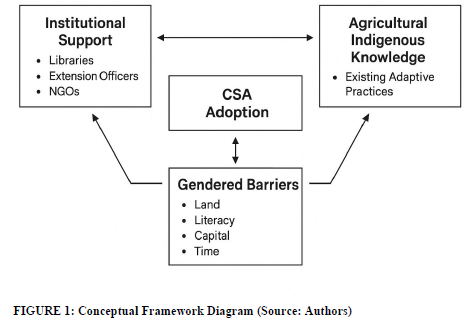
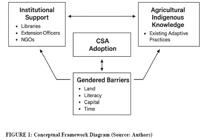
Against this backdrop, the study adopts a conceptual framework (Figure 1) that locates CSA adoption at the convergence of three interdependent domains:
• Gendered access to agricultural resources and knowledge.
• Institutional enablers and constraints (e.g., libraries, extension officers, NGOs).
• Agricultural IKS.
The need for an engendered approach in the introduction of agricultural technologies in rural areas in South Africa has been reiterated by Hart and Aliber (2010, 2012). They emphasise that this is important because most women farmers practice agriculture for household food consumption rather than for commercial farming, and they recommend a bottom-up approach to better understand local communities' agricultural needs (Hart & Aliber, 2010, 2012). Furthermore, Hart and Aliber (2012) argue that low levels of education are among the limiting factors that hinder smallholder farmers, particularly women, from accessing innovative agricultural technologies.
There is insufficient outreach to rural farmers by institutional enablers, such as government extension services (Kubanza & Oladele, 2024; Zhou et al., 2022). Boloka and Ngoepe (2024) emphasise the importance of access to information among rural communities as an enabler of rural development; hence, a lack of access to libraries, the internet, and data is a crippling factor. This is concerning as the Transformation Charter of the Library and Information Association of South Africa asserts that a public library is "an essential component of a modern democracy, an enduring agency uniquely tasked with providing opportunities for education, culture, literacy and information provision to reach all citizens free of charge" (Nkondo et al., 2014, p. 53). Boloka and Ngoepe (2024) also emphasise that information must be repackaged for rural communities so that they are not left behind in fulfilling the mandate of the SDGs and the South African National Development Plan (NDP).
The domains of agricultural indigenous knowledge (AIK), gendered barriers, and institutional support (see Figure 1) are not siloed; instead, they are tightly interwoven, collectively shaping how rural women engage with CSA practices. For example, limited institutional support, such as poorly resourced extension services or absent libraries, exacerbates existing gender disparities in access to land, finance, and training (Boudalia et al., 2024; Thottadi & Singh, 2024). This often forces women farmers to rely heavily on indigenous and informal knowledge systems, which, although effective, remain under-recognised in formal agricultural frameworks (Jamba, 2024; Modi, 2025; Vivanco, 2022)
Moreover, the marginalisation of IKS, including AIK, is both a gendered and institutional issue. Inadequately gender-responsive policies and extension approaches frequently overlook women's lived knowledge, thereby limiting the integration of AIK into CSA programming (Makate et al., 2019; Ogisi & Begho, 2023). However, when institutions acknowledge and invest in local systems, such as through community libraries, mobile extension platforms, or CSA training in indigenous languages, they can enhance women's access to adaptive strategies and build local ownership of CSA initiatives (Ajani et al., 2024; Njogu et al., 2024).
By focusing on the dynamic interplay among these factors, this framework views CSA adoption as a socially embedded, gender-sensitive, and institutionally mediated process rather than a purely technical intervention. It highlights the need to bridge formal and informal systems and address structural inequalities to ensure equitable and effective CSA outcomes at the local level (Adimassu et al., 2025; Kamara et al., 2024; Mnukwa et al., 2025).
3. METHODOLOGY
3.1. Study Area
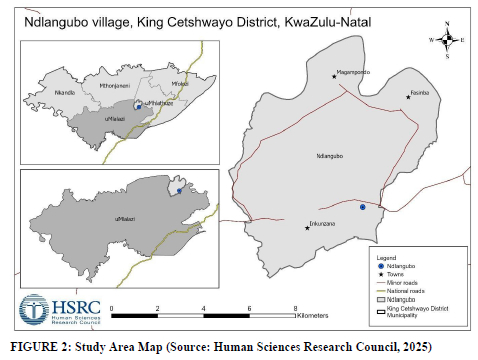
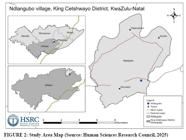
The pilot study was conducted in Ndlangubo, a small rural village located a few kilometres outside the town of Empangeni in the KwaZulu-Natal Province (see Figure 2). Ndlangubo Village is divided into eight subplaces: Bonisani, Ndlangubo, Fasimba, Enqoleni, Khabingwe, MngaMpondo, Mqadayi, and Nomyaca. Each subplace is overseen by a headman, who reports to the village chief. Administratively, the village falls under the Umlalazi Local Municipality within the King Cetshwayo District Municipality (formerly uThungulu District Municipality). Tribal authorities, including the Ndlangubo Traditional Council, predominantly govern the Umlalazi Local Municipality. Ndlangubo was purposively selected as the study site because farming plays a central role in the livelihoods of local women. In addition, the area has experienced notable climate variability in recent years, which remains under-researched.
3.2. Sampling Approach
The study employed a qualitative approach that integrates minimal quantitative descriptive analysis. The study focused on pre-identified women's groups participating in the Community Work Programmes (CWPs) under the Cooperative Governance and Traditional Affairs (CoGTA) initiative. The purpose of the CWP is to employ community members, particularly the youth; contribute to the development of public assets and services in poor communities; strengthen community development approaches; and improve the quality of life for people in marginalised economic areas by providing work experience, enhancing dignity, and promoting social and economic inclusion. This project was implemented in Ndlangubo in 2010 and focuses on four key areas: crop farming, early childhood education, health and social services, and construction.
The CoGTA work groups in the study area are identified either by codes assigned by the group supervisor or by the name of the subplace where they are located. These naming conventions were pre-determined by the specific CoGTA supervisor involved.
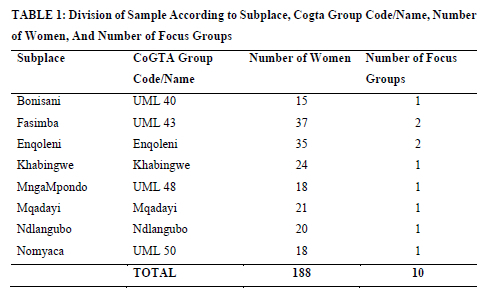
Table 1 demonstrates the linkage between the subplaces, the group codes/names on the CoGTA list, and their relationship to the focus groups. The first column indicates the subplace name, the second indicates the code or name pre-assigned to the CoGTA group, the third indicates the number of women in that group, and the last column indicates the number of focus groups formed for this study. The UML 43 and Enqoleni CoGTA groups were split into two focus groups because they each had more than 30 team members.
The study initially aimed to interview all 188 women subsistence farmers on the CoGTA list; however, some did not attend the focus group discussions (FGDs), hence 185 were finally interviewed.
Data were gathered via FGDs guided by a semi-structured questionnaire. Closed-ended items yielded comparable, numeric indicators, while open-ended prompts elicited rich, contextual insights. The questionnaire explored participants' current agricultural practices, their understanding of the CSA concept, the challenges associated with its implementation, and the role of libraries and agricultural extension officers in disseminating CSA-related knowledge. The study applied a predominantly qualitative approach, with qualitative narratives analysed separately and quantitative responses used for descriptive analysis. This approach is supported by Reichert (2022) and Krueger (2002), who describe FGDs as a fundamentally qualitative method that generates data through group discussions, typically using open-ended prompts. The data are then analysed using qualitative approaches, such as thematic analysis.
Creswell and Plano Clark (2011) and Fetters et al. (2013) explain that, if your FGD guide includes some closed-ended items (e.g., socio-demographics or quick ratings) used only for descriptive summaries (counts/percentages) to describe the sample, while the main research questions are answered via thematic analysis, the study can be classified as qualitative rather than mixed methods. This classification is justified because the quantitative component is not a standalone strand whose findings are integrated with the qualitative results to address the same phenomenon.
For this pilot study, content validity was established through consultation with subject-matter experts, who reviewed each questionnaire item. An audit trail documenting all pilot procedures, revisions, and analytical decisions further enhanced the study's reliability and enabled external review of the methodological process. To maintain an audit trail, FGDs were audio-recorded with the participants' consent. Recordings were transcribed and translated where necessary. In addition, field notes were taken to capture non-verbal cues and group dynamics. Researchers wrote down the different profiles of the pilot focus groups (CoGTA affiliated and non-affiliated), their size and how they were run (participant numbers ranged from four to 20 per group), and the rationale behind each step that was undertaken, given that discussions took place in locations such as the Chiefs Tribunal Court, under the trees, in local halls, and in school classrooms. The changes made to the discussion guide after the experts' feedback, along with how the data were handled and analysed, were all recorded.
3.3. Data Analysis
The qualitative (open-ended) data collected during the study were analysed using qualitative content analysis, a systematic approach for identifying, categorising, and interpreting patterns, codes, themes, and insights. A primarily deductive (directed) content analysis strategy was adopted, guided by a priori themes aligned with the study's research questions. The data were coded using ATLAS.ti Version 25, with labels assigned to meaningful units of text that directly related to the research objectives. These initial codes were then analysed to identify overarching themes, which were further categorised to offer a structured and comprehensive understanding of the data (Chibowa et al., 2020). Thematic grouping allowed for conceptual alignment with the study's objectives (Makamane et al., 2025). For the quantitative (closed-ended) data, descriptive statistics were conducted using IBM SPSS Statistics Version 30.
3.4. Ethical Considerations
Ethical standards were strictly followed. Before beginning our fieldwork, we first sought permission from the Ndlangubo traditional leadership to enter the village. By invitation and accompanied by a local gatekeeper, we attended a meeting of the Ndlangubo Traditional Council, where we formally obtained approval to conduct the study.
Participation in the study was strictly voluntary, and participants could ask questions or withdraw at any time. At no point were participants coerced or pressured to take part. Before commencing the discussion and interview sessions, we explained the participants' ethical rights in their mother tongue, isiZulu. The focus groups and interviews were conducted in isiZulu, and the transcripts were later translated into English.
Before participation, all participants received a clear explanation of the study's purpose and procedures and then provided written informed consent, which was also explained in detail to ensure that they understood what they were consenting to. Furthermore, participants were asked for permission to record the proceedings. Only persons who consented to participate were involved in the study. To ensure confidentiality and anonymity, codes were used to protect participants' identities.
4. RESULTS
4.1. Demographic Characteristics of the Women
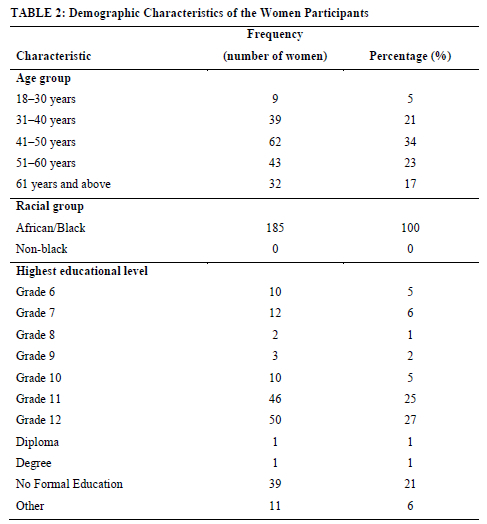
The demographic characteristics of the participants are summarised in Table 2.
This study revealed that 34% of the women participants were aged 41-50 years, 23% were aged 51-60 years, and about 5% were aged 18-30 years. Regarding the highest educational level achieved, 21% of the women reported having no formal education. Of those who had formal education, 27% attained Grade 12 (Matric certificate), while only 2% obtained a diploma or degree. About 6% of the participants reported holding other educational qualifications, including certifications in computer and security, poultry production, mechanical engineering, public management, electrical engineering, and first-aid.
4.2. Farming Profile of the Women's Groups
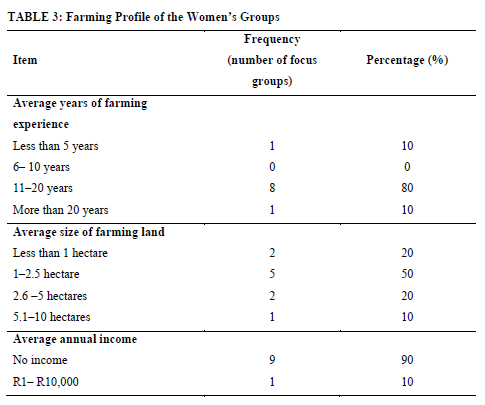
The farming profiles of the women's groups were determined by considering years of farming experience, the size of land utilised for farming, and average annual income, as shown in Table 3. The profile outlines each group's potential farming capabilities and resources, to better understand their farming outcomes and provide effective support.
The majority (80%) of the women's groups had 11-20 years of farming experience. About 50% of the women's groups utilised 1-2.5 hectares of land for farming, with only 10% utilising 5.1-10 hectares. Furthermore, the results indicated that 90% of the women's groups mainly farm for food security and have yet to generate income from the farming activities.
4.3. Current Agricultural Practices
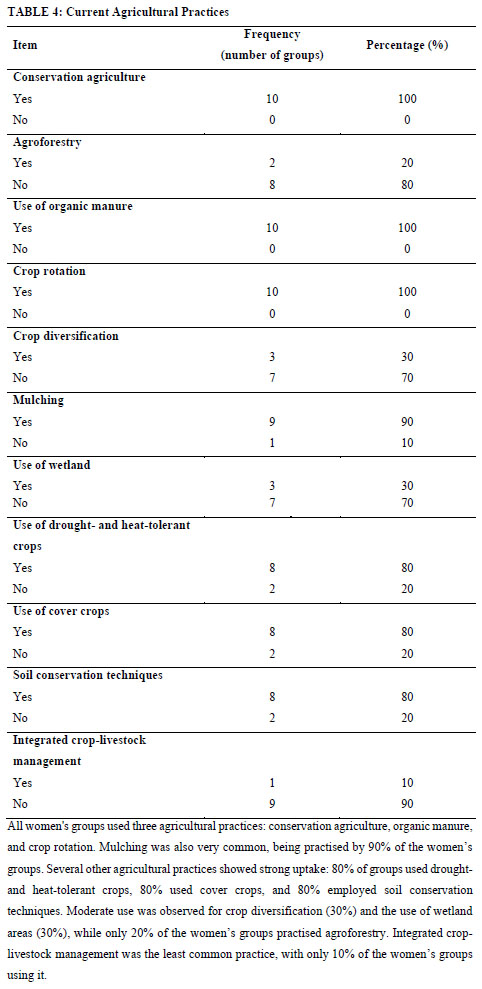
The current farming practices used by the women's groups are summarised in Table 4. This summary helped us understand the methods they were already using.
All women's groups used three agricultural practices: conservation agriculture, organic manure, and crop rotation. Mulching was also very common, being practised by 90% of the women's groups. Several other agricultural practices showed strong uptake: 80% of groups used drought-and heat-tolerant crops, 80% used cover crops, and 80% employed soil conservation techniques. Moderate use was observed for crop diversification (30%) and the use of wetland areas (30%), while only 20% of the women's groups practised agroforestry. Integrated crop-livestock management was the least common practice, with only 10% of the women's groups using it.
4.4. Assessing Women Subsistence Farmers' Understanding of CSA
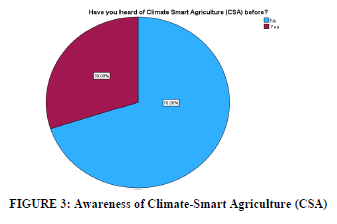
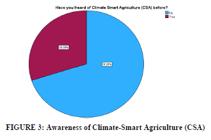
To gauge awareness and understanding of CSA among women's subsistence farmers, participants were asked whether they had ever heard of CSA. Seventy percent (70%) of respondents reported not having heard of CSA (Figure 3), suggesting minimal prior knowledge of this type of agriculture.
Although most participants had never heard of CSA, probing their views on CC revealed that a majority could articulate basic aspects of CC, such as rising temperatures, altered rainfall patterns, and increased drought frequency. Many women could pinpoint temperature increases. For example, one participant lamented: "Increase in heat in the atmosphere contributes to heavy rains."
According to the participants, CC has resulted in excessive heat and droughts. Another participant emphasised that "too much heat negatively affects crops." Several also noted that CC had resulted in flooding, disease, and environmental degradation. This suggests a practical awareness of environmental shifts due to CC, even if they are unfamiliar with CSA.
Reflecting on the effects of CC on their current farming, respondents described crop failures during dry seasons, soil erosion after heavy rains, and reduced yields. Participants described how climate change has harmed their crops. One woman lamented: "Too much rain and too much heat are bad for crops". Another reported that after heavy rains, "Flooding leads to plant crop death". One participant explained reduced productivity: "Heavy rain leads to crops not growing".
The women's vivid accounts confirm that they experience CC firsthand, even if they do not phrase their descriptions using CSA terminology.
4.5. Challenges in CSA Adoption
The participants were asked about the challenges they experience as women subsistence farmers in implementing CSA. Many highlighted a lack of external support. As one respondent bluntly stated, "The government doesn't assist us". Several participants noted the steep learning curve involved: "It is hard learning new information".
Others pointed out that, even when they understand what to do, there is no clear roadmap: "There is no guide on the way forward".
Interestingly, a few of the participants said they faced no particular challenges beyond those typical of small-scale farming. Together, these responses reveal the main challenges to implementing CSA in the village.
4.6. Institutional Knowledge Support
The respondents were asked about the institutional knowledge support provided by libraries and extension officers for sharing knowledge about CSA. All the women's groups unanimously reported that they had received no such support. Furthermore, they highlighted the difficulty of accessing libraries, as none were close to the women's homes. Participants indicated that libraries do not share information about CSA. In addition, extension officers rarely visit the area to share knowledge about CSA. These unanimous responses highlight a critical gap where formal institutions are not currently contributing to farmers' understanding of CSA. Without outreach from libraries or targeted training from extension services, women subsistence farmers rely solely on peer learning and trial-and-error to adapt their practices. Addressing this void will require deliberate efforts to train extension officers to facilitate hands-on learning in climate-resilient farming techniques and to ensure they visit areas where such learning is needed. In addition, new libraries could be built and mobile libraries deployed to provide information on CSA. School libraries in the community can also serve a dual function by making information about farming in general and CSA in particular available. Some of the women indicated that they use school grounds for farming; thus, the school libraries can serve as valuable resources for these farmers. Given that library building projects might take time, existing spaces and infrastructure could be utilised as a start.
5. DISCUSSION
Subsistence farming remains one of the primary means of food production for many women in rural settings within South Africa. This study confirms that CC challenges directly impact their means of survival. CSA has been introduced globally as a strategic response to the negative impacts of rapid CC; however, many women farmers are unaware of this form of agriculture, and those who are do not have access to the relevant technologies or resources to adopt it. Findings from a study by Muhanguzi et al. (2023) confirm that in many African countries, there are limited or no support systems to help women smallholder farmers combat CC challenges. Furthermore, evidence from Kenya, Zimbabwe, and other sub-Saharan countries shows that grassroots support for women farmers can help them to mitigate the adverse effects of CC (Muhanguzi et al, 2023).
The literature indicates that although gaining access to knowledge through libraries and engaging with information officers might help create a space for women to learn about various farming methods and adapt to changing climatic conditions, this study reveals that such access is not readily available. This study posits that libraries can play a critical role in ensuring that farmers, particularly smallholders, access timely, relevant, and actionable information to support CSA farming practices. The lack of libraries, as articulated by the respondents, is a challenge that hampers their ability to gain knowledge that could improve the success of their farming practices. Issa, Adesina, and Paul (2024) highlight the lack of collaboration among stakeholders, including government extension officers, NGOs, libraries, research institutions, and farmer organisations, as a limiting factor in implementing CSA policies needed for agricultural development.
We argue that re-centring indigenous farming systems and blending them with CSA can serve as an effective entry point for addressing challenges currently faced by women farmers in rural areas such as Ndlangubo. Leveraging and supporting the current systems that women farmers use might be helpful in the short term, while broader, long-term solutions are sought. According to the Food and Agriculture Organisation (FAO, 2013), CSA aims to "sustainably increase agricultural productivity and incomes, adapt and build resilience to CC, and reduce and/or remove greenhouse gas emissions where possible". However, several factors make it challenging for CSA to be adopted by farmers in the study site, Ndlangubo. Chisita (2011) notes that poverty in African rural areas severely limits farmers' -particularly women's -decision-making capacity, ultimately affecting their productivity and resilience. As agriculture becomes increasingly data-driven, access to reliable, relevant information is a challenge for many women farmers; yet, this information is as critical to success as access to seeds or fertilisers. Chisita's (2011) assertion is noteworthy in the context of our study, as the women highlighted that a lack of access to resources for their farming activities directly contributes to limited productivity. A multi-stakeholder approach is thus needed to address the challenges confronting women farmers.
Previous studies have found that age, education, farm size, and farm ownership affect whether smallholder farmers can successfully adopt CSA (Chandra et al., 2017; Westermann et al., 2018). This aligns with the results of our study, as most participants were older women working communally on small farms and had limited access to the technological tools necessary to adopt CSA.
Climate-smart agriculture offers a pathway for building resilient, sustainable food systems in the face of CC. However, the success of this approach depends heavily on farmers' access to accurate and timely information. To this end, access to information through libraries would empower women farmers and ensure that they are resourced with valuable farming knowledge. In this way, libraries can serve as critical conduits for agricultural knowledge, supporting farmers to make informed, climate-resilient decisions. Using libraries as access points to disseminate information about CSA can improve farming techniques and support the livelihoods of farmers not only in Ndlangubo but also across the globe. Critical enablers in promoting AIK and CSA integration to increase agricultural food production and mitigate CC challenges include libraries (public, community, rural, and agricultural), ICTs, community radio, government extension officers, NGOs, and farming organisations. By bridging identified knowledge gaps, these enablers can facilitate the realisation of the 2030 Agenda for Sustainable Development among smallholder farmers.
6. CONCLUSIONS AND RECOMMENDATIONS
This study examined how women subsistence farmers in Ndlangubo Village understand and engage with CSA, and how institutional support, or its lack, shapes their ability to adopt sustainable agricultural practices. Although many participants were unfamiliar with the formal concept of CSA, they were already applying several CSA techniques, such as mulching, crop rotation, and using organic manure. However, these efforts were often constrained by systemic challenges, including low literacy levels, limited access to farming implements, limited extension services, and the absence of accessible agricultural information systems such as libraries.
Therefore, it is recommended that local agricultural knowledge aligned with CSA practices be invigorated to help strengthen climate and agricultural production resilience in the village. Agricultural extension officers and librarians in public and school libraries can be trained in CSA knowledge and how to cascade it to the local farmers. In addition, they can be trained on how to repackage CSA-related information to align with local farmers' information needs. CSA-related information must be repackaged in formats and languages accessible to local smallholder farmers, particularly women, whom the system has long marginalised. These approaches are important for strengthening climate resilience and addressing food insecurity. Such initiatives will also help realise SDGs 1 (No Poverty), 2 (Zero Hunger), 5 (Gender Equality), and 13 (Climate Action).
Future research should focus on the effectiveness of libraries, including mobile libraries and digital tools (such as WhatsApp and community radio), in disseminating CSA information to women farmers in remote areas. Additionally, studies should investigate how integrated CSA-AIK models impact productivity, climate resilience, and food security over time. Finally, longitudinal research is needed on the institutional responsiveness and scalability of CSA interventions in traditional governance systems. Further longitudinal studies are needed to investigate how CSA policies can be transformed into practical applications through localised education and institutional reinforcement. This is critical to fulfilling the mandate of the South African NDP 2030, particularly concerning the empowerment of rural women, and the UN 2030 Agenda for Sustainable Development, with a specific focus on poverty eradication, gender equality, and climate action.
7. ACKNOWLEDGEMENTS
The authors express their appreciation to the Ndlangubo community for participating in this pilot study. Without their willingness to participate, this paper would not have been possible. In addition, the authors wish to acknowledge the University of South Africa (UNISA), College of Human Science (CHS) Research Office for funding this multidisciplinary project that aims to advance research and scholarly publishing skills for women and young emerging scholars. Acknowledgement is further extended to the language editor (Ms Esley van der Berg), as well as the editors and reviewers of the South African Journal of Agricultural Extension (SAJAE) for their invaluable assistance in reviewing this manuscript. Their expertise, insightful feedback and meticulous attention to detail have significantly contributed to the enhancement and refinement of this study.
REFERENCES
- ADFMASSU, Z., TIBEBE, D., TAMENE, L. & ABERA, W., 2025. Evaluating the effects of climate-smart agricultural (CSA) practices on productivity, adaptation, and mitigation indicators in Ethiopia: A meta-analysis approach. Heliyon., 11(4): 1-16.
- AJANI, A.O., AJANI, E.N. & ESIBEY, E., 2024. Enhancing rural libraries through digital integration: A tool for gender-inclusive CSA education in West Africa. Inf. Dev., 40(1): 34-45.
- ANTWI-AGYEI, P., BAFFOUR-ATA, F., ALHASSAN, J., KPENEKUU, F. & DOUGILL, A.J., 2025. Understanding the barriers and knowledge gaps to climate-smart agriculture and climate information services: A multi-stakeholder analysis of smallholder farmers' uptake in Ghana. Clim. Serv., 35(1): 1-11.
- ANUKWONKE, C. & OKONKWO, A., 2025. Leveraging climate-smart agriculture and indigenous knowledge for sustainable food security in sub-Saharan Africa: Policy and practice insights. FESCONConf. Proc., 5(1): 277-293.
- ASFAW, S. & LIPPER, L., 2016. Managing climate risk using climate-smart agriculture. FAO Technical Report. Rome: FAO.
- BENHIN, J.K.A., 2008. South African crop farming and climate change: An economic assessment of impacts. Glob. Environ. Change, 18(4): 666-678.
- BOJAGO, E. & ABRAHAM, Y., 2023. Small-scale irrigation (SSI) farming as a climate-smart agriculture (CSA) practice and its influence on livelihood improvement in Offa District, Southern Ethiopia. J. Agric. Food Res., 12(1): 1-14.
- BOLOKA, M.J. & NGOEPE, M., 2024. Leaving no one behind: Information (re)packaging for rural dwellers in South Africa. Inf. Dev., 42(2): 588-600.
- BOUDALIA, S., DAWIT TEWELDEBIRHAN, M., ARIOM, T.O., DIOUF, N.S., NAMBEYE, E., MWATITHA GONDWE, T., MBO'O-TCHOUAWOU, M., OKOTH, S.A. & HUYER, S., 2024. Gendered gaps in the adoption of climate-smart agriculture in Africa and how to overcome them. Sustain., 16(13): 1-18.
- CHANDRA, A., MCNAMARA, K.E. & DARGUSCH, P., 2017. Climate-smart agriculture: Perspectives and framings. Clim. Policy, 17(2): 192-209.
- CHIBOWA, T.K., SYNNEVÅG, G., MAONGA, B. & MAINJE, M., 2020. Gender differentiation in the adoption of climate-smart agriculture technologies and level of adaptive capacity to climate change in Malawi. In B.R. Singh, A. Safalaoh & N.A. Amuri (eds.), Climate impacts on agricultural and natural resource sustainability in Africa. Springer, pp. 507-526.
- CHISITA, C.T., 2011. Role of libraries in promoting the dissemination and documentation of indigenous agricultural information: Case study of Zimbabwe. Paper presented at the 77th IFLA Conference on information systems for indigenous knowledge in agriculture, San Juan, Puerto Rico, 13-18 August.
- CRESWELL, J.W. & PLANO CLARK, V.L., 2011. Designing and conducting mixed methods research (2nd edn.). Sage Publications.
- DEPARTMENT OF ENVIRONMENT, FORESTRY AND FISHERIES (DEFF)., 2019. South Africa's climate change adaptation strategy. Pretoria: DEFF.
- DEPARTMENT OF SCIENCE AND TECHNOLOGY (DST)., 2004. Indigenous knowledge systems policy. Pretoria: DST.
- DUFFY, C., TOTH, G., CULLINAN, J., MURRAY, U. & SPILLANE, C., 2021. Climate-smart agriculture extension: Gender disparities in agroforestry knowledge acquisition. Clim. Dev., 13(1): 21-33.
- FETTERS, M.D., CURRY, L.A. & CRESWELL, J.W., 2013. Achieving integration in mixed methods designs - principles and practices. Health Serv. Res., 48(6 Pt 2): 2134-2156.
- FOMBAD, M.C., 2024. Knowledge management for climate change in South Africa: A proposed strategy. IFLA J., 50(2): 292-309.
- FOOD AND AGRICULTURE ORGANIZATION (FAO)., 2013. Climate-smart agriculture sourcebook. Rome: FAO.
- FOOD AND AGRICULTURE ORGANIZATION (FAO)., 2021. Climate-smart agriculture. Rome: FAO.
- HART, T. & ALIBER, M., 2010. The need for an engendered approach to agricultural technology. Agenda., 24(84): 75-90.
-
HART, T. & ALIBER, M., 2012. Inequalities in agricultural support for women in South Africa. Human Sciences Research Council Policy Brief. Available from http://hdl.handle.net/20.500.11910/3235
» http://hdl.handle.net/20.500.11910/3235 - HUMAN SCIENCES RESEARCH COUNCIL (HSRC)., 2025. Study area map (Ndlangubo).
- ISSA, F.O., ONAGWA, G.I., ADESINA, M.A. & PAUL, R.O., 2024. Integrating climate-smart practices into agricultural extension and advisory services policy in Africa: A qualitative analysis. Niger. J. Agric. Ext., 24: 17-27.
- JAMBA, T., 2024. Indigenous climate adaptation practices among rural women farmers in Southern Africa. J. Agric. Ext. Rural Dev., 16(2): 87-98.
- KADDU, S. & HAUMBA, E.N., 2016. Promoting ICT-based agricultural knowledge management for increased production by smallholder rural farmers in Uganda: A case of Communication and Information Technology for Agriculture and Rural Development (CITARD), Butaleja. In Proceedings of the 22nd Standing Conference of Eastern, Central and Southern Africa Library and Information Associations (SCECSAL XXII), Butaleja, pp. 243-252.
- KAMARA, B., NYANG, S. & OBENG, B., 2024. Disconnect between CSA policy and practice: Evidence from rural women farmers in Sierra Leone. Clim. Dev., 16(3): 245-259.
- KOM, Z., NICOLAU, M.D. & NENWIINI, S.C., 2024. The use of indigenous knowledge systems practices to enhance food security in Vhembe District, South Africa. Agric. Res., 13(3): 599-612.
-
KRUEGER, R.A., 2002. Designing and conducting focus group interviews. University of Minnesota. Available from https://www.eiu.edu/ihec/Krueger-FocusGroupInterviews.pdf
» https://www.eiu.edu/ihec/Krueger-FocusGroupInterviews.pdf - KUBANZA, N.S. & OLADELE, O.J., 2024. Climate-smart agricultural policy in sub-Saharan Africa: A case study of Ngaka Modiri Molema District Municipality of North West Province, South Africa. Local Environ., 29(12): 1579-1593.
- KWANYA, T., 2023. From collections to connections: Transforming libraries to knowledge centres. In M.C. Fombad, C.T. Chisita, O.B. Onyancha and M.K. Minishi-Majanja (eds.), Information services for a sustainable society: Current developments in an era of information disorder. De Gruyter, pp. 320-341.
- LIPPER, L., THORNTON, P., CAMPBELL, B.M., BAEDEKER, T., BRAIMOH, A., BWALYA, M. & HOTTLE, R., 2014. Climate-smart agriculture for food security. Nat. Clim. Change., 4(12): 1068-1072.
- MAKAMANE, A., LOKI, O., SWANEPOEL, Z., ZENDA, M. & VAN NIEKERK, J., 2025. Farmers' perceptions on the capacity of extension practitioners on climate change in the Eastern Cape Province of South Africa. Front. Clim., 7(1): 1-12.
- MAKATE, C., 2019. Effective scaling of climate-smart agriculture innovations in African smallholder agriculture: A review of approaches, policy and institutional strategy needs. Environ. Sci. Policy., 96(1): 37-51.
- MAKATE, C., WANG, R., MAKATE, M. & MANGO, N., 2019. Farm household typology and adoption of climate-smart agriculture practices in southern Africa. Sustain., 11(6): 1 -21.
- MNKENI, P.N.S., MUTENGWA, C.S., CHIDUZA, C., ALIBER, M., BEYENE, ST., ARAYA, T., MNKENI, A.P., EIASU, B., NGARAVA, S. & HADEBE, T., 2019. Actionable guidelines for the implementation of climate-smart agriculture in South Africa. Volume 1: Situation analysis. A report compiled for the Department of Environment, Forestry and Fisheries, South Africa.
- MNUKWA, M.L., MDODA, L. & MUDHARA, M., 2025. Assessing the adoption and impact of climate-smart agricultural practices on smallholder maize farmers' livelihoods in sub-Saharan Africa: A systematic review. Front. Sustain. Food Syst., 9(1): 1-22.
- MODI, A.T., 2025. Potential nexus of science, technology and indigenous knowledge for teaching agricultural science: A theoretical proposal. In: M.C. Kgari-Masondo (ed.), Indigenous teaching disciplines and perspectives for higher education. IGI Global, pp. 1-24.
- MOREPJE, M.T., 2024. Redesigning production systems for water-use efficiency amongst smallholder farmers at Numbi, South Africa. Master's thesis, University of Mpumalanga.
- MUHANGUZI, F.K., BOONABAANA, B., SANYA, L.N., KAVUMA, S.N., KYOMUHENDO, G.B., LUDGATE, N. & MEINZEN-DICK, L., 2023. The meanings of resilience in climate justice: Women smallholder farmers' responses to agricultural shocks in Uganda under the spotlight. Agenda., 37(3): 106-123.
- MUSE, A.M., WASSIE, S.B., YIMER, F. & WORDOFA, M.G., 2023. Smallholder farmers' willingness to pay for a single and combined use of climate-smart agriculture technologies in Ethiopia. Clim. Dev., 16(8): 672-682.
- MUTENGWA, C.S., MNKENI, P. & KONDWAKWENDA, A., 2023. Climate-smart agriculture and food security in Southern Africa: A review of the vulnerability of smallholder agriculture and food security to climate change. Sustain., 15(4): 2882.
- NJOGU, J.W., KARUKU, G., BUSIENEI, J. & GATHIAKA, J.K., 2024. Assessing determinants of scaling up pathways for adopted CSA practices: Evidence from climate-smart villages in Nyando Basin, Kenya. Cogent Food Agric., 10(1): 1-21.
- NKONDO, M., BROWN, A., DICK, A., HART, G., MOLAWA, S., NASSIMBENI, M., SELETI, Y. & TEFFO, L.J., 2014. The Library and Information Services (LIS) Transformation Charter. Pretoria: Department of Arts and Culture (DAC) & National Council for Library and Information Services (NCLIS).
- OGISI, O.D. & BEGHO, T., 2023. Adoption of climate-smart agricultural practices in sub-Saharan Africa: A review of the progress, barriers, gender differences, and recommendations. Farming Syst., 3: 1-8.
- OGUNYIOLA, A., ADEDIRAN, A. & IWUCHUKWU, J., 2022. The role of local knowledge in the adoption of CSA in Nigeria. J. Rural Community Dev., 17(1): 15-30.
-
PANDA, S., KAUR, P. & KAUR, N., 2023. Role of agriculture libraries in advancing sustainable development goals: A study from an Indian perspective. Available from https://www.researchgate.net/publication/374763215_Role_of_Agriculture_Libraries_in_Advancing_Sustainable_Development_Goals_A_Study_in_Indian_Perspective
» https://www.researchgate.net/publication/374763215_Role_of_Agriculture_Libraries_in_Advancing_Sustainable_Development_Goals_A_Study_in_Indian_Perspective -
REICHERT, J., 2022. A guide to conducting focus groups. Illinois Criminal Justice Information Authority. Available from https://hdl.handle.net/20.500.11990/10233.
» https://hdl.handle.net/20.500.11990/10233 - STILWELL, C., 2016. Public libraries and social inclusion: An update from South Africa. In U. Gorham, N.G. Taylor & P.T. Jaeger (eds.), Perspectives on libraries as institutions of human rights and social justice. Emerald Group Publishing, pp.119-146.
- THOTTADI, B.P. & SINGH, S.P., 2024. Climate-smart agriculture (CSA) adaptation, adaptation determinants and extension services synergies: A systematic review. Mitig. Adapt. Strateg. Glob. Change., 29(3): 1-29.
- VIVANCO, M.F., 2022. Neglected how? Neocolonial discourses and practices in the production of Andean crops and knowledges. Doctoral dissertation, Pennsylvania State University.
- WESTERMANN, O., FÖRCH, W., THORNTON, P., KÖRNER, J., CRAMER, L. & CAMPBELL, B., 2018. Scaling up agricultural interventions: Case studies of climate-smart agriculture. Agric. Syst., 165: 283-293.
- ZHOU, L., KORI, D.S., SIBANDA, M. & NHUNDU, K., 2022. An analysis of the differences in vulnerability to climate change: A review of rural and urban areas in South Africa. Climate., 10(8): 118.
- ZIMU-BIYELA, A.N., 2016. The management and preservation of indigenous knowledge in Ndlangubo Village in KwaZulu-Natal, South Africa. Doctoral thesis, University of South Africa.