Preparing papers for the South African Journal of Agricultural Extension
Abstract
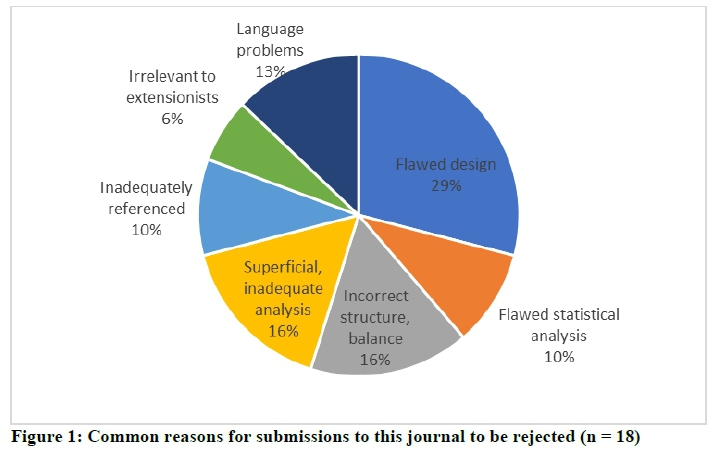
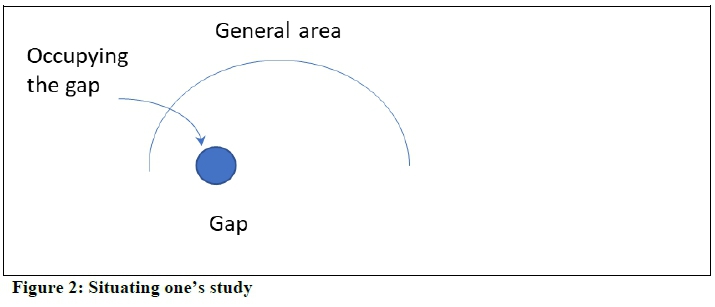
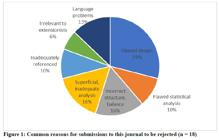
Successful journal submissions follow a predictable format and vary in length of between 5000 and 6500 words, including references. Formulating well-defined, tight research questions that contribute to an open aspect of the extension literature is essentialfor success. A good question makes it easier to identify appropriate analytical techniques and provide a logical structure to the results section. The most frequently encountered problems with unsuccessful submissions to this journal are the absence of a clear question, flawed research design, papers that are too short and present only a superficial inadequate analysis of descriptive statistics and papers that are front-heavy with an underweight disappointing results section. These problems are easily corrected by closely adhering to academic writing conventions and good research design, which explains why experienced authors have a better chance of success than novices.
Academic writing conventions; Improved acceptance rates; Preparing papers; Reasons for rejection; Extension
 Thumbnail
 Thumbnail
 Thumbnail
 Thumbnail