Exploring Communal Cattle Farmers' Perceptions Regarding Disease Challenges and Extension Services in Wildlife-Livestock Interface Areas of the Zambezi Region, Namibia
Abstract
Diseases are among the major factors limiting livestock productivity in many African pastoral systems. This study examined communal farmers' perceptions of cattle health challenges and of veterinary extension services in the Kabbe area of the Zambezi Region, Namibia. Semi-structured questionnaires were administered to randomly selected communal cattle farmers in villages (n = 73) and key informants (n = 3). Most cattle farmers (61.6%, n = 45) sought veterinary intervention for diseased cattle, but the veterinary services were 'inaccessible' (68.5%, n = 50). Approximately 88.9% (40/45) of the farmers sought help only for emergency cases. The top five conditions reported by farmers in the dry and wet seasons were wounds, fractures, anthrax, abscesses, and lumpy skin disease (LSD), in descending order. The farmers highlighted a multiplicity of other disease conditions associated with both seasons. Treatment of cattle relied on oxytetracycline (57.5%, n = 42) and ivermectin (66.7%, n = 30) preparations, while the vaccination rate was low (12.3%, n = 9). The wildlife-cattle interface was implicated as a major factor contributing to high disease incidence in cattle (49.3%, n = 36). Cattle diseases decreased income from cattle sales (94.5%, n = 69), money for school fees (78.1%, n = 57), household milk consumption (75.3%, n = 55), and increased veterinary treatment expenses (74.0%, n = 54). The annual investment in herd disease control was relatively low (US$55-US$550). The majority of the disease conditions emphasised by farmers can be managed through an effective primary healthcare system. Therefore, establishing a community-based animal healthcare system is recommended to bring veterinary extension services and knowledge closer to communities, thereby improving animal health and livelihoods.
Communal Farmers; Disease Challenges; Veterinary Services; Wildlife-Livestock Interface
1. INTRODUCTION
Livestock production is the most important part of Namibia's agriculture sector and a crucial component of the Namibian economy. It is the main livelihood source for rural communities, with approximately 70% of the population dependent on animal production (Teweldemedhin & Kafidi, 2009; Oladele et al., 2013). Cattle are the major livestock species in Namibia's northern regions, where they are reared under a communal pastoral system for subsistence purposes (GIZ, 2022). Despite sharing grazing land, the communal production system comprises the majority of the cattle population (63%, 1.7 million) in the country (MeatCo, 2021). Cattle fulfil multiple roles by sustaining livelihoods in rural and urban areas through poverty alleviation, food security, income, and social and cultural well-being (Baumgartner & Belevi, 2001; Thornton, 2002). Therefore, when diseases affect herds, the health and welfare of farmers and the community are jeopardised (Hegde, 2019).
Sustained animal health is crucial to the livelihoods of families relying on animal husbandry (Perry & Grace, 2009). Namibian communal pastoralists face several challenges that prevent them from deriving the maximum benefit from their cattle. Cattle diseases and parasites are the major factors limiting cattle productivity, particularly at the wildlife-livestock interface (Alcock & Geraci, 2020), such as in the Zambezi region. They are a barrier to the participation of communal cattle farmers in the lucrative internal and export beef markets (Reuters, 2020). In the Zambezi region, infectious diseases such as foot-and-mouth disease (FMD), contagious bovine pleuropneumonia (CBPP), anthrax, and tickborne diseases have the potential to cause substantial economic losses (Noden & van Schalkwyk, 2016). In other interface areas in Africa, the most important animal diseases identified were foot-and-mouth disease, Rift Valley fever (RVF), brucellosis, malignant catarrhal fever (MCF), bovine tuberculosis (bTB), anthrax, and parasitic infections (Karmacharya et al, 2024).
The consequences of livestock diseases include reduced productivity, high mortality rates (Moyo et al., 2020), lower quantities and quality of market outputs, increased preventive, treatment, and control costs, and risks to human health (Pradere, 2014; Rinchen et al., 2019). Acute animal disease outbreaks constitute livelihood shocks (Wagstaff & Lindelow, 2010), while chronic or subclinical diseases steadily reduce animal productivity and profitability (Randolph, 2007). Cattle diseases at the interface cause morbidity and mortality, which reduce food security and increase zoonotic disease and economic burden.
In other regions of Africa, limited access to veterinary support and veterinary medicines has been reported to hamper cattle health and productivity (Mbati et al., 2005) and to exacerbate the impact of disease outbreaks (Ndeva, 2019). Previous studies in Namibia also documented poor and inconsistent access to veterinary services and medicines among communal cattle farmers (Gido et al., 2015; Madzingira & Sikabongo, 2020). In particular, government veterinary assistance to communal farmers is generally less effective in many regions worldwide because veterinarians and animal health professionals are not in regular contact with farmers (Bahta et al., 2016). According to Niyas et al. (2015), cattle production in the subtropics is also hampered by climatic and nutritional stress, insufficient access to land and water, limited market channels, poor rangeland management, and limited feed resources.
The hot, wet climate, seasonal flooding, and wildlife-livestock interface areas in the Zambezi region create ideal conditions for the survival and transmission of vectors, parasites, and animal pathogens. In this region, cattle mingle directly or indirectly with wildlife reservoirs of pathogens, such as buffalo. As a result, cross-transmission of infections is inevitable at grazing and watering points. The death of 585 cattle in the interface area (Kabbe North and South) from unspecified causes in 2023 prompted us to investigate farmers' perspectives on cattle diseases and their impacts on livelihoods. Experience has shown that disease occurrence can only be reduced if local drivers of disease, livelihood situations, disease spectra, and farmers' situated knowledge are understood (Chenais & Fischer, 2018; Tasker, 2020). We therefore carried out this study to obtain farmers' perceptions and prioritisation of animal health challenges as a preliminary to a bigger investigation of diseases affecting cattle at the wildlife-livestock interface.
2. MATERIALS AND METHODS
2.1. Description of the Study Area
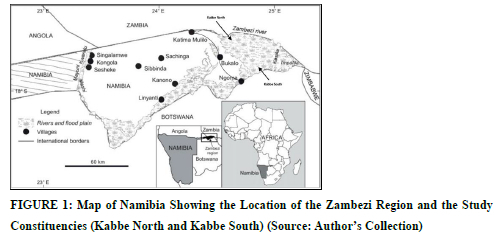
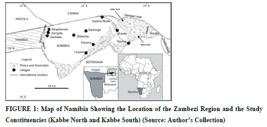
The study was conducted in the Kabbe North and Kabbe South constituencies (Kabbe) (Figure 1), which are located about 72km from Katima Mulilo town in the Zambezi region of Namibia (Figure 1). Kabbe is located in the Kavango-Zambezi Transfrontier Conservation Area (KAZA-TFCA), a wildlife conservation area that extends across Angola, Zambia, Botswana, and Zimbabwe. In the KAZA-TFCA, wild animals roam freely across international borders. A greater part of the Kabbe area is enclosed by two of the country's major perennial rivers, the Zambezi and Chobe Rivers. Kabbe comprises several villages with limited road infrastructure due to perennial seasonal floods. Kabbe North and Kabbe South have estimated populations of 12,253 and 11,345 inhabitants, respectively. In this rural setting, farmers engage in agropastoral farming as a primary source of livelihood, with cattle as the major livestock species. In the flood plains of Kabbe, cattle frequently mingle with and share grazing with wild animals such as buffalo, zebra, elephants, wildebeest, and other antelopes.
2.2. Study Design
This cross-sectional survey was conducted between July and September 2024 in Kabbe North and South constituencies using a piloted semi-structured questionnaire. The study areas were selected purposively based on the presence of wildlife-livestock interface areas and a communal pastoral cattle-rearing system. Therefore, the two study areas were taken as a homogeneous entity. We used two-stage sampling to select villages for the study in each constituency and to select cattle owners for interviews from each village. Questionnaire-based interviews were conducted in the villages, with farmers selected by systematic random sampling in the two constituencies. The criteria for participation were that respondents lived in the selected villages, were over 18 years old, and owned cattle. Three key informants (two veterinarians and one health technician) associated with the study areas were interviewed to obtain their perspectives on animal health challenges, their impact on farmers' livelihoods, and the current animal health support services provided to farmers.
2.3. Sample Size
The sample size required for the study was calculated by using the Yamane (1967) formula
 , where n = sample size; N = population size (23598); e2 = margin of error (0.1), to determine a sample size of 100.
2.4. Data Collection Procedure
This quantitative study was designed to collect contextual data on cattle health challenges and their impact on respondents' livelihoods. Survey questionnaires were the primary data collection tool for this study. They were administered to respondents through face-to-face interviews and self-administered responses via email or WhatsApp. Using the names and contact details of farmers obtained from the state veterinary office, we electronically dispatched some questionnaires for responses via email and WhatsApp. Prior permission and informed consent were obtained from the headman and respondents, respectively, before proceeding with the interviews. For face-to-face interviews, verbal consent was obtained before the questionnaire was completed. For self-administered questionnaires, written consent was obtained. Responses were anonymised. Only respondents aged 18 and above, of any gender, who owned cattle were included in the study. The team visited each selected village once to administer the semi-structured questionnaire to selected cattle farmers. The questionnaire to communal cattle farmers comprised Section A on sociodemographic information; Section B on livestock ownership and management; Section C on animal health challenges; Section D on socioeconomic impacts; and Section E on veterinary services and medicines. Key informant interviews were performed using a questionnaire designed to gather information on animal health challenges (Section A), prevalent diseases (Section B), veterinary services (Section C), extension and support services (Section D), and recommendations (Section E).
2.5. Data Analysis
The questionnaire responses were captured and analysed in SPSS® version 24 (IBM Corp, 2012). Descriptive and analytic statistics were computed. Descriptive statistics were used to se the main features of the collected data. Summary statistics, including means and standard deviations (SD) for continuous variables and frequencies and proportions for categorical variables, were calculated. We compared the proportion of farmers identifying a disease/condition between the rainy and dry seasons using the z-test (Epitools, 2026). In all cases, p < 0.05 was considered statistically significant.
2.6. Ethical Considerations
Ethical approval was obtained from the University of Namibia's Research Ethics Committee. Approvals were also obtained from the headman of each area before the project started, and informed consent was obtained from each respondent before they participated in the survey. Cattle owners were informed that they could withdraw from the interviews without any consequences.
3. RESULTS AND DISCUSSION
3.1. Sociodemographic Profile of Respondents
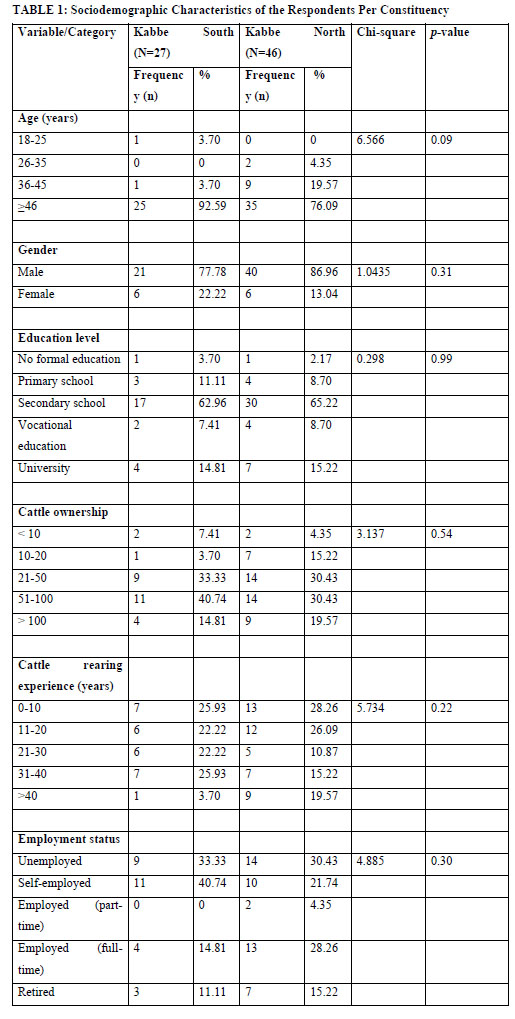
In total, 73 responses were obtained from cattle farmers in the Kabbe South (37%, n = 27) and Kabbe North (63%, n = 46) constituencies (Table 1). The majority of respondents were male (83.6%, n = 61), aged > 46 years (82.2%, n = 60), and educated to secondary level (64.4%, n = 47). This aligns with the social structure of rural communities, where males head households and own cattle (NSA, 2014). Most farmers (72.6%, 53/73) had been in cattle farming for more than 10 years, with an average of 25.5 ± 17.5 years of cattle rearing experience. The majority of farmers invested in cattle farming over the years as a form of retirement security, hence the high number of years of experience in cattle farming. However, most farmers (82.2%, n = 60) (Table 1) owned less than 100 cattle, perhaps a reflection of the characteristics of the communal subsistence production system (Akashambwata, 2016).
Cattle were reared primarily for income (93.2%, n = 68) and meat (84.9%, n = 62), but also for milk production (61.6%, n = 45), draught power (45.2%, n = 33) and for cultural reasons (12.3%, n = 9).
3.2. Sources of Information and Use of Veterinary Services
It was encouraging that cattle farmers preferred the competent veterinary officials (91.8%, n = 67) and experienced cattle farmers (76.7%, n = 56) as sources of technical information on cattle rearing and health. However, the farmers (68.5%, n = 50) were constrained by the unavailability and inaccessibility of veterinary services, especially during the flooding season, as was noted by the key informants and previous studies (Madzingira & Sikabongo, 2020). Only two veterinarians served the entire Zambezi region. According to the key informants, veterinary technicians who provide extension services at the district level were constrained by limited transport, equipment, and personnel. As a result, when disease occurred in the herd, farmers sought advice from several sources including other farmers (67.1%, n = 49), state veterinarians (63%, n = 46), animal health technicians (57.5%, n = 42), agricultural extension officers (21.9%, n = 16), treated the animal themselves (49.3%, n = 36) or searched online resources for guidance on disease treatment (2.7%, n = 2). Despite the limited veterinary services (with services more than 50 km away for most farmers (53.4%, n = 39)), farmers (n = 50) made efforts to reach them, particularly for unspecified emergency cases (38.0%, 19/50); dystocia (30.0%, 15/50); diseased animal (8.0%, 4/50); animals showing signs of FMD (8.0%, 4/50); downer cows (4.0%, 2/50); fractures (4.0%, 2/50); a herd health inspection (2.0%, 1/50); mortality in the herd (2.0%, 1/50), a swollen esophagus (2.0%, 1/50) and for assistance with medicine administration (2.0%, 1/50). The limited disease reporting by farmers observed in this study hampers the surveillance, early detection, and control of infectious diseases (Chenais et al., 2021). The key informants concurred that access to veterinary services in the study area was limited. They opined that this was due to a low veterinary technician-to-veterinarian ratio and limited access to veterinarians in some areas during seasonal flooding. Our observation of limited access to animal health services by communal farmers echoes the situation in several developing countries in Africa (Grasswitz et al., 2004; Caudell et al., 2020; Eeswaran et al., 2022; Gehring et al., 2002).
3.3. Cattle Disease Challenges
3.3.1. Diseases and Conditions During the Rainy and Dry Seasons
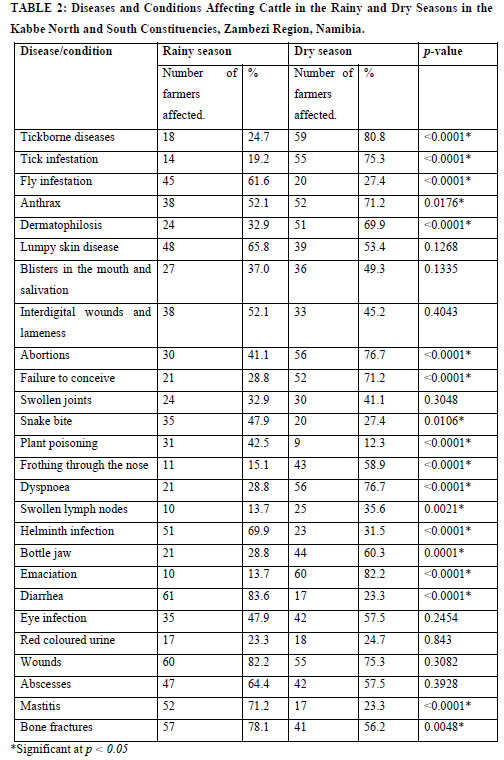
The spectrum of animal diseases and conditions reported during the rainy and dry seasons is indicated in Table 2. A comparison of the proportions of farmers reporting a disease/condition between the rainy and dry seasons was made using the z-test for the difference between two proportions (Epitools, 2026) (Table 2). The top five most frequent diseases or conditions prioritised by farmers during the year (both seasons) were wounds, fractures, anthrax, abscesses, and lumpy skin disease (LSD), in descending order. These are non-complex conditions that can be prevented by good management practices, vaccination, dipping, or prophylactic treatment. Well-trained community animal health workers (CAHWs) or veterinary technicians can assist the communities in managing these conditions. The notable prevalence of traumatic injuries (wounds, fractures) observed calls for training farmers in good animal-welfare practices to prevent or alleviate suffering.
During the rainy season, the top five conditions that affected cattle in the study area were diarrhoea (83.6%, n = 61), wounds (82.2%, n = 60), fractures (78.1%, n = 57), mastitis (71.2%, n = 52) and helminth infections (69.9%, n = 51) in descending order. These conditions are epidemiologically associated with hot, humid conditions, rainfall, or flooding (MPI, 2023; Medion, 2025). For example, the wet, muddy conditions associated with the rainy season promote udder infections and mastitis, injuries, helminth infections, and diarrhoea. The high incidence of mastitis reported by farmers in our study can also be attributed to the heavy tick infestation, as noted by Ledwaba et al. (2022). As expected, fly infestation, snake bite, helminth infection, diarrhoea, mastitis, and bone fractures were higher during the rainy season than in the dry season (p < 0.05).
The most prevalent conditions during the dry season were emaciation (82.2%, n = 60), tick-borne diseases (80.8%, n = 59), abortions, and dyspnea (76.7%, n = 56 each), as well as tick infestation and wounds (75.3%, n = 55). The dry season is associated with reduced forage quantity and quality, leading to a higher frequency of emaciation and abortions. The higher tick and tick-borne disease burdens observed on cattle in the dry season are consistent with the limited tick control observed in this study and point to the role of wild animal species, such as blue wildebeest, zebra, and buffalo, in cattle tick burdens, as reported by Tsao et al. (2021). It is recommended that farmers implement a planned tick control program, with assistance from state veterinary officials, to reduce the incidence of ticks and TBDs in their herds. The dyspnea and nasal mucus reported by the farmers may be due to CBPP or theileriosis, the two diseases reported in this area, but this warrants further investigation. Anthrax, dermatophilosis, failure to conceive, swollen lymph nodes, bottle jaw, and emaciation were also more common in the dry season than in the wet season (p < 0.05).
According to the key informants, the most prevalent disease challenges in the study area were dermatophilosis (first), followed by lumpy skin disease, liver flukes, and heartwater (second), and bovine papillomatosis and footrot (third). In Namibia, these diseases occur with greater frequency and severity in communal grazing areas, particularly in the northern and northeastern parts of the country, where hot, humid, and flood-prone environments coincide with limited biosecurity and irregular access to veterinary interventions (FAO, 2011; FAO, 2021). Other animal health challenges identified by the experts were pasteurellosis, anaplasmosis, roundworm infection, and the lack of vaccination of cattle against common diseases. The prevalence of a variety of preventable and treatable disease conditions in the study area is likely associated with production losses such as low weight gains, reduced milk production, increased mortality, loss of draught power, reduced carcass weight and quality, increased meat condemnation rates and livelihood risks (FAO, 2009; FAO, 2011; Rushton & Knight-Jones, 2012; IBAR, 2019). It has been estimated that one in four young ruminants and one in ten adult ruminants die from preventable diseases and conditions, with the greatest impact on mortality reported among resource-limited livestock keepers (New Scientist, 2008; BMGF, 2012). Marked disparities in the occurrence and impact of cattle diseases have been reported between communal and commercial farming systems in Namibia and across sub-Saharan Africa (FAO, 2011; FAO, 2021). In this study, veterinary extension key informants identified dermatophilosis and footrot among key challenges in communal herds, whereas these conditions are typically sporadic, controlled and of low impact in commercial systems (Radostits etal., 2007; FAO, 2015). Similarly, liver flukes were reported as endemic in communal cattle in this study, causing possible chronic production losses, whilst in commercial herds their impact is lower due to controlled grazing and strategic anthelmintic use (FAO, 2018; Taylor et al., 2016). -borne diseases such as heartwater and lumpy skin disease, which are frequently associated with production losses, were a major concern in this study; whereas these infections are mostly under control in commercial systems (WOAH, 2022; FAO, 2021). Therefore, increased access to effective animal health extension services in communal grazing systems is a prerequisite for improving livestock production and livelihoods.
In contrast to the farmers' perceptions, the disease priorities identified by key informants were divergent and more specific, perhaps demonstrating their knowledge. However, this information should be treated with caution, as key informants had limited contact with the farmers and the areas they served. Aggregating the information from farmers and key informants should yield plausible data for decision-making in the study area. Results of this study show that the state prioritised controlling highly infectious diseases of economic importance, while farmers prioritised controlling conditions that regularly affect their animals. As noted by previous studies, the needs and priorities of rural communities often diverge from those set by the state (Ebata et al., 2020; Barnett et al., 2020; Chenais & Fischer, 2018; Gertzell, 2020). This has the effect of lowering the disease reporting rate and compliance with preventive and control measures (Hutchison et al., 2019) and biosecurity measures (Chenais et al., 2017a, b; Chenais et al., 2019).
3.3.2. Factors Contributing to Cattle Disease
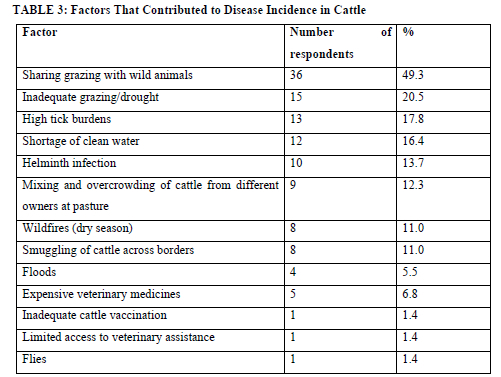
Most farmers (49.3%, n = 36) attributed the increased disease incidence in their herds to contact between cattle and wild animals (Table 3), which is in agreement with a study by van Rooyen (2016) in the Zambezi region. The fact that some diseases mentioned by farmers and key informants in our study, such as anthrax, are frequently detected in wildlife hosts at the interface (Caron et al., 2013; Nthiwa et al., 2019; Motikwe et al., 2023) supports this claim. Studies are required to determine the prevalence of specific disease risks posed by wild ruminants at the interface and to advise farmers appropriately on control measures. It is difficult to control diseases at the interface. However, preventive actions (translocation, fencing, feed and water management, hygienic offal disposal during hunting), arthropod vector control, and wild animal host population control (Gortazar et al., 2015) are some of the approaches that can be used.
3.4. Management of Cattle Health
3.4.1. Treatment of Diseased Cattle
Approximately 69.9% (n = 51) of the farmers treated diseased animals without a prior diagnosis, using conventional veterinary medicines purchased from pharmacies, hardware shops, and the informal market. Oxytetracycline-based medicines (57.5%, n = 42) were the only antibiotics administered to cattle, consistent with the key informants' observations that it is relatively cheap. The overuse of oxytetracycline-based preparations without veterinary guidance can lead to the emergence of antimicrobial resistance (AMR) in pathogenic organisms. The availability of oxytetracycline preparations over the counter, affordability, and the pharmacy's customer-driven dispensing practices contributed to the overuse of oxytetracycline products. It is recommended that dispensing practices for these products be based on the expert advice of veterinary personnel and pharmacists to promote the rational use of medicines (Haakuria et al., 2020). Around 39.7% (n = 29) of the farmers used unspecified ethnoveterinary preparations to treat anaplasmosis (n = 10), wounds (n = 10), diarrhoea (n = 8), and dermatophilosis (n = 1), risking chronic disease, production losses, and mortality. The key informants also noted that oxytetracycline-based antibiotics (short and long-acting) and ethno-veterinary medicines were the main treatments administered to diseased cattle.
3.4.2. Vaccination of Cattle
All respondents' cattle were vaccinated annually by state veterinary services against foot-and-mouth disease (FMD), contagious bovine pleuropneumonia (CBPP), lumpy skin disease (LSD), and anthrax during disease outbreaks, in accordance with prescribed vaccination protocols. The vaccination rate for other common diseases affecting the study area was low, despite vaccines being available in town pharmacies, exposing animals to infection, production, and reproductive losses. It was encouraging that some farmers vaccinated cattle against the trio of anthrax, botulism, and blackquarter vaccine (5.5%, n = 4); anthrax (1.4%, n = 1), pasteurellosis (2.7%, n = 2), botulism (1.4%, n = 1) and bovine brucellosis (1.4%, n = 1). It may be that farmers have the mistaken belief that the compulsory FMD and CBPP vaccinations administered by the state are sufficient to protect their cattle from all diseases.
3.4.3. Parasite Control in Cattle
Forty-five farmers (61.6%) dewormed cattle using unspecified protocols on an ad hoc basis. Of these farmers, 66.7% (n = 30) treated cattle against internal and external parasites with ivermectin-based products, 2.2% (n = 1) with albendazole, and 31.1% (n = 14) did not specify the chemicals they used. It is recommended that farmers be trained in proper deworming protocols and the proper use of antiparasitic products to improve cattle health and prevent parasite resistance. Our findings suggest that liver fluke infections were not effectively treated in the study area because ivermectin is ineffective against trematodes. It was encouraging that one farmer used albendazole, an effective treatment for roundworms, tapeworms, and adult liver flukes (Fairweather, 2011).
3.5. Recommendations for the Improvement of Cattle Health
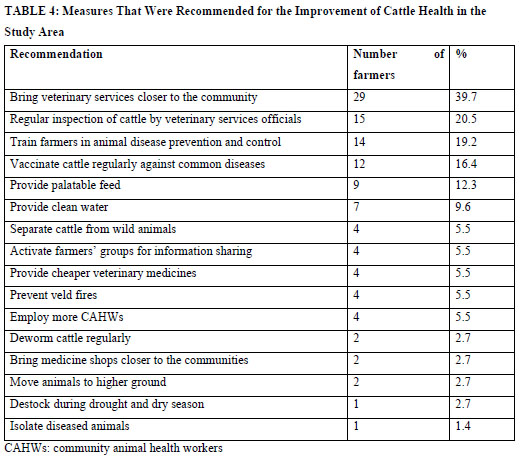
The challenges identified in this study have been reported in other regions of sub-Saharan Africa (Lybbert et al., 2004; Hangara, 2011; Mutibvu et al., 2012; Mosalagae & Magotsi, 2013; Ngoshe et al., 2023). The farmers proposed that the veterinary services be brought closer to the communities (34.2%, n = 25); regular health inspections be carried out on cattle (20.5%, n = 15); farmers be trained in disease prevention and control (19.2%, n = 14) and cattle be vaccinated regularly against the common diseases in the area (16.4%, n = 12), among other measures (Table 4). Therefore, any plan to improve animal health in the study areas should take into account farmers' recommendations. A community-based animal health delivery system that uses trained veterinary personnel, such as CAHWs, is a viable option for bringing animal health care to communal areas (Grahn & Leyland, 2005). With government investment, CAHWs can be deployed sustainably at the village level (Maposa et al., 2024). CAHW programs have been a success elsewhere in Africa (Makundi et al., 2012).
The three key informants agreed with farmers' recommendations regarding the deployment of more veterinary personnel to communal areas, the capacity building of farmers, the improvement of the accessibility of veterinary services, and the vaccination of cattle. In addition, they highlighted that field staff should be provided with reliable transport and materials for their duties; that extension services on cattle nutrition be emphasised; that tick control be up-scaled; that indigenous cattle breeds adapted to local conditions be used for breeding; and that the promotion of the use of ethnoveterinary medicines be emphasised.
3.6. Impact of Cattle Diseases
3.6.1. Impact of Cattle Disease
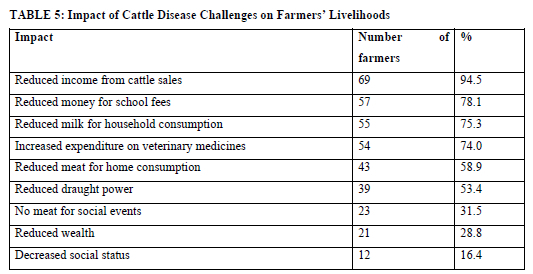
Animal health challenges affected livelihoods in many ways, including reduced household income among most respondents (86.3%, n = 63). The greatest negative impacts were on income from cattle sales, school fees, household milk consumption, and veterinary medicine expenses (Table 5). Previous studies have reported an increased risk of disease impacts in regions with greater dependence on livestock for income and nutrition (Perry & Sones, 2007), as in our study. Most respondents (94.5%, n = 69) were forced to sell diseased cattle at below-market prices. The annual cost of treating and preventing cattle diseases varied among the farmers. Some farmers spent less than US$55 (20.5%, n = 15), others spent between US$55 and US$275 (68.5%, n = 50), and a few farmers (11.0%, n = 8) spent between US$275 and US$550. The low investment in cattle health confirms the low-input nature of the communal cattle production system. This system prioritises human needs, such as food, clothing, and health, over cattle health. Most respondents were aware that cattle diseases can reduce weight gains (95.9%, n = 70), reproductive performance (90.4%, n = 66), milk production (87.7%, n = 64), (87.7%, n = 64) and work capacity (46.6%, n=34). However, our study did not indicate any efforts by farmers to mitigate these impacts on their herds. Although Foot and Mouth disease (FMD) was not listed among the common diseases affecting cattle in the study area, farmers cited it as having the greatest impact on animal productivity (58.9%, n = 43), followed by tick infestation (34.2%, n = 25). This was unsurprising as FMD outbreaks are often accompanied by stringent measures such as animal movement restrictions and a ban on the trade of cloven-hoofed animals and their products.
According to the key informants, cattle diseases resulted in high veterinary treatment costs, animal deaths, reduced draught power, and reduced meat and milk production.
4. CONCLUSIONS AND RECOMMENDATIONS
The study identified a broad spectrum of diseases and conditions affecting cattle and their impacts on the livelihoods of communal pastoral farmers. The study also highlights the limited state veterinary extension services for communal farmers at the wildlife-livestock interface in the Zambezi region. The diversity of cattle health-related challenges identified by the respondents underscores the complexity of the participants' livelihood situations and the management strategies required to address them. Our findings underscore the importance of understanding the local disease situation before designing preventive and control measures to improve cattle health. The results of this study can be used by government officials to plan, prioritise, and improve animal health extension services and livelihoods in the study areas.
To improve animal health in the study areas, it is recommended that state veterinary services consider the recommendations from farmers and key informants. In particular, veterinary extension services and healthcare facilities need to be brought closer to the communities. Communal cattle farmers should be encouraged to invest more in their cattle's health. More specifically, farmers are encouraged to prevent disease in their herds by vaccinating against common cattle diseases in the area, such as anthrax, brucellosis, botulism, and blackquarter. Regular training programs at the community level are required to equip cattle farmers with disease detection and basic animal health skills, including vaccination, tick control, and deworming, to reduce the impact of disease on farmers' livelihoods.
6. DISCLOSURE STATEMENT
The authors declare no conflicts of interest.
5. ACKNOWLEDGEMENTS
The authors wish to thank the participating farmers for taking time off their busy schedules to respond to our questions. The University of Namibia provided the time and transportation for the researchers to conduct this survey.
REFERENCES
- AKASHAMBATWA, C.L., 2016. Communal cattle husbandry practices and their impact on market participation: a case study of FSP farmers from Zambezi region in Namibia. Master's thesis, Namibia University of Science and Technology.
- ALCOCK, R. & GERACI, M., 2020. Livestock production. Bellville: University of Western Cape, South Africa.
- BARNETT, T., PFEIFFER, D.U., AHASANUL HOQUE, M., GIASUDDIN, M., FLORA, M.S., BISWAS, P.K., DEBNATH, N. & FOURNIE, G., 2020. Practising co-production and interdisciplinarity: Challenges and implications for one health research. Prev Vet Med., 177: 104949.
- BAUMGARTNER, B. & BELEVI, H.A., 2001. Systematic overview of urban agriculture in developing countries. Int. J. Environ. Technol. Manag., 3(2).
- BMGF., 2012. Agricultural development: Livestock overview and approach. Bill & Melinda Gates Foundation.
- CARON, A., MIGUEL, E., GOMO, C., MAKAYA, P., PFUKENYI, D. M., FOGGIN, C., HOVE, T., & DE GARINE-WICHATITSKY, M., 2013. Relationship between burden of infection in ungulate populations and wildlife/livestock interfaces. Epidemiol Infect., 141(7): 1522-1535.
- CATLEY, A., LEYLAND, T., MARINER, J.C., AKABWAI, D.M.O., ADMASSU, B., ASFAW, W., BEKELE, G. & HASSAN, H.S., 2004. Para-veterinary professionals and the development of quality, self-sustaining community-based services. Rev Sci Tech., 23: 225-252.
- CAUDELL, M.A., DORADO-GARCIA, A., ECKFORD, S., CREESE, C., BYARUGABA, D.K., AFAKYE, K., CHANSA-KABALI, T., FASINA, F.O., KABALI, E., KIAMBI, S., KIMANI, T., MAINDA, G., MANGESHO, P.E., CHIMPANGU, F., DUBE, K., KIKIMOTO, B.B., KOKA, E., MUGARA, T., RUBEGWA, B. & SWISWA, S., 2020. Towards a bottom-up understanding of antimicrobial use and resistance on the farm: A knowledge, attitudes, and practices survey across livestock systems in five African countries. Plos One, 24(1): 15.
- CHENAIS, E. & FISCHER, K., 2018. Increasing the local relevance of epidemiological research: situated knowledge of cattle disease among basongora pastoralists in Uganda. Front Vet Sci., 5: 119.
- CHENAIS, E., BOQVIST, S., STERNBERG-LEWERIN, S., EMANUELSON, U., OUMA, E., DIONE, M., ALIRO, T., CRAFOORD, F., MASEMBE, C. & STAHL, K., 2017a. Knowledge, attitudes and practices related to African swine fever within smallholder pig production in northern Uganda. Transbound Emerg Dis., 64: 101 -115.
- CHENAIS, E., LEWERIN, S.S., BOQVIST, S., STAHL, K., ALIKE, S., NOKORACH, B. & EMANUELSON, U., 2019. Smallholders' perceptions on biosecurity and disease control in relation to African swine fever in an endemically infected area in Northern Uganda. BMC Vet Res., 15: 279.
- CHENAIS, E., STERNBERG-LEWERIN, S., BOQVIST, S., LIU, L., LEBLANC, N., ALIRO, T., MASEMBE, C. & STAHL, K., 2017b. African swine fever outbreak on a medium-sized farm in Uganda: Biosecurity breaches and within-farm virus contamination. Trop Anim Health Prod., 49: 337-346.
- EBATA, A., HODGE, C., BRAAM, D., WALDMAN, L., SHARP, J., MACGREGOR, H. & MOORE, H., 2020. Power, participation and their problems: A consideration of power dynamics in the use of participatory epidemiology for one health and zoonoses research. Prev Vet Med., 177: 104940.
- EESWARAN, R., NEJADHASHEMI, A.P., FAYE, A., MIN, D., PRASAD, P.V.V. & CIAMPITTI, I.A., 2022. Current and future challenges and opportunities for livestock farming in West Africa: Perspectives from the case of Senegal. Agron., 12(8): 1818.
-
EPITOOLS., 2026. 2-sample z-test to compare sample proportion. Available from https://epitools.ausvet.com.au/ztesttwo
» https://epitools.ausvet.com.au/ztesttwo - FAIRWEATHER, I., 2011. Reducing the future threat from (liver) fluke: Realistic prospect or quixotic fantasy? Vet Parasit., 180(1-2): 133-143.
- FAO., 2009. The State of Food and Agriculture: Livestock in the Balance. Rome: Food and Agriculture Organisation of the United Nations.
- FAO., 2011. Guide to good dairy farming practices. Rome: Food and Agriculture Organisation of the United Nations.
- FAO., 2015. Climate change and livestock health in sub-Saharan Africa. Rome: FAO Animal Production and Health.
- FAO., 2018. Parasitic diseases of livestock in sub-Saharan Africa. Rome: Food and Agriculture Organisation of the United Nations.
- FAO., 2021. Namibia - Building agricultural resilience to animal pests and diseases. Rome: Food and Agriculture Organisation of the United Nations.
- GEHRING, G., SWAN, G.E. & SYKES, R.D., 2002. Supply of veterinary medicinal products to an emerging farming community in the North West Province of South Africa. J S Afr Vet Assoc, 73(4): 185-189.
-
GERTZELL, E., 2020. Veterinary herd health management in Ugandan smallholder pig farms. Licentiate thesis. Swedish University of Agricultural Sciences. Available from https://res.slu.se/id/publ/107224
» https://res.slu.se/id/publ/107224 -
GIZ., 2020. Sector brief Namibia: Agriculture. Deutsche Gesellschaft für Internationale Zusammenarbeit (GIZ) GmbH. Available from https://www.giz.de/en/downloads/giz2022-en-namibia-agriculture.pdf
» https://www.giz.de/en/downloads/giz2022-en-namibia-agriculture.pdf - GORTAZAR, C., DIEZ-DELGADO, I., BARASONA, J.A., VICENTE, J., DE LA FUENTE, J. & BOADELLA, M., 2015. The wild side of disease control at the wildlife-livestock-human interface: A review. Front Vet Sci., 1: 27.
- GRACE, D., LINDAHL, J., WANYOIKE, F., BETT, B., RANDOLPH, T. & RICH, K.M., 2017. Poor livestock keepers: Ecosystem-poverty-health interactions. Philos Trans R Soc Lond B BiolSci., 372: 20160166.
-
GRAHN, R. & LEYLAND, T., 2005. Complementarity between community-based animal health delivery systems and community- based wildlife management? An analysis of experiences linking animal health to conflict management in pastoralist areas of the Horn of Africa. In Proceedings Southern and East African experts panel on designing successful conservation and development intervention at the wildlife/livestock interface. Available from https://wcs-ahead.org/abstracts/ab_leyland.html
» https://wcs-ahead.org/abstracts/ab_leyland.html - GRASSWITZ, T.R., LEYLAND, T.J., MUSIIME, J.T., OWENS, S.J. & SONES, K.R., 2004. The veterinary pharmaceutical industry in Africa: a study of Kenya, Uganda and South Africa. Nairobi, Kenya: African Union/Inter-African Bureau for Animal Resources (AU/IBAR).
- HAAKURIA, V.M., PYATT, A.Z. & MANSBRIDGE, S.C., 2020. Exploration of veterinary service supply to rural farmers in Namibia: a one health perspective. PAMJ - One Health, 2: 17.
- HANGARA, G.N., 2011. Challenges facing communal farmers to improve cattle production and marketing systems in Namibia: case study from Omaheke Region. Doctoral thesis, University of the Free State, Bloemfontein, South Africa.
- HEGDE, N.G., 2019. Livestock development for sustainable livelihood of small farmers. Asian J Res Anim Vet Sci., 3: 1-17.
- HUTCHISON, J., MACKENZIE, C., MADIN, B., HAPPOLD, J., LESLIE, E., ZALCMAN, E., MEYER, A. & CAMERON, A., 2019. New approaches to aquatic and terrestrial animal surveillance: The potential for people and technology to transform epidemiology. Prev Vet Med., 167: 169-173.
- IBAR., 2019. Extension briefs on priority livestock diseases in Africa. Nairobi: African Union-Interafrican Bureau for Animal Resources.
- KARMACHARYA, D., HERRERO-GARCÍA, G., LUITEL, B., RAJBHANDARI, R. & BALSEIRO, A., 2024. Shared infections at the wildlife-livestock interface and their impact on public health, economy, and biodiversity. Anim Front., 14(1): 20-29.
- KHAPAYI, M. & CELLIERS, P., 2016. Factors limiting and preventing emerging farmers to progress to commercial agricultural farming in the King William's Town area of the Eastern Cape Province, South Africa. S Afr J Agric Ext., 44: 25-41.
- LEDWABA, M.B., NOZIPHO, K., TEMBE, D., ONYICHE, T.E. & CHAISI, M.E., 2022. Distribution and prevalence of ticks and tickborne pathogens of wild animals in South Africa: A systematic review. Curr Res Parasitol Vector-Borne Dis., 2: 100088.
- LYBBERT, T.J., BARRETT, C.B., DESTA, S. & COPPOCK, D.L., 2004. Stochastic wealth dynamics and risk management among a poor population. Econ J., 114: 750-777.
- MAASS, B.L., MUSALE, D.K., CHIURI, W.L., GASSNER, A. & PETERS, M., 2012. Challenges and opportunities for smallholder livestock production in post-conflict South Kivu, Eastern DR Congo. Trop Anim Health Prod., 4: 1221-1232.
- MADZINGIRA, O. & SIMASIKU, S., 2020. A survey of the usage and storage practices of veterinary medicines among communal cattle farmers in the Kabbe South Constituency, Zambezi region. Welwitschia Int J Agric Sci., 2: 58-66.
- MAKUNDI, A.E., MCHUNI, M.N. & SULTAN, J., 2012. Studies on animal health delivery systems in pastoral areas in Manyara, Tanzania. Huria: J Open Univ Tanzania., 10(1): 43-53.
- MALAK, A., MPOKE, L., BANAK, J., MURIUKI, S., SKILTON, R.A., ODONGO, D., SUNTER, J. & KIARA, H., 2012. Prevalence of livestock diseases and their impact on livelihoods in Central Equatoria State, southern Sudan. Prev Vet Med., 104: 216-223.
-
MAPOSA, L., GARWE, E.C. & NYAMUSHAMBA, G.G., 2023. Factors influencing smallholder farmers' preference for, veterinary services providers in Zimbabwe. Qeios., 5. https://doi.org/10.32388/3ZKNHD
» https://doi.org/10.32388/3ZKNHD -
MEATCO., 2021. MeatCo Annual Report 2021. Available from https://www.meatco.com.na/
» https://www.meatco.com.na/ -
MEDION., 2025. Maintaining the health of livestock during the rainy season. Available from https://www.medion.co.id/en/info-medion/maintaining-the-health-of-livestock-during-the-rainy-season/
» https://www.medion.co.id/en/info-medion/maintaining-the-health-of-livestock-during-the-rainy-season/ - MONKWE, T.R., GASXEKA, M. & GUNYA, B., 2023. Challenges and perception of communal farmers on cattle production in Ga- Matlala, Limpopo Province, South Africa. Heliyon., 9(3): e14190.
- MOSALAGAE, D. & MOGOTSI, K., 2013. Caught in a sandstorm: an assessment of pressures on communal pastoral livelihoods in the Kalahari Desert of Botswana. Past., 3: 18.
-
MPI., 2023. Livestock health after prolonged wet conditions andflooding. New Zealand: Ministry of Primary Industries. Available from https://www.mpi.govt.nz/dmsdocument/55771-Livestock-health-after-prolonged-wet-conditions-and-flooding-Fact-sheet
» https://www.mpi.govt.nz/dmsdocument/55771-Livestock-health-after-prolonged-wet-conditions-and-flooding-Fact-sheet - MUSALLAM, ABO-SHEHADA, M.N. & GUITIAN, J., 2015. Knowledge, attitudes, and practices associated with brucellosis in livestock owners in Jordan. Am J Trop Med Hyg., 93: 1148.
- MUTIBVU, T., MABURUTSE, B., MBIRIRI, D. & KASHANGURA, M., 2012. Constraints and opportunities for increased livestock production in communal areas: A case study of Simbe, Zimbabwe. Livest Res Rural Dev., 24: 165.
-
NEW SCIENTIST., 2008. Gates declares war on farm animal disease. Available from https://www.newscientist.com/article/mg20026773-500-gates-declares-war-on-farm-animal-disease/
» https://www.newscientist.com/article/mg20026773-500-gates-declares-war-on-farm-animal-disease/ - NGOSHE, Y.B., ETTER, E., GOMEZ-VAZQUEZ, J.P. & THOMPSON, P.N., 2023. Knowledge, attitudes, and practices of communal livestock farmers regarding animal health and zoonoses in Far northern KwaZulu-Natal, South Africa. Int J Environ Res Public Health., 20: 511.
-
NSA., 2014. Namibia Census of Agriculture 2013/14: Communal sector revised report 2019. Namibia Statistics Agency. Available from https://nsa.org.na
» https://nsa.org.na - NTHIWA, D., ALONSO. S., ODONGO. D., KENYA. E. & BETT. B., 2019. A participatory epidemiological study of major cattle diseases amongst Maasai pastoralists living in wildlife-livestock interfaces in Maasai Mara, Kenya. Trop Anim Health Prod., 51(5): 1097-1103.
- OLADELE, O., ANTWI, M. & KOLAWOLE, A., 2013. Factors influencing demand for animal health services by livestock farmers along the border villages of South Africa and Namibia. Int J Appl Res Vet. Med., 11(3): 180-188.
- ONONO, J.O., WIELAND, B. & RUSHTON, J., 2013. Factors influencing choice of veterinary service provider by pastoralist in Kenya. Trop Anim health Prod., 45(6): 1439-45.
- PERRY, B. & GRACE, D., 2009. The impacts of livestock diseases and their control on growth and development processes that are pro-poor. Philos Trans R Soc Lond B Biol Sci., 364: 2643-2655.
- PERRY, B. & SONES, K., 2007. Poverty reduction through animal health. Science., 315(5810): 333-334.
- PRADERE, J., 2014. Improving animal health and livestock productivity to reduce poverty. Rev Sci Tech., 33: 735-744.
- RADOSTITS, O.M., GAY, C.C., HINCHCLIFF, K.W. & CONSTABLE, P.D., 2007. Veterinary Medicine: A textbook of the diseases of cattle, horses, sheep, pigs and goats (10th edn.). London: Saunders Elsevier.
- RANDOLPH, T.F., SCHELLING, E., GRACE, D., NICHOLSON, C.F., LEROY, J., COLE, D., DEMMENT, M., OMORE, A., ZINSSTAG, J. & RUEL, M., 2007. Invited review: Role of livestock in human nutrition and health for poverty reduction in developing countries. J Anim Sci., 85: 2788-2800.
-
REUTERS., 2020. Namibia first African country to export red meat to the hungry U.S. market. Available from https://www.reuters.com/
» https://www.reuters.com/ - RINCHEN, S., TENZIN, T., HALL, D., VAN DER MEER, F., SHARMA, B., DUKPA, K. & CORK, S., 2019. A community-based knowledge, attitude, and practice survey on rabies among cattle owners in selected areas of Bhutan. PLoSNegl Trop Dis., 13: e0007305.
- RUSHTON, J. & KNIGHT-JONES, T., 2012. The impact of foot-and-mouth disease. In the FAO/OIE Global Conference on Foot and Mouth Disease Control. Bangkok, Thailand: Food and Agriculture Organisation of the United Nations and the World Organisation for Animal Health.
-
SALMON, G., 2018. Fact Check 6: Livestock Disease Production Burdens. Available from https://livestockdata.org/publications/fact-check-6-livestock-disease-production-burdens
» https://livestockdata.org/publications/fact-check-6-livestock-disease-production-burdens - SIKHWENI, N. & HASSAN, R., 2014. Opportunities and challenges facing small-scale cattle farmers living adjacent to Kruger National Park, Limpopo Province. J Emerg Trends Econ Manag Sci., 5: 38-43.
- TASKER, A.J., 2020. Exploring power and participation through informal livestock knowledge networks. Prev Vet Med., 181: 105058.
- TAYLOR, M.A., COOP, R.L. & WALL, R.L., 2016. Veterinary Parasitology (4th edn.). Oxford: Wiley Blackwell.
- TEWELDEMEDHIN, M.Y. & KAFIDI, L., 2009. Risk management strategies of cattle farmers in Namibia - case study from Omaheke and Otjozondjupa region. J Agric Ext Rural Dev., 1(2): 063-070.
- THORNTON, P., 2002. Mapping poverty and livestock in the developing world. Volume 1. Nairobi, Kenya: ILRI (ILCA and ILRAD).
- THUMBI, S., NJENGA, M.K., MARSH, T.L., NOH, S., OTIANG, E., MUNYUA, P., OCHIENG, L., OGOLA, E., YODER, J. & AUDI, A., MONTGOMERY, J.M., BIGOGO, G., BREIMAN, R.F., PALMER, G.H. & MCELWAIN, T.F., 2015. Linking human health and livestock health: a "one-health" platform for integrated analysis of human health, livestock health, and economic welfare in livestock dependent communities. Plos One., 10: e0120761.
- TSAO, J.I., HAMER, S.A., HAN, S., SIDGE, J.L. & HICKLING, G.J., 2021. The contribution of wildlife hosts to the rise of ticks and tickborne diseases in North America. J Med Entomol., 58(4): 1565-1587.
- VAN ROOYEN, J., 2016. Livestock production and animal health management systems in communal farming areas at the wildlife-livestock interface in southern Africa. Doctoral thesis, University of Pretoria.
- WAGSTAFF, A. & LINDELOW, M., 2014. Are health shocks different? Evidence from a multishock survey in Laos. Health Econ., 23(6): 706-718.
-
WORLD ORGANISATION FOR ANIMAL HEALTH (WOAH)., 2022. Lumpy skin disease: Technical disease card. Paris: WOAH. Available from https://www.woah.org/app/uploads/2022/06/lumpy-skin-disease-final-v1-1forpublication.pdf
» https://www.woah.org/app/uploads/2022/06/lumpy-skin-disease-final-v1-1forpublication.pdf - YAMANE, Y., 1967. Mathematicalformulae for sample size determination (2nd edn.). New York: Harper and Row.