Tuberculosis prevention in children, adolescents, and pregnant and postpartum women in South Africa
Abstract
Tuberculosis (TB), particularly drug-resistant TB (DR-TB), remains a major public health concern in South Africa (SA), with children, adolescents, and pregnant and postpartum women (CAPPW) facing heightened risks because of biological and social vulnerabilities. This article highlights the importance of a multipronged prevention framework that combines infection control measures, psychosocial support, education, and nutritional supplementation, alongside pharmacological interventions such as Bacillus Calmette-Guérin (BCG) vaccination and tailored TB preventive therapy (TPT). Drawing on national guidelines and recent academic literature, the article provides an overview of current evidence and recommendations for TPT regimens (including 6H, 3HP, 3RH, 4R, 12H, and 6LFX) and their eligibility, safety considerations, drug interactions, and formulations suitable for CAPPW. By strengthening awareness and streamlining guideline-based prevention efforts, the article equips healthcare workers to make informed, patient-centred decisions to improve treatment outcomes and ultimately reduce TB transmission in high-burden settings.
tuberculosis; preventive therapy; children and adolescents; pregnancy; postpartum; primary care
Introduction
Tuberculosis (TB) is a disease caused by Mycobacterium tuberculosis (M.tb), an airborne pathogen predominantly transmitted from person to person via inhalation of infected droplet nuclei. Tuberculosis disease can be treated, prevented and controlled using currently available interventions, if implemented comprehensively.
Approximately 212 000 TB cases were notified in South Africa (SA) in 2023, of which 7% were children under the age of 15 years and 37% were among women or adolescent girls of child-bearing potential.12
Drug-resistant (DR)-TB is a disease caused by M.tb strains that are resistant to at least rifampicin and/or isoniazid, the two most important first-line drugs used for treating drug-susceptible (DS)-TB. Drug-resistant TB accounts for approximately 3% of SA's annual burden of new TB cases but demands up to 33% of the total budget for national TB control.341,56
Transmission of M.tb is predominantly airborne in congregate settings, and children, adolescents, and pregnant and postpartum women (CAPPW) with significant TB exposure are at increased risk of TB infection and subsequent progression to TB disease. Other high-risk groups in SA include people living with HIV (PLWHIV), miners, inmates, immunocompromised individuals, those with silicosis and healthcare workers.7
Children who are infected and go on to develop TB disease usually do so within 12 months following exposure to someone with pulmonary TB.89,10,119,12
Adolescents are a unique group of individuals with an increasing desire for autonomy and wider social interactions and are therefore also at risk of TB exposure outside of the household. The risk of progression from TB infection to TB disease increases considerably from the age of 10 years,813
Pregnant women infected with TB appear to be at increased risk (compared with non-pregnant women) of progression to TB disease, with an even higher risk during the postpartum period.1415,1614
Reducing TB transmission, limiting TB infection, and preventing progression to TB disease among CAPPW are critical to prevent significant morbidity associated with both the disease and the currently available treatment options in these populations. This can be achieved through a combination of multisectoral approaches to promote TB education and awareness, prevent and control M.tb transmission, increase antiretroviral therapy (ART) coverage, facilitate routine TB screening, improve diagnosis, prompt initiation of effective TB treatment, and enhance psychosocial support for people and families affected by TB. Provision of TB preventive therapy (TPT) is only one component in the overall approach to achieve control of the TB epidemic in SA. Given the emerging evidence for TPT from international clinical trials and the importance of preventing TB disease in priority populations, this article aims to provide healthcare workers in primary care settings in SA a brief overview of the approach to TB prevention and current TPT recommendations for CAPPW.
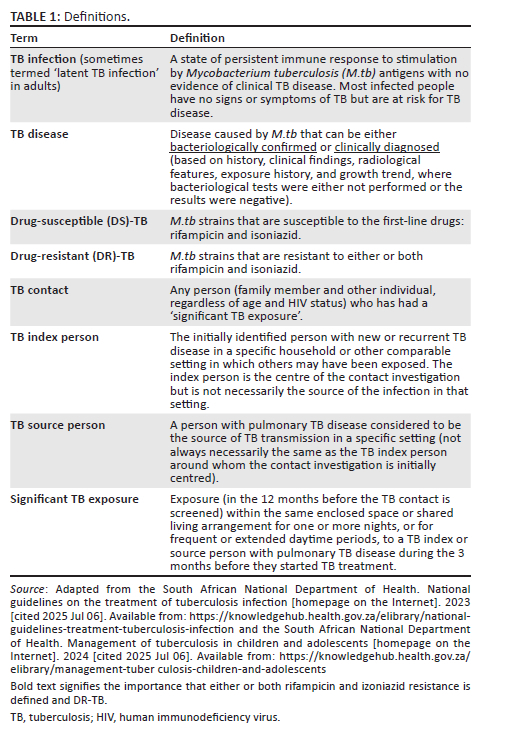
Table 1 contains definitions applicable in this article.7,9
General tuberculosis prevention measures
General measures to prevent TB transmission in SA should include: implementation of existing TB infection prevention and control (IPC) policies175,18,192097
Tuberculosis contact screening
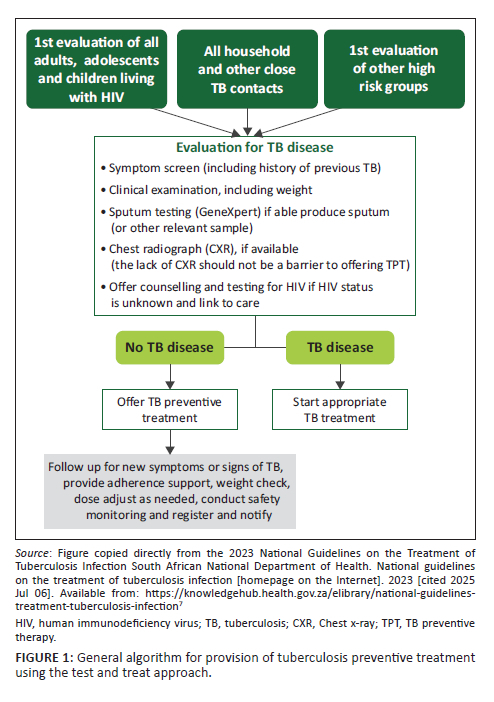
Once a person has been diagnosed with TB disease, they become the TB index person, and healthcare services should implement routine procedures and processes for the identification and screening of TB contacts as per Figure 1. Some TB contacts will be at higher risk of TB infection and progression to disease than others, and CAPPW should be prioritised for screening. In general, the process for evaluation of TB contacts is the same for establishing TB infection as for diagnosing DS-TB or DR-TB disease.7,9
For details of TB screening and evaluation procedures that relate to CAPPW specifically, refer to Section 6 of the 2024 Management of Tuberculosis in Children and Adolescents guideline97
Tuberculosis preventive therapy
People of all ages with significant TB exposure, children and adolescents living with HIV, and pregnant and postpartum women are at high risk of developing TB disease and should be screened for TB regularly. The South African National Department of Health (SANDoH) has recommended that individuals from high-risk groups be managed with a 'test and treat' approach, whereby TPT is offered to those in whom TB disease has been excluded as per Figure 1.7,9
The theory for providing TPT as a preventive measure is that individuals who do not have TB disease but who are infected with viable M.tb have a very low bacillary load, which can be eradicated with one or two drugs, thereby reducing the risk of developing TB disease.21,22M.tb transmission. Contraindications to TPT include severe liver dysfunction, severe peripheral neuropathy, or previous severe adverse reaction to TPT.7
Once a decision has been made to provide TPT for TB infection, the optimal choice of drug or drug combination depends on the effectiveness, availability, side effect profile, cost, drug-drug interactions, drug susceptibility profile of the TB index person, and the risk of resistance amplification.2122
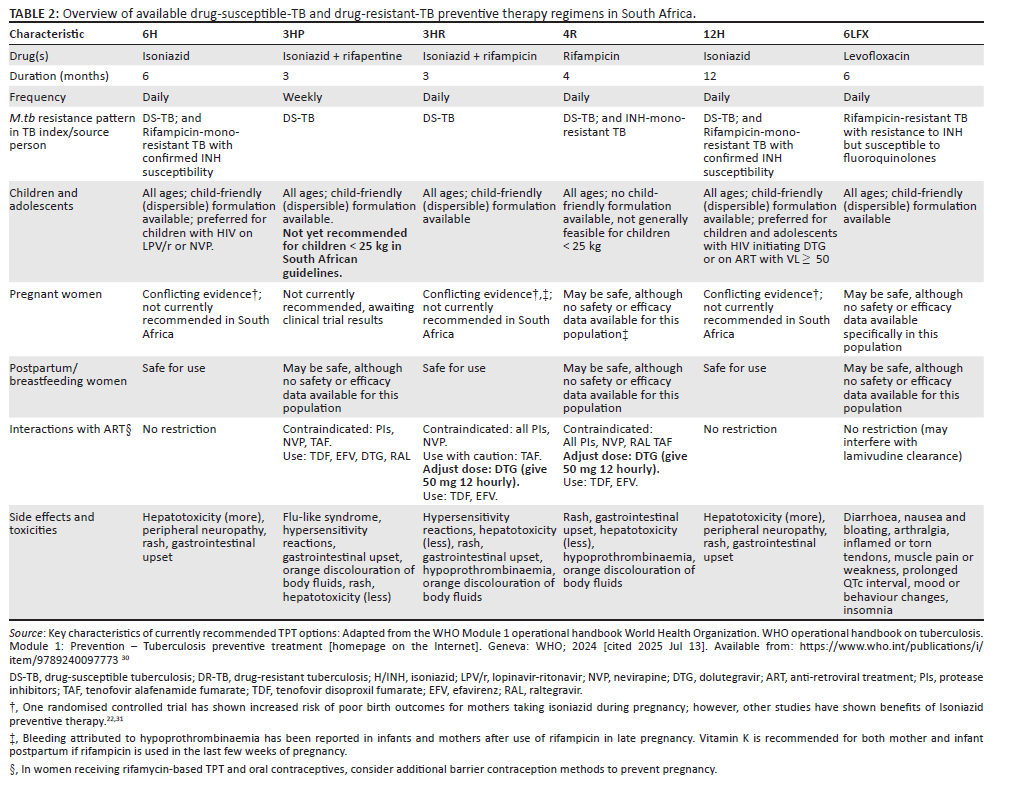
Table 2 summarises eligibility, composition, duration, and other characteristics of available TPT regimens for CAPPW in SA. For medication dosing guidance in these populations, refer to the relevant guideline documents,7,9,23,24 or Section 2 of the Quick Reference Guide.25
TB preventive therapy for drug-susceptible tuberculosis
In SA, the current TPT options for DS-TB include: isoniazid and rifapentine given once weekly for 3 months (3HP), daily rifampicin and isoniazid for 3 months (3RH), daily isoniazid for 6 months (6H) or daily isoniazid for 12 months (12H). All people receiving TPT should be offered pyridoxine (vitamin B6) for the duration of their TPT: 25 mg/day if ≥ 5 years and 12.5 mg/day if < 5 years. Lack of pyridoxine supply should not be a reason to withhold or postpone TPT.7
Rifampicin has significant drug-drug interactions with many ART drugs, and dolutegravir (DTG) dosing should be boosted if given with rifampicin-based TPT (see Table 2). Isoniazid and rifapentine do not interact significantly with DTG and are therefore preferred in PLWHIV. The PLWHIV may be offered 3HP if they are already virally suppressed (viral load < 50 copies/mL) on a DTG-containing regimen. However, those recently initiating DTG-based ART regimens or are virally unsuppressed should rather be offered 12H instead of 3HP. The reason is that rifapentine and DTG are metabolised by the same liver enzymes (CYP3A and UGT1A1). The DOLPHIN trial2627
Children and adolescents
Unfortunately, 3HP is not yet available in SA for children weighing < 25 kg. Once the DTG levels from the DOLPHIN-TOO,272829initiating a DTG-containing ART regimen, 6H is currently the preferred regimen in those weighing < 25 kg.
For children and adolescents weighing ≥ 25 kg, multiple TPT options are available, but 3HP is generally preferred, unless specifically contraindicated. For HIV-uninfected children weighing ≥ 25 kg, 3RH and 6H are alternative options if 3HP is unavailable. Children and adolescents living with HIV may be offered 3HP if they are already virally suppressed (viral load < 50 copies/mL) on a DTG-containing regimen. However, those recently initiating DTG-based ART regimens or are virally unsuppressed should rather be offered 12H instead of 3HP, at least until the results of the DOLPHIN-kids trial2829
Pregnant and postpartum women
The evidence base for TPT during pregnancy remains weak, with conflicting evidence regarding the optimal timing and safety of isoniazid-based TPT in pregnant and postpartum women.22,30732333333435
TB preventive therapy for drug-resistant tuberculosis
The 2023 National Guidelines on the Treatment of Tuberculosis Infection do not include recommendations for preventive therapy regimens for DR-TB.7M.tb strain.23
Children and adolescents
Recently published evidence from the TB-CHAMP and VQUIN trials supports the use of daily levofloxacin for 6 months (6Lfx) in children aged ≤ 5 years living with or without HIV, and older children and adolescents aged < 18 years living with HIV, following significant exposure to fluoroquinolone-susceptible DR-TB strains.36,37,3823,25
Pregnant and postpartum women
The national circular with revised guidance for TPT in pregnancy does not apply to pregnant women exposed to DR-TB that includes isoniazid resistance313423
Additional considerations
For TPT and ART interactions, refer to Table 2. Use interaction checker tools, such as EMGuidance or the SA HIV/TB Hotline application to check for other significant drug-drug interactions with TPT.
Table 2 summarises common side effects and toxicities. Most side effects are mild and can be managed symptomatically. All adverse events should be reported.
People on TPT should be reviewed monthly. For guidance around TPT treatment interruption, refer to Section 6 of the 2023 National Guidelines on the Treatment of Tuberculosis Infection.7
Conclusion
Preventing TB among CAPPW requires a co-ordinated and individualised approach. Through timely screening, IPC, psychosocial support, and targeted TPT, primary care providers play a critical role in mitigating TB-related morbidity and community transmission. As evidence evolves, particularly regarding TPT use in CAPPW, ongoing education and guideline adherence remain vital. Empowering clinicians with practical tools and clinical insight will enable safer, more effective TB prevention in SA's most vulnerable populations.
Competing interests
The authors declare that they have no financial or personal relationships that may have inappropriately influenced them in writing this article. The author, Mareike Rabe, serves as an editorial board member of this journal. The peer review process for this submission was handled independently, and the author had no involvement in the editorial decision-making process for this manuscript. The authors have no other competing interests to declare.
CRediT authorship contribution
Mareike Rabe: Conceptualisation, Writing - original draft, Writing - review & editing. Jennifer A. Hughes: Conceptualisation, Writing - original draft, Writing - review & editing. Both authors reviewed the article, contributed to the interpretation of current guidelines and literature, approved the final version for submission and publication, and take responsibility for the integrity of its content.
Funding information
This research received no specific grant from any funding agency in the public, commercial, or not-for-profit sectors.
Data availability
Data sharing is not applicable to this article as no new data were created or analysed in this study.
Disclaimer
The views and opinions expressed in this article are those of the authors and are the product of professional research. They do not necessarily reflect the official policy or position of any affiliated institution, funder, agency, or that of the publisher. The authors are responsible for this article's results, findings, and content.
Acknowledgements
References
-
1.World Health Organisation. Global TB report 2024, country profile [homepage on the Internet]. [cited 2025 Jul 06]. Available from: https://www.who.int/teams/global-programme-on-tuberculosis-and-lung-health/data (TB profile)
» https://www.who.int/teams/global-programme-on-tuberculosis-and-lung-health/data -
2.Moyo S, Ismail F, Van der Walt M, et al. Prevalence of bacteriologically confirmed pulmonary tuberculosis in South Africa, 2017-19: A multistage, cluster-based, cross-sectional survey. Lancet Infect Dis. 2022;22(8):1172-1180. https://doi.org/10.1016/S1473-3099(22)00149-9
» https://doi.org/10.1016/S1473-3099(22)00149-9 -
3.Naidoo K, Perumal R, Cox H, et al. The epidemiology, transmission, diagnosis, and management of drug-resistant tuberculosis-lessons from the South African experience. Lancet Infect Dis. 2024;24(9):e559-e575. https://doi.org/10.1016/S1473-3099(24)00144-0
» https://doi.org/10.1016/S1473-3099(24)00144-0 - 4.Cox HS, Dickson-Hall L, Jassat W, et al. Drug-resistant tuberculosis in South Africa: history, progress and opportunities for achieving universal access to diagnosis and effective treatment. In: Padarath A, Barron P, editors. South African Health Review. 20th ed. Durban: Health Systems Trust, 2017; p. 157-179.
-
5.South African National Department of Health. National TB recovery plan 4.0. April 2025 - March 2026 [homepage on the Internet]. 2025 [cited 2025 Jul 06]. Available from: https://www.health.gov.za/wp-content/uploads/2025/05/TB-Recovery-Plan-4_final_250526.pdf
» https://www.health.gov.za/wp-content/uploads/2025/05/TB-Recovery-Plan-4_final_250526.pdf -
6.Cox V, Cox H, Pai M, Stillo J, Citro B, Brigden G. Health care gaps in the global burden of drug-resistant tuberculosis. Int J Tuberc Lung Dis. 2019;23(2):125-135. https://doi.org/10.5588/ijtld.18.0866
» https://doi.org/10.5588/ijtld.18.0866 -
7.South African National Department of Health. National guidelines on the treatment of tuberculosis infection [homepage on the Internet]. 2023 [cited 2025 Jul 06]. Available from: https://knowledgehub.health.gov.za/elibrary/national-guidelines-treatment-tuberculosis-infection
» https://knowledgehub.health.gov.za/elibrary/national-guidelines-treatment-tuberculosis-infection -
8.Pinto P, Teixeira CSS, Ichihara MY, et al. Incidence and risk factors of tuberculosis among 420 854 household contacts of patients with tuberculosis in the 100 Million Brazilian Cohort (2004-18): A cohort study. Lancet Infect Dis. 2024;24(1):46-56. https://doi.org/10.1016/S1473-3099(23)00371-7
» https://doi.org/10.1016/S1473-3099(23)00371-7 -
9.South African National Department of Health. Management of tuberculosis in children and adolescents [homepage on the Internet]. 2024 [cited 2025 Jul 06]. Available from: https://knowledgehub.health.gov.za/elibrary/management-tuberculosis-children-and-adolescents
» https://knowledgehub.health.gov.za/elibrary/management-tuberculosis-children-and-adolescents -
10.Martinez L, Cords O, Horsburgh CR, Andrews JR, Pediatric TBCSC. The risk of tuberculosis in children after close exposure: A systematic review and individual-participant meta-analysis. Lancet. 2020;395(10228):973-984. https://doi.org/10.1016/S0140-6736(20)30166-5
» https://doi.org/10.1016/S0140-6736(20)30166-5 -
11.Van Schalkwyk C, Variava E, Shapiro AE, et al. Incidence of TB and HIV in prospectively followed household contacts of TB index patients in South Africa. PLoS One. 2014;9(4):e95372. https://doi.org/10.1371/journal.pone.0095372
» https://doi.org/10.1371/journal.pone.0095372 - 12.Marais BJ, Gie RP, Schaaf HS, et al. The natural history of childhood intra-thoracic tuberculosis: A critical review of literature from the pre-chemotherapy era. Int J Tuberc Lung Dis. 2004;8(4):392-402.
-
13.Snow KJ, Cruz AT, Seddon JA, et al. Adolescent tuberculosis. Lancet Child Adolesc Health. 2020;4(1):68-79. https://doi.org/10.1016/S2352-4642(19)30337-2
» https://doi.org/10.1016/S2352-4642(19)30337-2 -
14.Morton AJ, Roddy Mitchell A, Melville RE, et al. Mycobacterium tuberculosis infection in pregnancy: A systematic review. PLOS Glob Public Health. 2024;4(11):e0003578. https://doi.org/10.1371/journal.pgph.0003578
» https://doi.org/10.1371/journal.pgph.0003578 -
15.Meehan SA, Hesseling AC, Von Delft A, et al. Association between tuberculosis and pregnancy outcomes: A retrospective cohort study of women in Cape Town, South Africa. BMJ Open. 2024;14(2):e081209. https://doi.org/10.1136/bmjopen-2023-081209
» https://doi.org/10.1136/bmjopen-2023-081209 -
16.Mokhele I, Jinga N, Berhanu R, Dlamini T, Long L, Evans D. Treatment and pregnancy outcomes of pregnant women exposed to second-line anti-tuberculosis drugs in South Africa. BMC Pregnancy Childbirth. 2021;21(1):453. https://doi.org/10.1186/s12884-021-03956-6
» https://doi.org/10.1186/s12884-021-03956-6 -
17.South African National Department of Health. National infection prevention and control guidelines for TB, MDR-TB and XDR-TB [homepage on the Internet]. 2015 [cited 2025 Jul 06]. Available from: https://knowledgehub.health.gov.za/elibrary/national-infection-prevention-and-control-guidelines-tb-mdr-tb-and-xdr-tb
» https://knowledgehub.health.gov.za/elibrary/national-infection-prevention-and-control-guidelines-tb-mdr-tb-and-xdr-tb -
18.Foppiano Palacios C, Moll AP, Shrestha R, et al. Evaluating community knowledge of tuberculosis preventive therapy in rural South Africa. BMC Public Health. 2025;25(1):918. https://doi.org/10.1186/s12889-025-21719-2
» https://doi.org/10.1186/s12889-025-21719-2 -
19.Ndjeka N. South African National Department of Health. END TB CAMPAIGN 2025/26: OPERATIONAL PLAN [homepage on the Internet]. [cited 2025 Jul 06]. Available from: https://www.health.gov.za/wp-content/uploads/2025/05/End-TB-Campaign-Plan_27May-final.pdf
» https://www.health.gov.za/wp-content/uploads/2025/05/End-TB-Campaign-Plan_27May-final.pdf -
20.Bhargava A, Bhargava M, Meher A, et al. Nutritional supplementation to prevent tuberculosis incidence in household contacts of patients with pulmonary tuberculosis in India (RATIONS): A field-based, open-label, cluster-randomised, controlled trial. Lancet. 2023;402(10402):627-640. https://doi.org/10.1016/S0140-6736(23)01231-X
» https://doi.org/10.1016/S0140-6736(23)01231-X - 21.Seddon JA, Achar J, Malik AA, Hughes J. Management of individuals exposed to multidrug-resistant or rifampicin-resistant tuberculosis. Lancet Infect Dis. 2025;25(12):E692-E704.
-
22.Chihota V, Gombe M, Gupta A, et al. Tuberculosis preventive treatment in high TB-burden settings: A state-of-the-art review. Drugs. 2025;85(2):127-147. https://doi.org/10.1007/s40265-024-02131-3
» https://doi.org/10.1007/s40265-024-02131-3 -
23.South African National Department of Health. Management of rifampicin-resistant tuberculosis: A clinical reference guide [homepage on the Internet]. Pretoria: Department of Health; 2019 [cited 2025 Jul 13]. Available from: https://www.health.gov.za/wp-content/uploads/2020/11/management-of-rifampicin-resistant-tb-booklet-1219-v6.pdf
» https://www.health.gov.za/wp-content/uploads/2020/11/management-of-rifampicin-resistant-tb-booklet-1219-v6.pdf -
24.South African National Department of Health. Clinical management of rifampicin-resistant tuberculosis: Updated clinical reference guide [homepage on the Internet]. Pretoria: Department of Health; 2023 [cited 2025 Jul 13]. Available from: https://www.knowledgehub.org.za/elibrary/clinical-management-rifampicin-resistant-tuberculosis-updated-clinical-reference-guide
» https://www.knowledgehub.org.za/elibrary/clinical-management-rifampicin-resistant-tuberculosis-updated-clinical-reference-guide -
25.South African National Department of Health. Management of tuberculosis in children and adolescents (0-< 15 years old): A quick reference guide for frontline healthcare providers on the prevention, diagnosis and treatment of drug-susceptible TB and rifampicin-resistant TB in children and adolescents in South Africa. Pretoria: NDOH; 2025. [cited 2025 Nov 27]. Available from: https://tbthinktank.org/wp-content/uploads/2025/09/Paeds-TB-Quick-Ref-Guide_Final_Sept-2025.pdf.
» https://tbthinktank.org/wp-content/uploads/2025/09/Paeds-TB-Quick-Ref-Guide_Final_Sept-2025.pdf -
26.Dooley KE, Savic R, Gupte A, et al. Once-weekly rifapentine and isoniazid for tuberculosis prevention in patients with HIV taking DTG-based antiretroviral therapy: A phase 1/2 trial. Lancet HIV. 2020;7(6):e401-e409. https://doi.org/10.1016/S2352-3018(20)30032-1
» https://doi.org/10.1016/S2352-3018(20)30032-1 -
27.Weld ED, Beattie T, Moodley J, et al. Simultaneous initiation of DTG-based antiretroviral therapy and once-weekly rifapentine and isoniazid for tuberculosis prevention in antiretroviral-naive people with HIV: An open-label, non-randomised, phase 1/2 trial. Lancet HIV. 2025;12(6):e428-e439. https://doi.org/10.1016/S2352-3018(25)00002-5
» https://doi.org/10.1016/S2352-3018(25)00002-5 -
28.ClinicalTrials.gov. NCT05122767. Rifapentine and isoniazid TB preventive therapy (3HP) for children taking DTG-based antiretroviral treatment (DOLPHIN KIDS) [homepage on the Internet]. 2021 [cited 2025 Jul 07]. Available from: https://clinicaltrials.gov/study/NCT05122767
» https://clinicaltrials.gov/study/NCT05122767 -
29.ClinicalTrials.gov. NCT03730181. Tuberculosis clinical trials consortium study 35 [homepage on the Internet]. 2018 [cited 2025 Jul 07]. Available from: https://clinicaltrials.gov/study/NCT03730181
» https://clinicaltrials.gov/study/NCT03730181 -
30.World Health Organization. WHO operational handbook on tuberculosis. Module 1: Prevention - Tuberculosis preventive treatment [homepage on the Internet]. Geneva: WHO; 2024 [cited 2025 Jul 13]. Available from: https://www.who.int/publications/i/item/9789240097773
» https://www.who.int/publications/i/item/9789240097773 -
31.Hamada Y, Figueroa C, Martin-Sanchez M, Falzon D, Kanchar A. The safety of isoniazid tuberculosis preventive treatment in pregnant and postpartum women: Systematic review and meta-analysis. Eur Respir J. 2020;55(3):1901967. https://doi.org/10.1183/13993003.01967-2019
» https://doi.org/10.1183/13993003.01967-2019 -
32.South African National Department of Health. Circular No.2/2025: Revised guidance on TB Preventive Therapy (TPT) in pregnancy [homepage on the Internet]. 2025 [cited 2025 Jul 08]. Available from: https://www.health.gov.za/wp-content/uploads/2025/02/Circular-Revised-Guidance-on-TB-Preventative-Therapy-TPT-in-Pregnancy-30-January-2025.pdf
» https://www.health.gov.za/wp-content/uploads/2025/02/Circular-Revised-Guidance-on-TB-Preventative-Therapy-TPT-in-Pregnancy-30-January-2025.pdf -
33.South African National Department of Health, Republic of South Africa. Circular update to the guidance on isoniazid preventive therapy (IPT) in pregnancy. Pretoria: National Department of Health; 2025 [cited 2025 Dec 18]. Ref: AMD18Dec25/01. Available from: www.health.gov.za/wp-content/uploads/2025/12/Circular-Updateto-the-Guidance-on-Isoniazid-Preventative-Therapy-IPT-in-Pregnancy-18-December-2025.pdf
» www.health.gov.za/wp-content/uploads/2025/12/Circular-Updateto-the-Guidance-on-Isoniazid-Preventative-Therapy-IPT-in-Pregnancy-18-December-2025.pdf -
34.World Health Organization. WHO consolidated guidelines on tuberculosis. Module 1: Prevention - Tuberculosis preventive treatment [homepage on the Internet]. Geneva: WHO; 2024 [cited 2025 Jul 09]. Available from: https://www.who.int/publications/i/item/9789240096196
» https://www.who.int/publications/i/item/9789240096196 -
35.ClinicalTrials.gov. NCT05122026. Safety and tolerability of 1 month daily (1HP) and 3 months weekly (3HP) isoniazid and rifapentine with pharmacokinetics of DTG (DTG) in pregnant people with HIV (DOLPHIN Moms) [hompeage on the Internet]. 2021 [cited 2025 Jul 07]. Available from: https://clinicaltrials.gov/study/NCT05122026
» https://clinicaltrials.gov/study/NCT05122026 -
36.Fox GJ, Nhung NV, Cam Binh N, et al. Levofloxacin for the prevention of multidrug-resistant tuberculosis in Vietnam. N Engl J Med. 2024;391(24):2304-2314. https://doi.org/10.1056/NEJMoa2314325
» https://doi.org/10.1056/NEJMoa2314325 -
37.Hesseling AC, Purchase SE, Martinson NA, et al. Levofloxacin preventive treatment in children exposed to MDR tuberculosis. N Engl J Med. 2024;391(24):2315-2326. https://doi.org/10.1056/NEJMoa2314318
» https://doi.org/10.1056/NEJMoa2314318 -
38.Duong T, Brigden J, Simon Schaaf H, et al. A meta-analysis of levofloxacin for contacts of multidrug-resistant tuberculosis. NEJM Evid. 2025;4(1):EVIDoa2400190. https://doi.org/10.1056/EVIDoa2400190
» https://doi.org/10.1056/EVIDoa2400190

Accepted: 02 Nov. 2025
Published: 16 Jan. 2026