Granite spalling as a proxy of climate change during the late Pleistocene and early Holocene at Pomongwe Cave, Matobo World Heritage Landscape
Abstract
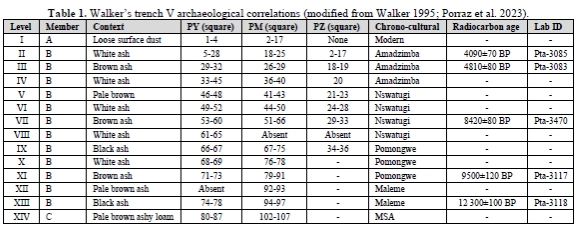
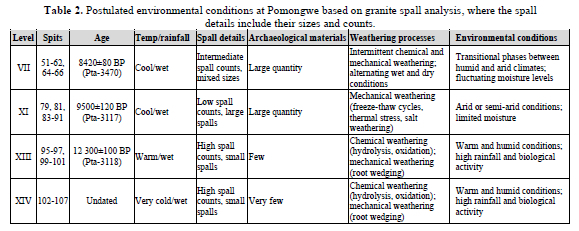
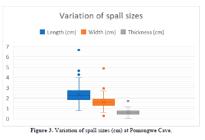
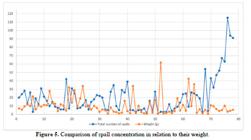
There is limited palaeoenvironmental data on Zimbabwe, primarily because the usual proxies used for climatic reconstructions are rarely preserved in the Zimbabwean archaeological record. Against this background, this research seeks to assess the practicality of using granite spalls that occur in the archaeological record as signatures of past climatic changes. We hypothesise that the size of spalls and the rate of exfoliation are dependent upon climatic conditions such as temperature and precipitation. We apply this principle by analysing the size and concentration of granite spalls within the stratigraphy of Pomongwe Cave, to reconstruct the palaeoclimatic conditions that prevailed during its occupation. Our results indicate that the environmental conditions changed through time, and this is reflected by the occurrence of granite spalls of varying sizes and concentrations. However, the results in this paper present a proof of concept that requires further investigation.
Pomongwe; palaeoenvironments; granite spalls; geoarchaeology
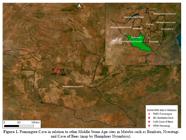 Thumbnail
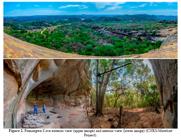 Thumbnail
 Thumbnail
 Thumbnail