Incidence and predisposing factors for dry socket following extraction of permanent teeth at a regional hospital in Kwa-Zulu Natal
Abstract
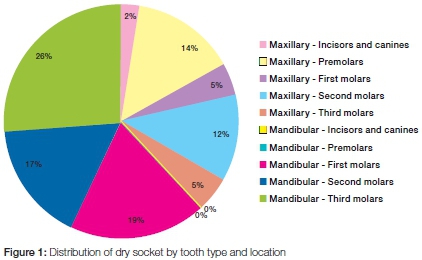
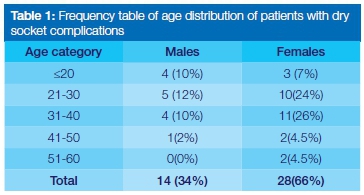
INTRODUCTION: Dry socket is one of the complications which may follow dental extractions. Whilst the exact pathogenesis is unknown, blood clot disintegration as a result of fibrinolysis remains the most acknowledged theory. AIMS AND OBJECTIVES: To determine the incidence, distribution by tooth type and location and predisposing factors for dry socket in a public health facility. METHODS: A retrospective review of the register and the records of patients who presented with dry socket at the facility were reviewed for the first quarter of 2015 (January-March). The following data were recorded: total number of patients their demographics, total number of permanent teeth extracted, number of dry sockets encountered and associated risk factors such as smoking, contraception and systemic illnesses. RESULTS: 2214 patients were reviewed from whom a total of 2281 permanent teeth had been extracted. The overall incidence of dry socket was 1.8%, being more prevalent in females, in the second and third decades of life, and in mandibular teeth, more specifically in molars. CONCLUSION: Dry socket occurrence is a painful but infrequent complication of tooth extraction and most commonly affects the mandibular sockets. Oral contraception and smoking independently or in combination with a traumatic extraction were the most prevalent predisposing factors.
 Thumbnail