Bacterial contamination of disinfectants: prevalence and students' compliance with infection control practices
Abstract
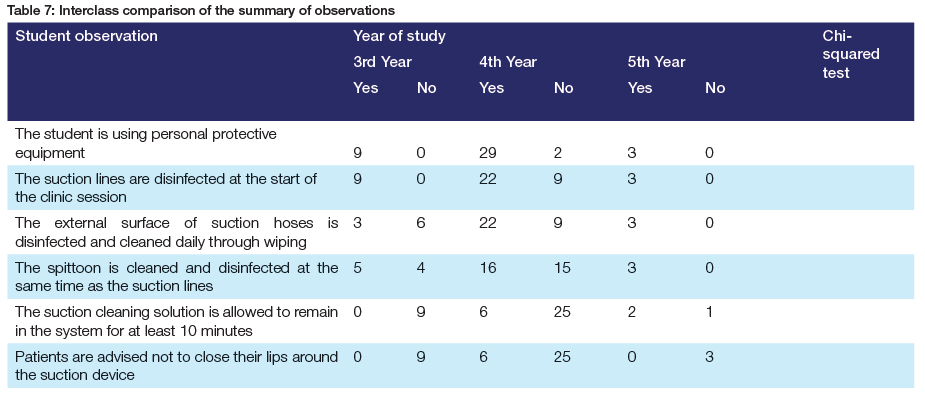
INTRODUCTION: Contaminated disinfectants have been occasional vehicles of healthcare associated infections. AIMS AND OBJECTIVES: To determine the presence and level of bacterial contamination of disinfectants used to decontaminate suction devices and to assess the extent to which students comply with infection control practices. DESIGN: A two-part cross-sectional descriptive study consisting of microbiological testing of disinfectants and a questionnaire-based observation of students. METHODS: Unannounced observation of students disinfecting suction devices were recorded using a questionnaire. The process involved collecting a prepared disinfectant from a storage bin using a kitchen measuring jug. Specimens of disinfectants and swabs of jugs were collected for aerobic culture. Data pertaining to compliance with infection control practices was gathered. RESULTS: Only 33.6% of the students were observed unannounced. An overwhelming majority (84.9%) of students disinfected suction devices; 52% cleaned and disinfected the external surface of suction hoses and the spittoon bowl; 18.6% allowed the disinfectant to remain in the system long enough, and 14% advised their patients not to close their lips around the suction device. The majority of disinfectant samples (56.3%) as well jugs (55.6%) were contaminated with bacteria. CONCLUSION: Bacterial contamination of disinfectants was common in addition to poor compliance with infection control practices.