Non-surgical Correction of Adult Class III Malocclusion Using a Fixed Orthodontic Lower Tongue Gate with Myofunctional Therapy: A Case Report
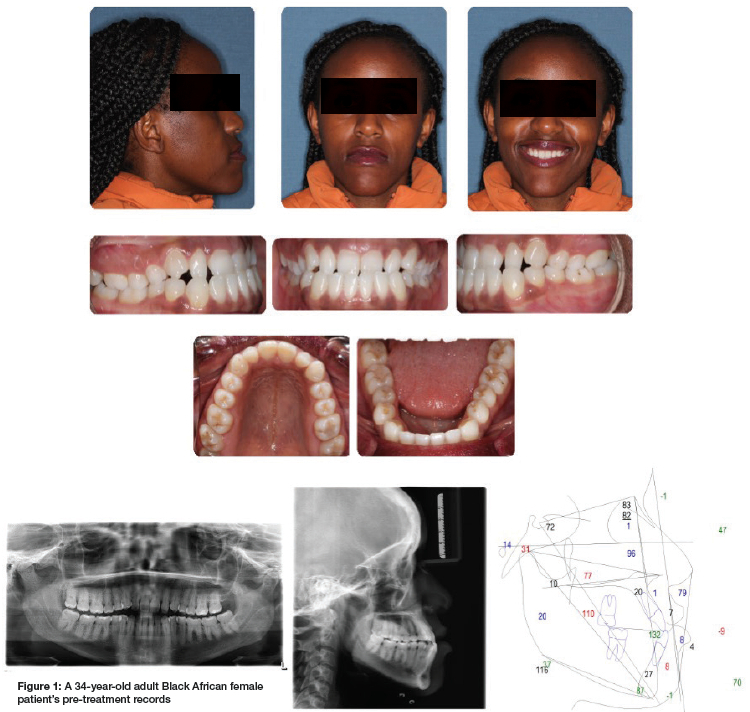
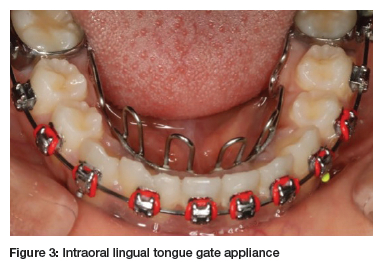
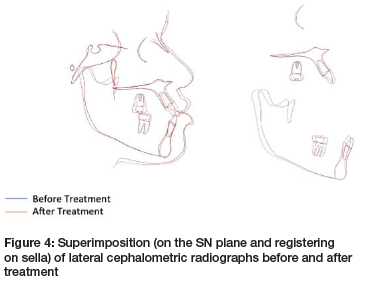
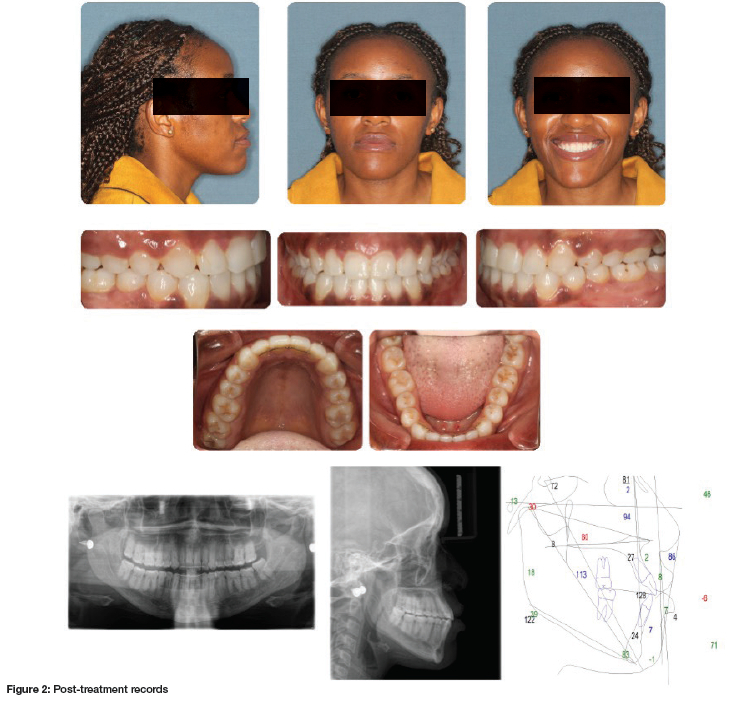
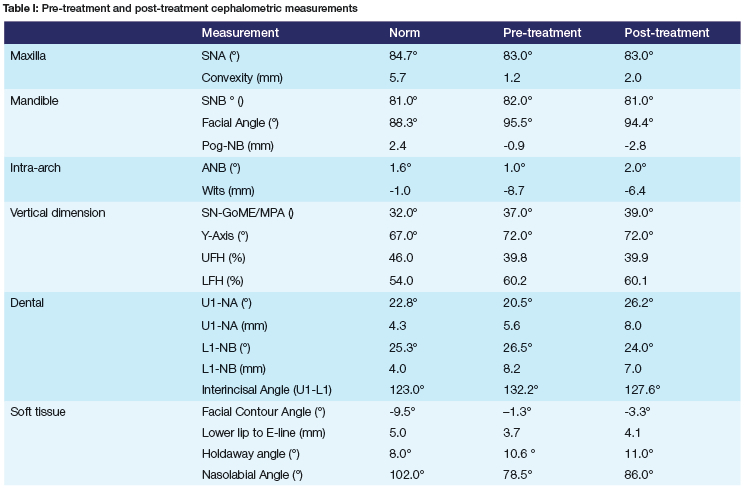
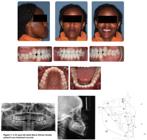
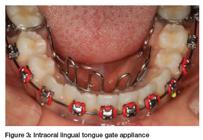
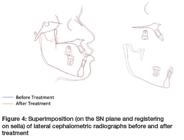
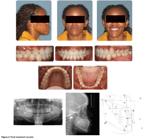
OBJECTIVE: To report a non-surgical approach for treating borderline skeletal Class III malocclusion in an adult patient using fixed orthodontics, a lower tonguegate appliance, and myofunctional therapy to improve occlusion, facial aesthetics, and tongue posture. DIAGNOSIS AND TREATMENT PLANNING: A 34-year-old Black African female presented with the chief complaint of "lower front teeth sticking out." Examination revealed a concave facial profile, a Class III molar, and canine relationships, negative overjet of 2.5 mm, anterior open bite of 2 mm, and mild maxillary and mandibular crowding. Cephalometric findings indicated mild maxillary retrognathia (SNA 83°), mandibular prognathism (SNB 82°), and a Wits appraisal of -8.7mm. A low tongue rest position was noted. The treatment objectives were to achieve Class I molar and canine relationships, correct overbite and overjet, control tongue posture, improve smile aesthetics, and maintain stability. The patient declined orthognathic surgery due to fear of surgical procedures, as well as the added financial burden. Treatment began with full fixed appliances (0.018" edgewise) and myofunctional therapy. Class III elastics were applied. After 12 months with minimal dental change, a lower tongue gate was fabricated to limit the anterior tongue pressure, combined with continued elastics. RESULTS: Within six months of lower tongue gate use, positive overjet and overbite were achieved. Cephalometric changes included improved upper incisor inclination (U1-NA from 20.5° to 26.2°), reduced lower incisor proclination (L1-NB from 26.5° to 24.0°), and Wits improvement to -6.9 mm. The soft tissue profile improved, with the nasolabial angle increasing from 78.5° to 86.0°. The patient reported improved confidence and function, with no adverse effects on speech or mastication from the tongue gate appliance. Retention included fixed 3-3 retainers, ESSIX® appliances, and continued myofunctional exercises to improve tongue posture by a Speech and Language therapist. CONCLUSION: Integrating a lower tongue gate with fixed orthodontics and myofunctional therapy can be an effective non-surgical option for adult borderline Class III malocclusion by improving the dental occlusion and facial profile through addressing the tongue posture.
Class III malocclusion; myofunctional therapy; tongue gate appliance; non-surgical adult treatment; tongue normal position; case report
 Thumbnail
 Thumbnail
 Thumbnail
 Thumbnail