Association between dental and periodontal conditions with chronic kidney disease: A cross-sectional analysis of urban South Africans
Abstract
INTRODUCTION: Oral diseases are preventable causes of poor health outcomes in people with chronic kidney disease (CKD). AIMS AND OBJECTIVES: Investigate the association between dental and periodontal conditions with kidney function and determine whether inflammation mediate the association between periodontitis and CKD. DESIGN: Cross-sectional analysis of 1551 South African adults of mixed ancestry. METHODS: CKD was classified as estimated glomerular filtration rate (eGFR) <60mL/min/1.73m2. Oral profile was captured by decayed, missing, filled teeth index (DMFTi), bleeding on probing (BOP), pocket depth (PD), clinical attachment loss (CAL), and periodontitis classified as PD >4 mm. RESULTS: Overall, 6% had CKD, with 93% and 66% of participants with and without CKD, respectively having a high DMFTi (p<0.0001). Further, 84% (CKD) and 43% (without CKD) were edentulous (p<0.0001). A great proportion of the dentate sub-sample (n=846) had periodontitis, however, BOP, PD >4mm and CAL >4mm were similar between the groups. DMFTi was associated with eGFR and prevalent CKD (p<0.023), with this association driven by the Missing component. Periodontitis was not associated with eGFR nor CKD (p>0.282 CONCLUSION: In routine care of people with CKD, attention should be given to oral health.
chronic kidney disease; oral disease; periodontitis; dental; tooth loss; Africa
INTRODUCTION AND BACKGROUND
Chronic kidney disease (CKD) is a major public health problem,123
Oral diseases are estimated to affect nearly half the global population.4,5 Of these oral diseases, periodontitis and dental caries have been implicated as a potential and preventable cause of poor health outcomes in people with CKD.6-9 Periodontitis, which affects the tissue surrounding the teeth, is thought to contribute to renal deficiency via inflammatory pathways.10-13 Indeed, several cross-sectional studies have reported that adults with periodontitis generally have elevated acute-phase systemic markers, like serum C-reactive protein (CRP) and oxidative stress responses,14,15 9,16,171018,19 where others show that CKD is associated with a worse dental status20 21,22
Despite the advances made in the aetiology governing the development and progression of CKD, including the potential link with the oral cavity, population-based data on the overall oral status of people with CKD, particularly in Africa are lacking. We therefore aimed to, 1) characterise the dental and periodontal profile of those with and without CKD, 2) investigate the association between dental and periodontal conditions with kidney function and prevalent CKD, and further 3) evaluate whether systemic inflammation, as measured by hsCRP, mediates the association between periodontitis and kidney function and prevalent CKD in a community-based sample of urban South Africans of mixed-ancestry.
MATERIALS AND METHODS
Study setting and population
The data utilized in this analysis is from adult South Africans of mixed-ancestry (in South Africa referred to as the Coloured population).23
Questionnaires and physical examination
All anthropometric measurements were taken three time and the average presented in this paper. An Omron body fat meter HBF-511 digital bathroom scale was used to determine body weight, with the individual in light clothing and without shoes. Waist circumference (WC) was measured with a non-elastic tape measure by standard procedure, thus at the level of the narrowest part of the torso, as seen from the anterior view. Body mass index (BMI) was calculated by means of the conventional calculation as weight divided by the square of height (kg/m224252424
Biochemical analysis and classifications
The biochemical analyses were all conducted at an ISO 15189 accredited pathology practice (Path-Care, Reference Laboratory, Cape Town, South Africa) according to set protocols. Serum samples were processed for the measurement of creatinine, hsCRP and cotinine by the modified Jaffe-Kinetic method (Beckman AU, Beckman Coulter, South Africa), and chemiluminescent assays (Immun Diagnostik AG, Bensheim, Germany and Immulite 1000, Siemens) respectively.
Kidney function was estimated by means of the serum creatinine-based 4-variable Modification of Diet in Renal Disease (MDRD) equation,2627 28229302 2
Statistical analysis
Due to the skewed distribution of most variables, participant characteristics were summarised as median (25th-75th percentiles) or count and percentages. However, the DMFT index and total number of teeth were also presented as mean and standard deviation (SD), to comply with the standard presentation of data obtained from the WHO and mean comparisons with other studies. Group comparisons were done with chi-square tests (categorical variables) and Student-t test or Wilcoxon rank-sum test (continuous variables). Multivariable robust linear regression models were used to assess the independent association between eGFR and the DMFT index. Whereas multivariable logistic regression models were used to determine whether the DMFT index predicted prevalent CKD, independent of confounding variables (listed in the models below). Since individuals with edentulism are unable to experience periodontitis, a sub-analysis on dentate participants (n=846) were conducted. Thus, multivariable linear regression and logistic regression models were employed to assess the independent association of eGFR and prevalent CKD with periodontitis. The models used were as follows: Model 1: DMFT or periodontitis; Model 2: Model 1 + Age >60years; Model 3: Model 2 + smoking status + obesity; Model 4: Model 3 + hypertension; Model 5: Model 4 + diabetes; Model 6 (DMFT): Model 5 + edentulism; Model 6 (periodontitis): Model 5 + hsCRP. All statistical analyses were performed using STATA version 15 (Statcorp, College Station, TX) and statistical significance was based on a p-value <0.05.
RESULTS
General characteristics of study population
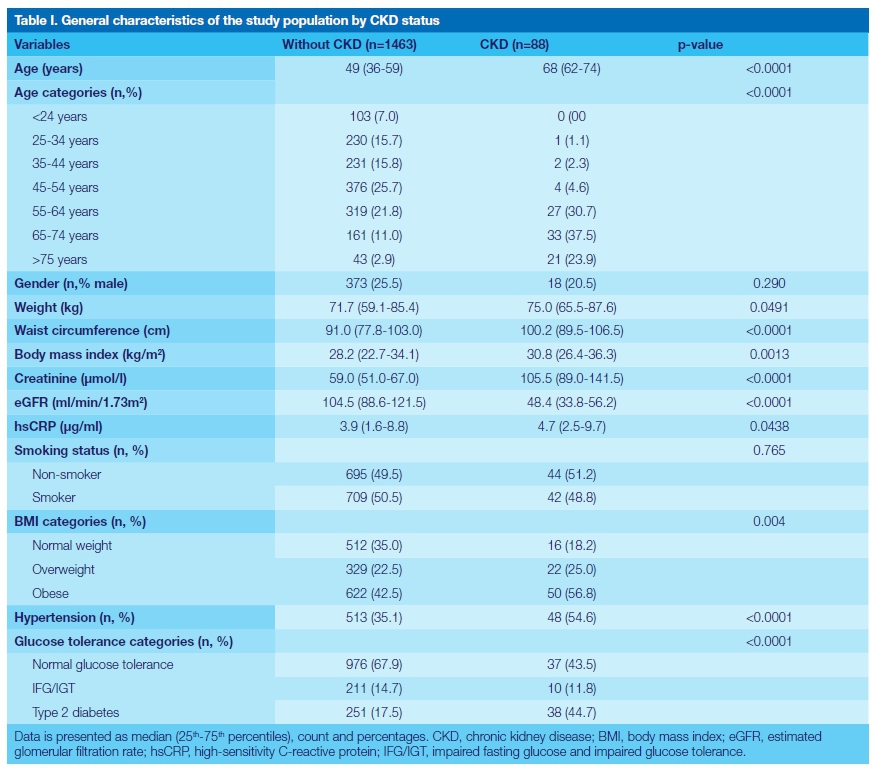
The general characteristics of the study population are summarised in Table I. The original study sample comprised 1,979 participants. Of those, 428 participants were excluded from this analysis due to missing data on serum creatinine or variables required to estimate kidney function, including age and gender, as well as those participants who did not receive an oral examination. The final sample included 1,551 participants, of which 25.2% were male, with ages ranging from 20 to 91 years (median age of 51 years), and 6% having an eGFR <60 ml/min/1.73m22
Dental and periodontal profile of study population
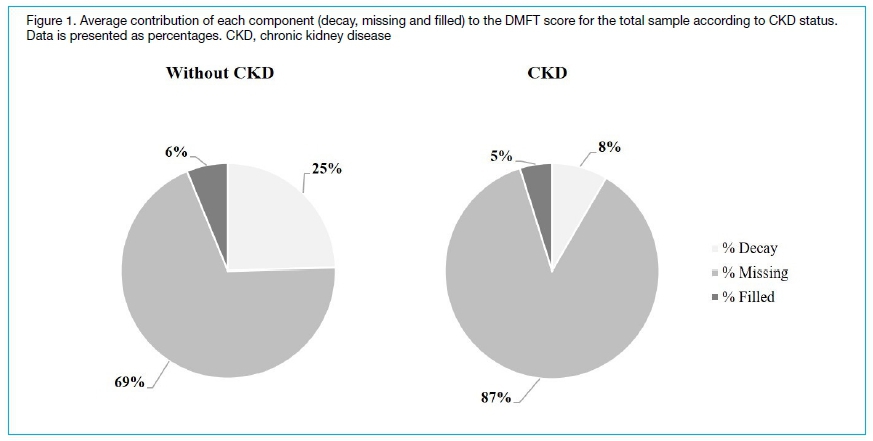
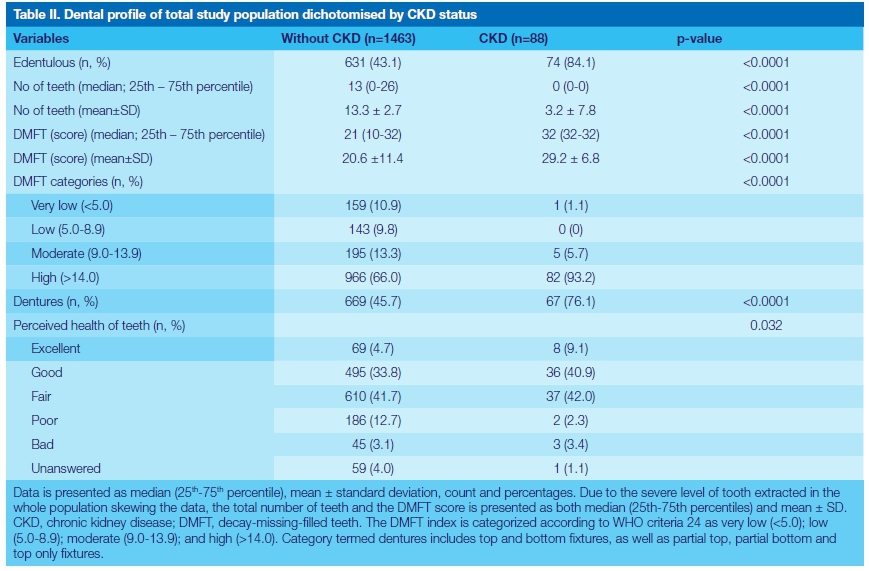
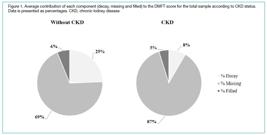
The dental profile of the study population is summarised in Table II and Figure 1. In the total sample, edentulism was found in 84.1% of those with CKD, compared to 43.1% of individuals with normal kidney function. On average those with reduced kidney function had significantly less teeth compared to those participants with normal kidney function (3.2 vs. 13 teeth; p<0.0001). Furthermore, CKD was characterized by a higher mean DMFT index compared to those without CKD (29.2 vs. 20.6; p<0.0001). Despite 93.2% and 66.0% of people with CKD and without CKD, respectively having a DMFT index greater than 14, 50% and 38.5% of those with and without CKD, respectively rated their overall oral health as either good or excellent. Based on the components of the DMFT index, for both groups the "missing" component had the highest contribution to the score with a greater contribution in those with CKD compared to those without CKD (87% vs. 69%; p<0.0001). On the contrary, compared to those without CKD, participants with CKD had a lower prevalence of decayed (8% vs. 25%; p<0.0001) and similar prevalence of filled teeth (5% vs. 6%; p=0.053) (Figure 1). Of the participants with CKD, 76.1% were fitted with dentures, compared to 45.8% of individuals with normal kidney function.
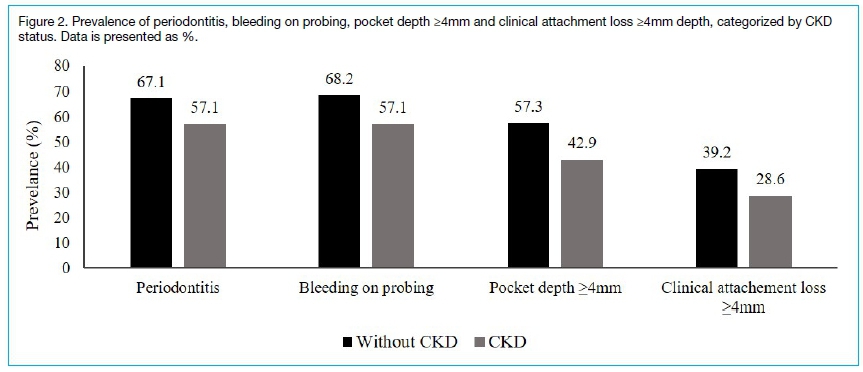
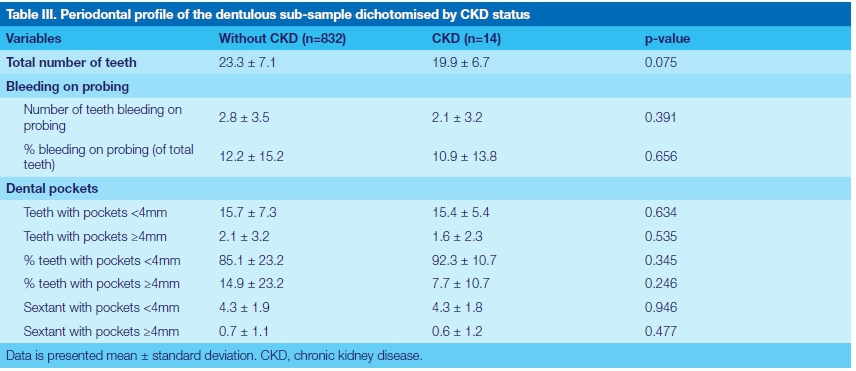
The periodontal profile of the dentate sub-sample (n=846) is presented in Table III and Figure 2. Compared to the participants with edentulism, those in the dentate sub-sample were on average younger (40.4 vs. 59.5 years; p<0.0001), had a higher eGFR (112.7 vs. 91.7 ml/ min/1.73m2Figure 2). Likewise, similar prevalence of BOP, PD >4mm and CAL >4mm was observed for participants with and without CKD (p>0.276 for all). Furthermore, the average number of teeth with BOP and PD >4mm was similar for individuals with CKD and those without CKD (p>0.391 for all). Also, similar prevalence levels of bleeding teeth and teeth with dental pockets greater than 4mm were observed between the two groups (12.2% vs. 10.9%; p=0.656 and 14.9% vs. 7.7%; p=0.246, respectively).
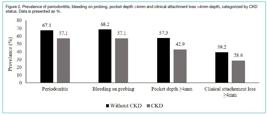
Relationship between dental caries and periodontitis with kidney function and prevalent chronic kidney disease
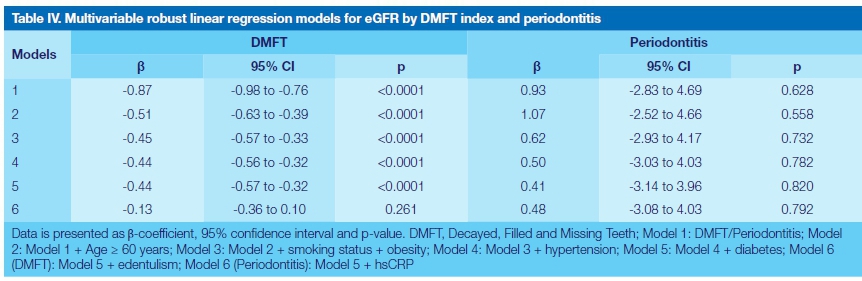
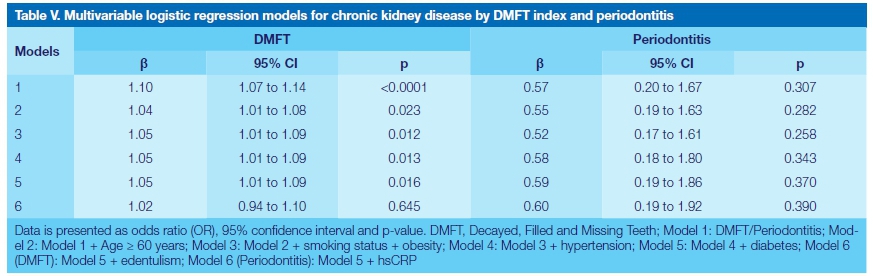
The unadjusted and adjusted associations for eGFR and prevalent CKD by DMFT index and periodontitis are presented in Tables IV and V, respectively. In robust linear regression analysis, higher DMFT scores were associated with lower eGFR (p<0.0001 for all), independent of older age (>60 years), smoking status, obesity, hypertension, and diabetes status (Table IV, Models 1-5). However, this association was not independent of edentulism (p=0.261) (Table IV, Model 6). Similarly, higher DMFT scores predicted prevalent CKD (p<0.023 for all) (Table V, Models 1-5), however not independent of edentulism (p=0.645) (Table V, Model 6). Periodontitis on the other hand was not associated with eGFR (p>0.558 for all) nor prevalent CKD (p>0.258 for all) (Tables IV and V, respectively; Model 1-5), before and after adjustment for relevant confounding variables.
Effect modification by hsCRP on the relationship between periodontitis and kidney function and prevalent CKD
There was no evidence of effect modification by hsCRP on the relationship between periodontitis and eGFR (p=0.792) (Table IV, Model 6), nor did hsCRP mediate the association between periodontitis and prevalent CKD (p=0.390) (Table V, Model 6), as the addition of hsCRP to the models had no effect on the association.
DISCUSSION
To the best of our knowledge, this is the first study to evaluate the periodontal and dental status of people of mixed ancestry with CKD. This study shows that adults of mixed ancestry, with and without CKD, have a severely impaired periodontal and dental status, with the clear majority experiencing periodontitis, dental caries and/or edentulism. Yet, despite the high prevalence of periodontitis in this population, this inflammatory condition seemingly had no effect on renal function nor could it predict CKD in this sample. However, given the small sub-sample of dentate individuals with CKD, this result should be viewed cautiously. We further showed that even though CKD is associated with a higher level of dental caries experienced, given the high DMFT index, this association is driven by the "missing" component and particularly the high level of edentulism in this group. Indeed, evaluating the components of the DMFT score, we found that CKD is associated with less decayed and filled teeth, but more missing teeth.
Though there is support for an association between periodontitis and CKD631,326,16,33 Also, the association between periodontitis and CKD is dependent on the severity of periodontitis. As such, the strength of the link between periodontitis and CKD increases with increasing severity of periodontitis.6,34 Even though we found no association between periodontitis and reduced kidney function in this study, we cannot exclude the possibility of such an association. Thus, it is not possible to determine, based on the existing evidence, if the relationship is truly absent in this group, or whether our study was not sufficiently powered to detect the difference, given the reduced sample of dentulous individuals. This hypothesis therefore needs further investigation.
With more than two thirds of the population presenting with a DMFT score greater than 14, the severity of caries experienced in this under-studied South African population is more comparable to higher income countries, such as the USA, Australia and Canada as opposed to other African countries,353637,3839 19,21
In this study, compared to the F (filled) and M (missing) component, we found that the D (decayed) component contributed less to the DMFT index in those with CKD, compared to the contribution of this component to those with normal kidney function. This lower prevalence of decayed teeth in people with CKD has been reported in other studies,19,3318,33,4018,33,4035,41,424335,43444546
Edentulism, which is the condition of being completely toothless, is also a major concern in this subpopulation with CKD, as 84% of the group had no teeth; an estimate substantially higher than most other countries.473747
This study has some limitations, which includes the high female to male participation, however this is a common trend in South African population studies. The association across CKD categories could not be evaluated as there were very few participants in the advanced stages of CKD (stage >4). Our study also used a single serum creatinine measure to determine the grade of kidney function and did not include estimates of albuminuria. It is however a common practice in community-based studies to diagnose CKD using a single measurement of serum creatinine. Also, because such a large proportion of people with CKD were edentulous, removing those with no teeth rendered the group with CKD very small. Also, we never gained information centred around the reason for tooth loss, and we are therefore unable to confirm whether tooth loss was due to caries, periodontitis or due to any other reasons. However, despite these limitations, we are not aware of other studies that have assessed the association between oral disease and CKD and the potential mediatory effect of systemic inflammation on this association in this previously understudied South African population group.
CONCLUSION
It is crucial that decision makers implement health strategies that focus on promoting good oral health and preventing oral disease, such as periodontitis and dental caries, also shifting away from the current predominantly emergency service of dental extractions. Due to the complex nature of the determinants of oral disease, both for people with and without CKD, exploring CKD patient preferences and priorities for dental care could guide additional research and practice interventions.
The author contributions are as follows: Conceived and/or designed the work that led to the submission (TEM, UC, RTE, APK, CG), acquired data (TEM, SFGD, GMH, UC), and/or played an important role in interpreting the results (UC, APK, CG), drafted (CG) or revised the manuscript (all authors), and approved the final version (all authors). The authors have no conflict of interest to disclose.
Funding declaration: This study was funded by the South African Medical Research Council (SAMRC) with funds from National Treasury under its Economic Competitiveness and Support Package (MRC-RFA-UFSP-01-2013/VMH Study) and strategic funds from the SAMRC received from the South African National Department of Health.
Acknowledgements
We are grateful to the Cape Town VMH study investigation team and population of Bellville-South (Cape Town, South Africa) for their participation.
References
-
1. Eckardt KU, Coresh J, Devuyst O, Johnson RJ, Kottgen A, Levey AS, Levin A. Evolving importance of kidney disease: from subspecialty to global health burden. Lancet. 2013;382(9887):158-69. doi: 10.1016/S0140- 6736(13)60439-0.
» https://doi.org/10.1016/S0140- 6736(13)60439-0 -
2. George C, Mogueo A, Okpechi I, Echouffo-Tcheugui JB, Kengne AP. Chronic kidney disease in low-income to middle-income countries: the case for increased screening. BMJ Glob Health. 2017;2(2):e000256. doi: 10.1136/bmjgh-2016-000256.
» https://doi.org/10.1136/bmjgh-2016-000256 -
3. Kaze AD, Ilori T, Jaar BG, Echouffo-Tcheugui JB. Burden of chronic kidney disease on the African continent: a systematic review and meta-analysis. BMC Nephrol. 2018;19(1):125. doi: 10.1186/s12882-018-0930-5
» https://doi.org/10.1186/s12882-018-0930-5 - 4. Petersen PE, Bourgeois D, Ogawa H, Estupinan-Day S, Ndiaye C. The global burden of oral diseases and risks to oral health. Bulletin of the World Health Organization. 2005;83(9):661-9.
-
5. Global Burden of Disease 2016 Disease and Injury Incidence and Prevalence Collaborators. Global, regional, and national incidence, prevalence, and years lived with disability for 328 diseases and injuries for 195 countries, 1990-2016: a systematic analysis for the Global Burden of Disease Study 2016. Lancet (London, England). 2017;390(10100):1211-59. doi: 10.1016/S0140-6736(17)32154-2.
» https://doi.org/10.1016/S0140-6736(17)32154-2 -
6. Deschamps-Lenhardt S, Martin-Cabezas R, Hannedouche T, Huck O. Association between periodontitis and chronic kidney disease: Systematic review and meta-analysis. Oral diseases. 2019;25(2):385-402. doi: 10.1111/odi.12834.
» https://doi.org/10.1111/odi.12834 -
7. Ioannidou E, Swede H, Dongari-Bagtzoglou A. Periodontitis predicts elevated C-reactive protein levels in chronic kidney disease. Journal of dental research. 2011;90(12):1411-5. doi: 10.1177/0022034511423394.
» https://doi.org/10.1177/0022034511423394 -
8. Sharma P, Dietrich T, Ferro CJ, Cockwell P, Chapple IL. Association between periodontitis and mortality in stages 3-5 chronic kidney disease: NHANES III and linked mortality study. Journal of clinical periodontology. 2016;43(2):104-13. doi: 10.1111/jcpe.12502.
» https://doi.org/10.1111/jcpe.12502 -
9. Fisher MA, Taylor GW. A prediction model for chronic kidney disease includes periodontal disease. Journal of periodontology. 2009;80(1):16-23. doi: 10.1902/ jop.2009.080226.
» https://doi.org/10.1902/ jop.2009.080226 -
10. Peres MA, Macpherson LMD, Weyant RJ, Daly B, Venturelli R, Mathur MR, Listl S, Celeste RK, Guarnizo-Herreho CC, Kearns C, Benzian H, Allison P, Watt RG. Oral diseases: a global public health challenge. Lancet. 2019;394(10194):249-60. doi: 10.1016/S0140-6736(19)31146-8.
» https://doi.org/10.1016/S0140-6736(19)31146-8 -
11. Zhao D, Khawaja AT, Jin L, Li KY, Tonetti M, Pelekos G. The directional and non-directional associations of periodontitis with chronic kidney disease: A systematic review and meta-analysis of observational studies. Journal of periodontal research. 2018;53(5):682-704. doi: 10.1111/jre.12565.
» https://doi.org/10.1111/jre.12565 -
12. Petersen PE, Ogawa H. The global burden of periodontal disease: towards integration with chronic disease prevention and control. Periodontology 2000. 2012;60(1):15-39. doi: 10.1111/J.1600-0757.2011.00425.x.
» https://doi.org/10.1111/J.1600-0757.2011.00425.x -
13. Hajishengallis G, Lambris JD. Complement and dysbiosis in periodontal disease. Immunobiology. 2012;217(11):1111-6. doi: 10.1016/j. imbio.2012.07.007.
» https://doi.org/10.1016/j. imbio.2012.07.007 -
14. D'Aiuto F, Parkar M, Andreou G, Suvan J, Brett PM, Ready D, Tonetti MS. Periodontitis and systemic inflammation: control of the local infection is associated with a reduction in serum inflammatory markers. Journal of dental research. 2004;83(2):156-60. doi: 10.1177/154405910408300214.
» https://doi.org/10.1177/154405910408300214 -
15. Paraskevas S, Huizinga JD, Loos BG. A systematic review and meta-analyses on C-reactive protein in relation to periodontitis. Journal of clinical periodontology. 2008;35(4):277-90. doi:10.1111/j.1600-051X.2007.01173.x.
» https://doi.org/10.1111/j.1600-051X.2007.01173.x -
16. Borawski J, Wilczynska-Borawska M, Stokowska W, Mysliwiec M. The periodontal status of pre-dialysis chronic kidney disease and maintenance dialysis patients. Nephrol Dial Transplant. 2007;22(2):457-64. doi: 10.1093/ndt/gfl676.
» https://doi.org/10.1093/ndt/gfl676 -
17. Ioannidou E, Hall Y, Swede H, Himmelfarb J. Periodontitis associated with chronic kidney disease among Mexican Americans. Journal of public health dentistry. 2013;73(2):112-9. doi: 10.1111/j.1752-7325.2012.00350.x.
» https://doi.org/10.1111/j.1752-7325.2012.00350.x -
18. Andrade MR, Salazar SL, de Sá LF, Portela M, Ferreira-Pereira A, Soares RM, Leão AT, Primo LG. Role of saliva in the caries experience and calculus formation of young patients undergoing hemodialysis. Clinical oral investigations. 2015;19(8):1973-80. doi: 10.1007/s00784-015-1441-4.
» https://doi.org/10.1007/s00784-015-1441-4 -
19. Menezes CR, Pereira AL, Ribeiro CC, Chaves CO, Guerra RN, Thomaz É B, Monteiro-Neto V, Alves CM. Is there association between chronic kidney disease and dental caries? A case-controlled study. Medicina oral, patologia oral y cirugia bucal. 2019;24(2):e211-e6. doi: 10.4317/medoral.22737.
» https://doi.org/10.4317/medoral.22737 -
20. Thorman R, Neovius M, Hylander B. Clinical findings in oral health during progression of chronic kidney disease to end-stage renal disease in a Swedish population. Scandinavian journal of urology and nephrology. 2009;43(2):154-9. doi: 10.1080/00365590802464817.
» https://doi.org/10.1080/00365590802464817 -
21. Andrade MR, Antunes LA, Soares RM, Leao AT, Maia LC, Primo LG. Lower dental caries prevalence associated to chronic kidney disease: a systematic review. Pediatric nephrology (Berlin, Germany). 2014;29(5):771-8. doi: 10.1007/s00467-013-2437-4.
» https://doi.org/10.1007/s00467-013-2437-4 -
22. Garcez J, Limeres Posse J, Carmona IT, Feijoo JF, Diz Dios P. Oral health status of patients with a mild decrease in glomerular filtration rate. Oral surgery, oral medicine, oral pathology, oral radiology, and endodontics. 2009;107(2):224-8. doi: 10.1016/j.tripleo.2008.09.018.
» https://doi.org/10.1016/j.tripleo.2008.09.018 - 23. Kengne AP, Erasmus RT, Levitt NS, Matsha TE. Alternative indices of glucose homeostasis as biochemical diagnostic tests for abnormal glucose tolerance in an African setting. Primary care diabetes. 2017;11(2):119-31
- 24. World Health Organization. Oral health surveys: basic methods. 5th ed. Geneva: WHO; 2013.
-
25. Chikte U, Pontes CC, Karangwa I, Kimmie-Dhansay F, Erasmus R, Kengne AP, et al. Dental caries in a South African adult population: findings from the Cape Town Vascular and Metabolic Health Study. Int Dent J. 2019:10.1111/idj.12538.
» https://doi.org/10.1111/idj.12538 -
26. Levey AS, Bosch JP, Lewis JB, Greene T, Rogers N, Roth D. A more accurate method to estimate glomerular filtration rate from serum creatinine: a new prediction equation. Modification of Diet in Renal Disease Study Group. Annals of internal medicine. 1999;130(6):461-70. doi: 10.7326/0003-4819-130-6199903160-00002.
» https://doi.org/10.7326/0003-4819-130-6199903160-00002 -
27. Levey AS, Stevens LA, Schmid CH, Zhang YL, Castro AF, 3rd, Feldman HI, Kusek JW, Eggers P, Van Lente F, Greene T, Coresh J, Chronic Kidney Disease Epidemiology Collaboration. A new equation to estimate glomerular filtration rate. Annals of internal medicine. 2009;150(9):604-12. doi: 10.7326/00034819-150-9-200905050-00006.
» https://doi.org/10.7326/00034819-150-9-200905050-00006 -
28. Levey AS, Coresh J, Balk E, Kausz AT, Levin A, Steffes MW, Hogg RJ, Perrone RD, Lau J, Eknoyan G, National Kidney Foundation. National Kidney Foundation practice guidelines for chronic kidney disease: evaluation, classification, and stratification. Annals of internal medicine. 2003;139(2):137-47. doi: 10.7326/0003-4819-139-2-200307150-00013.
» https://doi.org/10.7326/0003-4819-139-2-200307150-00013 - 29. World Health Organization. A global brief on Hypertension: Silent killer, global public health crisis. 2013.
- 30. World Health Organization, International Diabetes Federation. Definition and diagnosis of diabetes mellitus and intermediate hyperglycaemia: report of a WHO/IDF consultation. Geneva: World Health Organization; 2006.
-
31. Tonelli M, Sacks F, Pfeffer M, Jhangri GS, Curhan G, Cholesterol Recurrent Events Trial Investigators. Biomarkers of inflammation and progression of chronic kidney disease. Kidney Int. 2005;68(1):237-45. doi: 10.1111/j.1523-1755.2005.00398.x.
» https://doi.org/10.1111/j.1523-1755.2005.00398.x -
32. Menon V, Greene T, Wang X, Pereira AA, Marcovina SM, Beck GJ, Kusek JW, Collins AJ, Levey AS, Sarnak MJ. C-reactive protein and albumin as predictors of all-cause and cardiovascular mortality in chronic kidney disease. Kidney Int. 2005;68(2):766-72. doi:10.1111/j.1523-1755.2005.00455.x.
» https://doi.org/10.1111/j.1523-1755.2005.00455.x -
33. Akar H, Akar GC, Carrero JJ, Stenvinkel P, Lindholm B. Systemic consequences of poor oral health in chronic kidney disease patients. Clin J Am Soc Nephrol. 2011;6(1):218-26. doi: 10.2215/CJN.05470610.
» https://doi.org/10.2215/CJN.05470610 -
34. Grubbs V, Vittinghoff E, Taylor G, Kritz-Silverstein D, Powe N, Bibbins-Domingo K, Ishani A, Cummings SR, Osteoporotic Fractures in Men Study Research Group. The association of periodontal disease with kidney function decline: a longitudinal retrospective analysis of the MrOS dental study. Nephrol Dial Transplant. 2016;31(3):466-72. doi: 10.1093/ndt/gfv312.
» https://doi.org/10.1093/ndt/gfv312 - 35. Petersen P, World Health Organization Oral Health Programme. The world oral health report 2003: continuous improvement of oral health in the 21st century - the approach of the WHO Global Oral Health Programme. Geneva: World Health Organization; 2003.
- 36. South African Department of Health. National Oral Health Survey: South Africa 1988/89. In: Health Do, editor. Pretoria1994.
-
37. Ruospo M, Palmer SC, Craig JC, Gentile G, Johnson DW, Ford PJ, Tonelli M, Petruzzi M, De Benedittis M, Strippoli GF. Prevalence and severity of oral disease in adults with chronic kidney disease: a systematic review of observational studies. Nephrol Dial Transplant. 2014;29(2):364-75. doi: 10.1093/ndt/gft401.
» https://doi.org/10.1093/ndt/gft401 -
38. Jepsen S, Blanco J, Buchalla W, Carvalho JC, Dietrich T, Dörfer C, Eaton KA, Figuero E, Frencken JE, Graziani F, Higham SM, Kocher T, Maltz M, Ortiz-Vigon A, Schmoeckel J, Sculean A, Tenuta LM, van der Veen MH, Machiulskiene V. Prevention and control of dental caries and periodontal diseases at individual and population level: consensus report of group 3 of joint EFP/ORCA workshop on the boundaries between caries and periodontal diseases. Journal of clinical periodontology. 2017;44 Suppl 18:S85-s93. doi: 10.1111/jcpe.12687.
» https://doi.org/10.1111/jcpe.12687 -
39. Kassebaum NJ, Bernabé E, Dahiya M, Bhandari B, Murray CJL, Marcenes W. Global Burden of Severe Tooth Loss: A Systematic Review and Meta-analysis. Journal of dental research. 2014;93(7 Suppl):20S-8S. doi: 10.1177/0022034514537828.
» https://doi.org/10.1177/0022034514537828 -
40. Pham TAV, Le DD. Dental condition and salivary characteristics in Vietnamese patients with chronic kidney disease. International journal of dental hygiene. 2019;17(3):253-60. doi: 10.1111/idh.12380.
» https://doi.org/10.1111/idh.12380 -
41. Grubbs V, Plantinga LC, Tuot DS, Powe NR. Chronic kidney disease and use of dental services in a United States public healthcare system: a retrospective cohort study. BMC Nephrol. 2012;13(1):16. doi:10.1186/1471-2369-13-16.
» https://doi.org/10.1186/1471-2369-13-16 - 42. WHO Regional Office for Africa. Promoting Oral Health in Africa: Prevention and control of oral diseases and noma as part of essential noncommunicable disease interventions. 2016.
-
43. Kailembo A, Preet R, Stewart Williams J. Common risk factors and edentulism in adults, aged 50 years and over, in China, Ghana, India and South Africa: results from the WHO Study on global AGEing and adult health (SAGE). BMC oral health. 2016;17(1):29. doi: 10.1186/s12903-016-0256-2.
» https://doi.org/10.1186/s12903-016-0256-2 -
44. van Wyk PJ, van Wyk C. Oral health in South Africa. Int Dent J. 2004;54(6 Suppl 1):373-7. doi: 10.1111/J.1875-595x.2004.tb00014.x.
» https://doi.org/10.1111/J.1875-595x.2004.tb00014.x - 45. Molete MP, Yengopal V, Moorman J. Oral health needs and barriers to accessing care among the elderly in Johannesburg. SADJ: journal of the South African Dental Association = tydskrif van die Suid-Afrikaanse Tandheelkundige Vereniging. 2014;69(8):352, 4-7.
-
46. Olutola BG, Ayo-Yusuf OA. Socio-environmental factors associated with self-rated oral health in South Africa: a multilevel effects model. International journal of environmental research and public health. 2012;9(10):3465-83. doi: 10.3390/ijerph9103465.
» https://doi.org/10.3390/ijerph9103465 -
47. Peltzer K, Hewlett S, Yawson AE, Moynihan P, Preet R, Wu F, Guo G, Arokiasamy P, Snodgrass JJ, Chatterji S, Engelstad ME, Kowal P. Prevalence of loss of all teeth (edentulism) and associated factors in older adults in China, Ghana, India, Mexico, Russia and South Africa. International journal of environmental research and public health. 2014;11(11):11308-24. doi: 10.3390/ijerph111111308.
» https://doi.org/10.3390/ijerph111111308

Author contributions:
1 . Cindy George: 20% Contribution
2 . Tandi E Matsha: 15% Contribution
3 . Saarah FG Davids: 10% Contribution
4 . Gloudina M Hon: 10% Contribution
5 . U Chikte: 15% Contribution
6 . Rajiv T Erasmus: 15% Contribution
7 . Andre P Kengne: 15% Contribution