A Comparative Analysis of Traditional Dental Screening versus Smart Phone Screening
Abstract
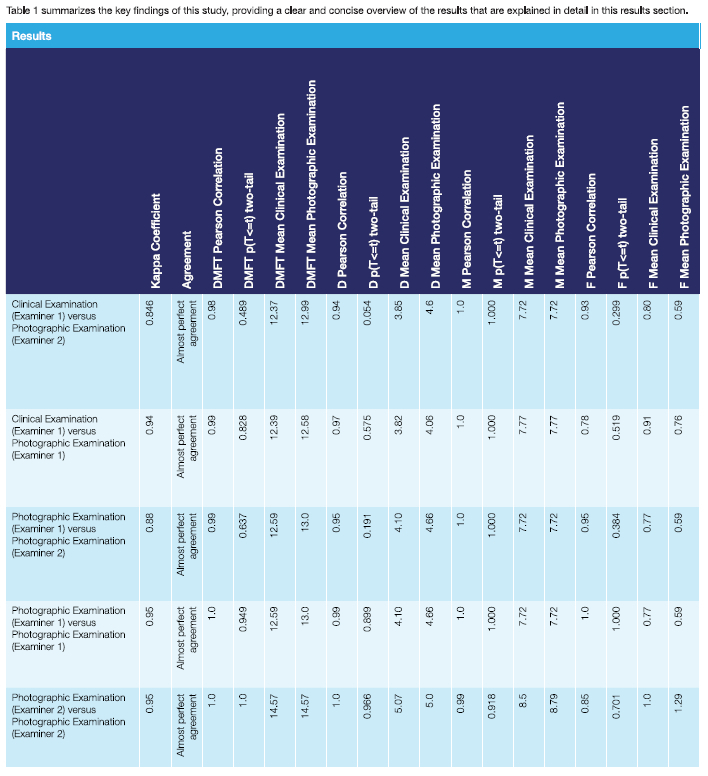
Teledentistry has emerged as a promising solution to address oral health disparities, particularly in resource-limited settings like rural South Africa, where low dentist-to-population ratios and high costs restrict access to dental care. The present study evaluated the reliability and accuracy of smartphone-based, remote dental screening compared to traditional chairside clinical examination screening. A cross-sectional study was conducted with 145 participants (> 18 years) attending the Tygerberg Oral Health Centre. Standardized intraoral photographs were captured using an Apple iPhone XS and uploaded securely to the Vula App for remote assessment. Diagnostic tools, including the International Caries Detection and Assessment System (ICDAS) and the Decayed, Missing, and Filled Teeth (DMFT) index, were employed to ensure consistency. The results showed an "Almost Perfect Agreement" between clinical and photographic examinations, with Cohen Kappa coefficients ranging from 0.84 to 0.95 and strong Pearson correlations (>0.90). No statistically significant differences were observed, confirming teledentistry's reliability as a diagnostic tool. Teledentistry offers a secure, and cost-effective method to improve access to dental care, particularly for underserved populations. By overcoming geographical and economic barriers, it aligns with public health goals, including South Africa's National Health Insurance (NHI) scheme, to improve equity and quality in healthcare delivery.
Teledentistry; Remote Dental Screening; Oral Health Equity; Digital Health; National Health Insurance (NHI); Diagnostic Reliability