Contamination and disinfection of silicone pacifiers: An in vitro study
Abstract
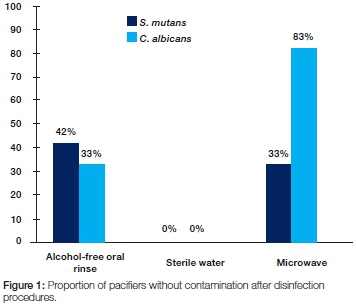
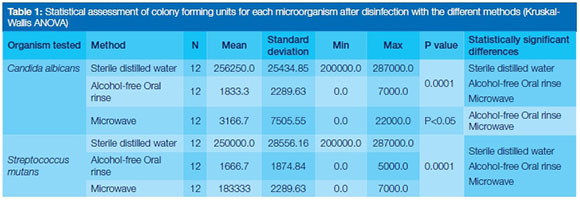
INTRODUCTION: Whilst in use as comforting devices, the nipples of pacifiers are permanently in contact with normal oral flora and saliva, allowing flourishing bacterial bio-films. Effective disinfection will limit contamination, promote oral health and prevent oral infections in children. Studies on pacifier disinfection in South Africa are not well documented. AIM: To investigate in vitro disinfection of contaminated pacifiers with alcohol-free oral rinse and microwave. METHODS: Seventy two silicone pacifiers were divided into two groups of 36, and contaminated with standardized suspensions of Candida albicans and Streptococcus mutans respectively. Each group was subdivided into three and disinfected with alcohol-free oral rinse, microwave and sterile distilled water (control), followed by microbiological analysis. Data was analyzed using Kruskal Wallis Anova test. RESULTS: Alcohol-free oral rinse removed S. mutans from 42% of pacifiers, whilst microwave removed 33%. Microwave removed C. albicans from 83% of pacifiers, but alcohol-free oral rinse removed only 33%, a difference significant at p<0.05. All pacifiers treated with sterile water retained bacterial contaminationed. CONCLUSION: Microwave was more effective than alcohol-free oral rinse in eliminating C. albicans from pacifiers. Microwave and alcohol-free oral rinse were equally effective in eliminating S. mutans from pacifiers.
Candida albicans; disinfection; microwave; oral rinse; pacifier
 Thumbnail