Preventive oral health knowledge, attitudes and practices of patients attending selected private dental practices in Pretoria, South Africa
Abstract
INTRODUCTION: Despite the well-established role of preventive oral health behaviours in reducing oral disease, limited evidence exists on the knowledge, attitudes, and practices (KAP) of adults attending private dental practices in South Africa. This study was undertaken to assessing preventive oral health behaviours among patients in selected private practices in Pretoria. AIM AND OBJECTIVES: The study aimed to determine the preventive oral health KAP of patients attending selected private dental practices in Pretoria. DESIGN: A descriptive cross-sectional study design was employed. METHODS: A descriptive cross-sectional study was conducted among adult patients attending four selected private dental practices in Pretoria. Participants were recruited using convenience sampling and completed a validated, self-administered questionnaire. Data were analysed using SPSS version 28, with descriptive statistics (frequencies, proportions, and means) and inferential analysis using the Chi-square test to assess associations between variables at a 5% significance level (p ≤ 0.05). RESULTS: More than 100% of the sample, or 325 out of the estimated 304 members of the representative sample, agreed and completed the survey. Out of 325 participants (59.1% female, mostly aged 30-39), 55% were aware of dental caries and 65% of its causes, while 77% associated gingivitis with poor oral hygiene. Most (89%) had received oral hygiene instruction, mainly from dentists (64%), and 74.5% brushed twice daily. About 60% attended regular dental check-ups. CONCLUSION: Although adult dental patients attending private practices in Pretoria demonstrate generally positive oral hygiene behaviours, significant gaps remain in preventive oral health knowledge and practices, particularly regarding fluoride use, diet, flossing, and routine dental attendance. These findings highlight the need for targeted, evidence-based preventive education strategies in private dental practice settings.
Preventive oral health; oral hygiene behaviour; KAP study; dental patient education; South Africa; private dental practice
INTRODUCTION
Oral health is a fundamental component of overall health and well-being, with substantial evidence demonstrating a strong association between oral diseases and comorbidities such as cardiovascular disease, diabetes mellitus, respiratory infections, adverse pregnancy outcomes, just to name a few.1-4 Oral diseases, particularly dental caries and periodontal disease, are among the most prevalent chronic conditions globally and are primarily caused by bacterial biofilm accumulation.51, 6, 7 Furthermore, pathogenic microorganisms and their by-products may enter the bloodstream, triggering systemic inflammation and contributing to the progression of systemic diseases.2, 3 As life expectancy increases and individuals retain their natural dentition for longer, maintaining oral health through effective preventive strategies has become increasingly important to preserve oral function and overall health.1
The Health Belief Model (HBM) provides a useful framework for understanding preventive oral health behaviours.8, 9 This model suggests that individuals are more likely to engage in preventive health behaviours if they perceive themselves to be susceptible to disease, recognise the severity of the condition, understand the benefits of preventive action, and perceive minimal barriers to implementing such behaviours.8-10 In the context of oral health, improving oral health knowledge is essential for early diagnosis, prevention, and prompt treatment of dental diseases.5, 7 Understanding oral health enables individuals to adopt appropriate preventive measures such as toothbrushing, interdental cleaning, and regular dental visits, which are essential for controlling dental plaque and preventing disease progression.5, 11, 12 Additionally, patient education and motivation are key factors influencing adherence to oral hygiene practices, as knowledge transfer promotes behavioural change and the establishment of lifelong preventive habits.2, 12, 13
Preventive dentistry focuses on addressing the underlying causes of oral disease through education, early intervention, and behavioural modification.1214, 15 Clinical evidence indicates that prevention and treatment of oral diseases, particularly periodontal disease, can reduce systemic inflammatory burden and improve general health.31, 6, 7 Within private dental practice settings, oral health professionals play a crucial role in delivering preventive education and reinforcing positive oral health behaviours during patient interactions.16
Despite the availability of preventive dental services and education, many patients continue to seek dental care only when symptoms become severe, frequently postponing treatment until limited options remain.1212
Therefore, the aim of this study was to assess the preventive oral health KAP of patients attending selected private dental practices in Pretoria, South Africa, in order to identify knowledge gaps and inform future oral health promotion and preventive care strategies.
The aim of the study was therefore to assess the KAP of dental patients regarding oral preventative measures in selected private dental practices in Pretoria.
MATERIALS AND METHOD
Study design
A descriptive cross-sectional study was conducted to assess oral health KAP among patients attending selected private dental practices in Pretoria, South Africa. Cross-sectional designs are appropriate for assessing population characteristics and associations between variables at a single point in time.12
Study setting
The study was conducted in four private dental practices located in different geographic regions of Pretoria (North, South, East, and West). These practices were purposively selected to obtain a broader representation of patients attending private dental care facilities across the city. Prior to the commencement of the study, the principal investigator contacted the practice owners to explain the objectives of the research and request permission to recruit patients from their practices. Gatekeeper permission was obtained from the practice owners before data collection commenced.
Study population
The study population consisted of adult patients attending routine dental appointments at the selected practices during the study period. Patients were approached while waiting for their dental consultation and were invited to participate in the study.
Inclusion criteria
• Patients aged 18 years or older
• Patients attending the participating dental practices during the data collection period
• Patients able to read and understand English
• Patients who voluntarily provided informed consent
Exclusion criteria
• Patients younger than 18 years
• Patients unable to read English
• Patients who declined to participate or did not provide informed consent
Sampling framework
A non-probability convenience sampling approach was used to recruit participants. Patients present in the waiting areas of the participating dental practices during the data collection period were invited to participate if they met the inclusion criteria. Based on the patient flow of the participating practices, two practices consulted an average of seven patients per day (approximately 140 patients per month), while the other two practices consulted approximately five patients per day (approximately 100 patients per month). Over a six-month data collection period, the estimated accessible population was therefore approximately 1,440 patients. The minimum required sample size was calculated using the Raosoft sample size calculator, assuming a population size of 1,440, a 95% confidence level, and a 5% margin of error (Calculator, Raosoft (2004) Sample size. Raosoft. http://www.rasoft.com/samplesize.html). The calculated minimum sample size was 304 participants.
Data collection
Data were collected using a modified, validated self-administered questionnaire adapted from previously published research.12
Recruitment procedure
The principal investigator coordinated the data collection process and communicated with the four participating practices prior to the commencement of the study. Practice staff were informed about the study procedures and assisted in identifying potential participants in the waiting area. Patients were approached before their dental consultation and provided with a brief explanation of the study. Individuals who expressed interest received an information sheet and were given the opportunity to read the informed consent document and ask questions. Patients who agreed to participate provided written informed consent before completing the questionnaire.
The principal investigator remained available at the practice during data collection periods to assist participants with questions and ensure that the consent process was properly followed.
Questionnaire structure
The questionnaire consisted of 31 closed-ended questions and was divided into three sections. The first section collected demographic information, including age, gender, highest level of education, and medical aid membership. The second section comprised of 22 questions assessing participants' oral health knowledge and practices, including dental hygiene behaviours and preventive oral health measures. The final section included five questions evaluating participants' attitudes toward oral health and dental care. Closed-ended questions were used to ensure standardised responses and to facilitate quantitative statistical analysis.
Pilot testing
Prior to the main study, the questionnaire was pilot tested among a small group of individuals who met the inclusion criteria but were not part of the final study population. The pilot study assessed the clarity of the questions, time required to complete the questionnaire, and the functionality of the electronic data collection platform. Minor adjustments were made to improve wording and usability before the questionnaire was implemented in the main study.
Data collected through Google Forms (Google LLC, Mountain View, CA, USA) were exported to Microsoft Excel and subsequently imported into SPSS version 28 (IBM Corp., Armonk, NY, USA) for statistical analysis.
Data cleaning
Prior to analysis, the dataset was reviewed for completeness, duplicate responses, and inconsistencies. Incomplete responses and invalid entries were removed where necessary. Variables were coded appropriately to ensure compatibility with the statistical software before analysis.
Descriptive statistics
Quantitative variables were summarised using frequencies, proportions, percentages, means, standard deviations, and ranges where appropriate.
Inferential statistics
Associations between categorical variables were evaluated using the Chi-square test of independence. This test was selected because the study variables consisted primarily of categorical data and the analysis aimed to determine whether statistically significant associations existed between demographic variables and oral health KAP. The assumptions for the Chi-square test were assessed prior to analysis, including:
• independence of observations
• categorical nature of the variables
• adequate expected cell frequencies
A significance level of p ≤ 0.05 was used to determine statistical significance. A statistician was consulted during the data analysis process to ensure the appropriateness of the statistical methods used.
Ethical considerations
Ethical approval for the study was obtained from the University of Pretoria Faculty of Health Sciences Research Ethics Committee (Reference number: 500/2022). Participation in the study was voluntary, and informed consent was obtained from all participants prior to completing the questionnaire. Participants were informed that they could withdraw from the study at any time without any consequences to their dental care. No personal identifying information was collected, and all responses were anonymised. Data were stored securely in password-protected electronic files accessible only to the research team. All study procedures were conducted in accordance with the ethical principles outlined in the Declaration of Helsinki.
Results
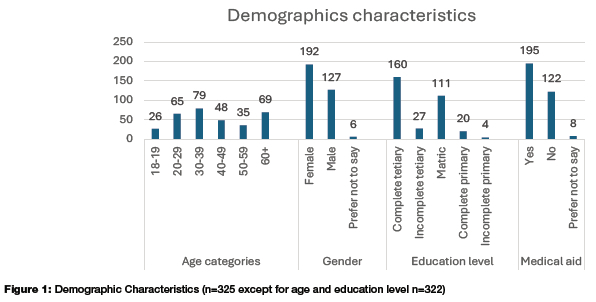
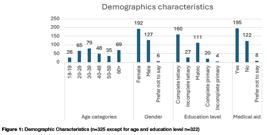
Of the estimated representative sample of 304, 325 consented and completed the questionnaire, resulting in a response rate of more than 100% of the representative sample. More than half of them being female (59.1%), and most of them were aged between 30 and 39. Nearly half of the respondents had completed tertiary education, and the majority (60%) had medical aid. The rest of the demographic features can be seen in Figure 1 below.
Knowledge component
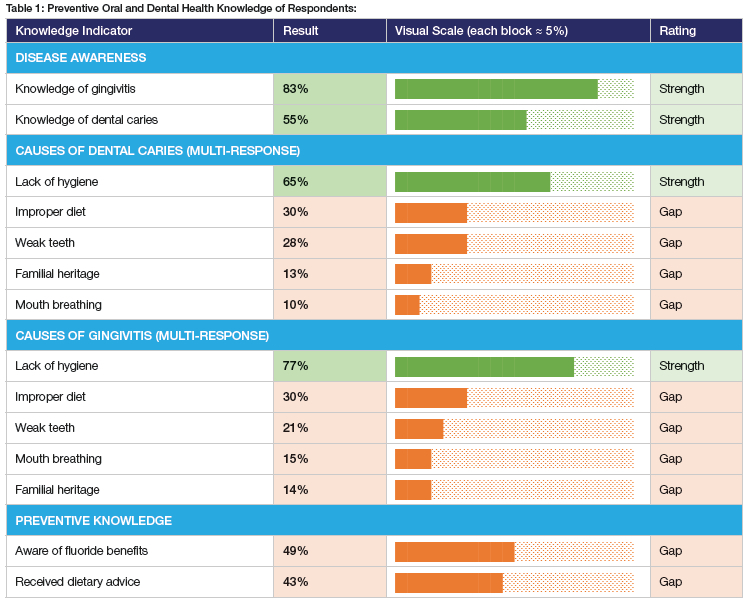
More than half of the participants were knowledgeable about dental caries, 177 (55%), and 65% of them knew the causative factors for dental caries. Almost two-thirds cited a lack of hygiene practices as the cause of gingivitis (77%). 57% of the participants lacked knowledge regarding the role that diet plays in oral and dental health. Fluoride and dietary advice findings represent critical targets for patient education in private dental practice. The preventive oral and dental health knowledge of the respondents can be seen in Table 1 below.
Horizontal bars represent the proportion of participants correctly identifying each item. Disease awareness items reflect single response yes/no questions. Green shading denotes areas of strength ( ≥ 50%); amber denotes knowledge gaps (<50%).
*Note: Causative factor items allow multiple responses - percentages do not sum to 100%. Response counts vary slightly per question due to non-responses. Dietary advice refers to food and drink choices that promote or are harmful to oral and dental health.
Attitudes - component
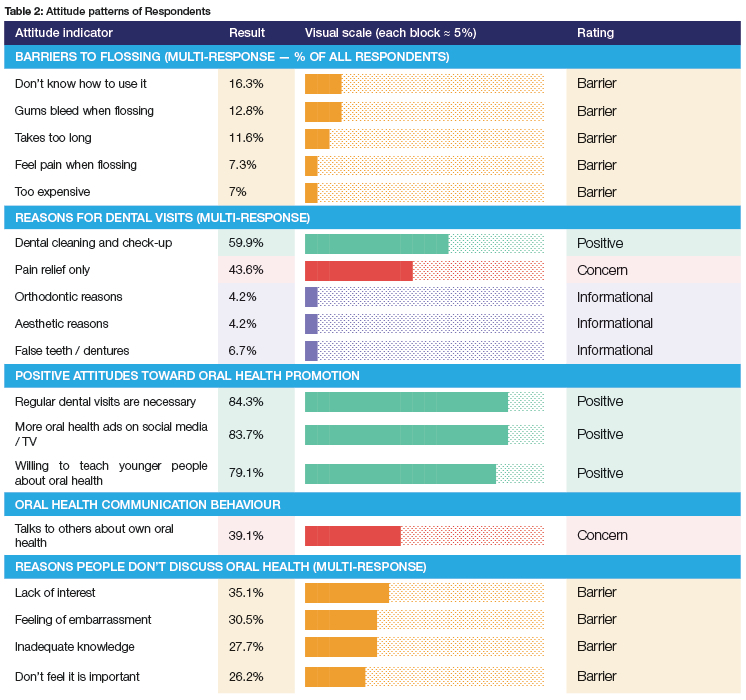
As can be seen in Table 2 below most (59,9%) of the participants go to the dentist mainly for a check-up and dental cleaning. A positive attitude pattern can be seen where most respondents agree that regular visits to the dentist are necessary (84.3%) and that oral health should be promoted on visual media (83.7%). Most of the participants are willing to teach younger individuals about oral health and prevention techniques (79%), while 61 % don't believe it is proper to talk to people about your mouth and how to take care of it.
Attitude patterns are presented across six domains: barriers to flossing, motivations for dental visits, positive attitudes toward preventive care, oral health communication behaviour, and perceived reasons for social silence about oral health.
Colour key: Positive = supportive attitude toward preventive care; Barrier = reported obstacle to optimal behaviour; Concern = clinically unfavourable pattern; Informational = contextual data point.
*Notes: Flossing barrier items and reasons-for-visit items allow multiple responses - percentages do not sum to 100% and are expressed relative to all respondents (n = 325).
Practices - component
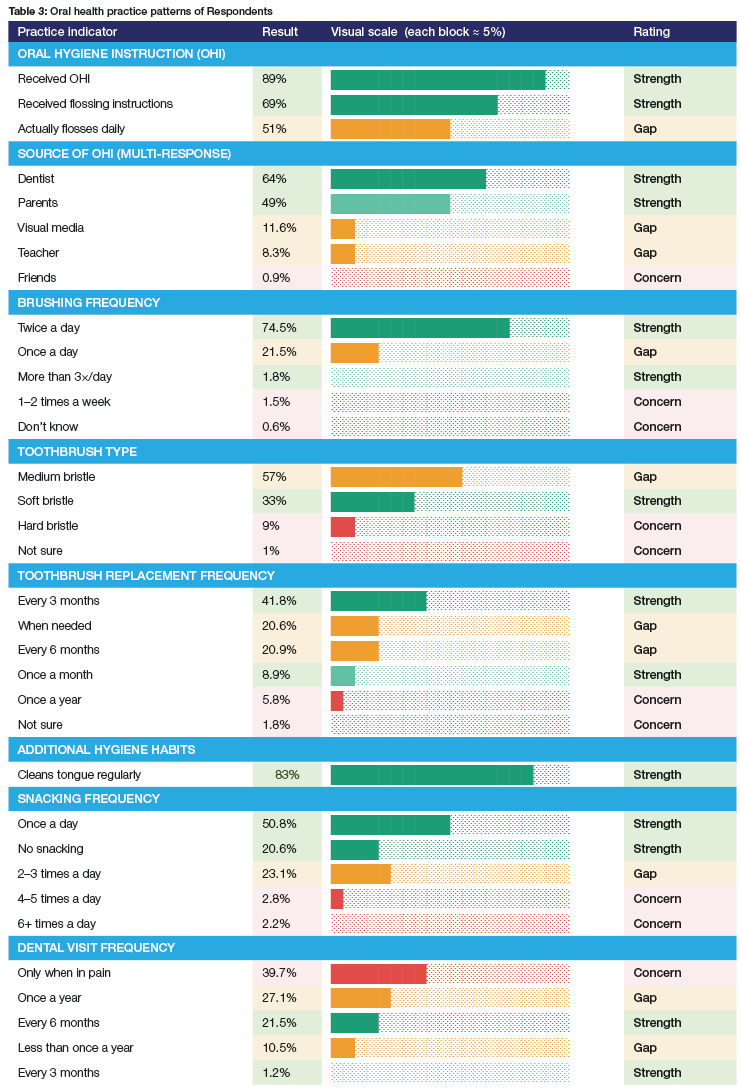
Most participants (89%) received oral hygiene instruction, and more than half of the participants indicated that the instructions were mainly given by a dentist (64%). Most respondents brush twice a day (74.5%) with a medium-bristled toothbrush (57%). Half of the respondents flossed their teeth, and 83% of the participants cleaned their tongues. Most of the participants went for dental visits only when they had a problem (39.7%), with the rest of the respondents visiting the dentist at various intervals. The oral health practice patterns of the patients can be seen in Table 3.
Summary of oral health practice patterns across eight domains.
Colour key: Strength = guideline-aligned or high positive uptake; Gap = moderate / suboptimal practice; Concern = clinically concerning behaviour.
*Notes: OHI source items allow multiple responses - percentages do not sum to 100%. Recommended dental check-up interval: every 6 months; optimal for high-risk patients: every 3 months. Soft bristle toothbrushes are the clinically recommended type.
Sociodemographic associations with oral health behaviours:
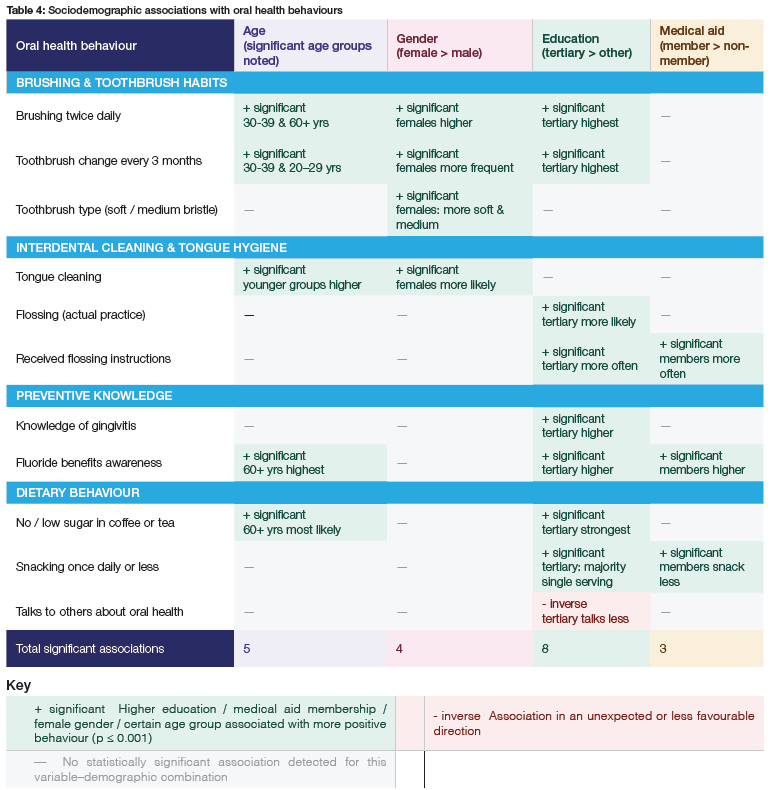
The cells in the matrix below (Table 4) show the direction and group pattern of each significant association. Education is the dominant predictor - it shows significant associations across 8 of the 11 behaviours tracked, more than any other demographic variable. The one inverse finding - tertiary-educated patients talking less to others about oral health - was an interesting finding. Gender and age are selective - females outperform males consistently on physical hygiene habits (brushing frequency, toothbrush type, tongue cleaning), while age effects are concentrated in the 30-39 peak and the 60+ group for dietary habits. Medical aid membership acts as a proxy for access - its associations cluster specifically around fluoride knowledge and flossing, both of which depend on professional instruction, reinforcing the access-driven inequality argument.
Significance matrix summarising statistically significant associations between four sociodemographic variables (age, gender, education level, medical aid membership) and eleven oral health behaviours.
*Notes: All Chi-square tests conducted in SPSS version 28. Significance level set at p ≤ 0.05; all reported associations met the more stringent threshold of p = 0.001. "-" indicates no statistically significant association was identified in the study data for that variable-demographic combination.
DISCUSSION
This study aimed to assess the preventive oral health KAP of patients attending selected private dental practices in Pretoria. The findings provide insight into several behavioural patterns and knowledge gaps related to preventive oral health. Participants' overall level of fundamental oral health knowledge was moderate to high, especially when it came to the causes of dental caries and gingivitis. However, there were notable disparities in preventive practices such as consistent flossing, nutritional knowledge, and proactive dental attendance, which was consistent with findings from earlier local and international studies.6, 7, 12 A comparable KAP study conducted among hospital patients in Guangzhou, China (2023) similarly reported that while knowledge and attitude scores were good, practice scores remained only moderate, and that education level was significantly associated with practice outcomes - a pattern that closely mirrors the sociodemographic associations identified in the present study.17
With 74.5% of respondents brushing twice a day, the brushing frequency of this study group was noticeably high and aligned with broader epidemiological data.55118
Only 49% of participants reported being aware of the advantages of fluoride, indicating a serious gap in preventive education. According to Tschoppe et al. (2011), fluoride remains one of the most scientifically supported caries prevention strategies, as it promotes remineralisation and inhibits demineralisation.1917
Participants generally expressed positive attitudes toward oral health promotion, with 83.7% indicating that oral health messages should receive greater visibility through media platforms, and 84.3% agreeing that routine dental check-ups are essential. These results are consistent with earlier research that highlights the vital role of public health campaigns in promoting preventive behaviours.11, 13 Crucially, the willingness of 79% of participants to impart oral health knowledge to younger people suggests that intergenerational transmission of healthy habits may be a productive approach in community-based interventions.1613
Sociodemographic factors - including age, gender, education level, and medical aid membership - were found to be significantly associated with oral health behaviours (p < 0.001). Better hygiene habits, lower sugar intake, and more preventive knowledge were substantially correlated with higher education levels, consistent with previous research demonstrating that health literacy and the adoption of preventive behaviours are positively associated with educational achievement.12, 15 A 2023 cross-sectional study by Veladas et al., published in BMC Public Health, confirmed that oral health literacy levels differ significantly by sex, age, and educational achievement, with younger participants and those with higher education demonstrating significantly higher levels of adequate oral health literacy - a finding that directly supports the sociodemographic patterns observed in the present study.20
Particular attention should be paid to dietary practices. Although snacking once a day was most common, a significant proportion of participants regularly consumed highly cariogenic items such as chips, chocolates, and sugary drinks. The need for comprehensive dietary counselling during dental consultations is further supported by the fact that dietary sugar remains a major risk factor for the development of dental caries.2, 4 Preventive measures must extend beyond oral hygiene to incorporate broader lifestyle factors, including diet, given the bidirectional relationship between oral and systemic health.3, 21, 22 Interestingly, individuals aged 60 and older demonstrated a significantly greater tendency to consume no sugar in their coffee or tea, while the 30-39 age group showed the highest rates of twice-daily brushing and regular toothbrush replacement - a pattern that suggests middle-aged adults may represent the most receptive target group for preventive reinforcement in private practice settings.
The pattern of dental attendance in this study was predominantly reactive, with 39.7% of participants visiting the dentist only when in pain - the single largest attendance group. Only 21.5% attended every six months in line with the recommended standard, and a mere 1.2% attended at the optimal three-monthly interval. This finding is consistent with earlier research12et al. in Gerodontology identified education, gender, and dental anxiety as key predisposing factors influencing the frequency of dental attendance, which aligns with the sociodemographic associations found in the present study.2351313
CONCLUSION
This study highlights that although adult dental patients attending private practices in Pretoria demonstrate generally positive oral hygiene behaviours, important gaps remain in preventive oral health knowledge and practices, particularly regarding fluoride use, dietary risk factors, flossing, and routine dental attendance. The observed associations between preventive behaviours and sociodemographic factors underscore ongoing inequities in oral health literacy and access to preventive care. These findings have important implications for clinical practice and public health policy, underscoring the need for targeted, evidence-based patient education strategies that extend beyond basic oral hygiene instruction to include dietary counselling, fluoride education, and behavioural reinforcement. Dental practitioners in private practice are uniquely positioned to address these gaps through consistent, tailored preventive messaging and the integration of health promotion into routine care. At a societal level, the strong participant support for media-based oral health promotion and intergenerational knowledge transfer presents an opportunity to leverage community and digital platforms to strengthen preventive behaviours beyond the clinical setting. Future research should explore longitudinal and intervention-based designs to evaluate the effectiveness of targeted educational strategies and to compare preventive oral health behaviours across public and private healthcare contexts in South Africa. Collectively, this study contributes to the limited body of South African data on adult preventive oral health behaviours and provides an evidence base to inform more equitable, context-responsive oral health promotion initiatives.
LIMITATIONS AND STRENGTHSThis study has several limitations that should be considered when interpreting the findings. The research was conducted in four private dental practices in Pretoria using convenience sampling, which may limit the generalisability of the results to the wider South African population. If the study were to be conducted again, a larger and more representative sample including additional private and public dental practices could be considered to improve external validity. In addition, the questionnaire was administered only in English, which may have excluded individuals who were not proficient in the language. The use of self-reported responses and closed-ended questions may also have introduced response bias and limited deeper exploration of participants' perceptions and behaviours. Future research could incorporate translated questionnaires and qualitative methods to provide a more comprehensive understanding of oral health behaviours. Finally, the cross-sectional design allows for the identification of associations between variables but does not allow causal relationships to be established. Despite the limitations, the current study provided useful information that may inform future oral health education approaches of patients in private practice.
Acknowledgements, funding sources
None
REFERENCES
- 1. Bhat PK, Kumar A. Preventive oral health knowledge, practice and behaviour of patients attending dental institution in Bangalore, India. Journal of International Oral Health. 2010;2(2).
- 2. Nelson-Dooley C. Heal Your Oral Microbiome: Balance and Repair Your Mouth Microbes to Improve Gut Health, Reduce Inflammation and Fight Disease: Simon and Schuster; 2019.
- 3. Hajishengallis G. Interconnection of periodontal disease and comorbidities: Evidence, mechanisms, and implications. Periodontology 2000. 2022;89(1):9-18.
- 4. Kapila YL. Oral health's inextricable connection to systemic health: Special populations bring to bear multimodal relationships and factors connecting periodontal disease to systemic diseases and conditions. Periodontology 2000. 2021;87(1):11-6.
- 5. FP A. Role of dental health education in preventive dentistry. The prevention of dental disease. 1989:406-14.
- 6. Jamjoum H. Preventive oral health knowledge, practice and behaviour in Jeddah, Saudi Arabia. TROPICAL DENTAL JOURNAL. 1997:13/8-/8.
- 7. Mbele-Kokela FF, Moodley R. Oral health knowledge, attitudes, and practices of undergraduate students at a South African University of Technology. South African Dental Journal. 2021;76(6):322-30.
- 8. Janz NK, Becker MH. The health belief model: A decade later. Health education quarterly. 1984;11(1):1-47.
- 9. Rosenstock IM. The health belief model and preventive health behavior. Health education monographs. 1974;2(4):354-86.
- 10. Thongchotchat V, Sutthiboonyapan P, Porntaveetus T, Wiriyakijja P. Relationship between periodontal health-related knowledge, belief, and behaviors: a structural equation modeling approach. BMC Oral Health. 2025;25(1):1244.
- 11. Bardal PAP, Olympio KPK, Bastos JRdM, Henriques JFC, Buzalaf MAR. Education and motivation in oral health: preventing disease and promoting health in patients undergoing orthodontic treatment. Dental Press Journal of Orthodontics. 2011;16:95-102.
- 12. Gomes APM, da Silva EG, Gonçalves SHF, Huhtala MFRL, Martinho FC, de Paiva Gonçalves SE, et al. Relationship between patient's education level and knowledge on oral health preventive measures. International Dental & Medical Journal of Advanced Research. 2015;1(1):1-7.
- 13. Freeman R. Strategies for motivating the non-compliant patient. British dental journal. 1999;187(6):307-12.
- 14. Association AD. Wake up to prevention for the smile of a lifetime. J Am Dent Assoc. 1988;116:6G-13G.
- 15. Paik Dl, Moon Hs, Horowitz AM, Gift HC, Jeong Kl, Suh Ss. Knowledge of and practices related to caries prevention among Koreans. Journal of public health dentistry. 1994;54(4):205-10.
- 16. Mfolo T, Madiba TK, Bhayat A. Oral health knowledge, attitudes and practices among school teachers in Tshwane district, South Africa. South African Dental Journal. 2021;76(5):250-5.
- 17. Jiang R, Yu J, Islam R, Li X, Nie E. Dental caries prevention knowledge, attitudes, and practice among patients at a university hospital in Guangzhou, China. Medicina. 2023;59(9):1559.
- 18. DeFulio A, Rzeszutek M. Delay discounting, probability discounting, and interdental cleaning frequency. BMC Oral Health. 2022;22(1):315.
- 19. Tschoppe P, Zandim DL, Martus P, Kielbassa AM. Enamel and dentine remineralization by nano-hydroxyapatite toothpastes. Journal of dentistry. 2011;39(6):430-7.
- 20. Veladas FMV, De la Torre Canales G, de Souza Nobre BB, Escoval A, Pedro AR, De Almeida AM, et al. Do sociodemographic factors influence the levels of health and oral literacy? A cross-sectional study. BMC Public Health. 2023;23(1):2543.
- 21. Allen R. The health benefits of nose breathing. 2017.
- 22. Tamkin J. Impact of airway dysfunction on dental health. Bioinformation. 2020;16(1):26.
- 23. Tu RY, Liang P, Tan AJM, Tran DHG, He AM, Je H, et al. Factors associated with regular dental attendance by aged adults: a systematic review. Gerodontology. 2023;40(3):277-87.

Author contributions
MMB, NHD and TKM designed and conceptualized the article. NHD conducted the literature search. NHD, MMB, and TKM assisted with the literature review. All authors edited the final version of the manuscript. All authors read and approved the final version of the manuscript.