Double type III dens invaginatus
MAXILLOFACIAL RADIOLOGY
Double type III dens invaginatus
J SimpsonI; L Janse van RensburgII
IBDS, PgDip (Oral and Maxillofacial Radiology). Department of Craniofacial Biology, Pathology & Radiology, Faculty of Dentistry, University of The Western Cape. ORCID: 0009-0009-6757-6577
IIMBBCh, MMed(RadD) EDiNR, DSc(Odontology). Department of Medical Imaging and Clinical Oncology, Faculty of Medicine and Health Sciences, Stellenbosch University. ORCID: 0000-0003-1549-6785. Author contribution: 30%
CASE
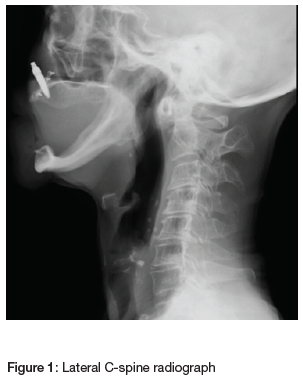
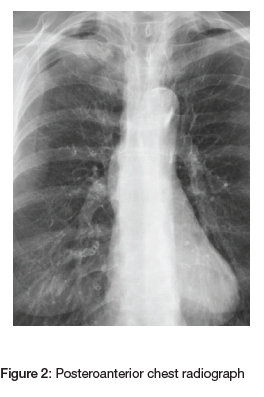
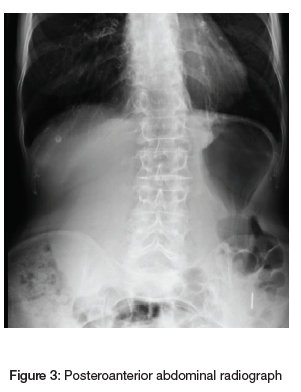
A 75-year-old female presented for a follow-up appointment for the construction of an implant-retained prosthetic nose. During the appointment, a prosthetic pin unintentionally dislodged into her nasopharynx. The following serial radiographs (Fig 1-3) were taken to determine the location of the pin, with a main concern of dislodgement into the patient's lungs.
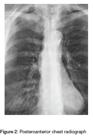
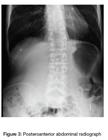
In Fig 3, the pin (black arrow) can be seen in the colon. This is an indication that the pin was not aspirated but ingested, implying that no further medical intervention was necessary.
INTERPRETATION
Foreign body ingestion is often seen in children, the elderly, alcoholic individuals, or the mentally impaired, and may intentionally occur in psychiatric patients and prisoners.1 1
In the gastrointestinal tract (GIT), many ingested objects will pass within a few days to a month without any intervention, with a small amount requiring non-surgical or surgical intervention.23 4
Dental practitioners must be able to recognise the signs and symptoms of air and gastric obstruction if a dental object was ingested. The need for proper patient communication if this problem were to occur is crucial. If the patient isn't showing any signs of gagging, coughing, choking, dysphagia, abdominal pain, wheezing, stridor or chest pain, the oral cavity must be thoroughly examined for the foreign object.52,4 For radiolucent objects, additional diagnostic aids such as computed tomography (CT), magnetic resonance imaging (MRI), endoscopy and diagnostic bronchoscopy may aid in detecting their anatomic location.2
As soon as a patient starts showing signs of a compromised airway and cannot dislodge the object by forcibly coughing, the Heimlich maneuvre should be performed to dislodge the laryngeal obstruction.53
Objects lodged in the oesophagus usually require surgical intervention and are often removed endoscopically.4 1 4
Inhalation of a foreign body can bemuchworse and is regarded as a medicalemergency.22
To prevent the inhalation or ingestion ofdental objects, dentists should ensure the use of rubberdam during endodontic and restorative procedures. Attachmentof dental floss to files isrecommended in casetheyare dropped. Additional preventative measuresthat could be considered are high vacuum suctions, gauze throat packs, customized impression trays, high-viscosity impression material, and placing the patient in a more upright position in the dental chair.3
AUTHORS DECLARATIONFunding
This research did not receive any specific grant from funding agencies in the public, commercial, or not-for-profit sectors.
Conflict of Interest
The authors declare that they have no conflict of interest.
Ethics approval: The University of The Western Cape Ethics Committee has stated that ethics clearance was not required for case reports.
REFERENCES
- 1. Venkataraghavan, K., Anantharaj, A., Praveen, P., Rani, S.P. and Krishnan, B.M. Accidental Ingestion of a Foreign Object: Systematic Review, Recommendations andReport of a Case. The Saudi Dental Journal 2011; 23(4):177-81.
-
2. Saraf, H.P., Nikhade, P.P. and Chandak, M.G. Accidental Ingestion of Endodontic File: A Case Report. Case Reports in Dentistry, 2012. https://doi.org/10.1155/2012/278134
» https://doi.org/10.1155/2012/278134 -
3. Naderian, A., Baghaie, H. and Satchithanandha, V. Accidental Ingestion of An Endodontic File: A Case Report. Journal of Medical Case Reports 2022; 16(1): 1-5. https://doi.org/10.1186/s13256-022-03363-1
» https://doi.org/10.1186/s13256-022-03363-1 -
4. Guelfguat, M., Kaplinskiy, V., Reddy, S. H., and DiPoce, J. Clinical Guidelines for Imagingand Reporting Ingested Foreign Bodies. American Journal of Roentgenology 2014;203(1): 37-53. https://doi.org/10.2214/AJR.13.12185
» https://doi.org/10.2214/AJR.13.12185 - 5. Zitzmann, N.U., Elsasser, S., Fried, R. and Marinello, C.P. Foreign Body Ingestion and Aspiration. Oral Surgery, Oral Medicine, Oral Pathology, Oral Radiology, and Endodontology 1999; 88(6):657-60.
Author contributions
1 . J. Simpson 70%
2 . L. Janse van Rensburg 30%