A comparison of the efficacy of various disinfection protocols in endodontic treatment: An in vitro study
Abstract
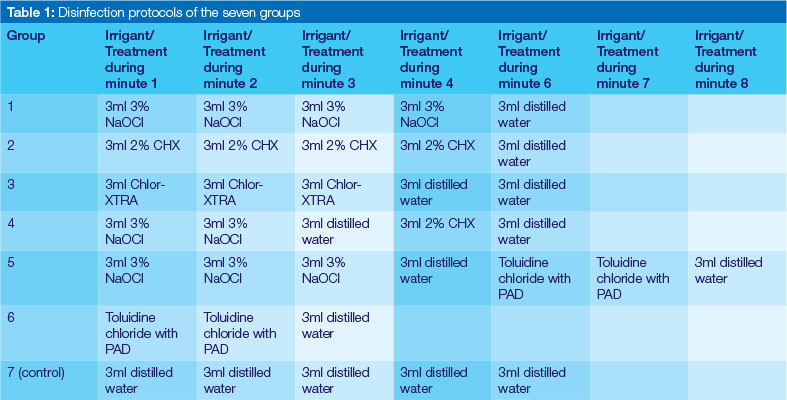
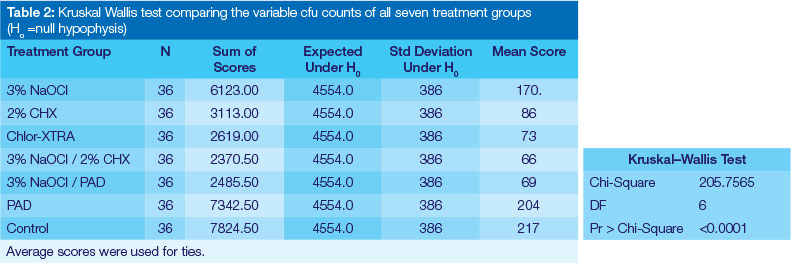
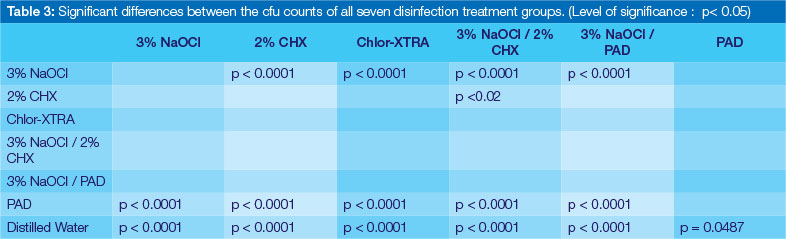
INTRODUCTION: Disinfection is the main objective of root canal preparation and whilst irrigation is most commonly used, another method is Photo-activated Disinfection (PAD). AIMS AND OBJECTIVES: The aim of this in vitro study was to compare the efficacy of eradication of bacteria from root canals by six different disinfection protocols. METHODS: Root canals of 84 extracted human teeth were prepared to a standardised size and taper. The teeth were sterilised and then inoculated with E. faecalis. The teeth were randomly assigned to one of seven groups (n = 12), each of which underwent a different disinfection protocol. Dentine samples were plated onto BHI plates and incubated anaerobically. After five days, colony-forming units (cfu) were counted. The Pairwise Wilcoxon Rank Sum test and the Kruskal-Wallis test were used for statistical analysis of the data. RESULTS: The most effective disinfection protocol was: 3% NaOCl with 2% CHX, followed by 3% NaOCl with PAD, Chlor-XTRA and 2% CHX. The 3% NaOCl-protocol performed significantly better than PAD and distilled water. The PAD-protocol performed significantly better than distilled water. CONCLUSION: The most efficient protocol in eradicating E. faecalis from the root canals was 3% NaOCl followed by irrigation with 2% CHX.