Influential factors on dental students' online learning experiences during the Covid-19 pandemic, Gauteng
Abstract
AIM: This study assessed the perceptions and practices of the 2021 dental student cohort toward online learning. METHODS: In 2021, a cross-sectional study was conducted using an online questionnaire to measure practices and perceptions at a tertiary dental school in Gauteng, South Africa. RESULTS: The study had a response rate of 49.4%, with 83 out of 168 students responding. Many of the respondents were female (73.5%). Most students (82%) lived in urban locations, with 62.6% residing at university or private residences. A significant proportion of the students (59%) were self-funding their studies. All students had access to learning devices and the majority (95.2%) had internet access before the lockdown. The students reported their peers (39.8%) and their lecturers (28.9%) as a major influence on online platform use. Almost half (45%-49%) of the students believed that the packaging of online presentations influenced them to use e-learning. When asked about their level of motivation from using e-learning, nearly a third were either "least motivated" or "neutral" about using online tools. Most students (73.5%) preferred not to contribute to online discussions but to observe. Of great concern is that nearly all (97.6%) did not even want the corrective feedback from lectures. Being able to navigate the online platform easily was significantly associated with having internet access before the lockdown (p-value=0.05). Females were more inclined to participate in online discussions than males (p-value=0.04). CONCLUSION: In summary, while neutral views suggest room for improvement, the study highlights the potential of online learning platforms in dental education. This suggests Innovative strategies are needed to make online learning more engaging and exciting. The findings highlight the importance of providing access to online learning tools and ensuring that students are motivated to use them. Regular monitoring through evaluation forms will help assess the effectiveness of online learning platforms.
Education; dental; graduate
INTRODUCTION
The Covid-19 pandemic in 2020-2021 compelled universities worldwide to swiftly transition their teaching, learning and assessment to online platforms.12 345
Dental health professionals play a crucial role in improving public health. Thus, it's vital to continually enhance their learning capacity and knowledge acquisition. Dental students need to grasp and apply the fundamental principles of dentistry. To meet these demands, online learning is increasingly being integrated into medical and dental education.1
Research conducted in Saudi Arabia6,7 and Thailand8,9 to gauge dental students' attitudes and readiness towards online learning revealed an acceptable level of individual student competency. However, there was limited readiness among participants and a bias against online learning still existed. A study in a New York College found that students believed e-learning could be successfully incorporated Into dentistry, particularly in the clinical curriculum.1011
In the South African context, a study by Queiros and De Villiers in 2016 showed that while most students preferred a paper-based teaching model, the online model was effective when preceded by the necessary training in the use of learning tools for interaction with lecturers and peers.12
Several factors influence the participation and engagement of dental students in online classes. These include instructor issues, personal issues, learners' motivational problems, time, support service problems, prerequisite skills, technical problems and social interactions.21
Therefore, students' assessment of the tools, their perceptions and evaluations are crucial when reviewing the success of any online learning system. This study assessed the perceptions and practices towards online learning among the 2021 cohort of dental students attending a tertiary training institution.
METHODS
A cross-sectional analytical study was conducted among an undergraduate dental and oral hygiene 2021-student cohort registered at a tertiary dental institution in Gauteng, South Africa. The entire group of students (168) registered for the 2021 year of study were invited to participate in the survey. Data collection occurred from April 2021 to June 2021. Data were collected using an online questionnaire administered through email. A five-point Likert scale, a 22-item questionnaire was adapted from that used by Turkyilmaz et al (2019).6,10 The questionnaire collected data on students' perceptions regarding online learning. The expected responses were: On a scale of 1 to 5, with 1 being no motivation and 5 being very motivated, what would you say your motivation level is when using online tools for learning with regard to the following? Regarding online video presentations, please rate the following factors as to their influence on your academic performance on a scale of 1 to 5, with 1 being least influence and 5 being most influence. Lastly, on a scale of 1 to 5, what perceived impact would e-learning have on your oral health science learning?
The questionnaire was sent to the participants in 2021, following the permission of the relevant managers to engage students and approval from the Human Research Ethics Committee (Number H 21/01/34).
Data analysis
The researchers captured, cleaned and verified data from the questionnaires in Microsoft Excel and exported it to Stata version 14 (Stata Corp, College Station, TX, US), which was used for descriptive and inferential statistical analysis using Pearson chi-squared and Fischer Exact tests. The demographics, year of study and historical internet use were assessed to appraise students' preferences regarding online learning across the characteristics of the study sample. The outcome variables included the study cohort's perceptions and practices.
RESULTS
The response rate for this study was 49.4%, with 83 participants responding out of a possible 168 students.
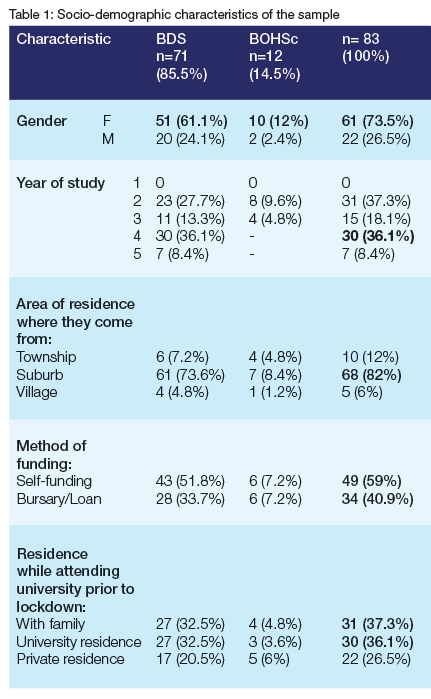
The majority (73.5%, n=61) of the participants were female students, while most (82%, n=68) students reported living in suburban residences compared to very few who lived in rural areas (6%, n=5) (Table 1). Almost 40% of students lived with a family, while the majority (about 62.6%) stayed either In university residences or private residences. Self-funding for university studies constituted nearly two-thirds (59%), while the remainder were funded via bursaries or loans. (Table 1)
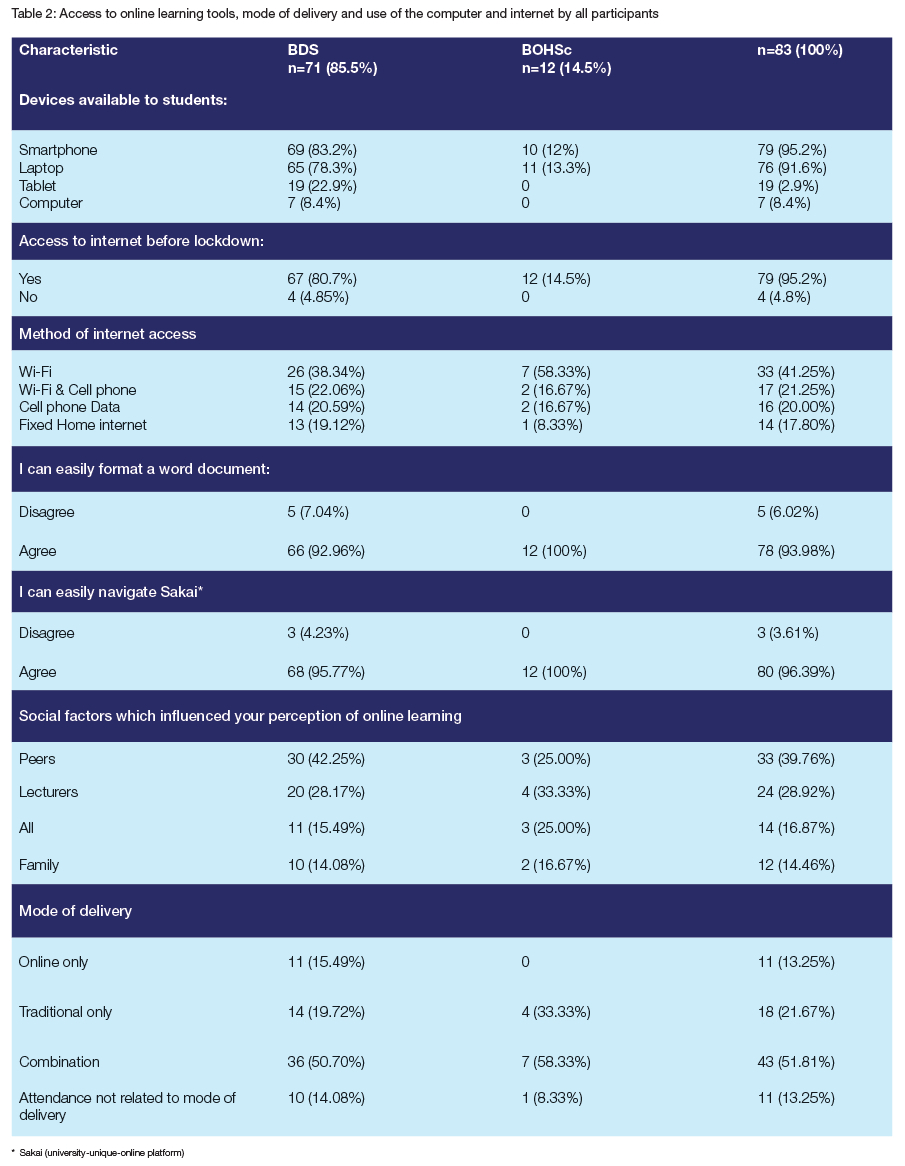
All students had a device to access learning materials, while most (n=79; 95.2%) had internet access except n=4 dental students. Additionally, the majority (96.4%) of the students could use Microsoft Word to send emails and navigate Sakai (96%) (university-unique-online platform). The student peers influenced them the most about online learning (39.8%), followed by lecturers at 28.9%. Approximately half (n=43, 51.8%) of students preferred a blended approach of learning, where online and traditional learning were integrated. (Table 2)
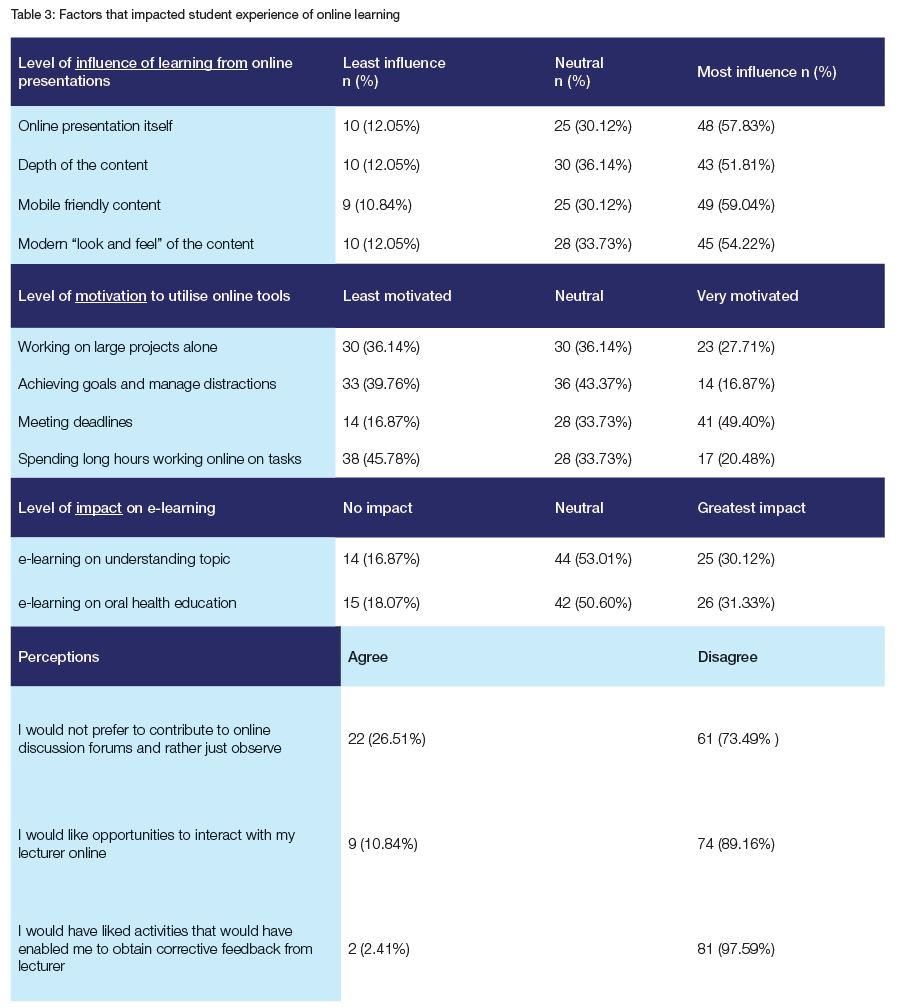
The mobile-friendly content and modern "look and feel" influenced students learning (57%-59%). More than half (51%-59%) of the students felt that online presentation packaging contributed the most to e-learning - meaning that the depth of content of the videos, whether the material is mobile friendly, how the presentation is and "feel" had the most influence on their academic performance. A third (30%-36%) of students reported neutral responses regarding the packaging level of influence by the online presentations. Online learning motivated students to meet deadlines (49%)
Working alone on large projects (36%) and managing distractions (40%) provided the least motivation to students. Generally, a third of students were neutral to the responses about the level of influence and motivation, while half (50%-53%) were neutral on the level of impact of online learning in their studies. (Table 3)
Students were also asked to share perceptions on engagement and feedback online. Most students preferred not to contribute to online discussions and would not want to interact with the lecturer online (73.5% and 89%, respectively), but rather observe. Of great concern is that nearly all did not even want the corrective feedback from lectures (97.6%)
Practices
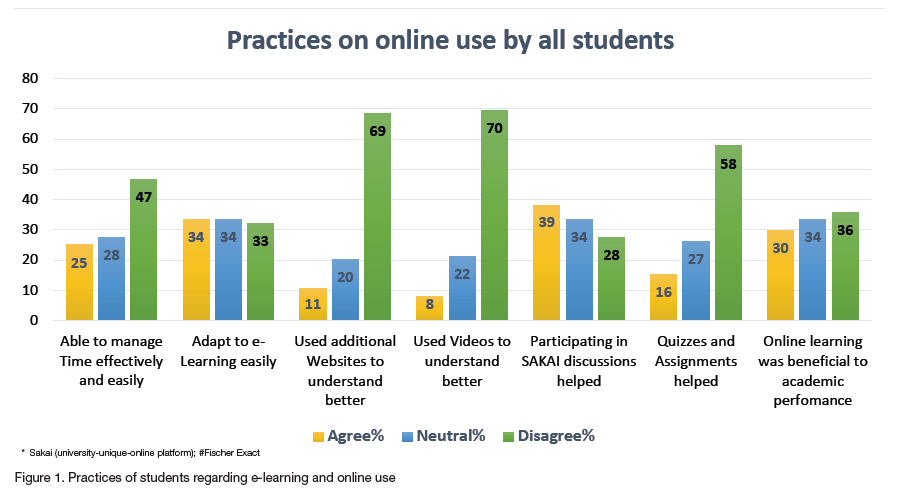
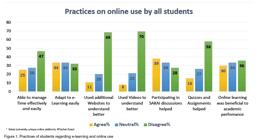
The majority of students (95%) were computer literate and about two-thirds (61%) spent more than three hours on e-learning (not in figure). All students had relatively varied opinions with regard to the benefits of online learning. The highest proportions were generally negative about online learning. (Figure 1)
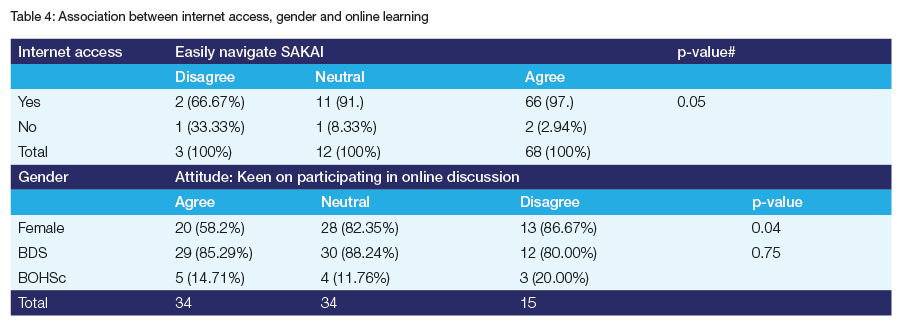
Easily navigating SAKAI was significantly associated with having internet access before lockdown (p=0.05). There was a difference between males and females with regard to their online participation, with females more readily participating in online discussions than males. There was no difference in keenness between dental and oral hygiene students. (Table 4)
DISCUSSION
The Covid-19 lockdown period necessitated a hasty transition from non-routinely used online platforms to compulsory use. The tertiary institution under study had an existing online platform that was not routinely used. The current study assessed the perception and practices of the 2021 oral health student-cohort regarding online learning during the 2020 Covid-19 lockdown period. The study had a good response rate for an online survey of 49.4%. Varying response rates have been reported in the literature ranging from 15% to 29% for web-based and email surveys, and a 30% response rate is considered reliable to generalise the results (13). Data collection occurred over three months, and monthly reminders were given to encourage participation.
Age and gender
The current study contributes to the literature as it revealed a difference between male and female students regarding their attitudes about online presentations. There were more females in the current study, and most readily participated in online activities. The results of the current study are similar to a study by Bahanan et al, 2022, where males preferred traditional learning and females tended to be inclined toward e-learning.149,11 A South African study reported that in developing countries, students' circumstances, the ownership and access to technological devices contribute to the student perception about online learning. The latter study failed to differentiate between age and gender as factors that contribute to student perceptions.12
Computer skills use and internet access
The participants in the current study reported a high level of computer skills and were able to operate and navigate the main online teaching platform utilised by the university, with ease. The online platform was utilised even before the lockdown period. Similar results were also reported, with undergraduate dental students in Saudi Arabia being computer literate. 914
Many (61%) of the students spent a minimum of three hours on online learning platforms. In contrast, a New York Dental College study found that 40% of the students spent less than one hour; however, 11% went above four hours.14
The success of e-learning adoption is also highly dependent on access to technology and having a good internet connection. Of the 83 student participants, the vast majority (n=79) had good internet access before the implementation of online learning; Wi-Fi was their main source of internet access. The study cohort reported high levels of technology accessibility, ensuring a good technological foundation for e-learning adoption in the institution amid the Covid-19 pandemic and subsequent lockdowns. An associated link between online competency levels through ease of navigating Sakai and having internet access before lockdown was also noted. Student peers were the primary motivator for using online learning, followed by lecturers at 28.9%.
Other degrees
The dental school in question only offers training for two degrees and no difference was found between any of the variables and the study category. This could be attributed to the very small number of degree programmes participants. A systematic review by Abdul and colleagues focused on the transition to online learning during Covid-19 by medical, biomedical, dentistry, nursing and veterinary students. The authors reported that nearly half of the students in all disciplines were moderately satisfied, while more than a third (37%) were highly satisfied with the online learning mode. Many of the students cited flexibility as a reason for their satisfaction.15
Funding method
The current study noted that the mode of online teaching was not associated with the funding method of students viz: self-funding or government funding. According to the literature, most students opt for online education due to the convenience and associated cost-effectiveness in institutions where a choice is available.16
Teaching preferences
The current study reported that half (52%) of the students preferred a mixture of both teaching methods. The same findings were noted among Saudi and USA New York College dental students.6,10 In contrast, in a Croatian study, half of the dental students were motivated to learn exclusively online instead of in combination.17
With regards impact impact, in the current study most students were neutral regarding the impact of online learning on their understanding of the topic. At the same time, there were also varied opinions about the benefit of online learning towards their overall academic experience. In contrast, students in Saudi Arabia perceived online technology as essential for personal and learning purposes. Interestingly, the benefit was noted until the fourth year of study and for courses with higher theoretical content. Thereafter, in the senior clinical years, the cohort reported online learning to have little impact on the success of their studies.610
Practice and perceptions
Despite students in the current study having access to online platforms and enabling support such as devices and Internet access, they were neutral and few were motivated by working alone on large projects and managing distractions while online. Students were also neutral on how e-learning impacted their understanding of the topic of oral health science learning. Students generally had poor practices related to time management, using additional websites to complement, and disagreed that quizzes and assignments helped them. There were generally negative comments on their online practices. The negative response online was also evident when the students were not interested in the engagement and contribution towards online interactions and receiving corrective feedback from lecturers. A Ghanian university also cited the reluctance to interact and engage with students181920
It is encouraging to note that despite the students' views, how the online material was packaged did influence them the most. The content's "mobile-friendliness" and modern "look and feel" motivated them to use the online platform. There are lessons to learn from this study so that future improvements can be made to enable and support online learning platforms. The current cohort is of the calibre of the modern student generation who are skilled in the use of technology. These students have higher expectations of content in learning because the content in nonformal platforms such as social media competes with the learning sphere.1012
CONCLUSION
The study highlights the impact of technology integration on student learning outcomes, particularly in dentistry and oral hygiene education during the Covid-19 pandemic. The key findings and implications:
Adequate technological skills: The 2021 dentistry and oral hygiene cohort demonstrated sufficient technological and online skills. This readiness allowed for the implementation of online training platforms during the pandemic. Access to devices and the internet was prevalent, with Wi-Fi being the primary source of connectivity.
Neutral views on e-learning: The study revealed neutral or ambivalent motivation levels toward using online tools. Importantly, there was no outright rejection of online learning. Students reported mixed feelings about the impact of e-learning on their understanding and academic performance.
Influence of content packaging: Interestingly, students were significantly influenced by the packaging of online content. How the material was presented was crucial in their engagement with online learning. This finding underscores the importance of creating engaging and well-structured online learning materials.
Gender and internet access: Female students and those with pre-existing internet access before lockdown showed more enthusiasm and navigated online learning effectively. These factors could inform strategies to enhance student engagement and success.
It is recommended that lecturers be capacitated in their continuous training on online learning. Refresher courses can help educators stay updated and improve their content packaging. Beyond practical platform use, training should emphasise innovative approaches to making learning materials interesting and motivating. In summary, while neutral views suggest room for improvement, the study highlights the potential of online learning platforms in dental education. Regular monitoring through evaluation forms will help assess the effectiveness of online learning platforms. The promising prospects of online platforms extend to both undergraduates and academics, locally and globally.
Education, dental, graduate
Disclosure
Authors declare there are no conflicts of interest.
Conflict of interest
The authors declare there are no conflicts of interest.
Acknowledgements
The authors would like to acknowledge the School of Oral Health Sciences, for providing support, time, and space for the research to occur. We also acknowledge the valuable Inputs of Dr Thekiso , Dr Molete, Mrs Ralephenya, Ms Mothupi, Ms Phakela, and Ms Modisha during the protocol process of the study.
REFERENCES
- 1. Avramova N, Mihaylova I, Yaneva-Ribagina K, Bonev B, Nenov S. Dental students' perspectives on the implementation and effectiveness of online learning due to COVID-19 pandemic: a descriptive cross-sectional study in Bulgaria. 2021
- 2. Butt H, Khan NR, Iqbal AI, Pakistan KA, Iqbal S, Tahir F. Factors Influencing the Participation and Engagement of Dental Students in E-Learning During Covid-19 Pandemic. J Gandhara Med Dent Sci. 2021;8(2):24-30
- 3. Etajuri EA, Mohd NR, Naimie Z, Ahmad NA. Undergraduate dental students' perspective of online learning and their physical and mental health during COVID-19 pandemic. PLoS One. 2022;17(6):e0270091
- 4. Hattar S, AlHadidi A, Sawair FA, Alraheam IA, El-Ma'aita A, Wahab FK. Impact of COVID-19 pandemic on dental education: online experience and practice expectations among dental students at the University of Jordan. BMC Med Educ. 2021;21(1):1-10
- 5. Stone C. Opportunity through online learning: Improving student access, participation and success in higher education. 2017
- 6. Linjawi AI, Alfadda LS. Students' perception, attitudes, and readiness toward online learning in dental education in Saudi Arabia: a cohort study. Adv Med Educ Pract. 2018 Nov;Volume 9:855-63
- 7. Martis M, Abdullah H, Oommen A. Perceived education environment of the undergraduate health profession programs in Saudi Arabia. Saudi J Nurs Health Care. 2021;4(12):472-81
- 8. Loi CK, Khamkhien A, Suki NM, Akkakoson S, Lee HA. Examining factors influencing students' acceptance of online learning during COVID-19 pandemic: Evidence from Thailand. Malays J Soc Sci Humanit MJSSH. 2023;8(1):e001524-e001524
- 9. Ngampornchai A, Adams J. Students' acceptance and readiness for E-learning in Northeastern Thailand. Int J Educ Technol High Educ. 2016 Dec;13(1):34
- 10. Turkyilmaz I, Hariri NH, Jahangiri L. Students' Perception of the Impact of E-learning on Dental Education. J Contemp Dent Pract. 2019 May;20(5):616-21
- 11. Ariana A, Amin M, Pakneshan S, Dolan-Evans E, Lam AK. Integration of Traditional and E-Learning Methods to Improve Learning Outcomes for Dental Students in Histopathology. J Dent Educ. 2016 Sep;80(9):1140-8
- 12. Queiros DR, de Villiers MR. Online learning in a South African higher education institution: Determining the right connections for the student. Int Rev Res Open Distrib Learn. 2016;17(5):165-85
- 13. Ilieva J, Baron S, Healey NM. Online Surveys in Marketing Research. Int J Mark Res. 2002 May;44(3):1-14
- 14. Bahanan L, Alsharif M, Samman M. Dental students' perception of integrating e-learning during COVID-19: a cross-sectional study in a Saudi University. Adv Med Educ Pract. 2022;13:839
- 15. Abdull Mutalib AA, Md. Akim A, Jaafar MH. A systematic review of health sciences students' online learning during the COVID-19 pandemic. BMC Med Educ. 2022 Jul 3;22(1):524
- 16. Sindiani AM, Obeidat N, Alshdaifat E, Elsalem L, Alwani MM, Rawashdeh H, et al. Distance education during the COVID-19 outbreak: A cross-sectional study among medical students in North of Jordan. Ann Med Surg. 2020;59:186-94
- 17. Puljak L, Civljak M, Haramina A, Mališa S, Cavic D, Klinec D, et al. Attitudes and concerns of undergraduate university health sciences students in Croatia regarding complete switch to e-learning during COVID-19 pandemic: a survey. BMC Med Educ. 2020 Dec;20(1):416
- 18. Asunka S. Online learning in higher education in Sub-Saharan Africa: Ghanaian University students' experiences and perceptions. Int Rev Res Open Distrib Learn. 2008;9(3):1-23
- 19. Bharuthram S, Kies C. Introducing e-learning in a South African Higher Education Institution: Challenges arising from an intervention and possible responses. Br J Educ Technol. 2013 May;44(3):410-20
- 20. Mayes R. Themes and strategies for transformative online instruction: A review of literature. Glob Learn. 2011;2121-30

Author's contribution
1. Yolanda Malele-Kolisa - concept, design, intellectual content, literature search, data analysis, statistical analysis, manuscript preparation, manuscript editing and review, guarantor
2. Kim Forbay - concept, design, literature search, data acquisition, manuscript preparation
3. Natasha Kayamba - concept, design, literature search, data acquisition, manuscript preparation
4. Sibongile Sibeko - concept, design, literature search, data acquisition, manuscript preparation
5. Mpinane Tlakane - concept, design, literature search, data acquisition
6. Safiyyah Vally - concept, design, literature search, data acquisition, manuscript preparation